 English
 Español
 русский
 中文简体

30B Dust-Collecting Crushing Machine
The 30B dust-collecting crushing machine is widely used for pulverizing var.....

Content
Modern pharmaceutical, food, chemical, nutraceutical, and related manufacturing operations require dependable size-reduction equipment that can deliver consistent particle fineness without creating unnecessary dust, maintenance difficulty, or contamination risk. The 30B dust-collecting crushing machine is designed to address these requirements in a compact and practical configuration. It combines a feeding system, pulverizing chamber, and integrated dust-collection unit to provide efficient dry-material crushing while supporting a cleaner production environment.
With a capacity range of 50 to 300 kilograms per hour, a main-shaft speed of 3,800 revolutions per minute, and a crushed fineness range of 60 to 120 mesh, the 30B model is suitable for a broad range of batch and continuous powder-processing applications. Its structure is straightforward, its material-contact surfaces are made of stainless steel, and its dust-catching system operates as part of the complete machine rather than as an optional afterthought.
This combination makes the equipment especially valuable for manufacturers that need reliable pulverization, convenient cleaning, controlled airborne dust, and practical integration into wider production lines. It can be used as a standalone crusher or incorporated into a processing route involving mixing, granulation, drying, coating, conveying, and packaging.
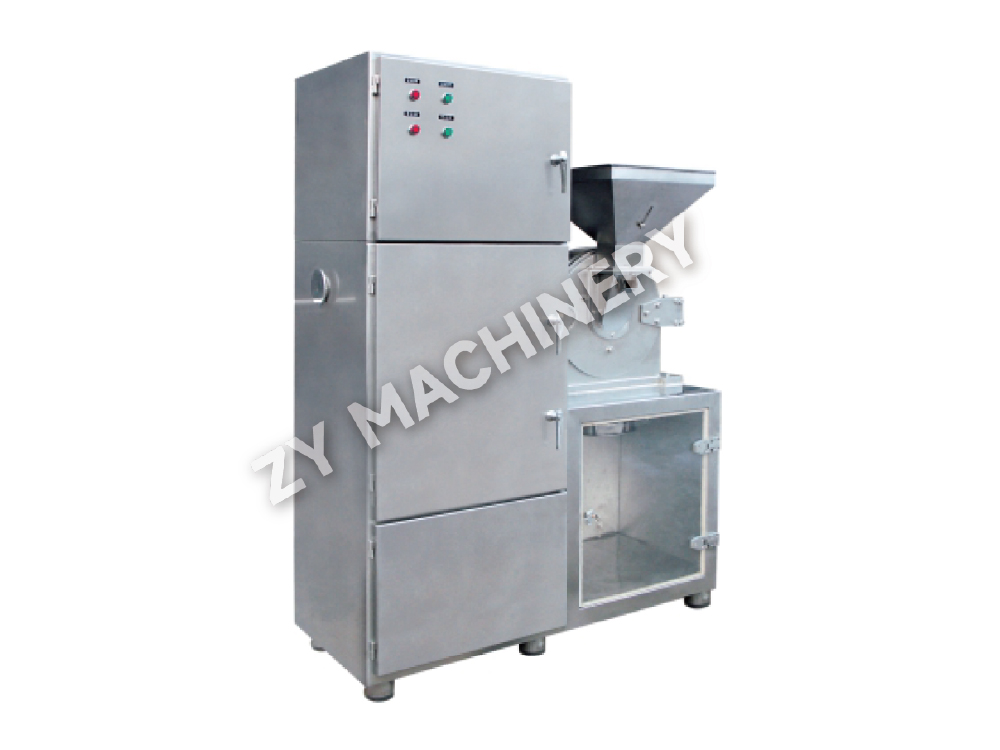
30B Dust-Collecting Crushing Machine
The 30B dust-collecting crushing machine is a dry-material pulverizer developed for industries in which particle-size reduction is an important stage of production. The machine is commonly applied to suitable dry materials used in pharmaceutical formulations, food products, chemical preparations, nutraceuticals, veterinary products, additives, and other powder-based manufacturing processes.
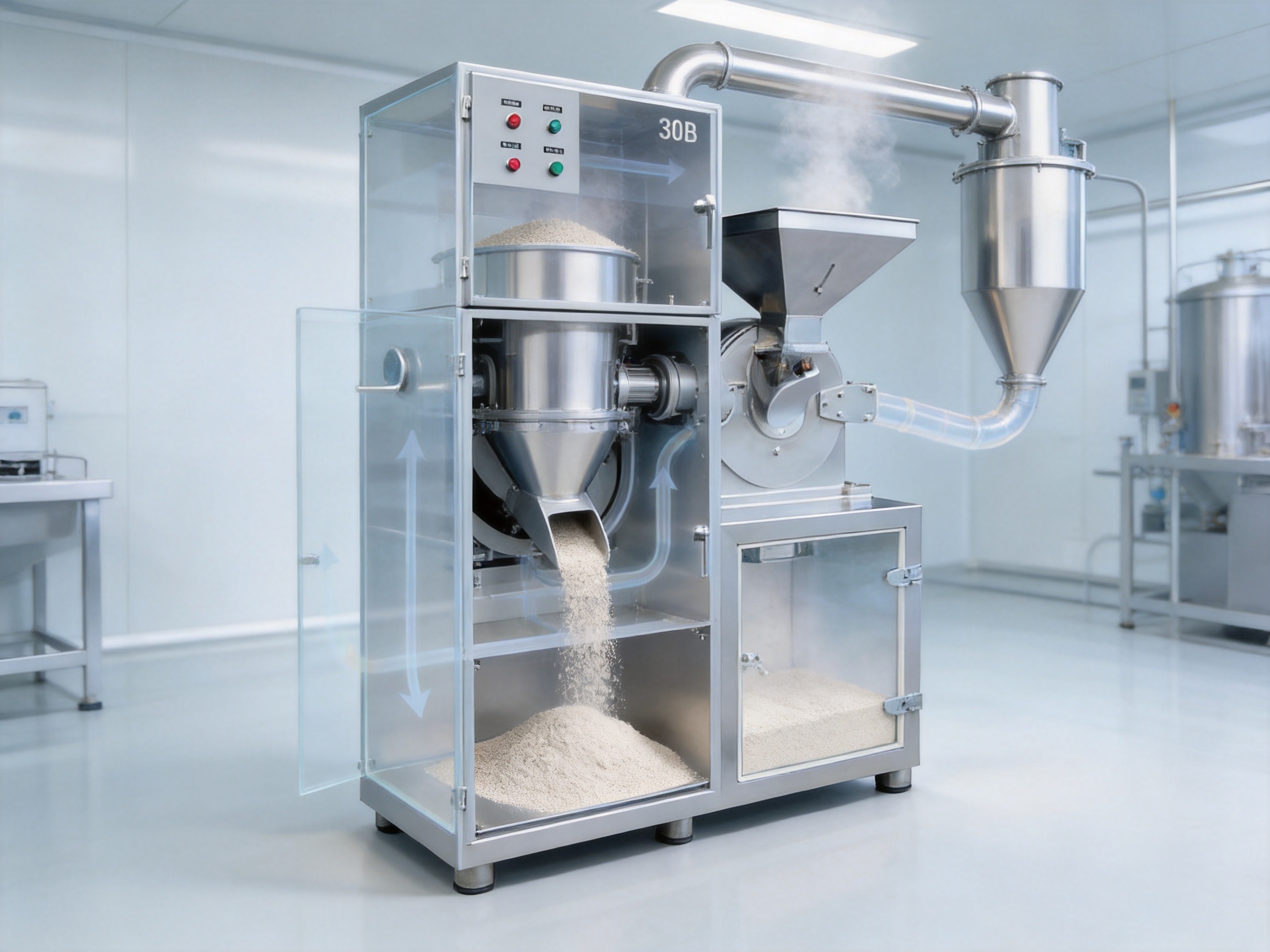
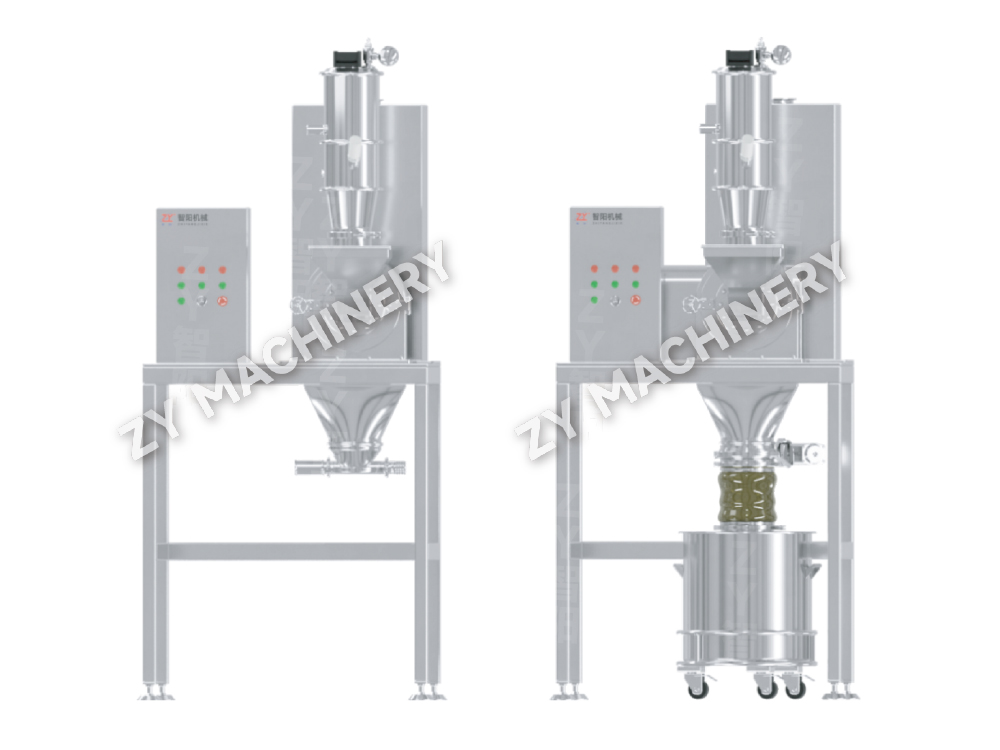
The machine is composed of three principal sections. The feeding system introduces the material into the crushing area. The pulverizing chamber performs the size-reduction operation through its internal milling mechanism. The dust-collection unit captures fine airborne particles generated during crushing and helps direct the processed powder toward collection while supporting a cleaner working environment.
This integrated arrangement is significant because crushing and dust handling are treated as connected operations. In many production environments, the effectiveness of a crusher cannot be evaluated only by its theoretical capacity. Operators must also consider the cleanliness of the room, the amount of powder released around the machine, the difficulty of cleaning, the possibility of product loss, and the level of maintenance needed between batches. The 30B model addresses these practical concerns through a compact design that brings pulverization and dust collection together.
The machine has a nominal capacity range of 50 to 300 kilograms per hour. Actual performance can vary according to material properties, moisture content, feeding conditions, initial particle size, desired fineness, screen selection, and operating practice. The stated range provides users with a useful reference for production planning while allowing the equipment to serve both moderate-capacity production and flexible batch-processing requirements.
Its stated feeding size is 8 mesh, while the crushed fineness is 60 to 120 mesh. This indicates that the machine is intended to receive pre-sized dry material and reduce it into a significantly finer powder. Preconditioning the feed is important because uniform input helps stabilize the crushing load, improve throughput, and support more consistent final particle distribution.
During operation, the material is introduced through the feeding system and enters the pulverizing chamber. Inside the chamber, the internal milling mechanism applies mechanical force to reduce the material into smaller particles. Depending on the material characteristics and operating conditions, size reduction may involve impact, friction, shearing, or a combination of these forces.
As the material is pulverized, the integrated dust-collection unit operates at the same time. Fine particles suspended in the air stream are drawn toward the dust-catching section rather than being allowed to spread freely throughout the processing area. This helps reduce visible dust, improve housekeeping conditions, and limit the amount of product that might otherwise be lost to the surrounding environment.
The crushed product is collected after passing through the appropriate separation or discharge path. Operators can adjust the process according to the required fineness, material behavior, and production target. For best results, the feeding rate should remain stable and the material should be suitable for dry crushing. Excessively wet, sticky, oily, or heat-sensitive materials may require a process evaluation before production use.
The machine’s working principle supports a balanced relationship between throughput and fineness. A higher throughput may require appropriate control of the feed rate and operating conditions, while a finer target may require additional processing time or a lower feed rate. Production teams can therefore establish operating parameters according to the specific material and final product requirements.
Dust collection is not only an environmental feature. It can also contribute to process stability. When powder accumulates around the chamber or discharge area, operators may face more frequent cleaning, greater material loss, and increased risk of cross-contamination. By capturing airborne particles during pulverization, the 30B design helps reduce these operational problems.
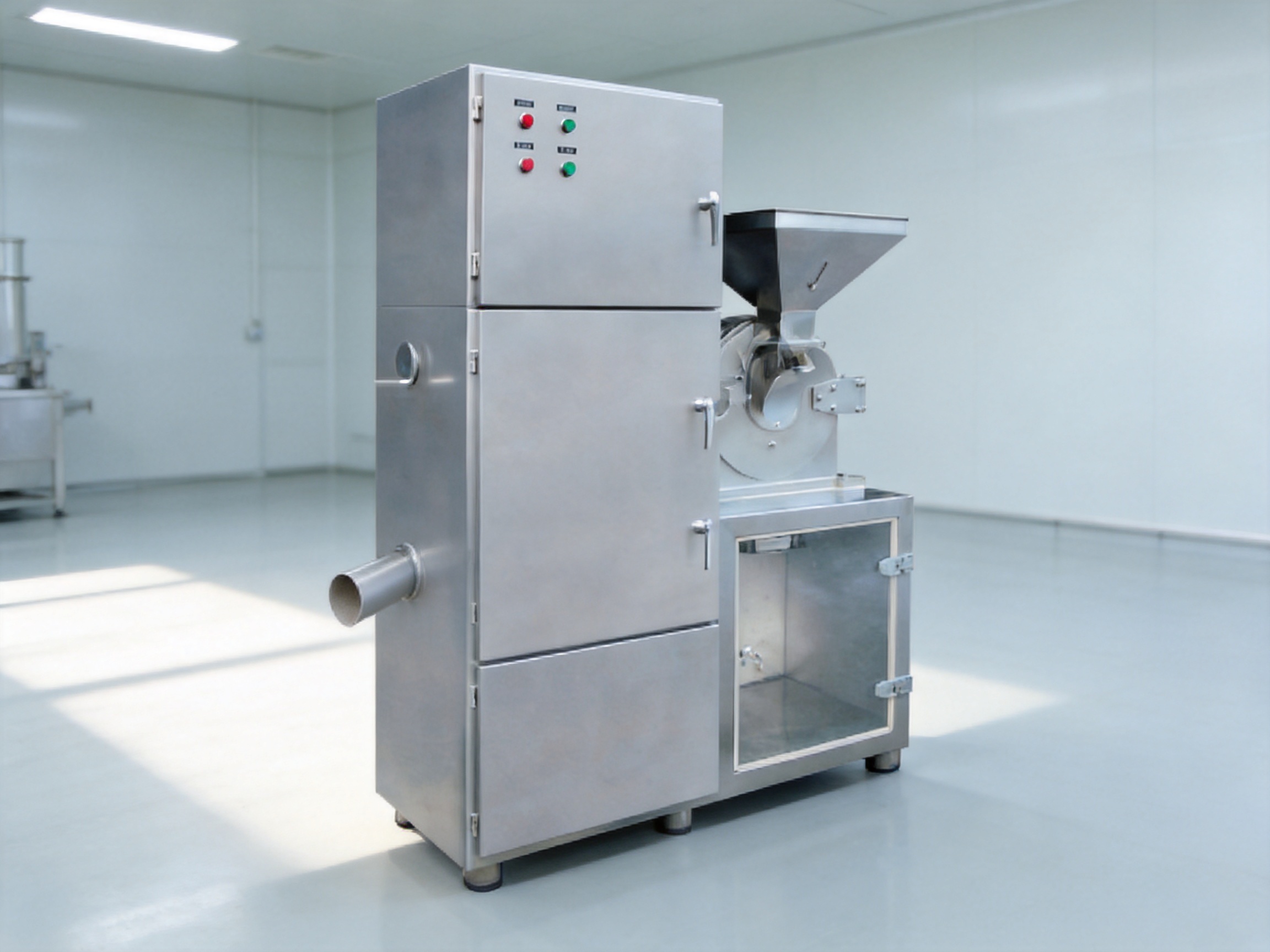
The following table summarizes the principal published parameters of the 30B dust-collecting crushing machine.
| Item | Unit | Specification |
|---|---|---|
| Model | — | 30B |
| Capacity | kg/h | 50–300 |
| Main-shaft rotating speed | rpm | 3,800 |
| Feeding size | mesh | 8 |
| Crushed fineness | mesh | 60–120 |
| Crushing motor power | kW | 5.5 |
| Dust-catching motor power | kW | 1.5 |
| Overall dimensions | mm | 1200 × 650 × 1650 |
The 5.5-kilowatt crushing motor provides the primary mechanical power required for pulverization, while the 1.5-kilowatt dust-catching motor supports the integrated collection process. Separating these functions allows the crushing and dust-control systems to perform their respective roles without relying on a single motor for both operations.
The overall dimensions of 1200 × 650 × 1650 millimeters provide a relatively compact footprint for a machine with this processing range. This can be beneficial for facilities where available floor space is limited or where several processing machines must be arranged within a controlled production area. Before installation, users should still confirm clearance requirements for feeding, discharge, cleaning, inspection, maintenance, and material transfer.
All parts that come into contact with the processed material are made of stainless steel. This is one of the most important characteristics of the equipment for pharmaceutical and other hygiene-sensitive applications. Stainless steel provides a smooth, durable, and cleanable surface that is better suited to controlled manufacturing than ordinary painted or unprotected carbon-steel contact components.
Material-contact construction affects more than appearance. The contact surface must withstand repeated cleaning, routine handling, and mechanical exposure while minimizing the likelihood of corrosion or unwanted material interaction. Stainless steel also supports more consistent sanitation procedures and can help manufacturers maintain a controlled production standard.
For pharmaceutical operations, the use of stainless steel contributes to the hygienic design of the machine and supports GMP-oriented production practices. The precise grade, surface finish, welding quality, and validation requirements should be confirmed according to the customer’s process and regulatory needs, but the basic stainless-steel construction provides an appropriate foundation for hygienic powder processing.
Fine powder can create serious operational challenges. It may settle on nearby surfaces, enter ventilation pathways, reduce visibility, increase cleaning labor, and expose operators to undesirable airborne particles. It may also represent a loss of valuable product. The 30B machine addresses this concern with an integrated dust-collection system that captures powder generated during the crushing process.
Dust control can improve the overall working environment and support better housekeeping. It can also help reduce the transfer of powder between adjacent processing stages. In facilities handling potent, allergenic, irritating, or high-value materials, dust management is an essential part of process design. The 30B system should be evaluated together with the facility’s wider ventilation, containment, and occupational-safety measures.
The machine is designed for dry materials and is suitable for a broad range of products in pharmaceutical, food, and chemical manufacturing. Dry pulverization can be useful when a process requires a more uniform particle size before blending, granulation, dissolution, compression, encapsulation, coating, or packaging.
Consistent particle size can influence downstream behavior. It may affect powder flow, blend uniformity, dissolution rate, bulk density, surface area, and the performance of subsequent processing operations. By reducing material to a controlled fineness range, the 30B machine can serve as an important preparation stage within a wider manufacturing process.
A simple and robust structure can reduce the complexity of routine operation and maintenance. Operators can more easily understand the main functional areas of the machine, while maintenance personnel can focus on the feeding system, crushing chamber, dust-collection section, drive components, and discharge path.
Simple structure does not mean limited functionality. In industrial equipment, a practical design can be an advantage when it reduces unnecessary components, shortens inspection time, and makes cleaning procedures easier to organize. For production teams, this may support better equipment availability and more predictable maintenance planning.
Many conventional crushers are able to reduce material size, but not all are designed with the same balance of powder control, hygienic construction, compactness, and process integration. The 30B model distinguishes itself by combining these elements in one machine.
A conventional crusher may require an additional external dust collector, ducting arrangement, or improvised extraction connection. Such arrangements can increase the installation footprint and create more interfaces that need to be inspected, cleaned, and maintained. An integrated dust-catching system provides a more coordinated approach to powder control.
Integrated design can also simplify project planning. Customers can evaluate the crushing motor and dust-catching motor as part of one equipment package, rather than sourcing separate components from different suppliers. This can reduce coordination work during installation and make operator training more straightforward.
External dust-control systems may still be appropriate for large facilities or specialized containment applications. However, for users seeking a compact and practical solution, an integrated system can offer a strong balance between function, convenience, and investment efficiency.
Some general-purpose crushers are designed primarily for industrial size reduction and may not provide the same level of attention to material-contact cleanliness. The 30B machine uses stainless steel for all parts in contact with the product, making it more appropriate for industries where sanitation, product integrity, and cleaning procedures are important.
This advantage is particularly relevant to pharmaceutical, food, nutraceutical, and veterinary manufacturers. A machine that is easier to clean and less likely to retain powder can support shorter changeover procedures and reduce the risk of carryover between products.
The published capacity range of 50 to 300 kilograms per hour gives the 30B model flexibility for different production requirements. It can be considered for pilot-scale development, medium-size manufacturing, or dedicated powder-preparation duties within a larger line.
Its compact dimensions help make the model suitable for facilities that need to preserve floor space. This is especially helpful when the crusher must be placed near a mixer, granulator, dryer, or conveying system. A smaller footprint can simplify material flow and reduce unnecessary transfer distance, although the final layout must always allow sufficient space for safe operation and servicing.
The stated crushed fineness range of 60 to 120 mesh allows the equipment to support different powder requirements. Rather than being limited to one fixed particle-size result, the machine can be configured or operated according to the characteristics of the material and the desired output.
This flexibility is valuable for manufacturers producing multiple products or serving different market segments. It may reduce the need to purchase separate crushers for every fineness target, provided that the machine is technically suitable for each specific material.
The 30B model includes the primary crushing function and the dust-catching function in one coordinated package. This balanced configuration can help customers evaluate the total process requirement more effectively. Instead of focusing only on motor power or nominal throughput, users can consider the complete operating system, including product handling, dust management, cleaning, and maintenance.
Such an approach reflects a process-oriented view of equipment selection. The most suitable machine is not necessarily the one with the largest motor or highest advertised speed. It is the one that can deliver the required result while fitting the material, facility, hygiene standard, labor resources, and downstream process.
The 30B machine is supplied by Changzhou Zhiyang Machinery Equipment Co., Ltd., a manufacturer specializing in powder-processing and oral solid dosage equipment. Founded in 2010 and based in Changzhou, China, the company develops standalone machines, modular systems, and complete production lines for pharmaceutical, biopharmaceutical, biotechnology, nutraceutical, veterinary, additives, and related industries.
The company’s strength is not limited to the production of a single crushing machine. Its wider product portfolio includes laboratory equipment, mixing equipment, granulation equipment, drying equipment, coating equipment, auxiliary processing equipment, and transfer and conveying systems. This broad scope allows the manufacturer to view the 30B crusher as one part of a complete process route rather than an isolated item of machinery.
A process-driven approach begins with an understanding of the material and the intended production outcome. Material characteristics such as hardness, friability, moisture, stickiness, abrasiveness, bulk density, and sensitivity to heat can affect the selection and operation of crushing equipment. Capacity requirements, site conditions, cleaning methods, containment expectations, and downstream equipment must also be considered.
According to its stated company profile, ZY Machinery designs solutions according to material characteristics, capacity requirements, and site conditions. This approach is valuable because a standard machine specification cannot fully describe how equipment will perform in every application. Process-based engineering allows the supplier and customer to discuss the actual production objective before finalizing the equipment arrangement.
For the 30B model, this may involve confirming the feed condition, reviewing the required particle-size range, evaluating the expected hourly capacity, discussing dust-control needs, and identifying how the machine will connect with material transfer or collection equipment. These discussions help reduce the risk of selecting a machine that is technically powerful but poorly matched to the process.
Some customers need a single crusher to upgrade an existing facility. Others require a complete powder-processing line. A manufacturer capable of supplying both individual machines and integrated systems can support different project scales.
The 30B crusher can function as a standalone unit for dedicated size reduction. It can also be positioned within a process that includes feeding, mixing, granulation, drying, coating, conveying, and packaging. Because the same supplier provides equipment across several processing categories, the customer may benefit from more consistent engineering communication, compatible equipment selection, and coordinated project planning.
Integrated project capability is especially useful when the crusher is part of an oral solid dosage production route. Powder may be transferred from one stage to another through controlled conveying equipment, mixed with other ingredients, granulated to improve flow, dried to achieve the required moisture content, and coated or packaged in later stages. The correct location of the crusher within this sequence depends on the formulation and process design.
The company states that it has strengthened its research and development capabilities, developed patented technologies, and expanded its product portfolio over time. These activities indicate an ongoing effort to improve equipment performance and respond to changing customer requirements.
Research and development in powder-processing machinery may address areas such as mechanical reliability, particle-size consistency, cleaning access, dust handling, energy use, material transfer, automation, and production flexibility. For customers, the practical value of R&D is measured by whether the equipment delivers more stable operation, easier maintenance, and better compatibility with the manufacturing process.
Innovation is also relevant to future expansion. A customer may initially purchase a single 30B crusher for a limited production requirement and later add a mixer, granulator, dryer, or conveying system. A supplier with broader engineering experience can help ensure that future equipment additions remain compatible with the original process concept.
The company emphasizes quality, customer reputation, reliable products, responsive service, and specialty. It also states that it has obtained quality system certification. Quality-oriented manufacturing is important for pharmaceutical and food-processing equipment because reliability must be supported by repeatable fabrication, appropriate component selection, controlled assembly, inspection, and service documentation.
For the 30B machine, quality considerations include the construction of the stainless-steel contact parts, the fit and finish of the crushing chamber, the stability of the drive system, the connection between the crushing and dust-catching sections, and the accessibility of components for cleaning and maintenance.
A professional manufacturing process should also include clear communication of operating limits, recommended maintenance intervals, spare-parts requirements, and cleaning procedures. These details help the user maintain performance throughout the equipment’s service life.
ZY Machinery reports that its equipment and engineering solutions have been delivered to customers worldwide, with partnerships across multiple countries and regions. International experience can help a supplier understand the different expectations associated with plant layout, documentation, installation support, regulatory requirements, utilities, and operator training.
For overseas customers evaluating the 30B model, communication before shipment is particularly important. The supplier and customer should confirm electrical standards, installation conditions, operating environment, material characteristics, required documentation, and the intended cleaning regime. Proper preparation can make commissioning more efficient and reduce the possibility of unexpected modifications at the customer site.
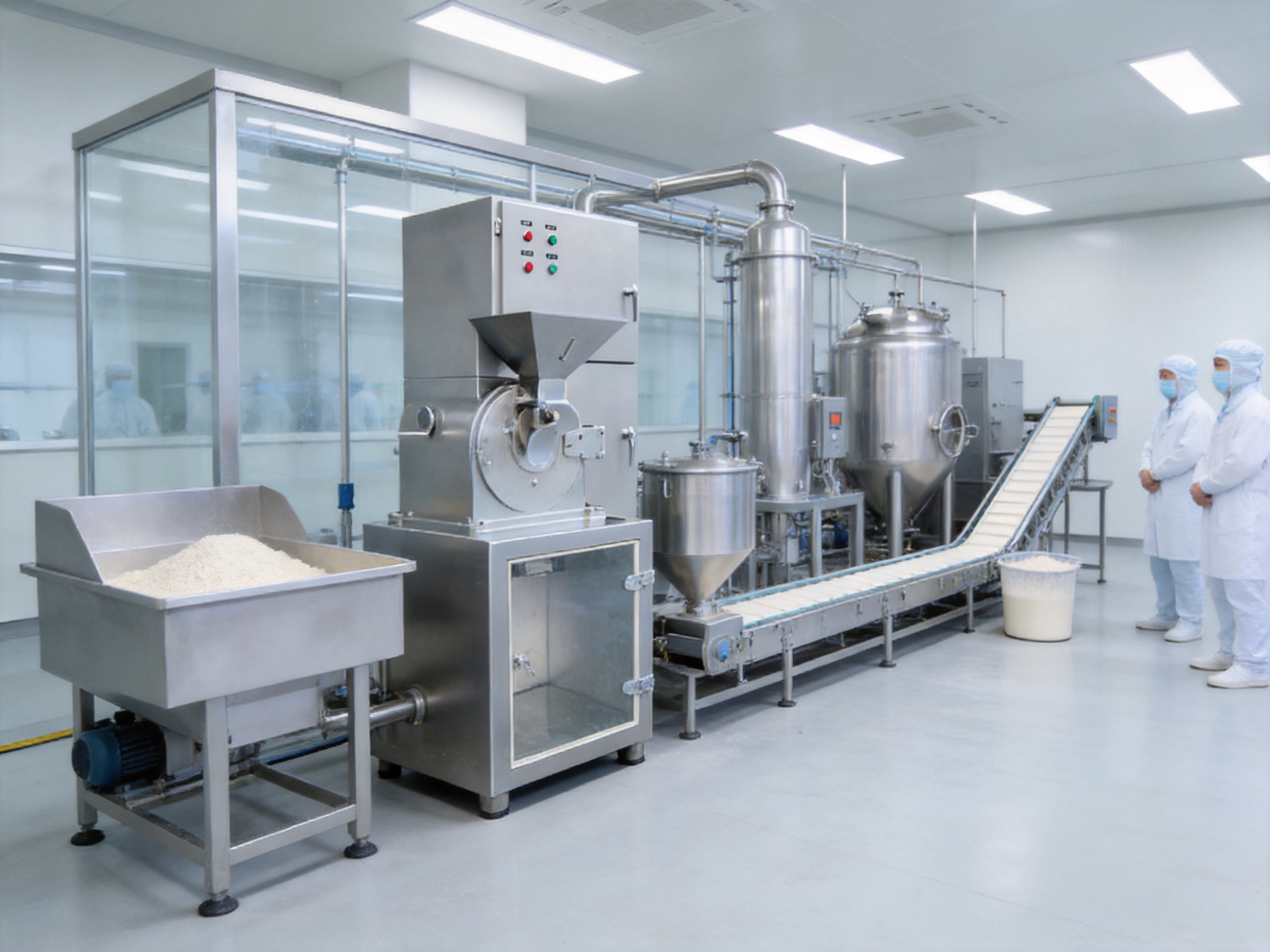
In pharmaceutical production, the 30B machine may be used to reduce the size of suitable dry raw materials, intermediate products, or recovered material that requires controlled pulverization. A finer and more uniform powder can support later blending, granulation, tablet compression, capsule filling, or other dosage-form operations.
The machine’s stainless-steel material-contact surfaces and dust-collection function are particularly relevant to pharmaceutical environments. Operators can incorporate the crusher into cleaning and changeover procedures designed to limit product carryover. The final suitability should be confirmed through material testing and the customer’s validation program.
Food manufacturers may use dry crushing equipment to prepare ingredients, powdered additives, spices, plant-based materials, or other suitable products. Particle size can influence mixing uniformity, hydration behavior, mouthfeel, dissolution, and product appearance.
Dust collection is also important in food facilities because airborne food powder can settle on equipment and building surfaces. Good dust management supports housekeeping, reduces product loss, and can contribute to a more comfortable working area for operators.
The 30B crusher can be considered for suitable dry chemical materials that require size reduction before blending, dissolution, reaction, granulation, or packaging. The chemical compatibility of the material with the contact surfaces must be reviewed before use, especially when the product is corrosive, reactive, abrasive, or sensitive to heat.
For chemical applications, dust control may be important for both product quality and worker protection. The machine should be evaluated alongside the plant’s ventilation, containment, explosion-protection, and hazard-control requirements.
Nutraceutical and veterinary manufacturers often handle powders, botanical ingredients, mineral components, premixes, and active materials that require consistent preparation. The 30B machine can support these operations when the material is dry and appropriate for mechanical pulverization.
Because these industries may produce multiple formulations in the same facility, cleanability and product-changeover considerations are important. A stainless-steel contact design and accessible structure can help support organized cleaning procedures between batches.
Successful performance depends on more than the machine itself. The 30B crusher should be installed as part of a complete material-flow plan. The feeding area must provide a stable and suitable supply of material. The discharge area must allow the crushed product to be collected or transferred without unnecessary exposure. The dust-collection section must have sufficient clearance for inspection and cleaning.
The equipment should be positioned on a stable foundation capable of supporting its operating weight and vibration. Operators should have safe access to controls, feeding points, inspection locations, and maintenance areas. The stated dimensions are 1200 × 650 × 1650 millimeters, but customers should also consider service clearances, door openings, lifting access, and the route used to bring raw materials to the machine.
When connected to upstream equipment, the feed rate should be coordinated to avoid surges. Excessive feeding can overload the crushing chamber, reduce fineness consistency, or lower throughput. Insufficient feeding may reduce productivity and make the operating condition less stable. A controlled and repeatable feeding method is therefore important.
The discharge can be connected to a collection container, a conveying system, or a downstream process depending on the factory layout. The equipment may be integrated into a line that includes mixers, granulators, dryers, coating machines, or other auxiliary processing equipment supplied by the same manufacturer or by compatible third parties.
Regular cleaning is essential when the machine is used for different products or when fine powders are processed. The cleaning procedure should follow the customer’s internal requirements and should cover the feeding area, pulverizing chamber, discharge path, and dust-collection components.
The stainless-steel contact surfaces simplify the cleaning process by providing durable and hygienic surfaces. However, the cleaning method must still be selected according to the material. Some products may be removed through dry cleaning, while others may require controlled wet cleaning followed by complete drying. Any disassembly should be performed by trained personnel in accordance with the operating instructions.
Routine maintenance should include inspection of the crushing mechanism, drive components, fasteners, seals, electrical connections, and dust-catching system. Abnormal vibration, unusual noise, reduced capacity, or inconsistent fineness may indicate wear, incorrect feeding, material changes, or a need for inspection.
Dust-collection performance should also be monitored. If collection becomes less effective, the cause may involve accumulated powder, a blockage, a connection problem, component wear, or an operating condition outside the normal range. Keeping the dust-catching system clean and functional helps preserve both environmental performance and product recovery.
Preventive maintenance is generally more effective than waiting for a failure. A scheduled maintenance program can help reduce unplanned downtime, improve spare-parts planning, and extend the useful life of the machine. The exact schedule should be established according to operating hours, material abrasiveness, cleaning frequency, and production intensity.
The published capacity of 50 to 300 kilograms per hour should be treated as a practical reference rather than a guaranteed result for every material. Production trials are recommended before full-scale implementation, especially when the material has unusual properties or when a precise particle-size distribution is required.
Material moisture is one of the most influential factors. Excess moisture can cause sticking, blockage, reduced throughput, or inconsistent discharge. If the material is too wet, a drying stage may be needed before crushing. If the material is sensitive to heat, the operating conditions should be assessed to avoid an undesirable temperature increase.
Feed-size consistency is also important. The stated feeding size is 8 mesh, so oversized pieces may require pre-cutting, screening, or another preparation step. A controlled input size helps distribute the crushing load and can improve the stability of the final powder.
The target fineness should be defined using an appropriate test method. Mesh terminology provides a useful reference, but customers may also need to specify a particle-size distribution, percentage passing a particular sieve, or another analytical requirement. The crushing process should be verified using samples from actual production material.
Operators should introduce material gradually during startup and confirm that the dust-collection system is functioning before normal feeding begins. At shutdown, the machine should be allowed to clear residual material according to the recommended procedure before power is disconnected and cleaning starts.
Equipment used in pharmaceutical and food production must be evaluated as part of the customer’s quality system. The 30B crusher’s stainless-steel contact construction and cleanable design support GMP-oriented manufacturing, but the complete installation must also satisfy the user’s requirements for documentation, cleaning, maintenance, operation, and validation.
Important quality considerations may include material certificates, surface-finish requirements, welding quality, equipment identification, operating instructions, inspection records, and spare-parts information. Customers may also require factory testing, installation qualification support, operational qualification support, or process-performance testing depending on the project.
Dust control should be considered from both a product-quality and occupational-safety perspective. The crusher’s integrated dust-catching system helps reduce airborne powder, but the facility must still assess the characteristics of the material and determine whether additional containment or special safety measures are necessary.
For powders with combustible or explosive properties, a separate hazard assessment is essential. The machine configuration, electrical components, ventilation, grounding, detection, and protective systems must be reviewed by qualified professionals. The 30B model should not be assumed to be suitable for hazardous materials without a specific technical evaluation.
A specialized manufacturer can provide more than a catalog product. It can help connect equipment selection with the realities of formulation, production capacity, factory layout, cleaning, material transfer, and future expansion.
Changzhou Zhiyang Machinery Equipment Co., Ltd. focuses on powder processing and oral solid dosage equipment, giving it experience across the stages that commonly surround a crushing operation. This specialization can help customers develop a more coherent equipment solution rather than combining unrelated machines without sufficient process coordination.
The company’s stated values emphasize honesty, strength, quality, and specialty. These principles are relevant to industrial purchasing because equipment performance depends on accurate technical communication, realistic capacity expectations, timely service, and long-term support. A reliable supplier should identify both the capabilities and the limitations of a machine before the order is finalized.
Customers may also benefit from the company’s ability to supply laboratory, pilot, and full-scale production equipment. This can support a gradual development path in which a formulation is tested at laboratory scale, optimized at pilot scale, and then transferred to commercial production using equipment based on the same process logic.
The machine is intended for suitable dry materials used in pharmaceutical, food, chemical, nutraceutical, veterinary, additive, and related industries. Material suitability depends on hardness, moisture, stickiness, abrasiveness, temperature sensitivity, chemical compatibility, and safety characteristics. A material test should be completed before commercial use.
The published capacity is 50 to 300 kilograms per hour. Actual throughput depends on the material, feed size, moisture content, desired fineness, feeding rate, and operating conditions.
The stated crushed fineness range is 60 to 120 mesh. The precise result and particle-size distribution depend on the material and process settings. Customers requiring a defined distribution should conduct trials using production material.
Yes. The 30B model includes an integrated dust-collection unit with a dedicated 1.5-kilowatt dust-catching motor. The system captures fine particles generated during pulverization and helps maintain a cleaner operating environment.
Yes. All parts in contact with the material are made of stainless steel. This supports hygienic processing, easier cleaning, and GMP-oriented production practices.
It can be considered for suitable pharmaceutical powder-processing applications. The final selection must account for the formulation, cleaning strategy, containment requirements, validation plan, electrical standards, and applicable regulations.
Yes. It can operate as a standalone machine or be incorporated into a broader process involving mixing, granulation, drying, coating, auxiliary processing, and conveying equipment. Layout and interface requirements should be confirmed during project engineering.
The machine is intended primarily for dry materials. Wet, sticky, oily, or highly cohesive materials may cause blockage or unstable performance. Such materials require a technical review and, where appropriate, a pre-drying or conditioning stage.
The stated dimensions are 1200 × 650 × 1650 millimeters. Additional space is required for feeding, discharge, cleaning, inspection, maintenance, and safe operator access.
The crushing motor has a rated power of 5.5 kilowatts. The dust-catching system uses a separate 1.5-kilowatt motor.
Customers should provide information about the material, feed size, moisture, target fineness, required capacity, production schedule, cleaning method, facility conditions, and downstream equipment. A material trial and technical discussion can help confirm whether the 30B model matches the application.
A specialized supplier can support equipment selection, process-route planning, layout coordination, manufacturing, installation guidance, commissioning, operator training, spare-parts planning, and after-sales service. The level of support should be confirmed as part of the project agreement.
The 30B dust-collecting crushing machine offers a practical solution for manufacturers that need reliable dry pulverization combined with effective powder control. Its 50 to 300 kilograms per hour capacity range, 3,800-rpm main-shaft speed, 60 to 120 mesh crushed fineness, stainless-steel material-contact surfaces, and integrated dust-catching system make it suitable for a wide range of powder-processing applications.
Compared with a basic crusher, the 30B model provides a more complete equipment concept. It addresses not only particle-size reduction but also cleanliness, dust management, maintenance convenience, compact installation, and process integration. These advantages can be especially valuable in pharmaceutical, food, chemical, nutraceutical, and veterinary manufacturing environments.
The strength of the equipment is further supported by the manufacturer’s process-driven engineering approach, broad product portfolio, research and development activities, quality-oriented manufacturing philosophy, and experience with standalone machines, modular systems, and complete production lines. Customers can therefore evaluate the 30B crusher as part of a long-term process strategy rather than as an isolated mechanical device.
For the best result, every project should begin with a clear review of the material, desired fineness, capacity, cleaning requirements, dust-control expectations, safety conditions, and facility layout. When these factors are properly matched, the 30B dust-collecting crushing machine can help manufacturers improve powder preparation, reduce airborne dust, simplify daily operation, and build a more consistent production process.
1. Product information supplied for the 30B Dust-Collecting Crushing Machine, including operating principle, technical specifications, construction, and application range.
2. Company profile information for Changzhou Zhiyang Machinery Equipment Co., Ltd., including manufacturing scope, engineering approach, product portfolio, research and development activities, and international service capabilities.
3. Good Manufacturing Practice principles for pharmaceutical production equipment, with emphasis on hygienic design, cleanability, material compatibility, and process control.
4. General industrial guidance on dry powder handling, dust collection, equipment maintenance, and particle-size reduction.
5. General engineering principles for integrating crushing, mixing, granulation, drying, coating, and conveying equipment into powder-processing production lines.
Want to stay up to date?
Contact us via the email address below.
Don't worry about spam. We hate it too!
Mobile Client

Video Account
Phone:+86-15161130178
Tel:+86-519-88674267
Email:czzy188@163.com
Phone:+86-15161132798
Email:zy@zy-drying.com

WeChat ID

Copyright 2026 Changzhou Zhiyang Machinery Equipment Co., Ltd. All Rights Reserved  Oral Solid Dosage Equipment Manufacturer