 English
 Español
 русский
 中文简体

BGB High-Efficiency Film Coating Machine
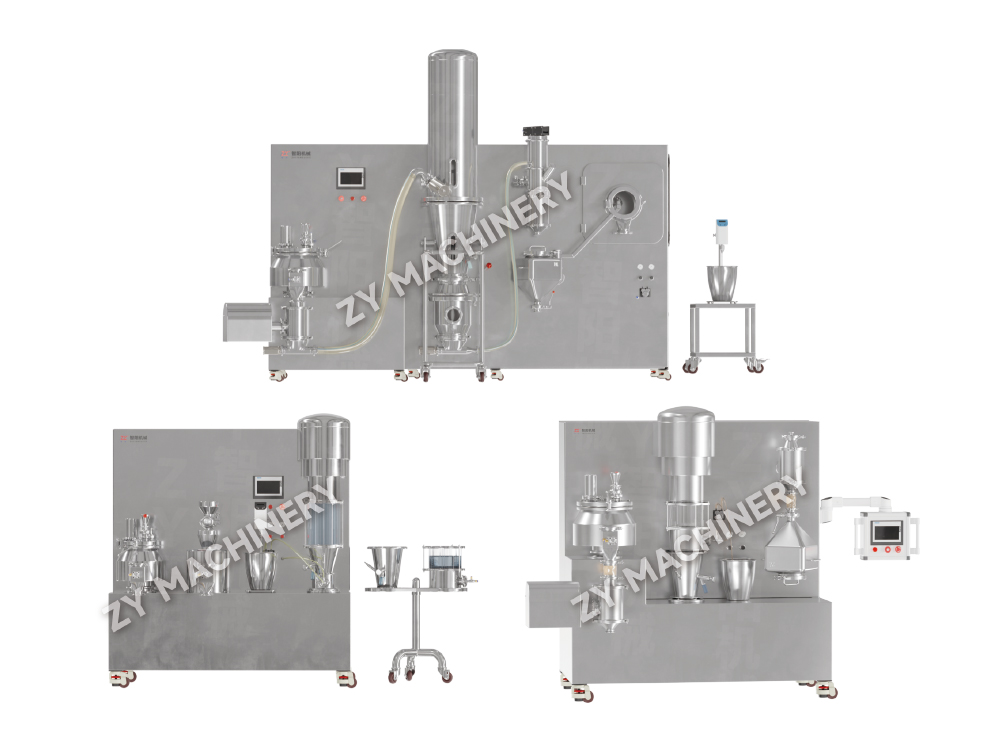
The BGB R&D High-Efficiency Coating Laboratory Machine is designed to m.....

Content
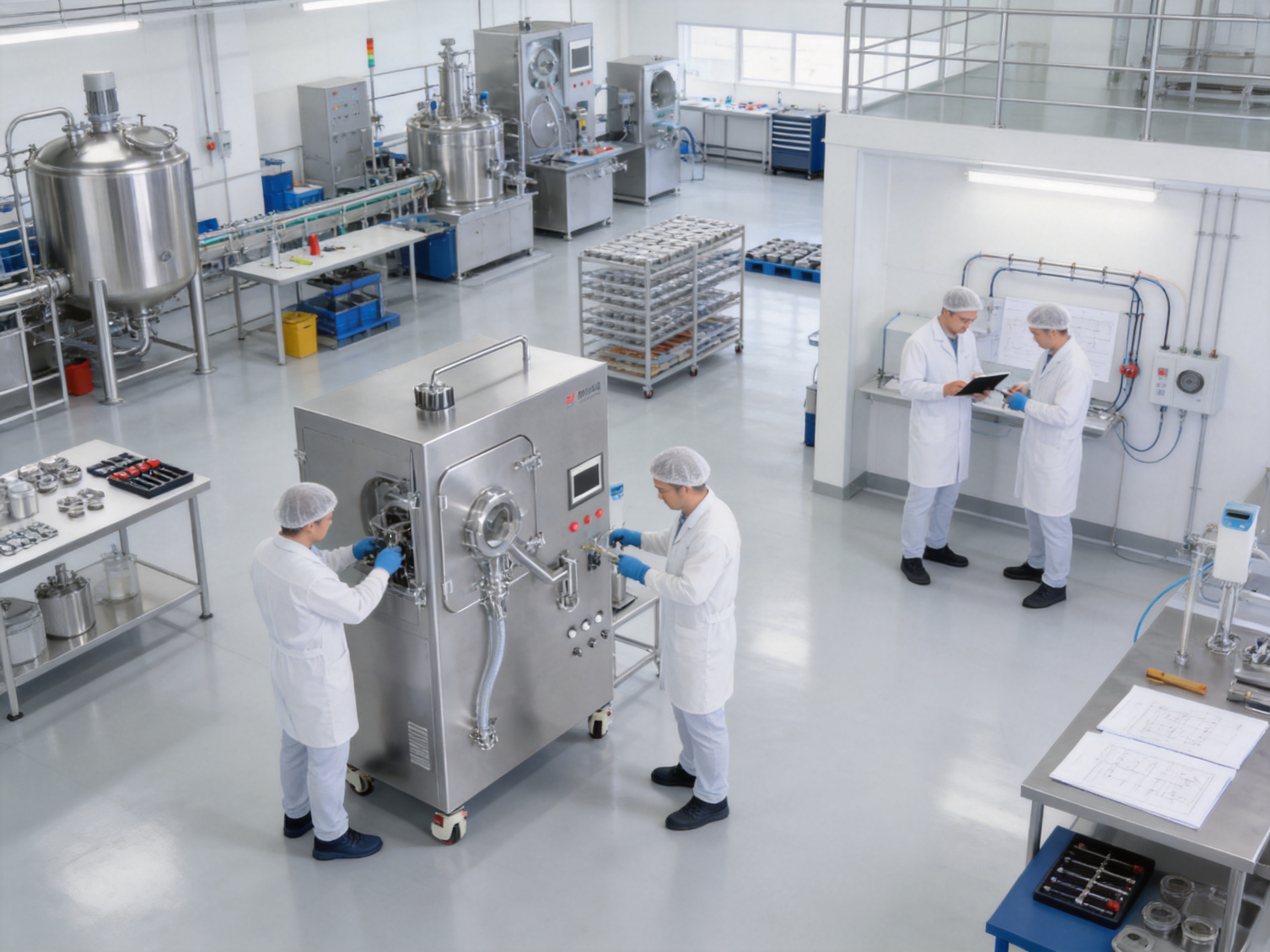
Film coating is one of the most important finishing operations in the development and manufacture of tablets, pellets, granules, candies, and other solid products. A well-designed coating process can improve appearance, protect the core material from moisture and light, mask unpleasant taste or odor, improve swallowing characteristics, and control the release of an active ingredient. At laboratory scale, however, coating development presents a particular challenge. Researchers must work with small quantities of material while still obtaining results that are uniform, repeatable, representative of larger production conditions, and suitable for later scale-up.
The BGB R&D high-efficiency film coating laboratory machine is designed for this purpose. It combines a rotating coating pan, adjustable spray technology, integrated hot-air handling, enclosed operation, and practical feeding and discharge functions in one laboratory-oriented system. The machine is suitable for pharmaceutical, food, bioproduct, nutraceutical, and related applications in which coating performance must be studied under controlled conditions.
Unlike a basic laboratory pan that may provide only rotation and manual spraying, this type of integrated system supports the complete coating cycle. Spraying, tablet movement, drying, ventilation, and process observation can be coordinated within a fully enclosed working environment. As a result, development teams can examine coating formulations and process conditions more efficiently while reducing unnecessary transfers and handling steps.
Film coating is not simply a cosmetic operation. It is a controlled mass-transfer and drying process that affects the physical, chemical, and performance characteristics of the finished product. During coating, a liquid formulation is atomized into droplets, transported toward the moving bed of cores, deposited on the surfaces, spread across the substrate, and dried by a controlled air stream. The final quality depends on the relationship between spray rate, droplet size, tablet movement, inlet-air conditions, exhaust performance, and formulation properties.
At the research and development stage, these relationships must be understood before a formula is transferred to pilot or commercial equipment. A laboratory machine therefore needs to provide more than a small container and a spray nozzle. It should allow operators to adjust and observe important variables, repeat experiments with reasonable consistency, and collect information that can guide future process design.
The system described here is intended for coating tablets, pellets, candies, and other solid dosage forms. It can be used with organic film coatings, water-soluble coatings, and conventional sugar-coating processes, depending on the selected formulation, spray configuration, operating conditions, and facility requirements. It is also suitable for controlled-release and sustained-release development work where the coating layer contributes directly to the release profile.
Laboratory-scale coating equipment is especially valuable when a development team is comparing polymers, plasticizers, pigments, anti-tacking agents, solvents, or process temperatures. A relatively small batch can be used to evaluate several formulations without consuming large quantities of active material. This reduces development cost and helps researchers identify unsuitable options before moving to larger equipment.
Before operation, core tablets or pellets are loaded into the selected rotating pan. The pan is enclosed, and the product bed is brought into motion as the drum rotates. The movement creates repeated lifting, rolling, cascading, and mixing actions. These complex motion paths expose different areas of the cores to the spray zone and help distribute the coating liquid across the product surface.
The coating solution or suspension is delivered to adjustable spray guns. The guns atomize the liquid into fine droplets and direct the spray toward the moving bed. Spray-gun position and angle can be adjusted to influence the coverage area, deposition pattern, coating thickness, and interaction between the spray zone and the product movement.
At the same time, filtered and heated air is supplied through the integrated air cabinet. The clean hot air passes across the tablet bed and removes solvent or water from the deposited coating. Exhaust air and mild negative pressure help maintain the intended airflow direction. The combined action of atomization, mechanical mixing, and controlled drying gradually builds a uniform film layer.
The process can continue as a coordinated cycle of spraying, drying, and ventilation. This is important because coating quality is often affected by the balance between wetting and drying. Excessive wetting may cause sticking, picking, twinning, roughness, or agglomeration. Excessive drying may produce poor spreading, spray-dried particles, weak adhesion, or an uneven surface. A machine that integrates air handling and spray control allows the operator to adjust the process more systematically.
After the target coating weight gain or visual endpoint has been reached, spraying is stopped and drying may continue as required. The finished material can then be discharged through the designated handling system. The enclosed design helps reduce exposure to the surrounding environment during the coating cycle and supports more controlled product handling.
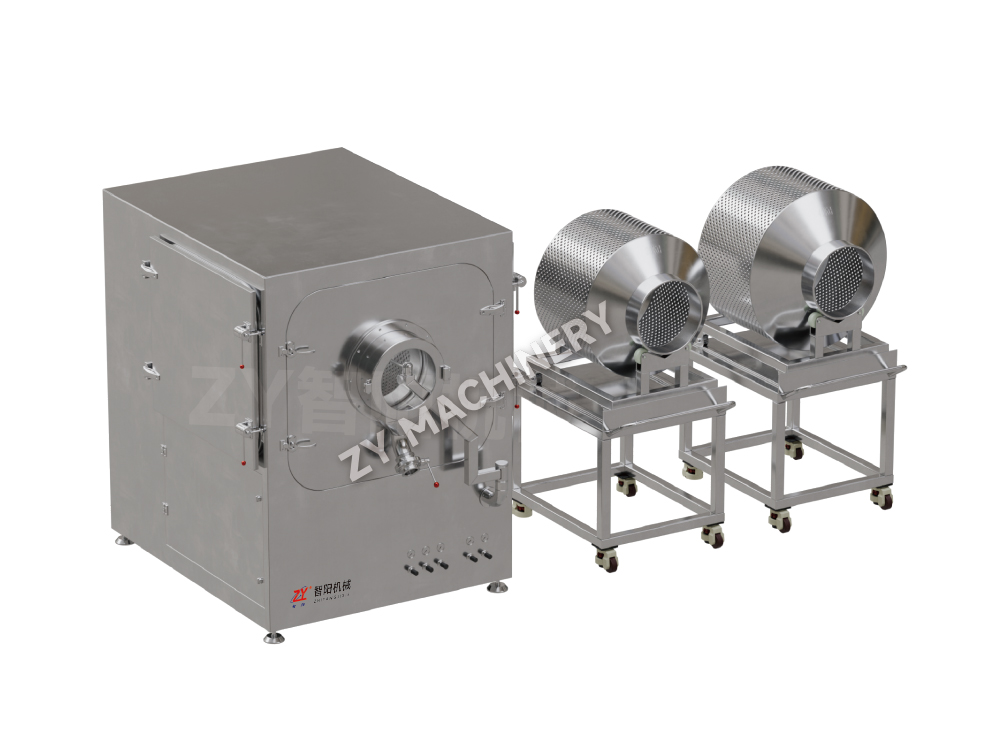
A notable feature of the system is the ability to equip one main machine with multiple coating pans of different volumes. The available pan capacities allow the same platform to serve different batch sizes and development tasks. This arrangement is useful for laboratories that work with very small experimental batches as well as pilot-scale quantities.
Using one main unit with interchangeable pans can reduce the need to purchase several separate coating machines. It can also simplify operator training, maintenance planning, and process documentation because the main operating concept remains consistent between batches. Researchers can select an appropriate pan according to the material quantity, expected coating load, and purpose of the experiment.
Multiple pan options also support a more gradual scale-up strategy. A formulation may first be assessed with a small load, then repeated with a larger pan or batch size once the basic coating behavior has been confirmed. Although every scale-up requires technical evaluation, a flexible platform makes it easier to compare process conditions and identify variables that may change as the batch size increases.
The spray gun is one of the most influential components in a film-coating process. Its distance from the bed, angle relative to the product surface, and position within the pan can affect droplet travel, spray coverage, wetting intensity, and coating distribution. The adjustable spray-gun arrangement allows operators to optimize these conditions for different tablet shapes, pellet sizes, coating formulations, and process objectives.
Adjustment capability is particularly useful during formulation development. A formulation that performs well with one spray pattern may require a different position or angle when the viscosity, solids content, or atomization behavior changes. The ability to make controlled mechanical adjustments gives researchers another tool for improving coating uniformity without immediately changing the formulation.
Careful spray-gun adjustment can also help reduce overspray and minimize the amount of coating solution that reaches the pan wall or other non-product surfaces. Better targeting may improve material utilization and help maintain a more stable coating environment. The exact operating point must be established through trials, but the machine provides the flexibility needed for those trials.
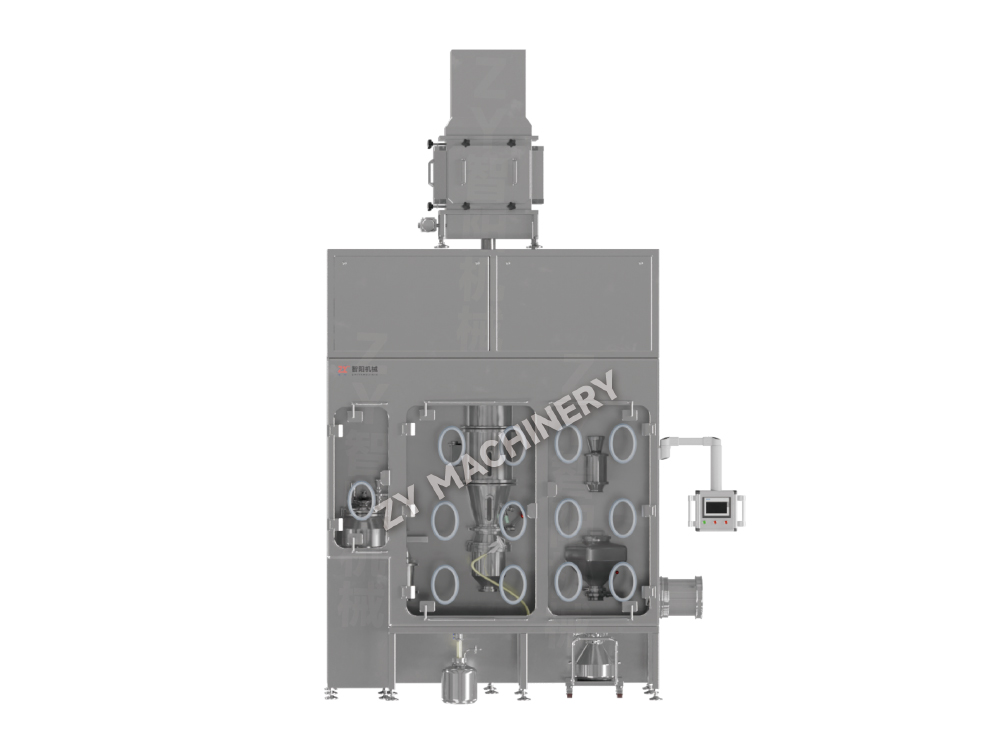
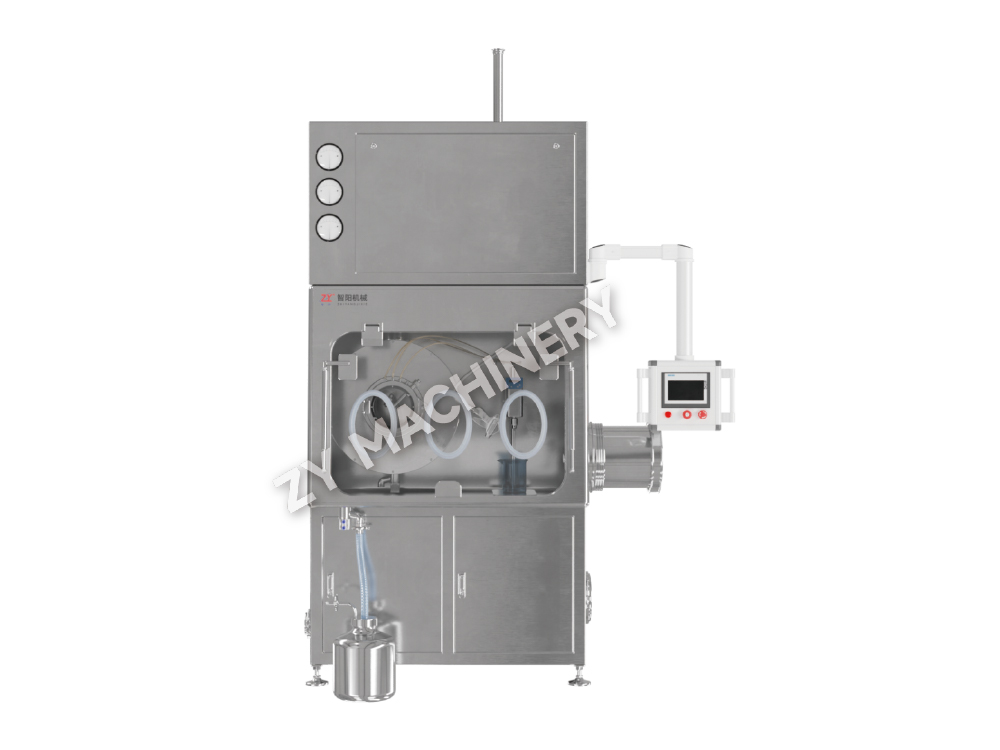
The coating area is designed as a clean, fully enclosed working environment. Mild negative pressure helps control the direction of air movement and reduces the likelihood of unfiltered air entering the process zone. This is valuable when product cleanliness, operator protection, and cross-contamination control are important considerations.
Enclosure also provides a more stable process environment than an open laboratory pan. It helps limit the effect of room air movement, reduces uncontrolled solvent or moisture release into the work area, and offers a more consistent setting for observing process behavior. For pharmaceutical and bioproduct development, these characteristics support more disciplined process handling.
The enclosed structure can be particularly beneficial when working with colored coatings, fine powders, organic solvents, or materials that require careful containment. Actual facility requirements depend on the formulation and the applicable safety systems, but the machine’s enclosed architecture provides a suitable foundation for controlled laboratory processing.
Drying performance is central to film-coating quality. The integrated air cabinet supplies filtered hot air to the coating area, helping remove water or solvent from the wet film. The specified hot-air range extends from normal temperature to 80 degrees Celsius, allowing the operator to select conditions appropriate to the product and coating system.
The air system supports continuous operation in which spraying and drying take place within the same enclosed pan. This arrangement reduces the need to transfer wet material between separate vessels. It also helps maintain a consistent process sequence, which is valuable when the material is sensitive to handling, moisture, or temperature changes.
Drying efficiency depends on more than inlet temperature. Air volume, product movement, spray rate, droplet size, coating solids, solvent characteristics, pan loading, and exhaust conditions all influence the final result. The laboratory machine gives development personnel a controlled platform for studying these variables together rather than treating drying as an isolated step.
The system uses specially designed spray guns intended to improve coating uniformity and process quality. Effective spray guns should generate a consistent atomization pattern and provide a stable delivery of coating liquid. Consistency in droplet formation helps reduce local over-wetting and under-wetting within the moving product bed.
Spray-gun performance is especially important when the batch is small. In a small laboratory load, a poorly controlled spray pattern can affect a significant percentage of the product. A suitable spray arrangement helps operators distribute the coating solution across the available bed while maintaining a manageable drying load.
Spray-gun selection and setup should always be matched to the formulation. Water-based and organic coating systems may behave differently, and suspension coatings may require additional attention to agitation and nozzle condition. The machine’s adjustable configuration allows the development team to establish a practical combination of nozzle arrangement, atomization pressure, spray rate, and gun position.
Automatic feeding and discharge functions simplify material handling during laboratory and pilot operations. Manual loading and unloading can introduce variability, increase operator contact with the product, and make the process more time-consuming. A more organized handling arrangement allows the operator to focus on process parameters and product evaluation.
Feeding and discharge functions are also helpful when the machine is used repeatedly for formulation screening. Reduced handling time can improve laboratory productivity, particularly when several batches must be processed in one working day. At the same time, the operator should follow appropriate procedures for verifying batch identity, checking equipment cleanliness, and preventing material mix-ups.
Cleaning is an essential part of pharmaceutical and food-process equipment operation. Residual coating liquid can harden on internal surfaces, spray guns, pan components, or air-contact areas if it is not removed promptly. The design of this laboratory coating machine emphasizes convenient and rapid cleaning, supporting shorter changeover times between development batches.
Cleaning convenience is also important when a laboratory works with multiple colors, polymers, active ingredients, or coating chemistries. A machine that is easier to access and clean can reduce the risk of carryover and help maintain a more consistent development environment. Cleaning procedures should be established according to the formulation, solvent system, material compatibility, and facility quality requirements.
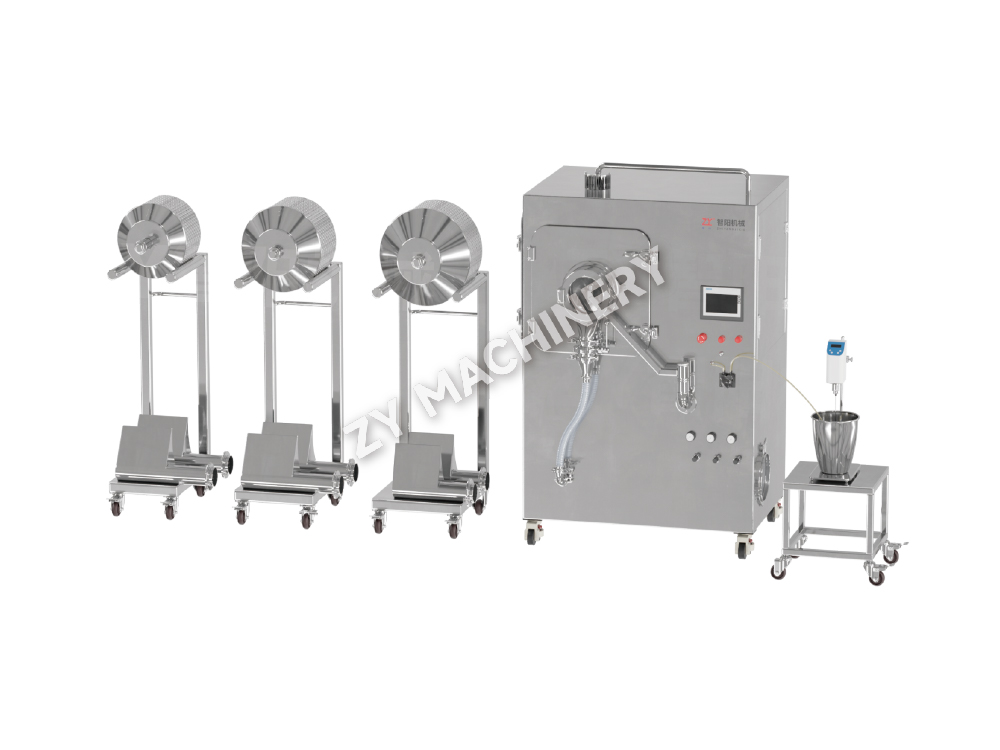
BGB R&D High-Efficiency Film Coating Lab Machine
Many laboratory coating approaches can produce a coated sample, but not all provide the same level of process control. A basic open pan may be adequate for introductory demonstrations or simple cosmetic experiments, yet it may offer limited control over air cleanliness, drying conditions, spray positioning, and containment. The integrated laboratory machine provides a more complete platform for professional formulation and process development.
One advantage is the combination of spraying, drying, and ventilation in a single enclosed unit. With a less integrated arrangement, operators may need to transfer material between a spray vessel and a separate drying area. These transfers can increase handling time and expose the product to uncontrolled environmental conditions. The integrated arrangement helps maintain a continuous process path.
A second advantage is the ability to work with multiple pan volumes on one main unit. Laboratories often have changing batch requirements. A fixed-capacity machine may be inefficient when the experimental load is smaller or larger than its preferred operating range. Multiple pan options make the equipment more adaptable and can improve the return on investment for laboratories with diverse development programs.
A third advantage is the adjustable spray-gun geometry. Equipment with fixed spray positions may limit the operator’s ability to correct uneven coverage or adapt to different product shapes. Adjustable guns provide more opportunities to optimize spray distribution and reduce coating defects during development.
A fourth advantage is controlled air handling. Open systems can be more sensitive to room temperature, humidity, air currents, and operator technique. The integrated air cabinet and enclosed process zone provide a more structured environment for evaluating coating behavior. This does not eliminate the need for environmental monitoring, but it can reduce unnecessary variability.
A fifth advantage is suitability for formulation testing, pilot production, and GMP-oriented development. The machine is not limited to one type of coating material or one product category. Its application range includes organic films, water-soluble films, sugar coatings, tablets, pellets, candies, and other solid forms. This versatility is valuable to contract manufacturers, pharmaceutical development laboratories, universities, and in-house product teams.
Compared with equipment designed only for large-scale commercial production, the laboratory-oriented system can also provide a more practical entry point for early development. Large machines may require substantial material quantities and utility capacity. A laboratory platform allows researchers to obtain meaningful process information with smaller batches before committing resources to pilot or full-scale trials.
For immediate-release tablets, coating may be used to improve appearance, reduce dust, protect the core, mask taste, or improve swallowing. The laboratory machine allows developers to compare different film-forming polymers, pigments, plasticizers, and coating levels. Researchers can examine surface smoothness, color uniformity, adhesion, disintegration behavior, and stability after coating.
The coating process must be balanced so that the film provides the desired protection without delaying disintegration beyond the product specification. A controlled laboratory system helps the team investigate this balance using small, manageable batches.
In controlled-release products, the coating may act as a functional barrier that regulates the movement of liquid into the dosage form or the movement of active ingredient out of it. Small differences in film thickness, porosity, composition, or curing conditions can affect the release profile. Laboratory coating trials are therefore essential for identifying a robust formulation and a repeatable process window.
The adjustable spray system and controlled drying environment support systematic studies of coating weight gain, spray rate, pan speed, drying temperature, and air conditions. The resulting samples can be evaluated through dissolution testing and other analytical methods. The machine does not replace formulation science or analytical testing, but it provides the process platform needed to create representative samples.
Pellets and multiparticulates require effective mixing and uniform exposure because each individual unit must receive an appropriate coating layer. The complex motion created in the rotating pan helps bring different surfaces into the spray zone. The selected pan size and operating conditions should be matched to pellet quantity, density, flowability, and friability.
Pellet coating can be used for taste masking, enteric protection, controlled release, or separation of incompatible ingredients. The laboratory machine provides a suitable environment for testing these applications before larger-scale production.
In the food and confectionery sectors, coating may be applied to candies, confectionery centers, nutritional products, and other solid pieces. The process can improve visual appeal, provide a protective layer, or deliver a functional ingredient. Water-soluble and sugar-based coating systems can be evaluated in the enclosed rotating pan with controlled drying.
Bioproduct and nutraceutical developers may also use laboratory coating to protect sensitive ingredients, improve handling, or create a more convenient dosage form. Temperature selection is particularly important for heat-sensitive materials, so the ability to operate within a controlled hot-air range is useful during development.
The following specifications summarize the principal model and utility information supplied for the equipment. Pan capacity and batch range depend on the selected model and configuration. Final technical details should be confirmed with the manufacturer before ordering, especially for a specific formulation, utility standard, or facility layout.
| Item | Unit | BGB-I | BGB-II | BGB-III | GHL-IV |
| Maximum load | L | 0.5/1/2 | 1/3/5 | 5/10/15 | 10/20/30 |
| Capacity | kg per batch | 0.2–1.5 | 0.5–5 | 3–15 | 5–30 |
| Drum speed | rpm | 3–20 | 3–20 | 3–20 | 3–20 |
| Total power | kW | 1.35 | 1.4 | 2.4 | 3.35 |
| Electrical heater power | kW | 2 | 4.5 | 4.5 | 9 |
| Hot-air range | °C | Normal temperature to 80 | Normal temperature to 80 | Normal temperature to 80 | Normal temperature to 80 |
| Compressed-air consumption | m³/h | 0.6 | 0.6 | 0.6 | 0.6 |
| Compressed-air pressure | MPa | 0.4–0.6 | 0.4–0.6 | 0.4–0.6 | 0.4–0.6 |
| Machine weight | kg | 480 | 815 | 960 | 1,230 |
The model range covers laboratory and pilot-oriented batch requirements from approximately 0.2 kilograms up to 30 kilograms per batch, depending on the selected configuration and material characteristics. The drum-speed range of 3 to 20 revolutions per minute gives the operator an adjustable basis for studying product movement. Actual operating speed should be selected according to dosage-form strength, shape, density, load level, and coating behavior.
The compressed-air requirement is listed at 0.6 cubic meters per hour, with a pressure range of 0.4 to 0.6 MPa. These requirements should be checked against the site utility system. Air quality, filtration, dryness, and pressure stability may also influence spray performance and should be managed in accordance with the formulation and facility standards.
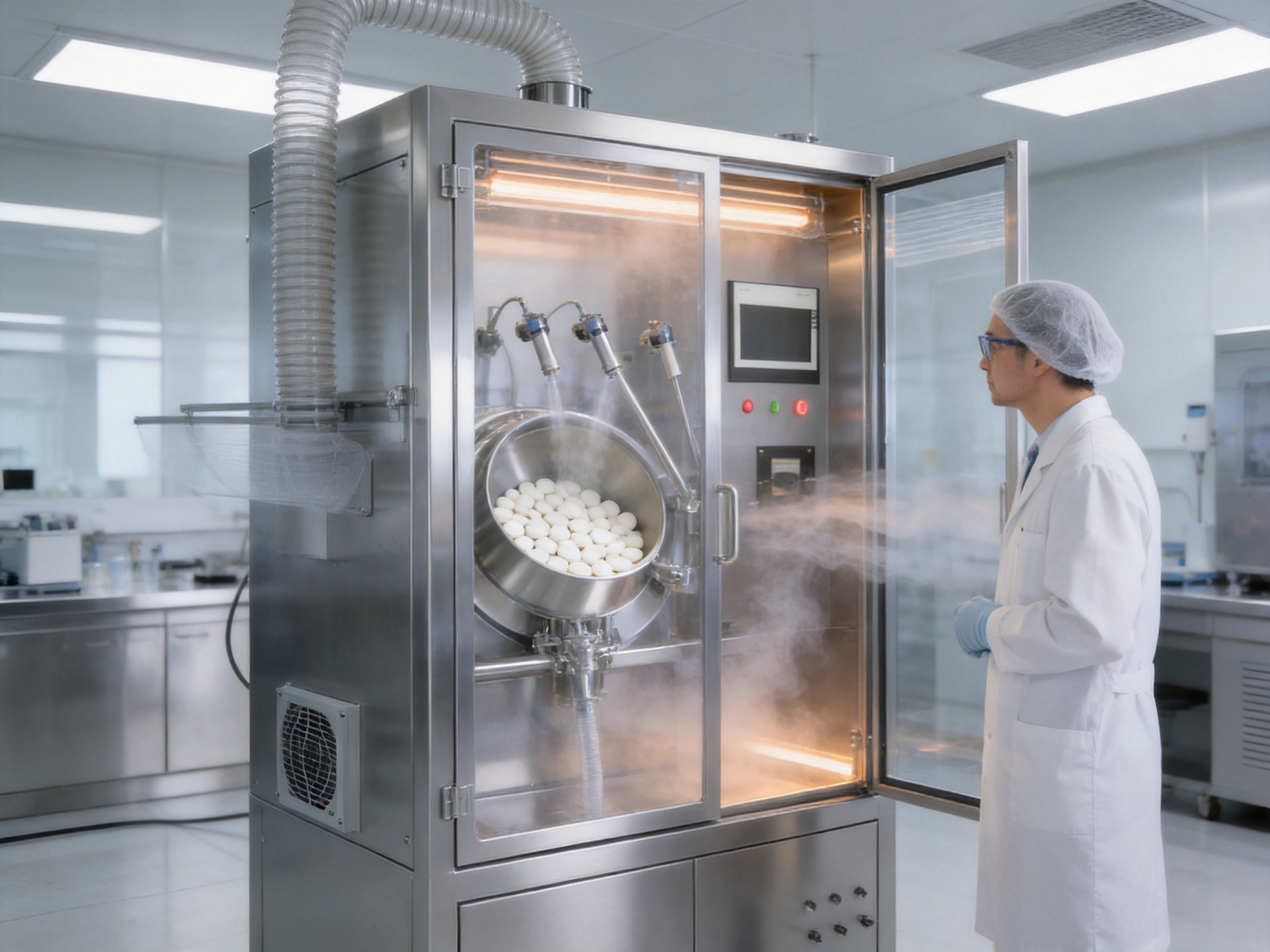
Pan selection should be based on more than the nominal capacity of the equipment. The physical properties of the cores, the required mixing behavior, the spray-zone coverage, and the target batch size all matter. A load that is too small may not form an effective moving bed, while an excessive load may reduce mixing quality and make it difficult for the spray to reach all product surfaces.
For early experiments, it is often useful to begin with a conservative load and establish basic spray and drying behavior. The process can then be expanded as the development team gains confidence. The availability of multiple pan volumes supports this staged approach.
Spray rate should be coordinated with the drying capability of the system. If liquid is applied faster than it can be dried, the product bed may become excessively wet. If the rate is too low, the process may become unnecessarily long and the deposited droplets may dry before spreading adequately across the surface.
Atomization pressure influences droplet size and spray pattern. A higher pressure may produce finer droplets, but the best setting depends on liquid viscosity, solids content, nozzle design, and the desired coating result. Operators should document spray pressure, liquid temperature, solution condition, and nozzle status during trials.
Product movement affects the frequency with which individual cores enter the spray zone. Drum speed, pan loading, product shape, and friction all contribute to the movement pattern. The listed drum-speed range provides a starting point for process optimization, but the appropriate setting must be established experimentally.
Too little movement may produce localized coating and poor mixing. Excessive movement may cause attrition, chipping, or mechanical damage to fragile tablets. A suitable process should achieve regular exposure to the spray while preserving the physical integrity of the cores.
A uniform film requires sufficient wetting for the coating liquid to spread, followed by effective drying to solidify the layer. This balance is affected by inlet-air temperature, airflow, exhaust, spray rate, droplet size, formulation solids, and solvent characteristics. Operators should evaluate not only the final appearance but also the behavior of the product during the process.
Signs of excessive wetting may include sticking, twinning, picking, tablet deformation, and agglomeration. Signs of insufficient wetting or excessively rapid drying may include roughness, poor adhesion, spray-dried deposits, and incomplete surface coverage. The integrated design enables the operator to adjust several process variables in a coordinated manner.
Coating weight gain is a common process-development measurement. It can be determined by comparing the mass of the uncoated cores with the mass of the coated product, while accounting for moisture or solvent conditions where necessary. Weight gain data should be considered together with appearance, thickness, mechanical properties, dissolution, and stability results.
For controlled-release products, weight gain alone may not be sufficient to predict performance. Coating structure, composition, porosity, curing, and product geometry can all contribute to release behavior. Nevertheless, a well-controlled laboratory coating process helps produce samples that can be compared more reliably.
The machine is supplied by Changzhou Zhiyang Machinery Equipment Co., Ltd., a China-based manufacturer specializing in powder processing and oral solid dosage equipment. Founded in 2010 and based in Changzhou, the company develops standalone machines, modular systems, and complete production lines for pharmaceutical, biopharmaceutical, biotechnology, nutraceutical, veterinary, additive, and related industries.
The company’s strength is not limited to the manufacture of an individual coating machine. Its product scope includes laboratory equipment, mixing equipment, granulation equipment, drying equipment, coating equipment, auxiliary processing equipment, and transfer and conveying systems. This broad portfolio allows the supplier to understand how a coating machine fits into an overall process rather than treating it as an isolated piece of equipment.
For customers developing a complete solid-dosage process, this integrated perspective can be valuable. Coating may need to be coordinated with powder handling, mixing, wet or dry granulation, drying, tablet production, conveying, intermediate storage, and packaging. A supplier familiar with several of these operations can help customers consider material flow, equipment compatibility, capacity balance, and process continuity.
The company describes its approach as process-driven. Solutions are designed according to material characteristics, capacity requirements, and site conditions. This is important because coating performance can vary significantly between products. Tablet hardness, friability, density, shape, surface texture, pellet size, and formulation rheology all influence the equipment configuration and process settings.
Rather than supplying machinery without process context, the manufacturer aims to provide practical process routes and engineering implementation plans. This can include consideration of the required batch size, coating method, air-handling arrangement, spray configuration, utility conditions, cleaning expectations, and integration with upstream or downstream equipment.
The manufacturer has continued to expand its product portfolio and strengthen its research and development capabilities. Its development activities include patented technologies, quality-system certification, and improvements intended to support reliable equipment performance. For laboratory customers, ongoing product development is important because research equipment must adapt to changing formulation strategies and increasingly demanding quality expectations.
A supplier with experience across powder processing and oral solid dosage applications can also draw on knowledge from related equipment categories. Mixing, granulation, drying, coating, and conveying are interconnected operations. Understanding these relationships helps inform decisions about feeding consistency, moisture control, particle handling, and product transfer.
Advanced manufacturing is not only a matter of individual components. It includes engineering design, fabrication accuracy, assembly quality, electrical integration, air-system coordination, inspection, testing, and documentation. For a coating machine, these elements affect the stability of drum rotation, the consistency of spray-gun positioning, the effectiveness of enclosure and air handling, and the convenience of cleaning.
The manufacturer’s emphasis on engineering implementation is relevant to customers with specific site conditions. Laboratory layouts may have limitations involving floor space, access routes, ventilation, compressed air, electrical supply, or operator workflow. A practical equipment solution must account for these conditions before installation rather than relying solely on a standard catalog configuration.
The company also reports overseas service capabilities and equipment deliveries to customers in multiple countries and regions. International experience can help a supplier understand the importance of documentation, communication, installation coordination, training, spare parts, and after-sales response. These factors contribute to the overall value of laboratory equipment throughout its service life.
The company’s stated values include honesty, strength, quality, specialization, customer reputation, responsive service, research and development, and innovation. In practical terms, customers should expect these values to be reflected in technical consultation, configuration review, operating guidance, documentation, commissioning support, and problem-solving after delivery.
For a laboratory coating machine, service quality can influence the speed at which a development team reaches a stable process. Operators may need assistance with pan selection, spray-gun arrangement, air settings, cleaning procedures, or the interpretation of process results. Responsive technical communication can prevent avoidable delays and help the customer use the equipment more effectively.
The machine is intended for laboratory-scale research, pilot production, and formulation testing under GMP-compliant conditions. GMP compliance is not created by the machine alone; it depends on the complete facility, documented procedures, validated methods, trained personnel, material controls, cleaning systems, and quality-management structure. However, equipment design can support these requirements.
Enclosed operation, controlled air supply, organized product handling, adjustable process parameters, and convenient cleaning are all useful features in a GMP-oriented development environment. The laboratory team should establish standard operating procedures covering loading, pre-use inspection, line clearance, spray preparation, operation, sampling, discharge, cleaning, maintenance, and batch-record completion.
For products involving organic solvents or other hazardous materials, the site must provide appropriate ventilation, solvent management, electrical protection, fire-safety measures, and risk controls. The machine should be evaluated in the context of the complete installation and the specific coating formulation.
Routine maintenance should include inspection of the rotating pan, drive components, spray guns, hoses, filters, air cabinet, seals, control elements, and discharge components. Spray nozzles should be checked for blockage, wear, or changes in the atomization pattern. Air filters should be replaced or serviced according to operating conditions and facility procedures.
Cleaning frequency depends on the material being processed and the required changeover standard. Water-soluble coatings may require a different cleaning approach from organic or polymer-rich coatings. Any cleaning agent must be compatible with the equipment materials and should be removed completely before the next batch.
Preventive maintenance helps preserve process consistency. A change in drum speed, spray pressure, airflow, or temperature response can affect coating performance even when the formulation has not changed. Regular checks and documented maintenance provide a stronger basis for comparing development batches over time.
Reliable equipment also contributes to the laboratory’s operating efficiency. Unplanned downtime can interrupt formulation studies, delay analytical testing, and increase the cost of scarce active materials. A machine designed for practical cleaning, accessible service, and repeatable operation can help reduce these disruptions.
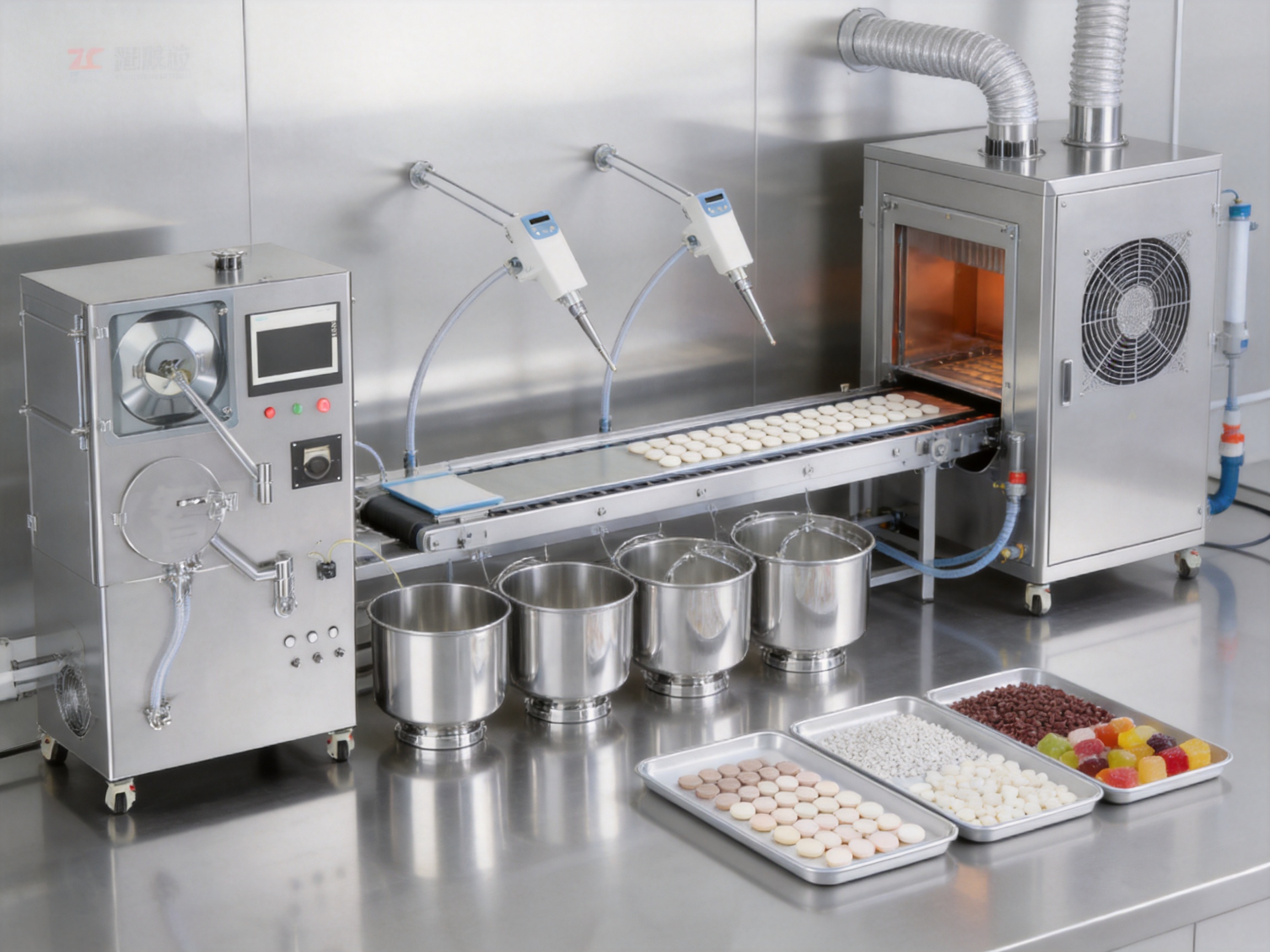
Prospective users should begin by defining the product range and development objectives. Important questions include the smallest and largest expected batch, the type of cores to be coated, the coating formulations to be used, whether organic solvents are involved, the desired level of automation, and the required cleaning standard.
The expected scale-up route should also be considered. If a laboratory machine will be used to prepare samples for pilot or commercial production, the development team should identify the process parameters that need to be transferred or correlated. Pan geometry, spray arrangement, air handling, product movement, and drying conditions may not scale directly, so early documentation is valuable.
Utility requirements should be checked carefully. The listed compressed-air pressure is 0.4 to 0.6 MPa, and the specified consumption is 0.6 cubic meters per hour. Electrical power, heater capacity, hot-air temperature, exhaust arrangements, room ventilation, and available floor space should be confirmed with the supplier.
Customers should also review the intended documentation package. Depending on the project, this may include equipment drawings, operating instructions, electrical information, material certificates, inspection records, cleaning guidance, spare-parts lists, and commissioning documents. The required package may vary by facility and regulatory environment.
Finally, a technical discussion with the supplier should address the actual formulation and product geometry. A coating machine that is appropriate for robust round tablets may require different settings or accessories for fragile tablets, low-density pellets, irregular shapes, or high-viscosity suspensions. Configuration should be based on the process, not only on the nominal batch capacity.
The machine is designed for tablets, pellets, candies, and other solid dosage forms. It can support organic film coatings, water-soluble films, and standard sugar coatings, subject to the formulation, facility conditions, and selected operating configuration.
Yes. The system is suitable for development work involving controlled or sustained drug release. Researchers can study coating formulation, coating weight gain, spray conditions, drying parameters, and product movement. Release performance must be confirmed through appropriate analytical and dissolution testing.
An enclosed pan helps provide a more controlled process environment. It can reduce exposure to room air, support mild negative pressure, improve containment, and help protect the product from environmental contamination. It also supports coordinated spraying, drying, and ventilation within the same process area.
Multiple pan options allow the same machine platform to accommodate different materials and batch sizes. This can reduce the need for several separate machines and support a gradual development path from small laboratory trials to larger pilot-oriented batches.
Yes. The spray-gun position and angle are adjustable. This allows operators to optimize spray coverage, coating distribution, and layer uniformity for different products and coating formulations.
The listed drum-speed range is 3 to 20 revolutions per minute. The appropriate speed depends on the product’s shape, strength, density, load, and movement characteristics. Process trials are needed to establish the best operating point.
The listed hot-air range extends from normal temperature to 80 degrees Celsius. The selected temperature should be appropriate for the coating solvent, product stability, tablet core, and required drying behavior.
Yes. The listed compressed-air consumption is 0.6 cubic meters per hour, and the pressure range is 0.4 to 0.6 MPa. The site should provide suitable air quality and stable pressure in accordance with the process and facility requirements.
The machine is intended for laboratory R&D, pilot production, and formulation testing under GMP-compliant conditions. GMP suitability depends on the entire installation, including facility design, procedures, cleaning controls, documentation, utilities, personnel training, and quality systems.
The integrated machine provides a more controlled arrangement for spraying, drying, ventilation, product movement, and containment. Compared with a simple open pan, it can offer better process organization, adjustable spray positioning, cleaner air handling, and more consistent development conditions.
The supplier manufactures equipment for mixing, granulation, drying, coating, conveying, and auxiliary processing. This broader product scope can support discussions about integrating the coating machine into a laboratory, pilot, or larger solid-dosage process line.
Customers should confirm batch range, pan configuration, product type, formulation characteristics, spray requirements, utility conditions, electrical standards, cleaning expectations, safety requirements, documentation, installation space, and any special GMP or validation needs.
The BGB R&D high-efficiency film coating laboratory machine provides a comprehensive platform for developing coated tablets, pellets, candies, and other solid products. Its principal advantages include multiple interchangeable pan volumes, adjustable spray-gun position and angle, enclosed operation under mild negative pressure, integrated filtered hot-air drying, continuous spraying and ventilation, automatic feeding and discharge, specially designed spray guns, and convenient cleaning.
These features make the machine more than a small coating vessel. It is a coordinated laboratory process system intended to help researchers investigate formulation behavior, coating uniformity, drying performance, controlled release, and scale-up conditions. Compared with less integrated equipment, it offers a more structured environment for repeatable development work and more efficient handling of experimental batches.
The supplier’s wider manufacturing capabilities also strengthen the equipment’s value. Changzhou Zhiyang Machinery Equipment Co., Ltd. provides powder-processing and oral-solid-dosage machinery across mixing, granulation, drying, coating, conveying, and auxiliary operations. Its process-driven engineering approach, R&D focus, manufacturing experience, product range, and overseas service capabilities enable it to support both standalone equipment projects and broader production-line requirements.
For pharmaceutical, biopharmaceutical, nutraceutical, food, confectionery, and related manufacturers, the machine can serve as a practical link between formulation research and pilot production. When properly configured, operated, cleaned, and documented, it helps development teams produce meaningful coating data with controlled material usage and a clear path toward future process improvement.
1. Product information supplied for the BGB R&D high-efficiency film coating laboratory machine, including operating principle, features, models, capacities, utilities, and machine weights.
2. Changzhou Zhiyang Machinery Equipment Co., Ltd. company information regarding powder processing, oral solid dosage equipment, process integration, research and development, manufacturing, and overseas service capabilities.
3. General principles of pharmaceutical tablet and pellet film coating, including spray atomization, product movement, drying, coating weight gain, and controlled-release development.
4. Good manufacturing practice principles for pharmaceutical equipment design, cleaning, process control, documentation, and laboratory-to-production scale-up.
Want to stay up to date?
Contact us via the email address below.
Don't worry about spam. We hate it too!
Mobile Client

Video Account
Phone:+86-15161130178
Tel:+86-519-88674267
Email:czzy188@163.com
Phone:+86-15161132798
Email:zy@zy-drying.com

WeChat ID

Copyright 2026 Changzhou Zhiyang Machinery Equipment Co., Ltd. All Rights Reserved  Oral Solid Dosage Equipment Manufacturer