 English
 Español
 русский
 中文简体

BGB R&D High-Efficiency Film Coating Lab Machine
The BGB R&D high-efficiency film coating lab machine is designed to mee.....

Content
Film coating is a critical operation in the production of tablets, pellets, candies, and other solid dosage forms. It can improve appearance, protect active ingredients, mask unpleasant tastes and odors, control release characteristics, and enhance the handling performance of finished products. However, achieving a consistent coating layer requires much more than simply spraying a liquid onto a moving bed of cores. The process depends on accurate air handling, controlled atomization, suitable pan movement, stable negative pressure, effective drying, and reliable cleaning and discharge procedures.
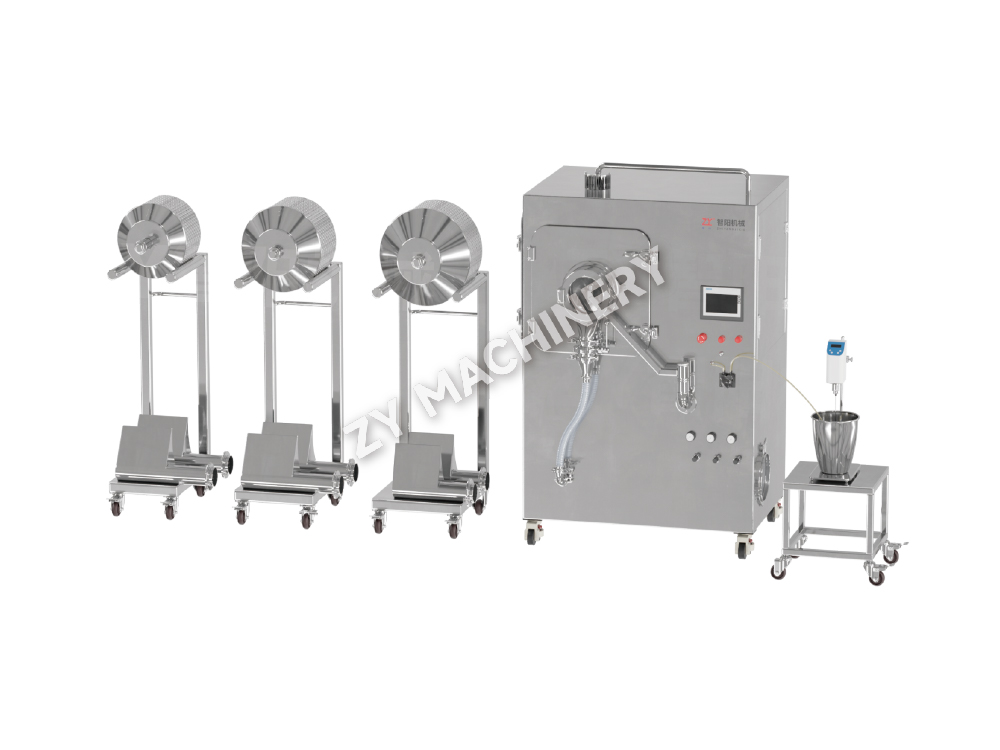
The BGB High-Efficiency Film Coating Machine is designed to address these requirements in laboratory, pilot, and production-oriented development environments. It is suitable for pharmaceutical, food, bioproduct, nutraceutical, and related applications involving organic film coatings, water-soluble films, conventional sugar coatings, and controlled-release coating systems. The equipment combines an enclosed rotating coating pan, adjustable spray technology, filtered hot-air circulation, exhaust management, and practical material-handling functions in one integrated system.
Its design is particularly valuable for manufacturers and research teams that need to evaluate formulations, scale coating processes, compare coating materials, and produce consistent coated products while maintaining a high level of process control. A key benefit is that one main machine can be used with coating pans of different capacities, allowing users to work with different batch sizes and materials without investing in a completely separate machine for every development stage.
Film coating is commonly applied after tablet compression, pellet formation, or other core manufacturing operations. During coating, a liquid formulation containing polymers, plasticizers, pigments, active ingredients, or other functional materials is atomized and distributed across the surface of moving cores. At the same time, heated and filtered air removes solvent or water from the applied layer. The repeated application and drying cycle gradually builds the desired coating thickness.
In pharmaceutical production, the coating may be used for several purposes. Immediate-release film coating can improve product appearance, swallowability, mechanical strength, and resistance to abrasion. Enteric coating can protect a formulation from the acidic environment of the stomach and promote release in the intestine. Sustained-release or controlled-release coating can regulate the movement of an active ingredient into the surrounding medium over a defined period.
In food and confectionery applications, coating can provide color, gloss, flavor protection, surface hardness, and improved shelf appearance. Bioproducts and nutraceutical products may require protective layers that reduce exposure to humidity, oxygen, light, or mechanical damage. Because these applications have different process requirements, a coating machine must offer flexible adjustment rather than relying on a single fixed operating condition.
A coating system must also protect the product from contamination. Open or poorly controlled coating operations may expose cores to airborne particles, uncontrolled humidity, and variations in room conditions. The BGB machine uses an enclosed coating environment and micro-negative pressure to help isolate the product from external contamination while supporting controlled air movement through the processing chamber.
The coating cores are placed inside a clean, fully enclosed rotating coating pan. As the pan rotates, the cores move continuously along complex trajectories. This movement promotes repeated contact between the cores, helping to expose their surfaces to the spray zone and distribute the coating liquid throughout the bed.
The coating solution is delivered to specially designed spray guns. The spray guns atomize the liquid into fine droplets and apply it to the moving cores. Their position and angle can be adjusted so that the spray pattern is matched to the pan geometry, product movement, liquid properties, and required coating rate.
At the same time, clean and filtered hot air is introduced from the hot-air cabinet. The air passes through the bed of cores and supports the rapid drying of the coating medium on the surface. The resulting air and solvent or moisture vapor are removed through the exhaust system. This combination of spraying, drying, and exhaust management allows the coating process to continue inside a single enclosed container.
The process is based on a carefully controlled balance. If the spray rate is too high compared with the drying capacity, the cores may become overwet, causing sticking, twinning, picking, or uneven coating. If drying is excessive or the spray rate is too low, the coating may dry before it spreads properly, leading to roughness, spray-drying defects, or poor uniformity. Stable pan movement, correctly positioned spray guns, appropriate air volume, and suitable temperature control are therefore essential.
The BGB system is designed to make these variables easier to manage. The adjustable spray gun arrangement supports precise application control, while the filtered hot-air system and exhaust fan help establish a repeatable drying environment. The enclosed construction supports cleaner operation and can reduce the influence of surrounding production conditions.
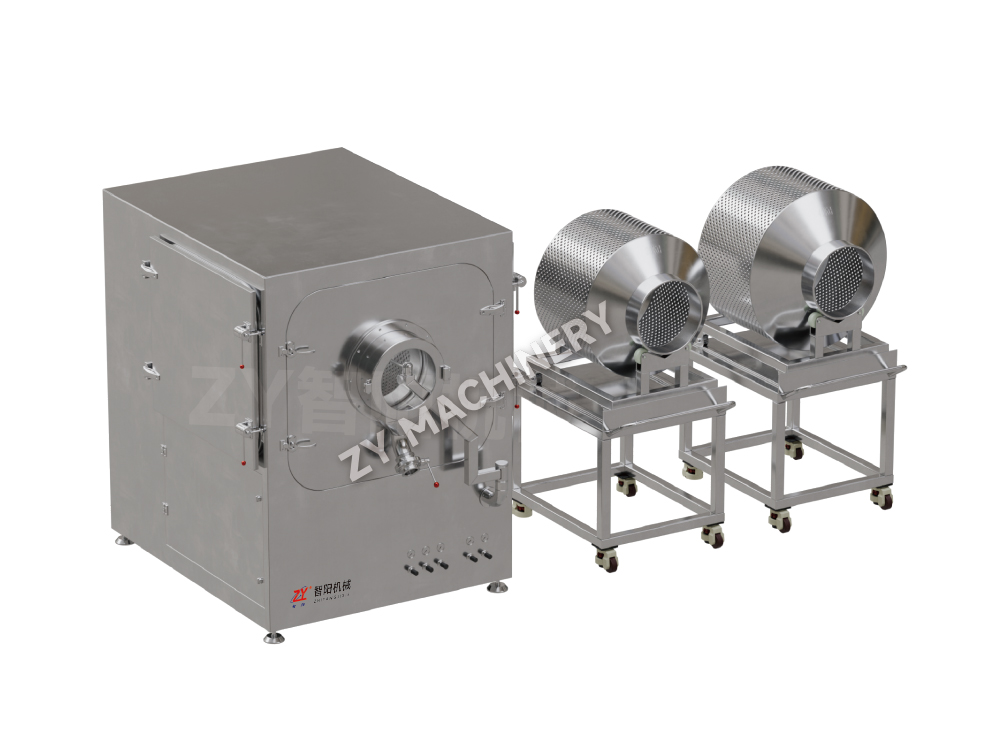
BGB High-Efficiency Film Coating Machine
One of the most important advantages of the BGB High-Efficiency Film Coating Machine is its ability to work with multiple coating pans of different capacities. A single main machine can therefore support a range of materials and batch sizes. This is especially useful in research and development, where users may process small experimental quantities during formulation screening and larger batches during pilot verification.
Using interchangeable or differently sized pans can reduce the need for multiple dedicated machines. It also helps organizations maintain a common equipment platform as a product moves from early development to process optimization. The same general coating concept can be evaluated across different batch volumes, making it easier to establish operating ranges and identify scale-related changes.
This flexibility is also valuable for contract manufacturers, universities, technical centers, and pharmaceutical companies that work with products having different core sizes, shapes, densities, and coating requirements. Instead of selecting a rigid system designed around one specific batch size, users can adapt the pan configuration to the application.
The location and orientation of a spray gun have a direct influence on coating distribution. If the spray cone is not correctly positioned, some areas of the moving bed may receive too much liquid while others receive too little. Poor positioning can increase the risk of overwetting, dry spray, surface roughness, and coating variability.
The BGB machine provides adjustable spray gun positioning and angle. This allows operators to set the spray pattern according to the shape of the pan, the trajectory of the cores, the number of guns in use, and the properties of the coating liquid. Adjustment can also help accommodate different products and coating formulations.
Precise spray control is particularly important for controlled-release coatings. In these applications, small variations in coating thickness can change dissolution behavior and affect product performance. A stable and adjustable spray arrangement gives process engineers more control over the factors that influence coating weight gain and film uniformity.
The coating chamber is designed for enclosed operation. Micro-negative pressure helps ensure that air flows into the equipment rather than allowing process air, coating vapors, or product particles to escape uncontrolled into the surrounding area. This design can support cleaner production conditions and reduce the risk of external contaminants entering the coating environment.
Enclosure is also important when using coating liquids that contain volatile solvents or produce fine aerosols. Properly managed exhaust and negative pressure can contribute to better operator protection and improved environmental control, subject to the specific solvent, facility, and ventilation requirements of each application.
For pharmaceutical and bioproduct manufacturers, a controlled enclosure can support more consistent processing. Room temperature, humidity, airborne particles, and operator movement have less direct influence on the product than in an open coating arrangement. This supports repeatability during development and production.
The BGB machine allows spraying, drying, and exhaust to take place continuously within one enclosed container. This integrated operating method reduces unnecessary transfers between equipment and supports a more efficient coating cycle. It also limits the number of times the partially coated product must be handled.
Continuous operation can improve productivity by reducing interruptions. Once the cores are loaded and the process parameters are established, the product can remain in the pan while the coating is applied and dried. Reduced handling may also lower the possibility of mechanical damage, contamination, or loss of material.
The combination of application and drying in the same chamber is especially useful for water-based and organic coating processes that require repeated, controlled deposition. The process team can adjust spraying and air handling together to achieve the desired balance between wetting and drying.
Automatic feeding and discharging reduce the physical effort required from operators and can make the overall workflow more orderly. The product is introduced into the coating system and removed after processing through designed material-handling functions rather than relying entirely on manual transfer.
Automation can support better batch-to-batch consistency because the loading and discharge procedures are less dependent on individual operator technique. It can also reduce the time required for product movement and improve the integration of the coating machine into a wider production or pilot-scale process.
Cleaning is an essential part of pharmaceutical and food processing equipment management. Residues from coating polymers, pigments, sugars, plasticizers, active ingredients, or solvents can affect subsequent batches if not removed effectively. Difficult-to-clean equipment also increases downtime and labor requirements.
The BGB design emphasizes convenient cleaning. The enclosed pan and associated process components can be cleaned as part of a planned sanitation procedure. Easy access to product-contact areas and a practical equipment arrangement help operators inspect surfaces and remove residual material.
Actual cleaning methods should be selected according to the formulation, the materials of construction, facility procedures, and applicable validation requirements. Water-soluble coatings, solvent-based coatings, sugar systems, and potent pharmaceutical materials may require different cleaning strategies.
Spray guns are among the most influential components in a coating system. Their atomization performance affects droplet size, spray distribution, wetting behavior, coating uniformity, and process stability. The BGB machine uses specially designed spray guns intended to enhance coating quality and uniformity.
A suitable spray gun can help generate a consistent spray pattern and support stable application over the moving product bed. When combined with correct liquid viscosity, spray pressure, atomization conditions, and gun positioning, the spray system can contribute to smoother films and more predictable coating weight gain.
Spray guns must still be selected and adjusted according to the coating formulation. A high-viscosity suspension, a low-viscosity aqueous solution, a pigment-containing formulation, and an organic polymer system may require different operating conditions. The machine’s adjustment capability gives process engineers a practical basis for optimizing these differences.
The BGB series is available in several models, ranging from the BGB-5 to the BGB-600. The stated capacity range is approximately 5 to 600 kilograms per batch. This broad range enables the series to serve laboratory-scale research, pilot-scale development, and larger production requirements.
| Item | BGB-5 | BGB-10 | BGB-40 | BGB-75 | BGB-150 | BGB-350 | BGB-600 |
| Capacity, kg per batch | 5 | 10 | 40 | 75 | 150 | 350 | 600 |
| Drum speed, rpm | 4–60 | 6–30 | 4–19 | 4–19 | 2–15 | 2–11 | 2–10 |
| Main machine power, kW | 0.55 | 0.55 | 0.75 | 1.1 | 2.2 | 4 | 5.5 |
| Blower power, kW | 0.55 | 0.75 | 1.1 | 1.1 | 1.1 | 2.2 | 5.5 |
| Exhaust fan power, kW | 1.5 | 2.2 | 2.2 | 3 | 5.5 | 7.5 | 15 |
| Overall size, L × W × H, mm | 800 × 650 × 1300 | 1100 × 750 × 1540 | 1200 × 950 × 1600 | 1350 × 1010 × 1630 | 1570 × 1260 × 2000 | 2000 × 1560 × 2300 | 2000 × 2240 × 2330 |
| Main machine weight, kg | 300 | 380 | 450 | 550 | 900 | 1650 | 2500 |
The drum speed range varies by model. Smaller units generally provide a wider speed range, which is useful for laboratory experimentation and small-batch process development. Larger models operate at lower drum speeds appropriate to their greater product loads and mechanical dimensions. Selecting the correct speed is important because it influences mixing intensity, bed turnover, surface exposure, and the time each core spends in the spray zone.
The hot-air system is specified for operation from room temperature to approximately 80°C. This range provides flexibility for different aqueous and organic coating processes, although the appropriate operating temperature must always be determined by the formulation, core stability, solvent properties, and product requirements.
The hot-air filtration fineness is specified at 0.5 micrometers, associated with a 100,000-class clean-air level. Clean and filtered process air helps reduce the entry of airborne particles into the coating chamber and supports a cleaner product environment. The exact cleanroom classification and installation requirements should be confirmed for each site and application.
The series also includes provisions for a vibration cleaning device and a peristaltic pump. The listed motor power for the vibration cleaning device is 0.37 kW, while the peristaltic pump power is 0.18 kW. These components support product handling and liquid delivery functions within the overall coating system.
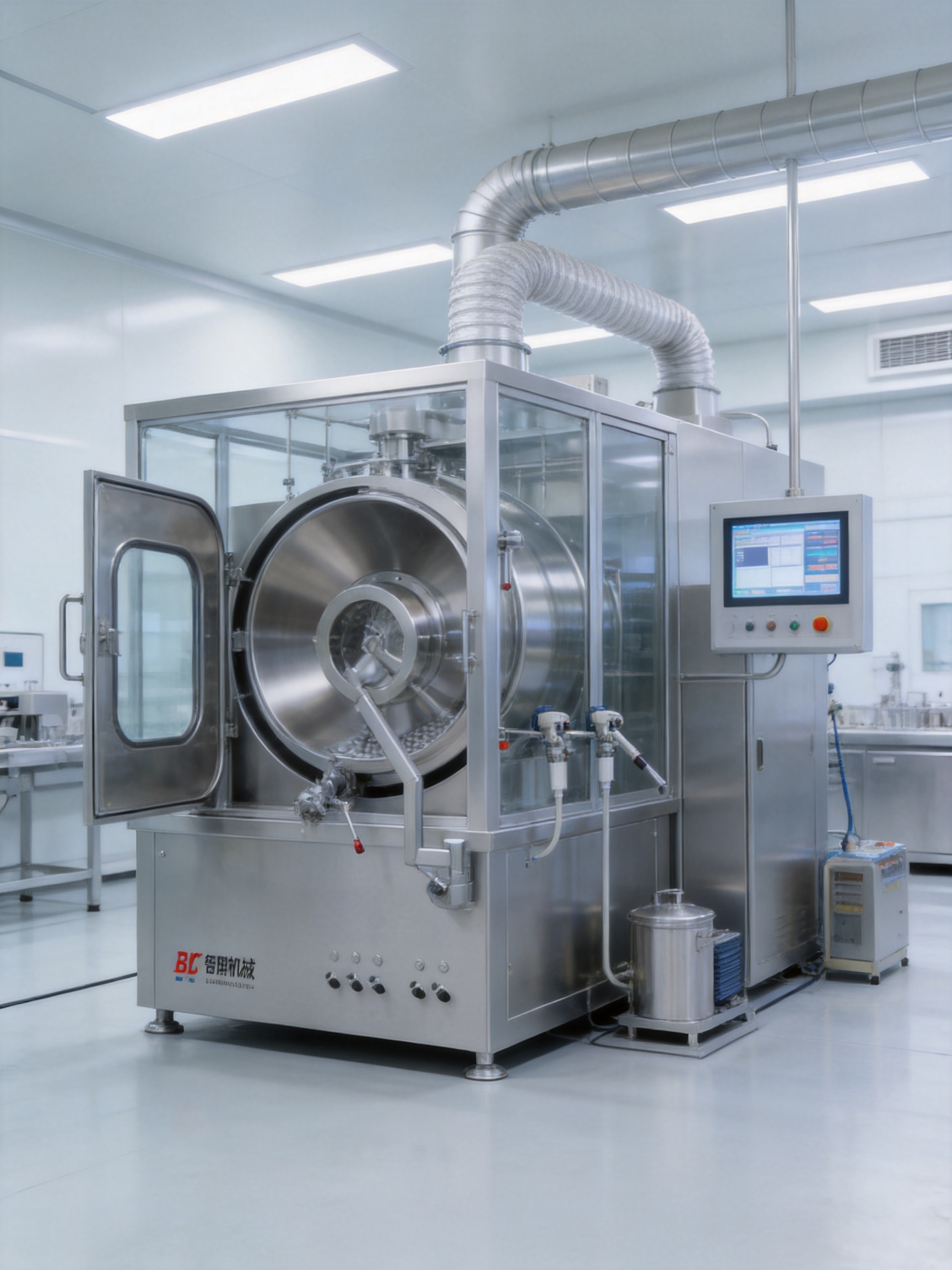
When comparing coating equipment, it is important to evaluate the complete process rather than looking only at nominal capacity. A machine with a high theoretical output may not deliver good value if it causes excessive product loss, difficult cleaning, inconsistent coating, or long changeover times. The BGB High-Efficiency Film Coating Machine is designed around several integrated features that can provide practical advantages over simpler or more fragmented systems.
Less advanced systems may offer limited adjustment of spray gun location, air movement, or pan speed. This can make it difficult to adapt the machine to different cores and coating liquids. By providing adjustable spray gun positioning, variable drum speed, filtered hot air, and controlled exhaust, the BGB system gives the operator more tools for process optimization.
Greater adjustment capability is especially important during product development. Researchers may need to test several polymer concentrations, solid contents, spray rates, and drying conditions. A flexible machine can accommodate these changes more effectively than a fixed-configuration system.
Open coating arrangements may expose the product to uncontrolled room air, dust, and handling. The BGB machine’s enclosed construction and micro-negative pressure help protect the cores during processing. This is a meaningful advantage where hygiene, contamination control, or solvent management is important.
The enclosed design also creates a more consistent process environment. When air enters through a planned filtration and heating path and exits through a managed exhaust system, changes in surrounding conditions have less influence on the coating process.
Scale-up is often challenging because a coating process that works well in a laboratory pan may behave differently at a larger capacity. The ability to use multiple pan sizes with one main machine provides a more structured route for transferring process knowledge between development stages.
Although scale-up still requires engineering evaluation, a common equipment philosophy can simplify comparison of pan speed, air volume, spray rate, drying capacity, and coating time. The user can build a more coherent process-development history rather than starting from an entirely different machine design at each stage.
Integrated spraying, drying, exhaust, feeding, and discharge reduce the need for repeated movement of the product. Fewer transfers may reduce powder loss, tablet breakage, contamination opportunities, and operator workload. This can be particularly beneficial for fragile cores, high-value active ingredients, and small development batches where material losses are significant.
High efficiency does not mean only faster pan rotation. It includes effective use of coating liquid, stable drying, reduced downtime, manageable cleaning, and consistent product quality. The BGB machine’s design combines these aspects in a single process platform. Continuous operation inside an enclosed chamber can shorten the overall production cycle and improve equipment utilization.
The equipment is manufactured by Changzhou Zhiyang Machinery Equipment Co., Ltd., a Chinese engineering company specializing in powder processing and oral solid dosage equipment. Founded in 2010 and based in Changzhou, the company designs and manufactures equipment for pharmaceutical, biopharmaceutical, biotechnology, nutraceutical, veterinary, additives, and related industries.
Its product scope covers laboratory equipment, mixing equipment, granulation equipment, drying equipment, coating equipment, auxiliary processing equipment, and transfer and conveying systems. This broad portfolio is important because coating is rarely an isolated operation. A complete solid dosage process may include material transfer, mixing, wet or dry granulation, drying, sizing, tablet compression, coating, inspection, and packaging.
A supplier with knowledge across these stages can provide more useful process integration support. For example, the properties of granules entering a coating machine can influence pan loading, movement, spray behavior, drying time, and final film quality. Particle density, residual moisture, hardness, friability, surface roughness, and size distribution may all affect the coating outcome.
The company describes its approach as process-driven. Rather than supplying machinery without considering the application, it develops solutions according to material characteristics, capacity requirements, and site conditions. This approach is valuable because equipment selection should reflect the actual product and manufacturing environment.
Important application questions include the type of core, batch size, coating formulation, solvent system, target coating weight gain, required drying rate, cleaning method, available utilities, room classification, operator workflow, and production schedule. A process-driven manufacturer can use these factors to guide equipment configuration and engineering implementation.
ZY Machinery provides standalone machines, modular systems, and complete production lines for laboratory, pilot, and full-scale production. This range allows customers to begin with a single coating unit and later expand the process as demand increases. It also supports projects that require several connected operations rather than one machine.
For a pharmaceutical manufacturer, this can simplify project coordination. One engineering partner may be able to address powder preparation, granulation, drying, coating, and conveying. This can reduce interface problems between machines supplied by different vendors and promote a more consistent approach to controls, material flow, and cleaning procedures.
The company has expanded its product portfolio, strengthened research and development capabilities, developed patented technologies, and obtained quality system certification. These efforts indicate an emphasis on continuous technical improvement. For coating equipment, R&D capability is important because coating materials and dosage forms continue to evolve.
New pharmaceutical products may require lower coating temperatures, more precise controlled release, improved containment, reduced solvent consumption, or greater automation. A manufacturer with an active development program is better positioned to adapt equipment designs to these changing expectations.
Reliable equipment depends on more than the design concept. Fabrication accuracy, material selection, welding quality, component integration, electrical installation, testing, documentation, and after-sales support all influence long-term performance. The company emphasizes reliable products, responsive service, customer reputation, and overseas service capabilities.
For international customers, service capability is especially important. Equipment installation may involve utility coordination, layout confirmation, trial operation, operator training, spare parts planning, and process assistance. Clear communication and timely technical support can reduce commissioning delays and help users reach stable production more quickly.
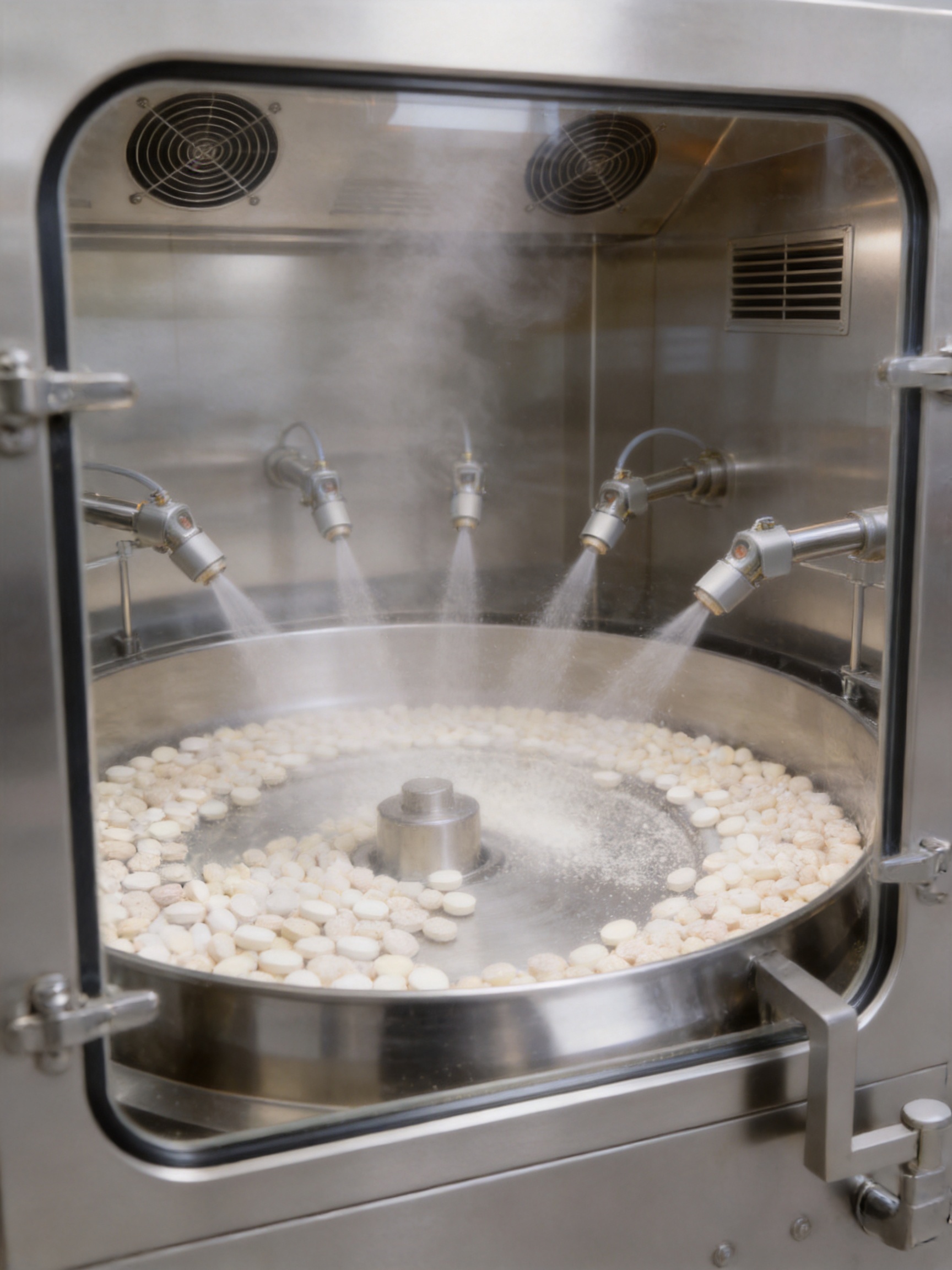
Pharmaceutical tablets are the primary application for many film coating machines. The BGB system can be used for conventional protective or cosmetic film coating, enteric coating, and controlled-release applications. It can support both development batches and larger production quantities, depending on the selected model and process configuration.
For tablets, the coating process must account for tablet shape, edge geometry, hardness, friability, embossing, and surface characteristics. The pan speed and spray conditions must be selected to provide sufficient mixing without causing excessive impact or tablet breakage.
Pellets often require uniform coating because the coating layer may determine drug release behavior. Uneven coating across the pellet population can lead to variability in dissolution. The continuous movement of the product bed and adjustable spray system can support the controlled application of functional layers.
Pellet coating may involve multiple layers, including barrier layers, drug-containing layers, seal coatings, and release-controlling membranes. Each layer may require different spray and drying conditions. The machine’s flexible air and spray adjustment can assist in establishing a suitable sequence.
In food and confectionery processing, coating can provide color, gloss, flavor, texture, and protection. Candies and similar products may require sugar coating or film coating formulations. The enclosed rotating pan and controlled air system support a more uniform application than manual or open-batch methods.
Food applications also require attention to sanitation, allergen control, material compatibility, and cleaning between product families. The practical cleaning arrangement and product-contact design can support these requirements when implemented within the user’s approved sanitation procedures.
Nutraceutical tablets, vitamin products, botanical formulations, and bioproducts may require coatings for taste masking, moisture protection, appearance improvement, or controlled release. These products can vary considerably in tablet density, surface structure, and sensitivity to heat.
The hot-air system can be adjusted within its specified range to match the thermal sensitivity of the product and coating formulation. Process engineers should confirm the acceptable product temperature and drying conditions through development studies.
Veterinary tablets and specialty additives may benefit from coating for taste masking, identification, stability, or dosing convenience. These products may be manufactured in different batch sizes and may require frequent product changeovers. A machine platform with multiple capacity options and manageable cleaning can be useful in such environments.
Successful coating depends on the interaction of several variables. Operators should establish a process window rather than relying on one isolated setting. The most important factors normally include pan speed, spray rate, atomization conditions, inlet air temperature, air volume, exhaust rate, product temperature, coating solids content, coating viscosity, and target weight gain.
Pan speed controls the movement and turnover of the cores. A low speed may not provide sufficient mixing, while an excessively high speed may increase mechanical stress or cause product damage. The appropriate range depends on the pan size, product load, core shape, and mechanical properties.
Spray rate must be balanced with the available drying capacity. Increasing the spray rate can shorten coating time, but it may also increase overwetting risk. A stable spray pattern and correctly positioned gun help distribute the liquid, but they cannot compensate for a rate that exceeds the ability of the air system to remove moisture or solvent.
Hot-air temperature influences drying speed and product temperature. Excessive temperature may damage heat-sensitive ingredients or cause premature film formation. Insufficient temperature or airflow may extend the process and promote sticking. The stated room-temperature-to-80°C range provides a useful operating envelope, but the final setting must be based on product testing.
Exhaust performance affects moisture removal, solvent management, and the pressure balance inside the chamber. Micro-negative pressure helps maintain inward air leakage, but the exhaust system must be correctly matched to the airflow and facility ventilation design.
Formulation properties such as viscosity, surface tension, solids content, particle size, and solvent type influence atomization and film formation. Pigments or suspended solids must remain adequately dispersed. The peristaltic pump and spray guns should be operated within conditions that maintain stable liquid delivery and avoid nozzle blockage.
Product temperature is often a more useful process indicator than inlet air temperature alone. The cores must remain within a range that supports film formation without damaging the formulation. Monitoring product temperature can help the operator evaluate whether the drying conditions are balanced.
For pharmaceutical applications, coating equipment may be included in qualification and validation programs. Typical activities can include design qualification, installation qualification, operational qualification, and performance qualification. The exact scope depends on the customer’s quality system and regulatory obligations.
Important verification areas may include temperature control, airflow, pressure behavior, spray uniformity, pan speed, pump performance, exhaust operation, alarm functions, cleaning procedures, and material traceability. The machine should be installed in accordance with approved drawings and utility specifications.
Coated product quality may be evaluated through appearance, color uniformity, weight gain, film thickness, friability, disintegration, dissolution, moisture content, and active ingredient release. For controlled-release products, dissolution profiling is especially important because coating variability can directly influence release behavior.
Operational reliability also depends on preventive maintenance. Spray nozzles, pumps, seals, filters, fan systems, drive components, sensors, and electrical controls should be inspected according to a planned schedule. Replacing worn or blocked spray components can prevent process instability and reduce unplanned downtime.
Before installation, users should confirm the machine footprint, access route, floor loading, power supply, compressed air requirements if applicable, heating source, exhaust connection, drainage, and cleaning provisions. The larger BGB models require more floor space and greater utility capacity than the laboratory models, so the layout should be planned in advance.
The stated overall sizes range from approximately 800 × 650 × 1300 millimeters for the BGB-5 to approximately 2000 × 2240 × 2330 millimeters for the BGB-600. Main machine weights range from approximately 300 kilograms to 2500 kilograms. These figures should be considered during building planning, equipment movement, platform design, and maintenance access calculations.
Integration with upstream and downstream systems is another advantage of selecting a supplier with a broad product range. Material can be transferred from a granulator or dryer to the coating area using suitable auxiliary and conveying equipment. After coating, the product can be directed to inspection, packaging, or further processing with less manual handling.
Modular integration also permits phased investment. A customer may initially purchase a standalone coating system and later add material handling, automation, or additional processing equipment. This approach can be helpful for growing manufacturers and development centers with changing production requirements.
Laboratory and pilot operations require flexibility, visibility, and repeatability. Product quantities may be limited, formulations may change frequently, and process scientists may need to conduct many experiments before selecting a final coating system. The BGB series addresses these needs through small-capacity models, adjustable process parameters, and compatibility with different pan capacities.
The smaller BGB-5 and BGB-10 models are suitable for early development, formulation screening, and process feasibility work. Larger models can be used when more material is required for stability testing, clinical development, customer samples, or pilot-scale verification. This range can support a progression from laboratory experimentation to larger-scale confirmation.
Multiple pan options also allow researchers to compare the influence of batch size and equipment geometry. By maintaining a common machine platform, users may reduce the number of unrelated variables introduced during development. This does not eliminate the need for scale-up studies, but it can make those studies more systematic.
The equipment is also appropriate for organizations that need to coat multiple product types. Pharmaceutical development laboratories may work with immediate-release tablets one day and controlled-release pellets the next. Food and nutraceutical manufacturers may need to test different colors, flavors, polymers, or sugar systems. A versatile coating machine supports this varied workload more effectively than a single-purpose unit.
ZY Machinery’s stated corporate values emphasize honesty, strength, quality, and specialty. These principles are reflected in a business model focused on practical engineering, reliable equipment, customer reputation, and long-term service. The company does not position its role solely as a machine seller; it also provides process routes and engineering implementation plans.
This distinction is important for complex powder and oral solid dosage projects. A coating machine must be suitable for the product, but it must also fit into the site layout, utility system, operating procedures, cleaning strategy, and production schedule. Engineering support can help identify these connections before equipment is manufactured and installed.
The company’s overseas partnerships and service capabilities are also relevant for international buyers. Pharmaceutical equipment projects commonly require technical documentation, remote communication, installation assistance, operator training, spare parts coordination, and troubleshooting. A supplier with experience serving customers in multiple countries is better prepared to manage these practical requirements.
Model selection should begin with the actual batch size and the required operating range rather than choosing solely by maximum capacity. The product’s bulk density, core size, filling ratio, coating weight gain, and desired throughput all influence the appropriate pan and machine size.
For very small development batches, the BGB-5 may provide the necessary flexibility. The BGB-10 can offer additional working capacity while remaining suitable for development environments. The BGB-40 and BGB-75 may be appropriate for pilot studies or intermediate production requirements. The BGB-150, BGB-350, and BGB-600 are intended for progressively larger batches and higher production needs.
Customers should also evaluate available building space, exhaust capacity, electrical power, cleaning procedures, and future expansion plans. A machine that fits the current batch size but cannot support future process growth may not provide the best long-term value. Conversely, selecting a machine that is much larger than required may reduce process efficiency during small-batch work.
Technical discussions with the manufacturer should include product samples, coating formulation information, target throughput, required coating quality, process temperature limits, solvent details, and site conditions. Testing with representative materials can help confirm spray performance, drying behavior, and product movement before final configuration.
A typical coating workflow begins with equipment inspection and cleaning verification. The correct pan is installed, spray guns are positioned, the coating formulation is prepared and filtered if required, and the pump and exhaust systems are checked. The cores are then loaded according to the approved batch size and filling range.
The pan is started at an appropriate speed before spraying begins. Hot air is introduced gradually to establish stable process conditions. Spray application is then initiated at a controlled rate. Operators monitor the spray pattern, product movement, inlet and outlet air conditions, product temperature, pressure, and appearance.
During the process, spray rate, pan speed, air temperature, airflow, and exhaust may be adjusted within the established process window. Adjustments should be recorded so that successful conditions can be reproduced. At the end of spraying, drying may continue until the product reaches the required moisture and surface condition.
The coated product is then discharged through the designed discharge arrangement. The pan, spray guns, liquid lines, filters, and product-contact surfaces are cleaned according to the approved procedure. Inspection and documentation complete the batch record.
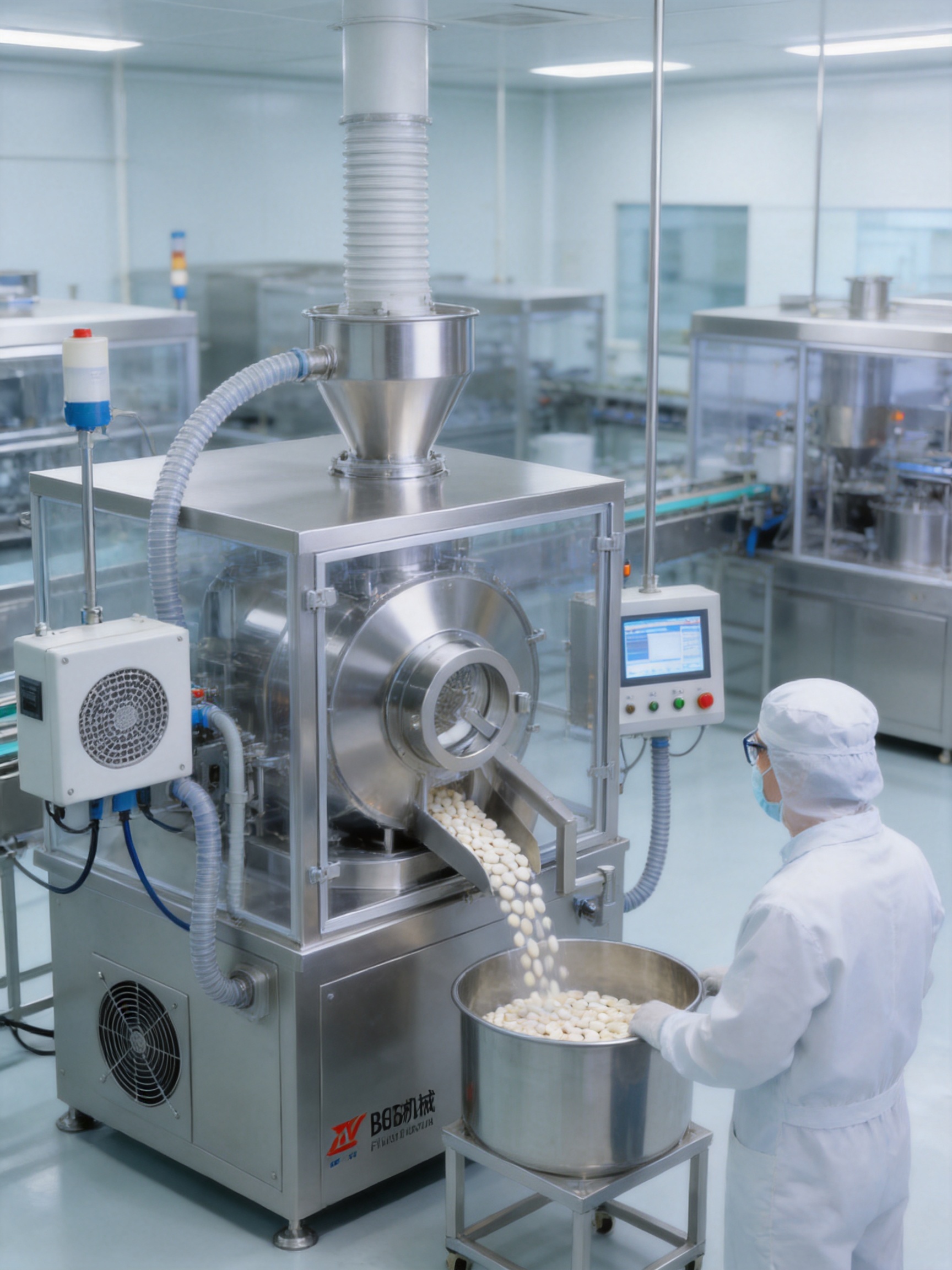
The machine is designed for tablets, pellets, candies, and similar solid products. It can apply organic films, water-soluble films, conventional sugar coatings, and coatings used for controlled-release pharmaceutical applications.
Yes. The series includes small-capacity models suitable for laboratory development and formulation screening. The ability to use different coating pans also allows one main machine to support a range of experimental batch sizes.
Yes. The BGB series ranges from approximately 5 to 600 kilograms per batch. Multiple model sizes and pan capacities provide a practical platform for laboratory, pilot, and larger production studies. Scale-up still requires process development and verification because product behavior can change with equipment size.
The specified hot-air range is from room temperature to approximately 80°C. The correct operating temperature depends on the coating formulation, solvent system, core stability, and product temperature limits.
The coating operation takes place in a clean, fully enclosed rotating pan. Micro-negative pressure helps maintain inward air movement, while filtered hot air supports a cleaner process environment and reduces exposure to external contamination.
Yes. The spray gun position and angle can be adjusted to improve spray coverage and adapt the process to different pan configurations, core types, coating liquids, and coating objectives.
The exhaust system removes moisture, solvent vapors, and process air from the coating chamber. It also contributes to the pressure balance required for enclosed operation and micro-negative pressure.
Yes. The equipment is designed with automatic feeding and discharging functions, which can reduce manual handling, improve workflow efficiency, and support more consistent batch operation.
Yes. The machine can be used for controlled-release coating applications. However, release performance depends on formulation design, coating thickness, process uniformity, curing conditions, and appropriate dissolution testing.
Users should consider batch size, product bulk density, core dimensions, target coating weight gain, desired throughput, available installation space, utility capacity, exhaust requirements, cleaning procedures, and future expansion plans.
Yes. In addition to standalone coating machines, the supplier provides modular systems and complete production lines involving powder processing, granulation, drying, coating, auxiliary processing, and transfer and conveying equipment.
Support may include equipment selection, process-route planning, engineering implementation, installation coordination, commissioning assistance, operator training, spare-parts support, and after-sales service. The precise scope should be confirmed for each project.
The BGB High-Efficiency Film Coating Machine combines flexible capacity, enclosed processing, adjustable spray technology, filtered hot-air drying, controlled exhaust, automatic material handling, and practical cleaning features. These functions make it suitable for a wide range of coating applications across pharmaceutical, food, nutraceutical, bioproduct, veterinary, and related industries.
Its strongest advantage is the integration of process flexibility and manufacturing practicality. A single main machine can accommodate multiple coating pans, allowing users to work with different materials and batch sizes. Adjustable spray guns support precise coverage, while micro-negative pressure and filtered air improve process cleanliness. Continuous spraying, drying, and exhaust within one enclosed chamber can increase efficiency and reduce unnecessary handling.
The supplier adds value through its broader expertise in powder processing and oral solid dosage equipment. Its process-driven approach, manufacturing experience, R&D orientation, product range, and overseas service capabilities provide a foundation for both standalone equipment projects and complete production-line solutions.
For manufacturers seeking consistent film coating, research institutions developing new dosage forms, and production facilities planning flexible oral solid dosage systems, the BGB series offers a practical and scalable equipment platform. Final performance will always depend on correct equipment selection, formulation development, installation, operator training, and process validation, but the design provides the key technical tools needed to establish a stable and repeatable coating operation.
1. Changzhou Zhiyang Machinery Equipment Co., Ltd. Product information for BGB High-Efficiency Film Coating Machines.
2. Changzhou Zhiyang Machinery Equipment Co., Ltd. Technical information for powder processing and oral solid dosage equipment.
3. Aulton, M. E. and Taylor, K. Aulton’s Pharmaceutics: The Design and Manufacture of Medicines.
4. Lieberman, H. A., Lachman, L., and Schwartz, J. B. Pharmaceutical Dosage Forms: Tablets.
5. United States Pharmacopeia. General principles and tests applicable to pharmaceutical dosage forms.
6. European Pharmacopoeia. Monographs and general chapters relating to tablets, capsules, coating, and dissolution testing.
7. International Society for Pharmaceutical Engineering. Pharmaceutical equipment, facility design, and process engineering guidance.
Want to stay up to date?
Contact us via the email address below.
Don't worry about spam. We hate it too!
Mobile Client

Video Account
Phone:+86-15161130178
Tel:+86-519-88674267
Email:czzy188@163.com
Phone:+86-15161132798
Email:zy@zy-drying.com

WeChat ID

Copyright 2026 Changzhou Zhiyang Machinery Equipment Co., Ltd. All Rights Reserved  Oral Solid Dosage Equipment Manufacturer