 English
 Español
 русский
 中文简体

V-Type Mixer
The V-Type Mixer is designed for uniform blending of powders and granular m.....

Content
Uniform blending is one of the most important operations in pharmaceutical, nutraceutical, chemical, food, veterinary, and specialty-material manufacturing. The quality of a finished product often depends on how evenly active ingredients, excipients, carriers, additives, and other dry components are distributed throughout a batch. Even when the formulation is correct and the individual ingredients meet specification, inadequate mixing can create concentration variations, inconsistent performance, rejected batches, and unnecessary production costs.
The V-Type Mixer is designed to address these challenges through a simple, reliable, and efficient tumble-mixing principle. Its V-shaped vessel rotates around a horizontal axis, repeatedly lifting, separating, falling, and folding the material. This gentle movement promotes uniform distribution while limiting the excessive shear, heat generation, and particle damage that can occur in more aggressive mixing systems.
For manufacturers seeking a practical powder mixer for laboratory, pilot, or production applications, the V-Type Mixer offers a balance of process efficiency, compact construction, low energy consumption, accessible maintenance, and flexible batch capacity. Manufactured and supplied by Changzhou Zhiyang Machinery Equipment Co., Ltd., the equipment forms part of a wider portfolio covering powder processing, oral solid dosage production, granulation, drying, coating, conveying, and auxiliary process systems.
Powder and granule blending is more complex than simply placing materials into a container and agitating them. Different ingredients may have different particle sizes, densities, shapes, moisture levels, flow properties, and electrostatic characteristics. These differences can cause segregation during loading, mixing, discharge, and transportation.
In pharmaceutical production, uniformity is especially important because the active pharmaceutical ingredient may represent only a small percentage of the total formulation. If the active component is not distributed consistently, individual tablets, capsules, sachets, or other dosage units may not contain the intended amount. In nutraceutical and food applications, inconsistent distribution can affect nutritional value, taste, color, and product performance.
Chemical manufacturers also require reliable blending when preparing catalysts, additives, pigments, dry intermediates, powdered formulations, and composite materials. A mixer must provide sufficient movement to distribute the components without unnecessarily breaking particles or changing their physical characteristics.
The V-Type Mixer responds to these requirements by using vessel geometry rather than high-speed agitation as the primary mixing mechanism. The shape of the chamber encourages the product to move through multiple paths as the vessel rotates. Material from one side of the V is lifted and transferred toward the center, while material from the other side moves in the opposite direction. This recurring division and recombination supports consistent blending across the batch.
The principal working component is an asymmetrical V-shaped cylinder mounted on a mechanical transmission system. When the main shaft rotates, the entire vessel rotates at a controlled speed. The dry material inside the vessel follows the movement of the chamber wall until gravity causes it to fall and roll toward the lower sections of the V.
This movement produces a continuous cycle of lifting, falling, tumbling, and folding. Materials that initially occupy different areas of the vessel are repeatedly brought together. The V-shaped configuration divides the batch into two sections and then recombines them during rotation. This action helps reduce stagnant areas and improves the circulation of powders and granules through the working volume.
Unlike a high-speed impeller mixer, the V-Type Mixer does not rely primarily on intense mechanical impact. The process is based on controlled tumbling, making it appropriate for products that require gentle handling. The lower-shear operating principle can help protect fragile particles, coated granules, crystalline materials, and heat-sensitive ingredients from unnecessary mechanical stress.
Mixing performance depends on several factors, including vessel loading, rotation speed, batch characteristics, mixing time, particle properties, and the installation of any optional internal components. A suitable process should be established through material testing and production trials. The equipment can then be operated within a defined range to achieve the required blend uniformity and repeatability.
The design is particularly suitable for small to medium batch sizes, although the available product range includes models with working volumes from approximately 20 liters to 2,300 liters. This range allows users to select a mixer appropriate for research, development, pilot production, or larger manufacturing requirements.
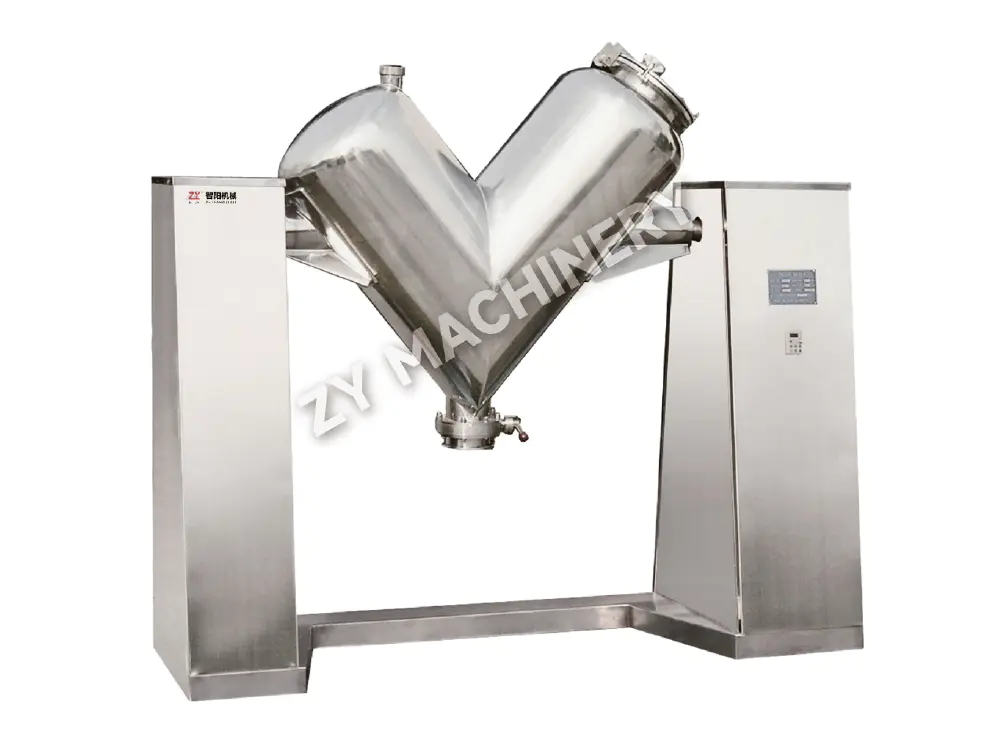
V-Type Mixer
The asymmetrical V-shaped vessel is the defining feature of the machine. Its geometry supports repeated material division and recombination, which is more effective than simple rotation in a uniform cylindrical container. As the vessel turns, the material is encouraged to fold over itself and move through different regions of the chamber.
This configuration helps reduce the risk of unmixed pockets. It also supports a relatively gentle process because the product is moved mainly through gravitational tumbling rather than aggressive blade action. For many dry powders and granules, this is an appropriate way to obtain a uniform blend while preserving particle integrity.
The vessel is driven through a mechanical transmission system designed to provide stable rotation. Controlled shaft speed is important because excessive speed may cause the material to move with the vessel instead of tumbling effectively, while insufficient speed may reduce circulation and increase the required mixing time.
The available models operate at different main-shaft speeds according to vessel size. Smaller models operate at higher speeds, while larger models use lower speeds to accommodate their greater mass and working volume. This relationship supports practical operation across a wide range of equipment sizes.
Many applications require blending without significant particle fracture, temperature increase, or excessive compaction. The V-Type Mixer provides a low-shear mixing environment compared with equipment designed for intensive dispersion or wet granulation.
Gentle mixing is valuable for fragile granules, heat-sensitive materials, dry pharmaceutical excipients, coated particles, and formulations in which particle-size distribution must be maintained. It can also reduce the risk of overprocessing when the formulation only requires homogeneous distribution rather than high-energy deagglomeration.
The machine is designed around a straightforward vessel, drive, frame, and discharge arrangement. This provides a compact equipment footprint relative to the batch volume and helps simplify routine inspection. A less complicated mechanical structure may also support easier troubleshooting and lower maintenance requirements when compared with systems containing numerous high-speed internal components.
Compact construction is particularly useful for laboratories, pilot plants, and facilities where production space is limited. It can also make the equipment easier to integrate into an existing powder-processing line.
Efficient material handling is essential for achieving reliable production cycles. The V-Type Mixer supports convenient loading and unloading, and an optional split-vessel configuration can facilitate cleaning and access to product-contact surfaces.
The loading method should be selected according to the formulation, batch size, dust-control requirements, and upstream process. The discharge arrangement should likewise be coordinated with downstream equipment such as mills, tablet presses, capsule fillers, intermediate bulk containers, or conveying systems.
Several types of tumble mixers are used for dry powders and granules, including double-cone, bin, drum, and horizontal cylindrical designs. Each has a suitable operating range. The V-Type Mixer distinguishes itself through the interaction between its divided vessel geometry, low-shear movement, and practical operating scale.
A simple rotating drum can move material around the vessel, but the V-shaped configuration provides an additional division-and-recombination effect. The batch is repeatedly separated into two sections and brought together again. This can improve the exchange of material between different parts of the batch and reduce the potential for isolated zones.
For formulations containing several dry components, this repeated folding action is useful because it encourages progressive distribution rather than relying only on circumferential movement.
High-intensity mixers can be effective for breaking agglomerates and dispersing difficult ingredients, but they may also create unwanted heat, particle fracture, or changes in granule structure. The V-Type Mixer provides an alternative when the main objective is uniform blending with limited mechanical stress.
This advantage is relevant to dry granules produced through previous granulation operations. If the granules have been engineered to provide a particular flow profile, dissolution behavior, or compression performance, preserving their structure during final blending may be important.
The operating principle does not require continuous high-speed rotor action. The equipment uses controlled vessel rotation, which contributes to relatively low energy consumption. Lower energy demand can reduce operating costs, especially when the mixer is used frequently or when a facility operates multiple units.
Energy efficiency also supports more practical installation in laboratory and pilot environments where available electrical capacity may be limited. The actual energy requirement depends on model size, material density, loading level, drive configuration, and operating conditions.
The relatively simple mechanical arrangement can make routine maintenance more manageable. Operators can focus on inspecting drive components, seals, bearings, discharge parts, fasteners, and product-contact surfaces according to the maintenance schedule.
A simpler system may also reduce the number of wear components exposed directly to the product. This is useful in applications where cleaning validation, cross-contamination control, and inspection access are important.
The V-Type Mixer is not limited to one type of powder. It can be used for pharmaceutical excipients, active ingredient blends, nutritional powders, food ingredients, chemical additives, dry intermediates, veterinary formulations, and other granular or powdered solids.
Its broad application range allows a manufacturer to use the same basic equipment concept across multiple products while changing the recipe, batch size, mixing time, or loading procedure as required. Application suitability should always be confirmed through material testing, especially when powders have extreme cohesiveness, very high density differences, strong electrostatic behavior, or a tendency to form hard agglomerates.
In oral solid-dosage manufacturing, the blending step is connected to many other operations. A typical process may include material dispensing, screening, pre-mixing, wet or dry granulation, drying, final blending, lubrication, compression, and packaging. The mixer must therefore fit into a broader process route rather than operate as an isolated machine.
The V-Type Mixer is especially relevant to final blending and intermediate blending of dry powders and granules. It can help distribute active ingredients, fillers, binders, disintegrants, glidants, lubricants, colors, and flavor components, provided that the product properties and process parameters are appropriate.
Because the equipment uses gentle tumbling, it may be suitable for post-granulation blending where excessive shear could damage granules. It can also support the controlled incorporation of smaller quantities of functional ingredients into a larger carrier material. In such cases, a staged loading strategy may improve uniformity.
For pharmaceutical applications, the equipment should be selected and configured with attention to cleanability, material compatibility, surface finish, sealing, discharge design, dust containment, and documentation. Product-contact materials and surface requirements should be specified according to the formulation and applicable quality procedures.
The mixer may also be integrated with a complete oral solid-dosage line. Upstream equipment can include sieving, milling, weighing, granulation, and drying systems. Downstream equipment can include conveying, tablet compression, capsule filling, coating, and packaging systems. A process-focused supplier can help coordinate these stages so that the mixer’s capacity, discharge height, and control requirements match the rest of the production line.
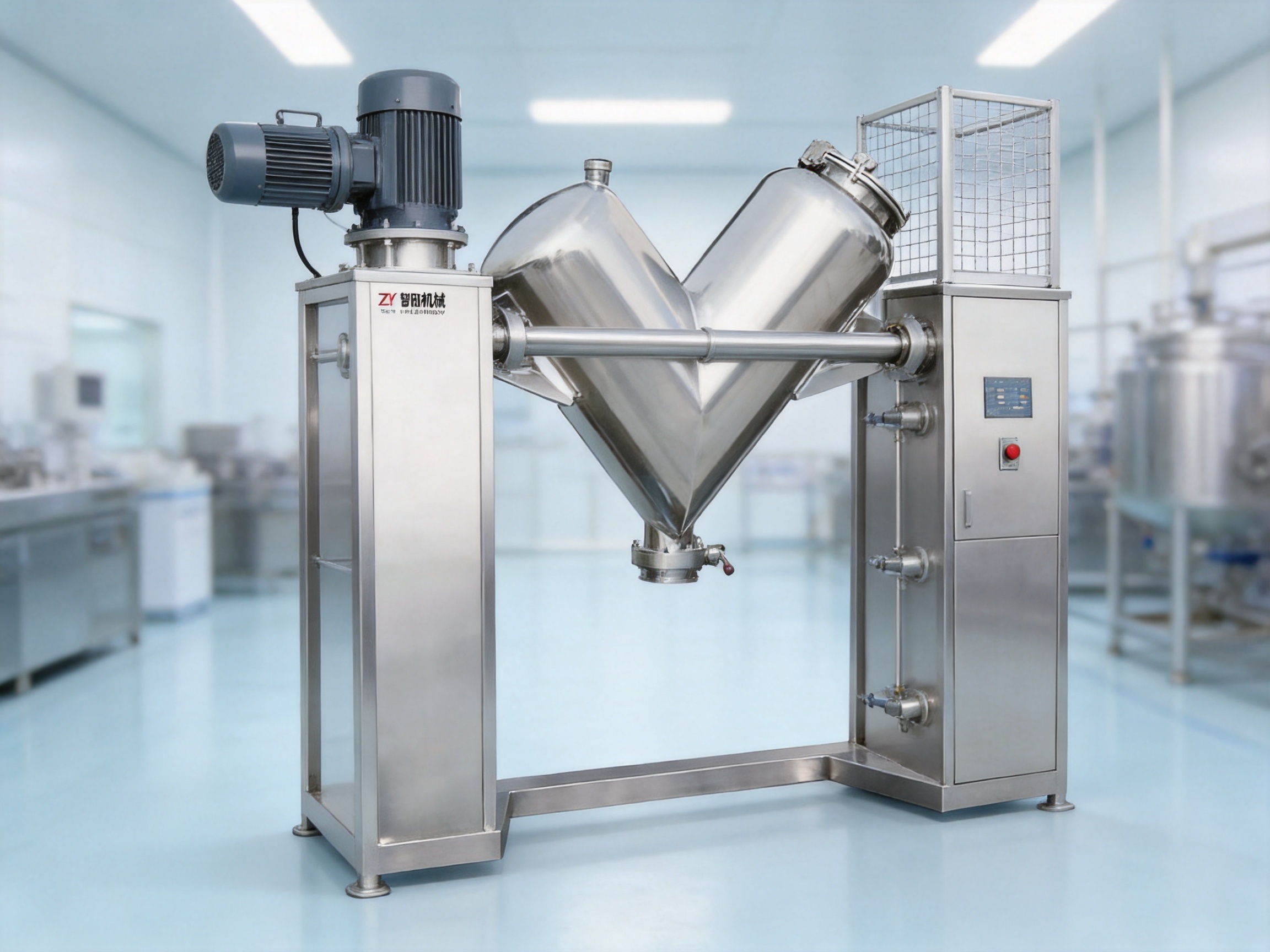
Pharmaceutical manufacturers use powder mixers to prepare uniform blends before compression, encapsulation, filling, or other dosage-form operations. The V-Type Mixer can be considered for formulations in which gentle blending and reliable distribution are more important than intensive size reduction.
Potential materials include excipient blends, active and excipient mixtures, dry granules, premixes, and selected lubricant-containing formulations. The final process should be validated according to the product’s critical quality attributes, including blend uniformity, content uniformity, flow, bulk density, and downstream performance.
Nutraceutical formulations often contain vitamins, minerals, botanical powders, carriers, sweeteners, and flavoring components. These ingredients may vary widely in density and particle size. A controlled tumble process can provide a practical solution for blending dry nutritional products while limiting unnecessary particle damage.
Food applications may include powdered beverage bases, dry seasoning blends, baking ingredients, premixes, and other free-flowing solids. Hygienic design, cleaning procedures, allergen management, and product-changeover controls should be considered during equipment selection.
Chemical producers may use the mixer for powdered additives, catalysts, pigments, fillers, dry intermediates, and compound formulations. The suitability of the equipment depends on bulk density, abrasiveness, moisture sensitivity, chemical compatibility, and the required degree of homogeneity.
When materials are abrasive or chemically aggressive, construction materials and wear protection should be reviewed with the equipment supplier. When powders are dusty or potentially hazardous, the overall installation may require contained charging, sealed discharge, local extraction, or other protective measures.
Veterinary powders, premixes, feed additives, and agricultural formulations may require the consistent distribution of low-dose ingredients through a larger carrier material. The V-Type Mixer can be evaluated for these applications when the formulation is dry and the components have suitable flow and handling characteristics.
As with pharmaceutical products, process development should examine segregation after mixing. A blend that is uniform inside the vessel may become non-uniform if it is transported or discharged improperly. Mixer selection should therefore be coordinated with downstream conveying and storage arrangements.
Changzhou Zhiyang Machinery Equipment Co., Ltd. specializes in the design, manufacture, and process integration of powder-processing and oral solid-dosage equipment. The company was founded in 2010 and is based in Changzhou, China. Its scope includes standalone machines, modular systems, and complete production lines for pharmaceutical, biopharmaceutical, biotechnology, nutraceutical, veterinary, additives, and related industries.
This breadth is important because a mixing machine rarely operates independently in a modern production facility. Customers may need to connect the mixer to screening, milling, granulation, drying, coating, conveying, and packaging operations. A supplier with experience across these equipment categories can evaluate the complete process route and identify practical interfaces between machines.
One of the company’s stated strengths is its process-driven approach. Rather than supplying the machine without considering the material or production environment, the company develops solutions according to material characteristics, capacity requirements, and site conditions.
For a V-Type Mixer project, this approach may involve reviewing the formulation, bulk density, particle size, flowability, moisture sensitivity, expected batch size, loading percentage, discharge method, cleaning requirements, and available plant space. The objective is to select an appropriate model and configuration instead of treating every application as identical.
Process integration can also include the preparation of engineering implementation plans. These plans help customers consider equipment arrangement, material transfer, operator access, maintenance clearance, utilities, dust control, and connections to upstream and downstream machinery.
The company’s product categories include laboratory equipment, mixing equipment, granulation equipment, drying equipment, coating equipment, auxiliary processing equipment, and transfer and conveying equipment. This portfolio provides a foundation for developing complete powder-processing routes.
A customer may begin with laboratory studies, move to pilot-scale trials, and later install full-scale production equipment. Having related equipment categories available from one experienced supplier can simplify communication, project coordination, and process compatibility.
The same approach is valuable when an existing facility requires expansion or modernization. A new V-Type Mixer may need to connect to older equipment, existing transfer systems, or a new downstream line. An integrated engineering review can help reduce interface problems and improve the practical performance of the installation.
According to the supplied company information, ZY Machinery has strengthened its research and development capabilities, obtained quality system certification, developed patented technologies, and expanded overseas service capabilities. These activities indicate an ongoing focus on improving equipment design and supporting customers in different markets.
For mixer users, continuous development can contribute to improvements in mechanical reliability, safety, cleanability, energy use, control, and process adaptability. The exact configuration should be discussed according to the customer’s application because not every project requires the same options or level of automation.
The V-Type Mixer product family includes models suitable for laboratory and smaller production requirements as well as larger-volume operations. This makes it possible to establish a development path in which the mixing principle remains familiar as production increases.
Scale-up should not be based solely on vessel volume. Rotation speed, fill ratio, particle movement, material density, mixing time, discharge behavior, and segregation risk may change with equipment size. A process-oriented supplier can assist with evaluating these variables and defining a suitable scale-up strategy.
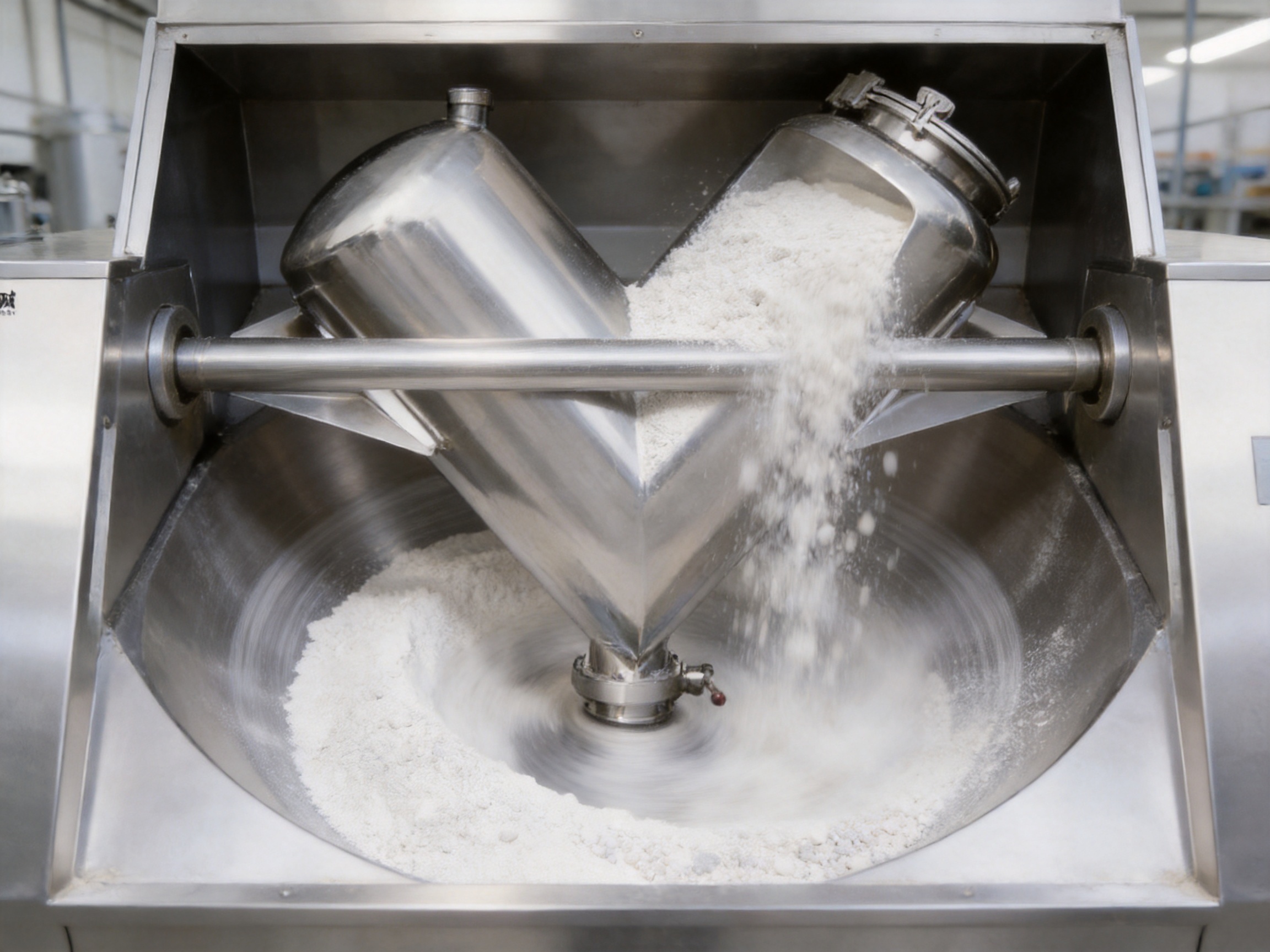
The following table presents the available model information supplied for the V-Type Mixer series. Working volume, shaft speed, power, and overall height are important starting points for model selection. The original parameter sheet identifies one row as “Loada” and lists the unit as “Kw”; this row is reproduced as provided and should be confirmed with the supplier during technical quotation.
| Item | Model | V-0.05 | V-0.15 | V-0.3 | V-0.5 | V-1 | V-1.5 | V-2 | V-3 | V-4 | V-5 |
| Working volume | L | 20 | 65 | 145 | 210 | 425 | 700 | 800 | 1250 | 1850 | 2300 |
| Loada | Kw | 12 | 40 | 90 | 130 | 250 | 420 | 480 | 750 | 1100 | 1400 |
| Speed main shaft | Rpm | 25 | 25 | 22 | 20 | 18 | 15 | 14 | 13 | 11 | 8 |
| Power | Kw | 0.4 | 0.55 | 0.75 | 1.5 | 3 | 4 | 5.5 | 5.5 | 7.5 | 7.5 |
| Height | mm | 900 | 1300 | 1700 | 1840 | 2030 | 2300 | 2490 | 2850 | 3200 | 4600 |
Working volume is one of the most important selection criteria. The mixer should not normally be selected simply because its nominal capacity matches the batch size. The actual operating fill level must allow the material to tumble freely. If the vessel is overloaded, movement may become restricted and mixing time may increase. If it is significantly underloaded, the material may not interact efficiently with the vessel geometry.
The appropriate fill ratio depends on material properties and the required blending performance. Customers should provide target batch weight, bulk density, minimum and maximum batch sizes, and expected production frequency when requesting a model recommendation.
The listed shaft speeds range from 8 to 25 revolutions per minute. Smaller vessels use higher speeds, while larger vessels operate more slowly. The correct speed supports a balance between adequate tumbling and controlled product movement.
Speed selection should be based on observation and testing rather than on the highest available value. Some powders require a gentler movement to avoid dust generation or segregation, while others may require additional time or optimized loading to achieve uniformity.
Listed motor power ranges from 0.4 kW for the smallest model to 7.5 kW for the largest listed models. Power requirements are influenced by vessel size, material density, loading, friction, starting conditions, and mechanical design.
Electrical and utility requirements should be confirmed before installation. Customers should also consider the control system, emergency-stop arrangement, overload protection, grounding, and applicable site safety requirements.
Equipment height affects building layout, operator access, charging arrangements, and downstream connections. The listed heights range from 900 millimeters to 4,600 millimeters. Larger models may require special attention to ceiling clearance, lifting access, platform design, and maintenance space.
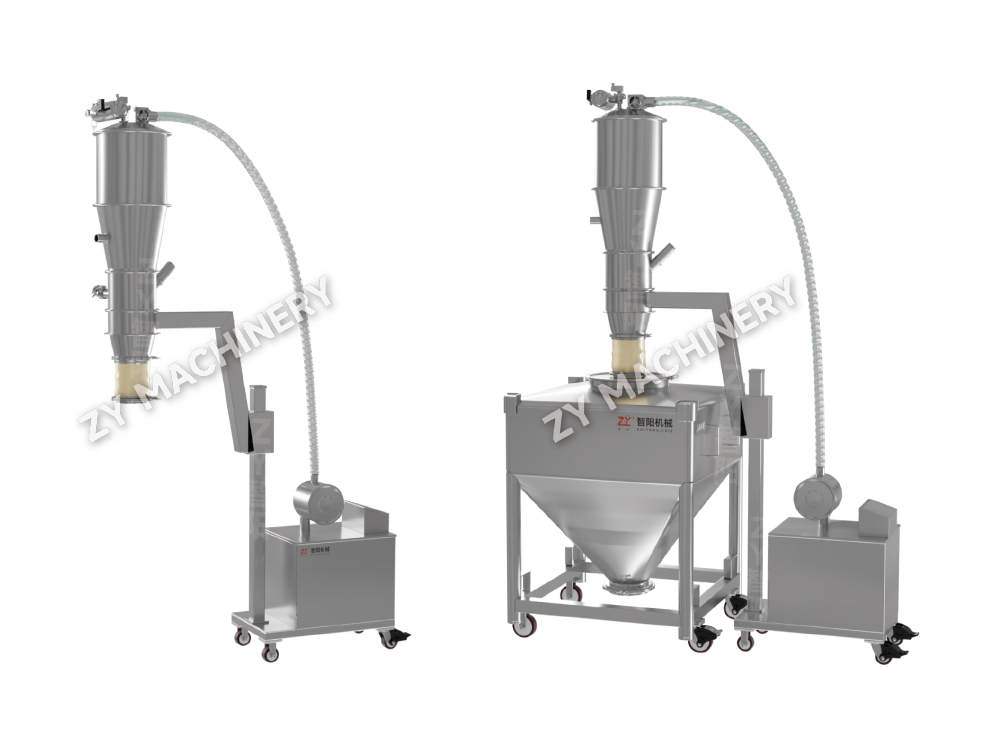
When the mixer is integrated into an automated line, the overall height must be coordinated with the charging system, storage hopper, vacuum conveying equipment, and discharge receiver. A layout review before purchase can prevent costly modifications during installation.
The reliability of a mixer depends not only on its operating principle but also on how it is manufactured, assembled, inspected, and commissioned. A well-designed vessel can perform poorly if alignment, welding, sealing, drive assembly, or surface finishing is not properly controlled.
For equipment used in pharmaceutical and food-related environments, product-contact surfaces require particular attention. Smooth, accessible surfaces are easier to clean and inspect. Weld quality, internal transitions, discharge areas, and seal interfaces should be evaluated according to the application’s hygiene and contamination-control requirements.
Mechanical alignment is also essential. The vessel, main shaft, bearings, transmission components, and supporting frame must work together under the expected load. Proper alignment can help limit vibration, reduce wear, and support stable long-term operation.
The manufacturing process should include design review, material verification, component inspection, fabrication, welding, surface treatment where applicable, mechanical assembly, functional testing, and final inspection. The exact quality-control sequence depends on the customer’s technical specification and the required documentation package.
ZY Machinery’s stated experience in equipment development, quality-system certification, patented technologies, and overseas project support provides a foundation for supplying machinery to customers with different technical and regulatory expectations. Customers should identify required inspection records, material certificates, test procedures, manuals, drawings, and acceptance criteria at the beginning of the project.
Standard models provide an efficient starting point, but industrial projects often require application-specific modifications. These may involve vessel material, surface finish, charging port, discharge valve, split-vessel design, dust containment, control instrumentation, safety guarding, access arrangements, or integration with a conveying system.
Customization should be based on a clear process requirement. Excessive or unnecessary options can increase cost and maintenance complexity, while insufficient configuration can limit performance. A technical discussion should therefore define the product, batch size, cleaning method, operating environment, and required level of automation before finalizing the design.
Cleaning procedures should be established according to the product and the facility’s quality system. Operators should empty the vessel completely where possible, inspect product-contact surfaces, remove residual powder, and follow the approved cleaning method. The optional split-vessel arrangement can improve access and convenience during cleaning activities.
Routine maintenance may include checking bearings, drive components, fasteners, seals, discharge mechanisms, guards, and electrical connections. Unusual noise, vibration, overheating, or changes in rotation should be investigated promptly. Early identification of mechanical problems can help avoid unexpected downtime.
Operators should be trained to load the correct amount of material, close all access points, confirm discharge alignment, verify safety devices, and follow the established mixing time. The vessel should not be operated beyond its rated capacity or with materials that are incompatible with the construction materials.
Preventive maintenance intervals should be defined based on operating hours, batch frequency, material abrasiveness, cleaning method, and environmental conditions. A maintenance record can help identify recurring issues and support continuous improvement.
Loading order can influence blend uniformity. Large-volume carrier materials are often loaded in a way that supports the distribution of smaller quantities of active or functional ingredients. The exact sequence depends on the formulation and should be verified through trials.
Adding a very small quantity of an ingredient directly into a large vessel may create localized concentrations. Pre-blending or geometric dilution may be appropriate for certain formulations, particularly when a low-dose component must be distributed through a larger mass.
The vessel must contain enough material to create effective movement, but excessive loading can restrict tumbling. Operators should define acceptable minimum and maximum batch sizes for each product and model.
Fill-level limits should be documented in the batch record or operating procedure. Changes in bulk density can alter the actual mass loaded into the same volume, so both volume and weight should be considered.
Longer mixing does not always produce a better result. Once a blend reaches the required uniformity, continued mixing may increase the risk of segregation during discharge or handling. Process development should therefore identify the minimum practical mixing time that consistently achieves the required result.
Sampling plans should represent different locations and stages of the batch. Testing should be linked to the product’s critical quality attributes and applicable internal or regulatory requirements.
A uniform blend can become segregated if it is discharged too quickly, dropped from excessive height, conveyed improperly, or stored in a way that separates coarse and fine particles. The discharge system and downstream transfer route should be reviewed as part of the complete process.
Integration with conveying equipment from the same product portfolio may help create a better-matched process route. The goal is to preserve blend uniformity from the end of mixing through the next manufacturing stage.
The V-Type Mixer competes effectively where manufacturers require dependable dry blending without the complexity of an intensive mixer. Its main advantages are its asymmetrical V-shaped geometry, gentle tumbling action, low energy demand, compact structure, broad model range, and practical maintenance requirements.
Compared with basic rotating containers, the V-shaped vessel provides more purposeful division and recombination of material. Compared with high-shear equipment, it offers a gentler alternative for products that do not require aggressive dispersion. Compared with highly specialized continuous systems, it can provide a relatively straightforward batch solution for facilities that require flexibility across several products.
Another competitive advantage is the ability to obtain the mixer from a company that also supplies granulation, drying, coating, auxiliary, and conveying equipment. This can reduce the number of separate technical interfaces in a complete project. It also gives customers an opportunity to discuss the entire process with a supplier familiar with powder behavior and solid-dosage production.
The correct comparison should consider more than purchase price. Important factors include product uniformity, cleaning time, energy consumption, maintenance access, spare-parts availability, technical support, integration capability, delivery documentation, and long-term reliability. A practical mixer that supports stable production may provide greater value than a lower-cost machine that creates difficulties during cleaning, scale-up, or downstream transfer.
Before requesting a quotation, buyers should prepare information about the product and production process. Useful details include the names or general types of materials, bulk density, particle-size range, moisture content, batch weight, required throughput, mixing time, cleaning method, and acceptable level of automation.
Customers should also describe the production environment. Available floor space, ceiling height, access routes, electrical supply, dust-control requirements, hazardous-area classification, and connection points can affect the final equipment configuration.
If the mixer will be used for pharmaceutical or food products, buyers should specify surface-finish expectations, product-contact materials, cleaning validation requirements, documentation needs, and inspection standards. If the mixer will be integrated into an existing line, drawings and connection dimensions should be provided as early as possible.
Material testing is recommended when the formulation is cohesive, highly electrostatic, abrasive, very sensitive to segregation, or composed of ingredients with large differences in density and particle size. Testing helps confirm whether a V-Type Mixer is appropriate and provides a basis for selecting operating conditions.
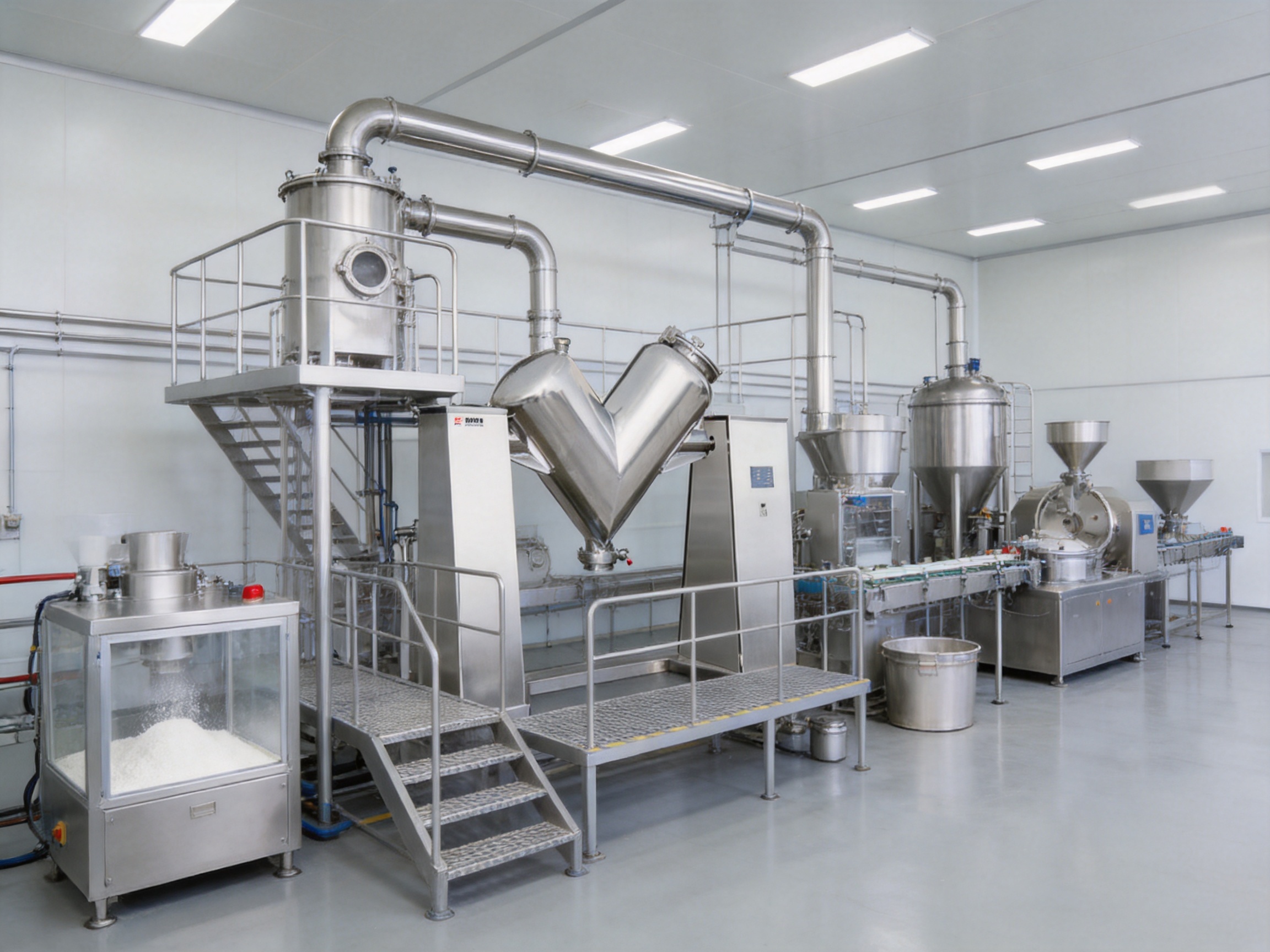
The mixer is intended for powders, granules, and other dry solids. Typical application areas include pharmaceutical ingredients, excipients, nutraceutical powders, food ingredients, chemical additives, veterinary formulations, and dry intermediates. Suitability depends on flowability, density, particle size, moisture, cohesiveness, and chemical compatibility.
During rotation, the V-shaped vessel divides the material into two sections and repeatedly brings those sections together. The material is lifted, falls under gravity, tumbles, and folds over itself. This repeated division and recombination promotes material exchange and helps reduce stagnant zones.
It may be suitable for fragile or heat-sensitive granules because the process uses gentle tumbling and relatively low shear. Final suitability should be confirmed through trials because some granules may still be vulnerable to impact, compaction, or segregation during discharge.
The listed models provide working volumes from 20 liters to 2,300 liters. The appropriate model depends on batch size, bulk density, fill ratio, production frequency, and required mixing performance.
Yes, the equipment is designed for applications that include pharmaceutical powder and granule processing. Pharmaceutical users should define the required product-contact materials, surface finish, cleaning access, containment, documentation, and validation expectations during the specification stage.
The V-Type Mixer uses controlled vessel rotation rather than continuous high-speed intensive agitation. This contributes to relatively low energy consumption. Actual power demand depends on the model, material properties, loading level, drive system, and operating conditions.
An optional split-vessel arrangement is available for convenient cleaning and access. The exact design should be confirmed according to the product, cleaning procedure, sealing requirements, and maintenance strategy.
Mixing time should be established through product trials and sampling. It depends on material properties, loading sequence, batch size, rotation speed, and the required uniformity. Excessive mixing should be avoided if it increases the risk of segregation or damages the product.
Yes. It can be coordinated with equipment for screening, milling, granulation, drying, coating, transfer, conveying, and other powder-processing operations. A process-integrated design should consider capacity, discharge height, control signals, cleaning, operator access, and material flow between each stage.
Customers should provide product type, batch size, bulk density, material properties, required throughput, mixing objectives, cleaning requirements, site conditions, power supply, automation expectations, and any applicable quality or documentation standards. These details allow the supplier to recommend an appropriate model and configuration.
The V-Type Mixer is a practical solution for uniform blending of powders and granules across pharmaceutical, nutraceutical, food, chemical, veterinary, and related industries. Its asymmetrical V-shaped vessel creates a repeated tumbling, folding, and recombination movement that supports homogeneous mixing while maintaining a gentle process environment.
Its advantages include low-shear handling, relatively low energy consumption, compact construction, straightforward maintenance, convenient loading and unloading, optional split-vessel cleaning access, and a model range covering approximately 20 to 2,300 liters of working volume. These characteristics make the mixer suitable for laboratory, pilot, and production applications.
The equipment also benefits from the broader capabilities of Changzhou Zhiyang Machinery Equipment Co., Ltd. The company provides powder-processing and oral solid-dosage equipment, including mixing, granulation, drying, coating, auxiliary, and conveying systems. Its process-driven engineering approach supports customers who require not only a standalone mixer but also a coordinated production route designed around material characteristics, capacity, and site conditions.
For the best result, mixer selection should be based on more than nominal volume. Product properties, fill level, loading sequence, mixing time, discharge behavior, cleaning, containment, downstream transfer, and future production plans should all be considered. With appropriate process development and equipment configuration, the V-Type Mixer can provide a reliable foundation for consistent dry-solid production.
1. Changzhou Zhiyang Machinery Equipment Co., Ltd., V-Type Mixer product information and supplied technical parameters.
2. Changzhou Zhiyang Machinery Equipment Co., Ltd., company information covering powder processing, oral solid-dosage equipment, process integration, research and development, and overseas service capabilities.
3. Aulton, M. E., and Taylor, K. M. G., Aulton’s Pharmaceutics: The Design and Manufacture of Medicines.
4. United States Pharmacopeia, general principles related to powder blending, dosage-unit uniformity, and pharmaceutical quality.
5. European Pharmacopoeia, general guidance concerning pharmaceutical manufacturing and dosage-form quality.
6. Perry’s Chemical Engineers’ Handbook, sections concerning solids handling, particle technology, and mixing operations.
7. Handbook of Pharmaceutical Granulation Technology, principles of powder flow, granule properties, blending, and scale-up.
Want to stay up to date?
Contact us via the email address below.
Don't worry about spam. We hate it too!
Mobile Client

Video Account
Phone:+86-15161130178
Tel:+86-519-88674267
Email:czzy188@163.com
Phone:+86-15161132798
Email:zy@zy-drying.com

WeChat ID

Copyright 2026 Changzhou Zhiyang Machinery Equipment Co., Ltd. All Rights Reserved  Oral Solid Dosage Equipment Manufacturer