 English
 Español
 русский
 中文简体

SZG Double Cone Rotary Vacuum Dryer
The SZG double cone rotary vacuum dryer is designed for materials that cann.....

Content
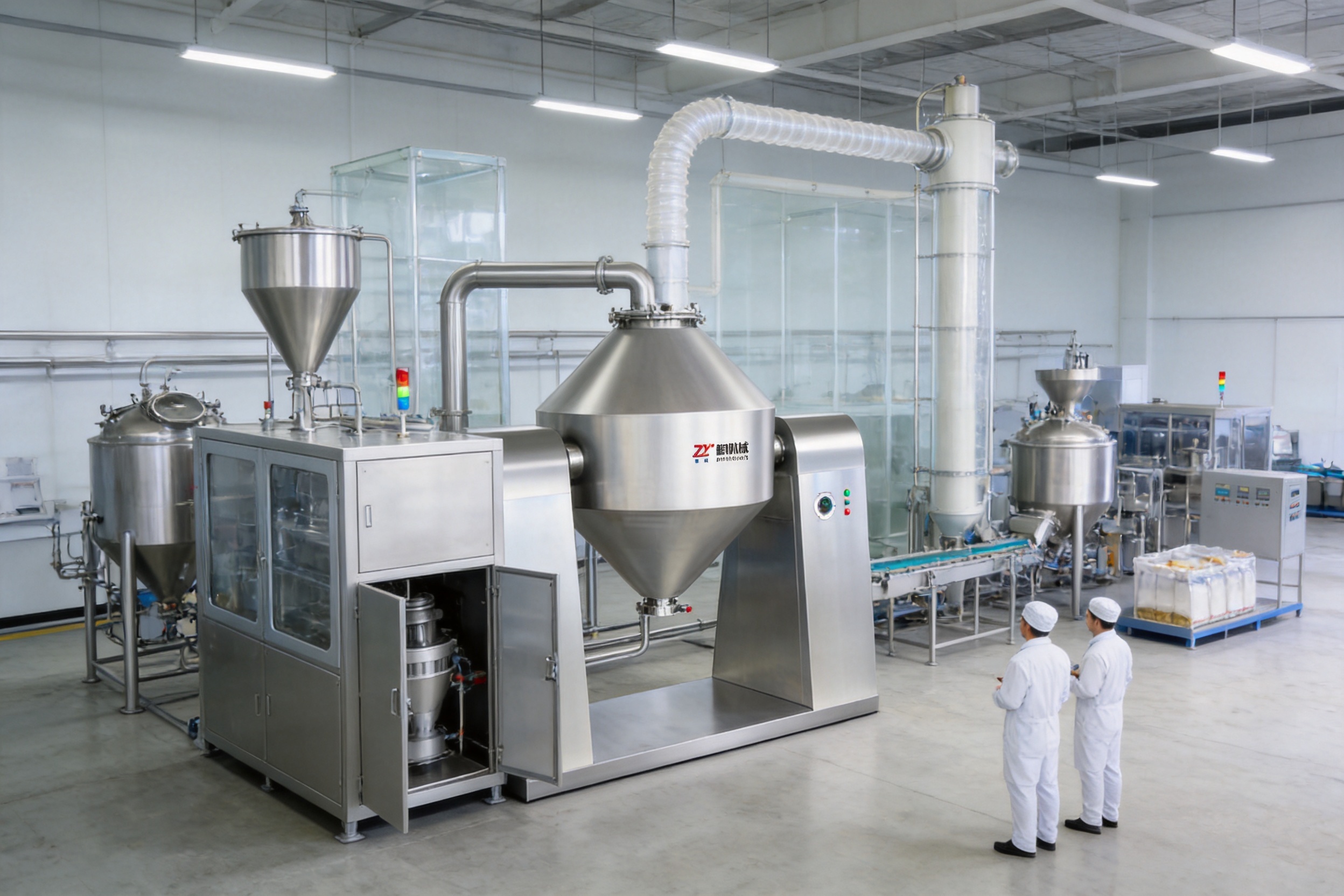
Drying is one of the most critical operations in pharmaceutical, chemical, food, nutraceutical, biotechnology, and related powder-processing industries. The drying method must remove moisture efficiently while protecting the physical, chemical, and functional properties of the product. This requirement becomes especially demanding when the material is heat-sensitive, easily oxidized, crystalline, toxic, strongly irritating, or valuable enough that moisture recovery is required.
The SZG double cone rotary vacuum dryer is designed for these challenging applications. By combining vacuum drying, controlled heating, and continuous vessel rotation, the equipment provides a gentle and uniform process for powders and granular materials. The rotating double-cone vessel continually lifts, rolls, tumbles, and redistributes the material. This movement promotes contact between the product and the heated vessel wall while reducing the possibility of localized overheating, stagnant zones, or uneven residual moisture.
Manufactured and supplied by Changzhou Zhiyang Machinery Equipment Co., Ltd., the SZG series forms part of a broader portfolio of powder processing and oral solid dosage equipment. The company develops standalone machines, modular systems, and complete production lines for laboratory, pilot-scale, and industrial production. Its process-oriented approach enables the dryer to be considered not merely as an isolated machine, but as part of an integrated route involving feeding, mixing, granulation, drying, conveying, coating, discharge, and packaging.
This article explains the operating principle, construction, advantages, applications, technical parameters, process considerations, and selection factors associated with the SZG double cone rotary vacuum dryer. It also examines how the manufacturer’s engineering capabilities and production philosophy support reliable equipment selection and practical process implementation.
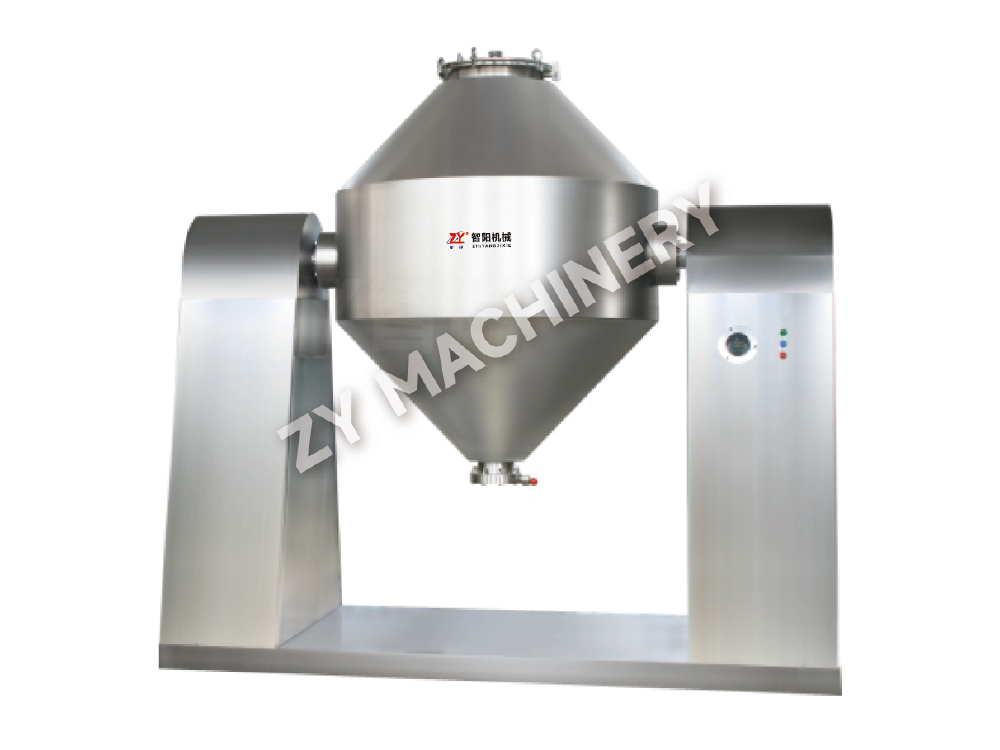
SZG Double Cone Rotary Vacuum Dryer
Conventional atmospheric drying often requires elevated temperatures or extended residence times. These conditions may be unsuitable for materials that degrade when exposed to heat, oxygen, or prolonged processing. Some active pharmaceutical ingredients can lose potency, while certain food ingredients may experience undesirable changes in color, flavor, aroma, or nutritional value. Chemical intermediates may oxidize, agglomerate, discolor, or react with moisture and air.
Vacuum drying addresses these limitations by reducing the pressure inside the processing vessel. Under lower pressure, water and other volatile components can evaporate at lower temperatures than they would under atmospheric conditions. This enables the operator to establish a useful drying rate while maintaining a comparatively mild product temperature.
The vacuum environment also reduces the presence of oxygen. This is valuable when the material is susceptible to oxidation or when the process requires a controlled atmosphere. In addition, volatile moisture can be directed toward a condenser or recovery system rather than being released directly into the working environment. This is particularly beneficial when the evaporated components are valuable, hazardous, odorous, or environmentally sensitive.
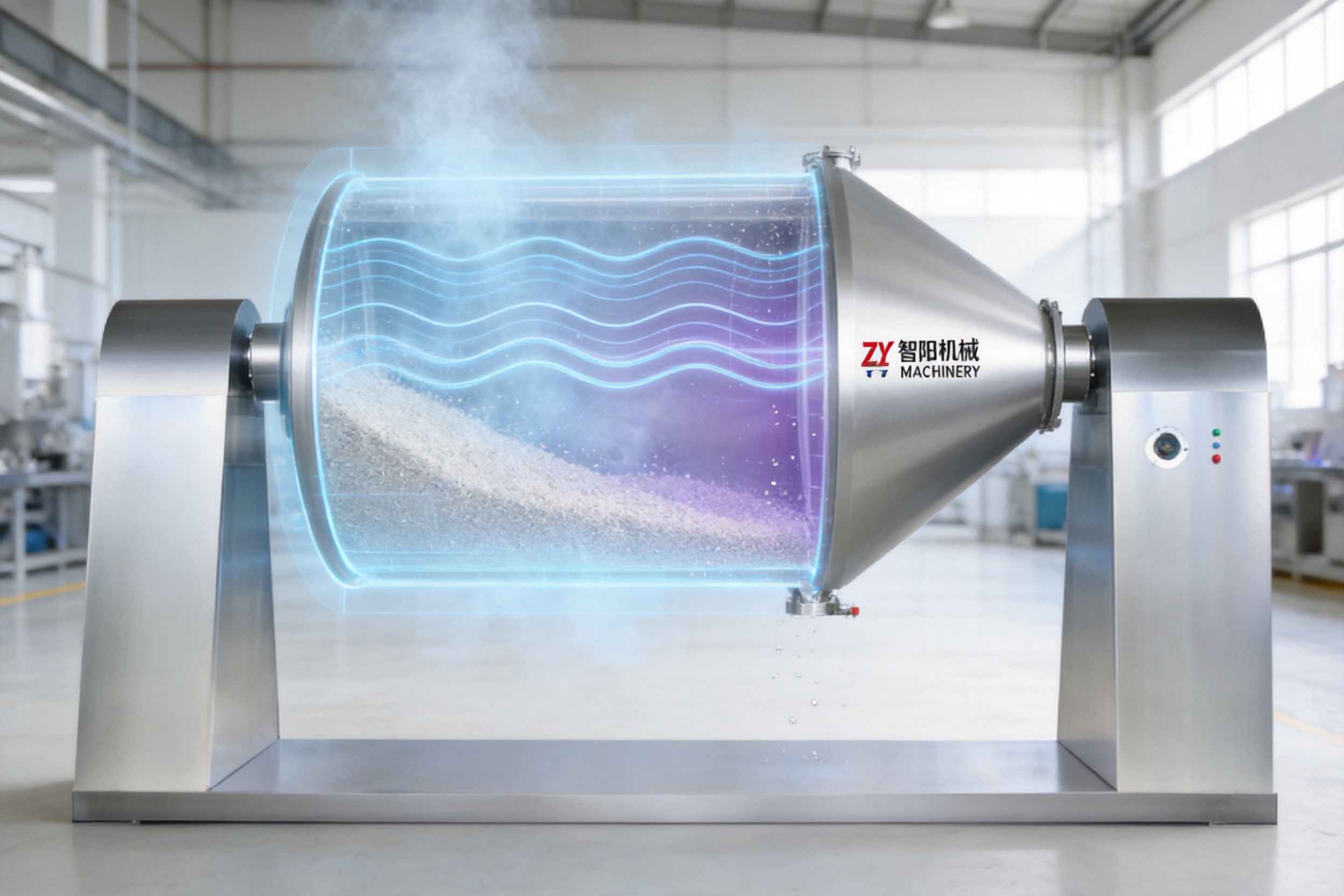
However, vacuum alone does not guarantee uniform drying. A stationary vessel may develop areas with limited heat transfer or poor vapor movement, especially when the powder forms a bed with low permeability. The SZG design addresses this challenge through continuous rotation. As the double-cone vessel turns, the product repeatedly changes position, exposes new surfaces, and mixes within the heated chamber.
The result is a combined process in which reduced pressure supports low-temperature evaporation and mechanical movement supports uniform heat and mass transfer. This combination is the principal reason that double cone rotary vacuum dryers are widely considered for sensitive powder and granular products.
The working process begins with loading the powder or granules into the double-cone vessel. Depending on the production layout and material characteristics, loading may be performed manually or through a vacuum feeding system. Once the vessel is charged, the system is closed and connected to the vacuum line and heating medium.
The vessel rotates continuously around its horizontal axis. During rotation, the material is lifted along the internal wall and then falls or rolls toward the lower portion of the vessel. The two-cone geometry helps guide the product toward the central region and then redistribute it as the vessel continues turning. The repeated movement creates a complex combination of tumbling, rolling, sliding, and impact.
At the same time, heat is transferred through the vessel wall from the interlayer. The heating medium may be selected according to the process requirements and equipment configuration. As the product warms, moisture evaporates. The vacuum system removes the vapor from the vessel, and downstream condensation or recovery equipment can collect the evaporated liquid.
Continuous rotation improves the consistency of this process in several ways. First, it repeatedly exposes different portions of the powder to the heated wall. Second, it breaks up areas of uneven distribution that could otherwise dry slowly. Third, it supports internal mixing without requiring a separate agitator shaft. Fourth, it helps maintain a more consistent moisture profile throughout the batch.
The process is normally operated as a batch cycle. The actual drying time depends on the material, initial moisture content, target residual moisture, loading ratio, heating temperature, vacuum level, particle size, bulk density, and required product quality. A suitable process-development program should therefore be completed before production-scale operation.
The working volume of the vessel is lower than its total volume. This empty space is necessary for the material to tumble freely. Overfilling can reduce movement, impair vapor removal, increase the drying time, and produce nonuniform results. The appropriate loading ratio depends on the flowability and cohesiveness of the material.
Free-flowing granules may require different operating conditions from cohesive powders. A material that forms large lumps may need pre-screening, milling, or a separate deagglomeration step. In pharmaceutical production, the loading method should also be evaluated for containment, cleaning, operator exposure, and cross-contamination control.
The process pressure is reduced after the vessel has been sealed. The SZG product information specifies a designed pressure range in the container of approximately -0.1 to 0.15 MPa, while the interlayer is designed for approximately 0.3 MPa. These values describe the equipment design conditions and should not be interpreted as a universal operating recipe for every product.
Heating and vacuum should be coordinated rather than adjusted independently. Excessively rapid heating may cause surface drying, foaming, bumping, or uncontrolled vapor release. Excessively low heating may extend the cycle unnecessarily. Similarly, a very deep vacuum may not always provide the best result if the product tends to foam, entrain fines, or become difficult to control.
Process engineers normally establish a controlled sequence that includes loading, vessel sealing, vacuum initiation, gradual heating, rotation, drying, optional hold time, cooling, vacuum release, and discharge. The precise sequence should be validated using the target formulation and production conditions.
The rotating double-cone arrangement does not merely move the material from one location to another. It creates a changing surface area and repeated redistribution of particles. This is especially useful when the product contains regions with different moisture levels or when heat transfer must be spread across a large batch.
The motion is comparatively gentle when compared with high-shear mixing or aggressive mechanical agitation. This can help preserve crystalline structure and reduce unnecessary particle breakage. Nevertheless, the actual effect depends on rotation speed, fill level, particle strength, friability, and the presence of internal fittings. Sensitive products should be evaluated for attrition during development trials.
The ability to dry at reduced temperatures is one of the most important benefits of vacuum operation. Materials that may degrade, discolor, lose activity, or undergo unwanted reactions at high temperature can often be processed more gently. This is relevant to active pharmaceutical ingredients, botanical extracts, enzymes, vitamins, specialty chemicals, and food ingredients.
The equipment does not eliminate the need for thermal control. Instead, it gives the process designer greater flexibility to select a product temperature compatible with the formulation. A lower boiling point under vacuum can support moisture removal while protecting the product from excessive thermal exposure.
Many powders are vulnerable to oxidation during heating and drying. Reducing the amount of air in the vessel can limit oxygen exposure during the main drying stage. This is particularly useful for products containing oxidation-sensitive oils, active compounds, colorants, flavors, or reactive intermediates.
Where necessary, the vacuum system may be combined with controlled inert-gas introduction during pressure release or other process stages. The exact arrangement should be specified according to the material hazard assessment and the required containment strategy.
Crystalline materials can be affected by excessive heat, rapid solvent removal, or uncontrolled mechanical stress. Such changes may influence particle morphology, flowability, dissolution, compressibility, and downstream formulation performance.
The SZG dryer provides a relatively controlled environment in which the material can be gently tumbled under vacuum. The absence of a high-speed cutting mechanism helps reduce unnecessary deformation. This can be advantageous when maintaining crystal integrity is important to product quality.
Continuous rotation is central to the equipment’s performance. Each revolution exposes different portions of the batch to the vessel wall and to the available vapor space. This helps reduce temperature and moisture gradients that may occur in static beds.
The same motion also produces a mixing effect. Although the dryer should not automatically be considered a substitute for a dedicated high-precision blender, its tumbling action can support a uniform distribution of product during drying. For certain materials, this can reduce the need for a separate intermediate mixing operation.
The moisture removed during vacuum drying can be directed to a recovery system. This feature is valuable when the evaporated liquid contains a solvent or another component that should be collected for reuse, treatment, or safe disposal.
Moisture recovery can also help protect the working environment. By enclosing the drying operation and routing vapors through appropriate downstream equipment, the system can reduce uncontrolled emissions. The condenser, receiver, vacuum pump, filters, and associated piping should be selected according to the vapor composition and process duty.
The product information identifies the SZG dryer as energy-saving, easy to operate, and capable of reducing labor intensity. These benefits arise from the combination of batch enclosure, controlled heating, vacuum evaporation, and mechanical product movement.
Automation can further improve operating consistency. Vacuum level, heating temperature, rotation time, and process sequence may be monitored or controlled through an appropriate electrical and instrumentation system. The degree of automation can be adapted to laboratory, pilot, or full-scale production requirements.
Equipment selection should always be based on the material and process requirements rather than on a single universal claim. The SZG dryer is not intended to replace every type of dryer. Its advantages are most significant when the product requires low-temperature drying, enclosed processing, gentle mixing, moisture recovery, or protection from air.
Static tray dryers can be practical for small batches and simple materials, but they may require manual spreading, tray handling, and periodic product redistribution. Differences in layer thickness can produce variations in drying time and residual moisture.
The SZG dryer provides continuous internal movement and an enclosed process path. It can reduce manual handling and improve batch uniformity, especially when the powder or granule benefits from tumbling. It may also provide better containment of vapors and lower operator exposure.
Atmospheric hot-air systems rely on heated air to transfer energy and carry away moisture. They can be efficient for robust products, but the hot-air environment may be unsuitable for oxidation-sensitive or heat-sensitive materials.
The SZG dryer uses vacuum evaporation rather than depending solely on hot air. This permits a lower drying temperature and reduces the amount of oxygen present during the main process stage. It may therefore be more appropriate for valuable or sensitive products whose properties could be damaged by direct exposure to hot air.
Fluidized-bed dryers provide excellent heat and mass transfer for particles with suitable size, density, and flow characteristics. However, some cohesive, fragile, sticky, or very fine materials are difficult to fluidize consistently. Fluidization can also generate dust and may require careful air-handling and filtration arrangements.
The SZG dryer uses mechanical tumbling instead of fluidizing air. This can make it attractive for materials that do not fluidize easily or that require a lower-shear, low-oxygen environment. On the other hand, fluidized-bed systems may be faster for suitable granules, so comparative trials should be performed when cycle time is the primary concern.
Agitated vacuum dryers can provide strong mixing and efficient heat transfer, particularly for pastes, wet masses, and cohesive products. Their internal shafts, paddles, or agitators may be beneficial for breaking material bridges and maintaining movement.
The double-cone rotary configuration has a simpler internal product-contact arrangement and avoids a continuously rotating agitator shaft through the vessel. This can support cleaning and reduce mechanical complexity in applications involving free-flowing powders or granules. For highly cohesive products, however, an agitated design may be more appropriate.
Spray drying is a continuous method that converts liquid feed into powder through atomization and rapid evaporation. It is highly effective for emulsions, solutions, and suspensions, but it requires the product to be suitable for atomization and rapid high-surface-area drying.
The SZG dryer is intended for powder and granular materials that are already in a wet or partially wet solid form. It is therefore better suited to batch drying after crystallization, precipitation, wet granulation, solvent exchange, or other solid-forming processes.
The SZG series is available in multiple sizes to support different production requirements. The published models range from SZG-100 to SZG-4500. Total vessel volume ranges from 100 liters to 4,500 liters, while working volume ranges from 50 liters to 2,250 liters.
| Item | Unit | SZG-100 | SZG-350 | SZG-500 | SZG-750 | SZG-1000 | SZG-1500 | SZG-2000 | SZG-3000 | SZG-4500 |
| Total volume | L | 100 | 350 | 500 | 750 | 1000 | 1500 | 2000 | 3000 | 4500 |
| Working volume | L | 50 | 175 | 250 | 350 | 500 | 750 | 1000 | 1500 | 2250 |
| Heating area | m² | 1.16 | 2 | 2.63 | 3.5 | 4.61 | 5.58 | 7.5 | 9.6 | 13.8 |
| Rotating speed | rpm | 6 | 6 | 6 | 6 | 6 | 6 | 6 | 4 | 4 |
| Power | kW | 0.8 | 1.5 | 1.5 | 2 | 3 | 3 | 4 | 5.5 | 7.5 |
| Rotating frame height | mm | 1750 | 2100 | 2250 | 2490 | 2800 | 2940 | 2990 | 3490 | 4150 |
| Total weight | kg | 800 | 1100 | 1200 | 1500 | 2800 | 3300 | 3600 | 6400 | 7500 |
The container design pressure is specified as -0.1 to 0.15 MPa, and the interlayer design pressure is specified as 0.3 MPa. These design values should be reviewed together with applicable pressure-vessel regulations, plant standards, material compatibility requirements, and the final engineering specification.
Rotation speed is listed at 6 rpm for models from SZG-100 through SZG-2000, and 4 rpm for SZG-3000 and SZG-4500. The lower listed speed on the larger models reflects the need to balance vessel size, product movement, drive torque, mechanical loads, and process requirements.
The heating area increases from 1.16 square meters on the SZG-100 to 13.8 square meters on the SZG-4500. This scaling supports greater heat-transfer capacity as batch size increases. Actual drying capacity, however, cannot be determined from vessel volume alone. Product bulk density, moisture load, thermal sensitivity, vapor pressure, and required cycle time must all be considered.
Pharmaceutical production frequently involves active ingredients, excipients, intermediates, and granules that require controlled drying. The SZG dryer can be considered for products that are sensitive to heat, oxygen, or prolonged atmospheric exposure.
Potential applications include drying crystallized active ingredients, pharmaceutical intermediates, wet granules, extracted solids, and selected excipient systems. In oral solid dosage production, the dryer may be positioned after wet granulation or another liquid-assisted process and before milling, blending, lubrication, or tablet compression.
Pharmaceutical use requires particular attention to cleaning validation, material traceability, containment, surface finish, gasket selection, discharge design, and documentation. The final equipment configuration should be selected according to the facility’s quality system and regulatory requirements.
Chemical manufacturers may use vacuum drying for catalysts, crystalline intermediates, pigments, additives, precipitated products, and specialty powders. The enclosed vessel can be useful when the product produces odorous or hazardous vapors during drying.
When solvents are involved, the complete system must be evaluated for flammability, vapor compatibility, electrical classification, pressure control, condenser performance, and vacuum-pump selection. The dryer should be integrated with appropriate protective devices and process safeguards.
Food ingredients and nutraceutical powders may be sensitive to heat, oxygen, or loss of volatile components. Vacuum drying can help preserve selected flavor, color, aroma, and functional properties while reducing the temperature required for evaporation.
Applications may include botanical materials, extracts, functional ingredients, crystalline food components, and specialty powders. Hygienic design, cleaning accessibility, food-contact materials, and prevention of cross-contamination are important considerations in these installations.
Biotechnology and biopharmaceutical processes may involve materials whose activity is affected by temperature or oxidation. The SZG dryer may be appropriate for selected solid intermediates and formulated powders when the product-development data supports the process.
Not every biological material is suitable for mechanical tumbling or vacuum drying. Product-specific testing is necessary to determine whether the process preserves activity, structure, moisture profile, and downstream performance.
Changzhou Zhiyang Machinery Equipment Co., Ltd. was founded in 2010 and is based in Changzhou, China. The company specializes in powder processing and oral solid dosage equipment, with capabilities covering equipment design, manufacturing, process integration, and engineering implementation.
A major strength of this business model is its broad product scope. The portfolio includes laboratory equipment, mixing equipment, granulation equipment, drying equipment, coating equipment, auxiliary processing equipment, and transfer and conveying systems. This range allows the supplier to consider how the SZG dryer connects with upstream and downstream operations rather than treating drying as an isolated unit.
For example, a complete process may require material transfer from a mixer to a granulator, movement from the granulator to the vacuum dryer, discharge into a mill or blender, and controlled conveyance to a coating or packaging stage. A supplier familiar with each of these operations can help reduce interface problems involving height, connection size, dust containment, batch capacity, and control logic.
The company describes its engineering approach as process-driven. This means that equipment selection is based on material characteristics, capacity requirements, and site conditions. Such an approach is particularly important for vacuum dryers because the same vessel size may perform very differently with different products.
Material properties that influence design include bulk density, particle size distribution, moisture content, solvent type, cohesiveness, flowability, thermal sensitivity, oxidation sensitivity, and tendency to form lumps. Site factors include available heating utilities, vacuum infrastructure, floor loading, installation height, cleaning systems, operator access, hazardous-area requirements, and production flow.
The company also reports that it has strengthened research and development capabilities, obtained quality system certification, developed patented technologies, and expanded overseas service capabilities. These activities support a more complete equipment-delivery process, from initial technical discussion and testing to manufacturing, installation assistance, commissioning, and after-sales service.
Another important strength is the company’s experience with laboratory, pilot, and full-scale production. Scale-up is often one of the most difficult aspects of drying. Laboratory testing can identify basic thermal and mixing behavior, while pilot equipment can reveal how loading ratio, rotation, vapor removal, and heat-transfer limitations change with size. Experience across these stages can improve the reliability of the final production specification.
The manufacturer’s stated emphasis on honesty, product quality, specialty, customer reputation, research, and innovation also reflects the long-term nature of industrial equipment relationships. A dryer is not simply purchased and forgotten. It must be supported through documentation, spare parts, maintenance guidance, troubleshooting, and possible process modifications as the customer’s production requirements develop.
A successful installation begins with a clear understanding of the product. The initial technical information should include batch size, initial moisture, target moisture, solvent composition, maximum allowable product temperature, thermal degradation limits, oxygen sensitivity, bulk density, particle size, flowability, and any requirements concerning crystal form or particle morphology.
Drying trials should measure more than the final moisture result. Important observations may include product temperature, wall temperature, vacuum pressure, vapor temperature, condenser load, torque behavior, color, particle-size distribution, bulk density, flowability, crystal form, and any evidence of sticking or agglomeration.
One of the most useful scale-up principles is to preserve the relevant process conditions rather than simply multiplying batch volume. Heat-transfer area per unit mass, product depth during tumbling, vapor-removal capacity, rotational motion, and residence time may all influence the outcome.
Working volume should be selected carefully. A vessel that is too small may require excessive fill and restrict movement. A vessel that is too large may produce inefficient tumbling and unnecessary utility consumption if the batch occupies only a small fraction of the available space.
Vacuum performance should be evaluated under actual vapor load. A vacuum pump may achieve a deep vacuum when the vessel is empty, but the pressure may rise significantly during active evaporation. The condenser must be capable of handling the expected vapor flow and temperature. Filters or demisters may be needed to prevent fine particles from entering the vacuum system.
Heating should be evaluated dynamically. The product temperature may lag behind the interlayer temperature, particularly during the early stage when evaporation consumes heat. The operator should understand the difference between heating-medium temperature, vessel-wall temperature, and actual product temperature.
For products that are prone to caking, the movement pattern and end-point strategy deserve special attention. A controlled reduction of moisture may be preferable to rapid drying. In some cases, a staged vacuum and temperature profile can help maintain movement and reduce the formation of hard agglomerates.
Pharmaceutical, food, and high-value chemical applications require a comprehensive hygiene and safety strategy. Product-contact surfaces should be selected for compatibility with the formulation, cleaning agents, temperature, vacuum, and any solvents involved. Surface finish and weld quality should be addressed in the equipment specification.
Cleaning access is another important factor. The internal geometry should permit effective removal of residual powder and condensed material. Where the process requires wet cleaning, the drainage arrangement and drying procedure should be reviewed. Where water is unsuitable, validated dry-cleaning or solvent-cleaning methods may be considered.
Mechanical safety measures should protect operators from rotating components, elevated structures, hot surfaces, vacuum conditions, and unexpected movement. Interlocks may be used to prevent vessel rotation when access doors are open or to prevent opening under unsafe pressure conditions.
If the process involves flammable solvents or combustible dust, a formal hazard assessment is essential. The system may require explosion protection, grounding and bonding, suitable electrical components, inert-gas capability, pressure-relief devices, solvent-compatible seals, and a properly selected condenser and vacuum pump.
Routine maintenance normally includes inspection of bearings, drive components, seals, vacuum connections, heating connections, support structures, instrumentation, and safety devices. Maintenance intervals should be established according to operating hours, load conditions, process temperature, product characteristics, and manufacturer recommendations.
Preventive maintenance is particularly valuable for vacuum systems. Small leaks can lengthen the drying cycle, increase energy consumption, and create inconsistent batch results. Regular leak testing and inspection of valves, gaskets, sight glasses, sampling points, and flexible connections can help maintain performance.
The SZG dryer can be installed as a standalone batch unit or integrated into a broader production line. In pharmaceutical and powder-processing facilities, upstream equipment may include vacuum feeders, mixers, wet granulators, high-shear granulators, crystallization systems, or filtration equipment.
Downstream equipment may include mills, oscillating granulators, cone mills, blending systems, tablet presses, capsule-filling machines, coating systems, or packaging lines. The dryer’s discharge arrangement should therefore be coordinated with the next process step.
Transfer and conveying equipment can be used to reduce manual handling. Vacuum conveying, lifting systems, flexible containers, bins, and enclosed transfer devices may improve containment and reduce operator exposure. The selection should consider the particle properties and whether the product is sensitive to segregation or attrition.
Control-system integration can help synchronize the dryer with feeding and discharge equipment. Batch records may include the vessel identification, product code, load weight, vacuum profile, heating profile, rotation time, end-point data, and operator confirmation. This type of process information supports repeatability and traceability.
Facility layout must account for the rotating frame height, vessel access, maintenance clearance, loading and discharge elevation, floor loading, utility connections, and safe operator movement. The listed rotating frame height ranges from 1,750 mm for the SZG-100 to 4,150 mm for the SZG-4500, so installation planning is essential for larger models.
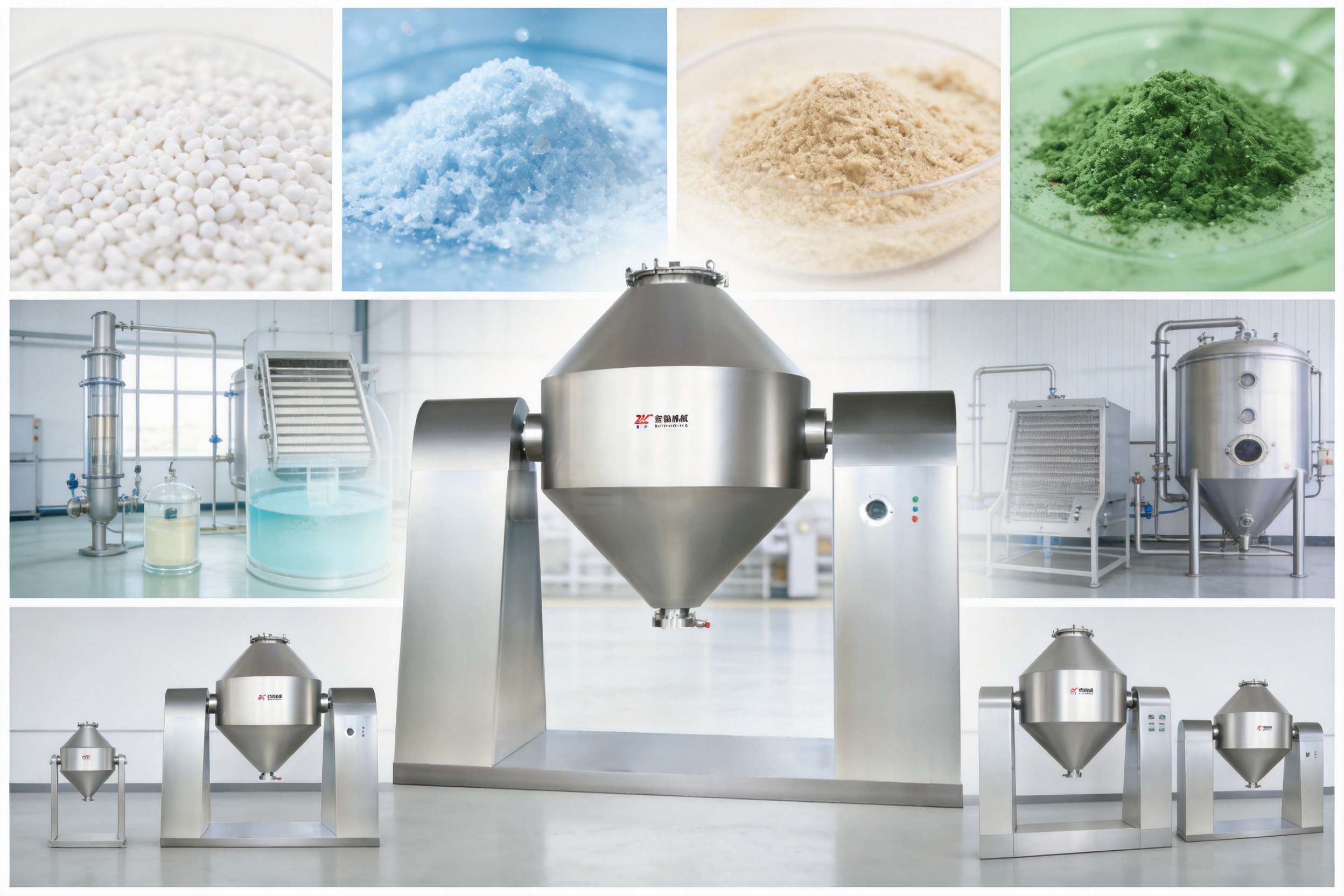
Model selection should begin with the required working volume rather than total vessel volume. The working volume of the selected unit should accommodate the actual batch while leaving sufficient space for effective tumbling and vapor movement.
The following factors should be reviewed with the equipment supplier:
1. Required batch mass and batch volume.
2. Minimum and maximum bulk density.
3. Initial moisture and final moisture requirements.
4. Type of liquid or solvent to be removed.
5. Maximum allowable product temperature.
6. Oxidation, toxicity, odor, or containment concerns.
7. Desired cycle time and production schedule.
8. Heating medium and available utility conditions.
9. Vacuum level and vapor-handling requirements.
10. Cleaning, sterilization, or hygienic-design requirements.
11. Product sensitivity to attrition, impact, and agglomeration.
12. Required automation and data-recording functions.
13. Installation space, access, floor loading, and discharge height.
14. Applicable pressure-vessel, electrical, environmental, and safety standards.
As a general planning principle, the dryer should not be selected solely by comparing nominal liters. A smaller unit may be more appropriate for a high-density product with a modest batch mass, while a larger unit may be needed for a low-density powder with substantial moisture loading. Laboratory and pilot testing can provide a more reliable basis for final selection.
The long-term value of a vacuum dryer depends on more than its initial purchase price. Productivity, cycle consistency, cleaning time, maintenance requirements, energy consumption, product recovery, operator safety, and integration with other equipment all influence the total cost of ownership.
A well-designed double cone dryer can reduce manual product handling and simplify the drying route. Its enclosed operation can limit exposure to the surrounding environment, while the rotating vessel provides both drying movement and mixing action. If the process is properly developed, these benefits may contribute to reliable batch quality and reduced rework.
Reliable manufacturing also requires attention to welding, alignment, pressure testing, drive assembly, sealing, surface finish, instrumentation, and documentation. These details are especially important for a vessel that must rotate under vacuum while transferring heat through an interlayer.
Changzhou Zhiyang Machinery Equipment Co., Ltd. positions itself as a process and engineering partner rather than only a machine vendor. Its combination of equipment categories, process integration, research and development, quality-system experience, and overseas service capability can be valuable for customers planning a new production line or upgrading an existing process.
For customers with complex materials, the most useful supplier relationship is one that includes technical discussion, product testing, model selection, engineering review, installation support, and after-sales assistance. This reduces the risk of selecting a dryer based on incomplete information and helps ensure that the final system is suitable for the actual production environment.
The dryer is designed for powders and granular materials, particularly products that are heat-sensitive, easily oxidized, crystalline, toxic, strongly irritating, or suitable for moisture recovery. Examples may include pharmaceutical intermediates, chemical powders, food ingredients, nutraceutical materials, and selected wet granules.
Vacuum lowers the pressure inside the vessel, allowing moisture and other volatile components to evaporate at lower temperatures. This can reduce thermal stress and oxygen exposure while supporting the drying of sensitive materials.
Yes. Continuous rotation causes the powder or granules to tumble, roll, slide, and redistribute inside the double-cone vessel. This produces a mixing effect and helps expose different portions of the material to the heated wall. It should not automatically replace a dedicated precision blender when a separate blending operation is required.
It can be connected to a condenser and recovery system designed for the relevant vapor. The condenser, receiver, vacuum pump, piping, seals, and protective devices must be selected according to the solvent properties and process safety requirements.
The largest listed model is SZG-4500, with a total volume of 4,500 liters and a working volume of 2,250 liters. Its listed heating area is 13.8 square meters, rotating speed is 4 rpm, power is 7.5 kW, and total weight is approximately 7,500 kg.
Selection should consider working volume, batch mass, bulk density, moisture load, product temperature limit, target cycle time, heating conditions, vacuum capacity, material flowability, installation space, and safety requirements. Product testing and process calculations should support the final selection.
It can be suitable for pharmaceutical powders, intermediates, and granules when the equipment configuration meets the facility’s requirements for cleaning, containment, documentation, materials, surface finish, validation, and process control. Each application should be reviewed individually.
The answer depends on the degree of cohesion and the material’s behavior during drying. Free-flowing powders and granules are generally well suited to tumbling. Highly cohesive, sticky, or paste-like products may require an agitated vacuum dryer or another specialized design. Trials are recommended.
Typical requirements include a heating medium, vacuum connection, vapor condensation or recovery equipment, electrical power, and suitable control and safety systems. Exact utility requirements depend on the model, process temperature, vapor load, and customer’s plant conditions.
Yes. The dryer can be incorporated into a process route involving feeding, mixing, granulation, conveying, milling, blending, coating, or packaging. Integration should be considered during layout and engineering design to ensure compatible capacities, elevations, interfaces, containment, and control logic.
The product information lists the designed pressure in the container as approximately -0.1 to 0.15 MPa and the designed pressure in the interlayer as approximately 0.3 MPa. Final operating conditions and compliance requirements must be confirmed in the technical specification.
Testing is strongly recommended for new materials, complex formulations, solvent-based processes, and products with strict quality requirements. Testing helps determine loading ratio, heating profile, vacuum conditions, cycle time, product temperature, and final moisture performance before scale-up.
The SZG double cone rotary vacuum dryer is a practical solution for batch drying of sensitive powders and granular materials. Its principal advantages arise from the combination of vacuum evaporation, controlled heating, and continuous double-cone rotation. This configuration supports low-temperature drying, reduced oxidation risk, uniform product movement, crystalline-structure preservation, moisture recovery, and reduced manual handling.
The range includes models from 100 liters to 4,500 liters of total volume, allowing the equipment to serve laboratory, pilot, and production-scale applications. The correct model should be selected through a technical review of batch volume, bulk density, moisture load, product sensitivity, cycle-time requirements, and plant conditions.
Compared with static, atmospheric, or air-based alternatives, the SZG dryer can provide meaningful advantages when product protection, enclosed operation, or vapor recovery is important. Its rotating vessel also offers a useful mixing effect without relying on a high-speed internal agitator.
Changzhou Zhiyang Machinery Equipment Co., Ltd. strengthens the equipment offering through process integration, a broad powder-processing portfolio, laboratory-to-production experience, research and development, quality-system experience, and overseas service capabilities. These strengths support a more complete approach to equipment selection and implementation.
For manufacturers seeking dependable drying of heat-sensitive, oxidation-sensitive, crystalline, toxic, or moisture-critical products, the SZG double cone rotary vacuum dryer offers a flexible platform that can be adapted to a wide range of industrial processes. Final performance depends on sound product characterization, appropriate model selection, validated operating conditions, and proper integration with the surrounding production system.
1. Product technical information for the SZG Double Cone Rotary Vacuum Dryer, including vessel capacity, working volume, heating area, rotation speed, power, design pressure, dimensions, and weight.
2. Perry’s Chemical Engineers’ Handbook, sections concerning drying, heat transfer, vacuum processing, and solids handling.
3. Handbook of Industrial Drying, discussions of vacuum drying, batch drying, heat-sensitive materials, and process scale-up.
4. Pharmaceutical Manufacturing Engineering references concerning powder handling, wet granulation, drying, containment, cleaning, and process validation.
5. General engineering practices for pressure vessels, vacuum systems, solvent recovery, hygienic equipment design, and industrial machinery safety.
6. Changzhou Zhiyang Machinery Equipment Co., Ltd. company information concerning powder processing equipment, oral solid dosage systems, process integration, research and development, manufacturing, and service capabilities.
Want to stay up to date?
Contact us via the email address below.
Don't worry about spam. We hate it too!
Mobile Client

Video Account
Phone:+86-15161130178
Tel:+86-519-88674267
Email:czzy188@163.com
Phone:+86-15161132798
Email:zy@zy-drying.com

WeChat ID

Copyright 2026 Changzhou Zhiyang Machinery Equipment Co., Ltd. All Rights Reserved  Oral Solid Dosage Equipment Manufacturer