 English
 Español
 русский
 中文简体

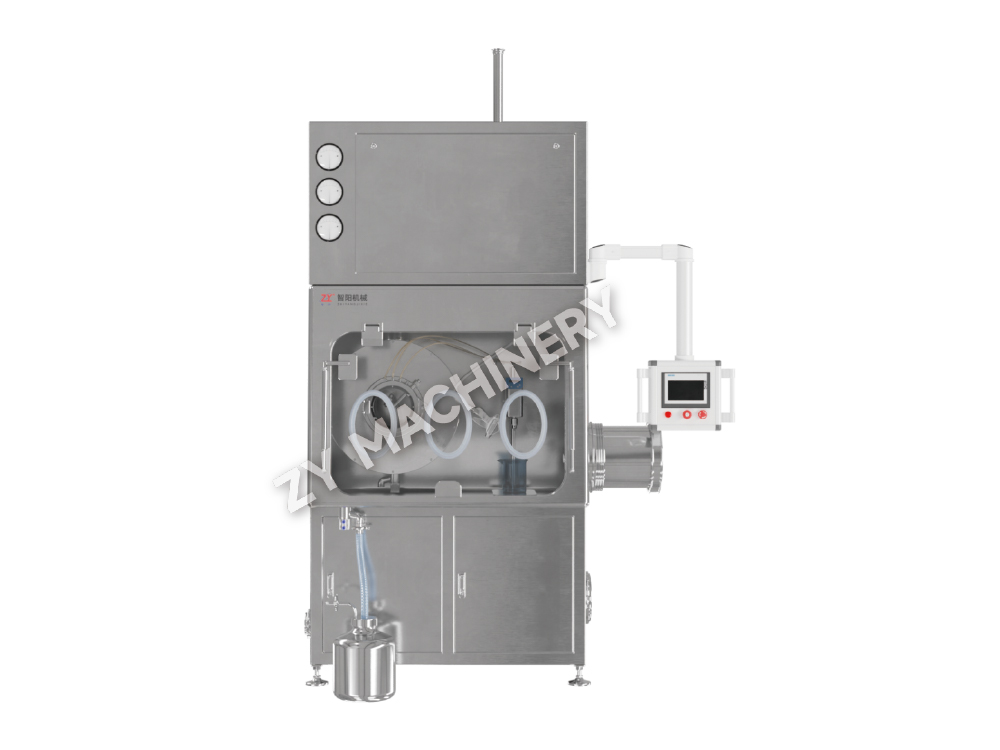
30B Dust-Collecting Crushing Machine
The 30B dust-collecting crushing machine is widely used for pulverizing var.....

Content
Reliable size reduction is one of the most important stages in pharmaceutical, food, and chemical processing. Before powders can be mixed, granulated, dried, coated, transferred, or filled, raw materials often need to be reduced to a controlled particle size. The quality of this first processing step directly influences downstream uniformity, production efficiency, material recovery, cleaning requirements, and operator safety.
The 30B dust-collecting crushing machine is designed for this purpose. It combines a feeding system, pulverizing chamber, and integrated dust-collection unit in one compact processing solution. The equipment is intended for dry materials that require fine grinding and controlled discharge, with a stated capacity range of 50 to 300 kilograms per hour and a crushed fineness range of 60 to 120 mesh under suitable operating conditions.
Unlike a basic crusher that only reduces particle size, the 30B model is designed to address several production requirements at the same time. It provides high-speed pulverization, captures airborne powder during processing, uses stainless steel on material-contact surfaces, and offers a structure that is relatively simple to operate and clean. These characteristics make it suitable for manufacturers seeking a practical machine for routine powder processing rather than an unnecessarily complicated system.
The machine is manufactured and supplied by Changzhou Zhiyang Machinery Equipment Co., Ltd., a China-based equipment company specializing in powder processing, oral solid dosage equipment, process integration, and production-line engineering. The company serves pharmaceutical, biopharmaceutical, biotechnology, nutraceutical, veterinary, additives, food, and related industries through standalone machines, modular systems, and complete production solutions.
This article examines the working principle, construction, performance, hygiene characteristics, manufacturing strengths, application value, and selection considerations of the 30B dust-collecting crushing machine. It also explains why the machine can offer practical advantages compared with conventional standalone crushers or poorly integrated pulverizing systems.
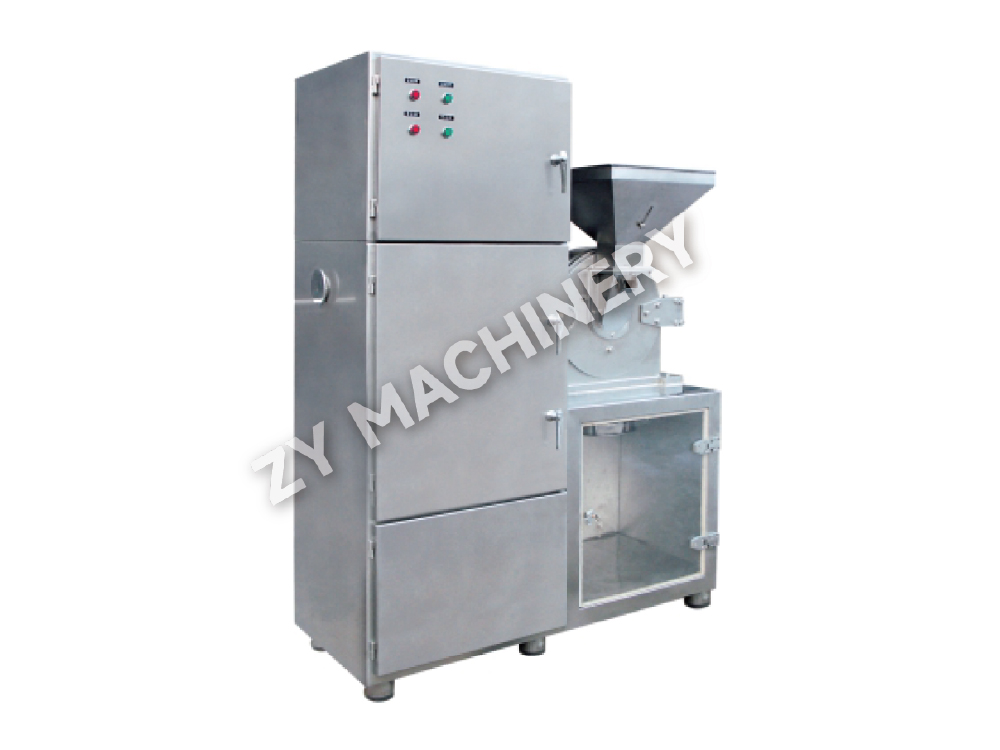
30B Dust-Collecting Crushing Machine
Crushing is often treated as a preliminary operation, but its influence extends through the entire production process. Particle size affects flowability, blending behavior, dissolution, dispersion, granulation, drying, coating, and final product consistency. If the feed material is too coarse or irregular, subsequent equipment may be forced to work harder, and the final product may show greater variability.
In pharmaceutical production, controlled pulverization can help prepare active ingredients, excipients, herbal materials, and other dry substances for blending or dosage-form manufacturing. In food processing, it can be used for dry ingredients, plant materials, spices, and selected nutritional products. In chemical production, it may support the preparation of additives, intermediates, and other dry powders that need a more uniform particle distribution.
A suitable crushing machine should achieve more than a high rotating speed. It should provide a stable material path, appropriate contact between the material and milling mechanism, effective powder collection, straightforward maintenance, and hygienic surfaces. It should also be adaptable to the characteristics of the feed material, because hardness, brittleness, moisture, heat sensitivity, stickiness, and bulk density can all influence the result.
The 30B model addresses these needs through a combined pulverizing and dust-catching arrangement. During operation, material enters the crushing chamber, is reduced by the internal milling mechanism, and is drawn toward the collection section while airborne particles are controlled. This arrangement helps reduce the need for separate dust-handling equipment in applications where an integrated collection unit is sufficient.
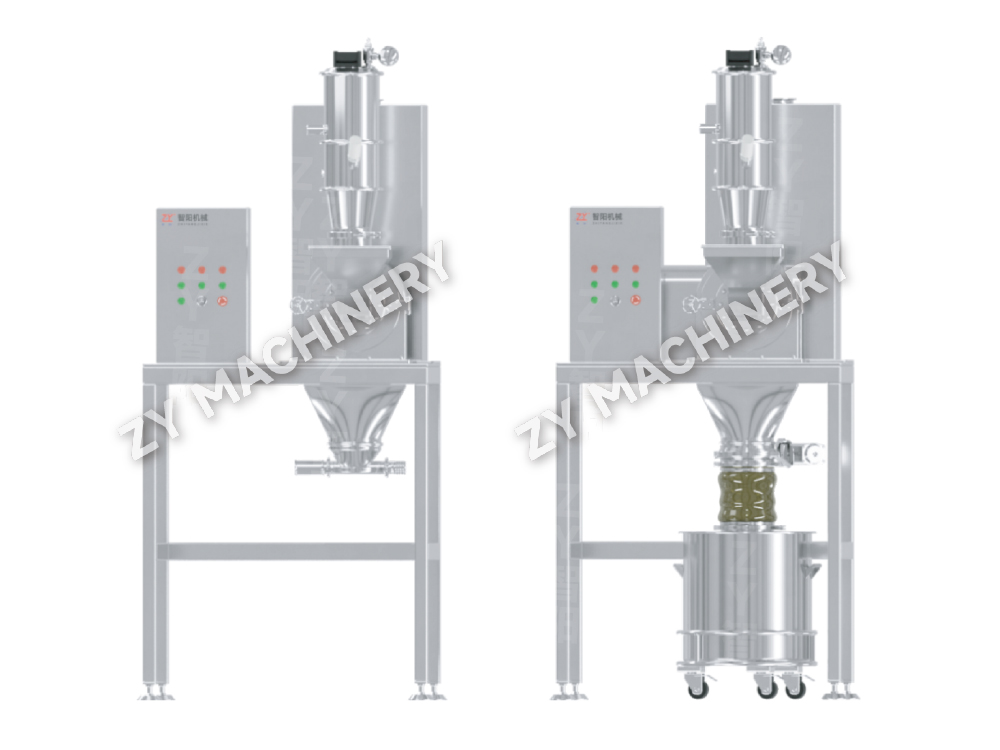
The 30B dust-collecting crushing machine is composed of three principal functional sections: the feeding system, the pulverizing chamber, and the dust-collection unit. Each section contributes to a continuous material-processing route.
The feeding system introduces the raw material into the pulverizing chamber. Consistent feeding is important because excessive feed may overload the crushing mechanism, while insufficient feed can reduce productivity and create unstable operating conditions. The declared feeding size is 8 mesh, which indicates that the material may need to be pre-sized or prepared before entering the machine if the original feed is larger.
Appropriate feeding preparation can improve the stability of the machine and reduce unnecessary mechanical stress. Operators should assess the raw material before production, including its dimensions, moisture content, hardness, and tendency to agglomerate. In a complete processing line, upstream screening, pre-crushing, or controlled feeding equipment may be added when required by the material.
The pulverizing chamber contains the internal milling mechanism responsible for reducing the material. The main shaft operates at a rated speed of 3,800 revolutions per minute. This high-speed action provides the energy needed to break down suitable dry materials into finer particles.
The actual crushing mechanism may act through impact, friction, shear, or a combination of these effects, depending on the material and operating conditions. As the material enters the chamber, repeated contact with the rotating internal components reduces its size. The final fineness is influenced by feed characteristics, throughput, screen or internal configuration, operating time, and the condition of the working components.
Because the machine is designed for dry materials, operators should avoid introducing wet, highly sticky, or unsuitable substances without first confirming compatibility. Moisture can promote adhesion, reduce throughput, obstruct the material path, and increase cleaning requirements. Product trials are recommended for new materials or demanding applications.
The integrated dust-collection unit is a defining characteristic of the 30B model. Fine powders can become airborne during crushing, particularly when the material is brittle or when the target particle size is small. Without effective collection, dust may settle on surrounding surfaces, reduce housekeeping efficiency, and create an uncomfortable working environment.
The dust-catching motor is rated at 1.5 kilowatts. During processing, the collection system works together with the crushing section to draw and capture pulverized material. This helps maintain a cleaner production area and can reduce the release of powder into the surrounding workspace.
Integrated dust control also provides an operational advantage over a basic crusher that discharges material directly into the room or relies on an improvised external vacuum arrangement. By designing the crushing and collection functions as part of one machine, the equipment can simplify installation and improve coordination between size reduction and powder recovery.
At the beginning of a batch or continuous production run, the prepared raw material is fed into the machine through the feeding system. The feed enters the pulverizing chamber, where it encounters the high-speed internal milling mechanism. Mechanical forces act on the material and progressively reduce larger pieces into smaller particles.
As pulverization proceeds, the dust-collection system creates the air movement required to transport fine particles away from the crushing zone. The processed powder is captured by the collection arrangement rather than being freely dispersed into the production area. This combined movement supports material recovery and helps maintain a cleaner atmosphere around the machine.
The final product is collected after passing through the appropriate internal control point or discharge route. Depending on the material, the machine can produce a powder within the stated range of 60 to 120 mesh. The actual result should be verified through sampling and particle-size testing because performance depends on the physical properties of the feedstock and the selected operating conditions.
The working principle is intentionally straightforward. A simple process route can reduce the number of potential failure points and make operator training easier. It can also support faster troubleshooting, since the machine is organized around a clear sequence: feed, pulverize, collect, and discharge.
| Item | Unit | Specification |
|---|---|---|
| Model | — | 30B |
| Capacity | kg/h | 50–300 |
| Main shaft rotating speed | rpm | 3,800 |
| Feeding size | mesh | 8 |
| Crushed fineness | mesh | 60–120 |
| Crushing motor power | kW | 5.5 |
| Dust-catching motor power | kW | 1.5 |
| Overall dimensions | mm | 1,200 × 650 × 1,650 |
The specification table indicates that the 30B is a compact industrial machine rather than a small laboratory mill or a very large high-throughput production crusher. Its capacity range enables it to serve pilot-scale operations, small and medium production lines, and selected full-production applications where the required throughput falls within the rated range.
The 5.5-kilowatt crushing motor provides the principal mechanical power, while the 1.5-kilowatt dust-catching motor supports powder collection. The separate motor ratings indicate that the machine has been configured to balance crushing performance with environmental control. The compact dimensions can also simplify placement in a processing room where floor space is limited.
One of the clearest advantages of the 30B machine is the integration of dust collection into the primary equipment. A conventional crusher may discharge powder into an open container or require a separate extraction system. Such arrangements can create additional installation work, increase the number of connections, and make it more difficult to coordinate airflow with material discharge.
The integrated configuration helps address dust at the point where it is generated. This is especially valuable when processing fine, dry, lightweight, or easily airborne materials. Better containment can reduce the amount of powder deposited on nearby surfaces, shorten cleanup time, and improve the working conditions for operators.
All parts in contact with materials are made of stainless steel. This feature is important in pharmaceutical, food, and chemical applications where hygiene, corrosion resistance, and product-contact cleanliness are essential. Stainless steel surfaces are generally easier to inspect and clean than unsuitable painted or heavily corroded surfaces.
Stainless steel construction can also help reduce the risk of product contamination caused by flaking coatings, rust, or difficult-to-clean contact areas. For manufacturers operating under strict internal hygiene procedures or GMP-oriented production practices, the selection of material-contact surfaces is a significant consideration.
Complexity is not always an advantage in powder processing. A machine with too many moving parts, unnecessary control modules, or difficult access points may increase maintenance time and make cleaning more complicated. The 30B emphasizes a simple and robust structure, allowing the primary functions to remain easy to understand.
A straightforward mechanical arrangement can support faster operator training and more efficient inspection. It may also help maintenance personnel identify wear, blockages, or abnormal operating conditions without relying on an overly complicated diagnostic system. This is particularly useful for factories that require dependable production equipment but do not want to maintain a large inventory of specialized spare parts.
With a rated capacity range of 50 to 300 kilograms per hour, the machine can support a variety of production requirements. The lower end may be appropriate for smaller batches, pilot operations, or materials that require cautious processing. The upper end can support routine production when the feed material is suitable and the machine is operated under optimized conditions.
A capacity range is more useful than a single nominal output figure because different materials behave differently. Hard or fibrous materials may require a lower feed rate, while brittle materials may process more efficiently. The broad operating range gives users flexibility to adjust throughput according to particle-size requirements and material behavior.
The stated dimensions of 1,200 × 650 × 1,650 millimeters give the machine a relatively compact footprint for an industrial crusher with integrated collection capability. This can be advantageous when a facility must fit several process stages into one production room.
Compact equipment can reduce the amount of floor space required for installation and may simplify the layout of upstream and downstream machines. However, adequate clearance should still be provided for inspection, cleaning, filter servicing, material handling, and safe operator access.
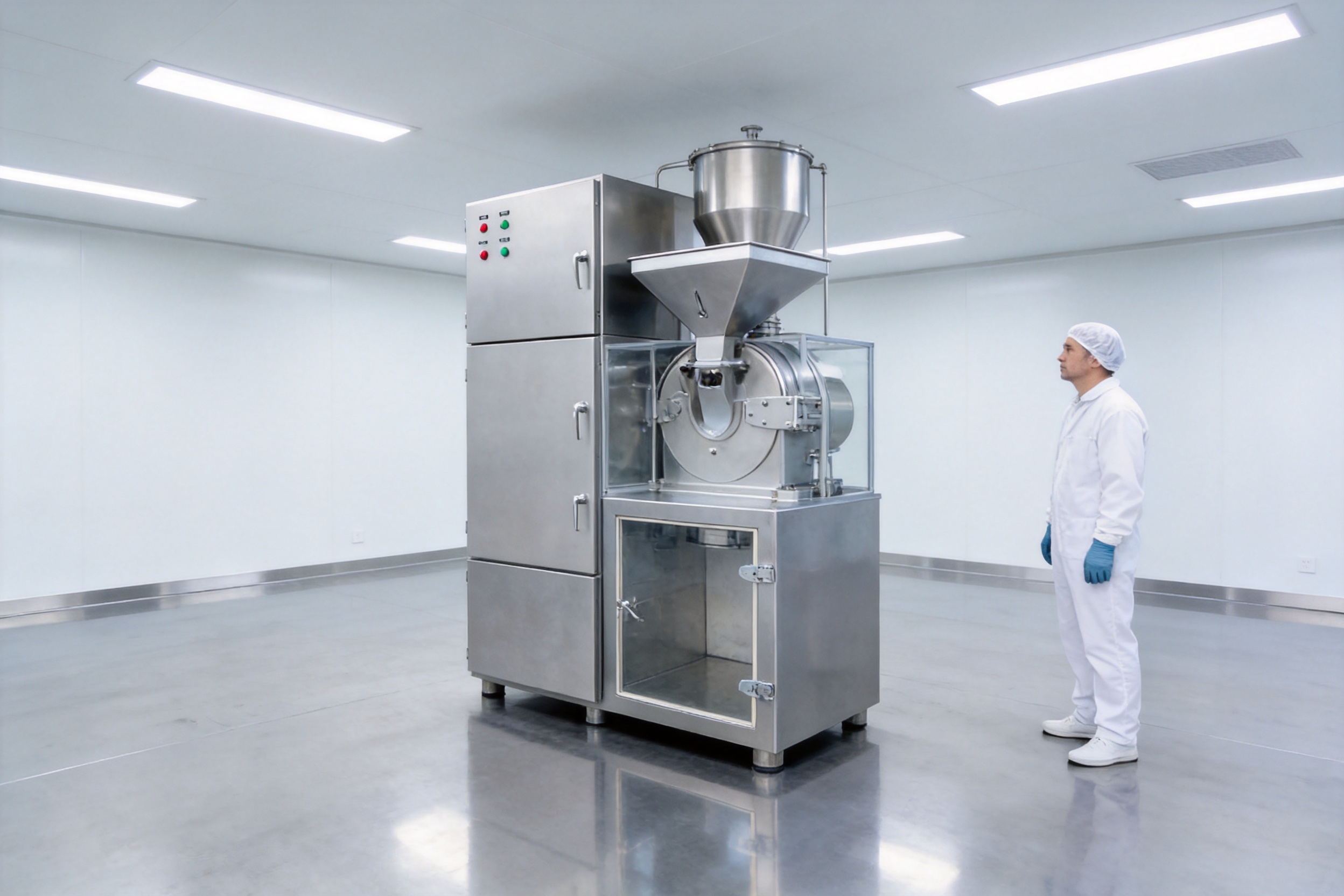
Pharmaceutical and food manufacturers must consider not only whether a machine can achieve the desired particle size but also whether it can be cleaned, inspected, and maintained in a controlled manner. Residue left inside a crusher may lead to cross-contamination, product loss, odor retention, microbial concerns, or batch-release delays.
The 30B machine supports hygienic operation through the use of stainless steel on all material-contact surfaces and a structure described as easy to clean. These characteristics are particularly relevant when the same equipment is used for more than one product or when production requires frequent changeover.
Cleaning procedures should be developed according to the actual material, product risk, and facility requirements. Operators should remove residual powder from the feeding area, crushing chamber, discharge section, and dust-collection components. If wet cleaning is used, all surfaces should be fully dried before the next production run. Where dry cleaning is required, suitable vacuuming and residue-removal procedures should be established.
Inspection should include seals, gaskets, access covers, collection filters, fasteners, and internal working parts. Components that contact product should be checked for scratches, corrosion, deformation, or difficult-to-clean deposits. A planned preventive-maintenance program is preferable to waiting for a failure or unexpected reduction in output.
The use of stainless steel does not eliminate the need for correct cleaning. Surface condition, weld quality, joint design, cleaning tools, water quality, detergents, and drying practices all influence hygienic performance. The machine should therefore be incorporated into the user’s standard operating procedures, cleaning validation program, and maintenance documentation where applicable.
In pharmaceutical production, the 30B dust-collecting crushing machine can be used for suitable dry raw materials that require particle-size reduction before blending, granulation, or other processing steps. Potential materials may include selected excipients, dried botanical substances, active ingredients, and intermediate powders, subject to compatibility testing and process validation.
Uniform particle size can improve the consistency of powder blending. If one component contains oversized particles while another is already fine, segregation may occur during transfer or storage. Pulverization can help narrow the difference between components, although blending performance also depends on density, shape, surface properties, electrostatic behavior, and mixing conditions.
For wet or dry granulation workflows, controlled crushing may be used to prepare raw materials or to break down dried agglomerates. When used after drying, the machine can help convert irregular lumps into a more manageable powder. The suitability of the machine for a particular granulation route should be confirmed through trials because some granules are intentionally maintained at a specific size distribution.
Dust control is especially important in pharmaceutical environments because airborne powder can affect housekeeping, operator exposure, cross-contamination risk, and the operation of nearby equipment. The integrated collection function is therefore a practical benefit for facilities that need to control dust close to the source.
Users should assess whether the material is heat-sensitive, explosive, highly potent, abrasive, or otherwise hazardous. Additional engineering controls may be required for special materials, including specialized filtration, grounding, explosion protection, containment, or validated cleaning arrangements. The standard configuration should not be assumed to cover every high-risk application without technical review.
Food manufacturers often process dry ingredients that require size reduction before mixing or packaging. The 30B machine may be suitable for selected dry food materials, plant-derived ingredients, nutritional powders, spices, and other compatible substances.
Particle-size control can influence dispersion in beverages, texture in dry mixes, dissolution behavior, mouthfeel, and the appearance of the final product. A controlled powder can also improve the uniformity of premixes, provided that the material is not excessively sticky or sensitive to heat generated during high-speed milling.
For nutraceutical production, the use of stainless steel material-contact surfaces and an integrated dust-collection system can support a cleaner processing environment. These features may reduce the accumulation of valuable powder around the machine and help operators maintain the cleanliness expected in a controlled production area.
Food applications require careful attention to allergen management. If the equipment is used for different ingredients, cleaning and verification procedures should be designed to prevent the transfer of allergens from one product to another. The machine’s cleanable structure can support such procedures, but the effectiveness of any changeover program depends on the complete operating method and verification process.
In chemical production, particle-size reduction can support formulation, dispersion, reaction preparation, additive production, and material conditioning. The 30B model may be considered for suitable dry chemicals that can be processed safely at high speed and that do not create unacceptable corrosion, heat, dust, or explosion risks.
Particle-size reduction may increase the available surface area of a material, which can influence mixing, dissolution, and reaction behavior. However, it can also alter flowability and dustiness. For this reason, the dust-collection function is especially relevant in chemical operations where fine powders need to be recovered and contained.
Chemical manufacturers should confirm material compatibility with the stainless steel grade and all seals or auxiliary components. They should also evaluate whether the material is abrasive, reactive, combustible, toxic, or moisture-sensitive. A technical assessment should be completed before processing any substance with special safety requirements.
The performance of processing equipment depends not only on the design of an individual machine but also on the capability of the manufacturer behind it. Changzhou Zhiyang Machinery Equipment Co., Ltd. specializes in powder processing and oral solid dosage equipment and has operated since 2010 from Changzhou, China.
The company’s product scope covers laboratory equipment, mixing equipment, granulation equipment, drying equipment, coating equipment, auxiliary processing equipment, and transfer and conveying systems. This broader portfolio is important because crushing is rarely an isolated operation in a complete production process. A customer may require a crushing machine together with a mixer, granulator, dryer, coating machine, vacuum transfer system, or conveying solution.
By working across several process stages, the manufacturer can consider how material moves from one operation to the next. This process-oriented perspective can help reduce problems caused by incompatible equipment interfaces, unsuitable discharge arrangements, insufficient conveying capacity, or mismatched production rates.
The company provides standalone machines, modular systems, and complete production lines for pharmaceutical, biopharmaceutical, biotechnology, nutraceutical, veterinary, additives, and related industries. This gives customers multiple purchasing options. A manufacturer may begin with a single 30B machine and later expand the process with compatible upstream or downstream equipment.
The company also emphasizes process integration. Rather than supplying machinery without considering the material or site, its approach is based on material characteristics, desired capacity, and facility conditions. This can be valuable because the most suitable crushing solution depends on more than the nominal motor power. Feed preparation, powder collection, discharge, cleaning access, room layout, and connection to other equipment all affect real-world results.
According to the supplied company information, the manufacturer has expanded its product portfolio, strengthened research and development capabilities, obtained quality system certification, developed patented technologies, and built overseas service capabilities. These strengths indicate a focus on continuous technical improvement and long-term equipment support rather than one-time equipment sales.
Advanced manufacturing in process equipment involves more than producing a metal frame and installing a motor. It includes material selection, dimensional accuracy, welding quality, surface treatment, component coordination, functional testing, documentation, and customer-specific engineering.
For a powder crusher, the manufacturing process must maintain reliable alignment between the motor, main shaft, internal milling mechanism, chamber, feeding route, and collection system. Accurate assembly helps reduce vibration, premature wear, abnormal noise, and unstable operation. Proper fabrication also supports repeatable cleaning and inspection.
Stainless steel material-contact components require appropriate fabrication methods to preserve hygiene and durability. Welds and joints should be made in a way that minimizes rough areas, crevices, and powder-retaining surfaces. Smooth, accessible surfaces make it easier for operators to remove residues during cleaning.
Engineering selection is equally important. The crushing motor and dust-catching motor must work together as a functional system. If pulverization is strong but collection is inadequate, dust may escape. If airflow is excessive or poorly balanced, it may affect material recovery or process stability. A coordinated design helps the machine perform its intended functions more effectively.
Factory testing and inspection are also important elements of advanced manufacturing. Equipment should be checked for basic mechanical operation, motor performance, abnormal vibration, collection behavior, access and cleaning points, and overall assembly quality before shipment. For customized projects, testing may include customer-specific material trials, production-rate verification, or integration checks with adjacent machines.
The company’s process-driven approach supports this type of engineering. By considering raw material characteristics, required capacity, and site conditions, the manufacturer can develop more practical solutions than a purely catalog-based approach. This is particularly useful when the customer’s material cannot be described adequately by a simple product name.
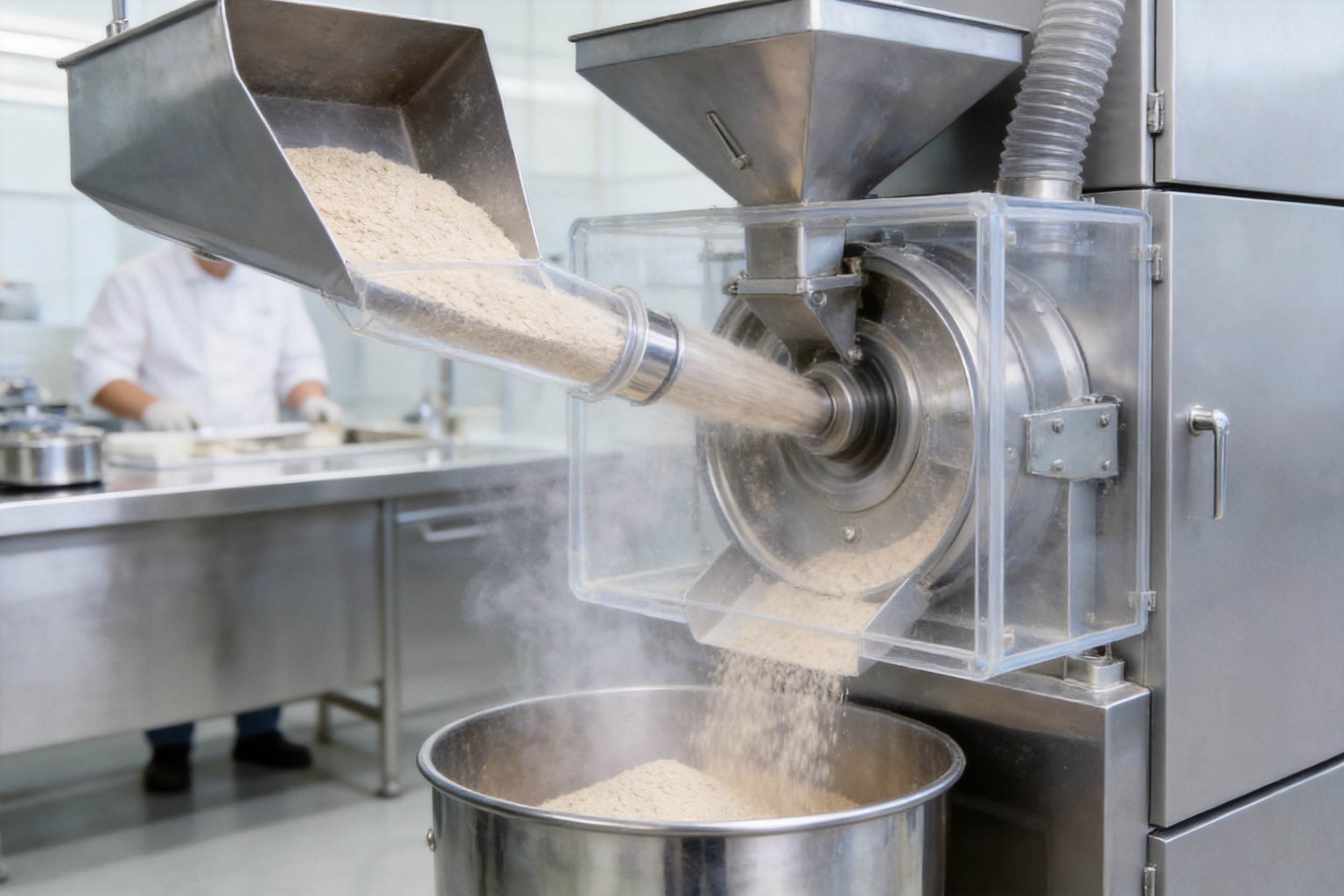
Equipment value is measured by what it contributes to daily production. The 30B model can provide several practical benefits for operators, maintenance personnel, quality teams, and production managers.
For operators, the simple structure can make routine starting, feeding, monitoring, and shutdown procedures easier to understand. A clear material path also assists with identifying where a blockage or abnormal accumulation may occur.
For maintenance personnel, the separate crushing and dust-catching functions make it possible to inspect the main mechanical system and the collection system as defined service areas. Preventive checks can focus on shaft condition, working components, fasteners, seals, filter elements, electrical connections, and motor performance.
For quality teams, stainless steel product-contact surfaces and a cleanable structure support hygiene management. The stated fineness range gives a useful starting point for process development, while sampling and testing can determine the actual particle-size distribution achieved for each material.
For production managers, the capacity range of 50 to 300 kilograms per hour provides flexibility. The machine can be operated at a lower rate when a sensitive material requires careful treatment or at a higher rate when the material is easy to process and the target fineness permits faster throughput.
For facility managers, the compact dimensions and integrated collection arrangement may simplify space planning. A single combined machine can reduce the need to arrange a separate crusher, external dust collector, and additional connecting ductwork, although the final installation should still be designed according to local safety and ventilation requirements.
Before installing the machine, the user should confirm that the floor can support the equipment and that there is enough clearance for operation, cleaning, inspection, and maintenance. The stated dimensions are 1,200 × 650 × 1,650 millimeters, but the total working area will be larger once operator access, material containers, electrical connections, and service space are considered.
The machine should be positioned to support a logical process flow. If material is received from a pre-crusher, screen, or storage hopper, the connection should avoid unnecessary lifting or manual handling. The discharge side should be located close to the next operation, such as a mixer, granulator, transfer system, or collection container.
Electrical installation should be completed by qualified personnel in accordance with local requirements. Motor ratings, voltage, grounding, overload protection, emergency-stop arrangements, and control-panel configuration should be confirmed before commissioning.
Dust collection should be evaluated as part of the room’s overall environmental-control strategy. The integrated unit is designed to capture powder generated during crushing, but the facility may still require general ventilation, local exhaust, or additional containment depending on the material and workplace regulations.
Noise, vibration, heat, and operator movement should also be considered. The machine should be installed on a stable foundation and checked for correct alignment. Unusual vibration or noise during initial operation should be investigated rather than ignored.
Although the 30B machine is described as suitable for various materials in pharmaceutical, food, and chemical industries, every material should be evaluated individually. The same machine can behave differently when processing a brittle crystalline powder, a fibrous botanical material, a hard mineral additive, or a slightly cohesive excipient.
Important evaluation factors include initial particle size, target particle size, moisture content, hardness, abrasiveness, bulk density, oil content, stickiness, heat sensitivity, electrostatic behavior, and dust explosibility. These characteristics affect capacity, fineness, cleaning, wear, and safety.
Users should provide representative samples or detailed material information during the technical discussion. A trial can help determine whether the expected output, throughput, and collection performance are achievable. Testing may also reveal whether pre-drying, pre-crushing, screening, or special feeding arrangements are necessary.
It is also important to distinguish between mesh designation and a complete particle-size distribution. A stated fineness of 60 to 120 mesh provides a general reference, but product specifications may require measurement by sieve analysis, laser diffraction, or another approved method. The acceptance criteria should be agreed upon before final process validation.
Regular maintenance helps protect the machine’s productivity and extend the service life of its components. A maintenance plan should be based on operating hours, material abrasiveness, production frequency, cleaning method, and the manufacturer’s recommendations.
Before each production run, operators should inspect the feeding route, chamber access points, discharge area, collection section, and visible fasteners. They should confirm that no foreign objects or residual material remain inside the machine. Safety guards and covers should be correctly installed before starting.
During operation, attention should be paid to unusual noise, vibration, temperature, dust leakage, reduced capacity, unstable discharge, or changes in particle size. These symptoms may indicate worn working components, a blocked collection path, an overloaded feed, inadequate cleaning, or an electrical or mechanical problem.
After production, the machine should be shut down according to the approved procedure and isolated before cleaning or maintenance. Dust-collection components should be inspected and cleaned at suitable intervals. Filters or other collection elements may require replacement depending on the material and operating conditions.
Wear parts should be checked periodically because high-speed crushing can gradually alter the geometry and performance of internal components. If a component becomes excessively worn, the machine may consume more energy, produce a broader particle-size distribution, or generate additional heat and vibration.
Maintenance records should include inspection dates, cleaning activities, replaced parts, abnormal findings, and corrective actions. Good documentation supports traceability and helps identify recurring problems before they become major production interruptions.
High-speed crushing equipment should only be operated by trained personnel. Operators must understand the feeding method, start-up and shutdown sequence, emergency procedures, cleaning requirements, and restrictions on unsuitable materials.
Never place hands or tools into the pulverizing chamber while the machine is connected to power or capable of starting. Lockout and isolation procedures should be followed before opening access points or removing blockages.
Dust safety must be evaluated according to the material. Fine organic powders and some chemical powders may create combustible or explosive atmospheres under specific conditions. The standard machine should not be used for hazardous materials without a qualified technical and safety review.
Personal protective equipment may include eye protection, gloves, hearing protection, protective clothing, and respiratory protection, depending on the material and workplace assessment. Dust collection reduces airborne contamination but should not be treated as a substitute for a complete occupational-safety program.
Grounding and electrical protection should be verified during installation. Any abnormal motor temperature, burning smell, electrical fault, or repeated overload should result in an immediate controlled shutdown and inspection by qualified personnel.
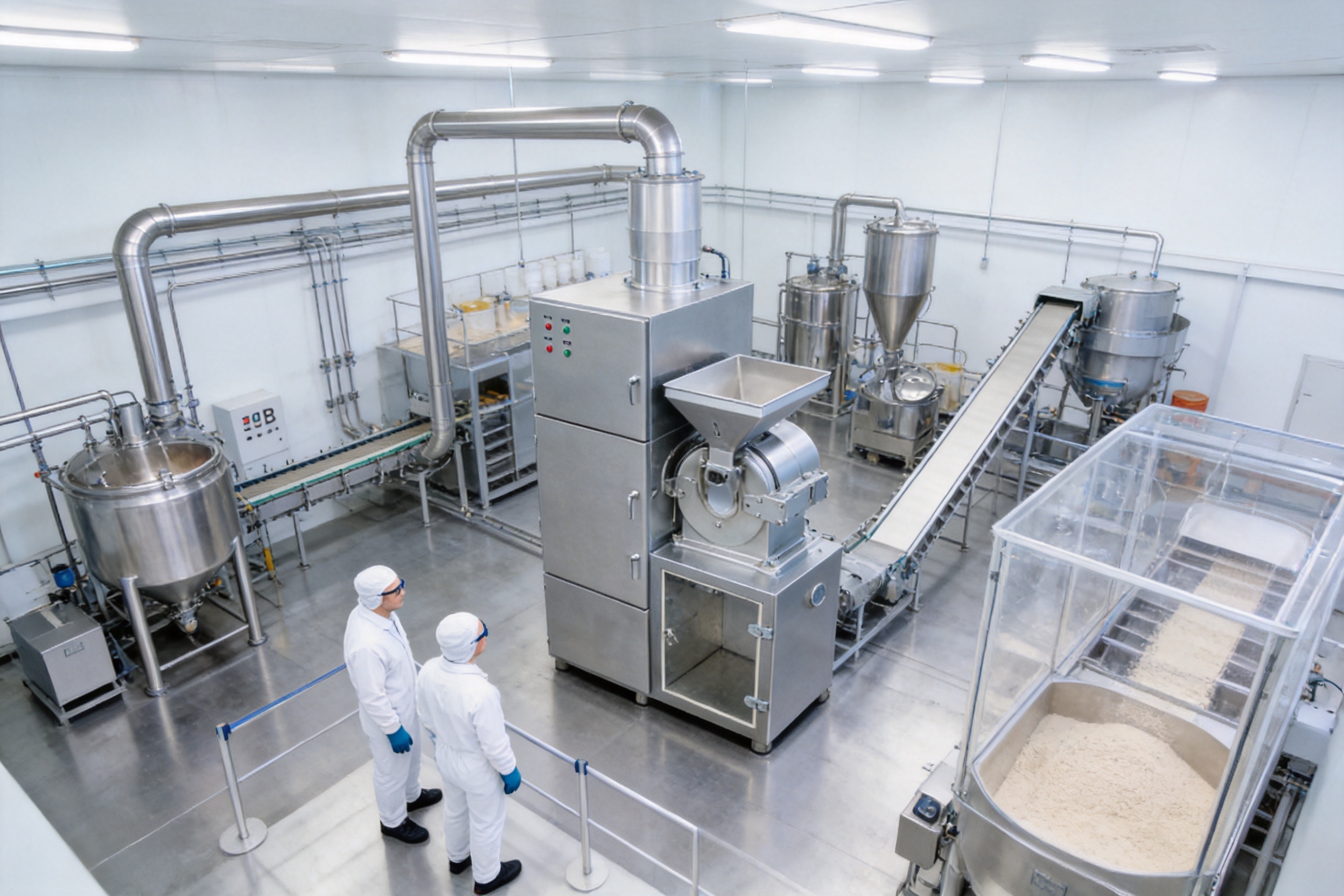
The 30B crusher can function as a standalone machine, but its greatest process value may be realized when it is integrated with other powder-processing equipment. A typical route might include raw-material preparation, crushing, mixing, granulation, drying, screening, coating, and transfer.
In an oral solid dosage process, the machine may prepare dry ingredients before blending or reduce dried agglomerates before final sizing. A conveying system can then move the processed powder to a mixer or storage container while limiting manual handling.
In a nutraceutical or food line, the crusher may be placed before a high-shear mixer, dry blender, granulator, or packaging system. The appropriate arrangement depends on the ingredient, formulation, batch size, and desired production method.
For a chemical process, the machine may be integrated with a feeding hopper, dust-tight transfer system, screening unit, mixer, or bagging station. The use of compatible equipment can improve material containment and reduce transfer losses.
Because the manufacturer also supplies mixing, granulation, drying, coating, auxiliary, and conveying equipment, customers can discuss the entire process route rather than selecting each machine in isolation. This can improve interface compatibility and simplify project coordination.
A crusher can meet its individual specification and still cause problems if it does not fit the rest of the production line. For example, a downstream mixer may not accept the crusher’s discharge rate, a transfer system may allow excessive dust release, or a storage hopper may bridge because the powder has become too cohesive.
Process integration addresses these issues before installation. It considers the relationship between capacity, particle size, material flow, cleaning, operator access, dust control, and control logic. It also provides a framework for future expansion.
The supplier’s process-driven engineering approach is therefore an important strength. By evaluating material characteristics, capacity requirements, and site conditions, the company can propose a machine configuration or complete line that is more closely matched to the customer’s actual production needs.
This approach can also reduce the risk of over-specification. Instead of purchasing a machine with unnecessary capacity or features, a customer can select equipment that fits the required production range and upgrade the process when demand changes.
Equipment purchasers increasingly evaluate suppliers based on more than price and delivery time. Documentation, spare-parts support, commissioning assistance, process advice, and communication after installation can influence the total cost of ownership.
Changzhou Zhiyang Machinery Equipment Co., Ltd. reports that it has developed overseas service capabilities and supplied equipment and engineering solutions to customers in multiple countries and regions. International experience can help a supplier understand different project requirements, documentation expectations, installation conditions, and communication needs.
The company’s stated emphasis on honesty, quality, specialization, customer reputation, research and development, and innovation also reflects a long-term equipment-development philosophy. For customers purchasing powder-processing equipment, this orientation can be valuable because the machine may remain part of the production system for many years.
Quality system certification and patented technologies, as identified in the supplied company information, provide additional evidence of structured development and manufacturing activity. Customers should request the specific certificates, technical documents, validation support, and inspection records relevant to their project.
Good service begins before purchase. The supplier should understand the material, target fineness, production volume, site conditions, cleaning method, and safety requirements. After purchase, support may include installation guidance, commissioning, operator training, troubleshooting, and spare-parts planning.
The purchase price of a crusher is only one part of its economic value. Energy consumption, labor, cleaning time, dust losses, maintenance, spare parts, downtime, and product recovery all affect the total cost of ownership.
The 30B machine can provide economic benefits through its combined crushing and dust-collection arrangement. Recovering fine powder at the source may reduce product loss and decrease the amount of time spent cleaning nearby equipment and surfaces.
Its simple structure may also support lower maintenance complexity. When operators can access, inspect, and clean the machine efficiently, production interruptions may be reduced. The use of stainless steel on contact surfaces can help preserve equipment condition in demanding hygienic environments.
Energy efficiency should be considered in relation to actual throughput and product requirements. The machine has a 5.5-kilowatt crushing motor and a 1.5-kilowatt dust-catching motor. Users should assess the combined power demand against the planned operating schedule, production output, and alternative equipment configurations.
A correct capacity selection is essential. Operating a machine far below or above its practical range may reduce efficiency. Process trials and technical consultation can help identify the appropriate feed rate and operating conditions for the material.
Customers considering the 30B machine should begin by defining the production objective. This includes the material type, initial feed size, desired fineness, required capacity, batch or continuous operation, and frequency of product changeover.
The next step is to review the material’s physical and safety characteristics. Moisture, hardness, abrasiveness, stickiness, heat sensitivity, toxicity, and combustible-dust potential should be documented. If the material is unusual or high-risk, a technical trial and safety review should be completed.
The facility should then be evaluated. Available floor space, ceiling height, electrical supply, ventilation, dust-control requirements, upstream and downstream equipment, cleaning facilities, and operator access can affect the final configuration.
Customers should request technical drawings, utility requirements, recommended spare parts, cleaning guidance, maintenance instructions, and acceptance criteria. Where necessary, they should also discuss material testing, factory acceptance testing, site acceptance testing, documentation, and operator training.
Finally, the proposed equipment should be evaluated based on total process value rather than only nominal capacity. A machine that offers integrated collection, hygienic surfaces, simple maintenance, and suitable process integration may provide better long-term performance than a lower-cost crusher with limited dust control and poor compatibility with the production line.
The machine is intended for suitable dry materials used in pharmaceutical, food, nutraceutical, and chemical processing. Material compatibility should be confirmed according to hardness, moisture, stickiness, abrasiveness, heat sensitivity, and safety properties.
The stated capacity is 50 to 300 kilograms per hour. Actual capacity depends on the material, feed size, target fineness, feeding consistency, and operating conditions.
The stated crushed fineness is 60 to 120 mesh. The actual particle-size distribution should be verified through testing because different materials respond differently to high-speed pulverization.
The product information specifies a feeding size of 8 mesh. Larger raw materials may need pre-crushing or other preparation before entering the machine.
Yes. The 30B includes an integrated dust-collection unit with a dedicated dust-catching motor rated at 1.5 kilowatts. The system captures pulverized material and helps reduce airborne dust during operation.
Yes. All parts in contact with materials are described as stainless steel. This supports hygienic processing, corrosion resistance, ease of cleaning, and GMP-oriented production requirements.
It can be considered for suitable pharmaceutical dry materials, provided that material compatibility, cleaning, containment, safety, and validation requirements are addressed. High-potency, explosive, or otherwise hazardous materials require additional technical evaluation.
The machine is intended primarily for dry materials. Wet, sticky, or highly cohesive substances may reduce throughput and cause buildup. Users should conduct a technical assessment before processing such materials.
The crushing motor is rated at 5.5 kilowatts, and the dust-catching motor is rated at 1.5 kilowatts.
The stated dimensions are 1,200 millimeters long, 650 millimeters wide, and 1,650 millimeters high. Additional space is required for operation, cleaning, maintenance, material handling, and safe access.
The main distinction is the integrated dust-collection function. The 30B combines pulverization and dust capture in one machine, while a basic crusher may require an external collection system or may discharge powder into the surrounding area. The stainless steel contact surfaces and simple cleanable structure are additional advantages for hygienic production.
Yes. It can be used as a standalone machine or incorporated into a broader process involving mixing, granulation, drying, coating, conveying, screening, and other operations. The supplier’s wider equipment portfolio supports process integration.
Customers should confirm material properties, feed size, desired fineness, required output, safety classification, cleaning method, room layout, electrical requirements, dust-control needs, and connection with upstream and downstream equipment.
The company describes its approach as process-driven and based on material characteristics, capacity requirements, and site conditions. Customers should discuss any customized design, testing, documentation, or engineering requirements during the project evaluation.
The 30B dust-collecting crushing machine is a practical solution for dry powder size reduction in pharmaceutical, food, nutraceutical, and chemical processing. Its principal strengths are the combination of a high-speed pulverizing chamber, integrated dust collection, stainless steel material-contact surfaces, simple construction, and a useful capacity range of 50 to 300 kilograms per hour.
Compared with a basic crusher, the machine offers a more complete processing function by addressing both particle-size reduction and airborne powder control. Its compact dimensions can support efficient facility layout, while its cleanable stainless steel construction is well suited to hygienic production environments.
The value of the equipment is further supported by the supplier’s broader expertise in powder processing, oral solid dosage equipment, process integration, modular systems, and complete production lines. Through material evaluation, application testing, engineering design, and after-sales support, Changzhou Zhiyang Machinery Equipment Co., Ltd. can help customers develop a crushing solution that fits actual production conditions.
As with any industrial pulverizer, the best results depend on correct material selection, controlled feeding, suitable operating parameters, regular cleaning, preventive maintenance, and appropriate safety measures. When these factors are properly managed, the 30B machine can contribute to cleaner processing, reliable powder preparation, improved production consistency, and more efficient integration into modern manufacturing systems.
1. Product technical information for the 30B dust-collecting crushing machine, including operating principle, construction, specifications, and application range.
2. Changzhou Zhiyang Machinery Equipment Co., Ltd. corporate information covering powder processing, oral solid dosage equipment, process integration, manufacturing capabilities, and overseas service.
3. Good Manufacturing Practice principles for pharmaceutical production equipment, hygienic design, cleaning, and contamination control.
4. General engineering guidance for powder handling, particle-size reduction, dust collection, and industrial equipment maintenance.
5. Food and nutraceutical processing guidance concerning stainless steel product-contact surfaces, allergen control, cleaning, and dry powder handling.
6. Industrial safety principles for high-speed milling equipment, combustible dust assessment, electrical protection, guarding, and lockout procedures.
Want to stay up to date?
Contact us via the email address below.
Don't worry about spam. We hate it too!
Mobile Client

Video Account
Phone:+86-15161130178
Tel:+86-519-88674267
Email:czzy188@163.com
Phone:+86-15161132798
Email:zy@zy-drying.com

WeChat ID

Copyright 2026 Changzhou Zhiyang Machinery Equipment Co., Ltd. All Rights Reserved  Oral Solid Dosage Equipment Manufacturer