 English
 Español
 русский
 中文简体

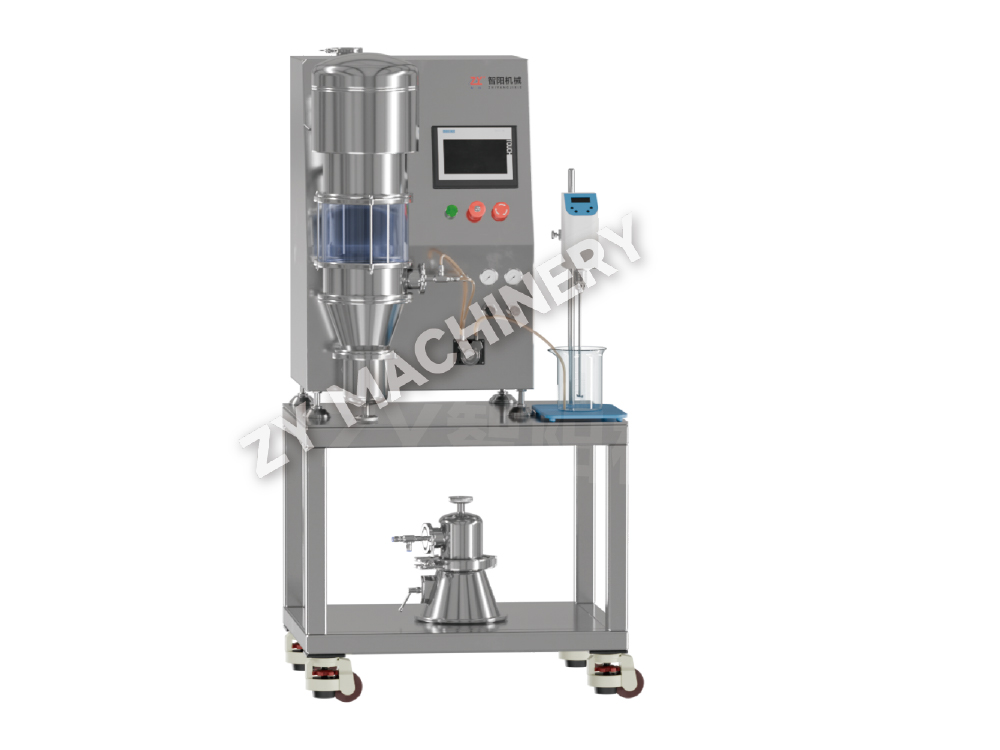
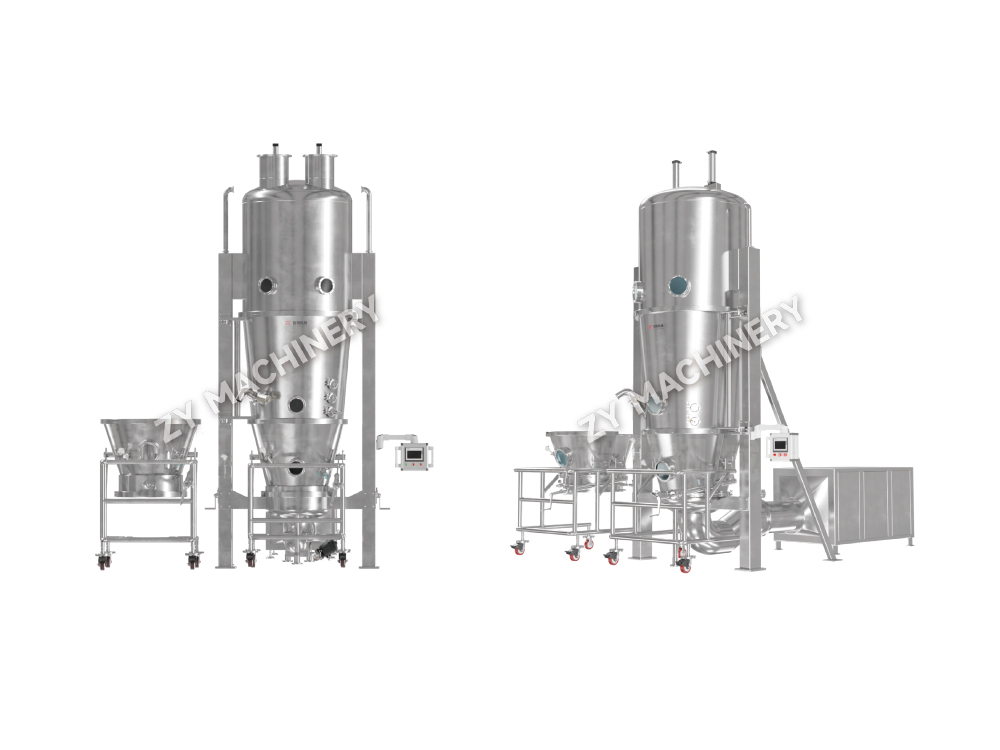
FL-B Fluid-bed Granulation & Drying Machine (One-Step Granulator)
The FL-B Fluidized Bed Granulation & Drying Machine is designed for pow.....

Content
Modern pharmaceutical, nutraceutical, food, and chemical manufacturers increasingly require equipment that can perform several powder-processing stages in a controlled, hygienic, and repeatable manner. Conventional production routes may involve separate mixers, wet granulators, dryers, material-transfer systems, and coating units. Although this arrangement can be effective, it also creates additional transfer points, longer processing times, greater space requirements, and more opportunities for product loss or cross-contamination.
The FL-B Fluidized Bed Granulation and Drying Machine, also known as a one-step granulator, addresses these challenges by integrating powder handling, granulation, drying, and optional top-spray coating in one processing system. The equipment is designed for pharmaceutical, food, chemical, nutraceutical, and related applications where consistent particle formation, controlled moisture, efficient processing, and hygienic operation are important.
With batch capacities ranging from 10 kg to 500 kg, the FL-B series can support laboratory development, pilot-scale process verification, and commercial production. Its configuration combines fluidized-air processing, spray atomization, filtration, and controlled drying in a single machine. This integrated approach can reduce intermediate handling and help manufacturers establish a more consistent process route from powder blend to finished granule.
The machine is engineered in accordance with the JB20014-2004 standard for pharmaceutical fluidized bed granulators. Its GMP-oriented layout, dual filter bag collection system, multi-fluid atomizer, optional explosion-proof construction, and adaptable heating arrangements make it suitable for applications requiring a high degree of process control.
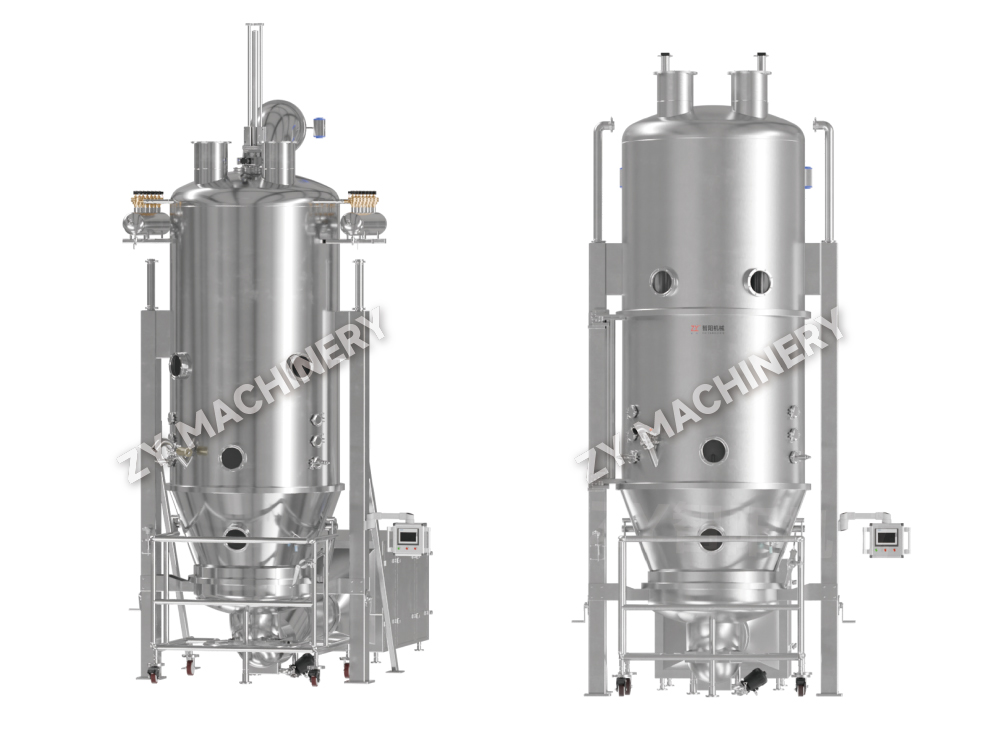
FL-B Fluid-bed Granulation & Drying Machine (One-Step Granulator)
Fluid-bed granulation uses a controlled stream of air to suspend and move powder particles inside a processing chamber. When the upward airflow is properly adjusted, the powder behaves similarly to a fluid. This creates intensive contact between the particles and the process air while allowing a binder or coating liquid to be sprayed into the moving powder bed.
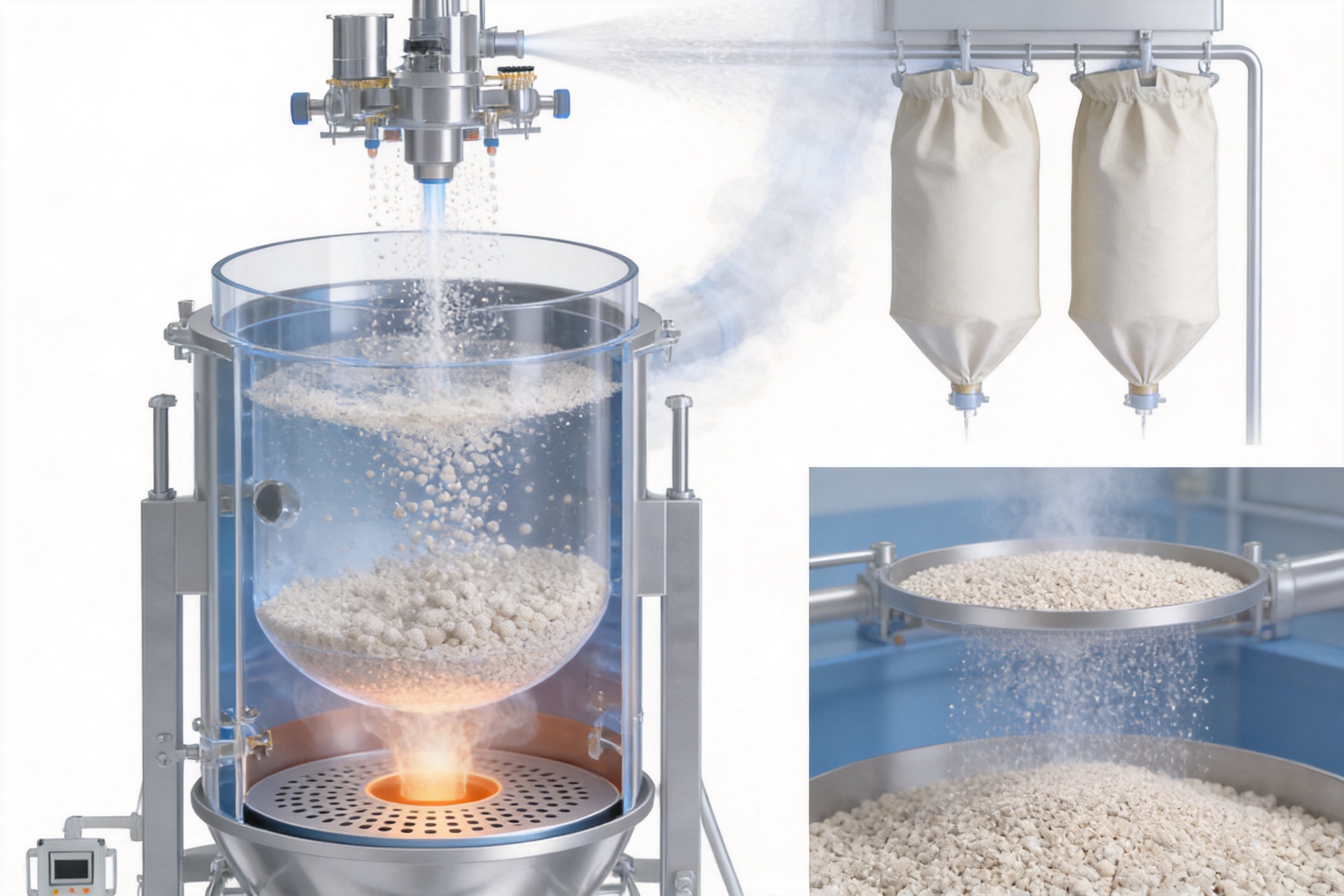
In the FL-B machine, heated air enters the product container through a distribution system. The airflow lifts and circulates the powder, promoting uniform mixing and heat transfer. A liquid binder can then be atomized through the spray system. The droplets contact the suspended powder particles, causing them to adhere and form larger agglomerates. Continued airflow removes moisture from the wet granules, producing a dry and stable product.
The same basic fluidized environment can also support top-spray coating operations. A coating solution, suspension, or functional liquid can be sprayed over the moving granules to create a surface layer. Depending on the formulation, this layer may support taste masking, color application, protection from environmental conditions, controlled release, or improved handling characteristics.
The principal advantage of this configuration is process integration. Mixing, granulation, and drying occur within one coordinated operating sequence rather than through several independent machines. Less material is transferred from one unit to another, reducing the possibility of material loss, dust release, and variation caused by manual handling.
Uniform fluidization is essential to granulation quality. If the airflow is too low, some particles may remain stagnant and receive insufficient binder. If the airflow is too high, fine particles may be carried toward the filters or the granules may experience excessive mechanical stress. The FL-B design uses controlled air movement and filtration to maintain a suitable balance between particle circulation and product retention.
Fluidized air also provides efficient heat transfer. Because a large portion of the particle surface is exposed to the moving air, drying can be faster and more uniform than in many static drying arrangements. Controlled temperature and airflow help reduce variations in final moisture content, which is particularly important for tablet compression, capsule filling, dissolution performance, powder flow, and storage stability.
The multi-fluid atomizer is a key element in the granulation and coating process. It uses compressed air to assist in breaking the liquid feed into fine droplets. Proper atomization helps distribute the binder or coating liquid throughout the moving powder bed and reduces the risk of large wet spots, over-wetting, or non-uniform agglomeration.
Uniform atomization can also reduce powder carryover. When liquid droplets are appropriately sized and the spray pattern is correctly adjusted, more of the feed becomes part of the intended granulation process instead of remaining as loose airborne powder. This contributes to better yield, cleaner operation, and improved control of the final particle-size distribution.
The FL-B series is designed for a broad range of powder and granule applications. In pharmaceutical manufacturing, it can be used for tablet granules, capsule-fill materials, intermediate powders, and other oral solid dosage products. The one-step process can support the preparation of granules with improved flowability, compressibility, density, and handling characteristics.
In food processing, the machine can be used for instant beverage particles, seasoning granules, nutritional powders, flavor systems, and other products that benefit from controlled agglomeration and drying. The ability to combine powder mixing, liquid addition, granulation, and drying can simplify the development of instant or readily dispersible products.
Chemical applications may include functional powders, additives, catalysts, specialty compounds, and granulated intermediates. The suitability of any particular formulation depends on its thermal sensitivity, solvent system, particle characteristics, required moisture level, and safety classification. The process should be validated with the actual product and operating conditions before full-scale production.
Nutraceutical, veterinary, and biotechnology-related products may also benefit from the equipment’s controlled handling and enclosed processing route. For sensitive formulations, the manufacturer can select appropriate materials of construction, temperature ranges, filtration arrangements, and process controls to suit the product requirements.
Many tablet formulations require granulation because raw powders may not possess adequate flow or compression properties. Fine powders can segregate, bridge, generate dust, or fill tablet dies inconsistently. Granulation converts the fine powder mixture into larger, more manageable particles with improved bulk density and flow.
The FL-B machine supports wet granulation by spraying a binder solution into a fluidized powder bed. The resulting granules can be dried in the same chamber. This can reduce the number of operations between blending and compression and may help maintain a more uniform distribution of active and inactive ingredients.
Food and beverage products often require rapid wetting, dispersibility, and controlled particle size. Fluid-bed granulation can produce agglomerated particles with improved porosity and a more convenient handling profile. By adjusting the spray rate, airflow, inlet temperature, and drying endpoint, manufacturers can develop products that disperse efficiently while maintaining acceptable storage stability.
The optional top-spray function extends the use of the machine beyond basic granulation and drying. Coating can be used to apply a protective layer, improve appearance, reduce dust, mask an unpleasant taste, or add a functional ingredient. In pharmaceutical applications, top-spray coating may support the preparation of layered granules or intermediates for later processing.
Because coating takes place while the granules remain fluidized, the liquid can be distributed over a large moving surface area. The final result depends on the formulation, spray conditions, air temperature, atomization pressure, product movement, and drying capacity. Process development is therefore important when selecting a coating solution or suspension.
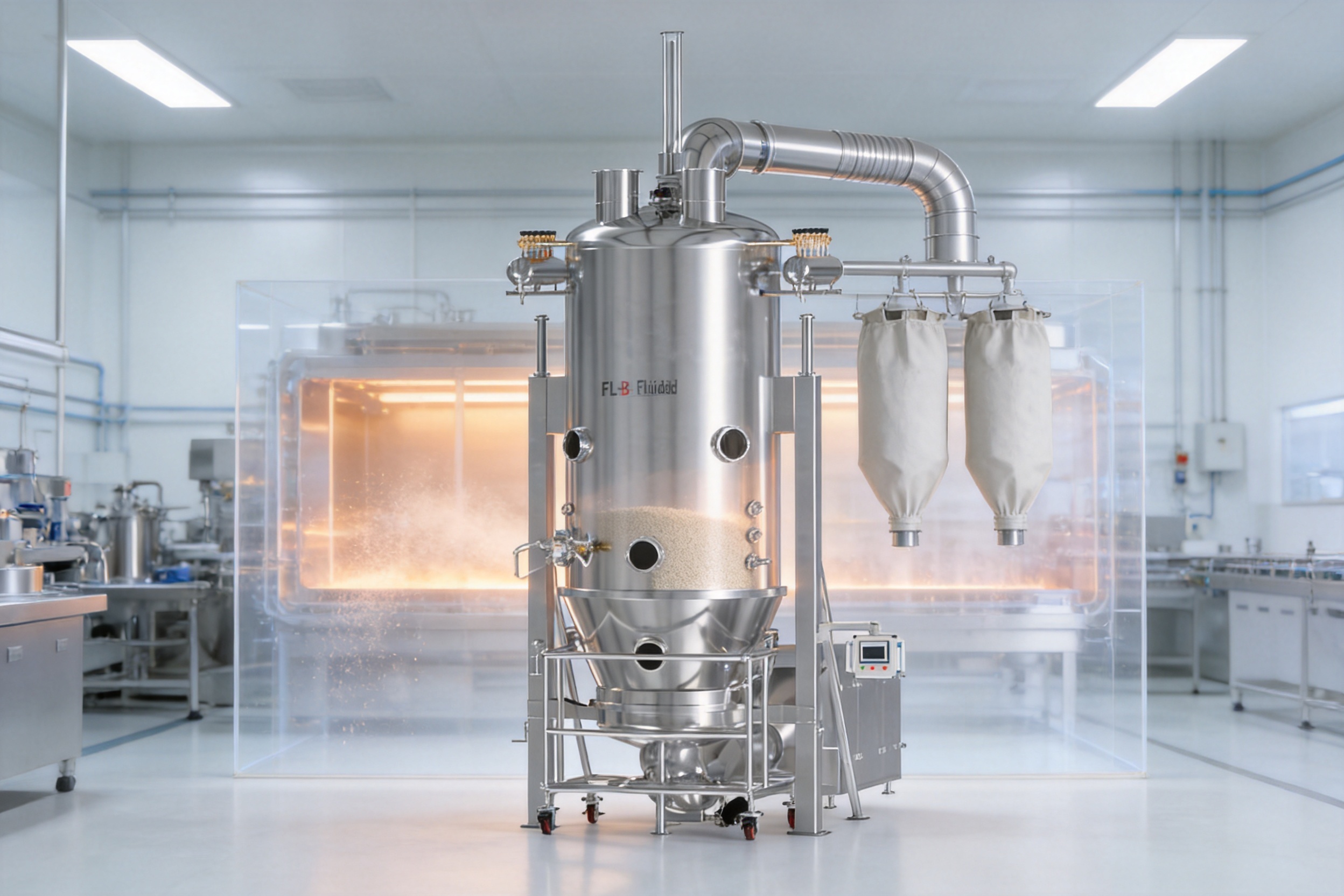
The most significant advantage of the FL-B machine is its ability to combine mixing, granulation, drying, and optional coating within one integrated process. In a conventional production route, operators may need to discharge wet granules from a granulator, transfer them to a dryer, unload the dried material, and then move it to another unit for coating or conditioning.
Each transfer can create opportunities for product loss, dust generation, contamination, and variation in processing history. The integrated design reduces these points and supports a more continuous process sequence. It can also reduce the floor area required for separate machines and simplify material-flow planning within the production facility.
Uniform fluidization and multi-fluid atomization support consistent contact between powder particles and the sprayed liquid. This can promote more even granule growth and help minimize differences in moisture content across the batch. Consistency is essential for downstream operations such as tableting, encapsulation, sieving, blending, and packaging.
By controlling airflow, temperature, spray rate, atomization pressure, and drying time, operators can establish repeatable operating windows for specific formulations. These process parameters can then be documented as part of a production recipe or validation program.
The fluidized-air environment offers a high degree of contact between heated air and wet granules. This can promote efficient moisture removal and shorten drying time compared with less dynamic systems. Efficient drying may improve equipment utilization and help manufacturers increase output without proportionally increasing the number of machines.
Drying efficiency must always be balanced against product sensitivity. Excessive temperature or overly aggressive airflow may affect active ingredients, flavors, colors, or other heat-sensitive components. The machine’s process flexibility allows operating conditions to be adjusted according to the thermal and moisture characteristics of the material.
The dual filter bag collection system is designed to support thorough separation of fine particles from the exhaust air. Effective filtration helps return retained powder to the process, reduce product loss, and maintain a cleaner operating environment. It also supports better control of airborne particulate matter inside the production area.
Filter performance depends on correct installation, cleaning, inspection, and replacement practices. Operators should establish a maintenance program based on the material being processed, batch frequency, pressure-drop trends, and applicable site procedures.
The multi-fluid atomizer and controlled fluidization system are designed to reduce unnecessary powder carryover. Keeping more of the material within the intended process zone improves yield and reduces the amount of powder collected in the filtration system. It may also help reduce cleaning demands and protect the surrounding production environment.
Some pharmaceutical, food, and chemical powders can create combustible dust hazards. The FL-B series can be supplied with an optional 2-bar explosion-proof design for applications involving flammable or sensitive materials. This option is intended to improve safety by addressing pressure-related risks associated with potentially explosive process environments.
Explosion protection must be selected according to a complete hazard assessment. Dust explosibility, solvent use, oxygen concentration, ignition sources, facility classification, pressure relief, suppression requirements, electrical components, and local regulations should all be reviewed by qualified safety and engineering personnel.
The machine is engineered and laid out according to GMP principles. A hygienic layout can support cleaning, inspection, maintenance, product containment, and controlled material flow. These features are important for pharmaceutical and other regulated applications, where equipment design must support documented procedures and reproducible production.
GMP-oriented design is not limited to the machine itself. Successful implementation also requires suitable utilities, validated cleaning methods, trained personnel, appropriate environmental controls, and documented operating procedures. The equipment provides a foundation for these systems, while the user remains responsible for site-specific qualification and compliance.
The FL-B series covers a broad capacity range, beginning with the FL-10 model at 10 kg per batch and extending to the FL-500 model at 500 kg per batch. This range allows the same general processing concept to be applied at different stages of product development and commercialization.
Smaller models can be useful for laboratory trials, formulation screening, and process development. Pilot-scale models can support scale-up studies and the production of engineering batches. Larger models are intended for production environments requiring higher batch throughput.
Capacity selection should not be based only on the nominal batch weight. Bulk density, particle size, liquid addition rate, required fluidization velocity, product moisture, formulation behavior, and desired working volume all affect the practical operating capacity. A formulation that fluidizes easily may operate differently from a cohesive or highly hygroscopic powder at the same batch weight.
| Model | Nominal Capacity | Fan Power | Reference Diameter | Reference Height H1 |
|---|---|---|---|---|
| FL-10 | 10 kg per batch | 4 kW | 550 mm | 2,800 mm |
| FL-15 | 15 kg per batch | 5.5 kW | 550 mm | 3,050 mm |
| FL-20 | 20 kg per batch | 7.5 kW | 550 mm | 3,450 mm |
| FL-30 | 30 kg per batch | 11 kW | 700 mm | 3,500 mm |
| FL-45 | 45 kg per batch | 11 kW | 850 mm | 3,620 mm |
| FL-60 | 60 kg per batch | 15 kW | 1,000 mm | 4,500 mm |
| FL-90 | 90 kg per batch | 18.5 kW | 1,100 mm | 4,600 mm |
| FL-100 | 100 kg per batch | 18.5 kW | 1,100 mm | 4,600 mm |
| FL-120 | 120 kg per batch | 18.5 kW | 1,200 mm | 4,600 mm |
| FL-150 | 150 kg per batch | 18.5 kW | 1,300 mm | 4,800 mm |
| FL-200 | 200 kg per batch | 22 kW | 1,400 mm | 4,960 mm |
| FL-300 | 300 kg per batch | 37 kW | 1,600 mm | 5,660 mm |
| FL-500 | 500 kg per batch | 45 kW | 1,800 mm | 5,800 mm |
The fan power shown in the table is a reference specification for the corresponding model. Actual utility requirements may vary according to the chosen configuration, product properties, heating method, airflow resistance, and site conditions. Electrical heater power is selected according to the customer’s process requirements rather than being fixed for every model.
Compressed air is used by the atomization system and related pneumatic functions. The specified compressed-air pressure range is 0.4 to 0.6 MPa. Consumption varies by model, beginning at approximately 0.9 cubic meters per hour for the smaller units and increasing to approximately 4.0 cubic meters per hour for the largest listed model.
Where steam heating is selected, the specified steam pressure is also 0.4 to 0.6 MPa. Steam consumption varies with model size and process demand, ranging from approximately 35 cubic meters per hour for the smallest model to approximately 500 cubic meters per hour for the FL-500 configuration. These figures should be reviewed during utility planning and confirmed against the final equipment configuration.
Electrical heating can be selected according to the customer’s requirements. This flexibility is useful when a facility does not have a suitable steam supply or when the process requires a particular heating response. The appropriate heating method depends on energy availability, operating cost, temperature requirements, facility design, and the nature of the product.
Noise is specified as no more than 75 decibels when the fan is separated from the main processing unit. Separating the fan can support noise management and provide more flexibility in equipment-room planning. The final noise level will depend on installation conditions, ductwork, room acoustics, fan operation, and maintenance status.
Before installation, users should review the available floor area, ceiling height, access route, structural loading, utility connections, drainage, ventilation, cleaning provisions, and maintenance clearances. The reference dimensions supplied for the FL-B series include diameter, length, width, and height values that vary according to the model.
The largest models require particular attention to building access and vertical clearance. In addition to the equipment footprint, sufficient space should be reserved for filter inspection, product loading and unloading, service access, control-panel operation, and safe movement of personnel.
Equipment placement should support a logical material flow from dispensing and blending through granulation, drying, inspection, and downstream operations. A well-planned layout can reduce unnecessary movement and help maintain separation between raw materials, intermediate products, finished products, and waste streams.
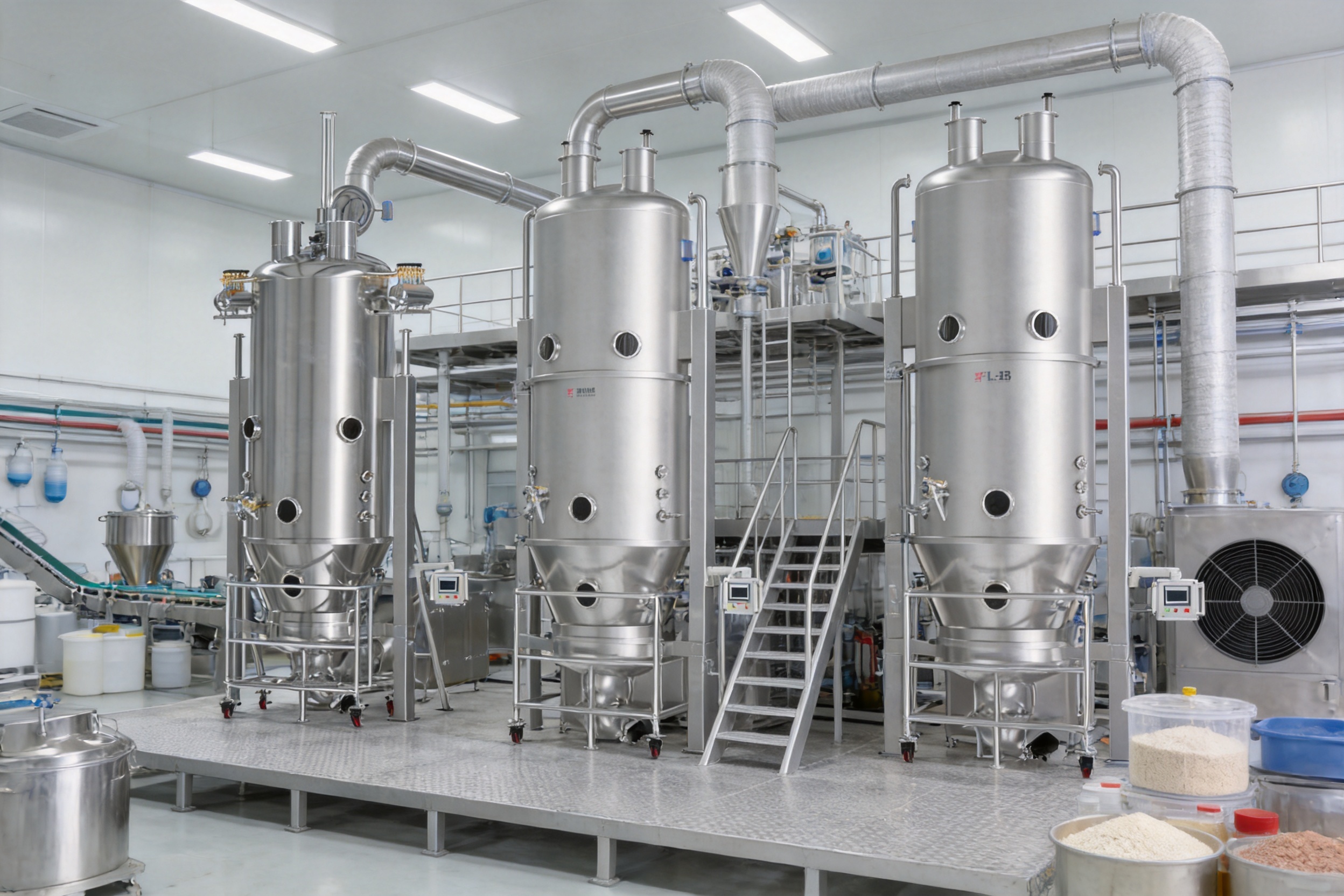
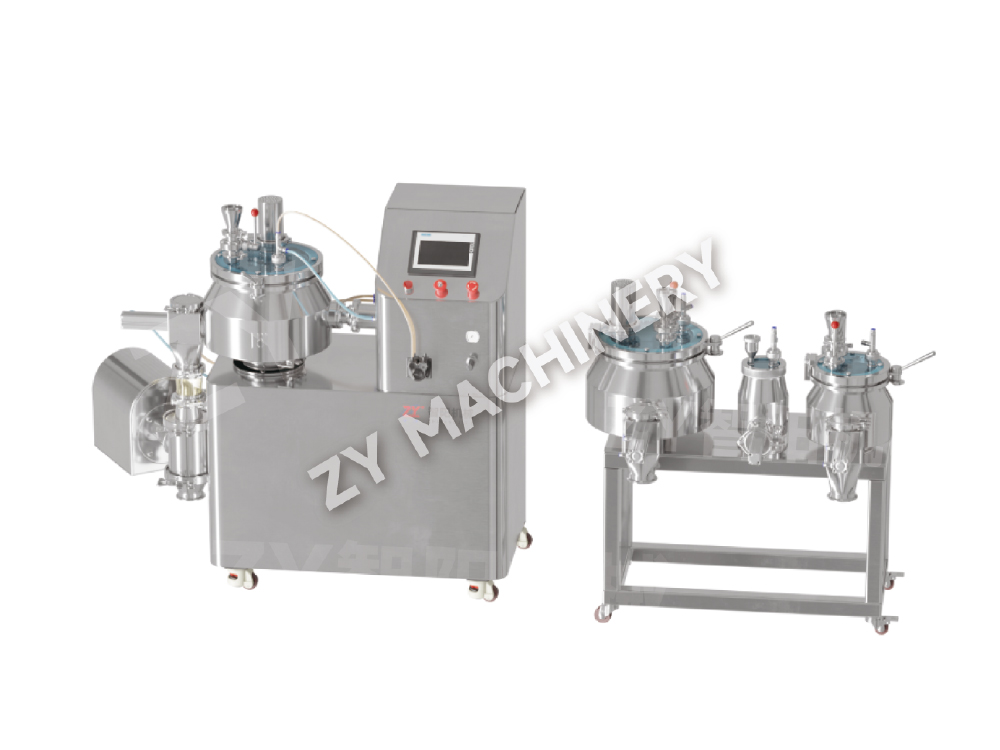
The manufacturer specializes in the design, production, and process integration of powder-processing and oral solid dosage equipment. Its product portfolio includes laboratory equipment, mixing equipment, granulation equipment, drying equipment, coating equipment, auxiliary processing equipment, and transfer and conveying systems.
This breadth is important because powder processing rarely depends on one machine alone. A complete production route may include weighing, mixing, wet granulation, drying, sizing, blending, conveying, coating, and packaging. Experience across these equipment categories allows engineering decisions to be considered as part of a connected process rather than as isolated machine selections.
The company’s stated approach is to design solutions according to material characteristics, capacity requirements, and site conditions. This process-driven method is particularly valuable for fluid-bed systems because different formulations can behave very differently under similar operating conditions.
Material characteristics that may influence the design include particle-size distribution, bulk density, moisture sensitivity, cohesiveness, thermal stability, binder viscosity, solvent type, target granule size, and required final moisture. Capacity requirements determine the appropriate machine model, while site conditions influence heating, compressed air, exhaust, electrical supply, room layout, and safety systems.
Rather than treating the machine as a standard item with no process adjustment, a process-integration approach considers the equipment, utilities, operating sequence, material-transfer route, cleaning method, and downstream requirements together. This can help customers avoid purchasing a machine that appears suitable by capacity but does not perform effectively with the actual formulation.
The company provides equipment and systems for laboratory, pilot, and full-scale production. This allows customers to develop a formulation at small scale, evaluate granulation and drying behavior, and then plan a larger system using related process principles.
Scale-up is not simply a matter of multiplying batch weight. Airflow per unit area, spray rate per unit mass, drying capacity, mixing intensity, filter loading, and heat-transfer behavior may change as the equipment becomes larger. A supplier with experience across multiple capacities can help users identify the variables that require attention during scale-up.
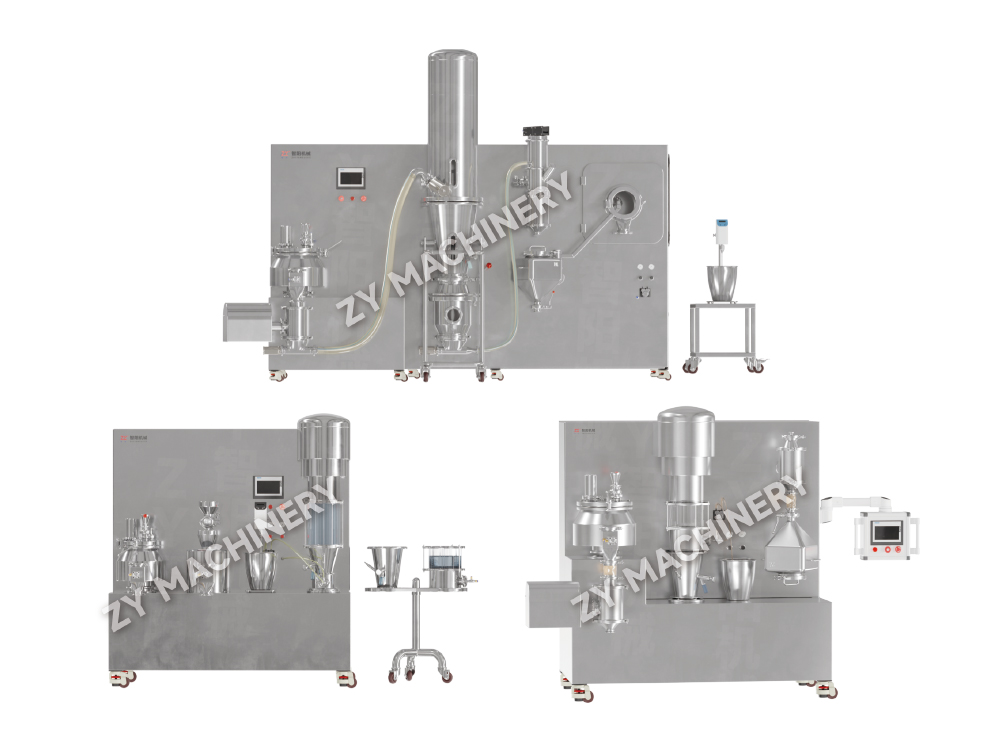
The manufacturer supplies standalone machines, modular systems, and complete production lines. This range supports different customer needs. A customer may require only a fluid-bed granulator for an existing facility, or it may need a coordinated line that includes powder handling, blending, granulation, drying, conveying, and downstream processing.
System-level engineering can reduce interface problems between machines. For example, the discharge arrangement of a granulator should be compatible with the receiving vessel or conveyor. The output condition of the dryer should be suitable for sizing or blending. Dust-control arrangements should be considered across the entire material route rather than only at one equipment point.
The company has continued to expand its product portfolio, strengthen research and development capabilities, obtain quality-system certification, and develop patented technologies. These activities indicate a focus on improving equipment design and responding to changing requirements in pharmaceutical and industrial powder processing.
Research and development in this field may involve airflow distribution, atomization performance, filter cleaning, control systems, hygienic construction, energy use, explosion protection, and cleaning accessibility. Continuous improvement in these areas can enhance equipment reliability and help users achieve more stable production results.
Competitor equipment may offer separate granulators, dryers, or coating machines that perform individual tasks effectively. The principal distinction of the FL-B approach is the integration of several operations in one fluidized processing system. This can provide advantages where the product and production strategy are suited to one-step processing.
Every transfer of a powder or wet granule can introduce losses and handling risks. Material may adhere to a vessel, remain in a transfer line, become airborne, or segregate during movement. By performing several stages in the same chamber, the FL-B machine can reduce the number of transfers required between wet granulation and final drying.
A shorter process route can reduce total handling time and improve equipment utilization. It may also simplify scheduling, cleaning coordination, and batch documentation. The actual time savings depend on formulation, batch size, drying endpoint, cleaning procedure, and operator practices, but the integrated design creates the opportunity for a more efficient workflow.
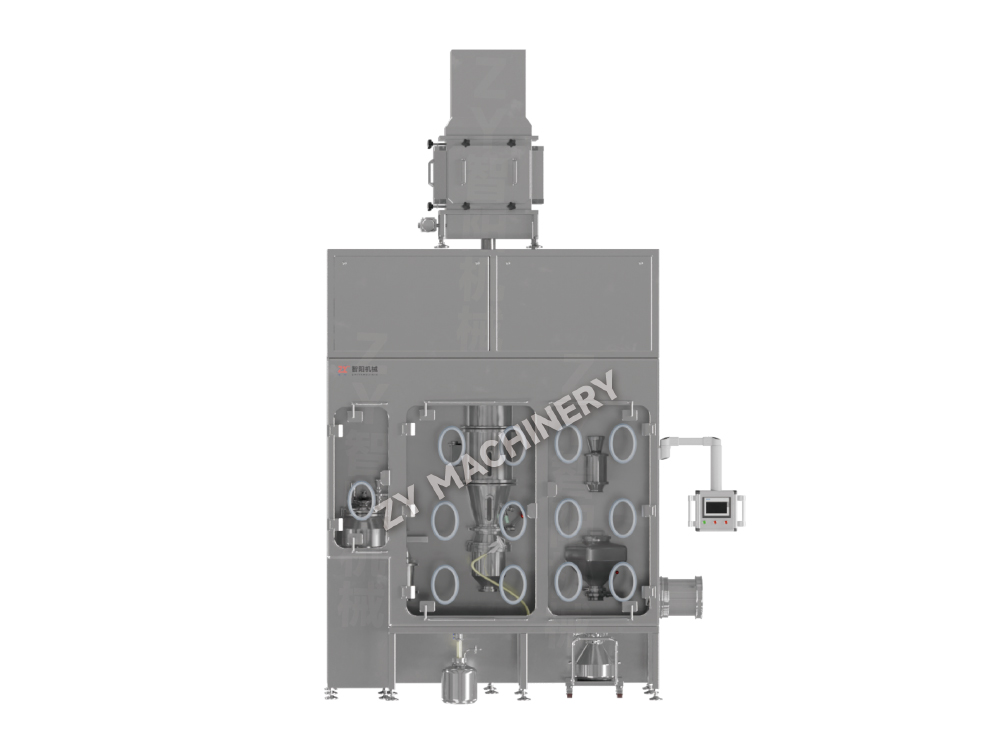
Enclosed processing helps limit exposure of the material to the surrounding environment. This can be valuable when the product is dusty, potent, moisture-sensitive, or susceptible to contamination. Containment is also beneficial for protecting operators from unnecessary exposure to process powders.
When a wet granulate is moved from one machine to another, the time between stages can vary. The material may cool, dry unevenly, or experience additional handling. One-step processing can create a more consistent transition from liquid addition to drying, which may support better batch-to-batch repeatability.
Combining process stages in one machine may reduce the number of individual units required. This can be useful in facilities with limited floor area or in projects where a compact production footprint is important. Reduced equipment count may also simplify utility distribution and maintenance planning.
Successful operation requires the control of several interrelated parameters. Airflow affects fluidization, spray penetration, and drying rate. Inlet-air temperature influences moisture removal and product stability. Spray rate affects granule growth and wetness. Atomization pressure influences droplet size. Product temperature and exhaust conditions provide additional information about the drying endpoint.
Operators should establish an operating window for every formulation through development trials. The window should define acceptable ranges for powder loading, airflow, inlet temperature, spray rate, atomization pressure, liquid concentration, drying time, and final moisture. These ranges should then be confirmed during scale-up and qualification.
Sampling and testing may include particle-size distribution, moisture content, bulk density, tapped density, flowability, granule strength, assay uniformity, dissolution behavior, and visual appearance. For food or chemical products, relevant performance indicators may include dispersibility, solubility, reactivity, color, bulk handling, or storage stability.
Cleaning requirements depend on the product, contact materials, formulation strength, and regulatory expectations. A suitable cleaning strategy should address the product container, air-distribution components, spray nozzle, filter bags, ducts, discharge points, seals, and any connected transfer equipment.
Shorter and simpler product-contact routes may help reduce changeover time, but the design must still provide access for inspection and cleaning. Cleaning validation or verification should be performed where required, particularly when the equipment is used for multiple products or when highly active materials are processed.
Preventive maintenance should cover the fan, filters, atomizer, compressed-air system, heating components, seals, sensors, control devices, and structural connections. Filter condition is especially important because changes in pressure drop can affect airflow and process performance.
Maintenance intervals should be based on operating hours, batch frequency, product properties, environmental conditions, and manufacturer recommendations. Proper maintenance can improve reliability, reduce unplanned downtime, and help keep the process within its validated operating range.
Safety considerations should be incorporated from the earliest stage of equipment selection. Powder processing may involve combustible dust, flammable solvents, high-temperature air, pressurized utilities, rotating fans, and moving components. A complete risk assessment should identify hazards associated with the formulation and the facility.
The optional 2-bar explosion-proof design is intended for applications where pressure protection is required. However, explosion protection is only one part of a complete safety strategy. The user should review dust data, solvent properties, ignition sources, pressure-relief routes, electrical classifications, grounding, static control, operator procedures, and emergency response measures.
The machine’s GMP-oriented layout supports hygienic and regulated production, but compliance also depends on installation qualification, operational qualification, performance qualification, documentation, calibration, cleaning procedures, training, and change control. The final system should be reviewed against the applicable requirements of the customer’s market and product category.
Customers evaluating a fluid-bed granulator should begin by defining the material and process objectives. Important questions include the desired batch size, initial powder condition, target granule size, binder type, liquid volume, drying endpoint, coating requirement, final moisture, and downstream equipment.
The desired capacity should be evaluated together with bulk density and working volume. A nominal 100 kg capacity, for example, may not provide the same practical result for a low-density powder as for a dense, free-flowing material. Development trials can help determine whether the product fluidizes correctly and whether the selected spray system provides suitable granulation.
Heating selection should be based on available utilities and product sensitivity. Steam can be suitable for facilities with an established clean-steam or process-steam system. Electrical heating may provide flexibility where steam is unavailable or where a dedicated heating arrangement is preferred.
Customers should also specify whether the machine will be used for granulation only, granulation and drying, or granulation, drying, and top-spray coating. The spray system, liquid vessel, pump, atomizing-air arrangement, and control requirements may vary according to the selected operation.
For regulated industries, the inquiry should include requirements for documentation, material certificates, surface finish, instrumentation, calibration, validation support, cleaning, containment, and data recording. For hazardous powders or solvent-based processes, a formal safety review should be completed before the final design is approved.
It is an integrated processing machine for powder mixing, wet granulation, drying, and optional top-spray coating. The powder is fluidized by heated air, while a binder or coating liquid is atomized into the moving powder bed.
The machine is suitable for tablet granules, instant beverage particles, seasoning granules, pharmaceutical powders, nutraceutical products, chemical intermediates, and other materials that require controlled granulation and drying. Product suitability should be confirmed through process testing.
One-step granulation means that powder handling, liquid addition, granule formation, and drying can occur in one integrated processing sequence. This reduces the need to transfer wet material between separate machines.
Yes. The FL-B machine can be configured for top-spray coating. Coating may be used for protection, taste masking, color application, functional layering, or other product-specific purposes.
The listed models range from 10 kg per batch to 500 kg per batch. The correct model depends on the product’s bulk density, fluidization behavior, working volume, liquid addition requirements, and production target.
The dual filter bag system supports dust separation from the exhaust air, helps retain fine product particles, and contributes to a cleaner processing environment. Filter cleaning and maintenance remain important for consistent performance.
An optional 2-bar explosion-proof design is available for enhanced safety in applications involving flammable or sensitive materials. The final safety configuration must be determined through a qualified hazard assessment.
The specified compressed-air pressure is 0.4 to 0.6 MPa. Consumption varies according to the model and is listed in the equipment parameters.
Yes. Steam heating is specified at 0.4 to 0.6 MPa, while electrical heater power is selected according to the customer’s requirements. The appropriate heating method depends on facility utilities and product needs.
Yes. The product range includes small models for laboratory and development work as well as larger models for pilot and commercial production. Scale-up should be supported by process trials and engineering review.
The machine is engineered in accordance with the JB20014-2004 standard for pharmaceutical fluidized bed granulators and is laid out according to GMP-oriented principles. Site-specific qualification and compliance activities are still required.
The manufacturer provides equipment across mixing, granulation, drying, coating, auxiliary processing, transfer, and conveying categories. It also offers standalone machines, modular systems, and complete production lines, allowing solutions to be developed around the customer’s process rather than around one isolated unit.
The FL-B Fluidized Bed Granulation and Drying Machine provides an integrated approach to powder processing by combining fluidized mixing, granulation, drying, and optional top-spray coating. Its broad capacity range allows the same general technology to support laboratory development, pilot work, and full-scale production.
The machine’s principal advantages include reduced material transfer, efficient heat and mass transfer, uniform spray atomization, effective dust collection, flexible heating options, optional explosion protection, and a GMP-oriented layout. These characteristics make it a practical choice for manufacturers seeking to improve granule consistency, reduce process complexity, and create a more compact production route.
Its value is strengthened by the manufacturer’s process-driven engineering approach and broad product portfolio. Experience in powder processing, oral solid dosage equipment, modular systems, and complete production lines enables the equipment to be considered within the wider manufacturing process. By assessing material properties, capacity, utilities, site conditions, safety, cleaning, and downstream requirements together, customers can develop a more reliable and efficient production solution.
For best results, the final machine configuration should be selected through a detailed review of the formulation and process objectives. Laboratory or pilot trials, utility assessment, safety analysis, installation planning, and qualification activities can help ensure that the selected system performs consistently in its intended application.
JB20014-2004, Standard for Pharmaceutical Fluidized Bed Granulators.
Good Manufacturing Practice principles for pharmaceutical production and quality control.
General principles of fluidized-bed granulation, drying, and spray coating in oral solid dosage manufacturing.
Industrial guidance for combustible dust assessment, explosion protection, and powder-processing safety.
Equipment parameters and technical information supplied for the FL-B Fluidized Bed Granulation and Drying Machine.
Want to stay up to date?
Contact us via the email address below.
Don't worry about spam. We hate it too!
Mobile Client

Video Account
Phone:+86-15161130178
Tel:+86-519-88674267
Email:czzy188@163.com
Phone:+86-15161132798
Email:zy@zy-drying.com

WeChat ID

Copyright 2026 Changzhou Zhiyang Machinery Equipment Co., Ltd. All Rights Reserved  Oral Solid Dosage Equipment Manufacturer