 English
 Español
 русский
 中文简体

GFH R&D High-Containment Solid Dosage Production Line
The GFH R&D High-Containment Solid Dosage Production Line is designed f.....

Content
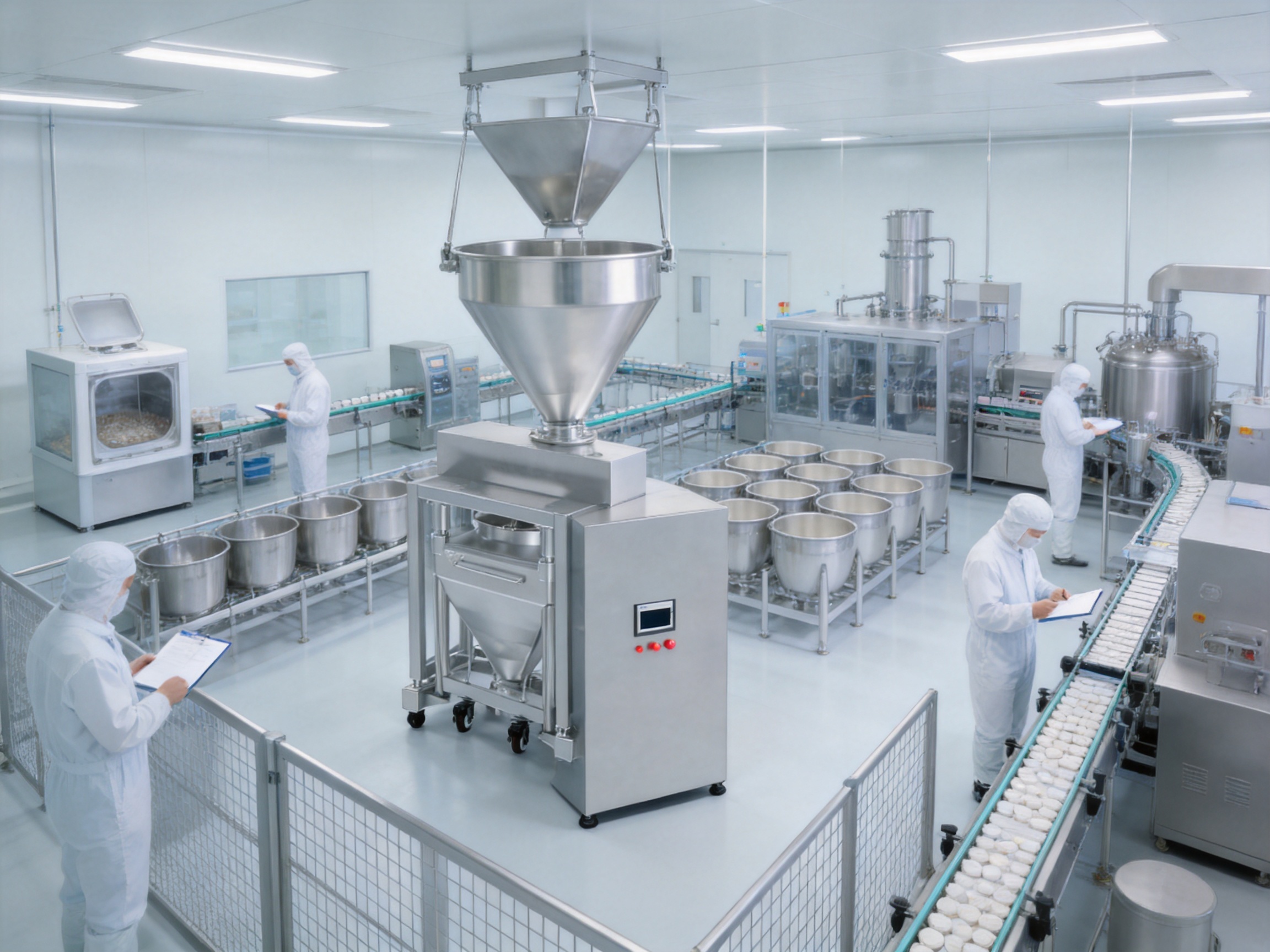
Modern pharmaceutical manufacturing requires mixing equipment that can combine powders and granules consistently while protecting product quality, operators, and the surrounding production environment. As formulations become more complex and production schedules become more demanding, manufacturers increasingly need equipment that can perform more than basic material blending. The ideal system should support repeatable mixing, rapid product changeover, reliable containment, hygienic cleaning, flexible batch sizes, and efficient integration with upstream and downstream processes.
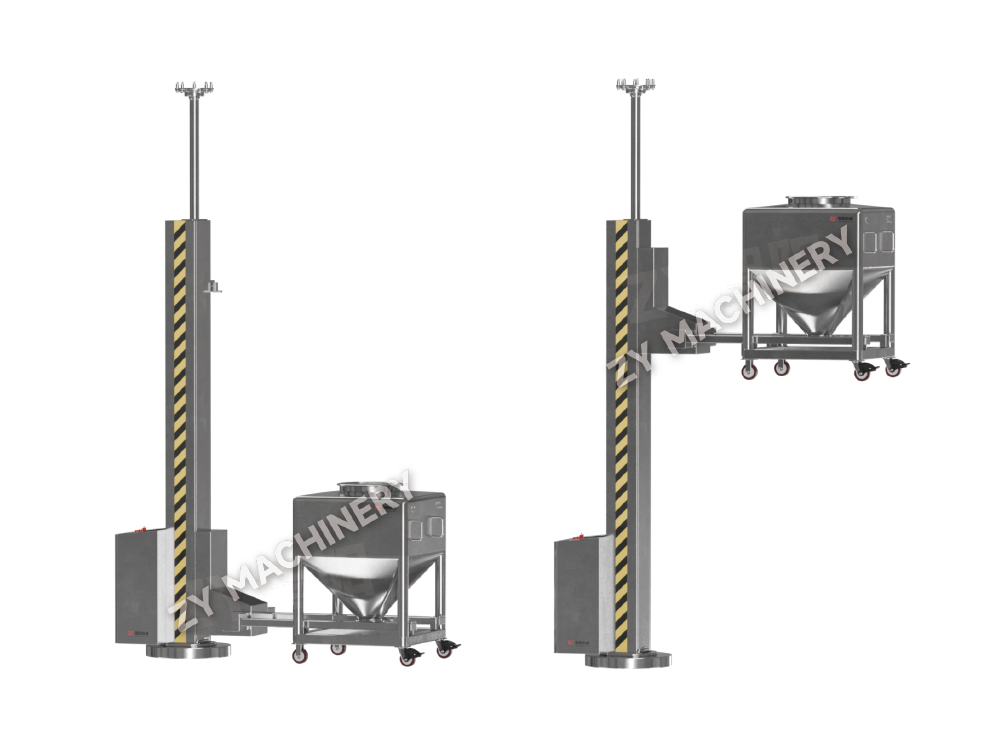
The HDD Single-Arm Bin Automatic Lifting Mixer is developed to address these requirements through a fully coordinated sequence of lifting, clamping, mixing, braking, lowering, and unloading. Instead of requiring operators to manually raise and secure a container before mixing, the system automates the complete handling cycle. A detachable mixing bin can be loaded with material, moved into position, automatically clamped, mixed according to programmed parameters, and lowered after processing.
This configuration is especially valuable for pharmaceutical powder processing and oral solid dosage production. It can be used for blending active pharmaceutical ingredients with excipients, mixing granulated materials before compression, homogenizing nutritional powders, and processing solid materials in chemical and food applications. Because several interchangeable bins can be used with one mixer, the equipment is also suitable for facilities that manufacture multiple formulations or operate with frequent batch changes.
Manufactured by Changzhou Zhiyang Machinery Equipment Co., Ltd., the HDD series reflects a process-oriented approach to equipment development. The company specializes in powder processing, oral solid dosage machinery, granulation, drying, coating, conveying, and complete production-line integration. Its engineering philosophy is based on matching equipment design to material properties, production capacity, site conditions, and compliance requirements rather than supplying isolated machinery without considering the complete process.
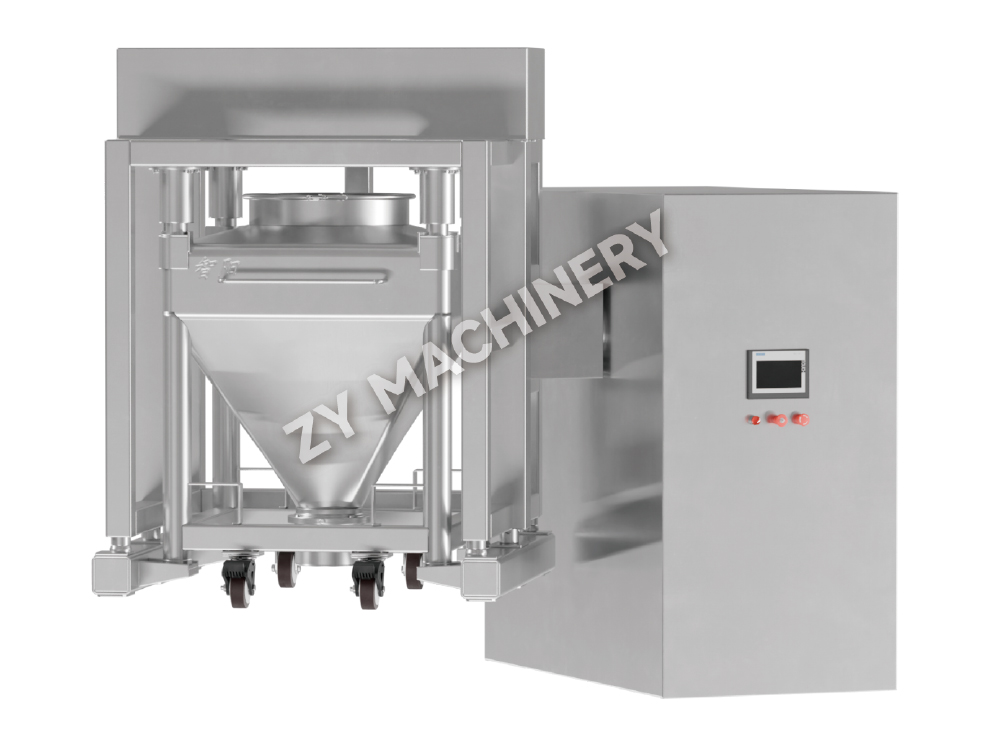
HDD Single-Arm Bin Automatic Lifting Mixer
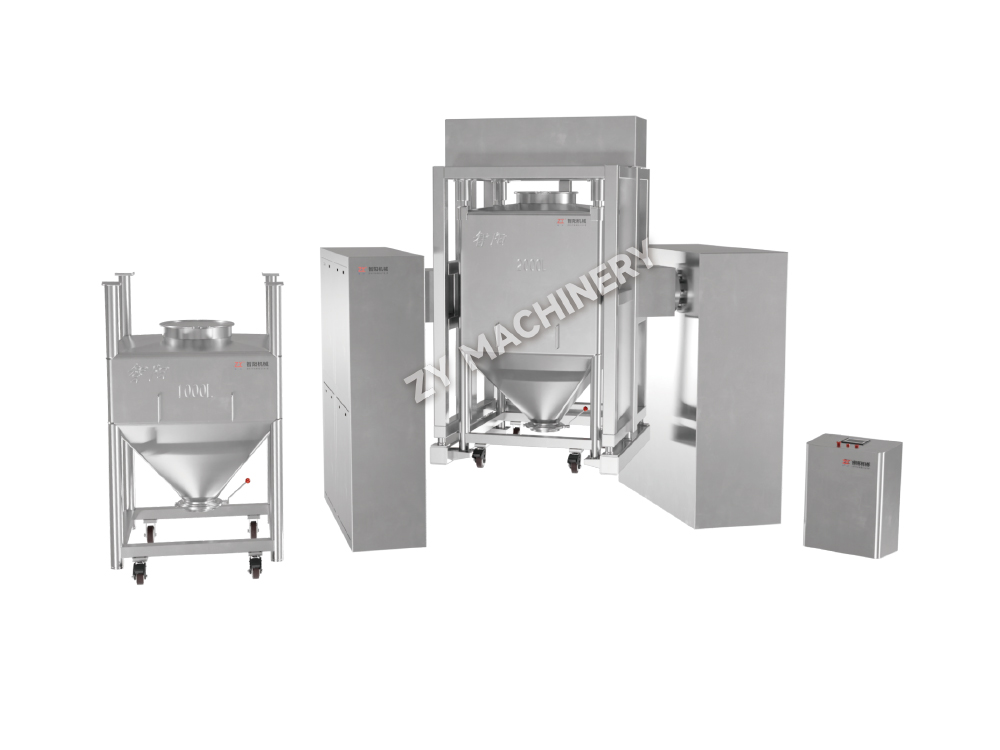
An automatic bin mixer is a blending machine in which the product remains inside a removable container during the mixing process. The container, often called a bin or hopper, is loaded before it enters the mixer. Once positioned inside the rotating body, it is locked into place and rotated around a controlled axis. The movement causes the powder or granules to tumble, cascade, and redistribute throughout the container.
Unlike conventional fixed-vessel mixers, a bin mixer does not necessarily require the product to be discharged into a separate machine after blending. The same bin can often be transferred to the next processing stage using a suitable material-handling system. This reduces intermediate transfers and can limit exposure to the environment.
The HDD Single-Arm Bin Automatic Lifting Mixer adds an automated lifting and clamping mechanism to this concept. The system is designed to handle the major steps of the operation in sequence:
1. A prepared mixing bin is moved into the loading position.
2. The operator confirms the required program through the touch-screen interface.
3. The single-arm lifting mechanism raises the bin to the specified operating position.
4. The bin is clamped securely inside the rotating body.
5. Pressure sensors verify that the bin is correctly secured.
6. The drive system starts the mixing cycle according to the selected speed and time.
7. The rotating body returns to a vertical position after the programmed cycle is complete.
8. The braking system stops and holds the rotating body.
9. The lifting mechanism lowers the bin automatically.
10. Process data can be printed, and the bin can be moved to the next stage.
This coordinated sequence reduces the number of manual actions required from operators. It also creates a more repeatable operating method, which is important when the same formulation must be produced over many batches.
The process begins when a mixing bin is inserted into the rotating body. The bin may contain powders, granules, or other solid materials that have been prepared for blending. The design allows the bin to be removed after processing, making it possible for one mixer to serve multiple containers and formulations.
Correct positioning is essential to safe and reliable operation. The equipment is designed to guide the bin into the required location before the lifting sequence begins. Once the operator has confirmed the operation on the touch-screen interface, the automatic mechanism takes control of the lifting and clamping procedure.
The single-arm lifting mechanism raises the bin into the mixing position. The clamping system then secures the bin to the rotating body. Pressure sensors provide confirmation that the bin has been clamped correctly. This interlock-oriented arrangement helps prevent the drive system from starting before the bin is properly secured.
Compared with manual lifting and securing methods, automatic clamping can reduce variation between operators. It also lowers the risk of incorrect positioning, incomplete locking, or accidental release during rotation. These benefits are particularly important when the bin contains a valuable, potent, dusty, or highly sensitive formulation.
Once the clamping status has been confirmed, the drive system rotates the body according to the preset parameters. The rotating body and bin are positioned at an angle of approximately 30 degrees. This geometry promotes a combination of tumbling and high-speed tangential movement.
As the bin rotates, the material is lifted and allowed to fall through the powder bed. Particles move in different directions, creating repeated redistribution throughout the container. The combined movement helps reduce concentration differences and supports the formation of a more uniform blend.
The available mixing speed range depends on the selected model. HDD-400, HDD-600, and HDD-800 models have a stated speed range of 3 to 20 rpm, while HDD-1000 and HDD-1200 models have a stated range of 3 to 15 rpm. The appropriate speed and mixing time should be established through process development and confirmed by product testing.
At the end of the programmed mixing cycle, the rotating body stops in a vertical position. The braking system engages to hold the equipment securely. This controlled stopping action supports orderly unloading and avoids unnecessary movement after the mixing cycle is complete.
The lifting mechanism then lowers the bin automatically. Once the bin reaches the unloading position, the system stops. Process information can be printed for documentation, and the bin can be pushed or transferred out for the next production stage.
This sequence links the mixing operation with material handling. It can help reduce unnecessary waiting time between batches and provides a more organized workflow for facilities that use multiple bins in rotation.
One of the most important advantages of the HDD series is that lifting, clamping, mixing, braking, lowering, and process recording are coordinated within one automated system. Conventional mixers may require separate manual operations for loading, securing, and unloading. Each additional manual step creates the possibility of inconsistent handling, production delays, or operator exposure.
By automating the principal actions, the HDD mixer supports a more consistent and predictable batch cycle. Operators can focus on material preparation, program verification, quality checks, and production coordination rather than repeatedly performing heavy or repetitive mechanical tasks.
The use of interchangeable mixing bins provides flexibility for facilities producing several formulations. A single mixer can be used with multiple bins, allowing one batch to move to the next process while another bin is being prepared. This arrangement can improve equipment utilization and reduce the need to install a separate fixed mixer for every formulation.
Multiple-bin operation is also beneficial when products must be separated to prevent cross-contamination. Dedicated bins may be assigned to particular products, product families, or active ingredients. The appropriate bin-management strategy depends on the facility’s validation program and cleaning procedures.
With a fixed mixing vessel, the blended product often has to be discharged into another container or transferred through a separate conveying route. Every transfer can introduce material loss, dust generation, exposure to the environment, and additional cleaning requirements.
In a bin-based workflow, the container can remain closed or controlled during movement to subsequent stages. This can reduce the number of handling steps between blending, granulation, compression, encapsulation, or packaging. Lower transfer frequency may also support better yield control and improved containment.
Pharmaceutical powders can generate airborne dust during charging, blending, and discharge. The HDD design emphasizes high containment to help reduce dust escape and cross-contamination. A contained bin-based process can be particularly useful for products with low occupational exposure limits, strong odors, fine particle sizes, or high material value.
Containment performance depends on the complete installation, including bin covers, seals, transfer points, room pressure, cleaning procedures, and connected equipment. Nevertheless, reducing open handling points is an important design advantage compared with systems that require repeated exposure of the product during transfers.
The mixer is designed with smooth, hygienic surfaces and without exposed screws or unnecessary dead zones. Such construction supports cleaning and reduces the possibility that residual material will collect in difficult-to-access areas. This is important for pharmaceutical and food applications, where residue control and cleaning verification are essential.
Hygienic design also contributes to more efficient changeover. A machine that is easier to inspect and clean can help reduce downtime between batches, although the final cleaning method must be established according to the product, formulation, facility procedures, and validation requirements.
Some powders and granules tend to segregate because of differences in particle size, density, shape, or flow characteristics. A suitable tumbling pattern helps maintain movement throughout the batch and can reduce the possibility of localized layering. The angled rotation of the HDD mixer is intended to generate strong material movement and promote effective redistribution.
Material loss can also be reduced by limiting open transfers and keeping the product inside the bin. This may be particularly valuable when handling expensive active ingredients, fine powders, or formulations requiring a precise composition.
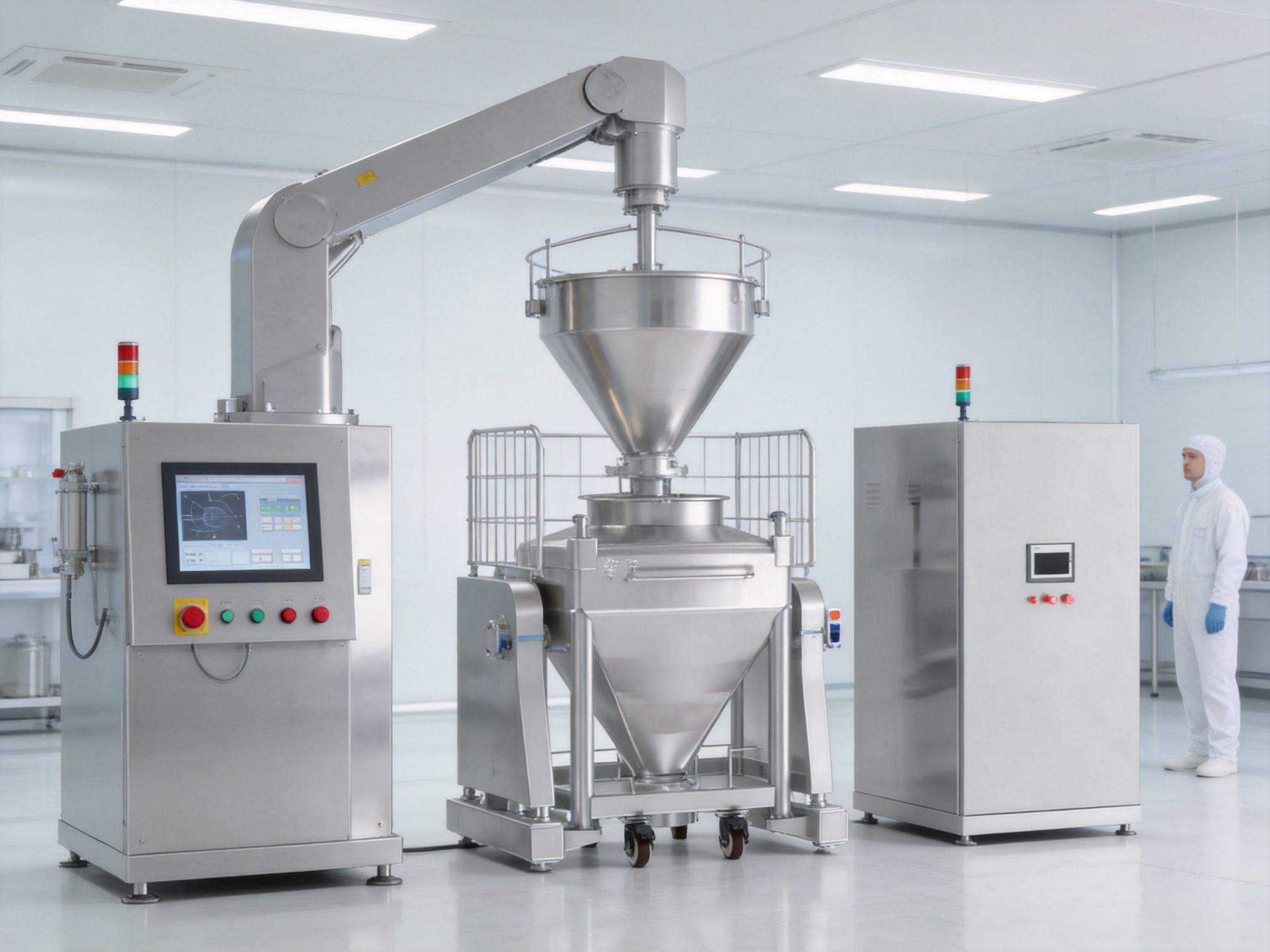
The HDD mixer uses a programmable logic controller to coordinate the operating sequence. PLC control allows the equipment to manage lifting, clamping, rotation, braking, lowering, and safety-related interlocks in a structured manner. Operators can select or enter process settings through a touch-screen interface.
PLC-based systems are widely used in industrial pharmaceutical equipment because they can provide consistent sequence control and support the creation of defined operating procedures. Depending on the project requirements, the control system may be incorporated into a broader production-control strategy involving batch records, alarms, access levels, and data-management functions.
The touch-screen interface provides a central point for confirming commands and setting operating parameters. A clear interface can help operators follow the correct procedure and reduce the risk of starting the mixer before the bin is properly positioned.
Typical operating parameters include mixing time and rotational speed. The final settings should be determined through formulation trials. Different materials may require different conditions because flowability, cohesion, moisture, particle size, bulk density, and electrostatic behavior all influence the mixing result.
Pressure sensors are used to confirm that the bin has been securely clamped. This provides an important control point before rotation begins. If the required clamping condition has not been achieved, the drive system can be prevented from operating.
This type of verification is more reliable than depending solely on visual confirmation. It contributes to safer automation and supports a more repeatable production cycle.
Infrared safety sensors are incorporated to help protect personnel around the operating area. If an interruption or unsafe access condition is detected, the equipment can respond according to the programmed safety logic.
Safety sensors should be considered part of a complete safeguarding system. Site-specific risk assessment, protective guarding, emergency-stop devices, lockout procedures, training, and maintenance inspections remain essential for safe operation.
Anti-misoperation discharge valves help reduce the likelihood of unintended product release. This feature is important in processes where premature discharge could affect product quality, expose personnel, or create a cleaning problem.
Valve design and control logic should be coordinated with the bin, transfer equipment, and downstream process. Proper interlocking can help ensure that discharge occurs only when the equipment is in the correct position and the relevant operating conditions have been met.
The HDD series is available in several nominal capacity models. The range allows users to select equipment according to batch size, material bulk density, production demand, and available installation space. The following values are the stated reference parameters for the principal models.
| Item | Unit | HDD-400 | HDD-600 | HDD-800 | HDD-1000 | HDD-1200 |
|---|---|---|---|---|---|---|
| Motor power | kW | 5.5 | 7 | 7 | 7 | 7 |
| Mixing speed | rpm | 3–20 | 3–20 | 3–20 | 3–15 | 3–15 |
| Net carrying capacity | kg | 120 | 200 | 250 | 300 | 400 |
| Hopper capacity | L | 400 | 600 | 800 | 1,000 | 1,200 |
| Reference installation length | mm | 2,900 | 3,180 | 3,180 | 3,450 | 3,450 |
| Reference width W1 | mm | 2,500 | 2,600 | 2,900 | 3,000 | 3,200 |
| Reference width W2 | mm | 1,250 | 1,250 | 1,400 | 1,400 | 1,400 |
| Reference height H | mm | 2,200 | 2,300 | 2,400 | 2,600 | 2,800 |
| Reference height H1 | mm | 2,600 | 2,800 | 3,000 | 3,500 | 3,750 |
| Reference height H2 | mm | 1,800 | 1,850 | 1,950 | 2,100 | 2,100 |
The listed hopper capacity is not necessarily the same as the recommended working volume. A practical batch should be selected according to the formulation’s flow behavior, required fill level, target blend uniformity, and the operating limits established during process development. Net carrying capacity also depends on bulk density. A high-density product may reach the weight limit before the nominal volume is filled, while a low-density powder may occupy a large volume at a relatively low weight.
Installation dimensions should be confirmed before ordering and during layout design. The final arrangement must allow sufficient clearance for bin movement, operator access, cleaning, maintenance, lifting operations, safety guarding, and connection to adjacent equipment.
The HDD mixer is suitable for applications associated with tablets and capsules, including the blending of powders and granules before compression or encapsulation. Uniform distribution of active and inactive ingredients is a fundamental requirement in these processes. A controlled bin-mixing step can support consistent composition when the process is properly developed and monitored.
The mixer may be positioned after sizing or granulation and before tablet compression, capsule filling, or another dosing operation. Its ability to use interchangeable bins can support batch segregation, formulation flexibility, and orderly material flow.
Granules often require gentle but effective movement. Excessive mechanical stress can damage granules or generate unwanted fines, while insufficient movement may produce an uneven mixture. The rotational speed and mixing time should therefore be selected according to granule strength, moisture content, particle-size distribution, and formulation requirements.
The HDD mixer’s adjustable speed range gives process engineers an opportunity to develop appropriate conditions for different materials. The goal is not simply to maximize movement, but to achieve the required blend uniformity while preserving the physical properties of the granules.
Excipients such as diluents, binders, disintegrants, lubricants, and flow aids may need to be blended with active ingredients or with other excipients. Each material can behave differently during mixing. Fine cohesive powders may require a different approach from free-flowing granules, and lubricant addition may require careful control to avoid overmixing.
The bin mixer provides a flexible platform for process trials and production batches. The final procedure should define charging order, fill level, speed, mixing time, sampling method, and cleaning requirements.
The same operating principles are applicable to nutritional powders, food additives, premixes, and other dry solid products. These industries may benefit from reduced product transfer, easy batch changeover, and hygienic construction.
For food and nutraceutical applications, material-contact surfaces, cleaning procedures, allergen control, and applicable regulatory requirements should be considered during equipment selection and project design.
The equipment can also be used for dry chemical powders, additives, and other solid materials. In these applications, the key considerations may include chemical compatibility, dust control, electrostatic behavior, bulk density, abrasion, and the need for dedicated bins.
Where materials are abrasive, corrosive, highly cohesive, or potentially hazardous, the equipment configuration should be reviewed with the manufacturer so that suitable materials, seals, surface finishes, and containment measures can be selected.
Pharmaceutical equipment must be designed with more than mechanical performance in mind. Product-contact surfaces, accessibility, cleanability, sealing, documentation, and operating discipline all affect the suitability of the system for regulated manufacturing.
The HDD mixer has a smooth design intended to minimize dead zones and avoid unnecessary exposed screws. These characteristics can make inspection and cleaning more straightforward. A hygienic form also reduces areas where residual powder can accumulate and later become a source of cross-contamination.
High containment is valuable for both product protection and occupational safety. Keeping the material within a controlled bin can reduce open exposure during movement between stages. The actual containment level achieved in a production environment depends on the complete system, including container sealing, transfer interfaces, room design, ventilation, and operator procedures.
For GMP-oriented projects, users should establish a documented qualification strategy. This may include design qualification, installation qualification, operational qualification, and performance qualification, depending on the site’s quality system and regulatory expectations. Cleaning validation, calibration, preventive maintenance, and change control should also be considered.
The equipment can be integrated into a broader powder-processing line that includes charging, screening, granulation, drying, milling, conveying, blending, coating, and packaging. A process-integrated approach helps ensure that containment and hygiene are maintained not only inside the mixer but throughout the complete material route.
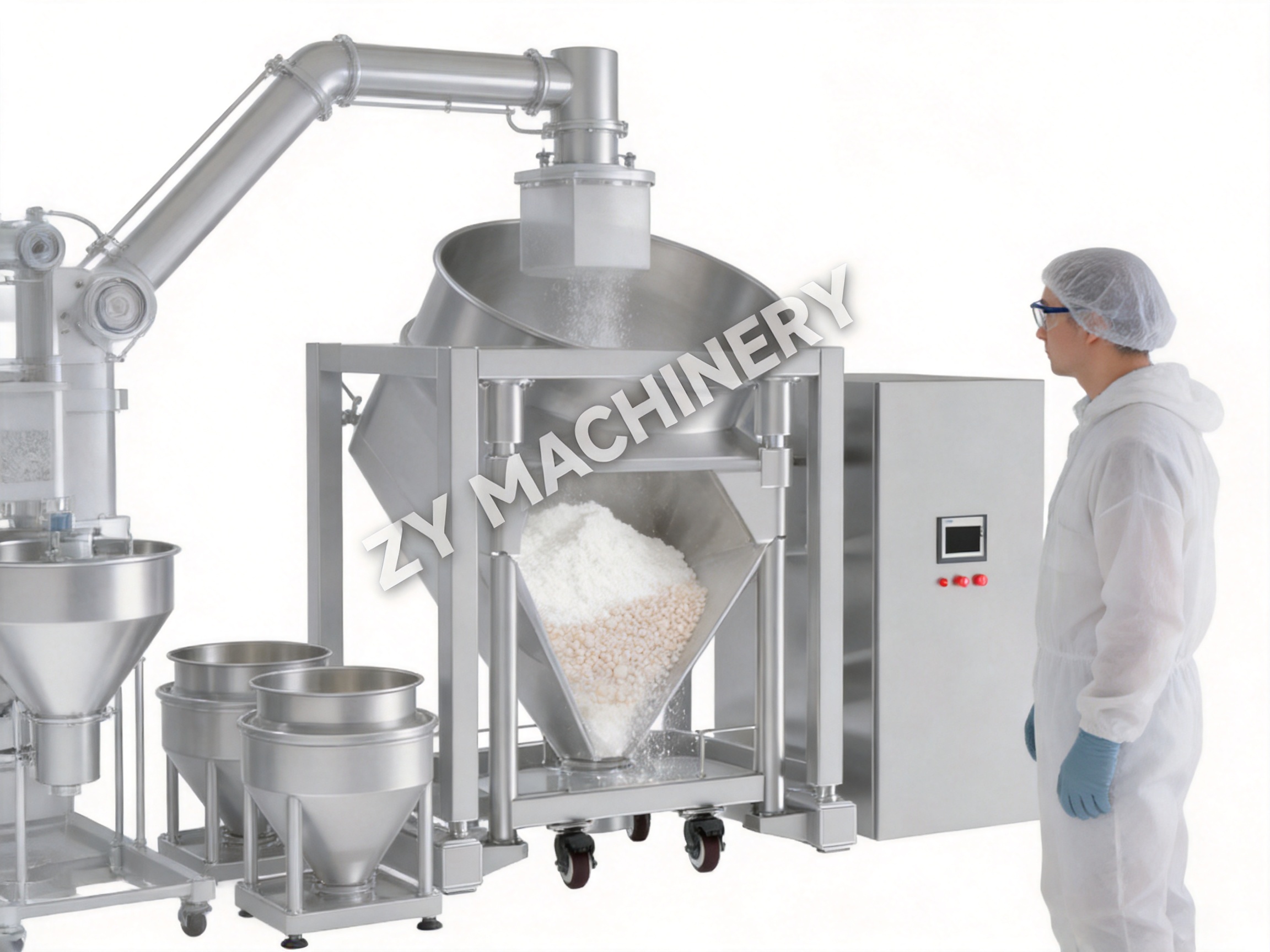
Changzhou Zhiyang Machinery Equipment Co., Ltd. focuses on process engineering rather than treating the mixer as an isolated mechanical product. The company develops solutions according to material characteristics, capacity requirements, production objectives, and site conditions.
This approach is important because a mixer that performs well with one powder may not provide the same result with another. Particle size, density, moisture, flowability, cohesiveness, electrostatic charge, and sensitivity to shear all affect equipment selection and process settings. A process-oriented manufacturer can help customers evaluate these factors before finalizing the machine configuration.
The company’s product scope includes laboratory equipment, mixing equipment, granulation equipment, drying equipment, coating equipment, auxiliary processing equipment, and transfer and conveying systems. This broad portfolio allows the mixer to be considered as part of a complete production route.
For customers developing a new facility or upgrading an existing line, access to complementary equipment can simplify project coordination. The same engineering partner may support laboratory trials, pilot-scale development, full-scale production, and material-transfer design.
Production scale-up can be difficult when laboratory and commercial equipment use completely different movement patterns or operating principles. A manufacturer experienced in multiple scales can help customers establish a more logical progression from formulation development to pilot production and full-scale manufacturing.
The HDD series offers several capacity options, allowing users to select a model that matches their production requirements. Capacity selection should be based on the actual formulation and process rather than nominal volume alone.
Pharmaceutical facilities often have unique building layouts, material flows, containment requirements, and automation standards. A standard machine may need to be adapted to fit a particular room, connect to existing bins, or communicate with a site control system.
ZY Machinery provides standalone machines, modular systems, and complete production-line solutions. This creates opportunities for customized engineering involving equipment dimensions, bin configuration, transfer routes, control logic, safety arrangements, and production capacity.
The company has expanded its product portfolio, strengthened research and development capabilities, obtained quality system certification, and developed patented technologies. These efforts support the continuous improvement of equipment design and manufacturing methods.
Reliable pharmaceutical equipment requires disciplined manufacturing as well as sound design. Materials, welding, surface finishing, assembly, electrical installation, testing, and documentation must be controlled so that the final machine performs consistently in the customer’s facility.
ZY Machinery has supplied equipment and engineering solutions to customers in multiple countries and regions. International project experience can be valuable because pharmaceutical manufacturers may operate according to different regulatory frameworks, validation practices, utility standards, and documentation requirements.
Overseas service capability also supports communication during equipment selection, installation, commissioning, operator training, troubleshooting, and after-sales support. The quality of this cooperation is an important factor when purchasing specialized processing equipment.
Efficiency is not limited to motor power or mixing speed. It also includes loading time, changeover time, cleaning time, transfer losses, operator requirements, equipment utilization, and the ability to maintain a stable production schedule.
The automatic lifting and clamping system can reduce manual handling. Interchangeable bins can allow one container to be prepared while another is being mixed. Reduced product transfer may lower material losses and shorten the route between blending and subsequent processing. Automated stopping and lowering can make the end of the batch more predictable.
In a multi-product facility, the mixer can be incorporated into a planned bin-management system. Clean bins may be staged in advance, formulation-specific containers can be identified, and processed material can be transferred to the next operation without waiting for a fixed vessel to be emptied and cleaned.
These benefits are most effective when the equipment is supported by suitable production planning. Bin identification, cleaning status, material traceability, sampling, maintenance, and operator training should be included in the standard operating procedure.
Model selection should begin with the formulation and batch requirements. Important questions include the required batch weight, bulk density, target fill volume, production frequency, acceptable mixing time, material sensitivity, and the available room dimensions.
The nominal hopper capacity provides an initial comparison between models, but it should not be used as the only selection criterion. The actual working volume must allow sufficient space for particles to move during tumbling. Overfilling can reduce mixing effectiveness, while underfilling may affect the movement pattern and production economics.
Users should also consider whether different formulations will share the same mixer. If so, the project may require additional bins, dedicated contact parts, cleaning tools, product identification, and a validated changeover procedure.
For products with strict containment requirements, the complete transfer arrangement should be reviewed. Bin sealing, charging, discharge, conveying, room pressure, dust extraction, and cleaning all influence the final performance of the installation.
Electrical standards, local safety regulations, available utilities, access routes, floor loading, ceiling height, and maintenance clearance must also be checked. The reference dimensions supplied for the HDD models should be confirmed with the manufacturer during detailed engineering.
Installation should be carried out on a stable foundation with sufficient space for the rotating body, lifting mechanism, bins, guarding, and operator access. The machine should be aligned and secured according to the manufacturer’s instructions. Electrical connections, emergency-stop circuits, sensors, and control panels should be checked before production use.
Commissioning normally includes dry running, safety verification, lifting and clamping checks, speed confirmation, braking tests, sensor testing, and examination of the complete operating sequence. Product trials should then be conducted using representative material to confirm the selected mixing time and speed.
Preventive maintenance should cover the drive system, bearings, braking components, lifting mechanism, clamps, sensors, valves, seals, electrical cabinet, and control interface. Inspection intervals should be based on operating hours, batch frequency, environmental conditions, and the manufacturer’s recommendations.
Cleaning procedures should address all product-contact areas, bin interiors, discharge points, seals, and surrounding surfaces. Operators should verify that no material remains in difficult-to-access locations. Where wet cleaning is used, the equipment and electrical components must be handled according to the approved procedure, with adequate drying before the next batch.
Maintenance and cleaning records contribute to equipment reliability and regulatory traceability. A well-managed program can also help identify wear or process changes before they lead to unexpected downtime.
The mixer is suitable for powders, granules, and other solid materials. Typical applications include pharmaceutical ingredients, excipients, granulated products, nutraceutical powders, food premixes, chemical powders, and additives. Material trials are recommended for products with unusual flow, density, cohesion, moisture, or sensitivity characteristics.
Yes. The equipment is designed to automatically lift, clamp, mix, stop, and lower the bin. The operating sequence is managed through the control system after the operator confirms the selected operation.
The bin is positioned inside the rotating body and secured by the automatic clamping mechanism. Pressure sensors verify the clamping condition before the drive system starts.
The approximately 30-degree arrangement supports a combination of tumbling and tangential movement. This creates repeated lifting, cascading, and redistribution of the material, helping promote uniform blending.
Yes. The design supports multiple interchangeable mixing bins. This can help manufacturers process several formulations, improve production flexibility, and reduce the need for a dedicated fixed mixer for every product.
The HDD-400, HDD-600, and HDD-800 models have a stated speed range of 3 to 20 rpm. The HDD-1000 and HDD-1200 models have a stated range of 3 to 15 rpm. The final setting should be determined through product-specific trials.
The mixer includes a smooth hygienic design, minimized dead zones, no exposed screws in the stated design, automatic controls, safety sensors, and containment-oriented operation. Suitability for a particular GMP application depends on the complete equipment configuration, materials of construction, facility procedures, validation requirements, and applicable regulations.
Selection should consider batch weight, bulk density, working volume, formulation flowability, production schedule, mixing time, available space, containment requirements, and future capacity. The stated hopper capacity and net carrying capacity should be reviewed together rather than considered separately.
Yes. It can be integrated with granulation, drying, milling, screening, conveying, coating, compression, encapsulation, and packaging processes. The manufacturer also provides modular systems and complete production-line engineering solutions.
Useful information includes the product type, batch weight, bulk density, particle-size range, moisture level, required production capacity, desired mixing time, number of formulations, containment expectations, cleaning method, available room dimensions, electrical standards, and the required level of automation and documentation.
The HDD Single-Arm Bin Automatic Lifting Mixer provides an integrated approach to powder and granule blending. Its automatic lifting, clamping, mixing, braking, lowering, and data-printing sequence reduces manual handling and supports consistent operation. The interchangeable-bin concept gives manufacturers flexibility for multiple formulations, while the contained workflow can reduce product exposure, material loss, and cross-contamination risk.
The angled rotating configuration promotes tumbling and tangential movement, and the adjustable speed range allows process engineers to develop suitable conditions for different materials. PLC control, pressure-sensor verification, infrared safety sensors, anti-misoperation discharge valves, and hygienic construction further strengthen the machine’s suitability for pharmaceutical, nutraceutical, food, and chemical production.
Its value is increased by the manufacturer’s broader engineering capabilities. Changzhou Zhiyang Machinery Equipment Co., Ltd. combines equipment manufacturing with process integration, supporting laboratory, pilot, and commercial-scale requirements. Its portfolio covers mixing, granulation, drying, coating, conveying, and auxiliary processing, allowing customers to develop complete material-handling and oral solid dosage solutions.
For companies seeking a flexible and containment-oriented alternative to conventional fixed-vessel mixers, the HDD series offers a practical platform. Final equipment selection should be based on formulation trials, production targets, facility conditions, validation needs, and a detailed review of the complete process route.
1. Changzhou Zhiyang Machinery Equipment Co., Ltd. Product information for the HDD Single-Arm Bin Automatic Lifting Mixer.
2. Changzhou Zhiyang Machinery Equipment Co., Ltd. Technical information for powder processing and oral solid dosage equipment.
3. Good Manufacturing Practice guidance for pharmaceutical production facilities and equipment design.
4. General principles of powder blending, granule handling, containment, and hygienic equipment construction.
5. Standard practices for pharmaceutical equipment qualification, cleaning verification, preventive maintenance, and process validation.
Want to stay up to date?
Contact us via the email address below.
Don't worry about spam. We hate it too!
Mobile Client
Video Account
Phone:+86-15161130178
Tel:+86-519-88674267
Email:czzy188@163.com
Phone:+86-15161132798
Email:zy@zy-drying.com

WeChat ID

Copyright 2026 Changzhou Zhiyang Machinery Equipment Co., Ltd. All Rights Reserved  Oral Solid Dosage Equipment Manufacturer