 English
 Español
 русский
 中文简体
中文简体HD Multi-Directional Motion Mixer
The HD Multi-Directional Motion Mixer is engineered for high-efficiency ble.....

Content
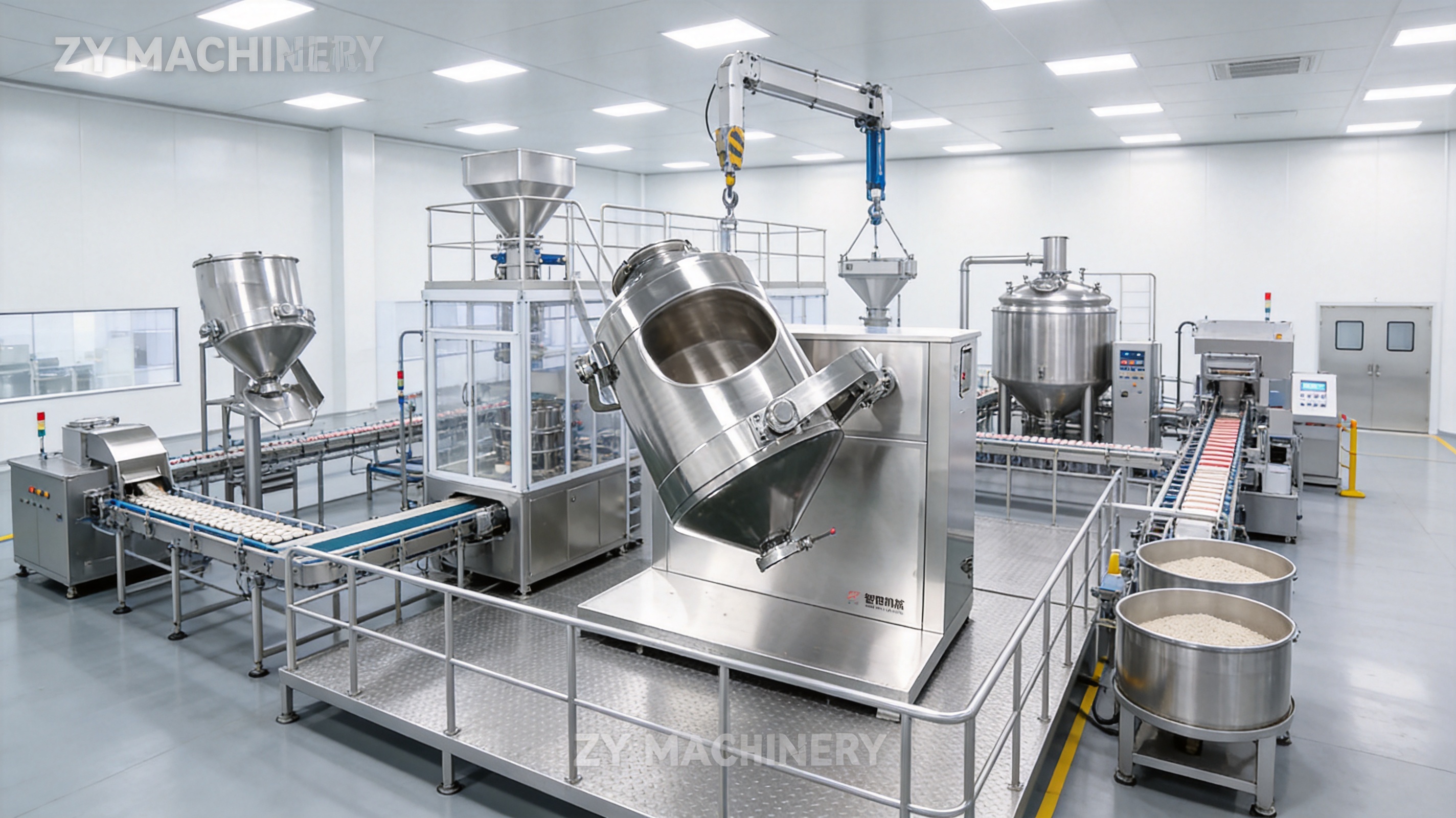
In pharmaceutical, chemical, food, nutraceutical, and related manufacturing industries, blending is one of the most important operations in the production process. A formulation may contain several powders or granules with different particle sizes, densities, flow characteristics, and moisture levels. If these components are not distributed evenly, the finished product may fail quality specifications, show inconsistent potency, or require costly reprocessing. For this reason, modern manufacturers need mixing equipment that can deliver reliable homogeneity while preserving particle integrity and supporting efficient production.
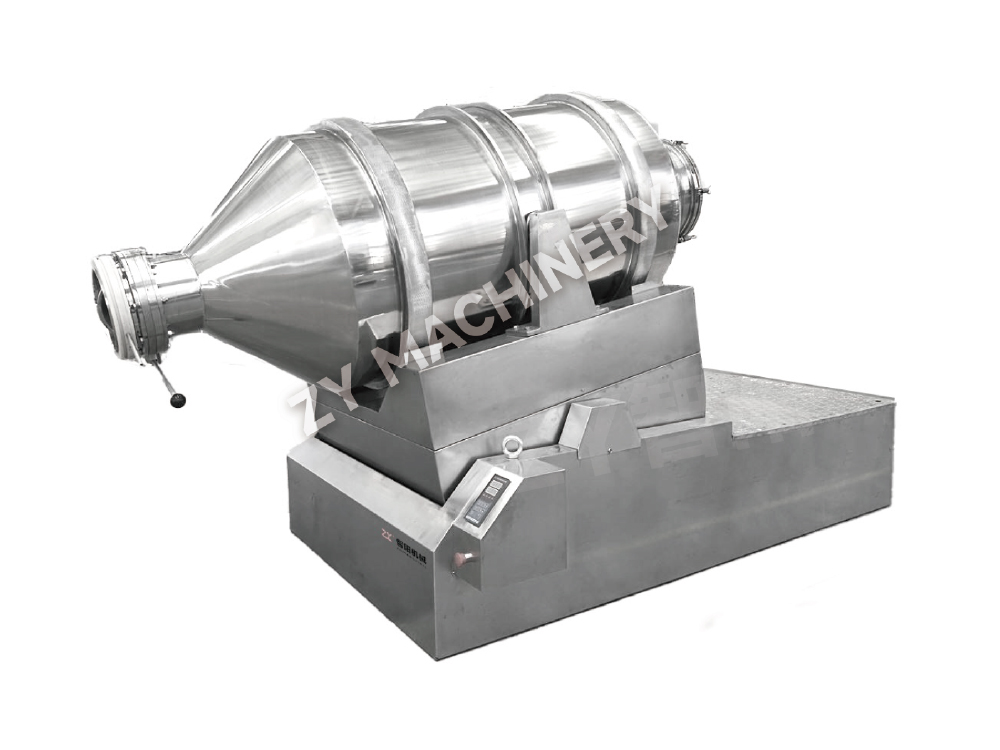
The HD Multi-Directional Motion Mixer is engineered to address these requirements. It is a high-efficiency tumble mixer designed for powders, granules, and sensitive solid materials. Its multi-directional movement creates a continuous tumbling and folding action inside a precision-finished vessel. Unlike conventional single-axis blending equipment, the machine moves the material in several coordinated directions, helping reduce segregation, layering, dead zones, and accumulation.
With mixing uniformity of up to 99.9%, a maximum filling capacity of up to 80% of vessel volume, and model options from 1 liter to 1,000 liters, the equipment is suitable for laboratory development, pilot-scale work, and large-batch production. Its design combines process performance, hygienic construction, practical capacity, reduced energy consumption, and flexible system integration.
Manufactured by Changzhou Zhiyang Machinery Equipment Co., Ltd., the mixer forms part of a broader portfolio of powder processing and oral solid dosage equipment. The company provides standalone machines, modular processing systems, and complete production lines for pharmaceutical, biopharmaceutical, biotechnology, nutraceutical, veterinary, additive, food, and chemical applications.
Powder blending is more complex than simply placing several ingredients into a vessel and rotating it. The behavior of a formulation depends on particle diameter, shape, surface roughness, density, cohesion, electrostatic properties, moisture content, and loading ratio. Two materials may appear similar but behave very differently during transportation and mixing. A fine, cohesive powder may adhere to the vessel wall, while a heavier granule may move rapidly toward the bottom. A low-density excipient may rise while a high-density active ingredient settles.
These differences create several common risks. One is segregation, in which particles separate after mixing because of differences in size or density. Another is layering, where materials form relatively distinct zones rather than becoming uniformly distributed. A third is accumulation, which occurs when material remains in corners, around discharge points, or on poorly designed internal surfaces. These problems are particularly serious in pharmaceutical formulations, where a small variation in active ingredient concentration may affect dose uniformity and regulatory compliance.
Overly aggressive mixing can also create undesirable effects. High shear may break granules, generate excessive fines, increase heat, or damage fragile particles. It can also consume more energy than necessary. In food and nutraceutical processing, excessive mechanical stress may affect product appearance or functional properties. In chemical processing, it may alter particle morphology or accelerate unwanted reactions.
The ideal mixer therefore needs to provide sufficient movement to distribute all components thoroughly without creating excessive centrifugal force or mechanical stress. The HD Multi-Directional Motion Mixer is designed around this balance. Its coordinated movement continuously changes the direction of material flow, promoting repeated dispersion and recombination throughout the vessel.
The mixer operates by moving the product simultaneously in multiple directions within a precisely engineered vessel. Instead of relying on a simple rotation around one central axis, the equipment produces a complex three-dimensional tumbling pattern. Materials rise, fall, roll, fold, and circulate through different regions of the chamber.
This movement creates repeated opportunities for particles to separate locally and then recombine across the full batch. As the vessel changes orientation and motion, material that has moved toward one area is returned to the main flow. The process minimizes the formation of stable layers and helps distribute minor ingredients throughout the entire mixture.
The multi-directional principle is especially valuable when processing formulations containing components with different bulk densities. In a conventional mixer, centrifugal forces or predictable flow patterns can push heavier materials outward or cause lighter materials to remain in a separate zone. The HD design reduces reliance on a single circular flow path, making it more difficult for density-based separation to persist.
Inside the polished vessel, smooth and rounded transitions help material move consistently. The absence of sharp internal corners reduces potential accumulation points and supports more complete discharge. This construction also simplifies cleaning and is appropriate for applications where hygienic design and contamination control are important.
Mixing time depends on the formulation, batch size, loading ratio, and required uniformity. However, the optimized multi-directional movement is intended to achieve a high degree of homogeneity in a relatively short cycle. Manufacturers can establish operating parameters through laboratory trials and scale-up studies, then apply the selected process conditions to the appropriate production model.
The HD Multi-Directional Motion Mixer can achieve mixing uniformity levels of up to 99.9% under suitable process conditions. This performance is important for formulations in which every sample must represent the intended composition. High uniformity can improve product consistency, reduce batch-to-batch variation, and support more reliable quality control.
The final result depends on the properties of the materials and the validated operating procedure. Nevertheless, the mixer’s movement pattern is designed to support uniform distribution even when the formulation contains multiple components. Continuous circulation helps prevent isolated pockets of unmixed material and promotes repeated contact among particles.
Many conventional tumble mixers generate a dominant rotational flow. While this may be effective for certain free-flowing materials, it can also allow particles to separate according to density or size. The multi-directional design interrupts simple flow patterns and continuously changes the relative position of the material.
By reducing sustained centrifugal effects, the machine helps limit the movement of heavy particles toward the outer region of the vessel. It also reduces the likelihood that light particles will remain concentrated near the top or center. This is a significant advantage when blending active ingredients with larger quantities of excipients, carriers, or granulated materials.
The mixer can be loaded to as much as 80% of the vessel volume, compared with approximately 40% for many conventional mixers. A higher usable fill ratio increases the amount of material processed in each cycle without requiring a proportionally larger machine.
This feature can improve production efficiency in several ways. It may reduce the number of batches required for a specific order, lower operator intervention, reduce the number of cleaning cycles, and make better use of available floor space. Higher capacity is also valuable when the formulation requires adequate movement despite a relatively large batch volume.
Although the maximum loading volume is an important design reference, the optimum working fill should be established for each product. Materials must have enough free space to tumble and fold effectively. A process engineer may select a lower or higher loading level depending on particle flowability, density, moisture, and mixing target.
The optimized motion pattern allows material to travel through different parts of the vessel more frequently. This can shorten the time required to reach the desired degree of uniformity compared with less efficient mixing patterns.
Shorter cycles can increase equipment utilization and reduce the time that sensitive materials remain under mechanical movement. In a production environment, the benefit extends beyond the mixer itself. Faster blending can improve the throughput of downstream granulation, encapsulation, tableting, filling, or packaging operations.
Although the mixer provides vigorous material circulation, its tumble-based action is intended to be gentler than high-shear processing. This makes it appropriate for powders and granules whose physical properties must be preserved. Granule breakage, excessive fines, and unnecessary temperature rise can be reduced when the process is correctly selected and controlled.
Gentle mixing is particularly useful for coated particles, fragile granules, low-density powders, and formulations in which particle shape affects flow or dose delivery. The exact behavior depends on the product, but the absence of aggressive internal blades or high-intensity shear zones provides a practical advantage for many sensitive applications.
The interior of the vessel incorporates smooth, rounded transitions and precision polishing. These features help reduce crevices where powder can remain after discharge. They also make visual inspection, cleaning, and sanitation more manageable.
For pharmaceutical and food applications, hygienic design is not limited to surface appearance. It includes the relationship between internal geometry, access, discharge, seals, material selection, cleaning procedures, and product-contact surface quality. The HD mixer is designed with these considerations in mind, supporting production environments where cross-contamination control and repeatable cleaning are essential.
The multi-directional motion system is designed to achieve effective blending without relying on unnecessarily high rotational speed or excessive mechanical force. Efficient material movement can reduce the energy required per batch, especially when compared with a process that needs extended mixing time or repeated reprocessing.
Lower energy use can contribute to reduced operating costs and support sustainability objectives. The overall result will depend on motor selection, operating speed, batch weight, cycle duration, and plant utilities. Even so, a machine that reaches homogeneity efficiently provides a strong foundation for energy-conscious production.
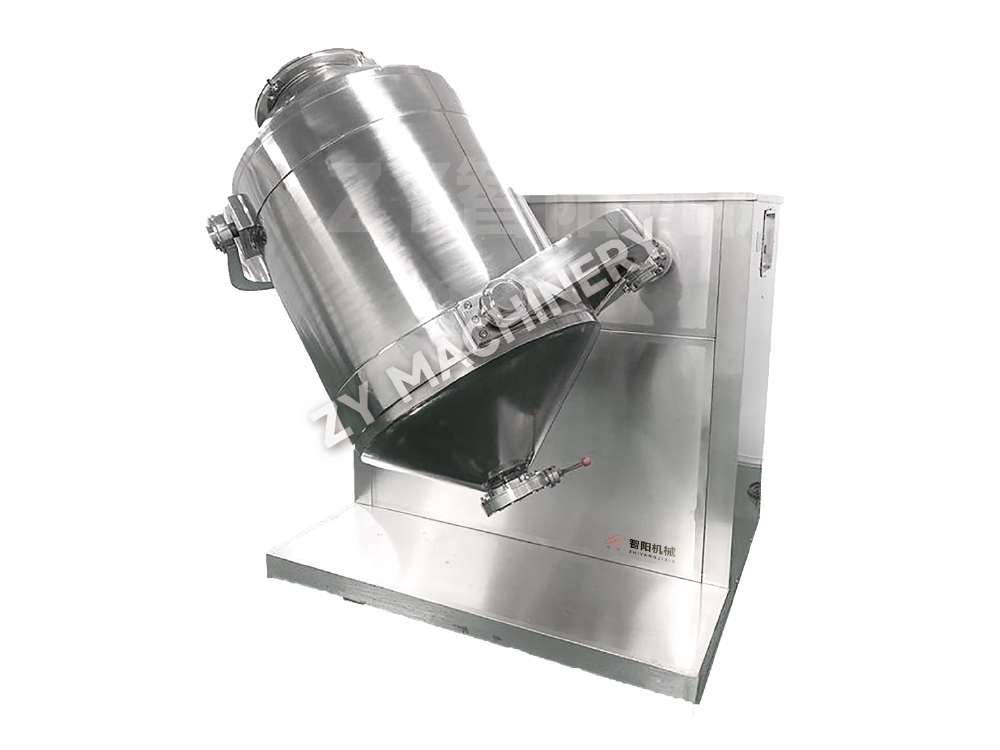
HD Multi-Directional Motion Mixer
Manufacturers commonly choose among ribbon mixers, paddle mixers, double-cone mixers, V-blenders, bin blenders, high-shear mixers, and other tumble systems. Each technology has suitable applications, and no single machine is ideal for every formulation. The HD Multi-Directional Motion Mixer distinguishes itself through its combination of motion complexity, filling capacity, gentle handling, and scalability.
Traditional single-axis tumble mixers generally rely on rotation around one main axis. This can create a predictable and relatively simple product flow. For easy-flowing materials with similar densities, the arrangement may be adequate. However, mixtures with significant density differences can experience separation during or after the mixing cycle.
The HD mixer introduces movement in multiple directions. This creates a more varied flow pattern and reduces the possibility that particles will remain in a stable circulation route. The resulting movement is better suited to challenging multi-component formulations where density-based separation is a major concern.
Some conventional mixers perform best when filled to approximately one-third or two-fifths of their vessel volume. This limitation can increase the number of batches required and may raise labor, cleaning, and handling costs. The HD series supports maximum loading volumes from 0.6 liters on the smallest model to 800 liters on the largest model, with maximum loading ratios reaching approximately 80% of vessel volume.
This higher utilization allows manufacturers to select a compact machine for a given production requirement or to process a larger batch in equipment of similar nominal size. It can be especially valuable in facilities where floor space is limited or where multiple formulation sizes must be managed.
High-shear mixers are useful when intensive dispersion, wet granulation, or rapid agglomeration is required. However, they can exert substantial mechanical force on particles and may not be the best choice for final blending of fragile granules or formulations that must maintain a specific particle structure.
The HD mixer is intended for efficient tumble blending rather than high-shear granulation. Its process environment is more suitable when the primary objective is uniform distribution with limited particle damage. It can therefore complement high-shear equipment in a complete production line rather than replace it in every application.
Vessel geometry has a direct effect on cleaning and product recovery. Sharp corners, irregular transitions, and difficult-to-reach areas can retain powder and increase the risk of cross-contamination. The rounded, polished interior of the HD vessel is designed to facilitate product movement and improve access for cleaning and inspection.
This design advantage can help reduce material loss and make changeover procedures more predictable. In multi-product facilities, faster and more reliable changeover can support better equipment utilization.
The HD series includes models with barrel volumes from 1 liter to 1,000 liters. This range enables manufacturers to use the same basic mixing principle across research, development, pilot, and production stages. A laboratory model may be used for formulation screening, while a larger unit can support process scale-up and commercial manufacturing.
| Model | Barrel Volume (L) | Maximum Loading Volume (L) | Maximum Loading Weight (kg) | Motor Power (kW) | Approximate Machine Weight (kg) |
| HD-1 | 1 | 0.6 | 0.36 | 0.12 | 50 |
| HD-5 | 5 | 3 | 1.8 | 0.25 | 150 |
| HD-15 | 15 | 9 | 5.5 | 0.37 | 200 |
| HD-50 | 50 | 25 | 15 | 1.1 | 300 |
| HD-100 | 100 | 60 | 35 | 1.5 | 500 |
| HD-200 | 200 | 120 | 70 | 2.2 | 800 |
| HD-400 | 400 | 240 | 150 | 4 | 1,200 |
| HD-600 | 600 | 360 | 200 | 5.5 | 1,500 |
| HD-800 | 800 | 640 | 400 | 7.5 | 2,000 |
| HD-1000 | 1,000 | 800 | 600 | 7.5 | 2,500 |
The published maximum loading weight is influenced by bulk density. For this reason, users should distinguish between volume capacity and mass capacity when selecting a model. A formulation with a low bulk density may reach the volume limit before reaching the maximum weight, while a dense product may reach the weight limit first.
The smaller HD-1, HD-5, and HD-15 models are useful for research, formulation development, sample preparation, and small-scale specialty production. HD-50 and HD-100 units can support pilot manufacturing and medium-sized batches. The HD-200 through HD-1,000 models are intended for larger production requirements where high throughput and reduced batch frequency are priorities.
The stated driving shaft speed is listed in two ranges: approximately 15 to 30 revolutions per minute and 8 to 15 revolutions per minute, depending on model configuration. Lower-speed operation is generally associated with larger vessels and heavier material loads, while smaller models can operate at a higher speed range.
Motor power ranges from 0.12 kW for the HD-1 to 7.5 kW for the HD-800 and HD-1,000. This progression reflects the increasing mechanical requirements of larger batches. Motor sizing is selected to provide stable movement under the intended loading conditions while avoiding unnecessary energy consumption.
Uniform blending is essential in oral solid dosage production. The mixer can be used for pre-blending active pharmaceutical ingredients with excipients, final blending before tablet compression, powder preparation for capsule filling, and other dry formulation steps.
Its gentle movement is useful when the formulation includes fragile granules or materials that may be damaged by excessive shear. The polished vessel and rounded internal transitions also support hygienic operation and cleaning requirements associated with pharmaceutical manufacturing.
For a pharmaceutical process, the mixer should be integrated into a documented validation program. Sampling plans, blend uniformity testing, cleaning validation, equipment qualification, and operating parameter control should be established according to the product and applicable regulations.
Vitamins, minerals, botanical powders, amino acids, proteins, and functional ingredients often differ considerably in density and particle size. A high-uniformity mixer can help distribute low-dose ingredients through a larger carrier base while reducing the risk of localized concentration differences.
Maintaining particle integrity is also important for powder flow, encapsulation, sachet filling, and tablet compression. The HD mixer’s tumble-based process provides an option for blending sensitive nutritional ingredients without depending on aggressive high-shear action.
Food powders and granules may include seasonings, flour-based materials, powdered beverages, dehydrated ingredients, sugar, salt, starches, and functional additives. These products often require a consistent composition and cleanable equipment surfaces.
The machine’s large available capacity and smooth vessel design can support both small specialty batches and industrial production. The suitable model depends on the material’s bulk density, moisture, flow behavior, cleaning requirements, and desired batch size.
Chemical manufacturers may use the mixer for dry additives, catalysts, pigments, mineral powders, polymer additives, and other granular or powdered products. The multi-directional movement can help blend materials with substantially different physical characteristics.
Before selecting the equipment for chemical service, users should evaluate chemical compatibility, dust control, static electricity, temperature requirements, explosion protection, and any special containment provisions. The basic mixer platform can be incorporated into a process design that addresses these requirements.
Veterinary formulations, premixes, feed additives, and agricultural products often require accurate distribution of active components throughout a carrier. The mixer can support production where uniformity and traceability are important, especially when the active ingredient represents a relatively small percentage of the total batch.
The performance of a mixer depends not only on its operating principle but also on how it is designed, fabricated, finished, assembled, inspected, and integrated into a production line. The manufacturer’s broader experience in powder processing and oral solid dosage equipment supports an engineering approach that considers the complete process rather than a single machine in isolation.
Changzhou Zhiyang Machinery Equipment Co., Ltd. designs solutions according to material characteristics, production capacity, and site conditions. This approach is important because the same nominal capacity can produce different results for different materials. A powder’s density, flowability, cohesiveness, moisture sensitivity, and particle size distribution all influence mixer selection.
Instead of treating equipment as a standard commodity, a process-driven manufacturer evaluates how the mixer will receive material, blend it, discharge it, transfer it, clean it, and connect with upstream and downstream machinery. This improves the probability that the final system will operate as a coordinated production process.
The vessel is a central component of the mixer. Its internal geometry controls material movement, while its surface finish affects product retention, cleaning, and hygiene. Precision fabrication and polishing help create a smooth product-contact environment with rounded transitions.
A well-finished vessel also contributes to repeatable processing. If material accumulates unevenly or remains in inaccessible areas, the effective batch composition may differ from the nominal formulation. Smooth internal surfaces help support better product recovery and more consistent cleaning results.
The company was founded in 2010 and has developed a product portfolio covering laboratory equipment, mixing systems, granulation equipment, drying equipment, coating equipment, auxiliary processing machinery, and transfer and conveying systems. This range provides practical knowledge of the relationships among different stages of solid processing.
For customers, such experience can simplify equipment selection and project coordination. A mixer may need to connect with a granulator, dryer, lifter, vacuum transfer system, or packaging line. A supplier familiar with these technologies can help develop a more coherent process route.
The manufacturer has continued to strengthen research and development capabilities, expand its product portfolio, and develop patented technologies. Ongoing engineering development is important in a field where customer requirements vary according to material behavior, regional regulations, production scale, and automation expectations.
Research and development also support improvements in equipment efficiency, cleaning access, sealing, control systems, discharge performance, and integration with factory workflows. These improvements can increase the practical value of the mixer over its service life.
Reliable mixing equipment requires more than a successful design concept. Manufacturing control must be applied to material selection, component fabrication, welding, surface treatment, assembly, electrical installation, testing, and final inspection. The company has obtained quality system certification, reflecting its commitment to structured quality management.
Quality systems help establish consistent procedures and responsibilities. They can support traceability of materials, control of design changes, verification of purchased components, inspection records, and corrective action when deviations occur. For regulated industries, this structure provides a useful foundation for supplier qualification and project documentation.
Some customers require only a mixer, while others need a complete powder processing line. The manufacturer provides standalone machines, modular systems, and complete production lines for laboratory, pilot, and full-scale production.
A complete project may include feeding, weighing, mixing, granulation, drying, milling, conveying, coating, storage, and discharge. Coordinating these units can improve material flow and reduce manual transfer. It may also help control dust, limit exposure, reduce handling losses, and improve process repeatability.
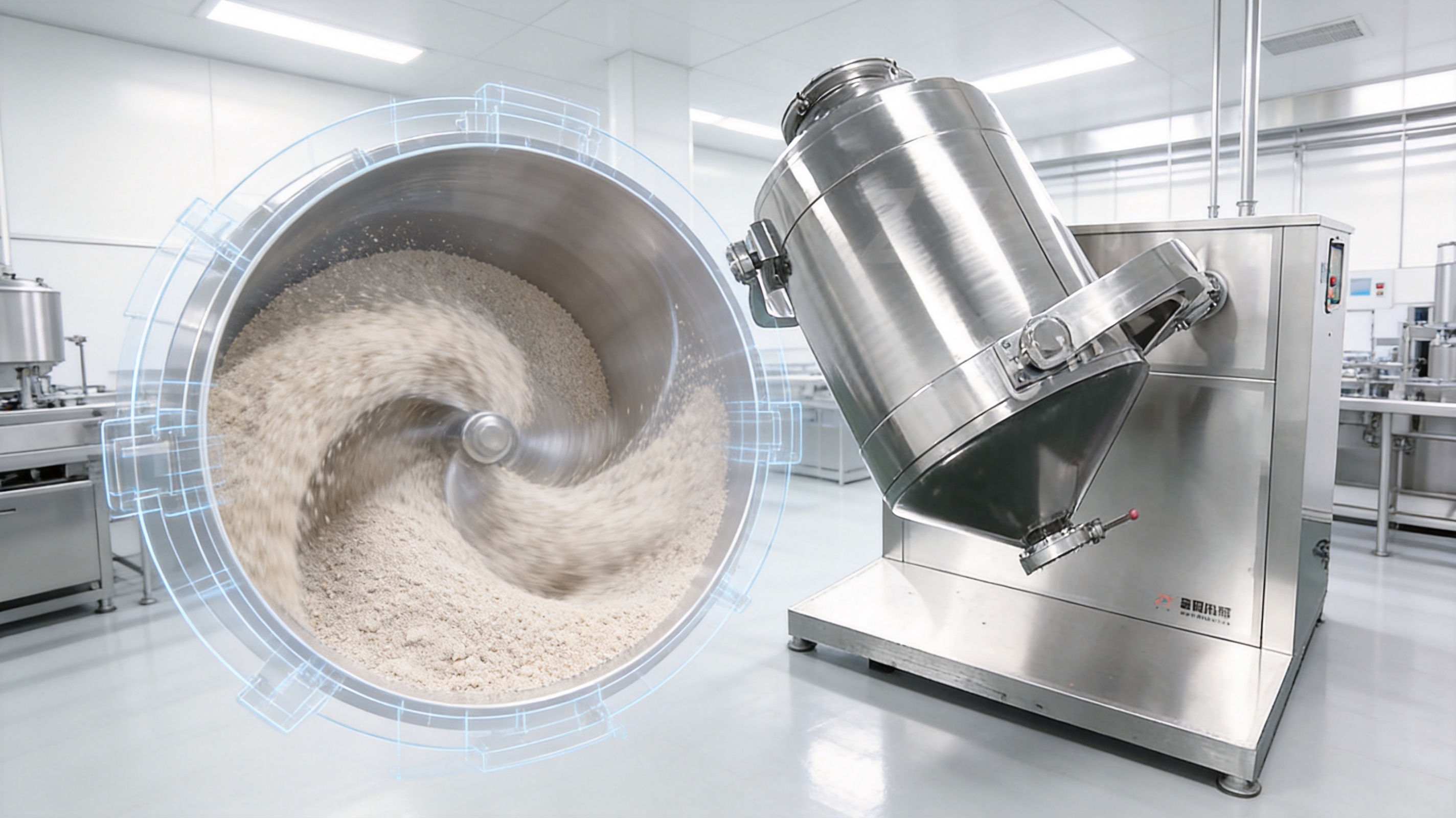
In multi-product manufacturing, cleaning performance is a major factor in equipment selection. A mixer that produces excellent blending but is difficult to clean may create unacceptable downtime or cross-contamination risk. The HD mixer’s smooth, rounded, polished interior is intended to reduce retained powder and facilitate cleaning.
Cleaning procedures should be developed according to the product, equipment configuration, and regulatory requirements. Dry cleaning may be suitable for some powders, while wet cleaning or a combination of methods may be needed for sticky, potent, or water-soluble materials. Operators should have safe access to relevant surfaces and should be able to verify cleanliness through inspection or validated testing.
Rounded transitions help limit areas where product can lodge. Effective discharge design can further reduce residual material. These details are particularly important when the mixer is used for several formulations in sequence. Reduced residue can shorten changeover time and improve the availability of the equipment.
For highly potent or dusty materials, the mixer may need additional containment, controlled charging, sealed discharge, dust extraction, or specialized cleaning arrangements. These features should be considered during project design rather than added after installation.
Equipment value should be evaluated over the entire operating cycle, not only by purchase price. A mixer that supports high fill capacity and short cycle times may reduce the cost per kilogram by processing more material in fewer batches. It may also reduce labor associated with loading, unloading, cleaning, sampling, and material transfer.
The HD series supports this type of efficiency through several complementary features. The available 80% maximum filling ratio increases productive use of the vessel. The multi-directional movement helps shorten blending cycles. The gentle process can reduce product damage and rework. The polished interior can make cleaning and product recovery more manageable.
Energy consumption is another part of total operating value. The motor power range is proportioned to the model size, while the optimized motion design is intended to produce effective mixing without excessive speed. Lower energy use can be particularly meaningful in facilities operating multiple batches per day or several mixers simultaneously.
Maintenance planning also influences lifecycle cost. A well-designed machine should provide practical access to wear components, drive elements, seals, and inspection points. Preventive maintenance schedules should be established based on operating hours, batch weight, material characteristics, and manufacturer recommendations.
Laboratories often require small quantities and flexibility rather than maximum throughput. The HD-1, HD-5, or HD-15 may be appropriate for formulation screening, development trials, sample preparation, and early process studies. These models allow engineers to evaluate blending behavior before committing to a larger production system.
During laboratory trials, users should record loading ratio, mixing speed, time, material order, sampling location, and blend uniformity results. These records support later scale-up and help identify the process variables that most affect performance.
Pilot equipment bridges the gap between laboratory research and commercial manufacturing. The HD-50 or HD-100 can support larger trials while allowing manufacturers to study discharge, cleaning, transfer, and integration with other units.
Pilot testing is especially valuable for difficult formulations. It can reveal whether the product flows freely, adheres to surfaces, segregates after discharge, or requires a special loading sequence. The information gathered can then guide the selection of a larger model and the design of the production procedure.
For commercial manufacturing, HD-200, HD-400, HD-600, HD-800, and HD-1,000 models provide progressively larger working capacities. The final selection should account for annual production volume, batch size, product density, number of products, cleaning frequency, available room, material handling method, and future expansion plans.
A larger model is not automatically better. If a facility produces many small batches, an oversized vessel may reduce flexibility and make cleaning less efficient. Conversely, a machine that is too small may create excessive batch counts and increase handling costs. The correct choice balances capacity, process performance, and operating convenience.
The HD mixer can serve as an independent blending unit or as part of a larger solid processing system. In oral solid dosage manufacturing, it may be positioned after material weighing and screening, before granulation or compression, or within a final blending stage.
When integrated with a granulation line, the mixer can prepare a uniform pre-blend before liquid addition or wet processing. In a dry granulation route, it may blend powders before compaction. After drying and sizing, it can be used for final blending with lubricants, glidants, colors, or other low-dose components, provided that the process is validated for the formulation.
Transfer and conveying equipment can be used to move materials between process steps while reducing manual handling. Auxiliary equipment may support lifting, charging, discharge, dust control, screening, or temporary storage. Coordinated integration can improve ergonomics, reduce exposure, and support a more consistent material flow.
The manufacturer’s product range includes mixing, granulation, drying, coating, auxiliary processing, and transfer and conveying equipment. This broad scope allows a project to be planned around the full manufacturing route rather than a collection of unrelated machines.
Before production begins, operators should confirm that the vessel is clean, dry, correctly assembled, and free from foreign objects. The formulation should be weighed according to the approved batch record. Material charging order can affect blend performance, especially when a small quantity of active ingredient must be distributed through a large amount of carrier.
The mixer should not be overloaded beyond the selected working limit. Adequate free space is necessary for tumbling and folding. Operators should use the validated speed and mixing time rather than assuming that a longer cycle will always improve the blend. Excessive mixing may increase the risk of segregation during discharge or handling.
Sampling should be representative of the entire batch. Samples may need to be collected from different locations or at different stages, depending on the formulation and validation protocol. Blend uniformity results should be interpreted together with observations of flowability, particle integrity, and discharge behavior.
After mixing, the product should be discharged using a procedure that minimizes separation. Transfer lines, bins, containers, and downstream equipment should be arranged to reduce unnecessary drops, vibration, or long conveying distances that could cause segregation after the mixer has achieved uniformity.
Safe operation requires guarding of moving parts, appropriate electrical protection, emergency stopping capability, and clear operating procedures. Workers should be trained in loading, unloading, cleaning, inspection, and maintenance activities.
Powder handling may create airborne dust, static electricity, or combustible atmospheres. A project assessment should determine whether dust extraction, grounding, inerting, explosion protection, sealed transfer, or other specialized measures are necessary. Chemical compatibility and occupational exposure limits should also be evaluated when hazardous materials are involved.
For pharmaceutical and food installations, equipment materials and surface finishes should be selected according to product-contact requirements. Documentation may include material certificates, inspection records, operating manuals, testing records, and qualification support documents. The precise documentation package should be agreed upon during the purchasing and engineering stages.
Purchasing a mixer is only one part of establishing a reliable production process. Manufacturers also need support with capacity selection, process trials, layout planning, loading and discharge arrangements, cleaning strategy, utility requirements, and integration with existing equipment.
An engineering-oriented supplier can analyze the formulation and recommend an appropriate process route. This is particularly important when several processing steps must work together. For example, a mixer may perform well in isolation but create bottlenecks if its discharge is not coordinated with the next machine or if the transfer system cannot handle the batch size.
Changzhou Zhiyang Machinery Equipment Co., Ltd. emphasizes process integration and practical engineering implementation. Its solutions are developed for different materials, capacities, and site conditions. The company’s equipment has been supplied to customers in multiple countries and regions, supported by overseas service capabilities.
This combination of manufacturing, research, process knowledge, and service can provide greater value than a simple catalogue transaction. Customers can receive assistance not only in identifying a machine but also in developing a workable production concept.
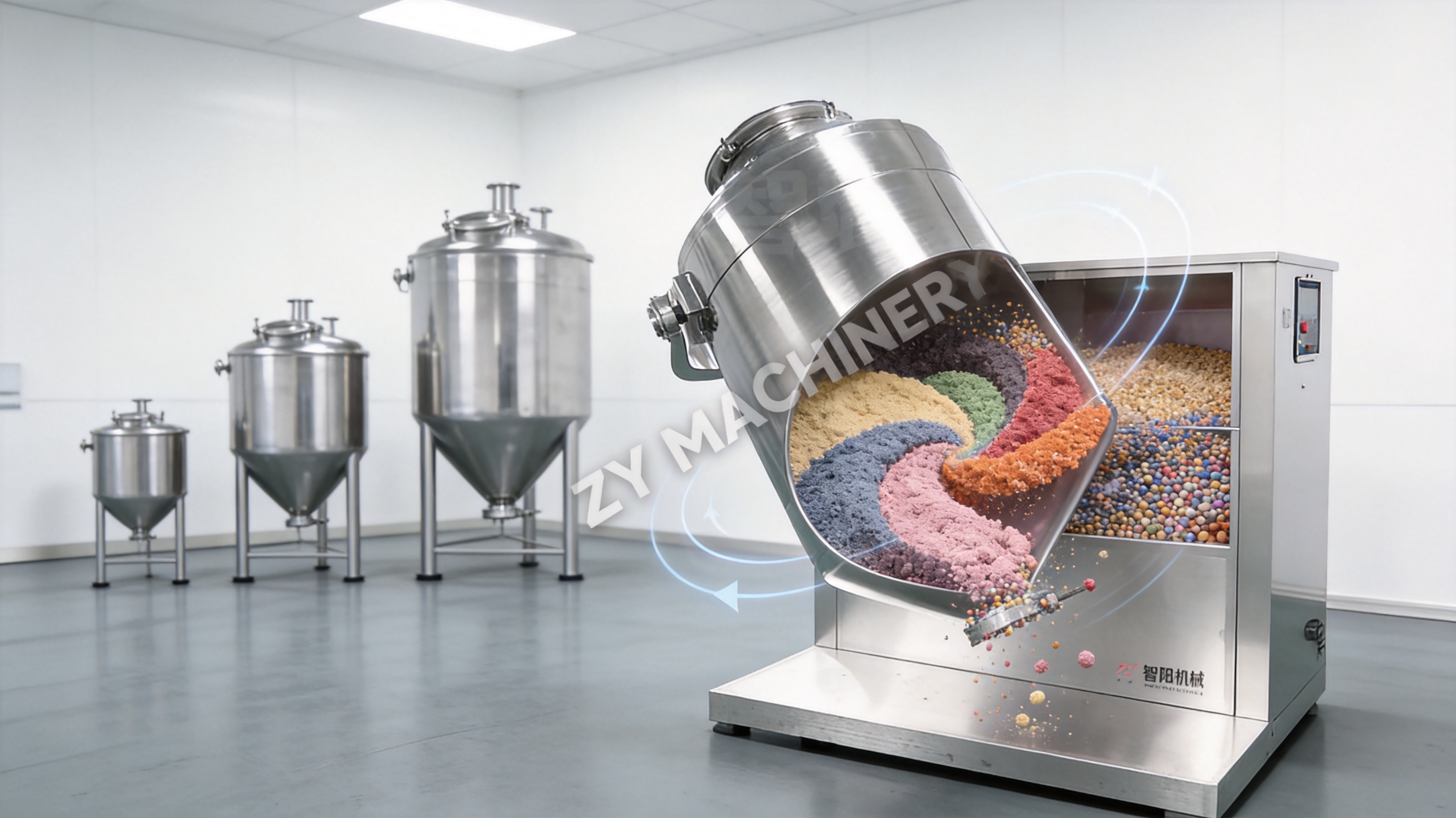
The mixer is designed for powders, granules, and sensitive solid materials. Potential applications include pharmaceutical ingredients, excipients, nutraceutical powders, food ingredients, chemical additives, veterinary premixes, and other dry formulations. Suitability should be confirmed through material evaluation or testing.
The equipment is designed to achieve uniformity of up to 99.9% under suitable formulation and operating conditions. Actual performance depends on particle properties, batch composition, loading ratio, speed, mixing time, sampling method, and discharge procedure. A validated process should establish the applicable operating range.
The maximum loading volume can reach approximately 80% of the vessel volume. The appropriate working volume depends on the material’s density and flow behavior. Users should maintain enough free space for effective tumbling and should also observe the maximum allowable loading weight.
No mixing technology can guarantee that every formulation will remain perfectly uniform under every condition. However, the HD mixer is specifically designed to reduce segregation, layering, and density-based separation by using multi-directional movement and minimizing reliance on centrifugal flow. Discharge, conveying, and storage procedures must also be controlled to preserve uniformity.
The tumble-based motion is intended to provide effective blending with relatively gentle handling compared with high-shear mixing. It can be suitable for fragile granules and sensitive materials, but product trials should be performed to verify that particle size, friability, and flow properties remain within specification.
The HD-1, HD-5, and HD-15 are the smallest models and may be used for laboratory research, formulation development, and small-batch studies. The final choice depends on the minimum practical batch size and the amount of material needed for representative testing.
The HD-200, HD-400, HD-600, HD-800, and HD-1,000 provide larger vessel and loading capacities. They are intended for medium- to large-scale production, subject to the product’s bulk density, required batch size, facility layout, and operating schedule.
Yes. Its high-uniformity blending principle, polished vessel interior, rounded transitions, and available scale range make it suitable for pharmaceutical powder and granule processing. Pharmaceutical users should define the required material specifications, cleaning procedures, validation activities, containment features, and documentation before installation.
Yes. The mixer can be used with feeding, weighing, granulation, drying, coating, lifting, conveying, screening, storage, and other auxiliary equipment. The manufacturer provides standalone machines, modular systems, and complete production lines for laboratory, pilot, and full-scale operations.
Selection should consider barrel volume, maximum loading volume, maximum loading weight, bulk density, batch size, annual output, product range, cleaning frequency, room dimensions, and future expansion. A process trial or technical discussion can help identify the most appropriate model.
No. Motor power is matched to vessel size, motion requirements, and material load. Effective mixing depends on the movement pattern, loading ratio, formulation properties, speed, and time. Excessive power or speed may be unnecessary and could increase particle stress or energy consumption.
The vessel uses smooth, rounded transitions and precision polishing to reduce crevices, accumulation, and retained powder. These features support cleaning, inspection, product recovery, and GMP-oriented manufacturing. A complete hygienic assessment must also include seals, discharge points, access, cleaning procedures, and material selection.
Customers should provide material names or categories, bulk density, particle size, moisture sensitivity, batch weight, required throughput, number of formulations, cleaning method, operating environment, desired automation level, and available utilities. Information about upstream and downstream equipment is also useful for system integration.
The HD Multi-Directional Motion Mixer provides a practical solution for manufacturers seeking uniform, efficient, and gentle blending of powders and granules. Its defining advantage is the coordinated movement of material in multiple directions, which promotes continuous tumbling and folding while reducing centrifugal separation, layering, and accumulation.
With mixing uniformity of up to 99.9%, a maximum vessel utilization of approximately 80%, short mixing cycles, a polished and rounded product-contact interior, and models ranging from 1 liter to 1,000 liters, the equipment can support a wide range of laboratory, pilot, and production applications.
Compared with conventional single-axis or low-fill-capacity mixers, the HD series offers stronger process flexibility for difficult multi-component formulations. Compared with high-shear equipment, it provides a gentler alternative when the preservation of granule structure and particle integrity is important.
Its value is further strengthened by the manufacturer’s process-oriented engineering capabilities. Changzhou Zhiyang Machinery Equipment Co., Ltd. combines equipment design, powder processing experience, research and development, quality management, patented technologies, and complete line integration. This allows customers to obtain not only a mixer but also practical support for capacity planning, process development, equipment coordination, and production implementation.
For pharmaceutical, nutraceutical, food, chemical, veterinary, and specialty material manufacturers, the HD Multi-Directional Motion Mixer can form the foundation of a more consistent and efficient dry-processing operation. Proper model selection, formulation testing, validated operating conditions, hygienic procedures, and controlled discharge remain essential. When these factors are addressed together, the mixer can help improve batch uniformity, throughput, product quality, and long-term manufacturing reliability.
1. Product technical information for the HD Multi-Directional Motion Mixer, including operating principle, features, model range, capacities, motor specifications, dimensions, and machine weights.
2. General principles of powder mixing, particle segregation, bulk density behavior, and tumble blending in pharmaceutical and chemical processing.
3. Good Manufacturing Practice principles for equipment design, cleaning, hygienic processing, contamination control, and validation in pharmaceutical production.
4. General engineering practices for scale-up from laboratory and pilot powder-processing equipment to commercial manufacturing systems.
5. Industrial guidance on powder handling, dust control, equipment safety, material containment, and process integration.
6. Technical information concerning laboratory equipment, mixing equipment, granulation equipment, drying equipment, coating equipment, auxiliary processing equipment, and transfer and conveying systems supplied by Changzhou Zhiyang Machinery Equipment Co., Ltd.
Want to stay up to date?
Contact us via the email address below.
Don't worry about spam. We hate it too!
Mobile Client

Video Account
Phone:+86-15161130178
Tel:+86-519-88674267
Email:czzy188@163.com
Phone:+86-15161132798
Email:zy@zy-drying.com

WeChat ID

Copyright 2026 Changzhou Zhiyang Machinery Equipment Co., Ltd. All Rights Reserved  Oral Solid Dosage Equipment Manufacturer