 English
 Español
 русский
 中文简体
中文简体XL Rotary Granulator
The XL Rotary Granulator is designed to convert wet materials from previous.....

Content
Wet granulation is a critical stage in the production of pharmaceutical, nutraceutical, chemical, food, and specialty industrial products. It transforms damp, agglomerated, or partially processed material into granules with a controlled shape and size. When granules are too large, too fine, irregular, or excessively compacted, later operations such as drying, blending, tableting, encapsulation, tumbling, and coating can become less stable. A reliable granulation system therefore contributes directly to product quality, process efficiency, material recovery, and production continuity.
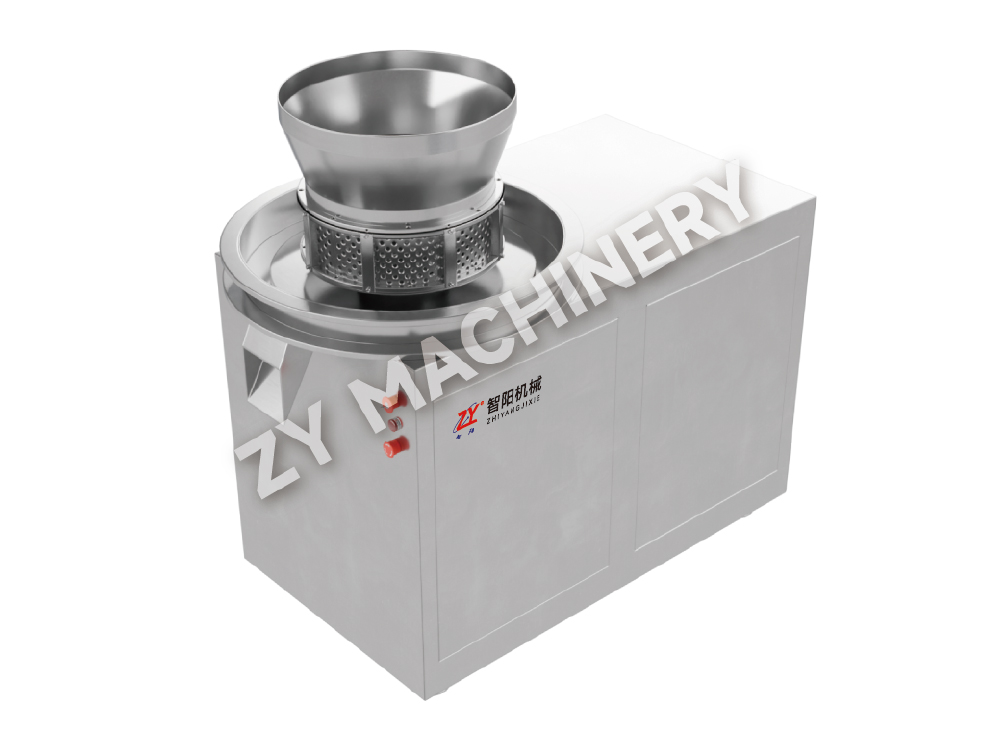
The XL Rotary Granulator is designed for this important processing requirement. It converts wet material into uniform cylindrical granules by combining rotating rollers with a perforated stainless-steel sieve cylinder. As the rollers rotate, they apply pressure to the wet mass and guide it through the openings in the sieve. The material emerges as formed strands or cylindrical granules, which are discharged for collection and subsequent processing.
Its practical design allows manufacturers to change sieve cylinders when different granule dimensions are required. This makes the equipment suitable for production environments where several formulations, capacities, or particle-size specifications must be handled using one basic machine platform. The available models cover laboratory, pilot, and production-oriented requirements, with capacities ranging from approximately 5 to 400 kilograms per hour, depending on the selected model and material conditions.
Manufactured by Changzhou Zhiyang Machinery Equipment Co., Ltd., the XL Rotary Granulator forms part of a broader portfolio of powder processing and oral solid dosage equipment. The company develops individual machines, modular processing systems, and complete production lines for pharmaceutical, biopharmaceutical, biotechnology, nutraceutical, veterinary, additive, chemical, and related applications.
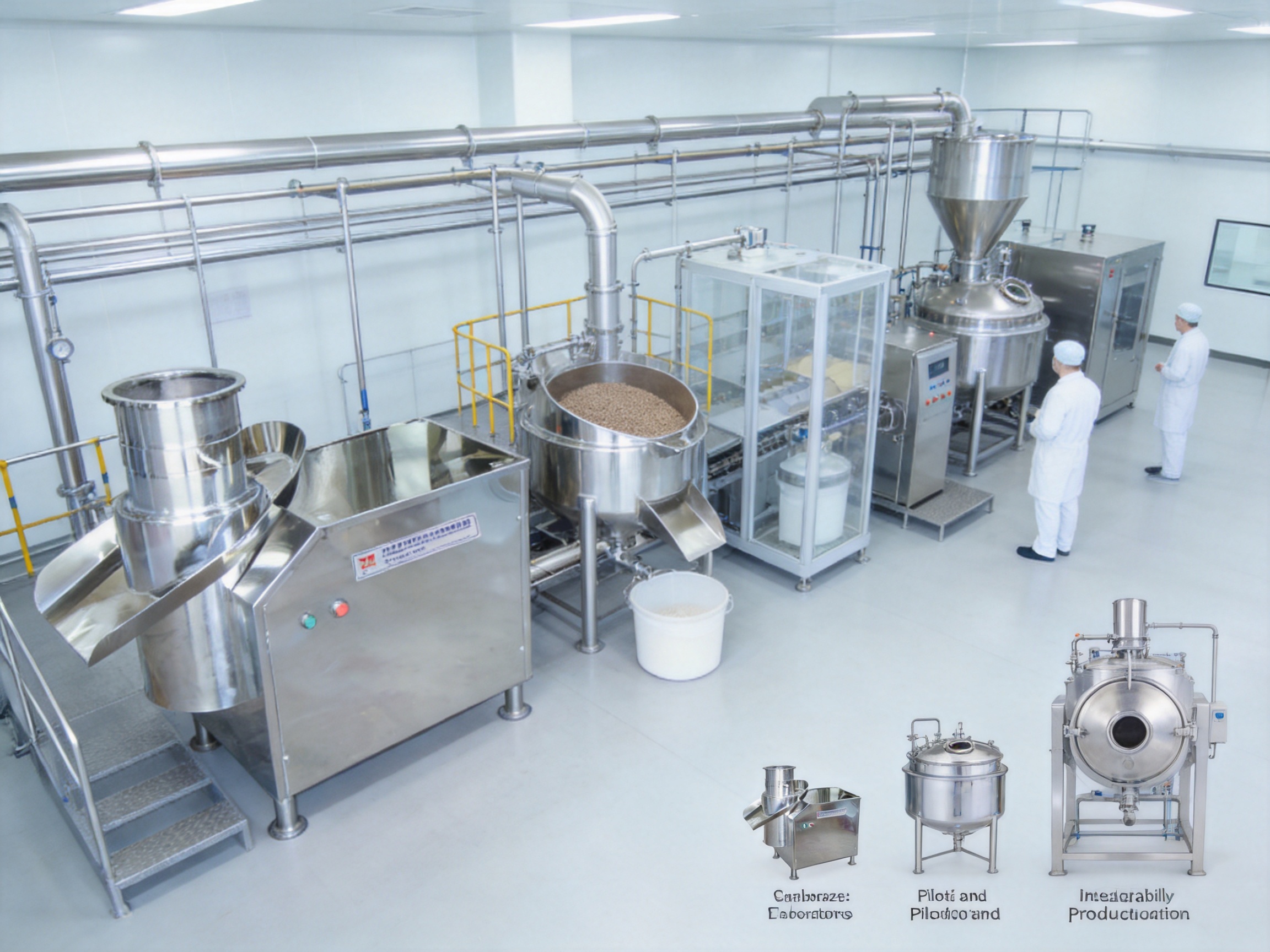
Rather than treating granulation as an isolated mechanical operation, the company approaches equipment selection as part of an integrated process. Material properties, moisture level, production capacity, downstream requirements, factory layout, cleaning expectations, and operating conditions all influence the final design. This process-oriented approach enables the XL Rotary Granulator to be considered not only as a standalone machine, but also as a practical component within a complete wet-granulation and drying line.
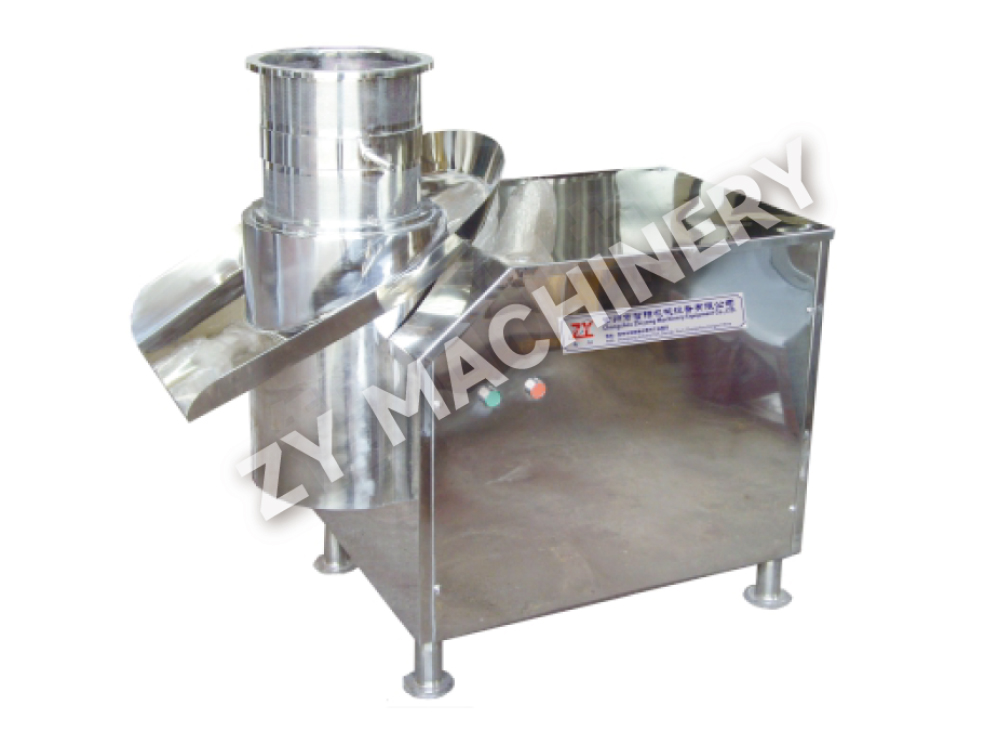
XL Rotary Granulator
Wet granules are intermediate products, but their characteristics have a substantial influence on the rest of the manufacturing process. The size distribution affects drying time, moisture migration, flowability, dissolution behavior, bulk density, and the uniformity of subsequent coating or compression operations. A granulator that produces a repeatable particle structure can reduce variation between batches and help operators maintain a more stable production routine.
In pharmaceutical manufacturing, wet granules are often prepared to improve the flow and compressibility of powders. Fine powders may show poor flow, excessive dust generation, or inadequate feeding performance. Granulation increases the effective particle size and can help bind formulation components together. However, the granules must remain sufficiently uniform. Oversized lumps may dry unevenly, while excessive fines may create dust, segregation, or feeding problems.
In chemical and nutraceutical production, granule quality can be equally important. Controlled granule dimensions may improve dosing, packaging, dissolution, dispersion, handling, and storage. For products that undergo tumbling, drying, or coating after granulation, a consistent cylindrical form provides a predictable starting point for the next operation.
The XL Rotary Granulator addresses this requirement through a straightforward pressure-extrusion principle. Instead of relying only on impact or uncontrolled breaking, it uses the interaction between rotating rollers and a perforated sieve cylinder. The wet mass is guided toward the sieve openings and forced through them under controlled mechanical pressure. The resulting granules are formed according to the dimensions of the sieve openings.
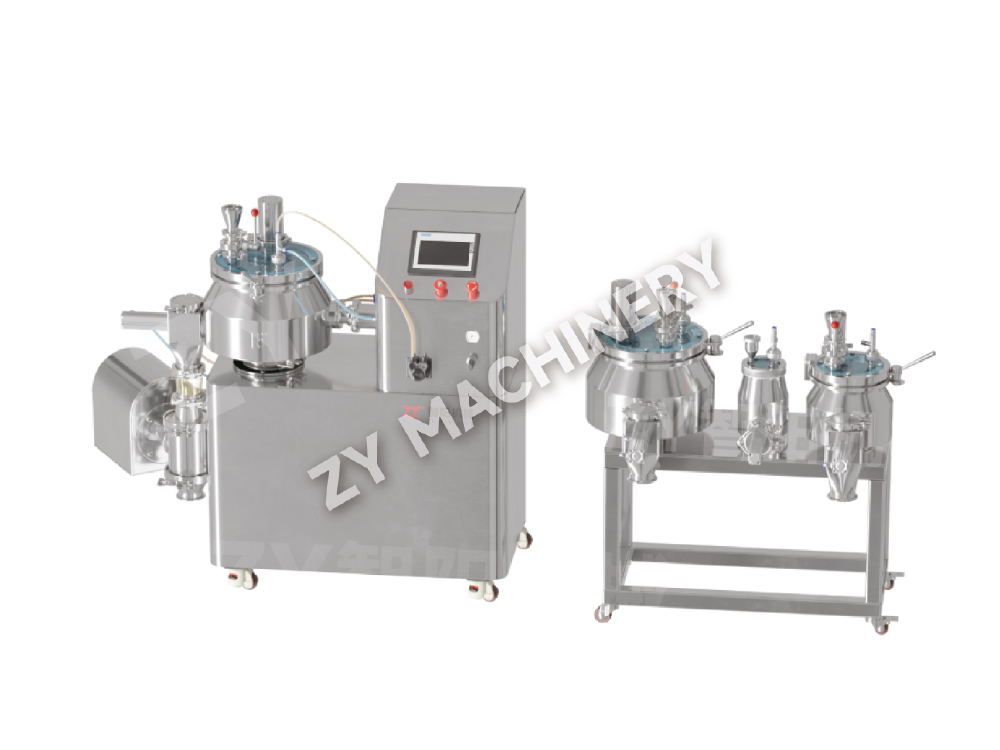
Wet material from a preceding process is fed into the working chamber containing the stainless-steel sieve cylinder. The material may have been prepared by a high-shear mixer, wet mixer, planetary mixer, or another suitable blending and wetting system. The consistency of the feed is important. A properly conditioned wet mass allows the rollers to apply pressure evenly and reduces unnecessary fluctuations in output.
Once the material enters the sieve area, it is distributed across the working zone. The equipment is intended for wet materials that possess sufficient plasticity or cohesion to pass through the sieve openings and maintain their formed structure after discharge. Exact performance depends on formulation, moisture content, binder characteristics, temperature, and other process variables.
Rotating rollers press the wet material against the perforated sieve cylinder. The rollers do not simply crush the material. Their movement guides the mass toward the openings and applies a relatively continuous force that encourages extrusion. As the material passes through the openings, it takes on a cylindrical form.
The combination of roller rotation and sieve geometry supports a more repeatable granulation action than manual screening or uncontrolled lump breaking. The process can be adjusted through operating conditions and sieve selection. When the feed material is prepared consistently, the machine can provide a stable output suitable for further drying or coating.
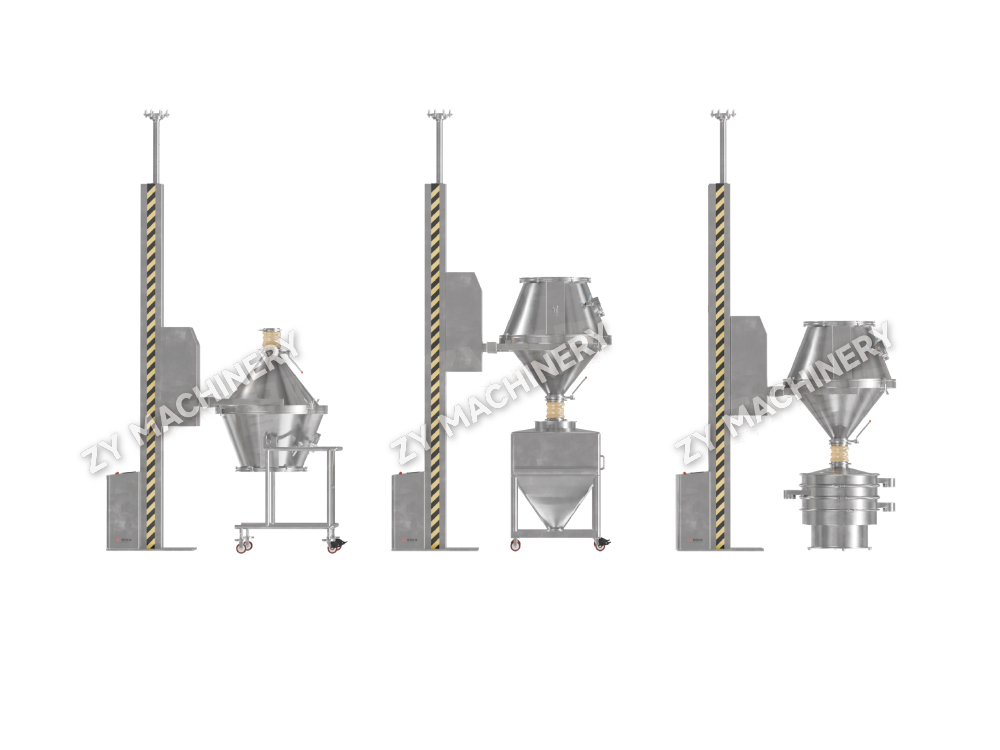
After passing through the sieve openings, the formed granules are discharged from the granulation zone and collected for the next stage. The discharge arrangement can be incorporated into a production line according to the user's layout and downstream equipment. Depending on the application, granules may be transferred to a fluid-bed dryer, tray dryer, lifting system, coating machine, intermediate container, or other handling equipment.
Because the granules are produced continuously during operation, the machine can support a smooth transition between wet mixing, granulation, drying, and finishing. The equipment's compact dimensions also make it suitable for integration into production areas where floor space and material flow must be carefully managed.
The sieve cylinder is the primary component used to determine the nominal size of the granules. The XL series is specified with sieve diameters from 0.8 to 2.5 millimeters, depending on the selected configuration. By changing the sieve cylinder, users can produce different particle dimensions for different formulations or downstream requirements.
This replaceable-cylinder concept provides flexibility without requiring a completely different granulator for every product. A facility producing several product grades can select the appropriate sieve configuration for each process. It also allows the equipment to be adapted as formulation development progresses from laboratory or pilot work to regular production.
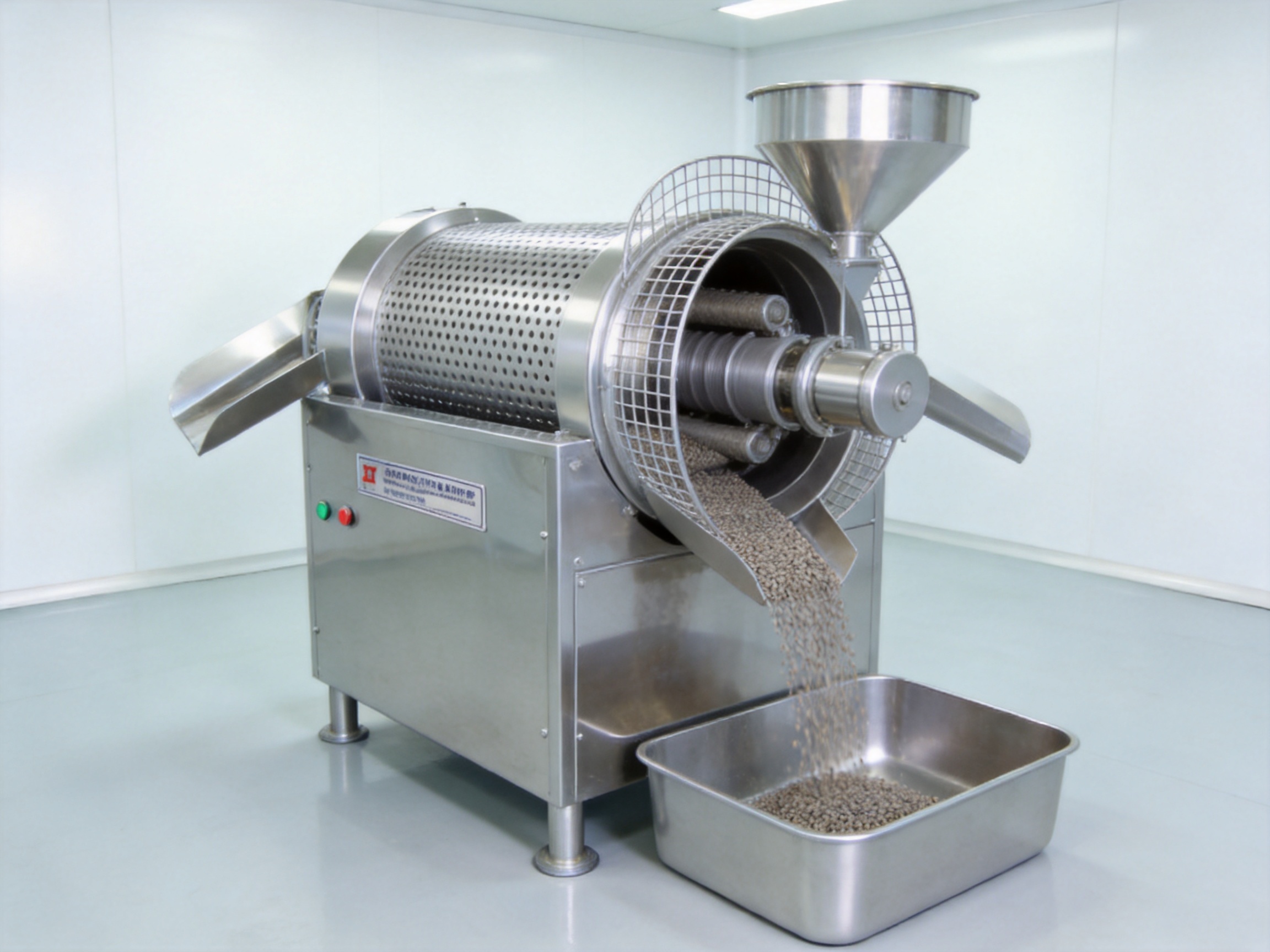
One of the main advantages of the XL Rotary Granulator is its ability to produce cylindrical granules rather than relying on irregular breaking or random agglomeration. A cylindrical form can provide a more predictable basis for drying, coating, feeding, and handling. The final shape is influenced by the sieve openings and the condition of the wet mass, allowing operators to establish a repeatable process window.
Compared with manual screening, the rotary system offers a more controlled and continuous method. Manual screening may depend heavily on operator strength, technique, and timing. It can also create inconsistent pressure across the screen and lead to variable granule dimensions. A powered roller system reduces this dependence on manual intervention.
Many basic granulation systems are designed around a fixed particle-size range. Changing the target size may require substantial modification or the use of another machine. The XL design allows sieve cylinders to be replaced, providing a practical way to change the granule dimensions.
This flexibility is useful for manufacturers that produce multiple formulations or operate both development and commercial batches. It can also help process engineers compare different granule sizes during product development. A smaller opening may be selected for a more refined granule, while a larger opening may be chosen when faster drying or a different downstream behavior is required.
The pressure-based extrusion action is designed to guide wet material through the sieve rather than subjecting it to unnecessarily aggressive mechanical treatment. Smooth operation can help reduce splashing, uncontrolled breakage, and the generation of excessive waste. Lower material loss is particularly valuable when processing costly active ingredients, specialty chemicals, or high-value formulations.
Actual recovery depends on the formulation, cleaning method, feed preparation, sieve selection, and operating conditions. Nevertheless, a well-matched roller-and-sieve system provides a clear mechanical route for converting the wet mass into usable granules, helping operators maintain a more efficient material balance.
The XL Rotary Granulator is designed with a compact structure that can be positioned within a larger production line without excessive floor-space demand. This is important for facilities that need to connect several operations in sequence while maintaining appropriate access for inspection, cleaning, and maintenance.
Compact dimensions can also simplify the planning of pilot areas, formulation development rooms, and smaller production suites. The equipment is available in multiple sizes, allowing users to select a capacity range that is more appropriate for their actual requirements instead of installing a disproportionately large machine.
The sieve cylinder is manufactured from stainless steel, a material commonly selected for process equipment because of its corrosion resistance, cleanability, and suitability for contact with a broad range of pharmaceutical and chemical materials. The robust construction supports regular operation in demanding production environments.
Material selection alone does not determine equipment life. Correct operation, appropriate cleaning, timely inspection, and suitable maintenance remain essential. However, the use of stainless-steel process-contact components provides a reliable foundation for hygienic and durable equipment design.
The machine is suitable for a variety of wet materials, including pharmaceutical and chemical compounds. It may also be considered for nutraceutical, veterinary, additive, and related formulations when the material characteristics are compatible with rotary extrusion granulation.
This cross-industry suitability allows a manufacturer to use one equipment platform across different product categories. The exact application should be confirmed through material testing and process trials, especially when the formulation contains sticky, heat-sensitive, abrasive, or highly cohesive ingredients.
The XL series includes three principal models. They are differentiated mainly by capacity, motor power, and external dimensions. The selected model should be based on the required throughput, material behavior, batch size, available space, and the desired relationship between the granulator and upstream and downstream equipment.
| Item | Unit | XL-120 | XL-250 | XL-300 |
|---|---|---|---|---|
| Sieve diameter range | mm | 0.8–2.5 | 0.8–2.5 | 0.8–2.5 |
| Capacity | kg/h | 5–60 | 60–200 | 100–400 |
| Motor power | kW | 1.5 | 4 | 5.5 |
| External dimensions | mm | 740 × 350 × 1080 | 750 × 500 × 1230 | 880 × 630 × 1230 |
The capacity figures are nominal ranges and should be evaluated together with the material's moisture content, density, cohesiveness, particle characteristics, feeding stability, and desired granule size. A material with high resistance to extrusion may produce a lower practical throughput than a free-flowing wet mass. Conversely, a well-conditioned feed may support efficient operation within the upper portion of the stated range.
The XL-120 is suited to lower-capacity applications, development work, pilot production, and facilities that require a compact machine. Its capacity range of approximately 5 to 60 kilograms per hour makes it useful where flexibility and moderate output are more important than maximum throughput.
The XL-250 provides an intermediate capacity range of approximately 60 to 200 kilograms per hour. It may be appropriate for pilot-scale expansion, medium-volume manufacturing, or production lines that require a balance between capacity and footprint.
The XL-300 is the largest listed model, with a nominal capacity range of approximately 100 to 400 kilograms per hour. Its 5.5-kilowatt motor and larger external dimensions support higher-volume processing. This model is appropriate for production environments where the granulator must keep pace with a larger upstream wet-mixing or dosing operation.
Changzhou Zhiyang Machinery Equipment Co., Ltd. was founded in 2010 and is based in Changzhou, China. Its manufacturing activities focus on powder processing and oral solid dosage equipment. The company develops equipment for laboratory, pilot, and full-scale production, allowing customers to address different stages of process development and commercialization.
A key strength is the company's process-oriented design philosophy. Instead of selecting a machine solely from a catalog capacity, the engineering team considers material characteristics, required output, installation conditions, production sequence, and site constraints. This approach is particularly valuable for granulation because the quality of the final granules depends on the relationship between wet mixing, granulation, drying, conveying, and finishing.
For example, a granulator may be technically capable of handling a certain mass flow, but the overall line may not perform well if the upstream mixer delivers material inconsistently or if the downstream dryer cannot accept the discharge rate. By considering the complete process route, the equipment supplier can help create a better-matched production system.
The company produces equipment across several processing categories, including laboratory equipment, mixing equipment, granulation equipment, drying equipment, coating equipment, auxiliary processing equipment, and transfer and conveying systems. This broad scope allows a customer to coordinate multiple stages through one engineering partner.
For a wet-granulation project, this may include a material preparation system, the XL Rotary Granulator, a drying unit, a coating machine, and suitable powder or granule transfer equipment. Coordinating these stages can reduce interface problems related to discharge height, feeding rate, connection dimensions, control logic, and cleaning access.
Customers may also benefit from a more consistent approach to documentation, spare parts planning, operator training, and technical support when several machines are supplied by the same specialized manufacturer.
The XL Rotary Granulator can be supplied as an individual machine or integrated into a modular system. A standalone unit may be appropriate for a facility that already owns compatible wet-mixing and drying equipment. A modular arrangement can be designed for a defined process segment, while a complete line may connect material preparation, granulation, drying, coating, and transfer operations.
This scalable approach helps users avoid unnecessary investment. A company can begin with a single granulator for process development and later expand the system as demand grows. Alternatively, a larger production line can be engineered from the beginning when capacity and regulatory requirements are already defined.
The company has expanded its product portfolio and strengthened its research and development capabilities over time. Its development work is supported by patented technologies and a quality system framework. These efforts are important because powder and granule processing often requires more than standard mechanical design. Changes in formulation, moisture, binder, temperature, and particle behavior can require equipment refinements or customized process solutions.
Continuous development also helps manufacturers respond to changing expectations regarding automation, energy efficiency, hygienic design, operator safety, production flexibility, and data management. The XL series reflects a practical equipment concept in which replaceable sieve cylinders and multiple machine sizes provide adaptability without unnecessary complexity.
ZY Machinery has supplied equipment and engineering solutions to customers in multiple countries and regions. Overseas service capability is important for companies purchasing processing equipment internationally because successful installation involves more than shipping the machine. Site preparation, commissioning, operator instruction, troubleshooting, spare parts, and process adjustment all contribute to the long-term value of the equipment.
By supporting customers across different markets, the company has experience adapting equipment and engineering plans to varying production environments, factory layouts, and application requirements. Customers should still define local standards, electrical specifications, documentation needs, and validation expectations at the beginning of a project so that the equipment can be prepared accordingly.
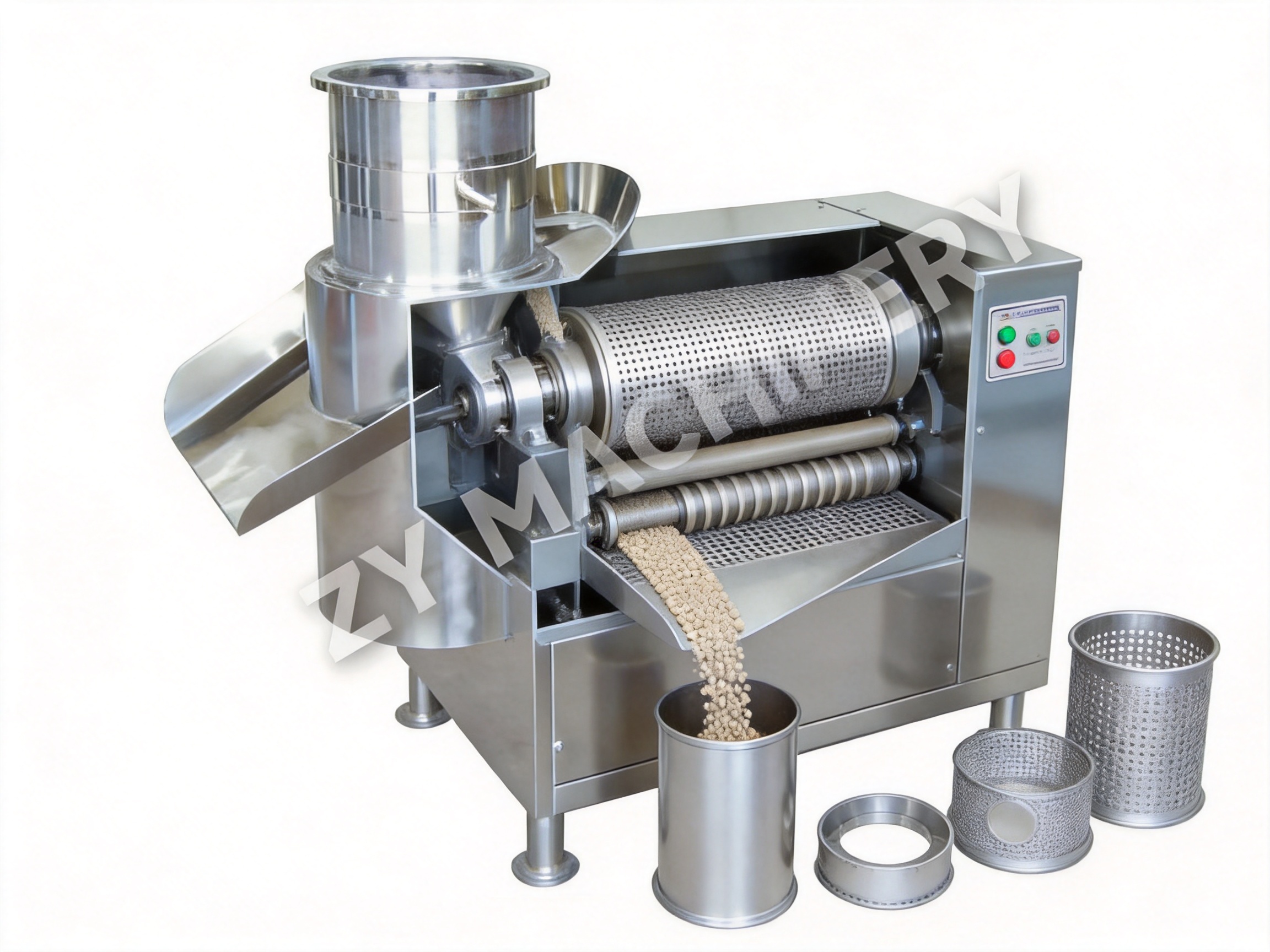
Reliable granulation equipment begins with appropriate material selection. Stainless-steel components in the process-contact area support corrosion resistance and facilitate cleaning. The sieve cylinder must maintain its dimensional accuracy and mechanical integrity during repeated operation. Rollers and drive components must also be selected and assembled to withstand continuous pressure and rotation.
For pharmaceutical and chemical applications, the condition of the contact surfaces is especially important. Smooth, well-finished surfaces can reduce material retention and simplify cleaning. The design should also limit unnecessary crevices or difficult-to-access areas where wet material could accumulate. The specific surface finish, gasket materials, and construction details should be confirmed according to the customer's application and regulatory expectations.
The working relationship between the rollers and sieve cylinder must be maintained through accurate fabrication and assembly. Misalignment can produce uneven pressure, irregular granule formation, excessive wear, or unstable output. A professional manufacturing process therefore includes careful fitting, alignment, inspection, and functional testing.
Consistent assembly also supports repeatability between machines of the same model. When a facility operates several granulators, predictable mechanical performance makes it easier to transfer process parameters from one unit to another. This is valuable for scale-up, capacity expansion, and replacement planning.
The listed motor powers range from 1.5 to 5.5 kilowatts across the XL-120, XL-250, and XL-300 models. The motor drives the roller system and provides the force required to process the wet material. Appropriate power selection is essential because the machine must overcome the resistance created by the material and sieve while maintaining stable rotation.
Reliable drive performance helps prevent sudden interruptions and supports a smoother granulation output. Operators should avoid feeding material that is outside the machine's intended characteristics, as excessive viscosity, foreign objects, or overloading may increase mechanical stress. Regular inspection of the drive, bearings, fasteners, and protective components is recommended as part of normal maintenance.
Manufacturing quality should be supported by functional testing before equipment leaves the factory. Testing may include checking rotation direction, drive operation, sieve installation, roller movement, discharge behavior, guarding, electrical controls, and basic safety functions. Where appropriate, customers can request factory testing with representative materials or agreed test conditions.
Testing helps identify mechanical or control issues at an early stage. It also provides an opportunity to confirm the intended throughput range, granule characteristics, and equipment interfaces before installation at the customer's site. The exact test procedure depends on the project scope and the customer's quality requirements.
Professional equipment manufacturing includes technical documents that help customers install, operate, clean, and maintain the machine. Depending on the project, documentation may include general arrangement drawings, operating instructions, electrical information, spare-parts lists, inspection records, and maintenance recommendations.
For regulated industries, customers may also require documentation related to materials, welding, surface treatment, testing, calibration, risk assessment, and qualification. These requirements should be agreed upon during the quotation and engineering stages. Early communication prevents delays and ensures that the finished equipment supports the customer's internal quality system.
The quality of granulation begins before material reaches the XL Rotary Granulator. The wet mass should be mixed thoroughly so that active ingredients, excipients, binders, and other components are distributed consistently. Moisture must also be added in a controlled manner. Material that is too dry may fail to form stable granules, while material that is too wet may become sticky, overload the machine, or produce deformed granules.
Upstream equipment may include a high-shear mixer, wet mixer, planetary mixer, or another system suitable for the formulation. The mixing time, liquid addition rate, binder concentration, temperature, and endpoint should be developed through process trials. Once the wet mass reaches the required condition, it can be transferred to the granulator in a stable and controlled manner.
During granulation, operators should monitor the feed condition, machine load, discharge behavior, and granule appearance. The selected sieve cylinder determines the nominal opening size, but final granule dimensions are also affected by material elasticity, moisture, pressure, and the behavior of the extruded mass after it leaves the sieve.
Stable feeding is essential for consistent output. Irregular feeding may cause fluctuations in pressure and produce a mixture of different granule sizes. A suitable hopper, transfer arrangement, or feeding device can help maintain a more uniform material supply.
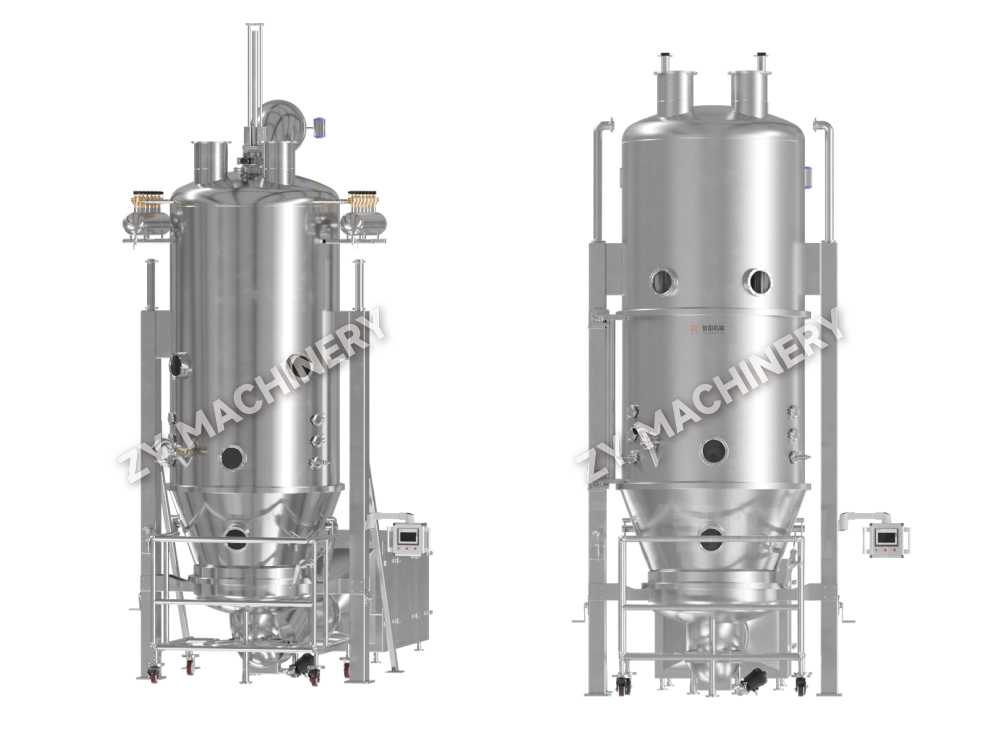
Wet granules normally proceed to a drying stage. The drying method may be selected according to the formulation, production scale, heat sensitivity, solvent system, and desired moisture endpoint. Fluid-bed drying is commonly used for pharmaceutical granules, while tray drying or other systems may be suitable for specific products.
Uniform granule size can support more predictable drying because the exposed surface area and internal moisture path are more consistent. Extremely irregular lumps may remain wet in their centers while smaller particles become overdried. The XL Rotary Granulator therefore contributes to the efficiency of the downstream drying process, although the final drying performance depends on the dryer design and operating parameters.
After drying and sizing, granules may be used directly, compressed into tablets, filled into capsules, or transferred to a coating system. In some applications, granules are coated to improve taste, protect active ingredients, control release, or enhance stability.
Uniformity at the granulation stage can improve the loading behavior and movement of the material during coating. Consistent granules are less likely to create a highly variable distribution of coating liquid. The specific relationship between granule geometry and coating performance should be verified through product trials.
Material transfer is another important part of a complete line. Mechanical damage, segregation, dust generation, and material retention can occur if conveying equipment is poorly matched to the granule properties. ZY Machinery's broader range of transfer and conveying equipment allows the granulator to be considered together with the material-handling route.
A well-planned system should minimize unnecessary transfer points, reduce elevation changes where possible, provide suitable access for cleaning, and protect the product from contamination. The granulator's compact design can help simplify the arrangement of these connected stages.
The XL Rotary Granulator is particularly relevant to oral solid dosage manufacturing, where granulation is often used to improve powder flow and compression behavior. It can be applied to suitable wet masses used in tablet, capsule, and other solid-dose processes. The cylindrical granules may then be dried, calibrated, blended with external-phase ingredients, and compressed or filled.
In nutraceutical production, the machine may be used for vitamin, mineral, botanical, or functional-ingredient formulations. These materials can vary significantly in density, hygroscopicity, and binding behavior, so application testing is important. The replaceable sieve-cylinder concept can help manufacturers evaluate different granule sizes for dissolution, flow, packaging, and downstream processing.
Veterinary formulations may also require controlled granulation for tablets, boluses, powders, or other dosage forms. Chemical compounds, additives, catalysts, and specialty materials can be considered when their wet-processing properties are compatible with the machine's extrusion principle.
The equipment should not be assumed to be suitable for every wet material without evaluation. Highly abrasive materials may require special wear considerations. Very sticky formulations may need carefully selected moisture and binder levels. Heat-sensitive materials may require control of residence time and mechanical energy. Product trials help determine the appropriate sieve, speed, feed rate, and cleaning method.
Model selection should begin with the required throughput and the expected material behavior. The nominal capacity range provides a starting point, but it should not be treated as a universal guarantee for every formulation. Customers should provide information about bulk density, moisture content, particle composition, binder type, batch size, desired granule dimensions, and production hours.
The XL-120 may be suitable for smaller operations and development work. The XL-250 provides a larger intermediate range, while the XL-300 is intended for higher-volume production. Selecting a machine with reasonable capacity margin can help accommodate future demand, but excessive oversizing may reduce operating efficiency during small batches.
Sieve cylinders should be selected according to the desired granule dimensions and the behavior of the wet mass. They must be installed correctly and inspected for blockage, deformation, or damage before use. A blocked opening can change the pressure distribution and affect the output.
After operation, the sieve should be cleaned according to the approved procedure. Residual wet material can harden inside the openings and make later operation more difficult. Proper storage helps prevent dents, scratches, and contamination when cylinders are not installed on the machine.
Feed consistency is one of the most important process variables. Operators should follow established mixing and liquid-addition procedures rather than relying only on visual judgment. The wet mass should be sufficiently cohesive to pass through the sieve and form stable granules, but not so wet that it adheres excessively to the rollers or sieve.
Changes in raw-material supplier, particle-size distribution, binder concentration, or ambient humidity may affect granulation performance. Process monitoring and documented adjustment procedures can help maintain stable results when material conditions change.
The equipment should be operated with all protective components correctly installed. Operators should not reach into the working area while the rollers are moving. Lockout and isolation procedures should be followed before cleaning, inspection, or maintenance.
Cleaning procedures should address the sieve cylinder, rollers, product-contact surfaces, discharge zone, hopper, and any connected transfer components. The method should be compatible with the materials of construction and the customer's hygiene or validation program. Thorough drying after cleaning is important, particularly when stainless-steel components are stored or reassembled before the next batch.
The value of the XL Rotary Granulator extends beyond its basic ability to form granules. Its replaceable sieve cylinders provide process flexibility, while the three model sizes support different capacity requirements. The compact design can simplify layout planning, and the stainless-steel sieve cylinder supports durable processing in pharmaceutical and chemical environments.
For process engineers, the machine offers a clear relationship between sieve selection and nominal granule size. This can make development work easier to organize because particle-size trials can be performed by changing the cylinder while keeping the basic granulator platform unchanged. For production managers, the available capacity range provides an option for matching the granulator to the existing process line.
Compared with equipment that performs only coarse lump breaking, the XL Rotary Granulator provides a more deliberate extrusion route. Compared with fixed-size machines, its interchangeable sieve-cylinder design offers greater adaptability. Compared with overly complex systems, its compact mechanical structure can support easier integration and routine operation.
These advantages do not eliminate the need for process development. No granulator can compensate for inconsistent wet mixing, unsuitable moisture, poor feeding, or inadequate downstream drying. The strongest results are achieved when the machine is correctly matched to the material and incorporated into a well-designed process route.
The machine is intended for wet materials that can be pressed through a perforated sieve and retain a formed granule structure after extrusion. Suitable materials may include pharmaceutical, nutraceutical, veterinary, chemical, additive, and related wet compounds. Application trials are recommended for materials that are highly sticky, abrasive, heat-sensitive, or unusually cohesive.
The listed sieve diameter range is 0.8 to 2.5 millimeters. The actual granule dimensions may be influenced by the selected sieve, moisture content, formulation, roller operation, and the behavior of the material after discharge. Different sieve cylinders can be installed to achieve different nominal particle dimensions.
Yes, the equipment can be considered for multiple products when the material properties and cleaning requirements are compatible. Changing the sieve cylinder allows different granule sizes to be produced. Before multi-product use, the manufacturer should evaluate cleaning procedures, cross-contamination risks, material compatibility, and any product-specific validation requirements.
The XL-120 has a stated capacity of approximately 5 to 60 kilograms per hour. The XL-250 is rated at approximately 60 to 200 kilograms per hour, and the XL-300 at approximately 100 to 400 kilograms per hour. The final selection should consider material characteristics, batch size, operating schedule, downstream capacity, and future production plans rather than capacity alone.
The machine is designed for applications that include pharmaceutical and oral solid dosage processing. Its suitability for a specific regulated product depends on the material, contact-surface requirements, cleaning strategy, documentation, validation plan, and applicable local standards. These details should be confirmed during project engineering.
Wet granules commonly proceed to a drying system, such as a fluid-bed dryer or another suitable dryer. They may then be sized, blended, compressed, encapsulated, or coated. Transfer and conveying equipment can be used to connect the granulator with these downstream units.
The XL Rotary Granulator provides powered rollers and a defined sieve geometry, which can make the process more consistent and less dependent on operator force. It also enables continuous operation and easier adjustment of nominal granule size through sieve-cylinder replacement. Manual screening may remain useful for small laboratory tasks, but it generally offers less production capacity and repeatability.
Material loss can be reduced by maintaining a consistent wet-mass condition, selecting the correct sieve, avoiding overloading, cleaning the working area promptly, and designing suitable discharge and transfer connections. The machine's smooth roller-and-sieve action is intended to support efficient material conversion, but recovery still depends on the formulation and complete process design.
Changzhou Zhiyang Machinery Equipment Co., Ltd. supplies standalone machines, modular systems, and complete production lines. Its product range includes mixing, granulation, drying, coating, auxiliary processing, transfer, and conveying equipment. The final project scope can be developed according to capacity, material properties, factory layout, and process requirements.
Useful information includes the material name and characteristics, moisture content, bulk density, batch size, required throughput, target granule size, upstream mixing method, downstream drying method, operating hours, cleaning requirements, available utilities, installation space, electrical standards, and documentation expectations. Representative samples may also be useful for process testing.
The XL Rotary Granulator provides a practical method for converting wet materials into uniform cylindrical granules. Its rotating rollers apply pressure through a perforated stainless-steel sieve cylinder, creating a controlled extrusion process that supports consistent particle formation. Replaceable sieve cylinders allow users to adjust nominal granule dimensions, while three available models cover lower-capacity, intermediate, and higher-volume requirements.
Its advantages include adjustable sizing, smooth operation, reduced material loss, compact construction, durable process-contact components, and suitability for pharmaceutical, chemical, nutraceutical, veterinary, additive, and related applications. These features make it a flexible alternative to manual screening, fixed-size granulation equipment, and less controlled lump-breaking methods.
The equipment's value is further strengthened by the manufacturer's broader engineering capabilities. Changzhou Zhiyang Machinery Equipment Co., Ltd. combines equipment production with process integration, research and development, quality-system practices, modular design, complete-line engineering, and overseas service support. This allows customers to evaluate the granulator as part of a full production route rather than as an isolated machine.
For the best result, model selection and process parameters should be based on material testing and a clear understanding of upstream and downstream requirements. When correctly matched with wet mixing, drying, conveying, and finishing equipment, the XL Rotary Granulator can help manufacturers improve granule consistency, production efficiency, process flexibility, and long-term equipment value.
1. Changzhou Zhiyang Machinery Equipment Co., Ltd. Product information for the XL Rotary Granulator.
2. Changzhou Zhiyang Machinery Equipment Co., Ltd. Technical data for XL-120, XL-250, and XL-300 rotary granulator models.
3. General principles of wet granulation and extrusion-based particle formation in pharmaceutical manufacturing.
4. Good Manufacturing Practice principles for pharmaceutical processing equipment design, operation, cleaning, and maintenance.
5. General engineering practices for powder processing, drying, coating, transfer, and oral solid dosage production lines.
Want to stay up to date?
Contact us via the email address below.
Don't worry about spam. We hate it too!
Mobile Client

Video Account
Phone:+86-15161130178
Tel:+86-519-88674267
Email:czzy188@163.com
Phone:+86-15161132798
Email:zy@zy-drying.com

WeChat ID

Copyright 2026 Changzhou Zhiyang Machinery Equipment Co., Ltd. All Rights Reserved  Oral Solid Dosage Equipment Manufacturer