 English
 Español
 русский
 中文简体

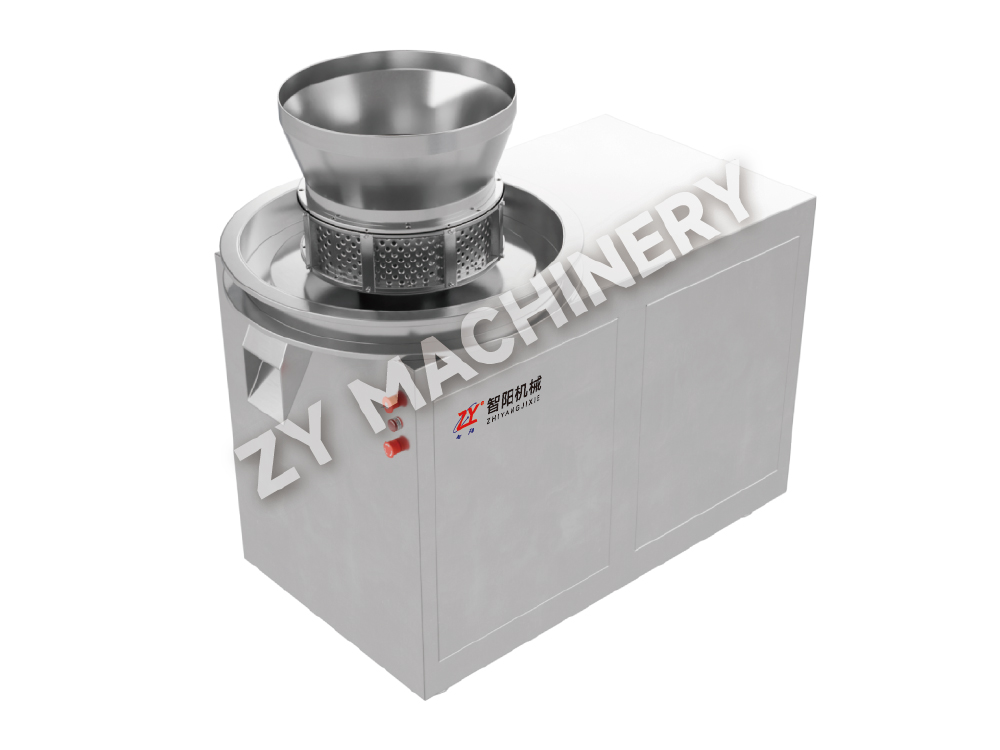
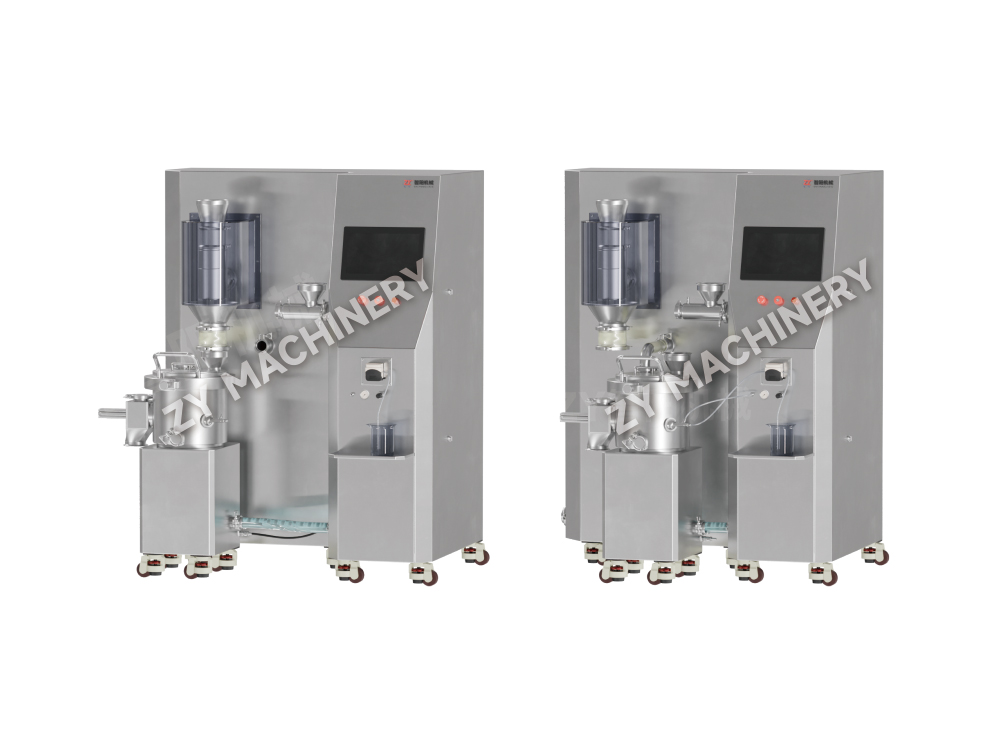
SET Screw Extrusion Granulator
The SET Screw Extrusion Granulator is a high-efficiency machine designed fo.....

Content
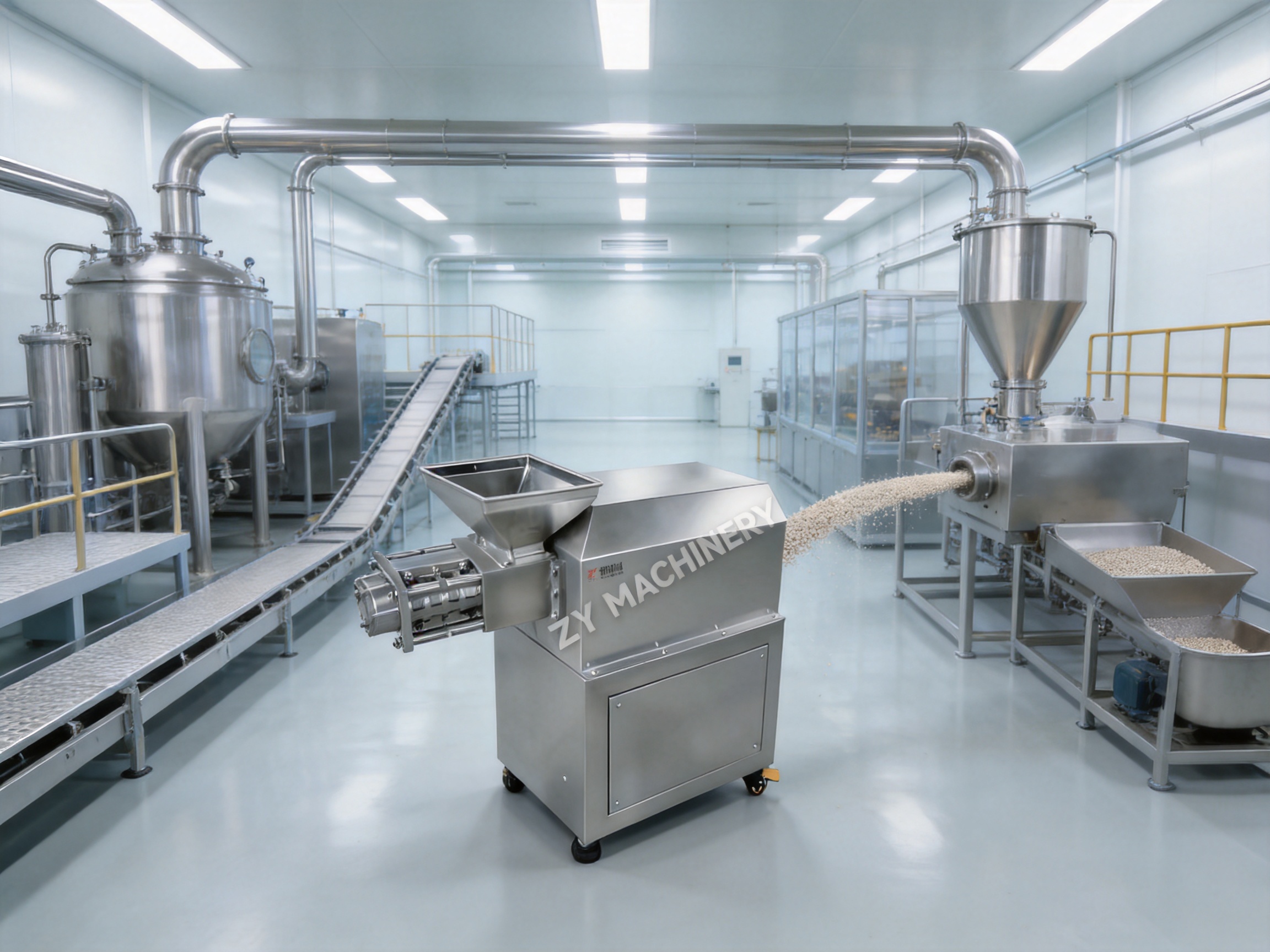
Modern pharmaceutical, chemical, food, nutraceutical, and related processing industries increasingly require granules with consistent size, density, shape, and flow behavior. These characteristics influence downstream operations such as drying, coating, tablet compression, capsule filling, packaging, dissolution, and material transfer. When granulation is inconsistent, manufacturers may experience segregation, poor flowability, irregular filling, excessive dust, variable compression performance, and increased production waste. For this reason, selecting a suitable granulation technology is an important part of designing a reliable powder processing line.
The SET Screw Extrusion Granulator is designed to address these requirements through a controlled screw extrusion process. It converts powders or pastes into uniform cylindrical granules by conveying, compressing, extruding, and cutting the material in a continuous operation. Its adjustable screw speed provides flexibility in controlling output and granule characteristics, while its compact construction allows integration into laboratory, pilot-scale, and production environments.
Developed and manufactured by Changzhou Zhiyang Machinery Equipment Co., Ltd., the SET series reflects a process-oriented approach to powder and oral solid dosage equipment. The machine is intended not merely as an isolated production unit, but as a practical component of a broader material processing route. It can be applied where manufacturers need dependable granule formation, controllable operating parameters, straightforward maintenance, and compatibility with existing equipment.
Granulation is often used to transform fine powders into larger, more manageable particles. Powders may have poor flowability, high dust generation, low bulk density, or a tendency to segregate during handling. Granulating these materials can improve their behavior during feeding, conveying, drying, storage, compression, and packaging.
In pharmaceutical applications, consistent granules can support more stable tablet and capsule production. Granule size and density affect die filling, compression behavior, disintegration, and the uniform distribution of active ingredients. In food and nutraceutical processing, granulation can help improve dosing accuracy, reduce airborne powder, and make products easier to handle. In chemical processing, controlled granules can support better transport, blending, reaction preparation, and packaging.
However, the quality of granulation depends on much more than simply forcing material through an opening. Feed condition, moisture content, formulation behavior, compression, screw speed, cutting conditions, and equipment design all influence the finished product. A suitable granulator should therefore provide a controlled material path and enough operating flexibility to adapt to different formulations.
The SET Screw Extrusion Granulator uses a continuous mechanical route. Material is introduced through the hopper, conveyed by a rotating screw, compressed inside the extrusion chamber, and formed into a continuous cylindrical column. An integrated cutting mechanism then divides the extruded column into granules. This organized sequence helps reduce variation caused by uncontrolled discharge or irregular manual cutting.
The SET Screw Extrusion Granulator is a high-efficiency machine for producing granules from powders and pastes. It is suitable for pharmaceutical, chemical, food, nutraceutical, and related processing applications in which uniform granule formation is required.
The machine is available in several configurations within the SET series. The listed models include SET-100, SET-140, and SET-180, with screw diameters of 100 millimeters, 140 millimeters, and 180 millimeters respectively. These sizes provide options for different processing requirements and production scales.
A major feature of the equipment is its variable screw speed. The listed revolution range is 11 to 110 revolutions per minute. This broad adjustable range enables operators to modify conveying intensity, compression behavior, residence conditions, and output rate according to the material and process objective.
The granulator is designed to generate minimal heat during operation compared with processes that expose materials to prolonged high-energy treatment. This characteristic is particularly valuable when handling heat-sensitive compounds or formulations whose properties may change under excessive thermal stress. Actual operating performance will depend on formulation, feed condition, screw configuration, and process settings, so appropriate testing and validation remain essential.
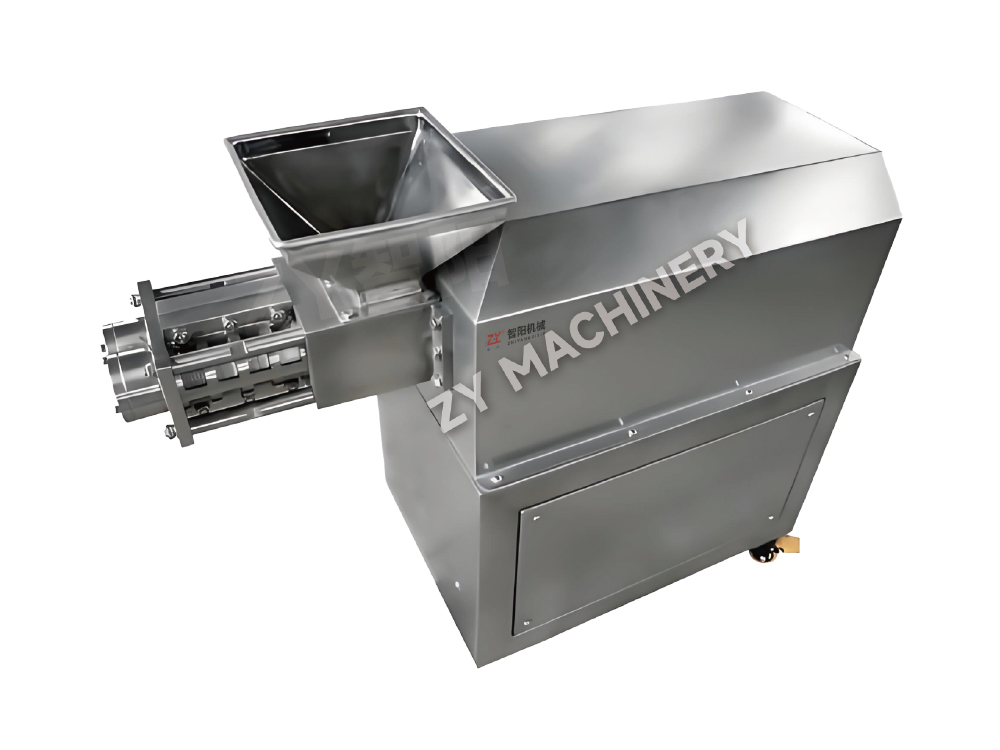
SET Screw Extrusion Granulator
Raw material enters the machine through the hopper. Depending on the process, the feed may consist of a powder blend, a moistened powder, or a paste-like formulation. Stable feeding is important because fluctuations at the hopper can influence extrusion pressure, output rate, and granule uniformity.
The hopper provides the entry point for the material and directs it toward the extrusion chamber. In a properly prepared process, the formulation should have suitable cohesion and moisture characteristics so that it can be conveyed and compressed without excessive blockage or uncontrolled slippage.
Once inside the extrusion chamber, the rotating screw conveys the material forward. As the material advances, the screw applies mechanical pressure and compresses the formulation. This action helps transform loose powder or paste into a more coherent mass.
The relationship between screw speed and material behavior is central to the process. A lower screw speed may support a slower, more controlled output, while a higher speed may increase throughput when the formulation and equipment configuration permit. Operators can adjust the screw speed to find a suitable balance between capacity, pressure, residence time, and granule quality.
Compression also influences the density and strength of the extruded column. If the material is insufficiently consolidated, the extrudate may break irregularly or produce weak granules. If compression is excessive for a particular formulation, the material may require greater energy to process or may form granules that are too dense. The adjustable operating design of the SET series gives users a practical means of adapting the process to different materials.
After compression, the material forms a continuous cylindrical column. The integrated cutting mechanism divides this column into granules of a controlled and consistent size. Cutting the extrudate within the machine provides a more repeatable result than relying on uncontrolled fracture.
Granule dimensions are influenced by the formulation, extrusion conditions, column consistency, and cutting arrangement. For applications requiring a particular granule profile, process trials can be used to establish suitable operating parameters. The objective is to create granules that meet the requirements of subsequent drying, coating, compression, filling, or packaging operations.
The SET Screw Extrusion Granulator is designed to minimize heat generation during processing. This is useful for materials that may soften, degrade, evaporate, or otherwise change when exposed to elevated temperatures. Mechanical processing remains a practical approach when the formulation requires controlled granulation without unnecessary thermal exposure.
Minimal heat generation does not eliminate the need for process monitoring. Material temperature can still be affected by feed properties, ambient conditions, screw speed, compression resistance, and operating duration. Manufacturers should evaluate the formulation under representative conditions and establish appropriate limits through process development and validation.
Uniformity is one of the main reasons manufacturers choose extrusion granulation. The SET machine forms a continuous extrudate before cutting it into granules. This sequence supports a more consistent particle shape and size than processes that depend primarily on random agglomeration or uncontrolled breakage.
More uniform granules can improve downstream material handling. They may flow more consistently, reduce segregation, and provide a more predictable feed to drying or compression equipment. In oral solid dosage production, this can contribute to stable die filling and more reliable tablet weight control, although the final result also depends on formulation design and downstream equipment.
The screw speed range of 11 to 110 revolutions per minute provides a substantial degree of operating flexibility. Adjustment of the screw speed enables users to respond to changes in material properties, required capacity, and desired granule characteristics.
This flexibility is valuable in facilities that process several products. A single fixed-speed machine may perform well for one formulation but be less suitable for another. Variable speed allows the operator to establish different recipes or operating windows, helping the equipment serve a wider range of production needs.
The SET series is designed for both powders and pastes. This broad material compatibility is important because many formulations do not behave like free-flowing dry powders. Some require controlled moisture addition, binder incorporation, or preconditioning before they can be formed into stable granules.
By using mechanical conveying and compression, the machine can process cohesive materials that may be difficult to handle through simple dry screening or conventional powder discharge. The suitability of any specific formulation should be confirmed through trials, particularly when materials have unusual rheology, high abrasiveness, strong cohesion, or moisture sensitivity.
Heat-sensitive compounds can present a challenge for granulation. Excessive heat may affect active ingredients, excipients, flavors, colors, or other functional components. The SET design emphasizes minimal heat generation, making it a suitable option for applications where thermal exposure should be limited.
This advantage can help manufacturers preserve the intended properties of the formulation while still achieving the mechanical consolidation required for granule formation. It also provides an alternative to processes that rely heavily on thermal treatment or extended high-energy mixing.
The compact design of the SET Screw Extrusion Granulator supports installation in facilities where floor space is limited. Its modular character also makes it easier to incorporate into an existing production line. Depending on the process route, the equipment may be positioned after mixing or wetting and before drying, screening, coating, or final dosage-form production.
A compact machine can offer practical benefits beyond space savings. Shorter material transfer routes may help simplify plant layout, reduce unnecessary handling, and make operator access more convenient. The exact installation arrangement should be determined according to material flow, cleaning requirements, utility access, safety provisions, and the rest of the production system.
Durability is essential in continuous or repeated industrial processing. The SET series uses robust construction intended to withstand the mechanical demands of conveying and compressing powders and pastes. A durable structure can support reliable operation and reduce the frequency of unplanned interruptions.
Long service life depends on proper use, cleaning, lubrication where applicable, inspection, and replacement of wear components. Even a well-built machine performs best when operators follow an appropriate maintenance schedule and avoid operating outside the recommended process range.
The availability of multiple screw diameters allows the series to address different production requirements. The SET-100, SET-140, and SET-180 models provide a choice of equipment size for laboratory-related development, pilot work, and larger-scale manufacturing applications.
Capacity selection should consider more than nominal machine dimensions. Material density, moisture, formulation cohesion, required granule quality, operating speed, and production schedule all affect practical output. A proper selection process should match the equipment to the complete production objective rather than choosing a model solely by screw diameter.
The following table summarizes the principal listed specifications for the SET series.
| Item | Unit | SET-100 | SET-140 | SET-180 |
| Screw diameter | Millimeter | 100 | 140 | 180 |
| Power | Kilowatt | 7.5 | 15 | 22 |
| Revolution range | Revolutions per minute | 11 to 110 | 11 to 110 | 11 to 110 |
| External dimensions | Millimeter | 2000 × 500 × 1000 | 1920 × 800 × 1430 | 3000 × 870 × 880 |
| Listed weight | Kilogram | 810 | 810 | 810 |
The dimensions and power ratings provide a starting point for equipment planning. Before purchase or installation, users should confirm the final configuration, electrical requirements, discharge arrangement, material-contact construction, controls, and any application-specific options with the equipment supplier.
Different granulation technologies are appropriate for different materials and objectives. The value of the SET Screw Extrusion Granulator becomes especially clear when the process requires controlled shaping and repeatable mechanical consolidation.
Crushing and milling reduce the size of existing particles, but they do not necessarily produce granules with the required density, shape, or cohesion. Milling can also create additional fines and dust. Screw extrusion granulation works in the opposite direction: it consolidates powder or paste into a coherent column and then cuts the column into larger, more manageable particles.
For manufacturers seeking improved flowability or reduced dust, extrusion may provide a more suitable route than simply reducing particle size. It is particularly useful when the objective is to build a defined granule structure rather than create a finer powder.
Some agglomeration processes depend on random collisions, liquid distribution, or fluidized movement. These methods can be effective, but they may produce a broad particle-size distribution if process conditions are not carefully controlled. Screw extrusion provides a defined mechanical path from feed to extrudate to cut granule.
This does not mean extrusion is universally superior. Rather, it offers a distinct advantage when shape consistency and direct control are priorities. The best choice depends on the formulation, desired particle structure, moisture content, production scale, and downstream requirements.
Processes involving substantial thermal exposure may not be suitable for heat-sensitive formulations. The SET machine emphasizes mechanical processing with minimal heat generation, which can be beneficial when maintaining ingredient stability is important.
Lower thermal stress may also simplify the process strategy for materials that require temperature-sensitive handling. Nevertheless, drying may still be required after granulation, and the drying stage should be selected and controlled separately according to the formulation.
Fixed-speed granulators can limit the operator’s ability to adapt to different materials. A formulation that needs gentle conveying may require a different setting from one that needs higher throughput or stronger consolidation. The SET series provides an adjustable speed range, allowing users to develop operating conditions for multiple products.
Variable speed also supports process optimization during scale-up. Engineers can study how changes in screw speed affect output, granule structure, and downstream performance before defining a production recipe.
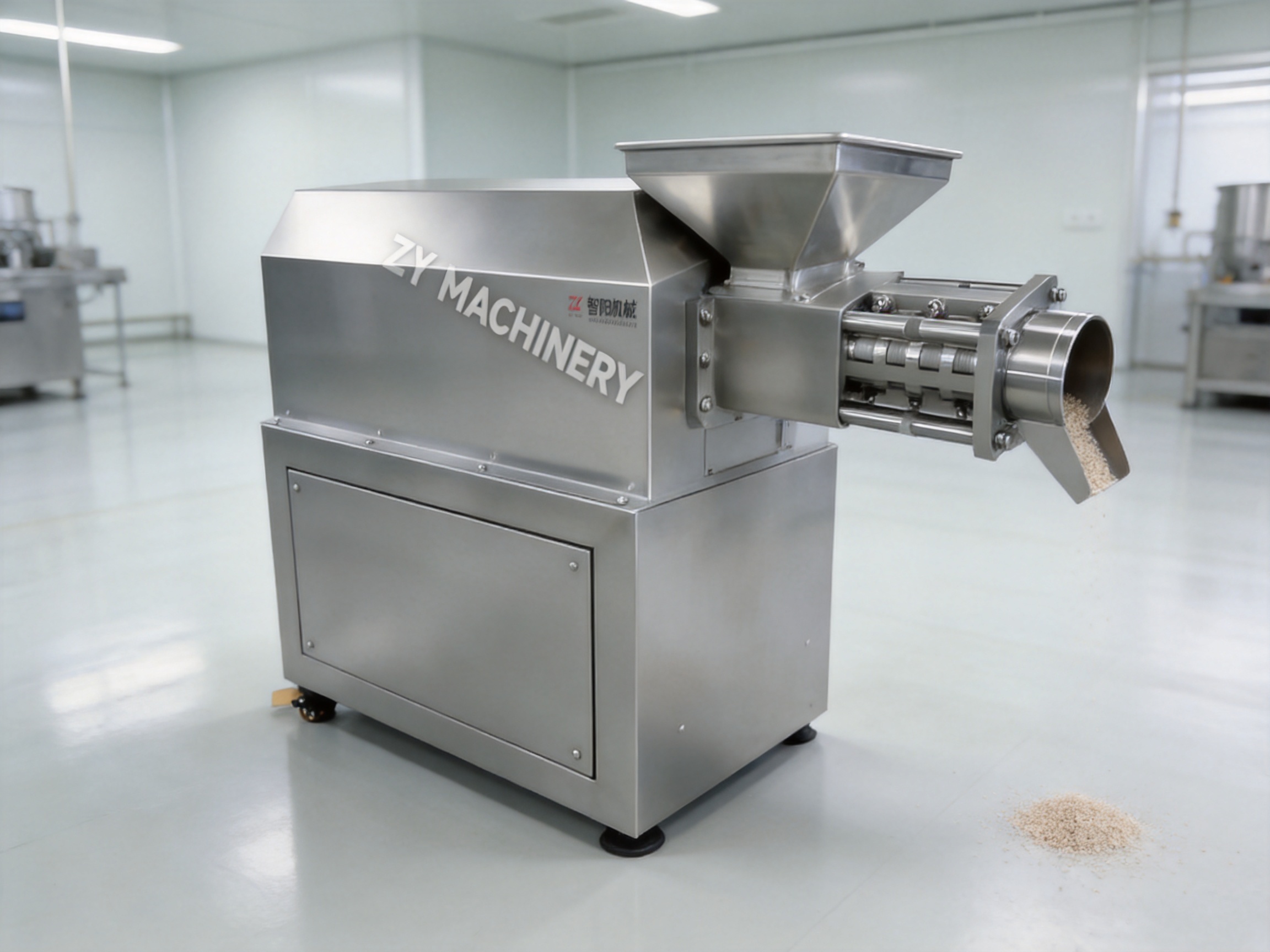
In pharmaceutical manufacturing, granulation is commonly used to improve powder flow, reduce segregation, and prepare materials for tablet compression or capsule filling. The SET machine can be used for formulations containing active pharmaceutical ingredients and excipients, provided that the formulation is suitable for extrusion and the required process controls are established.
The ability to process powders and pastes and to adjust screw speed makes the equipment relevant to development and production environments. It may be integrated into a process route that includes mixing, wetting, extrusion granulation, drying, sizing, blending, and final dosage-form production.
Food and nutraceutical materials may require improved handling, more consistent dosing, or reduced dust during packaging. Powders containing vitamins, minerals, botanical ingredients, flavors, or functional additives can sometimes be difficult to convey or fill uniformly. Granulation can improve the physical behavior of such materials.
Because food and nutraceutical formulations vary widely, the material should be evaluated for cohesion, moisture response, compressibility, and thermal sensitivity. The machine’s low-heat processing characteristic may be attractive for formulations in which flavor, color, or functional properties must be protected.
Chemical powders and pastes may benefit from conversion into granules that are easier to transport, store, mix, or feed into subsequent equipment. The robust screw system can provide the mechanical force needed to consolidate cohesive or difficult-to-handle materials.
Material compatibility is a key consideration in chemical applications. Users should confirm that all product-contact surfaces, seals, and auxiliary components are appropriate for the formulation and cleaning method. Dust control, ventilation, operator protection, and process containment should also be addressed in the plant design.
Veterinary products, feed additives, and industrial additives may require consistent granules for dosing and distribution. The machine’s flexible operating range can support different production recipes, while its compact design allows integration into existing processing systems.
For these applications, granule density and flow behavior can influence packaging accuracy and product uniformity. Process development should therefore evaluate not only the appearance of the granules but also their mechanical strength, size distribution, moisture content, and performance during storage and transfer.
The SET Screw Extrusion Granulator is suitable for use as part of a wider powder processing system. In a typical process route, raw materials may first be weighed and blended. Depending on the formulation, a liquid binder or moisture may then be introduced. The prepared material is fed into the granulator, extruded, and cut into granules.
After granulation, the material may be transferred to a drying system to achieve the required moisture level. Subsequent screening or sizing can remove oversized or undersized particles. The granules may then be blended with additional components, coated, compressed into tablets, filled into capsules, or packaged as an intermediate or final product.
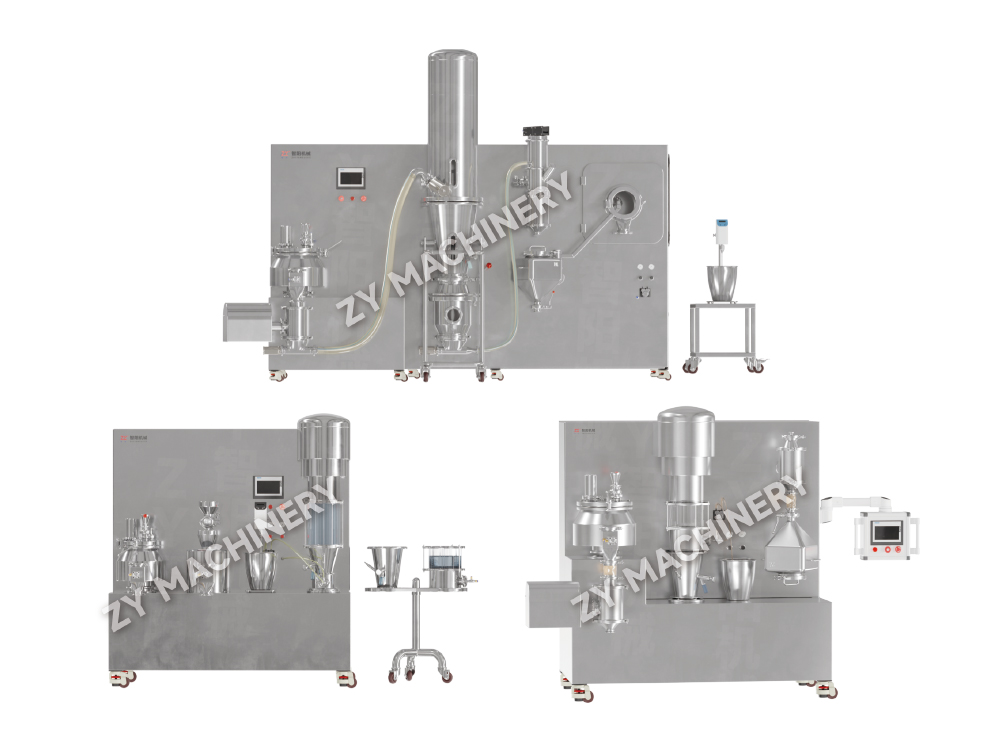
ZY Machinery’s product scope includes mixing equipment, granulation equipment, drying equipment, coating equipment, auxiliary processing equipment, and transfer and conveying systems. This broad range supports the design of process routes in which equipment functions are considered together rather than selected independently.
Integrated planning can help reduce compatibility issues between machines. For example, the discharge height of the granulator should correspond to the receiving equipment, and the transfer system should be suitable for the granule strength and dust characteristics. Control philosophy, cleaning access, operator movement, and maintenance space should also be considered from the beginning.
Changzhou Zhiyang Machinery Equipment Co., Ltd. focuses on powder processing and oral solid dosage equipment. Its stated approach is process-driven, meaning that equipment solutions are developed according to material characteristics, capacity requirements, and site conditions.
This approach is important because a granulator cannot be evaluated separately from the material and the rest of the plant. A machine that performs well with one formulation may require different settings or configuration for another. Process-oriented engineering considers the complete route, helping customers identify practical equipment combinations and implementation plans.
The company serves pharmaceutical, biopharmaceutical, biotechnology, nutraceutical, veterinary, additives, and related industries. Experience across these fields provides exposure to a broad range of powders, pastes, formulations, production scales, and regulatory expectations.
This cross-industry perspective can be useful when developing a granulation solution for a new application. Lessons from one material category may help engineers understand conveying behavior, cleaning needs, scale-up challenges, or integration requirements in another category, while still recognizing that every formulation must be evaluated individually.
ZY Machinery provides standalone machines, modular systems, and complete production lines for laboratory, pilot, and full-scale production. This range supports a development pathway in which a formulation can be evaluated at a small scale before being transferred to larger equipment.
Scale-up is not simply a matter of multiplying output. Screw diameter, feed behavior, residence time, compression, heat generation, and discharge conditions may change as equipment size increases. Having access to equipment across different scales can help manufacturers establish more reliable process relationships and reduce uncertainty during commercialization.
The company has expanded its product portfolio, strengthened research and development capabilities, developed patented technologies, and obtained quality system certification according to the supplied company information. These efforts indicate a focus on continued product improvement and structured manufacturing practices.
For equipment users, research and development capability can provide value beyond the initial machine purchase. It may support application testing, equipment adaptation, process refinement, and the development of solutions for specialized materials or plant conditions.
The SET Screw Extrusion Granulator is described as a durable machine with robust construction and a long service life. Reliable manufacturing requires attention to mechanical structure, drive components, material-contact parts, fabrication accuracy, assembly, inspection, and final testing.
Quality should also be considered throughout the equipment lifecycle. Clear operating instructions, accessible maintenance points, responsive technical support, and the availability of replacement parts all contribute to long-term equipment performance. A reliable machine is not defined only by its initial operation, but by its ability to continue performing consistently after repeated production cycles.
ZY Machinery has developed overseas service capabilities and supplied equipment and engineering solutions to customers in multiple countries and regions. International project experience can be valuable when installations involve different plant standards, production environments, utilities, documentation expectations, and communication requirements.
Engineering implementation includes more than delivery. It may involve process discussions, layout coordination, installation guidance, commissioning support, operator training, troubleshooting, and service follow-up. These activities help customers move from equipment selection to stable production.
Choosing between the SET-100, SET-140, and SET-180 requires a review of the entire process. The screw diameter is an important factor, but it should be considered together with formulation behavior and target capacity.
Before selecting a model, users should characterize the material. Important properties may include bulk density, moisture content, particle size, cohesion, compressibility, abrasiveness, temperature sensitivity, and paste consistency. These properties influence feeding, conveying, pressure development, extrudate strength, and cutting behavior.
Production capacity should be calculated from the required batch size, operating hours, expected yield, cleaning time, and planned production schedule. A machine that is too small may create a bottleneck, while an oversized machine may provide unnecessary capital cost or make small-batch control more difficult.
The desired granule size, density, shape, strength, and moisture level should be defined before trials begin. The granulator may produce different results depending on screw speed, feed condition, and formulation preparation. Clear quality targets make it easier to evaluate equipment performance and establish a repeatable process window.
Available floor space, ceiling height, access routes, electrical supply, ventilation, dust control, cleaning facilities, and receiving equipment should all be reviewed. The external dimensions listed for the three models differ, so the installation area should accommodate the machine, operator access, maintenance clearance, and material transfer connections.
Pharmaceutical and food facilities may require frequent cleaning and product changeover. The equipment layout should therefore allow convenient access to product-contact areas and components that require inspection. Maintenance planning should include routine checks, drive-system inspection, cutting mechanism inspection, and timely replacement of wear parts.
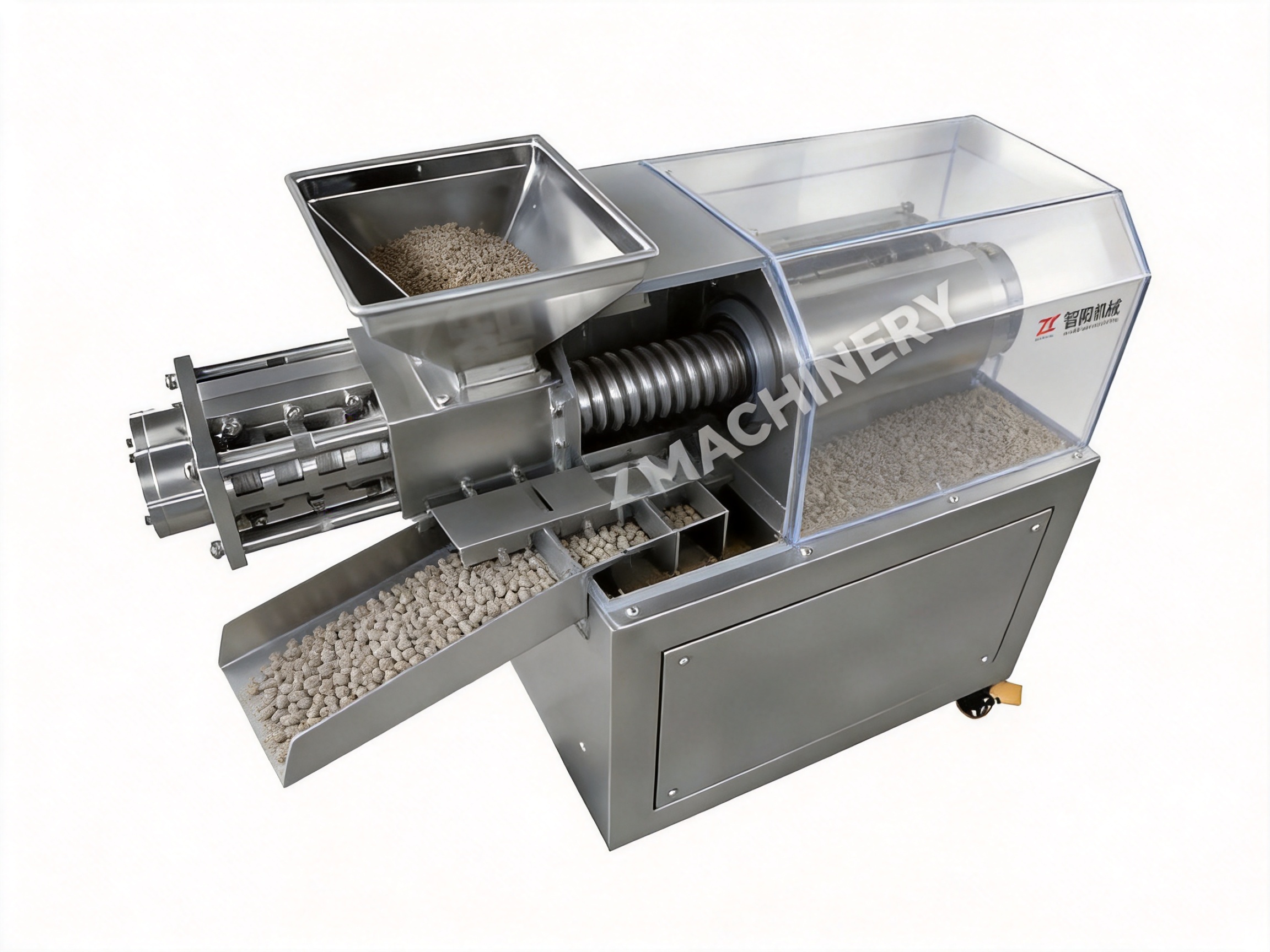
Consistent results depend on both machine design and operating discipline. Before starting production, operators should confirm that the formulation has been prepared according to the approved process, the hopper and extrusion chamber are clean, and the cutting mechanism is correctly installed.
The feed should be introduced at a stable rate. Sudden surges or interruptions may cause variation in pressure and granule formation. Operators should observe the material flow and monitor the relationship between screw speed and output. If the formulation changes, the operating parameters should be reassessed rather than copied without evaluation.
Process records should include material identification, batch information, screw speed, processing time, feed condition, observed temperature, output, and any deviations. These records support troubleshooting, repeatability, and continuous improvement.
After production, the machine should be cleaned according to the site’s approved procedure. Residual product can affect the next batch, restrict material flow, or increase wear. Inspection after cleaning can also reveal early signs of damage or abnormal operation.
Granulation quality should be evaluated using measurements relevant to the final application. Possible checks include particle-size distribution, bulk density, tapped density, moisture content, flowability, granule strength, friability, and visual uniformity. Pharmaceutical applications may also require evaluation of content uniformity, dissolution performance, and downstream compression behavior.
Process validation should demonstrate that the selected equipment and operating parameters consistently produce material within the required specifications. Validation may include equipment qualification, cleaning verification, process performance studies, and documented acceptance criteria.
For new formulations, laboratory or pilot trials are useful for determining suitable screw speed, feed preparation, and post-granulation treatment. The trial results can then inform production-scale equipment selection and process design.
Routine maintenance helps protect the equipment investment and maintain granule consistency. Operators should follow the manufacturer’s instructions for inspection, lubrication, tightening, cleaning, and component replacement.
Particular attention should be given to areas exposed to mechanical stress or product abrasion. The screw, extrusion chamber, cutting mechanism, seals, drive components, and material-contact surfaces should be inspected at suitable intervals. Unusual noise, vibration, temperature, output fluctuation, or changes in granule appearance may indicate that maintenance is required.
Preventive maintenance is generally more effective than waiting for a failure. Planned inspections can reduce unplanned downtime, protect other equipment in the production line, and provide better control over spare-part requirements.
The machine is designed for powders and pastes used in pharmaceutical, chemical, food, nutraceutical, veterinary, additive, and related applications. The suitability of a specific material depends on its moisture, cohesion, compressibility, temperature sensitivity, and other physical properties. Application testing is recommended before final production selection.
Material is fed into the hopper and conveyed into the extrusion chamber by a rotating screw. The screw compresses the material into a continuous cylindrical column. The integrated cutting mechanism then divides the column into granules of consistent size and shape.
Yes. The listed revolution range for the SET-100, SET-140, and SET-180 models is 11 to 110 revolutions per minute. Adjustable speed allows users to adapt conveying intensity, output rate, and granule formation to the formulation and process requirements.
The machine is designed to generate minimal heat during operation, making it suitable for applications involving heat-sensitive materials. Nevertheless, the actual temperature profile depends on the material, feed condition, screw speed, compression resistance, and operating duration. Trials and process monitoring remain necessary.
Model selection depends on required capacity, material behavior, available installation space, production schedule, and granule specifications. The SET-100, SET-140, and SET-180 models have different screw diameters, power ratings, and external dimensions. A technical review and, where appropriate, material testing should be completed before selection.
Yes. Its compact, modular design is intended to support integration into existing processing lines. Integration planning should consider upstream mixing or wetting equipment, downstream drying and sizing equipment, material transfer, discharge height, controls, cleaning access, and maintenance space.
Not necessarily. If the formulation contains moisture or binder liquid, drying may still be required after extrusion and cutting. The granulator performs the formation and shaping step, while a suitable dryer can be used afterward to achieve the required moisture level.
Potential industries include pharmaceutical, biopharmaceutical, biotechnology, nutraceutical, food, chemical, veterinary, and additive manufacturing. The machine is especially relevant where powders or pastes must be converted into consistent, manageable granules.
A trial should evaluate feeding stability, screw speed, output, extrudate formation, granule size distribution, density, moisture, strength, temperature, and downstream performance. The results can be used to establish a practical operating window and determine whether additional drying, sizing, or blending is needed.
Support may include equipment selection, process-route planning, layout coordination, application discussions, installation guidance, commissioning, operator training, maintenance recommendations, and after-sales service. Changzhou Zhiyang Machinery Equipment Co., Ltd. provides standalone machines, modular systems, and complete production-line solutions for different production scales.
The SET Screw Extrusion Granulator provides a controlled and flexible approach to producing uniform granules from powders and pastes. Its screw conveying and compression system forms a continuous cylindrical extrudate, while the integrated cutting mechanism creates granules with consistent shape and size. Adjustable screw speed, low heat generation, compact construction, robust design, and multiple model options make the machine suitable for a wide range of material-processing requirements.
Compared with less controlled granulation approaches, screw extrusion offers a defined mechanical route that can improve repeatability and support more predictable downstream handling. It is especially relevant when manufacturers need granules with better flowability, reduced dust, controlled density, or improved suitability for drying, coating, tablet compression, capsule filling, or packaging.
The performance of any granulator ultimately depends on the relationship between equipment, formulation, operating parameters, and complete process design. For this reason, the strongest advantage of the SET series is not only its mechanical construction, but also its compatibility with a process-oriented engineering approach. Changzhou Zhiyang Machinery Equipment Co., Ltd. combines equipment manufacturing with powder processing knowledge, modular system design, laboratory-to-production coverage, research and development, and international service capabilities.
For manufacturers planning a new granulation process or upgrading an existing production line, the SET series offers a practical foundation for controlled granule formation. With appropriate material testing, model selection, process validation, cleaning, and maintenance, it can support reliable production across pharmaceutical, chemical, food, nutraceutical, veterinary, additive, and related industries.
1. Changzhou Zhiyang Machinery Equipment Co., Ltd. Product information for the SET Screw Extrusion Granulator.
2. Changzhou Zhiyang Machinery Equipment Co., Ltd. Company information and powder processing equipment overview.
3. General principles of powder processing, granulation, material handling, and oral solid dosage manufacturing.
4. General equipment selection practices for laboratory, pilot-scale, and full-scale pharmaceutical production systems.
5. General process development and validation principles for granulation, drying, sizing, and downstream dosage-form manufacture.
Want to stay up to date?
Contact us via the email address below.
Don't worry about spam. We hate it too!
Mobile Client

Video Account
Phone:+86-15161130178
Tel:+86-519-88674267
Email:czzy188@163.com
Phone:+86-15161132798
Email:zy@zy-drying.com

WeChat ID

Copyright 2026 Changzhou Zhiyang Machinery Equipment Co., Ltd. All Rights Reserved  Oral Solid Dosage Equipment Manufacturer