 English
 Español
 русский
 中文简体

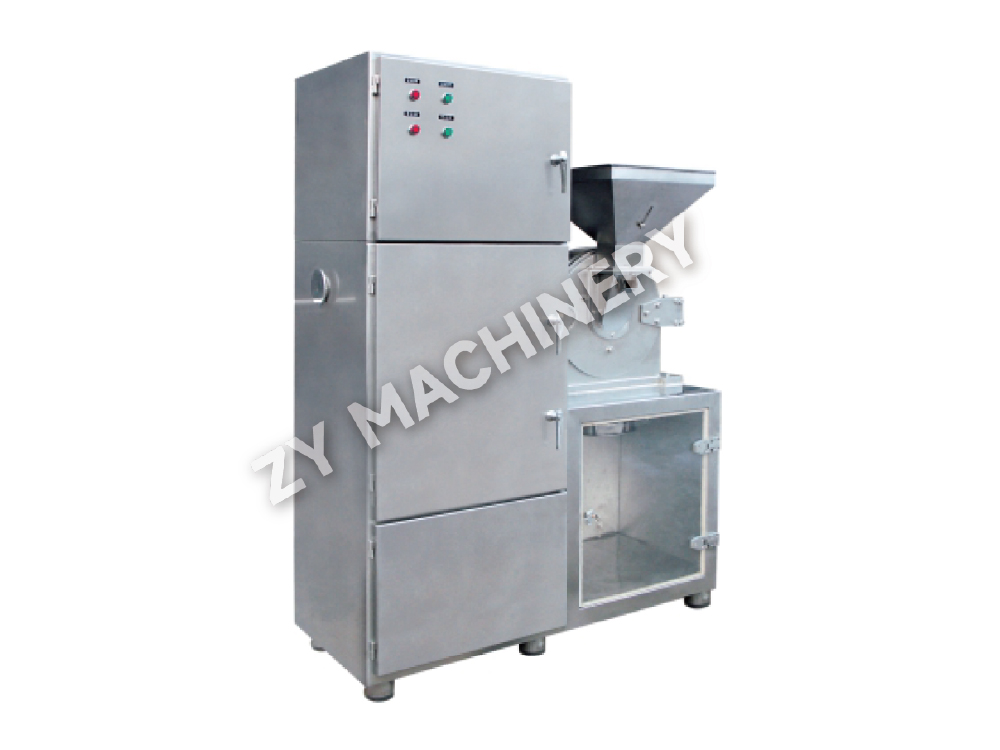
ZS Centrifugal Vibrating Sieve Machine
The ZS Centrifugal Vibrating Sieve Machine is designed for continuous scree.....

Content
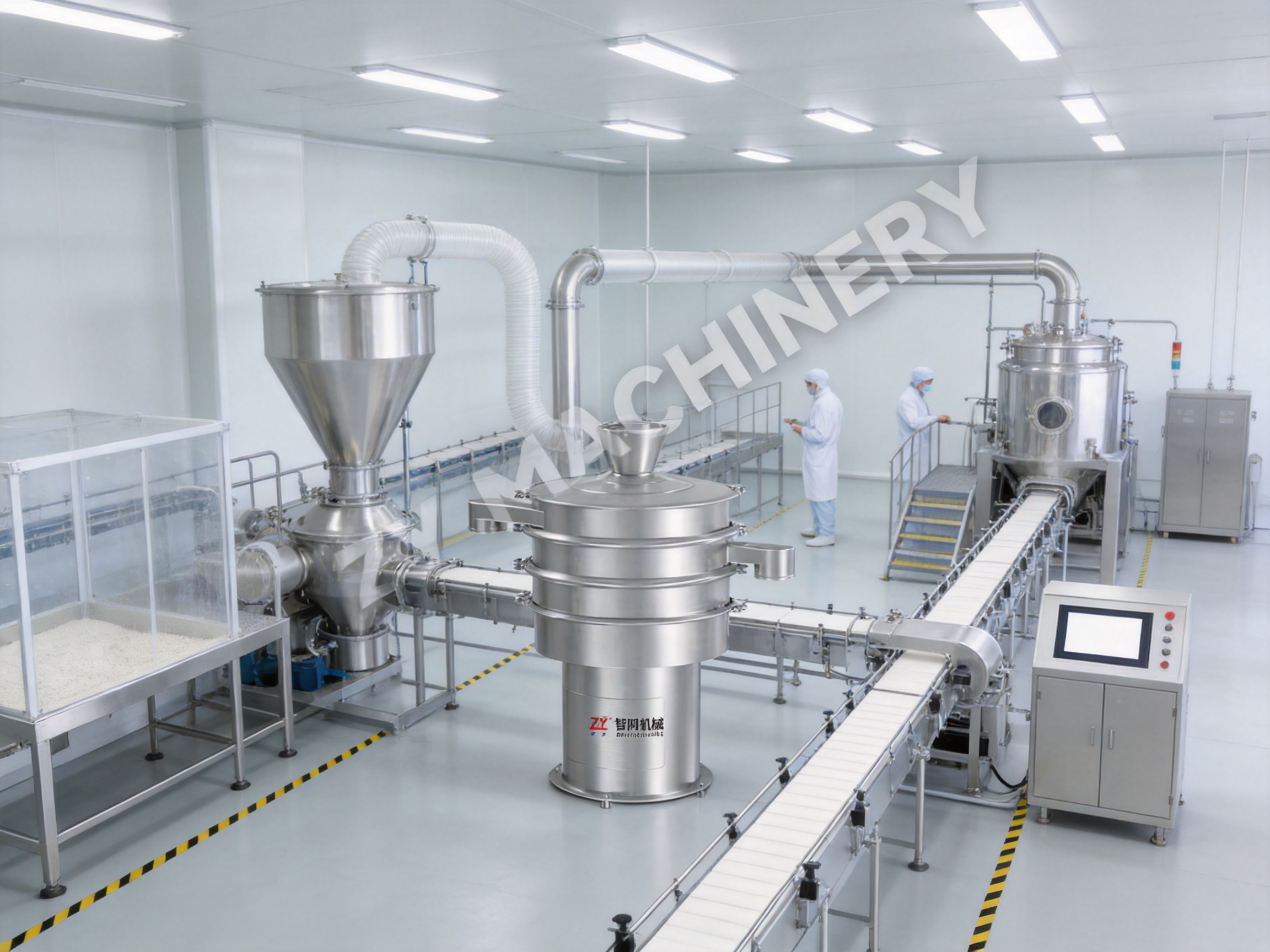
In modern pharmaceutical, nutraceutical, chemical, food, and specialty material production, screening is more than a simple separation step. It is an important process operation that influences particle-size distribution, product uniformity, downstream equipment performance, production continuity, and final product quality. A screening machine must therefore do more than separate coarse and fine particles. It must operate reliably within a production line, accept a consistent feed, discharge material continuously, and remain adaptable to different materials and process conditions.
The ZS Centrifugal Vibrating Sieve Machine is designed for this type of industrial duty. It provides continuous screening for production lines in which material must be classified according to particle size while the process remains in operation. The machine is suitable for materials containing different proportions of coarse and fine particles and is configured to support continuous feeding and continuous discharge of qualified material.
Its centrifugal vibration principle promotes material movement across the screen surface, allowing particles to pass through the selected mesh according to size. Compared with basic batch screening arrangements, the ZS series is intended for a more stable, in-line workflow. It can be integrated with conveying systems, mixers, granulators, dryers, storage hoppers, filling systems, and other powder-processing equipment.
Manufactured by Changzhou Zhiyang Machinery Equipment Co., Ltd., the machine forms part of a broader portfolio of powder-processing and oral solid dosage equipment. The company develops standalone machines, modular systems, and complete production lines for pharmaceutical, biopharmaceutical, biotechnology, nutraceutical, veterinary, additives, and related applications. This process-oriented background enables the sieve machine to be considered not as an isolated unit, but as part of a complete and coordinated production route.
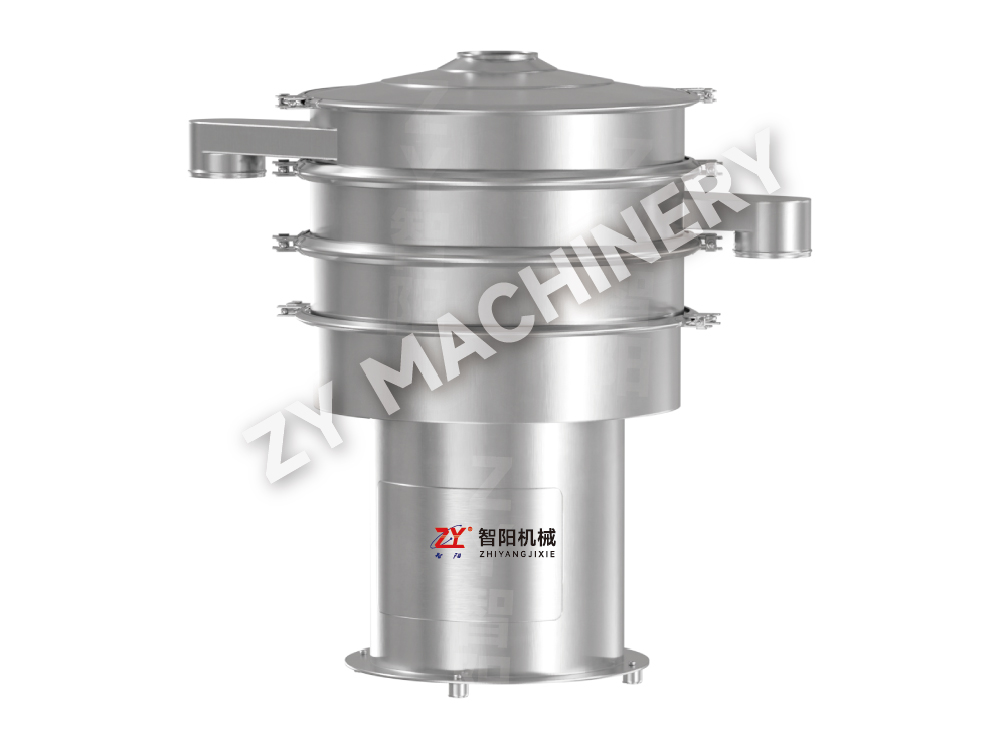
ZS Centrifugal Vibrating Sieve Machine
Powder and granulated materials rarely have a perfectly uniform particle-size distribution immediately after mixing, granulation, drying, crushing, or transfer. Some particles may be larger than the target range, while others may be smaller. Agglomerates can also form during storage or transportation. If these particles are allowed to pass directly to the next stage, they may cause inconsistent flow, poor blending, unstable feeding, uneven coating, or filling variation.
Screening helps control this condition by separating particles according to their ability to pass through a selected screen mesh. Fine particles pass through the openings, while larger particles remain on the screen surface and are directed toward a separate discharge route. This makes screening especially valuable after wet granulation, dry granulation, pulverization, blending, and material transfer.
In a batch process, an operator may load a fixed quantity of material, run the screening operation, stop the machine, remove the screened product, and then repeat the cycle. While this method can be appropriate for small laboratory quantities, it can create interruptions in medium- and large-scale production. Every stop and restart may reduce productivity and introduce additional handling.
A continuous screening machine is designed to maintain material movement while the upstream and downstream equipment continue operating. This arrangement can reduce manual intervention, improve line balance, and support a more predictable production rhythm. The ZS Centrifugal Vibrating Sieve Machine is developed specifically for continuous, in-line screening applications.
Industrial materials can vary significantly in moisture content, density, cohesiveness, particle shape, and flowability. A screen must handle these variations without creating excessive accumulation or unstable discharge. In addition, production lines may require different capacities and mesh specifications depending on the material and the target product.
Many screening applications also involve uneven coarse-to-fine particle ratios. A material may contain a relatively high proportion of fines with only a limited quantity of oversize particles, or it may contain a large percentage of coarse particles after granulation. Equipment selected for only one specific material condition may perform poorly when the process changes.
The ZS series addresses this requirement by offering multiple model sizes and a mesh range of 12 to 80 mesh. The available models cover nominal capacities from 50 to 2,000 kilograms per hour, allowing users to select a machine according to production demand rather than relying on a single universal size.
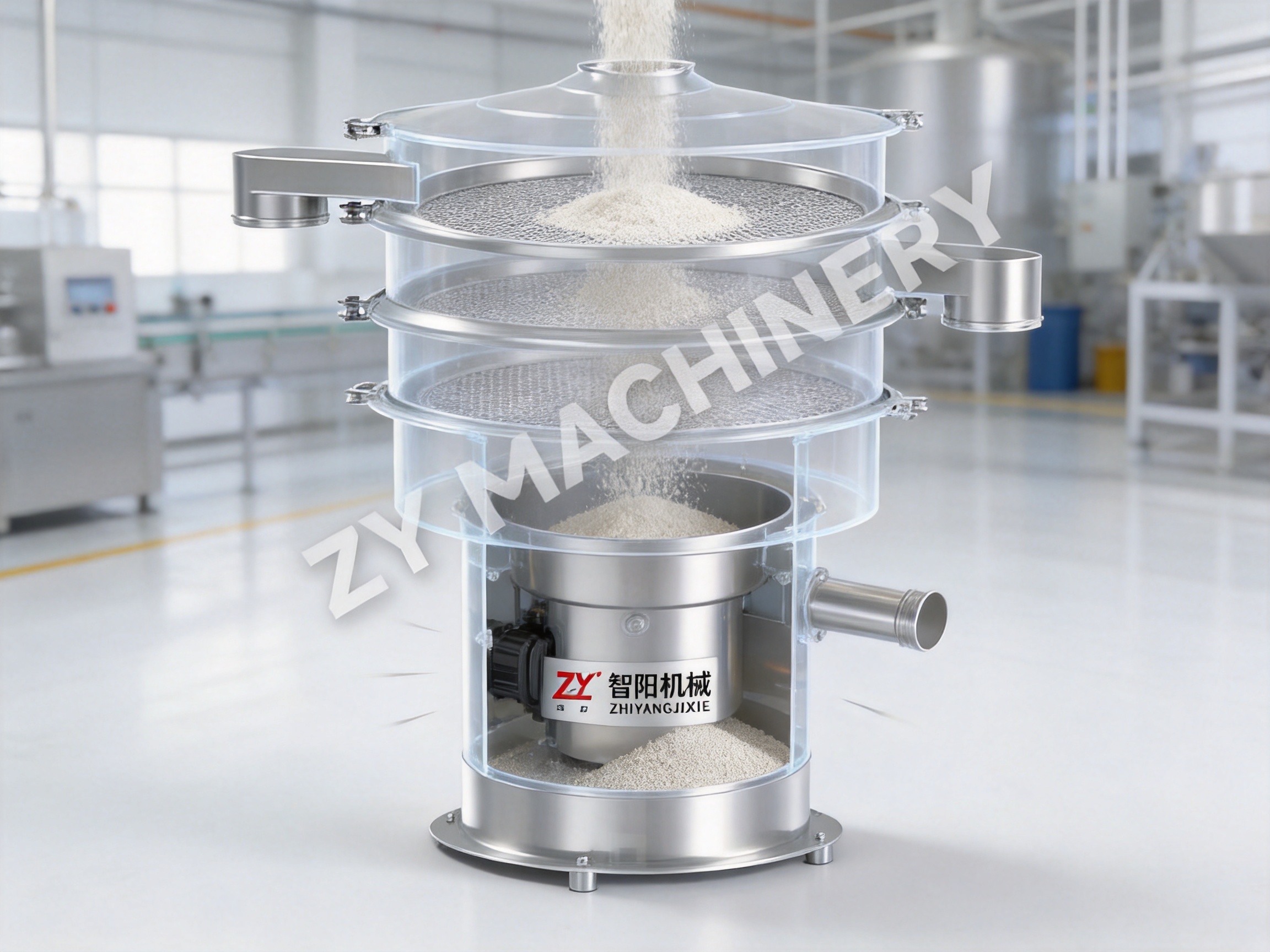
The ZS machine uses centrifugal vibration to drive material movement on the screen surface. When the machine operates, the vibration creates a controlled movement pattern that encourages particles to travel through the screening area. Smaller particles pass through the selected screen openings, while larger particles remain above the screen and move toward the coarse-material outlet.
The screening action depends on the relationship between particle size and screen aperture. Material entering the machine is exposed to repeated movement across the screen. This movement improves contact between particles and the mesh, helping qualified particles pass through while reducing the chance that the entire feed remains in one stationary mass.
The centrifugal vibration mechanism is particularly useful for continuous operation because it supports ongoing material transport. The machine does not depend only on manual agitation or intermittent loading. Instead, the vibration and internal movement enable material to be fed, separated, and discharged as part of a continuous process sequence.
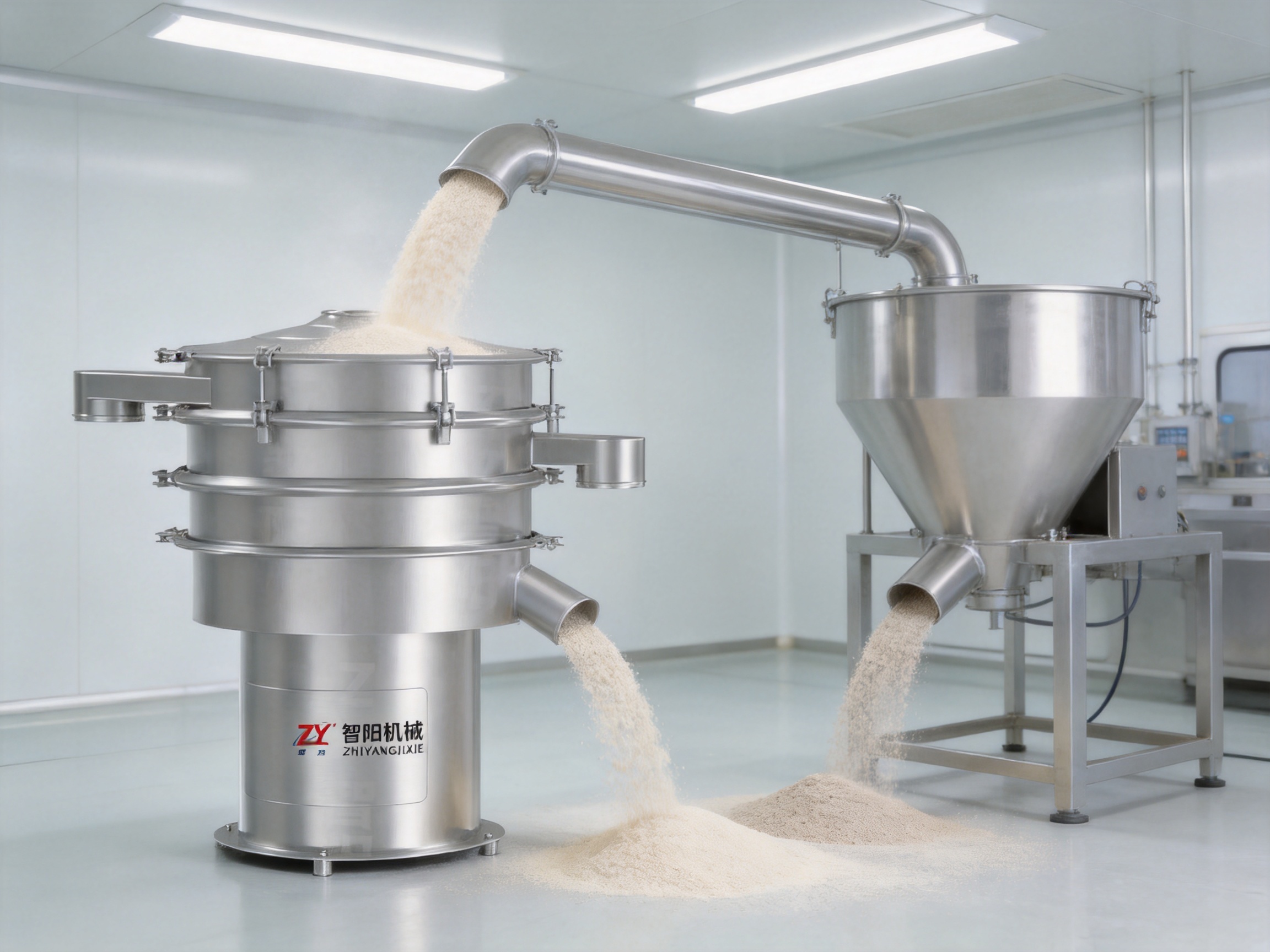
In a typical production line, material may enter from a hopper, granulator, mixer, dryer, or conveyor. After passing through the screening chamber, fine material is discharged through one outlet, while coarse or oversize material is removed through another route. The exact arrangement depends on the process design, material characteristics, and required recovery or reprocessing strategy.
Continuous movement is one of the key characteristics of the ZS series. When the feed rate is properly matched to machine capacity, material can enter the machine without requiring repeated shutdowns. Qualified material can then leave the machine continuously, supporting stable operation of the connected production equipment.
This characteristic is valuable in processes where the sieve is installed between two other machines. For example, a granulator may discharge directly into the sieve, while the screened granules move to a dryer or intermediate storage hopper. Alternatively, a dryer may feed the sieve before the product enters a tablet press, capsule-filling machine, packaging line, or blending system.
Continuous screening can also reduce the number of manual product transfers. Fewer transfers may help limit handling time, reduce the risk of material loss, and support a cleaner production environment. In pharmaceutical and nutraceutical applications, reduced manual intervention can also make cleaning and documentation procedures more manageable.
The machine is intended for grading materials that contain different proportions of coarse and fine particles. This makes it suitable for applications where particle-size variation is expected after a preceding process. The selected mesh determines the size threshold at which particles are separated.
Mesh selection should be based on the required product specification, material behavior, and desired throughput. A finer mesh may provide a smaller separation range but may reduce capacity or require closer control of feed conditions. A coarser mesh may support higher throughput while producing a broader particle-size classification. Process testing is therefore recommended when selecting the appropriate mesh for a new formulation or material.
The ZS Centrifugal Vibrating Sieve Machine is available in six principal models: ZS-350, ZS-515, ZS-650, ZS-800, ZS-1000, and ZS-1200. These models provide a range of capacities and physical dimensions for different production environments.
| Item | Unit | ZS-350 | ZS-515 | ZS-650 | ZS-800 | ZS-1000 | ZS-1200 |
| Capacity | kg/h | 50–300 | 100–500 | 150–800 | 180–1,000 | 200–1,800 | 250–2,000 |
| Mesh Range | mesh | 12–80 | 12–80 | 12–80 | 12–80 | 12–80 | 12–80 |
| Power | kW | 0.55 | 0.75 | 1.10 | 0.75 | 1.10 | 1.50 |
| Speed | rpm | 1,380 | 1,370 | 1,370 | 1,500 | 1,500 | 1,500 |
| Overall Dimensions | mm | 540 × 540 × 1,060 | 710 × 710 × 1,290 | 880 × 880 × 1,350 | 900 × 900 × 1,200 | 1,100 × 1,100 × 1,200 | 1,300 × 1,300 × 1,200 |
| Weight | kg | 100 | 180 | 250 | 300 | 400 | 500 |
The capacity figures provide a reference for model selection, but actual output depends on material density, particle-size distribution, moisture, flowability, screen selection, feed consistency, and operating conditions. A material with good flowability may achieve a different result from a cohesive or moisture-sensitive powder, even when both materials are processed on the same model.
The broad mesh range from 12 to 80 mesh gives the machine flexibility for different grading requirements. This range can support coarse screening, intermediate classification, and finer powder separation, subject to testing and process validation. The available motor powers range from 0.55 kW to 1.50 kW, providing practical options for different machine sizes and throughput requirements.
Screening equipment must fit into the available production space without compromising material flow. The ZS models have compact overall dimensions relative to their intended processing capacity. This makes them suitable for installation in production rooms, transfer areas, modular processing skids, and integrated equipment lines.
A compact machine can simplify layout planning, especially where the sieve must be positioned below a granulator, beside a dryer, or above a collection hopper. The machine dimensions should still be evaluated together with access space, cleaning requirements, inspection points, electrical connections, ducting, and product-transfer routes.
The range of machine weights, from approximately 100 to 500 kilograms, also reflects the progression from smaller to larger models. Appropriate support structures, lifting arrangements, and installation foundations should be considered before delivery and commissioning.
The market includes many types of screening equipment, including manual screens, static sieves, rotary screens, linear vibrating screens, and centrifugal sifters. Each technology has an appropriate use. The advantage of the ZS series is its combination of continuous operation, centrifugal vibration, multiple capacity options, broad mesh selection, and suitability for in-line production.
One of the clearest advantages is the machine’s ability to support continuous feeding and continuous discharge. A basic batch screen may require the operator to load material, wait for screening, stop the machine, and unload the result. This interrupts material flow and can make production dependent on manual timing.
The ZS machine is designed to keep material moving through the screening chamber. This makes it more suitable for production lines where the upstream and downstream equipment are expected to run continuously. The result can be improved line utilization, fewer handling steps, and a more consistent production rhythm.
Some screening systems perform best when the incoming material has a relatively stable and predictable composition. The ZS series is intended for materials with different proportions of coarse and fine particles. Its operating principle allows the machine to handle changing coarse-to-fine ratios within the limits of the selected model and process conditions.
This is especially relevant after granulation, where the resulting material may include granules of different sizes. It is also useful after crushing or drying, when agglomerates and fines may appear together. By separating these fractions, the machine can help improve the consistency of the material delivered to the next process stage.
A single machine size cannot efficiently serve every production requirement. A laboratory or pilot line may require only tens or hundreds of kilograms per hour, while a commercial line may require substantially higher capacity. The six available ZS models allow users to select a machine based on the approximate throughput requirement.
This scalability is useful for companies that develop products through laboratory, pilot, and full-scale production stages. A suitable model can be chosen for the current process while the broader product portfolio provides a path for future capacity expansion. Model selection should always be confirmed through material testing and engineering review.
The 12-to-80 mesh range provides greater process flexibility than a machine limited to one fixed screen specification. Users can select the screen according to the desired classification range and material behavior. This helps the machine serve multiple products or process steps, provided that screen changes and cleaning procedures are properly managed.
In a multi-product facility, mesh flexibility can reduce the need to dedicate an entirely separate machine to every product grade. It may also support product development work in which the target particle-size distribution changes during formulation optimization.
The machine is designed for stable screening performance within production workflows. Stability is important because an inconsistent screening step may affect every downstream operation. If too many oversized particles pass through, the next machine may experience blockage or unstable feeding. If excessive fines are removed, the product yield or formulation balance may be affected.
Stable performance depends on correct installation, suitable feed control, appropriate mesh selection, regular inspection, and correct operating procedures. The machine design provides the screening mechanism, while the complete process must be engineered to maintain balanced conditions.
Pharmaceutical production often requires careful control of particle size and material flow. Powders and granules may need to pass through a sieve before blending, compression, capsule filling, coating, packaging, or storage. The ZS machine can be considered for applications in oral solid dosage production where continuous grading and removal of oversized particles are required.
After wet granulation, the material may need to be dried and then screened to break up loose agglomerates and classify granules. Before tablet compression, a controlled particle-size distribution can support more uniform die filling and improve the consistency of the compression process. Before capsule filling, screening may help promote more predictable powder flow, subject to formulation characteristics.
In nutraceutical manufacturing, powders containing vitamins, minerals, plant extracts, proteins, and other ingredients may require screening after mixing or drying. The machine can also be evaluated for veterinary products, food additives, chemical powders, and other process materials where continuous separation of coarse and fine fractions is required.
Biopharmaceutical and biotechnology operations may involve sensitive materials and demanding hygiene requirements. In such environments, the equipment configuration, material of construction, sealing, surface finish, cleaning method, and validation expectations must be reviewed carefully for the specific application.
Granulation creates particles with improved flow and handling properties, but the resulting product may not be completely uniform. Screening after granulation can separate particles outside the desired size range. Oversized material may be returned for additional processing, while qualified granules continue to drying, blending, compression, or filling.
When installed after a granulator, the sieve should be selected according to the granulator discharge rate and the target granule size. The transfer connection should avoid unnecessary accumulation. A properly balanced line allows the granulator and sieve to operate without excessive backup or uncontrolled discharge.
Drying can produce hard agglomerates, especially when the material has been processed with a binder or has experienced uneven moisture removal. Screening after drying helps remove or classify these agglomerates before the product moves into a final blending or dosing step.
Material temperature and residual moisture should be considered before screening. If the material is still warm, sticky, or prone to cohesion, the screening behavior may differ from that of a dry, free-flowing powder. Process trials can help establish the appropriate feed rate and screen configuration.
Uniform feed behavior is important for tablet presses, capsule fillers, sachet machines, and other dosing equipment. A sieve installed before such equipment can help reduce the presence of oversize particles that might disturb feeding or cause local blockage.
Screening is not a substitute for formulation development or flow testing, but it can form an important part of the material-preparation route. The sieve should be integrated with the equipment control system and material-transfer arrangement to prevent overloading and uncontrolled accumulation.
The ZS Centrifugal Vibrating Sieve Machine is supported by the manufacturing and engineering capabilities of Changzhou Zhiyang Machinery Equipment Co., Ltd. Founded in 2010 and based in Changzhou, China, the company specializes in powder processing and oral solid dosage equipment. Its product scope includes laboratory equipment, mixing equipment, granulation equipment, drying equipment, coating equipment, auxiliary processing equipment, and transfer and conveying systems.
This broad equipment scope is important because screening rarely operates as an isolated process. A customer may require a complete route that includes material preparation, mixing, granulation, drying, screening, conveying, coating, and packaging. A manufacturer with experience across these process categories can evaluate the interactions between machines rather than focusing only on one unit.
The company develops solutions according to material characteristics, capacity requirements, and site conditions. This approach is more useful than selecting equipment solely by nameplate capacity. The same nominal throughput may require different configurations depending on whether the material is free-flowing, cohesive, abrasive, hygroscopic, heat-sensitive, or prone to agglomeration.
For the ZS machine, process-oriented engineering may include reviewing feed behavior, mesh requirements, expected output, product recovery, transfer height, installation location, cleaning access, and connection with upstream and downstream equipment. Such analysis helps establish a practical process route before the machine is manufactured.
Some customers need only a replacement sieve or an independent screening machine. Others require a modular system or complete production line. The company’s ability to supply standalone machines, modular systems, and complete lines allows the ZS series to be used in different project sizes.
A standalone machine can be configured for an existing production line. A modular system may combine the sieve with feeders, conveyors, hoppers, dust-control components, and control panels. A complete line may connect the screening step with mixing, granulation, drying, coating, and packaging operations.
This flexibility can reduce the difficulty of coordinating multiple equipment suppliers. It may also improve mechanical compatibility, control-system integration, documentation consistency, and technical communication during installation and commissioning.
The company has expanded its product portfolio, strengthened research and development capabilities, obtained quality-system certification, developed patented technologies, and built overseas service capabilities. These activities support the ongoing improvement of equipment design and manufacturing processes.
For customers, research and development capability matters when the application involves a difficult material, a new formulation, unusual capacity requirements, or special integration conditions. Technical discussions can help determine whether a standard ZS model is appropriate or whether a customized solution should be evaluated.
Reliable screening depends on more than the motor and screen. Structural stability, rotating or vibrating components, screen installation, product-contact surfaces, electrical controls, discharge configuration, and assembly accuracy all influence performance. A manufacturer with a quality-focused production system can better control these factors during fabrication and assembly.
The company emphasizes product quality, customer reputation, responsive service, research, and innovation. These priorities are relevant to industrial customers that require consistent equipment performance over an extended operating period rather than a low initial purchase price alone.
Before installing a ZS machine, the complete material route should be reviewed. The feed point must provide a controlled and reasonably uniform supply. The discharge points must connect to suitable hoppers, conveyors, containers, or return lines. The machine should also be positioned so that operators can access the screen, inspect the chamber, and perform cleaning and maintenance.
A typical integrated arrangement may include a feeding hopper above the sieve, a controlled inlet connection, a screening chamber, a fine-material outlet, and an oversize-material outlet. Depending on the process, the fine fraction may move to a blender, storage hopper, compression machine, capsule filler, or packaging system. The oversize fraction may be collected for reprocessing or removed from the production route.
Control integration can help coordinate the sieve with upstream and downstream machines. For example, a level sensor or feed-control device may prevent the sieve from being overloaded. A downstream signal may stop or reduce upstream feeding if the receiving hopper is full. These functions should be designed according to the customer’s automation requirements.
Capacity is not achieved simply by selecting the largest machine. The feed rate must remain within the effective operating range of the selected model. Excessive feeding can cause material accumulation, reduced separation efficiency, screen blinding, or unstable discharge. Insufficient feeding may reduce productivity and make the line less efficient.
Feed consistency is particularly important when the material contains a high proportion of coarse particles. The process should be evaluated under realistic production conditions rather than only with a small quantity of ideal material.
Powder screening can generate airborne dust, particularly when dry, fine, or friable materials are handled. The production layout should therefore consider containment, local extraction, sealed transfers, and suitable dust-control measures. The required arrangement depends on the material hazard, product sensitivity, facility classification, and applicable regulations.
Where the machine is used for pharmaceutical or fine chemical powders, the customer should define requirements for containment, cleaning, product recovery, and cross-contamination control before finalizing the equipment configuration.
Multi-product facilities need practical cleaning and changeover procedures. The screen and product-contact areas should be accessible for inspection and cleaning. Screen removal, washing, drying, and reinstallation procedures should be established according to the material and hygiene requirements.
For products that are sensitive to cross-contamination, cleaning validation may be required. The machine’s final configuration should therefore be reviewed with the customer’s quality, production, engineering, and validation teams.
Model selection should begin with the actual material and production requirement. The expected hourly capacity is an important factor, but it should not be considered alone. The decision should include particle-size distribution, mesh requirement, bulk density, moisture, cohesion, temperature, feed method, downstream equipment, and available installation space.
The ZS-350 is the smallest listed model, with a reference capacity of 50 to 300 kilograms per hour. It may be suitable for smaller production lines, pilot-scale operations, or processes where space is limited. The ZS-515 and ZS-650 provide progressively higher reference capacities for medium-scale applications.
The ZS-800, ZS-1000, and ZS-1200 are intended for higher-throughput requirements, with the largest listed model reaching a reference capacity of 250 to 2,000 kilograms per hour. These figures are application-dependent and should be confirmed through technical evaluation.
| Typical Requirement | Selection Consideration | Relevant ZS Series Advantage |
| Small or pilot production | Compact size and lower reference capacity | Availability of smaller models |
| Continuous in-line operation | Stable feeding and discharge arrangement | Designed for continuous screening |
| Variable coarse-to-fine ratio | Screening area and suitable feed control | Suitable for uneven particle proportions |
| Different product grades | Replaceable or selectable mesh specification | 12–80 mesh range |
| High-throughput production | Capacity, motor power, and line balance | Models up to a 2,000 kg/h reference capacity |
| Integrated processing line | Inlet, outlet, controls, and layout compatibility | Support from a broader equipment manufacturer |
When the machine is used for a new product, pilot testing is recommended. Testing can verify actual capacity, separation efficiency, screen selection, material recovery, and the behavior of coarse particles. It can also identify whether the material requires preconditioning, deagglomeration, or controlled feeding.
Correct operation is essential for maintaining screening performance. Operators should confirm that the screen is installed correctly, the feed route is clear, the discharge route is available, and the selected operating parameters match the material. The machine should not be overloaded beyond its practical operating range.
Before starting production, the screen and product-contact areas should be inspected for damage, contamination, or improper installation. Connections should be checked, and the machine should be operated according to the manufacturer’s instructions. Abnormal noise, vibration, temperature, or discharge behavior should be investigated promptly.
Routine maintenance may include inspection of the screen, fastening components, drive or vibration components, electrical connections, supports, seals, and discharge outlets. The maintenance schedule should reflect operating hours, material abrasiveness, cleaning frequency, and site conditions.
The screen is a critical working component. A damaged, stretched, blocked, or incorrectly installed screen can reduce separation accuracy and allow unwanted particles to pass through. Screen inspection should therefore be part of routine operation and product changeover.
Screen blinding may occur when fine or moist particles block the openings. If blinding develops, the operator should follow the approved cleaning or corrective procedure rather than increasing the feed rate. The cause may be related to material moisture, particle cohesion, incorrect mesh selection, or insufficient process control.
Because the machine relies on centrifugal vibration, mechanical inspection is important. Unusual vibration, movement, or noise may indicate an installation issue, loose component, imbalance, wear, or material accumulation. Prompt inspection can help prevent secondary damage and unplanned downtime.
Maintenance personnel should follow the equipment manual and site safety procedures. Electrical isolation should be completed before inspection or cleaning inside the machine.
Production teams can monitor performance by tracking feed rate, output, oversize quantity, screen condition, cleaning frequency, and downtime. These records help determine whether the equipment continues to operate within the expected process range.
If performance changes over time, the cause may not be the sieve itself. Changes in upstream granulation, drying, moisture, material storage, or feed consistency can affect screening behavior. A complete process review is often more effective than adjusting the sieve in isolation.
Pharmaceutical and regulated industries require equipment to be evaluated within a broader quality system. The exact documentation depends on the customer’s regulatory environment, product category, facility standards, and validation strategy.
Typical project discussions may include equipment specifications, material of construction, product-contact surface requirements, electrical information, operating instructions, maintenance procedures, cleaning instructions, spare-parts lists, factory testing, installation support, and commissioning documentation.
For a continuous screening process, the customer may also define acceptance criteria related to capacity, particle-size separation, recovery, discharge behavior, cleanability, and repeatability. These criteria should be established before testing so that the results can be evaluated objectively.
The sieve may be included in installation qualification, operational qualification, or performance qualification activities, depending on the customer’s validation plan. Qualification should consider the equipment’s intended operating range, selected mesh, feed conditions, alarms or interlocks, cleaning procedures, and material-transfer interfaces.
Validation is not limited to proving that the machine runs. It should demonstrate that the machine performs its intended function consistently under defined process conditions. The level of testing should be proportionate to the product risk and regulatory expectations.
International customers may require technical documents in specific formats or languages. They may also need assistance with installation planning, spare parts, operator training, and after-sales communication. Changzhou Zhiyang Machinery Equipment Co., Ltd. has developed overseas service capabilities and supplies equipment and engineering solutions to customers in multiple countries and regions.
Early discussion of documentation and service requirements can help prevent delays during procurement, shipment, installation, and commissioning.
Purchasing a screening machine involves more than comparing motor power and listed capacity. A reliable result depends on how well the supplier understands the process, controls manufacturing quality, supports integration, and responds after delivery.
A specialized manufacturer can help the customer assess the complete route. For example, the company may determine whether the screening step should be placed before or after drying, whether the feed needs a hopper or conveyor, how the oversize fraction should be handled, and what mesh range is appropriate for the product.
Changzhou Zhiyang Machinery Equipment Co., Ltd. combines equipment manufacturing with process engineering. Its experience covers mixing, granulation, drying, coating, conveying, and auxiliary processing. This broad scope can be advantageous for projects in which the sieve must be coordinated with several other machines.
The company’s stated focus on honesty, strength, quality, and specialty is supported by its emphasis on product reliability, customer reputation, research and development, and responsive service. These qualities are important when the equipment will become part of a long-term manufacturing asset rather than a short-term standalone purchase.
The principal customer benefit is improved continuity in the screening stage. By supporting continuous feeding and discharge, the machine can help reduce repeated batch handling and improve coordination between connected process units.
A second benefit is flexibility. Six models, multiple capacity ranges, and a 12-to-80 mesh selection give customers several ways to configure the equipment according to production requirements. This flexibility may be useful for businesses that handle several products or plan to expand from pilot scale to commercial scale.
A third benefit is process integration. The machine can be considered alongside other powder-processing equipment supplied by the same manufacturer. This may simplify project communication and help align mechanical, operational, and engineering requirements.
A fourth benefit is suitability for materials with uneven proportions of coarse and fine particles. This is a common condition after granulation, drying, crushing, or material transfer. The machine is designed to support separation under these production conditions.
Finally, the ZS series provides a practical equipment platform for industries that require stable, repeatable screening within a broader powder-processing workflow. Its value is greatest when the machine is correctly selected, tested, installed, and maintained.
The machine is used for continuous screening and grading of materials according to particle size. It separates coarse and fine particles while supporting continuous feeding and continuous discharge in a production line.
The machine uses centrifugal vibration to drive material movement on the screen surface. Particles are exposed to the screen openings as they move, allowing qualified particles to pass through while larger particles continue toward the coarse-material discharge.
It can be used in different production arrangements, but its principal design purpose is continuous, in-line screening. Customers requiring batch operation should review the loading, discharge, cleaning, and control arrangement with the manufacturer.
The listed models support a mesh range from 12 to 80 mesh. The final mesh selection should be based on the target particle-size distribution, material characteristics, required capacity, and process test results.
The ZS-1200 has a reference capacity range of 250 to 2,000 kilograms per hour. Actual output depends on material density, moisture, flowability, particle-size distribution, screen selection, and feeding conditions.
Yes. The machine is designed for materials containing different proportions of coarse and fine particles. However, the feed rate and model should be selected according to the actual material and the required separation result.
Potential applications include pharmaceutical, nutraceutical, veterinary, chemical, food additive, biotechnology, biopharmaceutical, and related powder-processing industries. Suitability should be confirmed through material testing and application review.
Yes. The sieve can be installed after granulation, drying, crushing, or other material-preparation steps. The inlet, outlet, transfer height, feed control, and downstream equipment should be engineered as one coordinated system.
Changzhou Zhiyang Machinery Equipment Co., Ltd. supplies standalone machines, modular systems, and complete production lines. Its wider product range includes mixing, granulation, drying, coating, auxiliary processing, and conveying equipment.
The selection should consider required capacity, material properties, mesh size, feed method, particle-size distribution, cleaning requirements, installation space, and downstream process conditions. Pilot testing or application evaluation is recommended for new or difficult materials.
Routine maintenance should include inspection of the screen, vibration and drive components, fastening points, electrical connections, supports, seals, and discharge outlets. The screen should be cleaned and checked regularly to prevent blinding, damage, or contamination.
It can be considered for pharmaceutical and oral solid dosage applications, including screening after granulation or drying. The final equipment configuration must be reviewed against the customer’s material-contact, hygiene, cleaning, containment, validation, and regulatory requirements.
The ZS Centrifugal Vibrating Sieve Machine is designed to provide continuous, reliable particle-size separation within powder-processing and granulation production lines. Its centrifugal vibration principle promotes material movement across the screen, while its continuous-feed and continuous-discharge design supports a more efficient in-line workflow.
Compared with basic batch screening arrangements, the ZS series offers clear advantages for production environments that require reduced manual handling, stable material transfer, and consistent separation of coarse and fine particles. The six model sizes, reference capacities from 50 to 2,000 kilograms per hour, and mesh range from 12 to 80 mesh provide flexibility for different processing requirements.
The machine’s value is further strengthened by the manufacturing and engineering capabilities of Changzhou Zhiyang Machinery Equipment Co., Ltd. With experience in powder processing, oral solid dosage equipment, mixing, granulation, drying, coating, conveying, and complete production-line integration, the company can support customers from individual-machine selection through broader process engineering.
For customers seeking a practical screening solution for pharmaceutical, nutraceutical, chemical, veterinary, additive, and related applications, the ZS series provides a scalable platform. Proper model selection, material testing, installation planning, cleaning procedures, and preventive maintenance will help ensure that the machine delivers stable performance throughout the production process.
1. Changzhou Zhiyang Machinery Equipment Co., Ltd., ZS Centrifugal Vibrating Sieve Machine product information and technical parameter sheet.
2. Changzhou Zhiyang Machinery Equipment Co., Ltd., Powder Processing and Oral Solid Dosage Equipment Company Profile.
3. General principles of particle-size classification and screening in pharmaceutical powder processing.
4. General guidelines for equipment integration in continuous granulation, drying, conveying, and oral solid dosage production lines.
5. General industrial practices for screen inspection, powder containment, equipment cleaning, maintenance, and process validation.
Want to stay up to date?
Contact us via the email address below.
Don't worry about spam. We hate it too!
Mobile Client
Video Account
Phone:+86-15161130178
Tel:+86-519-88674267
Email:czzy188@163.com
Phone:+86-15161132798
Email:zy@zy-drying.com

WeChat ID

Copyright 2026 Changzhou Zhiyang Machinery Equipment Co., Ltd. All Rights Reserved  Oral Solid Dosage Equipment Manufacturer