 English
 Español
 русский
 中文简体
中文简体
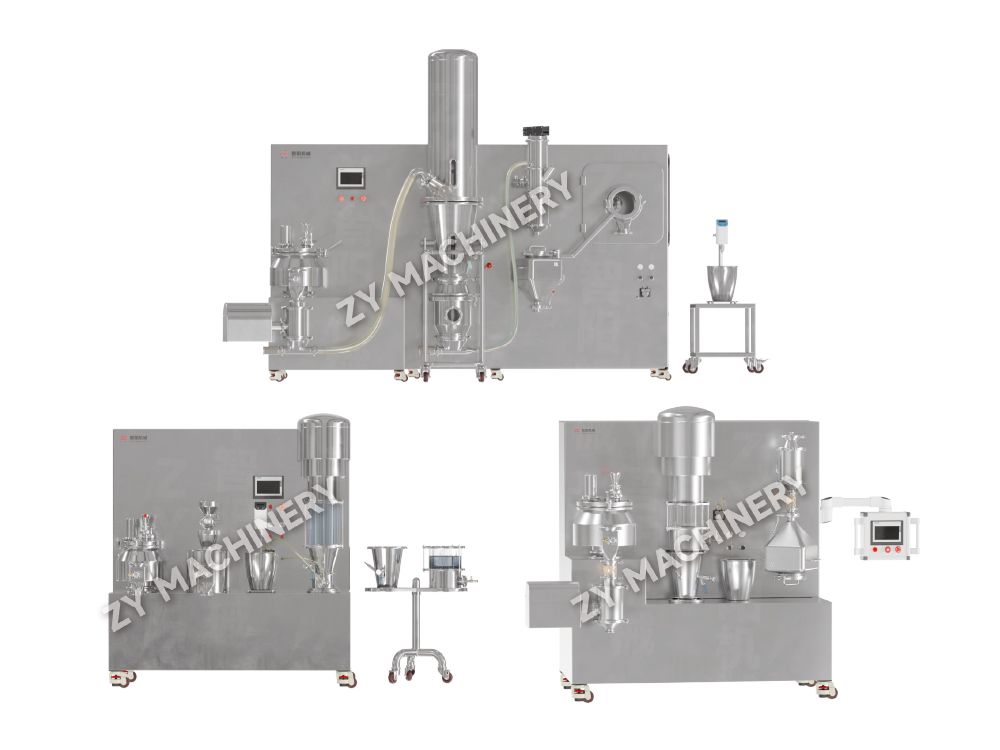
BGB HR&D High-Containment, High-Efficiency Coating Machine
The BGB HR&D High-Containment Coating Machine is engineered for applyin.....

Content
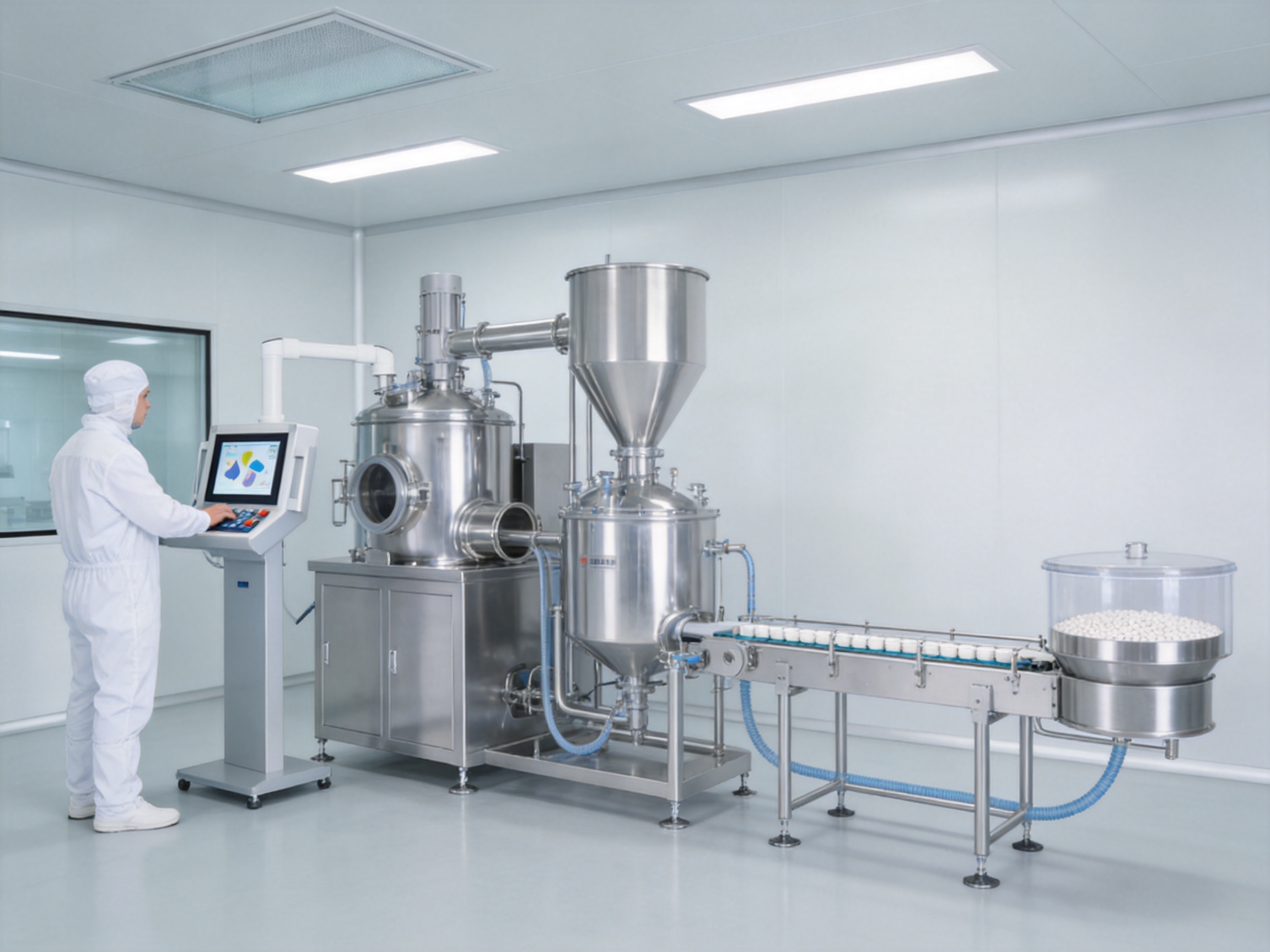
High-potency pharmaceutical products require coating systems that do much more than apply a uniform film. When tablets or granules contain hormones, anticancer compounds, or other substances with significant occupational exposure risks, every stage of the process must be designed around containment, process control, operator protection, cleaning, and regulatory compliance. A coating machine for these applications must protect personnel while also delivering consistent product quality, reliable throughput, efficient drying, and practical operation.
The BGB HR&D High-Containment, High-Efficiency Coating Machine is designed for this demanding production environment. It combines a sealed isolator, controlled material transfer, contained coating technology, high-efficiency air management, interlocked access points, specialized sealing systems, and automated process control. The result is an integrated platform for coating highly potent tablets and granules while maintaining a controlled and hygienic working environment.
This equipment is part of Changzhou Zhiyang Machinery Equipment Co., Ltd.’s broader portfolio of pharmaceutical powder processing and oral solid dosage equipment. The company develops laboratory, pilot-scale, and production-scale machinery according to material properties, batch size, process requirements, and installation conditions. Its experience across mixing, granulation, drying, coating, conveying, and auxiliary processing enables it to approach high-containment coating as part of a complete manufacturing process rather than as an isolated machine purchase.
Conventional tablet coating machines are generally designed to manage dust, solvent vapors, heat, and product uniformity under standard pharmaceutical manufacturing conditions. Highly potent products introduce additional challenges. Even a very small quantity of active pharmaceutical ingredient may create an unacceptable exposure risk if it becomes airborne during loading, coating, unloading, sampling, cleaning, or maintenance.
The coating stage can create several possible release points. Tablets may generate dust when they are transferred into the machine. Air movement inside the coating chamber can carry fine particles. Exhaust air must be filtered correctly before it leaves the process area. Finished tablets must be removed without exposing operators to residues. Doors, glove ports, seals, filters, and transfer connections must remain secure throughout the operation.
A high-containment system therefore needs to manage the complete process boundary. Containment cannot depend only on a filter or a negative-pressure room. It must be created by the coordinated performance of the isolator, transfer equipment, pressure controls, filtration system, sealing arrangement, access doors, operator interfaces, and emergency response logic.
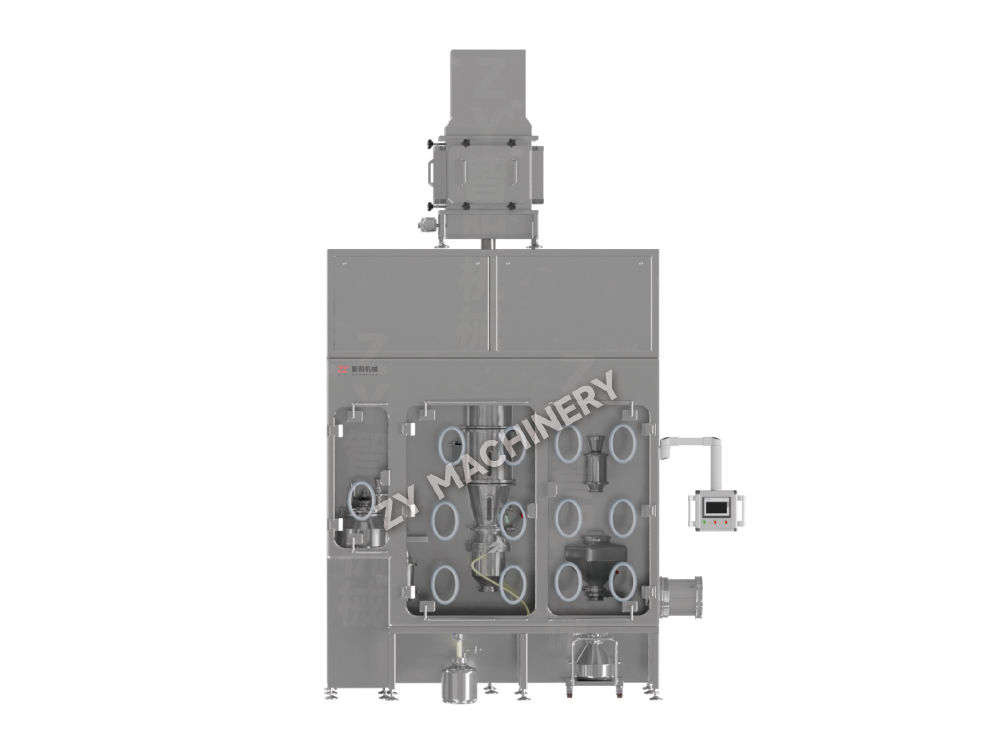
The BGB HR&D system addresses these requirements through a sealed isolator configuration. Materials enter through a Rapid Transfer Port, or RTP, valve, and processing takes place inside a controlled coating chamber. After coating, the finished product is transferred through a dedicated transfer chamber or sleeve system. This arrangement reduces direct operator contact and helps maintain containment from loading through discharge.
Before processing begins, the coating machine and its isolator are prepared according to the approved operating procedure. The containment enclosure, coating chamber, filters, seals, transfer connections, and control system are checked. The required negative pressure is established inside the operating cabin so that air flows inward if a minor leak occurs.
Raw tablets or granules are transferred into the sealed isolator through an RTP valve. The RTP arrangement allows material to move between compatible containers or process units while limiting the escape of hazardous dust. Because the connection is designed as a controlled transfer interface, it provides a safer alternative to open charging and manual handling.
Inside the isolator, the material enters the coating chamber. The coating process can then be performed under controlled conditions, including spray application, air movement, drying, and exhaust filtration. The operator controls the process through the logic controller and human-machine interface without needing to open the primary containment enclosure during normal operation.
Once the coating cycle is complete, the finished products are discharged through a transfer chamber or sleeve system. These transfer methods allow the product to leave the isolator while keeping the process boundary closed. Depending on the manufacturing arrangement, the product can be directed into suitable containers, bags, intermediate vessels, or downstream handling equipment.
This closed process route is particularly valuable when the product has a low occupational exposure limit, when cross-contamination must be minimized, or when the production area must be protected from potent residues. It also supports a more organized validation strategy because the critical containment points are defined and monitored within the equipment design.
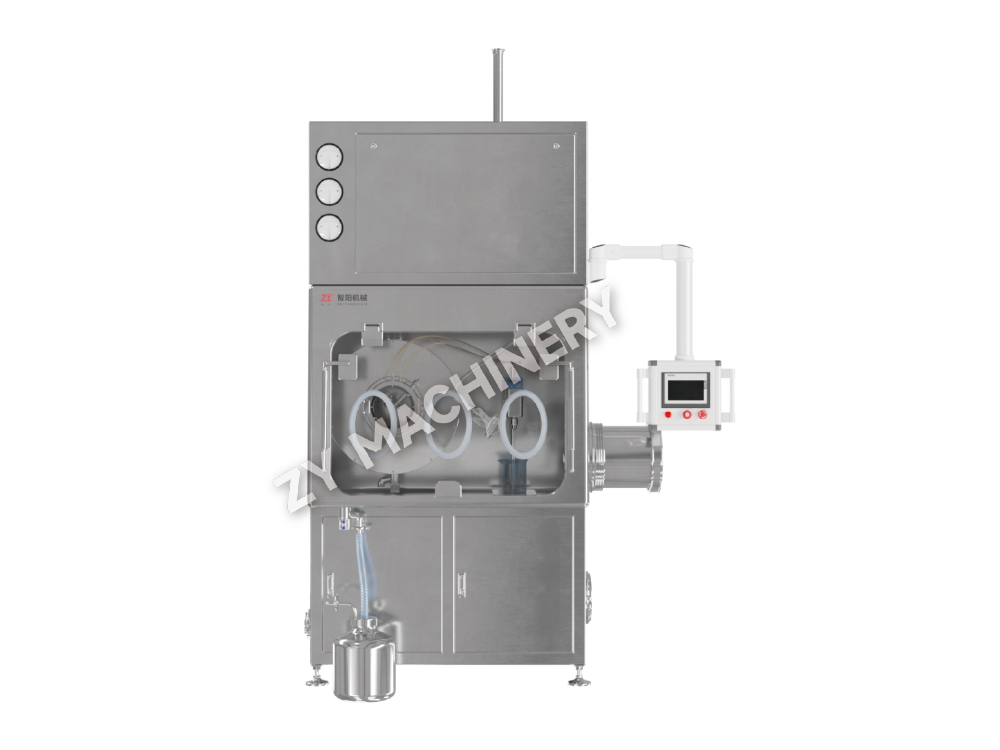
BGB HR&D High-Containment, High-Efficiency Coating Machine
The machine is designed for OEB4/OEB5 protection applications. Occupational exposure band classifications vary according to the pharmaceutical company’s internal system and risk assessment, but OEB4 and OEB5 generally represent highly potent substances requiring strict engineering controls and specialized handling procedures.
For these applications, the main advantage of the equipment is the use of multiple containment barriers rather than a single protective measure. The isolator forms the primary enclosure. Negative pressure supports inward airflow. Interlocked doors prevent uncontrolled opening. HEPA filtration manages exhaust air. Gloves, half-suits, or robotic systems enable manipulation within the sealed environment. Transfer chambers, sleeve systems, and RTP valves control material movement.
This layered design provides a stronger safety concept than open or partially enclosed coating equipment. If one barrier requires inspection or replacement, the other systems continue to support protection. The design philosophy is especially important for pharmaceutical products in which the consequences of operator exposure, environmental contamination, or cross-contamination may be serious.
Containment also benefits product quality. A sealed environment reduces the chance that airborne contaminants, foreign particles, or cleaning residues from the surrounding room will enter the process. In this way, operator protection and product protection are addressed together.
The operating cabin is specified for a pressure range of approximately -50 Pa to -150 Pa. Maintaining the cabin below the pressure of the surrounding environment encourages air to move into the enclosure rather than allowing potentially contaminated air to move outward.
Negative pressure is not a substitute for sound mechanical design, but it is an important part of the containment strategy. Pressure monitoring can be incorporated into operating procedures and alarm logic. If the pressure moves outside the approved range, the control system can alert personnel and initiate the required response.
The equipment uses a turbulence airflow mode and a ventilation frequency of more than 15 air changes per hour according to the provided parameters. The airflow arrangement is intended to support process drying, heat and vapor removal, and containment performance inside the enclosure.
Airflow must be balanced carefully. Excessive turbulence can disturb the coating pattern or create unnecessary dust movement, while insufficient air exchange can reduce drying efficiency and affect product quality. The system’s air management design provides a foundation for selecting appropriate process settings based on the formulation, coating suspension, tablet characteristics, and batch size.
Air filtration is one of the most important elements in high-containment processing. The BGB HR&D coating machine can be configured with replaceable dual-layer HEPA filters, described as PUSHPUSH filtration, or with a bag-in/bag-out filtration arrangement. These options support different facility preferences, maintenance procedures, and containment strategies.
HEPA filtration helps remove fine particulate matter from the exhaust air. In potent pharmaceutical applications, the filter system must not only perform efficiently during normal operation; it must also be replaceable without creating an uncontrolled release. Filter access, housing design, gasket compression, replacement sequence, and waste packaging all influence the actual protection level of the installation.
A bag-in/bag-out system enables used filters to be enclosed as they are removed. This approach is widely used when maintenance personnel must avoid direct contact with contaminated filter surfaces. The replacement bag provides a controlled boundary during removal, handling, and disposal.
The replaceable dual-layer configuration provides an alternative approach for facilities that prefer a specific filter replacement method or need an adaptable filtration arrangement. The final selection should be based on the hazard assessment, validation requirements, site procedures, filter loading, and applicable regulatory expectations.
Compared with coating systems that rely on general room ventilation or a single exhaust filter, the integrated filtration concept offers stronger control over the process air path. It also gives pharmaceutical manufacturers more flexibility when developing standard operating procedures for inspection, service, and decontamination.
Material transfer is often one of the most difficult parts of a high-potency process. Loading and unloading can expose operators to more risk than the coating operation itself if containers, doors, or connections are opened incorrectly. The BGB HR&D system provides several transfer options so that the equipment can be matched to the customer’s material flow and containment strategy.
RTP valves are suitable for controlled transfer between compatible process containers and the isolator. The connection is designed to limit direct exposure during the movement of tablets, granules, or other solid pharmaceutical materials. RTP technology can be especially useful when the coating machine is integrated with upstream granulation, drying, blending, or intermediate storage equipment.
A transfer chamber creates an intermediate space between the primary isolator and the external environment. Products can be moved into or out of the chamber through a controlled sequence. Interlocking doors help prevent both doors from being open at the same time, reducing the possibility of a direct open path between the contaminated interior and the surrounding room.
Sleeve systems provide another method of moving products or waste while limiting contact with the surrounding environment. They can be configured for different packaging and handling requirements. Additional accessories, including polyethylene bag handling kits, sealing clamps, and packaging tools, support contained transfer and waste management.
The availability of multiple transfer methods is a practical advantage. Pharmaceutical facilities do not all use the same containers, production scales, or downstream equipment. A machine that can be configured around existing material-handling practices is more likely to support efficient installation and long-term operation.
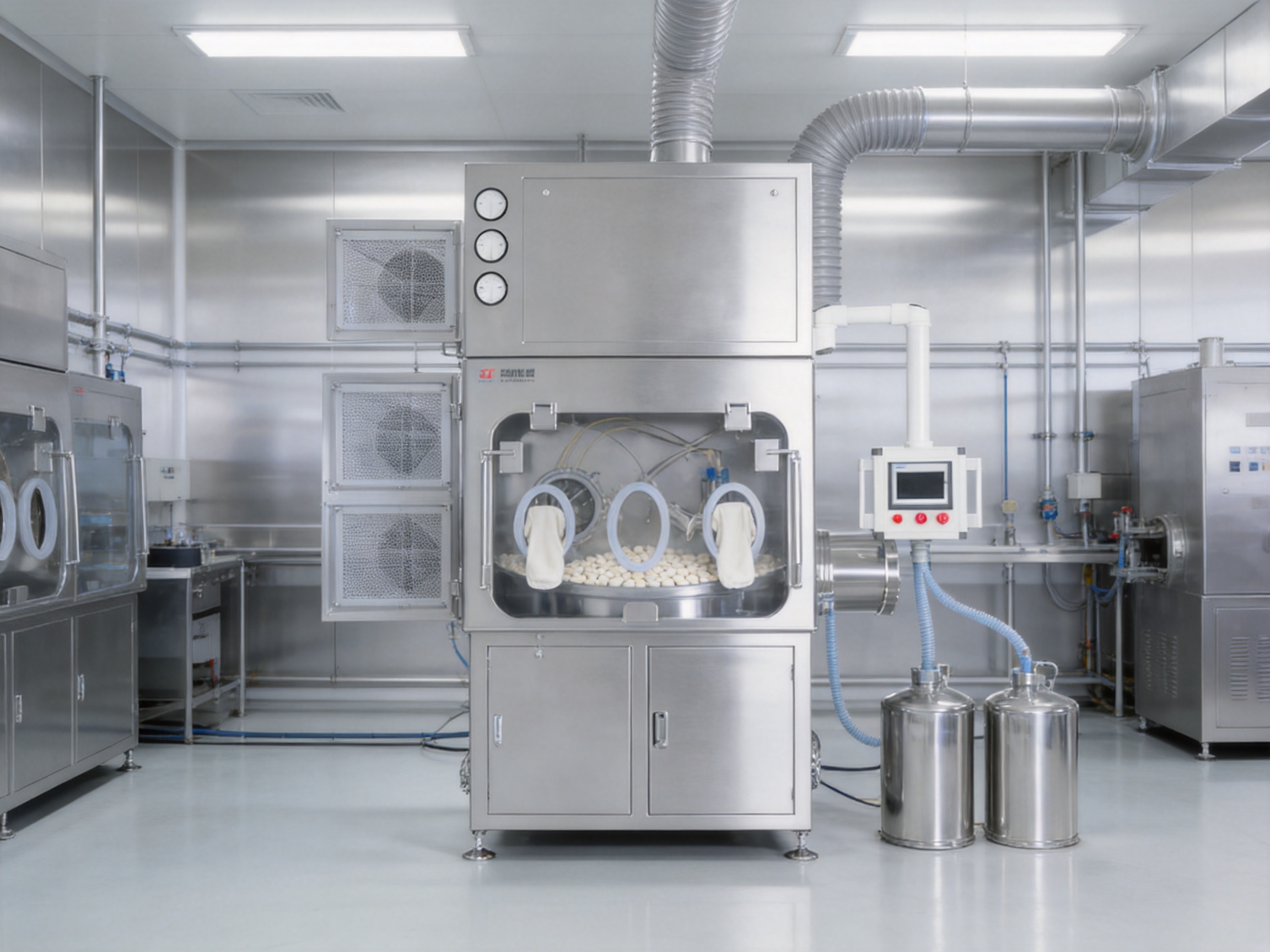
Every access point in a high-containment system must be treated as a critical control point. The BGB HR&D coating machine uses interlocking mechanisms for chamber doors. The interlocks help ensure that the enclosure is not unintentionally opened in a condition that could compromise containment.
Door seals are available in inflatable or mechanically compressed designs. Inflatable seals can create a strong, controlled seal when the system is operating and may be released during an authorized opening sequence. Mechanically compressed seals provide a robust and familiar sealing solution for applications where the door design, maintenance program, or facility preference favors compression gaskets.
The choice between inflatable and mechanically compressed seals depends on the process, cleaning method, frequency of access, material compatibility, validation requirements, and maintenance philosophy. Offering both options allows the equipment to be adapted rather than forcing every customer into a single configuration.
Seal integrity is important throughout the complete production cycle. It affects pressure stability, airflow direction, filter performance, and operator safety. For this reason, seal inspection and testing should be included in commissioning, qualification, routine operation, and preventive maintenance procedures.
High-containment equipment must be prepared for abnormal situations, not only normal production. A damaged glove, failed seal, loss of pressure, or unexpected access condition can create a potential release pathway. The BGB HR&D system includes an emergency mode designed to respond automatically if gloves or seals fail.
According to the provided operating concept, emergency mode increases the internal pressure response, activates alarms, adjusts fan speed, maximizes exhaust, and closes air inlets. The system is designed to maintain airflow above 0.5 m/s to help prevent hazardous substances from escaping through a damaged area.
This response sequence is valuable because it reduces the time between fault detection and protective action. Instead of relying solely on an operator to recognize a failure and manually adjust several controls, the control system can initiate a predefined response. Audible and visual alarms can notify personnel while the equipment moves into a safer operating condition.
Emergency functions should be verified through a documented testing program. The customer’s safety team should define the applicable alarm limits, response times, shutdown conditions, recovery process, and maintenance requirements. The precise performance of the installed system should be confirmed during commissioning and qualification.
Automatic emergency response is a significant advantage over simpler enclosed coating systems that may not include coordinated fan, inlet, pressure, and alarm control. It supports a more comprehensive risk-management approach and gives operators clear guidance during an abnormal event.
The isolator can be customized with different glove ports, half-suits, or robotic systems. These options allow the machine to accommodate various levels of operator interaction and automation.
Glove ports are suitable for many routine interventions, including visual inspection, adjustment of internal components, sampling, connection of accessories, and controlled handling of materials. The gloves provide access while keeping the operator outside the primary process enclosure.
Half-suits can be considered when more extensive manual manipulation is required inside the isolator. They provide greater reach and flexibility than individual glove ports while maintaining a contained interface between the operator and the process environment.
Robotic systems are an option for facilities that want to reduce manual intervention, improve repeatability, or support highly hazardous operations. Robotic handling may be used for selected tasks such as product movement, component manipulation, inspection, or packaging preparation. The final configuration depends on the process layout and the required degree of automation.
These customization options represent an important difference between a standard coating machine and a process-engineered containment platform. Rather than treating operator access as an afterthought, the system allows the access method to be selected according to the hazard level, process complexity, production volume, and facility strategy.
Gloves are essential containment components, but they are also wear items. Repeated movement, contact with equipment surfaces, cleaning, chemical exposure, and aging can gradually reduce glove integrity. A small puncture or tear may not be visible during a basic visual inspection.
An optional online glove integrity testing system can help identify potential glove failures before they become a significant containment event. Testing can be incorporated into routine checks, maintenance activities, or production preparation procedures according to the customer’s quality system.
Safe glove replacement capabilities further improve maintainability. The purpose is to replace a damaged glove while keeping the contaminated side controlled and minimizing exposure to service personnel. The detailed method should be established during equipment configuration and validated as part of the site’s containment and cleaning procedures.
Online integrity testing is particularly useful for highly potent products because it transforms glove inspection from a subjective activity into a more structured control. It also supports better documentation and trending of glove performance over time.
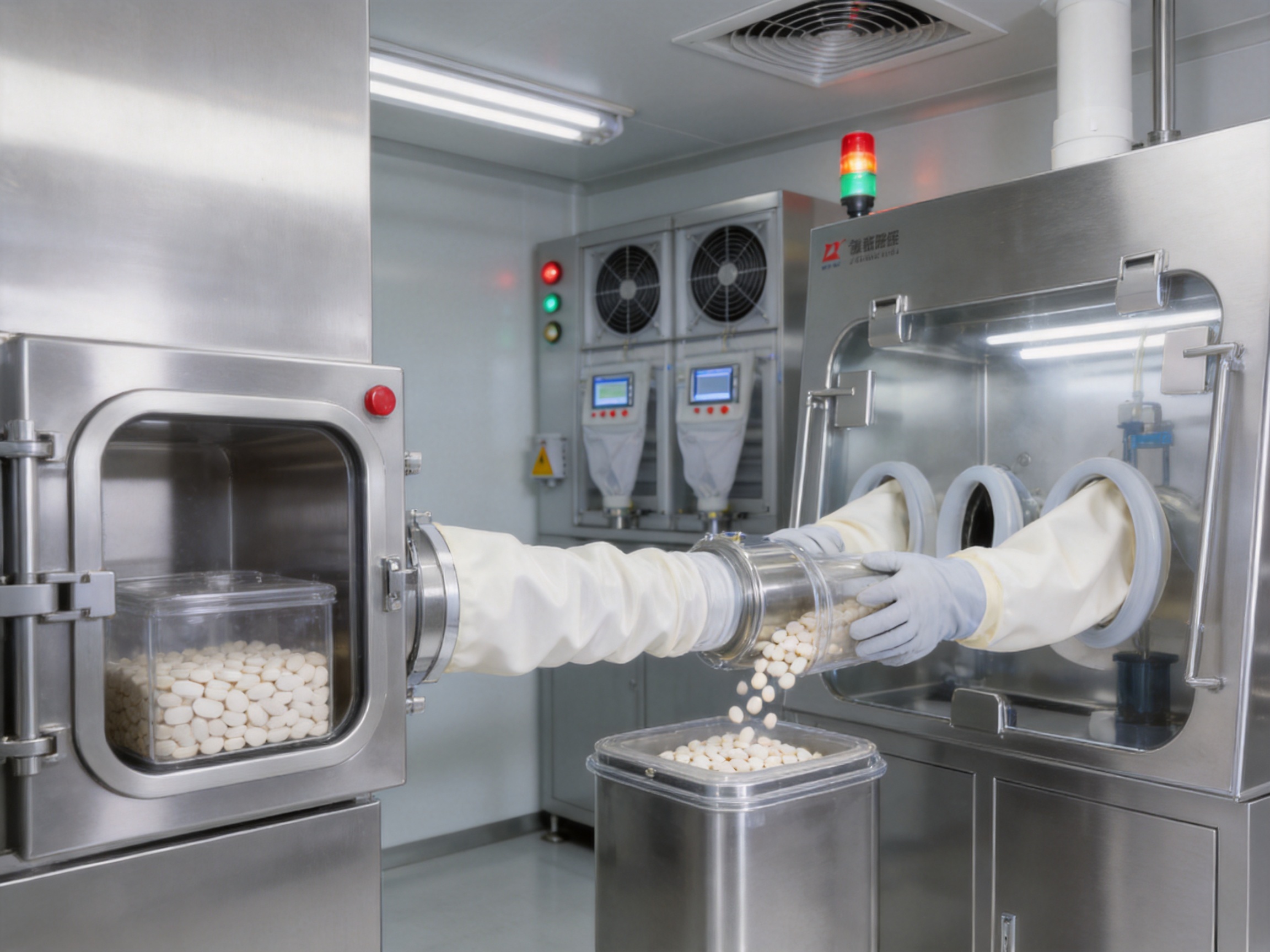
Containment is the primary design objective, but a high-containment machine must still produce a high-quality coating. Tablets may require film coating for identification, appearance, taste masking, moisture protection, controlled release, mechanical protection, or improved handling. Poor spray distribution, uneven drying, excessive agglomeration, or prolonged processing can compromise the batch.
The coating chamber is designed to process tablets or granules under controlled airflow and exhaust conditions. The electrical heater provides the thermal energy required for drying, while the ventilation system removes moisture and process vapors. The control system allows operators to manage process parameters in a coordinated manner.
High-efficiency performance comes from the relationship between the coating chamber, spray system, air handling system, heater, product movement, and control logic. Increasing heater power alone does not guarantee faster or better coating. Efficient processing requires suitable air volume, controlled temperature, appropriate spray rate, stable product motion, and consistent exhaust.
The system’s range of capacities, from approximately 1 kg per batch to 20 kg per batch in the listed models, makes it suitable for laboratory development, process optimization, pilot production, and selected small-scale manufacturing applications. Customers can select a size that corresponds to their development stage or production needs.
Laboratory and R&D coating equipment is particularly important when developing potent formulations. It allows researchers to study coating suspension behavior, spray parameters, drying characteristics, and containment performance before transferring the process to a larger machine. A controlled development platform can reduce scale-up risk and help establish a reproducible manufacturing process.
The complete system is operated through a logic controller and a user-friendly human-machine interface. A PLC-based control architecture provides a structured method for managing equipment functions, alarms, interlocks, air handling, heating, and process sequences.
The HMI gives operators access to process information and control commands from a central interface. Depending on the configured system, this may include operating status, pressure conditions, airflow settings, heater operation, alarm messages, transfer sequences, and emergency-mode status.
A clear HMI is especially important in high-containment processing because operators may have limited physical access to the equipment. They need to understand what is happening inside the isolator without opening it. Visual status information and guided operating steps can help reduce errors during loading, processing, unloading, and fault recovery.
Control-system design also supports repeatability. Once a validated process recipe has been established, the operator can follow defined settings and sequences rather than relying on manual adjustments. This contributes to batch-to-batch consistency and helps reduce variation between operators.
Alarm management is another important function. Alarms should identify abnormal pressure, filter conditions, access status, glove integrity, seal status, airflow, or other relevant conditions. Effective alarm presentation helps personnel respond quickly and provides useful information for investigations and maintenance.
The following table summarizes the principal parameters supplied for the available models. Actual machine dimensions, weight, utilities, and final configuration are determined according to the design approved for the customer’s application.
| Item | Unit | BGBH-I | BGBH-III | BGBH-V | BHBH-10 | BGBH-20 |
| Capacity | kg/batch | 1 | 3 | 5 | 10 | 20 |
| Power | kW | 1.35 | 3.4 | 4.35 | 6 | 6 |
| Electrical heater power | kW | 1.5 | 4.5 | 4.5 | 6 | 9 |
| Protection level | — | OEB4/OEB5 | OEB4/OEB5 | OEB4/OEB5 | OEB4/OEB5 | OEB4/OEB5 |
| Airflow mode | — | Turbulence | Turbulence | Turbulence | Turbulence | Turbulence |
| Ventilation frequency | air changes/hour | More than 15 | More than 15 | More than 15 | More than 15 | More than 15 |
| Operating cabin pressure | Pa | -50 to -150 | -50 to -150 | -50 to -150 | -50 to -150 | -50 to -150 |
| Compressed air consumption | m³/h | 0.2 | 0.3 | 0.6 | 0.9 | 1.1 |
| Compressed air pressure | MPa | 0.4 to 0.6 | 0.4 to 0.6 | 0.4 to 0.6 | 0.4 to 0.6 | 0.4 to 0.6 |
| External dimensions | mm | According to design | According to design | According to design | According to design | According to design |
| Machine weight | kg | According to design | According to design | According to design | According to design | According to design |
The capacity range supports a staged development strategy. A pharmaceutical developer may begin with a 1 kg laboratory model, use a 3 kg or 5 kg unit for process refinement, and then select a 10 kg or 20 kg machine for larger batches. The correct selection depends on tablet size, bed volume, coating weight gain, loading ratio, spray rate, drying demand, and the required containment configuration.
Utilities should be confirmed during the technical design stage. Compressed-air consumption, heater capacity, exhaust requirements, electrical supply, room layout, and maintenance clearances may vary with the selected accessories and customized design. The stated dimensions and weight are not fixed because the isolator, transfer system, filter housing, glove configuration, and supporting equipment can be adapted to the installation.
The main advantage of this equipment over conventional non-contained coating machines is the extent to which containment is integrated into the process architecture. Standard coating systems may require extensive room-level controls and manual handling procedures when used with highly potent substances. The BGB HR&D system places the critical process inside a purpose-designed isolator and provides controlled interfaces for transfer and operation.
A second advantage is the use of multiple configurable access methods. Glove ports, half-suits, and robotic systems allow the equipment to be matched to the required level of intervention. This flexibility is useful for facilities with different operating philosophies, product hazards, automation targets, or future expansion plans.
A third advantage is the range of filtration and transfer options. Dual-layer HEPA filtration or bag-in/bag-out filtration can be selected according to the site’s maintenance and safety procedures. Transfer chambers, sleeves, or RTP valves can be incorporated according to the material flow. This makes the system more adaptable than a fixed machine with limited connection options.
A fourth advantage is the emergency response function. Coordinated fan control, exhaust maximization, inlet closure, alarms, and airflow management provide a structured response to glove or seal failure. This is more comprehensive than relying on manual emergency intervention alone.
A fifth advantage is the combination of containment and process development capability. The smaller models are suitable for research and development work, where containment must be maintained while formulations and coating recipes are optimized. This can be important for companies developing potent products that cannot be handled safely on open laboratory equipment.
Finally, the machine is designed as part of a broader pharmaceutical equipment portfolio. This allows customers to work with a supplier that understands upstream and downstream operations, including powder handling, mixing, granulation, drying, conveying, and packaging interfaces. A coordinated process route can simplify engineering decisions and improve the overall performance of the production line.
Changzhou Zhiyang Machinery Equipment Co., Ltd. was founded in 2010 and is based in Changzhou, China. The company specializes in the design, manufacture, and process integration of powder processing and oral solid dosage equipment.
Its product scope includes laboratory equipment, mixing equipment, granulation equipment, drying equipment, coating equipment, auxiliary processing equipment, and transfer and conveying systems. This broad range gives the company a practical understanding of how individual machines operate within a complete pharmaceutical process.
The company’s engineering approach begins with the material and process rather than with a standard machine alone. Material characteristics, target capacity, production method, site conditions, containment requirements, utilities, and downstream connections are considered when developing a solution. This process-driven method is particularly important for high-containment coating, where the isolator and transfer system must fit the actual workflow.
For customers, this approach can reduce the risk of selecting equipment that performs well in isolation but creates difficulties during loading, cleaning, discharge, maintenance, or integration. A machine should not only meet a nominal capacity; it must also work within the facility’s material flow, operator procedures, quality system, and maintenance capabilities.
ZY Machinery provides standalone machines, modular systems, and complete production lines for pharmaceutical, biopharmaceutical, biotechnology, nutraceutical, veterinary, additives, and related industries. Its experience across these sectors supports the development of equipment for different powder properties, process sensitivities, production scales, and regulatory expectations.
Process-oriented engineering is a key strength in the development of high-containment equipment. The company can evaluate how material enters the system, how the product is processed, how air moves through the equipment, how the finished batch exits, and how operators perform interventions. These factors are considered together rather than treated as separate equipment features.
The design can also account for customer-specific requirements such as glove-port locations, half-suit access, robotic interfaces, filter replacement methods, transfer chamber arrangement, bagging systems, and packaging tools. Such customization is useful when the equipment must fit an existing room or connect with established production assets.
ZY Machinery has expanded its product portfolio, strengthened research and development capabilities, developed patented technologies, and obtained quality system certification according to the supplied company information. Continued investment in development is important for equipment manufacturers because pharmaceutical processes require improvements in automation, cleanability, containment, energy efficiency, and validation support.
Research and development also helps the company address different material behaviors. Tablets may vary in hardness, friability, shape, density, surface characteristics, and coating sensitivity. Granules may behave differently from tablets during fluid movement and spray application. A flexible engineering capability allows equipment solutions to be adapted to the actual product rather than relying on a single universal process assumption.
The quality of a high-containment machine depends on more than its main chamber. Weld quality, surface finish, gasket installation, door alignment, filter housing construction, electrical integration, instrumentation, and control-system testing all influence performance. A manufacturer with experience in pharmaceutical machinery must coordinate these details during fabrication and assembly.
Quality system certification and documented manufacturing practices can support more consistent production, inspection, and delivery. Customers should nevertheless define their own technical acceptance criteria, including material certificates, surface-finish requirements, pressure testing, airflow testing, filter integrity testing, alarm verification, and qualification documentation.
The company’s focus on reliable products, customer reputation, responsive service, innovation, and engineering implementation provides a foundation for long-term cooperation. High-containment systems require support beyond initial delivery, including installation assistance, commissioning, operator training, spare parts, maintenance guidance, and process consultation.
Pharmaceutical coating equipment must be designed with hygiene in mind. Product-contact surfaces should be accessible for cleaning and inspection. The internal arrangement should minimize unnecessary ledges, dead zones, and residue accumulation. Seals, gaskets, transfer points, and filters should be selected with the cleaning and containment strategy in mind.
The BGB HR&D machine is described as complying with GMP requirements and providing a safe, efficient, and hygienic coating process. GMP compliance is ultimately demonstrated through the complete equipment design, documentation, manufacturing quality, installation, commissioning, qualification, operation, cleaning, and maintenance program. The machine provides the engineering features needed to support that program.
Contained operation can also simplify cleaning by reducing the spread of residues into the surrounding room. However, containment does not eliminate the need for a validated cleaning procedure. The pharmaceutical manufacturer must determine how the coating chamber, isolator interior, gloves, transfer paths, filters, and waste-handling components will be cleaned or changed between products.
When multiple potent products are processed in the same facility, cleaning validation and campaign planning become especially important. The equipment configuration should be selected with changeover frequency, product toxicity, cleaning agents, drying time, and waste disposal requirements in mind.
The machine is suitable for coating highly potent tablets and granules used in pharmaceutical development and manufacturing. Potential product categories include hormone products, anticancer medications, and other formulations containing high-toxicity compounds.
In laboratory development, the system can provide a safer environment for investigating coating formulations and process parameters. Researchers can evaluate the effect of coating suspension viscosity, atomization, spray rate, inlet conditions, exhaust conditions, and drying time without relying on open handling of potent materials.
In pilot production, the equipment can help confirm scale-up behavior. The team can compare product movement, coating uniformity, drying performance, and containment results between development and larger-batch operations. This information can be used to establish a more reliable production recipe.
In small-scale commercial or specialized production, the 10 kg and 20 kg models can support batches where product value is high, demand is moderate, or the active ingredient requires strict containment. The final capacity decision should be based on the actual product load and the coating process rather than nominal batch weight alone.
The equipment may also be considered for nutraceutical, veterinary, biotechnology, and specialty chemical applications where highly active powders or granules require contained coating or surface treatment. Suitability should be confirmed through a detailed hazard assessment and process trial.
A high-containment coating machine should be treated as a complete engineered system during installation. The room must provide suitable floor loading, access for delivery, utility connections, exhaust routing, maintenance space, and compatible environmental conditions. The machine’s external dimensions are designed according to the project, so these requirements should be finalized before fabrication.
Commissioning normally includes mechanical inspection, electrical inspection, control-system testing, pressure testing, airflow verification, filter integrity testing, interlock checks, alarm testing, emergency-mode testing, and confirmation of transfer procedures. The exact scope depends on the customer’s quality system and applicable regulatory requirements.
Qualification activities may include design qualification, installation qualification, operational qualification, and performance qualification. The customer may also require containment performance testing, glove integrity testing, cleaning verification, temperature mapping, coating uniformity studies, and process validation.
Operator training is essential. Personnel should understand the purpose of the isolator, correct RTP operation, door interlock sequences, glove use, pressure monitoring, alarm response, emergency procedures, product transfer, waste packaging, and routine cleaning. Training should be refreshed whenever the equipment configuration or operating procedure changes.
Lifecycle support includes preventive maintenance, seal inspection, glove replacement, filter replacement, calibration, software backup, spare parts management, and periodic requalification. Because the system handles potent products, maintenance work must be planned carefully to prevent exposure during service activities.
The first selection factor is product hazard. The pharmaceutical manufacturer should define the required occupational exposure band, containment target, active ingredient properties, dustiness, toxicity, and acceptable exposure limits. These factors influence the isolator design, filtration strategy, transfer method, glove arrangement, and testing program.
The second factor is product form and batch size. Tablets and granules may require different internal handling conditions. The batch weight must be considered together with bulk density, product dimensions, bed depth, coating weight gain, and available chamber volume.
The third factor is operator intervention. If the process requires frequent manual manipulation, glove ports or half-suits may be appropriate. If intervention should be minimized, robotic handling and greater automation may be considered. The selected system should allow operators to complete necessary tasks without compromising the enclosure.
The fourth factor is material flow. Customers should determine how material will arrive at the machine, what containers will be used, how finished product will be collected, and how waste will be removed. RTP ports, transfer chambers, and sleeve systems can then be arranged to create a logical and contained process route.
The fifth factor is maintenance. Filter replacement, glove testing, seal inspection, cleaning, and component access should be discussed during design review. A system that is difficult to maintain may experience longer downtime or increased service risk.
The sixth factor is future flexibility. Pharmaceutical development programs often change. A machine may be used for several formulations, different coating materials, or evolving production volumes. Modular accessories and configurable containment features can help preserve the usefulness of the equipment as requirements change.
Operators should inspect the isolator, gloves, seals, transfer ports, filters, and alarms before each campaign. Any abnormal condition should be reported and resolved before material is introduced. Pre-use checks are particularly important when the equipment has been idle or has undergone maintenance.
Material should be transferred only through the approved route. Operators should follow the correct sequence for RTP connection, transfer chamber operation, sleeve handling, and container sealing. Improvised handling methods can undermine the protection provided by the machine.
Pressure, airflow, temperature, spray conditions, and coating time should be monitored throughout the batch. Operators should not bypass alarms or interlocks without an authorized procedure. If emergency mode activates, personnel should follow the site response plan and avoid opening the containment system until it has been declared safe.
Gloves should be handled carefully during operation and cleaning. Sharp tools, excessive stretching, unsuitable chemicals, and contact with hot surfaces can damage them. Routine integrity testing and timely replacement reduce the likelihood of an unexpected failure.
After processing, the finished product should be discharged using the approved contained transfer method. Waste materials, used bags, disposable accessories, and contaminated components should be sealed and managed according to the site’s hazardous-material procedure.
The machine is designed for highly potent tablets and granules, including products containing hormones, anticancer compounds, and other high-toxicity pharmaceutical substances. Final suitability should be confirmed through a product and hazard assessment.
The listed protection level is OEB4/OEB5. The complete containment performance depends on the selected configuration, installation, operating procedures, maintenance, and verification testing.
Material can be transferred into the sealed isolator through a Rapid Transfer Port valve. Depending on the project, transfer chambers or sleeve systems may also be used.
Finished tablets or granules are transferred out through a transfer chamber or sleeve system. The selected discharge method is designed to maintain containment during product removal.
Yes. Configuration options include different glove-port arrangements, half-suits, robotic systems, filtration designs, transfer methods, seal types, glove testing systems, bag-handling kits, sealing clamps, and packaging tools.
The emergency mode is designed to activate alarms, adjust fan speed, maximize exhaust, close air inlets, and maintain airflow above 0.5 m/s to help prevent hazardous material release. Site-specific emergency procedures and testing requirements should be established during commissioning.
The system can use replaceable dual-layer HEPA filters, described as PUSHPUSH filtration, or a bag-in/bag-out filtration arrangement. The final selection should reflect the containment assessment and maintenance strategy.
The listed models provide capacities of approximately 1, 3, 5, 10, and 20 kg per batch. Actual usable capacity depends on material characteristics and process conditions.
Yes. The smaller models are appropriate for laboratory and development work involving potent tablets or granules. They can support formulation studies, coating parameter development, and process scale-up investigations.
The system is operated through a logic controller and human-machine interface. The control platform supports process operation, interlocks, alarms, air management, heating, and other configured functions.
The listed compressed-air pressure is 0.4 to 0.6 MPa. Consumption ranges from approximately 0.2 to 1.1 m³/h depending on the model. Final utility requirements should be confirmed for the selected configuration.
No. External dimensions and machine weight are specified according to the design. The isolator, transfer equipment, filter system, access arrangement, and accessories can affect the final footprint.
The system is engineered for a safe, efficient, hygienic coating process that complies with GMP-oriented requirements. The customer must complete the applicable qualification, validation, documentation, and operating controls for the installed system.
Customers should provide information about the active ingredient, exposure band, product form, batch size, coating formulation, material containers, transfer route, operator interventions, cleaning method, utilities, room conditions, automation expectations, and documentation requirements. This information allows the equipment to be designed for the actual process.
The BGB HR&D High-Containment, High-Efficiency Coating Machine is designed for pharmaceutical manufacturers that need controlled coating performance together with stringent operator protection. Its sealed isolator, negative-pressure operation, controlled RTP transfer, interlocked doors, configurable sealing systems, HEPA filtration, emergency response mode, optional glove integrity testing, and PLC/HMI control create a comprehensive platform for handling highly potent tablets and granules.
Its principal value lies in the integration of these functions. Containment is addressed during charging, processing, discharge, maintenance, and abnormal conditions rather than being treated as a separate room-level concern. At the same time, the equipment supports efficient coating, process repeatability, hygienic operation, and laboratory-to-pilot capacity selection.
Changzhou Zhiyang Machinery Equipment Co., Ltd. strengthens this product offering through process-oriented engineering, broad oral solid dosage experience, customized system design, research and development capabilities, manufacturing expertise, and support for complete production routes. By connecting coating technology with mixing, granulation, drying, conveying, and auxiliary equipment, the company can help customers develop practical and integrated pharmaceutical processing solutions.
For organizations developing or manufacturing OEB4/OEB5 products, the most effective equipment strategy is one that considers hazard control, product quality, operator workflow, maintenance, validation, and future expansion at the same time. A properly configured high-containment coating machine can provide the engineering foundation needed to achieve that objective.
1. International Society for Pharmaceutical Engineering. Good Practice Guide: Assessing the Risk of Pharmaceutical Manufacturing Equipment for Cross-Contamination.
2. European Commission. EudraLex, Volume 4: Good Manufacturing Practice Guidelines for Medicinal Products.
3. United States Food and Drug Administration. Guidance for Industry: Manufacturing, Processing, or Holding Active Pharmaceutical Ingredients.
4. International Organization for Standardization. ISO 14644 Series: Cleanrooms and Associated Controlled Environments.
5. Occupational exposure banding principles for handling highly potent pharmaceutical compounds.
6. Changzhou Zhiyang Machinery Equipment Co., Ltd. Product information for high-containment coating equipment and oral solid dosage processing systems.
Want to stay up to date?
Contact us via the email address below.
Don't worry about spam. We hate it too!
Mobile Client

Video Account
Phone:+86-15161130178
Tel:+86-519-88674267
Email:czzy188@163.com
Phone:+86-15161132798
Email:zy@zy-drying.com

WeChat ID

Copyright 2026 Changzhou Zhiyang Machinery Equipment Co., Ltd. All Rights Reserved  Oral Solid Dosage Equipment Manufacturer