 English
 Español
 русский
 中文简体

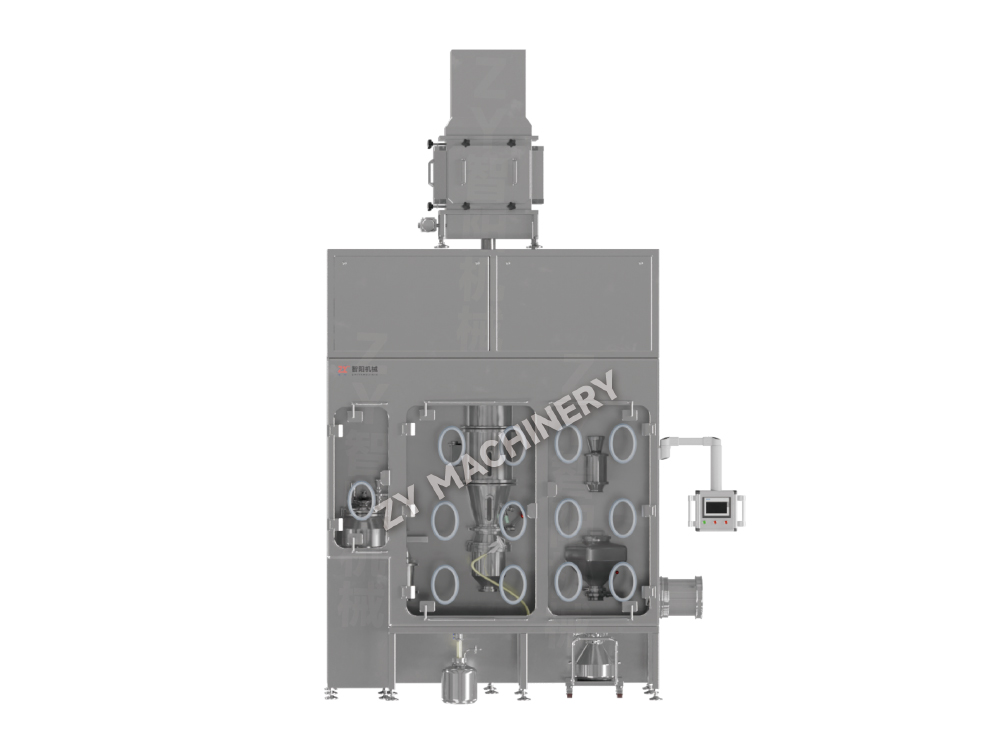
GFH R&D High-Containment Solid Dosage Production Line
The GFH R&D High-Containment Solid Dosage Production Line is designed f.....

Content
Wet granulation is one of the most important powder-processing operations in the manufacture of tablets, capsules, and other oral solid dosage forms. It transforms fine, poorly flowing powders into larger, more uniform granules with improved flowability, compressibility, handling characteristics, and content uniformity. For pharmaceutical manufacturers, the granulation stage directly influences downstream tablet compression, drying performance, production efficiency, material yield, and final product quality.
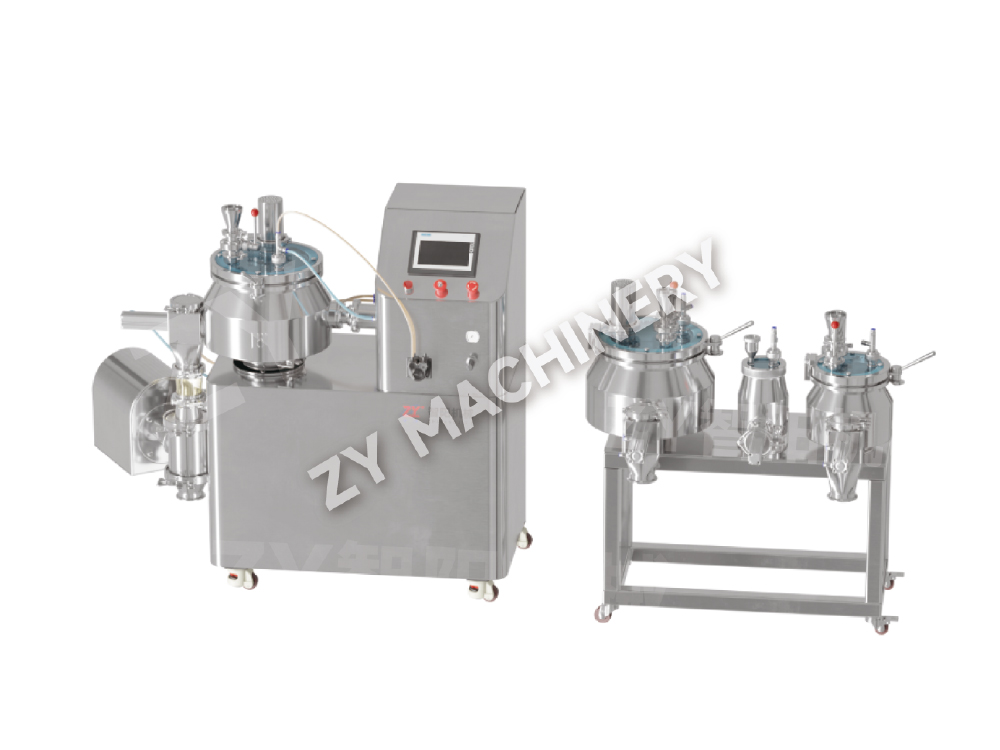
The GHL High-Speed Wet Granulator is designed as an efficient single-step solution for blending powders and producing consistent wet granules. It combines rapid mixing, controlled binder addition, high-speed cutting, and enclosed processing in one integrated machine. The equipment is suitable for pharmaceutical, food, chemical, nutraceutical, veterinary, biotechnology, and related applications in which reliable powder homogenization and repeatable granule formation are required.
Manufactured by Changzhou Zhiyang Machinery Equipment Co., Ltd., the GHL series is part of a broader portfolio of powder-processing and oral solid dosage equipment. The company develops standalone machines, modular systems, and complete production lines for laboratory, pilot-scale, and industrial applications. Its process-oriented approach enables equipment configurations to be adapted to material properties, production capacity, process requirements, and site conditions.
This article explains the operating principle, process advantages, construction features, applications, technical parameters, manufacturing strengths, and selection considerations associated with the GHL High-Speed Wet Granulator.
Many pharmaceutical powders cannot be compressed directly into high-quality tablets. Fine powders may have poor flowability, inconsistent bulk density, insufficient compactability, or a tendency to segregate during transfer. These properties can create variations in tablet weight, hardness, disintegration, dissolution, and active pharmaceutical ingredient distribution.
Wet granulation addresses these challenges by introducing a liquid binder into a powder mixture while applying controlled mechanical agitation. The binder forms liquid bridges between particles. As mixing continues, these bridges develop into larger agglomerates. The resulting wet mass is then shaped into granules, which are dried before compression or other downstream operations.
A well-controlled wet granulation process can provide several important benefits:
• Improved powder flow through more regular and larger particles.
• Better compressibility during tablet pressing.
• Reduced segregation of active ingredients and excipients.
• More consistent distribution of low-dose active ingredients.
• Improved control of bulk density and granule size.
• More stable feeding into tablet presses, capsule fillers, and packaging systems.
However, traditional granulation processes may involve separate mixing, wetting, massing, and granule-forming stages. Each additional transfer can increase handling time, product loss, contamination risk, and process variability. The GHL High-Speed Wet Granulator is designed to consolidate key operations into a compact, enclosed, and efficient processing step.
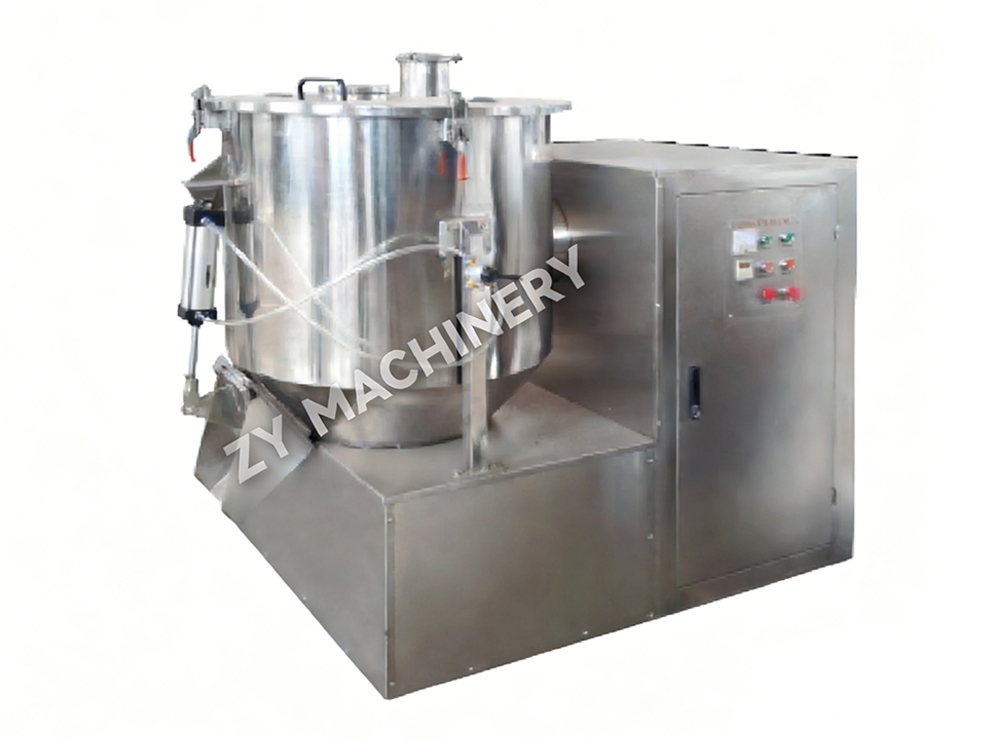
The GHL High-Speed Wet Granulator is an enclosed granulation machine that mixes powdered materials, distributes a binder, and forms wet granules in a short cycle. It is available in horizontal cylindrical and conical configurations, allowing the equipment to be selected according to material characteristics, batch size, production layout, and process objectives.
The machine is designed for manufacturers that require high mixing uniformity, rapid processing, controlled operation, and straightforward integration with drying and downstream solid dosage equipment. Its internal design minimizes dead zones, helping reduce powder accumulation and supporting consistent contact between the impeller, cutting system, powder bed, and binder.
The GHL series covers container volumes from 20 to 1,200 liters. Depending on the model and material density, the nominal batch capacity ranges from approximately 5 to 400 kilograms per batch. This range allows the same equipment family to support laboratory development, pilot production, clinical manufacturing, and full-scale commercial production.
The equipment can be used with different pharmaceutical powders and excipients, including materials that vary significantly in particle size, density, moisture affinity, and flow behavior. Proper formulation evaluation and process development remain essential, but the high-speed mixing system provides a strong platform for achieving uniform distribution and repeatable granule formation.
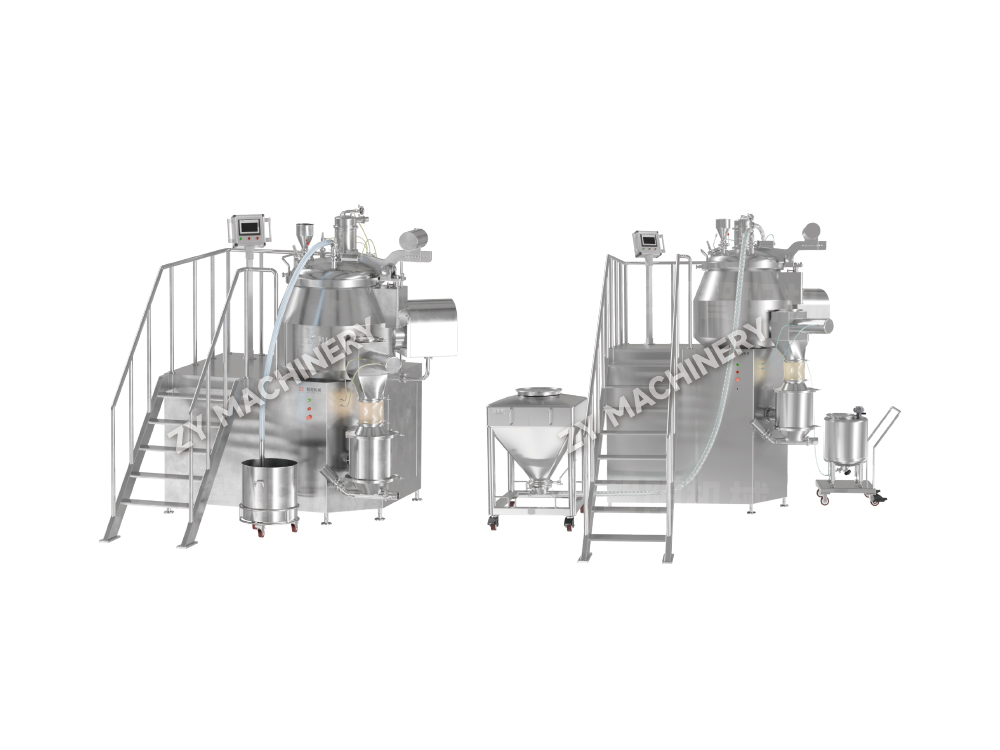
GHL High-Speed Wet Granulator
The production cycle begins with the charging of powders and excipients into the granulator container. The main mixing mechanism is then activated to distribute the materials throughout the working chamber. During this stage, the powder bed is repeatedly lifted, folded, circulated, and redistributed.
High-speed movement promotes rapid contact among particles and helps break up localized concentrations of active ingredient or excipient. According to the supplied process description, dry mixing can typically be completed in approximately two minutes, although the actual time depends on formulation properties, fill level, density, particle morphology, and required uniformity.
Compared with slow conventional mixers, a high-speed system can reduce the time required to achieve a homogeneous blend. It can also reduce the possibility that high-density particles will settle or that low-density materials will remain concentrated near the surface of the powder bed.
After dry mixing, a liquid binder is introduced into the moving powder bed. The binder may be added through a suitable spraying or dosing arrangement selected according to the formulation and process requirements. Uniform binder distribution is essential because excessive local wetting can produce large lumps, while insufficient wetting can result in weak or dusty granules.
The GHL granulator uses continued high-speed mixing to spread the binder rapidly across the powder mass. The movement of the product helps create controlled liquid bridges between particles. As the wetting process continues, these bridges develop into agglomerates with a more uniform structure.
Binder demand varies according to the type of active ingredient, excipient system, binder concentration, liquid viscosity, powder surface area, and target granule properties. The equipment’s efficient mixing action can help reduce unnecessary binder use. The supplied product information indicates that binder consumption may be reduced by up to 25 percent compared with traditional methods when the process is properly optimized.
Once the powder reaches the required wetness, the cutting mechanism breaks down oversized agglomerates and promotes a more consistent granule structure. The cutting speed is listed as adjustable from 0 to 2,880 revolutions per minute. This wide adjustment range gives operators flexibility when processing formulations with different binding characteristics and target particle sizes.
Cutting speed affects granule size distribution, densification, temperature generation, and the degree of wet mass refinement. Lower speeds may be suitable for fragile or easily agglomerated formulations, while higher speeds can provide stronger size reduction and more intensive processing. The optimum setting should be established during process development and confirmed through production-scale trials.
The short granulation phase is generally stated as approximately one to four minutes. Actual processing time will depend on the formulation, the selected model, the fill ratio, binder properties, and the desired endpoint. The objective is not simply to process the material as quickly as possible, but to achieve the required granule quality with minimal over-wetting and energy use.
After the granulation endpoint has been reached, the wet granules are discharged for drying. The granulator can be integrated with fluid-bed dryers, vacuum drying systems, tray dryers, or other suitable drying equipment depending on the production process. The compact cycle and controlled binder addition can reduce the amount of liquid that must be removed during drying.
Reduced binder use and shorter wet processing times can contribute to shorter drying cycles. This may improve overall line throughput and reduce thermal exposure for moisture-sensitive materials. Drying conditions must still be controlled carefully to avoid overdrying, residual moisture variation, granule hardening, or changes in product performance.
One of the most important advantages of the GHL series is its short process cycle. Dry mixing is typically completed in approximately two minutes, followed by wet granulation in approximately one to four minutes. The supplied information indicates that the machine can deliver four to five times higher efficiency than conventional methods under comparable process conditions.
Shorter cycle times can increase the number of batches completed in a working shift. They may also reduce labor requirements associated with separate transfer and intermediate handling operations. For high-volume facilities, even a modest reduction in cycle time can significantly improve annual production capacity.
Uniform granule texture is critical to downstream processing. Granules that are too soft may create dust and poor flow, while granules that are too hard may dissolve slowly or require excessive force during compression. The GHL system combines mixing and cutting action to produce granules with a more consistent structure.
Uniformity can support stable die filling, consistent tablet weight, controlled tablet hardness, and predictable disintegration. It can also reduce the quantity of fines generated during material transfer and drying.
Fine powders often bridge, rat-hole, or segregate in hoppers and feeding systems. Granulation increases particle size and can create a more favorable particle shape and density. The resulting granules generally flow more reliably through bins, transfer systems, tablet press feeders, and capsule-filling equipment.
Improved flow is especially valuable in continuous or high-speed operations. Consistent feeding helps reduce weight variation and supports more stable equipment performance.
Formulations may contain active ingredients and excipients with substantially different particle sizes, densities, and flow properties. These differences can cause segregation during blending, transfer, vibration, or storage. If segregation occurs, the concentration of active ingredient may vary from one portion of the batch to another.
The GHL machine is designed to maintain uniform mixing even when the active ingredient and excipients differ significantly in physical properties. Rapid circulation and intensive mixing help distribute the components before and during granulation. Once particles are incorporated into common granules, the risk of separation during later handling can be reduced.
Binder selection and quantity affect granule strength, drying demand, dissolution behavior, and process cost. Excess binder can produce dense granules, extend drying time, and hinder disintegration. Insufficient binder can create fragile granules with excessive fines.
The efficient wetting and mixing action of the GHL series may allow the formulation to achieve the desired granule strength with less binder. The product information cites potential savings of up to 25 percent compared with traditional methods. This figure should be validated for each specific formulation, but it illustrates the equipment’s potential to reduce material consumption and drying requirements.
Energy efficiency results from several factors, including shorter processing time, reduced binder quantity, efficient power transmission, and the integration of mixing and granulation operations. A shorter wet process can also reduce the energy required for subsequent drying.
Energy consumption is influenced by model size, material density, product load, cutting speed, binder properties, and operating conditions. The GHL range includes motor power ratings from 3.3 to 70 kilowatts, enabling users to select an appropriate scale rather than applying a single oversized machine to every batch.
The interior of the machine is fully enclosed and designed without dead angles. This configuration supports hygienic operation, minimizes powder accumulation, and helps reduce the possibility of cross-contamination. An enclosed working chamber also limits exposure of the product to the surrounding environment.
For pharmaceutical production, equipment design must support cleaning, inspection, maintenance, and validation. The GHL machine’s enclosed construction and smooth internal configuration provide a foundation for GMP-compliant operation. The final compliance strategy should also include validated cleaning procedures, suitable materials of construction, controlled utilities, documented maintenance, and appropriate operating procedures.
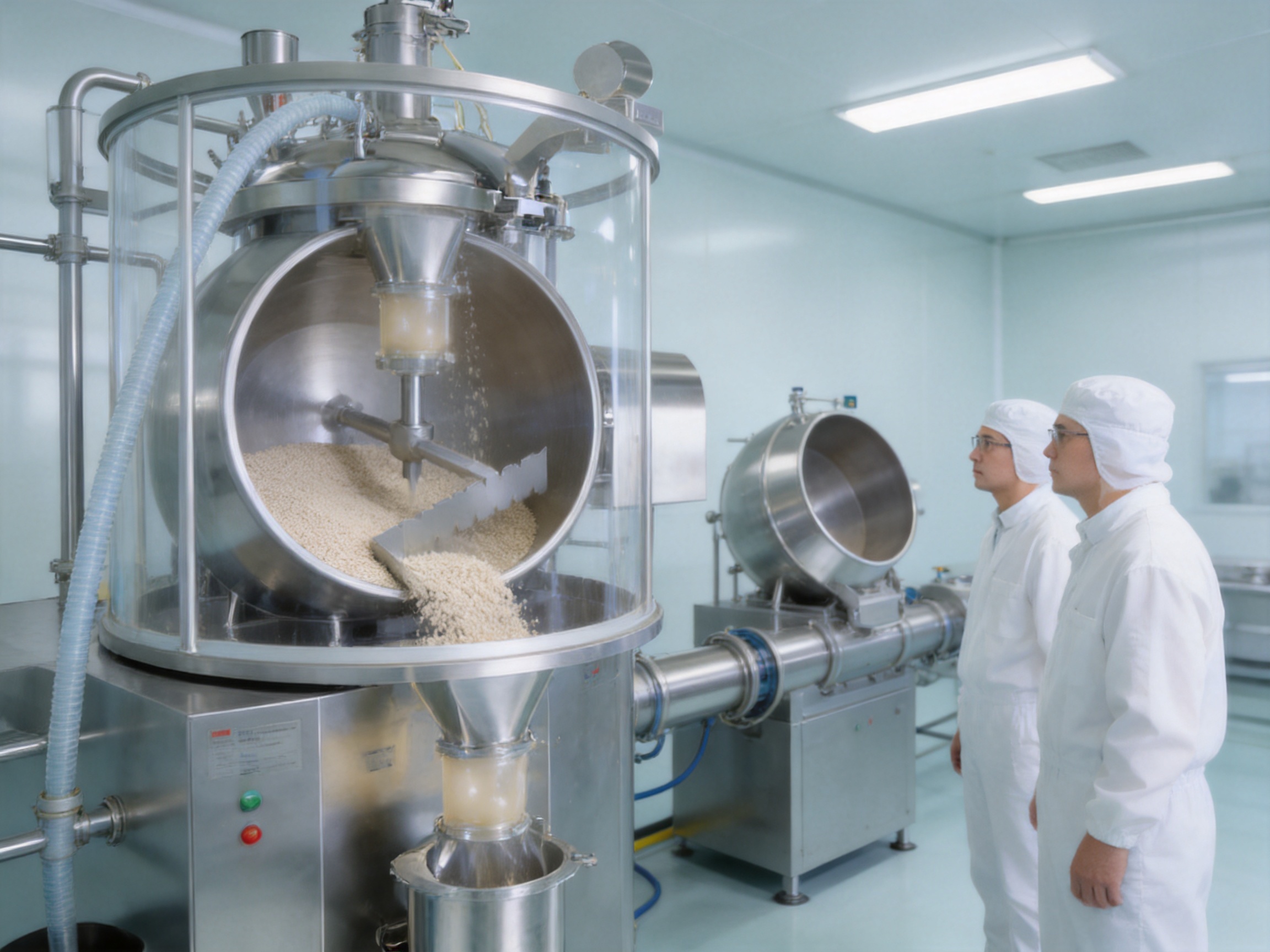
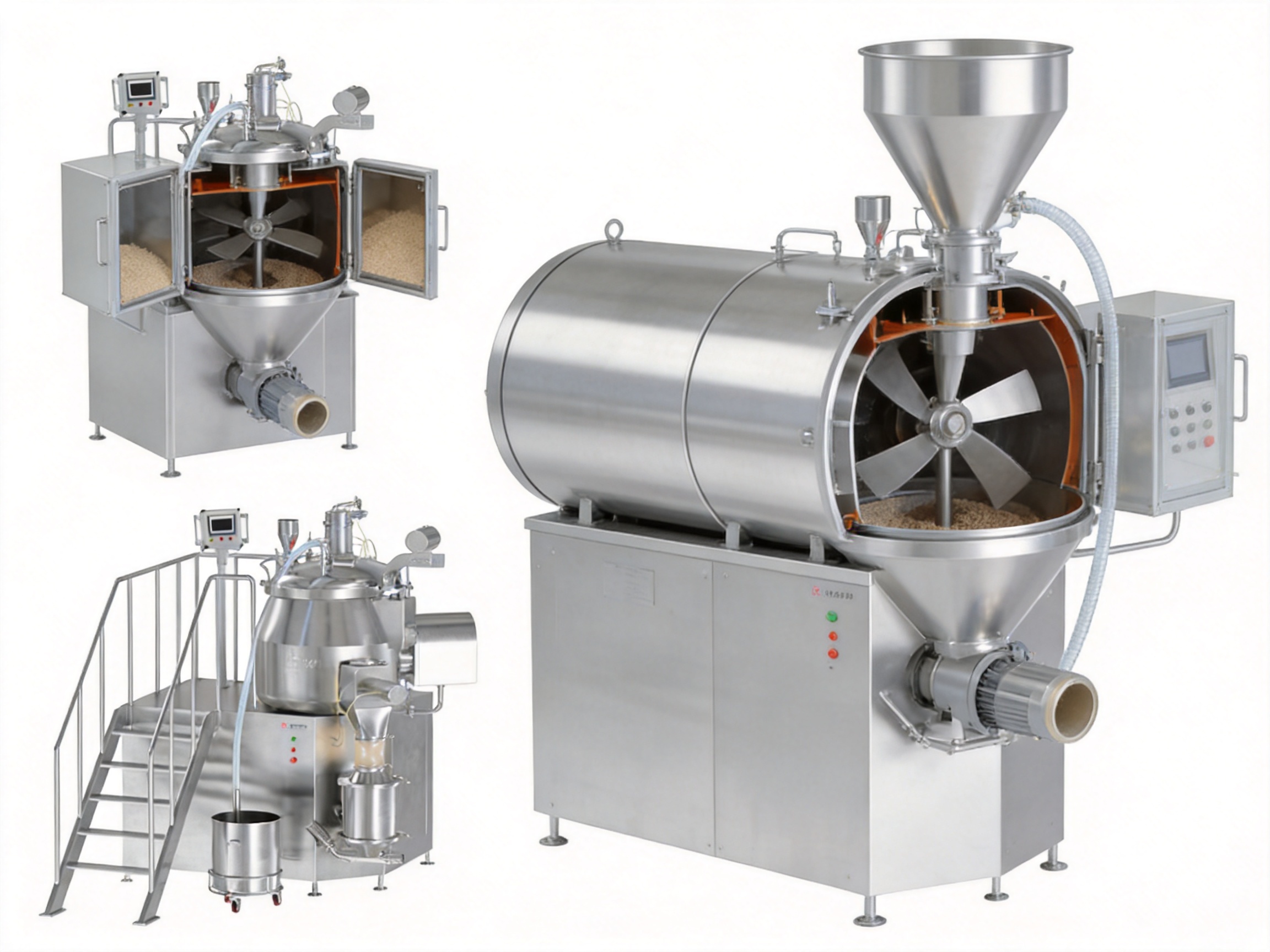
Different materials and production environments may require different vessel geometries. The GHL series can be supplied in horizontal cylindrical or conical configurations. A horizontal cylindrical design may be suitable for established production layouts and materials that benefit from broad circulation. A conical configuration can support specific discharge, mixing, or space utilization requirements.
Offering multiple configurations is an advantage over suppliers that provide only one standard vessel design. It allows the equipment to be matched more closely to the formulation, batch size, building constraints, and downstream transfer arrangement.
In some conventional production arrangements, mixing and wet sizing are performed in separate machines. This may require intermediate transfer of a sticky wet mass, increasing handling complexity and the risk of material loss. The GHL design integrates high-speed mixing and cutting within one processing chamber.
Integrated processing reduces the number of transfer points and can shorten the overall production route. It also enables the binder to be distributed and the wet mass to be refined within a controlled environment. Fewer unit operations may simplify process validation and operator training.
The cutting system operates across an adjustable range of 0 to 2,880 revolutions per minute. Variable speed allows the process to be adapted to materials with different wetting behavior and mechanical strength. It also supports development work in which granule size, density, and moisture distribution are studied across a range of conditions.
Speed adjustment should be combined with monitoring of torque, processing time, wet mass appearance, granule size, moisture, and product performance. These variables provide a more reliable basis for endpoint determination than time alone.
The GHL series requires compressed air at approximately 0.4 to 0.6 MPa. Compressed-air consumption varies by model, from approximately 0.2 to 2.0 cubic meters per hour according to the supplied specifications. Clearly defined utility requirements simplify plant design and support more predictable installation planning.
Before installation, users should verify electrical supply, compressed-air quality, ventilation, drainage, access clearance, lifting requirements, and connection points for upstream and downstream equipment. Utility conditions should be confirmed against the final equipment configuration and local standards.
The equipment is supplied with comprehensive safety features intended to support secure operation. Typical safety provisions for high-speed processing equipment may include interlocked covers, emergency stop devices, guarded moving parts, controlled access to the working chamber, and protection against operation under unsafe conditions.
Operators should receive documented training covering startup, shutdown, cleaning, inspection, emergency procedures, and safe handling of powders and binders. Safety performance depends not only on machine design but also on installation, risk assessment, maintenance, and operator discipline.
Changzhou Zhiyang Machinery Equipment Co., Ltd. focuses on powder processing and oral solid dosage equipment. Rather than treating the granulator as an isolated machine, the company develops solutions according to material characteristics, capacity requirements, process routes, and site conditions.
This approach is important because granulation performance cannot be evaluated solely by vessel volume or motor power. The material’s density, moisture sensitivity, particle size, binder response, and target granule properties all influence the final equipment configuration. A process-driven supplier can help users assess these factors before selecting a machine.
The company’s product scope includes laboratory equipment, mixing equipment, granulation equipment, drying equipment, coating equipment, auxiliary processing equipment, and transfer and conveying systems. This breadth supports the development of connected production routes rather than isolated equipment purchases.
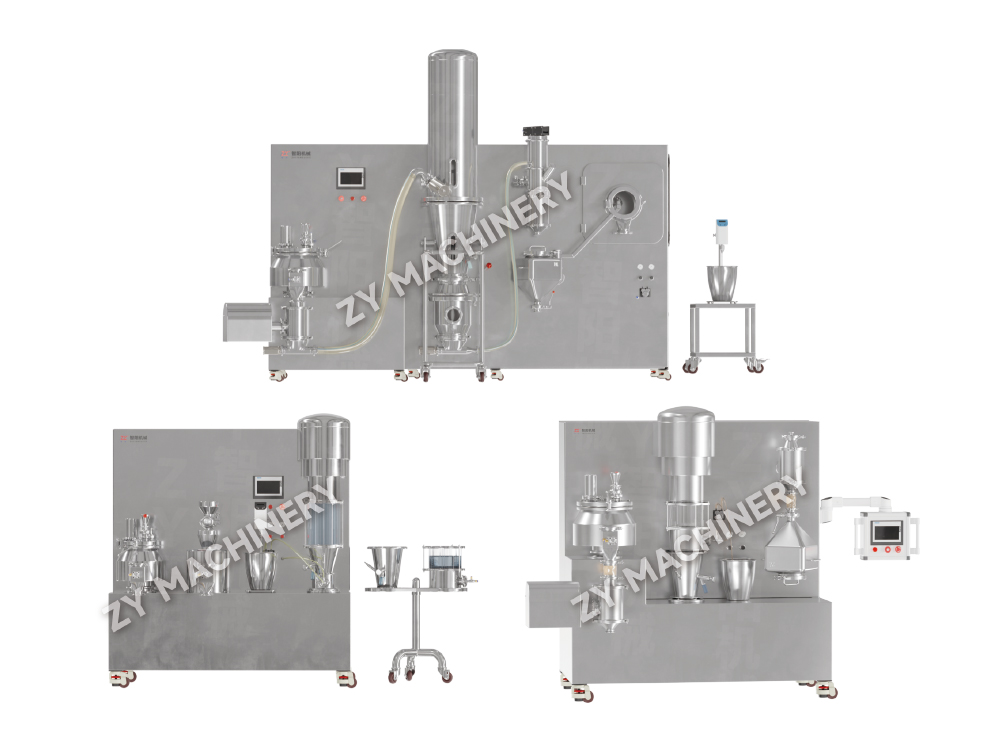
For example, a wet granulation line may include powder charging, high-speed granulation, wet transfer, fluid-bed drying, dry sizing, blending, tablet compression, and coating. A supplier with capabilities across several of these stages can help improve equipment compatibility, layout coordination, and control strategy.
The GHL model range extends from 20-liter laboratory-scale equipment to 1,200-liter production-scale units. This allows process knowledge developed during formulation trials or pilot work to be transferred to larger systems within the same general equipment family.
Scale-up is not simply a matter of multiplying batch size. Peripheral speed, fill ratio, specific energy, binder distribution, residence time, and heat generation may change as equipment size increases. A supplier with laboratory, pilot, and commercial equipment experience can assist in identifying the critical parameters that must remain comparable during scale-up.
Production sites differ in building height, floor loading, cleanroom classification, material flow, personnel flow, utility availability, and maintenance access. The company provides engineering implementation plans intended to address these practical requirements.
Customization may include vessel configuration, discharge arrangement, control system, material of construction, spray system, cleaning provisions, platform design, transfer connections, and integration with drying or conveying equipment. A customized solution can reduce the need for costly site modifications and improve the usability of the final production line.
The company has expanded its product portfolio, strengthened research and development capabilities, obtained quality system certification, and developed patented technologies according to the supplied company information. These activities demonstrate a continuing focus on product development, engineering reliability, and manufacturing improvement.
For pharmaceutical customers, quality system maturity is important because equipment must be documented, traceable, inspectable, and suitable for validation. Supplier documentation may include technical drawings, material certificates, operating manuals, spare-parts lists, testing records, and qualification support, depending on the project scope.
ZY Machinery has delivered equipment and engineering solutions to customers in multiple countries and regions. Overseas service capability can be valuable when projects involve international standards, remote technical support, export packaging, installation coordination, or multilingual documentation.
Successful international equipment delivery requires more than shipping a machine. It involves accurate specification confirmation, clear responsibility boundaries, appropriate factory testing, installation planning, commissioning support, spare-parts availability, and communication throughout the project. These factors contribute to lower implementation risk for international users.
The following table summarizes the principal specifications supplied for the GHL High-Speed Wet Granulator series. Capacity figures are based on a material density of 0.6 grams per cubic centimeter. Actual capacity may vary according to formulation density, fill level, binder properties, and process requirements.
| Item | Unit | GHL-20 | GHL-30 | GHL-50 | GHL-100 | GHL-150 | GHL-200 | GHL-250 | GHL-300 |
|---|---|---|---|---|---|---|---|---|---|
| Container volume | L | 20 | 30 | 50 | 100 | 150 | 200 | 250 | 300 |
| Capacity | kg/batch | 5 | 10 | 15 | 30 | 50 | 60 | 80 | 100 |
| Power | kW | 3.3 | 4.1 | 6.6 | 9 | 13.2 | 14 | 14 | 18 |
| Compressed-air consumption | m³/h | 0.2 | 0.3 | 0.6 | 0.9 | 0.9 | 1.1 | 1.1 | 1.1 |
| Machine weight | kg | 600 | 635 | 890 | 1200 | 1500 | 1800 | 2000 | 2500 |
| Item | Unit | GHL-400 | GHL-450 | GHL-500 | GHL-600 | GHL-800 | GHL-1000 | GHL-1200 |
|---|---|---|---|---|---|---|---|---|
| Container volume | L | 400 | 450 | 500 | 600 | 800 | 1000 | 1200 |
| Capacity | kg/batch | 120 | 150 | 180 | 200 | 250 | 350 | 400 |
| Power | kW | 22.5 | 22.5 | 26 | 35.5 | 44.5 | 56 | 70 |
| Compressed-air consumption | m³/h | 1.3 | 1.5 | 1.5 | 1.8 | 1.8 | 1.8 | 2.0 |
| Machine weight | kg | 3000 | 3500 | 3800 | 4000 | 4200 | 4500 | 5000 |
The cutting speed is listed as 0 to 2,880 revolutions per minute. Compressed-air pressure is listed as 0.4 to 0.6 MPa. Installation dimensions vary by model and should be confirmed from the final approved engineering drawing before construction or equipment positioning.
Proper installation planning is essential for achieving the expected performance of a high-speed granulator. The machine should be positioned to support logical material flow from powder charging through wet granulation, drying, sizing, blending, compression, and packaging.
Operators and maintenance personnel require sufficient access around the machine. Space should be provided for opening inspection points, removing components, cleaning internal surfaces, connecting utilities, and servicing motors or transmission systems. The final layout should also consider the movement of raw materials, finished granules, waste, cleaning equipment, and personnel.
Floor loading must be checked against the machine weight and the dynamic forces associated with high-speed operation. Larger GHL models may weigh several thousand kilograms before the addition of platforms, product, peripheral equipment, or transfer systems. The support structure should be evaluated by qualified engineering personnel.
Ventilation and dust-control measures should be considered where fine powders are handled. Although the machine is enclosed, powder charging, discharge, sampling, cleaning, and connection points may still require appropriate containment and extraction arrangements.
Integration with a dryer is particularly important. The discharge route should minimize the time that wet granules remain exposed before drying. Depending on the formulation, pneumatic, vacuum, gravity, or mechanical transfer may be selected. The transfer method should avoid excessive compaction, segregation, or granule breakage.
Pharmaceutical equipment must be cleaned in a manner that removes product residues, binder deposits, dust, and cleaning agents. The enclosed, no-dead-angle design of the GHL machine supports cleaning activities, but cleaning procedures must be developed for each formulation and production environment.
Cleaning validation should identify difficult-to-clean locations, establish acceptable residue limits, define sampling methods, and confirm repeatable cleaning performance. Product-contact surfaces should be inspected for scratches, deposits, corrosion, or other conditions that could affect hygiene or product quality.
Preventive maintenance should cover the main mixing mechanism, cutting system, seals, bearings, drive components, fasteners, electrical controls, safety interlocks, compressed-air connections, and discharge assembly. Maintenance frequency should be based on operating hours, batch count, load conditions, manufacturer recommendations, and site experience.
Early identification of wear is important because worn mixing or cutting components can change granule size, increase energy consumption, or create metal contamination risks. A documented spare-parts strategy can reduce unplanned downtime, especially for facilities operating multiple shifts.
Validation should demonstrate that the granulator consistently produces material meeting predefined quality attributes. Typical process variables may include dry mixing time, binder addition rate, binder concentration, impeller speed, cutting speed, wet mass temperature, torque, granulation time, and discharge timing.
Critical quality attributes may include granule size distribution, residual moisture, bulk density, flowability, compressibility, active ingredient uniformity, tablet hardness, friability, disintegration, and dissolution. The relationship between granulator settings and final product performance should be established through development studies and documented manufacturing procedures.
The primary application of the GHL series is the production of granules for tablets and capsules. It can be used for immediate-release formulations, selected modified-release systems, nutritional products, and other oral solid dosage applications where wet granulation is appropriate.
The machine may be applied to development batches, clinical supplies, scale-up studies, and commercial production. Its range of model sizes allows manufacturers to match batch capacity to the stage of product development.
Nutraceutical formulations often contain powders with different densities, particle sizes, and moisture sensitivities. Wet granulation can improve the handling and flow of vitamins, minerals, botanical extracts, and other nutritional ingredients. Binder selection and drying conditions must be evaluated carefully because some natural ingredients are sensitive to heat or prolonged moisture exposure.
In food applications, granulation can improve the flowability and dosing characteristics of powdered ingredients, flavor systems, and functional food components. Hygienic construction and cleaning accessibility are important when equipment is used for products with allergen, flavor, or color changeover requirements.
Chemical manufacturers may use wet granulation to control dust, improve transport properties, or create a more uniform particle form. The suitability of the machine depends on chemical compatibility, heat generation, solvent use, explosion-risk assessment, and the mechanical properties of the material.
Veterinary medicines, feed additives, and selected agricultural formulations may benefit from improved powder uniformity and flow. The enclosed processing route can help control exposure to potent or dusty ingredients, while the variable cutting speed supports formulation-specific granule development.
Traditional granulation lines may rely on multiple pieces of equipment for dry blending, wet massing, granule formation, and transfer. Such arrangements can be effective, but they may require more floor space, more operators, more transfer steps, and longer batch cycles.
The GHL series offers several practical advantages over these conventional arrangements:
• It combines high-speed mixing and granulation in one enclosed machine.
• It reduces the need to transfer a wet mass between separate processing units.
• It provides adjustable cutting speed for formulation-specific processing.
• It supports a broad range of batch sizes from laboratory to production scale.
• It is designed with an enclosed interior and minimized dead zones.
• It may reduce binder demand and subsequent drying time.
• It can be integrated with drying, conveying, and other solid dosage equipment.
• It is supported by a manufacturer with capabilities across several powder-processing stages.
Compared with low-speed mixing systems, the GHL machine can provide faster powder distribution and shorter wet processing times. Compared with simple high-shear equipment lacking process integration, its model range, vessel options, and engineering support can offer greater flexibility for complete production projects.
Nevertheless, equipment performance should always be evaluated against the specific formulation. A granulator that is effective for one powder system may not be optimal for another. Product trials, laboratory testing, and pilot-scale verification are recommended before final equipment selection.
Model selection should begin with the required batch size and material density. The stated capacities are calculated using a density of 0.6 grams per cubic centimeter, but actual powder densities may differ significantly. Users should consider both loose bulk density and the density of the wet mass when estimating working volume.
Important selection factors include:
• Required production capacity per batch.
• Number of batches required per shift or day.
• Minimum and maximum practical fill levels.
• Powder flowability and cohesiveness.
• Active ingredient concentration and uniformity requirements.
• Binder type, viscosity, and addition method.
• Target granule size distribution.
• Downstream dryer capacity.
• Available floor area and installation height.
• Electrical and compressed-air capacity.
• Cleaning and containment requirements.
• Required automation and data-recording functions.
• Materials of construction and surface-finish requirements.
A machine should not be selected solely on the basis of maximum nominal capacity. Operating too far below or above the effective working range may reduce mixing quality or process efficiency. The best model provides sufficient capacity while maintaining reliable circulation, binder distribution, cutting performance, and discharge behavior.
Before commercial production, users should conduct a structured development program. Initial laboratory trials can determine whether wet granulation is appropriate and identify a suitable binder system. These trials should assess wetting behavior, granule formation, drying response, and final powder performance.
Pilot trials can then be used to evaluate scale-up behavior. The process team should examine the influence of fill level, mixing speed, cutting speed, binder addition rate, and endpoint determination. Granule samples should be tested for moisture, size distribution, density, flow, and mechanical strength.
Scale-up should preserve the most important process relationships rather than simply extending batch time. Depending on the formulation, these relationships may include specific energy input, tip speed, mixing intensity, binder-to-solid ratio, or wet mass torque profile.
Once a robust operating window has been identified, the production procedure should define approved ranges for critical process parameters. Operators should be trained to recognize abnormal conditions such as excessive lumping, inadequate wetting, rising temperature, unusual motor load, or poor discharge behavior.
Efficient granulation can support sustainability by reducing material consumption, energy use, waste, and processing time. Potential binder savings reduce the demand for auxiliary raw materials. Shorter drying cycles may reduce thermal energy consumption. Fewer transfer operations can lower product losses and decrease the need for additional handling equipment.
Long-term sustainability also depends on equipment durability, maintainability, spare-parts availability, and the ability to adapt the machine to future products. A robust granulator that remains useful across several formulations can provide better lifecycle value than a narrowly specialized system that must be replaced when production requirements change.
Manufacturers should evaluate sustainability using measured plant data, including energy per batch, water used for cleaning, cleaning-agent consumption, rejected product, downtime, and equipment utilization. These measurements can identify further opportunities for improvement.
Changzhou Zhiyang Machinery Equipment Co., Ltd. was founded in 2010 and is based in Changzhou, China. The company specializes in the design, manufacture, and process integration of powder-processing and oral solid dosage equipment.
Its solutions serve pharmaceutical, biopharmaceutical, biotechnology, nutraceutical, veterinary, additives, and related industries. The company provides standalone machines, modular systems, and complete production lines for laboratory, pilot, and full-scale production environments.
Its engineering philosophy emphasizes practical process routes and implementation plans. This includes considering material behavior, capacity requirements, site conditions, equipment coordination, production consistency, reliability, and cost control. Such support is especially valuable for customers developing new production facilities or upgrading existing lines.
The company also emphasizes research and development, innovation, product quality, customer reputation, and overseas service. Its equipment has been supplied to customers in multiple countries and regions, supporting international projects that require coordinated manufacturing, delivery, installation, and technical assistance.
Reliable granulation depends on the interaction of mechanical design, process control, material selection, manufacturing quality, and after-sales service. The machine must maintain stable speed, effective sealing, accurate binder addition, consistent cutting action, and dependable discharge over repeated production cycles.
Manufacturing quality should include controlled welding, appropriate surface finishing, dimensional inspection, balanced rotating components, suitable sealing materials, and accurate assembly. Product-contact surfaces should be manufactured from materials appropriate for the application and finished in a way that supports cleaning and corrosion resistance.
Factory testing can verify basic operation, rotation direction, speed control, safety functions, utility connections, discharge action, and control-system performance. Where required, more extensive testing can be conducted with representative materials to confirm mixing and granulation behavior before shipment.
Documentation is another important part of reliability. Clear manuals, drawings, maintenance instructions, parts lists, and process recommendations help operators use the equipment correctly and enable maintenance teams to respond efficiently.
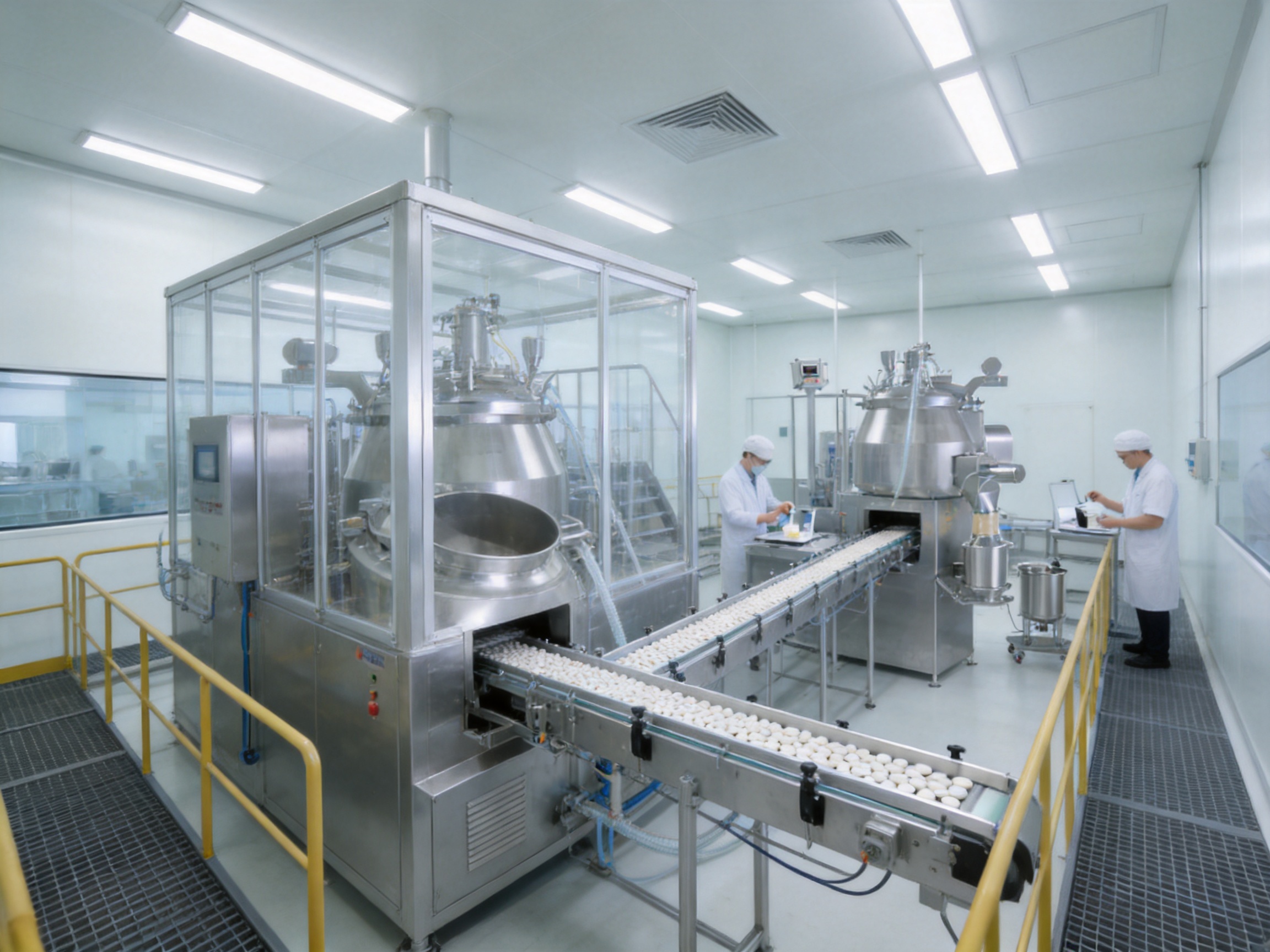
The machine mixes powdered materials with a liquid binder and forms uniform wet granules in a short, controlled process. The granules can then be dried and used for tablet compression, encapsulation, or other downstream applications.
The primary industry is pharmaceutical manufacturing, but the equipment can also be used in food, chemical, nutraceutical, veterinary, biotechnology, and additives production where wet granulation is appropriate.
The GHL series includes container volumes from 20 to 1,200 liters. Based on a material density of 0.6 grams per cubic centimeter, listed capacities range from approximately 5 to 400 kilograms per batch.
Dry mixing is typically completed in approximately two minutes, while wet granulation generally takes about one to four minutes. Actual time depends on the formulation, binder, fill level, speed settings, and required endpoint.
Yes. The listed cutting speed range is 0 to 2,880 revolutions per minute. Adjustable speed allows the process to be adapted to different material properties and granule-size requirements.
The supplied information indicates that binder usage may be reduced by up to 25 percent compared with traditional methods. The actual result depends on the formulation and must be confirmed through process trials.
An enclosed design helps control the processing environment, reduce product exposure, limit powder release, and support GMP-oriented production. It also helps reduce the risk of contamination and material accumulation.
Yes. The GHL machine can be integrated with suitable drying equipment, including fluid-bed dryers and other systems selected according to the formulation and production process.
Selection should consider batch size, material density, formulation behavior, fill ratio, binder properties, downstream dryer capacity, available utilities, installation space, cleaning requirements, and desired production output. Nominal capacity alone should not determine the final model.
Yes. The smaller models are suitable for development, laboratory, and pilot applications, while larger models support commercial-scale production. Using the same equipment family across scales can assist process transfer and scale-up.
Users should provide the formulation type, batch size, material density, target output, binder information, required granule characteristics, operating environment, utility conditions, cleaning requirements, automation expectations, and available installation space.
Users should establish operating procedures, cleaning instructions, preventive-maintenance schedules, safety training, process-validation protocols, spare-parts plans, and performance-monitoring methods. These activities help maintain stable operation throughout the machine’s service life.
The GHL High-Speed Wet Granulator provides an efficient approach to powder mixing and wet granulation for oral solid dosage and related manufacturing applications. Its high-speed mixing mechanism, integrated cutting system, adjustable operating parameters, enclosed interior, and broad model range make it suitable for laboratory development, pilot production, and large-scale manufacturing.
Compared with more fragmented conventional processing routes, the machine can reduce transfers, shorten processing time, improve granule uniformity, reduce segregation, and potentially lower binder and drying requirements. Its horizontal cylindrical and conical configurations provide additional flexibility for different materials and plant layouts.
The equipment’s value is strengthened by the manufacturing and engineering capabilities of Changzhou Zhiyang Machinery Equipment Co., Ltd. The company combines equipment production with process integration, product development, customized engineering, and international service. Its wider portfolio of mixing, granulation, drying, coating, conveying, and auxiliary systems allows customers to develop coordinated production lines rather than isolated machines.
For best results, the GHL granulator should be selected and configured through formulation trials, pilot testing, engineering review, and validation planning. When properly matched to the material and integrated into the complete process, it can support reliable granule quality, improved production efficiency, and cost-effective pharmaceutical manufacturing.
1. Changzhou Zhiyang Machinery Equipment Co., Ltd. Product information for the GHL High-Speed Wet Granulator.
2. Changzhou Zhiyang Machinery Equipment Co., Ltd. Technical specifications for GHL series container volumes, capacities, power ratings, utility requirements, and dimensions.
3. Good Manufacturing Practice principles for pharmaceutical production equipment design, cleaning, qualification, and validation.
4. General principles of pharmaceutical powder mixing, wet granulation, drying, particle-size control, and tablet manufacturing.
5. Process development practices for laboratory-to-production scale-up of oral solid dosage formulations.
Want to stay up to date?
Contact us via the email address below.
Don't worry about spam. We hate it too!
Mobile Client

Video Account
Phone:+86-15161130178
Tel:+86-519-88674267
Email:czzy188@163.com
Phone:+86-15161132798
Email:zy@zy-drying.com

WeChat ID

Copyright 2026 Changzhou Zhiyang Machinery Equipment Co., Ltd. All Rights Reserved  Oral Solid Dosage Equipment Manufacturer