 English
 Español
 русский
 中文简体

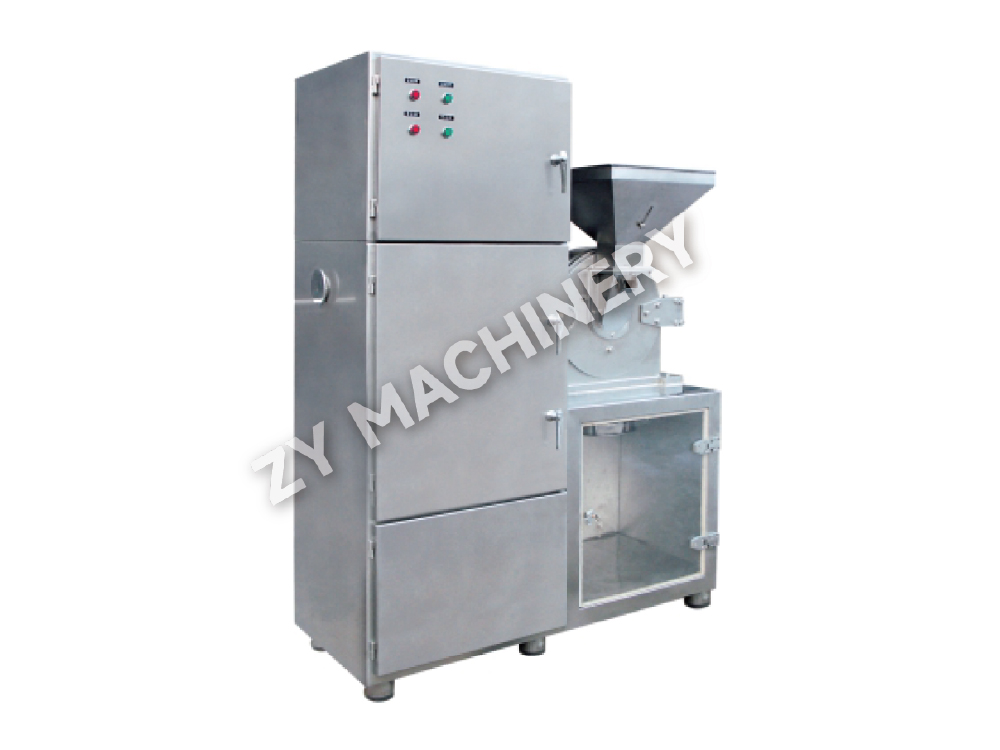
WF Dust-Free Crushing Machine
The WF dust-free crushing machine is used as a grinding process module in t.....

Content
The WF dust-free crushing machine is designed for pharmaceutical, food, nutraceutical, veterinary, additive, and related powder-processing applications that require controlled pulverizing, stable throughput, and reduced dust dispersion. As a grinding process module, it can be installed as an individual machine or integrated into a broader production line involving feeding, weighing, mixing, granulation, drying, conveying, and packaging.
Modern powder-processing facilities increasingly require more than a machine that simply reduces particle size. Production teams must also manage dust, temperature, material loss, operator exposure, cleaning requirements, product consistency, and the relationship between crushing performance and downstream processing. The WF dust-free crushing machine addresses these practical requirements through a fully enclosed operating structure, real-time temperature monitoring, optional cooling, interchangeable pulverizer heads, and a selection of blade materials.
Available configurations range from WF-10B to WF-100B, with processing capacities selected according to the material, required fineness, feed condition, and production scale. Based on test data using 60-mesh white sugar as a reference material, the equipment is designed for a broad capacity range from approximately 10 to 2500 kilograms per hour. The detailed model table provides the rated operating ranges for the principal machine sizes.
For manufacturers seeking reliable pharmaceutical powder processing equipment, the central value of this machine lies in its balanced design. It combines high-speed pulverizing, enclosed material handling, controlled discharge, temperature protection, and process integration in one compact module. These features help it compete effectively with conventional open or semi-open crushing systems, particularly where dust control and repeatable operation are important.
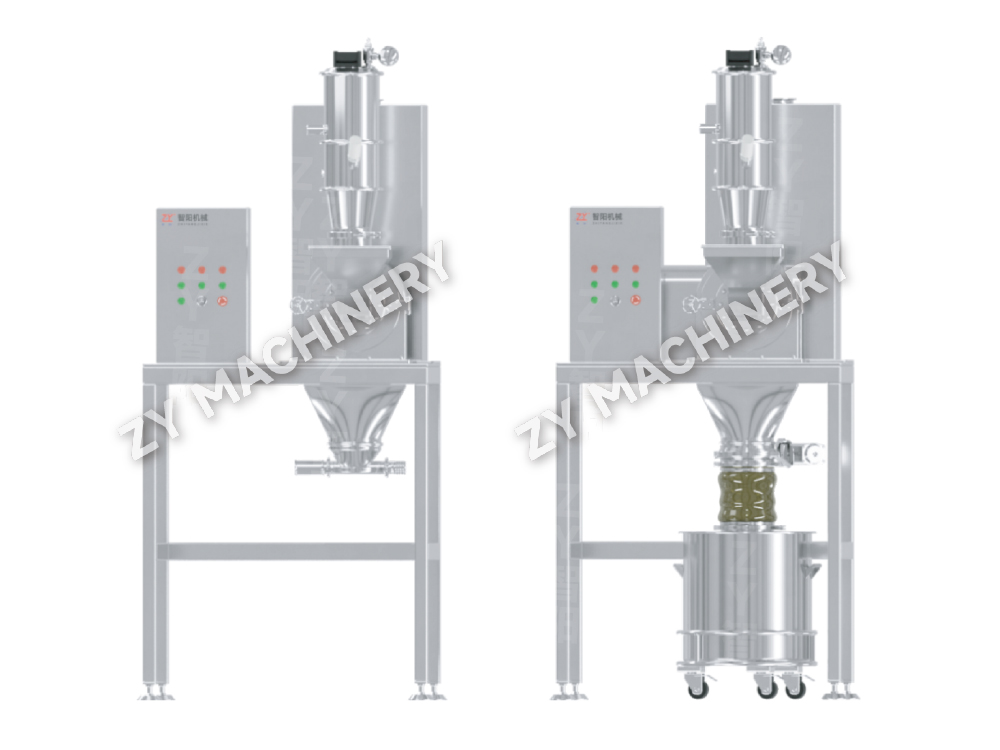
WF Dust-Free Crushing Machine
Crushing is often one of the first major transformation steps in a powder-production process. Raw materials may arrive as compacted pieces, granules, flakes, crystals, or irregular particles. Before blending, granulation, tableting, capsule filling, coating, or final formulation, the material may need to be reduced to a more uniform particle size.
Particle-size reduction influences several downstream characteristics. A more consistent powder can improve blend uniformity, support predictable flow, increase contact between components, and make subsequent processing easier to control. In food and pharmaceutical applications, a stable particle-size distribution can also contribute to a more uniform appearance, dissolution behavior, dispersion rate, and finished-product quality.
However, conventional crushing can introduce several challenges. Open transfer points may allow powder to escape into the working environment. Excessive heat may affect temperature-sensitive ingredients. Uneven feeding may result in fluctuating output. A poorly matched blade or pulverizer head may reduce efficiency, increase wear, or produce an inconsistent discharge.
The WF dust-free crushing machine is developed around these operating realities. Its grinding process occurs inside a fully enclosed structure. Material is fed into the pulverizing chamber, processed by a rotating cutting and impact system, and discharged at a controlled rate. Because the crushing zone and material pathway are enclosed, dust dispersion during normal handling is significantly reduced compared with open crushing arrangements.
Dust reduction is important for several reasons. It helps maintain a cleaner production environment, supports better housekeeping, reduces material loss, and can simplify the management of airborne particles. In pharmaceutical and food plants, these benefits may also support broader hygiene, containment, and occupational protection programs. The equipment does not eliminate the need for appropriate plant ventilation, filtration, cleaning, and safety procedures, but it provides a strong process-level foundation for controlling powder movement.
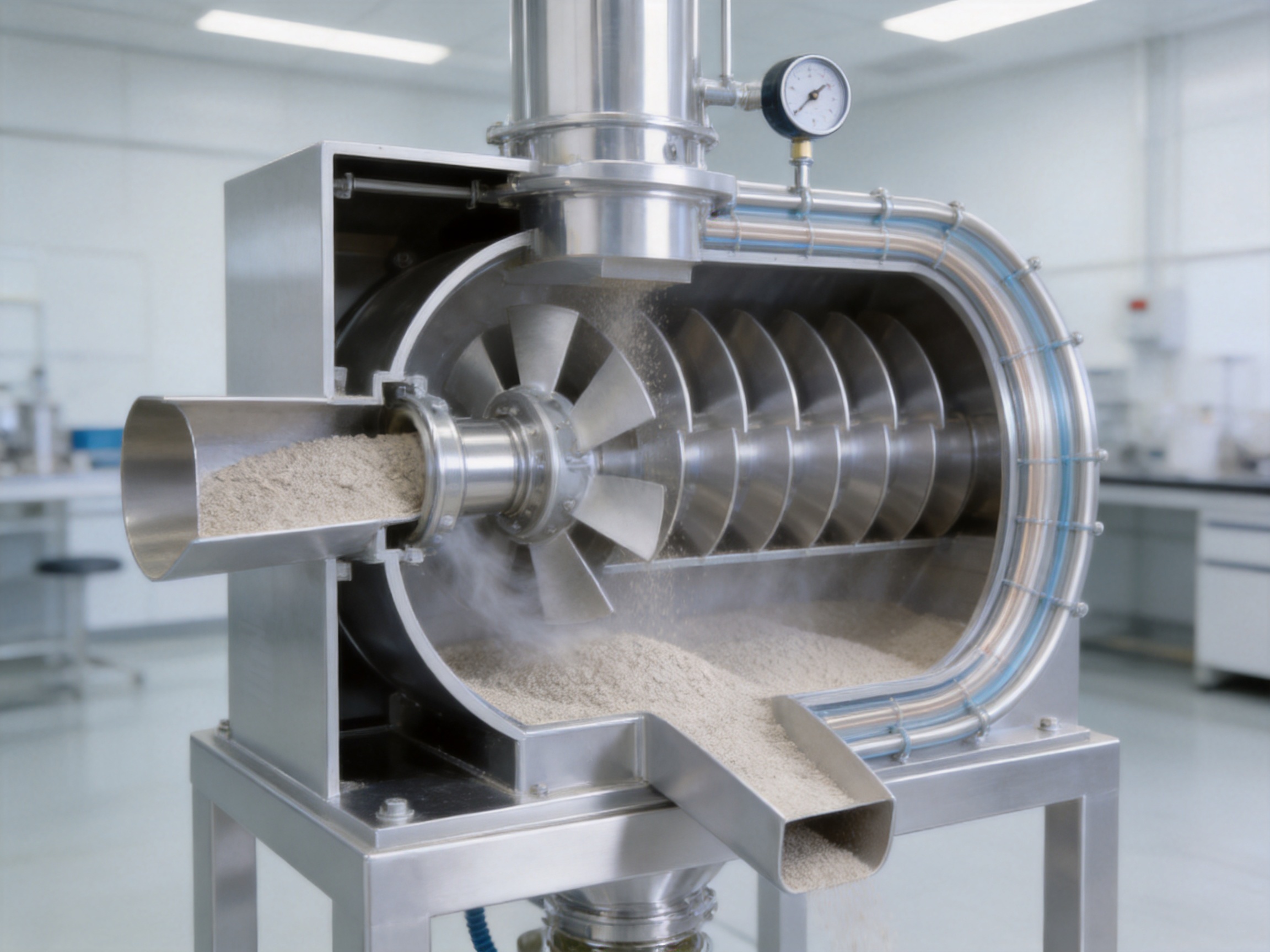
The WF machine uses a rotating cutting and impact system to process material inside a pulverizing chamber. Feed material enters the chamber in a controlled manner and is exposed to high-speed mechanical action. The combination of cutting, impact, and repeated movement through the crushing zone reduces the material to the desired discharge fineness.
The process begins with feeding. The feed material must be suitable for the selected model and must remain within the specified maximum feed size. Depending on the model, the listed feed fineness requirement is below 6 millimeters or below 10 millimeters. Proper upstream preparation is important because material that is too large, excessively hard, or irregularly shaped may affect capacity and mechanical loading.
Once inside the chamber, the material encounters the rotating blade and impact arrangement. The main shaft speed varies according to model. Smaller systems operate at higher speeds, while larger systems generally use lower rotational speeds to handle greater material loads. For example, the listed main-shaft speeds range from 8000 revolutions per minute for the WF-10B to 1400 revolutions per minute for the WF-100B.
During operation, the material is repeatedly acted on until it reaches the required fineness. The discharge range is listed as 20 to 120 mesh, allowing the equipment to serve applications that require either relatively coarse powder or finer output. Actual results depend on material properties, moisture, hardness, feed rate, blade selection, screen or internal configuration, and operating conditions.
The enclosed design helps keep the material within the intended process route. Instead of allowing powder to travel through an exposed crushing area, the WF machine maintains the grinding operation within a contained structure. This arrangement helps reduce dust escape and supports a more controlled connection to downstream weighing, conveying, collection, or packaging equipment.
Continuous operation is another important part of the working principle. The machine is designed to maintain stable operation at maximum capacity when correctly configured and supplied. A uniform discharge rate helps downstream equipment operate more consistently, particularly when the crusher is connected to a weighing system, mixer, granulator, dryer, or continuous conveying line.
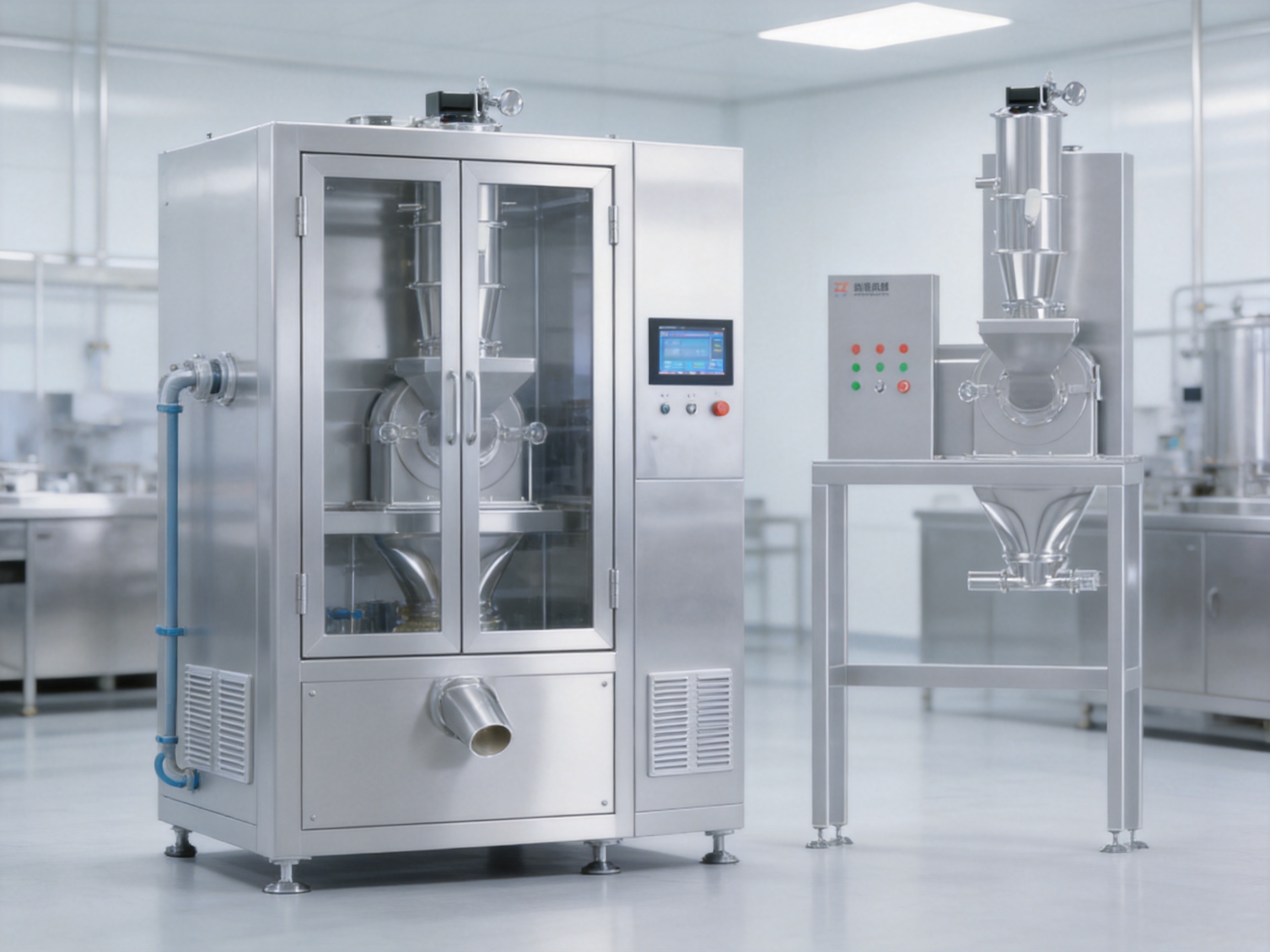
The most visible advantage of the WF dust-free crushing machine is its enclosed construction. Traditional open crushing equipment may expose the product to the surrounding environment during feeding, pulverizing, and discharge. This can increase airborne dust, product loss, cleaning work, and the possibility of cross-contamination between materials.
By enclosing the crushing pathway, the WF design helps keep powder movement under control. This is especially valuable when the material is fine, lightweight, dusty, or easily dispersed. The enclosed structure also makes it easier to connect the machine with other enclosed process equipment, reducing the number of open transfer points in a production line.
Compared with basic open mills, the equipment therefore provides a more suitable approach for facilities that prioritize controlled handling. It can support cleaner working areas and more predictable material recovery, while still providing the mechanical action required for effective pulverizing.
Many crushing machines are designed for a narrow range of production conditions. If a facility expands from pilot production to commercial manufacturing, it may need to replace the machine or use several unrelated units. The WF series offers seven principal pulverizer-head sizes, from WF-10B through WF-100B.
The smaller WF-10B is suitable for lower-throughput work, laboratory-related processing, development activities, and small production requirements. Larger models provide progressively higher capacity for pilot and full-scale manufacturing. The table lists capacities from 10 to 60 kilograms per hour for the WF-10B and up to 250 to 2000 kilograms per hour for the WF-100B. General test information indicates that the broader series can reach approximately 2500 kilograms per hour under suitable material and process conditions.
This range allows manufacturers to select equipment according to real production needs rather than applying a single oversized machine to every project. Correct sizing may improve energy utilization, process control, cleaning efficiency, and capital planning.
Heat management is a central concern in high-speed grinding. Mechanical energy is converted partly into heat, and temperature may rise when the feed rate is high, the material is difficult to process, or the operation continues for an extended period. Excessive temperature can affect heat-sensitive ingredients and may also place additional stress on bearings and other mechanical components.
The WF machine provides real-time grinding temperature monitoring. This allows operators to observe process conditions during production rather than relying only on post-process inspection. Temperature information can support decisions regarding feed rate, operating time, cooling, and maintenance.
Real-time monitoring is an advantage over simple crushers that provide no direct indication of temperature behavior. It contributes to better process visibility and helps production personnel respond before thermal conditions affect product quality or machine reliability.
For materials that are sensitive to heat, the machine can be equipped with an optional cooling water jacket. The cooling jacket provides an additional method of controlling the temperature around the processing area. When combined with temperature monitoring, it gives operators a more complete approach to thermal management.
The cooling option can be useful for ingredients that may soften, agglomerate, lose volatile components, change color, or experience other quality changes when exposed to excessive heat. The appropriate cooling arrangement depends on the material and site utilities, and process trials should be used to confirm the required water temperature, flow rate, and operating procedure.
This combination of monitoring and optional cooling makes the machine more adaptable than a basic high-speed crusher without thermal protection. It also supports a broader range of pharmaceutical, food, and nutraceutical materials.
Different materials place different demands on the crushing system. Some are brittle and easy to break, while others are fibrous, abrasive, sticky, or more resistant to cutting. A single blade configuration may not provide the best performance across all products.
The WF machine can be fitted with an alloy blade system selected according to material characteristics. This allows the working components to be matched more closely with the required cutting and impact conditions. Appropriate blade selection may improve processing efficiency, service life, discharge consistency, and protection against premature wear.
This configurable approach is an important advantage for contract manufacturers and multiproduct facilities. Instead of limiting the line to one narrow material family, the equipment can be evaluated and configured for different products while maintaining a common process platform.
Throughput alone does not define crusher performance. A machine that reaches a high peak capacity but delivers an unstable discharge can create difficulties for weighing, blending, granulation, and packaging. Fluctuating output may cause overfeeding or underfeeding of downstream equipment and make batch control more complicated.
The WF series is designed for continuous and stable operation at maximum capacity, with a uniform discharge rate. This feature supports smoother material transfer and can improve the overall coordination of an integrated process line. It is particularly useful when the crusher is connected to a weighing system or another automatic material-control device.
Uniform discharge also helps operators maintain more consistent operating conditions. When the flow is predictable, it is easier to establish standard operating procedures, monitor production performance, identify deviations, and calculate material balances.
The machine can be integrated with weighing systems for precise material control. This is valuable where the process requires accurate dosing, batch recording, or continuous monitoring of the quantity entering and leaving the crushing stage.
Integration may also include upstream feeders, downstream conveyors, collection units, intermediate bins, mixers, granulators, dryers, or packaging equipment. Because the WF machine is part of a wider equipment portfolio covering transfer and conveying, mixing, granulation, drying, coating, and auxiliary processing, it can be considered within a complete process-engineering plan rather than as an isolated piece of machinery.
Compared with purchasing unrelated machines from multiple suppliers, an integrated equipment approach can simplify process coordination, engineering communication, layout planning, and after-sales support. It may also help reduce interface problems between mechanical, electrical, and control systems.
The following table summarizes the principal published parameters for the WF dust-free crushing machine series. The actual operating capacity should be confirmed through material testing because reference capacity is influenced by feed properties, target fineness, moisture, bulk density, and process configuration.
| Item | Unit | WF-10B | WF-20B | WF-30B | WF-40B | WF-60B | WF-80B | WF-100B |
| Capacity | kg/h | 10–60 | 60–150 | 100–300 | 150–600 | 200–1200 | 200–1400 | 250–2000 |
| Feed Fineness | mm | <6 | <6 | <10 | <10 | <10 | <10 | <10 |
| Discharge Fineness | mesh | 20–120 | 20–120 | 20–120 | 20–120 | 20–120 | 20–120 | 20–120 |
| Crushing Motor Power | kW | 2.2 | 2.2 | 4 | 5.5 | 11 | 18.5 | 30 |
| Main-Shaft Speed | rpm | 8000 | 4500–5000 | 3800 | 3200 | 2400 | 1800 | 1400 |
| Dimensions | mm | 1000×500×1180 | 1280×600×1660 | 1280×600×1660 | 1450×700×1800 | 1950×850×2100 | 2000×850×2200 | 2200×950×2400 |
| Weight | kg | 180 | 280 | 340 | 450 | 600 | 2000 | 2400 |
The WF-10B and WF-20B are appropriate starting points for lower-volume applications. Their smaller dimensions and lower motor powers can be advantageous where available floor space, production quantity, or development-scale flexibility is important.
The WF-30B and WF-40B provide an intermediate solution for facilities requiring more capacity without moving directly to the largest equipment sizes. These models may be suitable for pilot production, medium-scale food processing, or pharmaceutical operations with moderate throughput.
The WF-60B, WF-80B, and WF-100B are intended for higher-capacity work. Their greater motor power, larger dimensions, and heavier construction support larger material flows. These models should be evaluated together with building access, structural loading, electrical supply, cooling utilities, conveying arrangements, and dust-control infrastructure.
Model selection should not be based only on the highest stated capacity. A machine operating far above the actual requirement may occupy unnecessary space and consume more energy than needed, while a machine selected below the required capacity may experience excessive loading and reduced productivity. A responsible selection process considers the desired output, feed size, target mesh, material behavior, operating schedule, cleaning method, and future expansion plans.
Pharmaceutical manufacturing requires careful control of material identity, particle size, cleanliness, and process repeatability. The WF machine can serve as a crushing or pulverizing module before blending, granulation, capsule filling, tablet production, or other dosage-form operations.
For active pharmaceutical ingredients, excipients, and intermediate materials, the enclosed structure helps reduce dust escape during processing. Temperature monitoring is also useful where an ingredient may be affected by heat. The selected model, blade material, and operating conditions should be confirmed through product-specific testing and validation procedures.
In oral solid dosage production, the crusher may be connected with weighing, mixing, wet granulation, drying, milling, and transfer equipment. A controlled powder stream can support more stable downstream operation and reduce the need for manual intervention at material-transfer points.
Food powders and nutraceutical ingredients often require reliable size reduction before blending or formulation. Sugar, dried ingredients, botanical materials, nutritional additives, and other food-related products may require different crushing conditions. The reference capacity testing with 60-mesh white sugar demonstrates the machine’s suitability for a representative food powder application, although every commercial material should be tested independently.
In food plants, dust control has both product and workplace benefits. Powder loss can be reduced, cleaning workloads can be better managed, and the processing area can remain more orderly. Enclosed operation also supports a more controlled path from raw material intake to finished powder handling.
The same processing principles can be applied to veterinary ingredients, feed additives, chemical additives, and other specialty powders. The main considerations are material hardness, abrasiveness, moisture, heat sensitivity, required fineness, and compatibility with product-contact surfaces.
The availability of stainless-steel pulverizer heads and optional alloy blades provides a practical foundation for handling varied materials. Final equipment selection should include a review of material-contact requirements, cleaning procedures, changeover frequency, and any regulatory or customer-specific standards.
The pulverizer heads are available in stainless steel from 10B to 100B. Stainless-steel construction is widely used in pharmaceutical and food processing because it supports cleanable surfaces, corrosion resistance, and compatibility with many common processing environments.
Material selection is only one part of hygienic equipment design. The overall installation should also consider accessibility, drainage, inspection, sealing, disassembly, cleaning agents, and the prevention of product accumulation. A suitable operating procedure should define cleaning frequency, inspection points, and product-changeover requirements.
For multiproduct facilities, cleaning and changeover efficiency can have a direct effect on production availability. A machine that is easy to access and inspect may help reduce downtime between batches. The final cleaning method must be selected according to the product, process classification, equipment configuration, and the customer’s quality system.
The fully enclosed design helps control the product pathway, but operators should still verify all seals, connections, collection points, and transfer interfaces before operation. Correct installation and regular inspection are essential to preserve dust-control performance over the service life of the equipment.
The equipment is manufactured by Changzhou Zhiyang Machinery Equipment Co., Ltd., a China-based engineering company specializing in powder processing and oral solid dosage equipment. Established in 2010, the company develops standalone machines, modular systems, and complete production lines for pharmaceutical, biopharmaceutical, biotechnology, nutraceutical, veterinary, additive, and related industries.
A major manufacturing strength is the company’s process-driven approach. Instead of treating the crusher as an isolated catalog product, the engineering team considers material characteristics, capacity requirements, site conditions, and the relationship between individual process units. This approach is important because a crusher’s performance is affected by the feeder, collection system, downstream equipment, and operating method.
The company’s product scope covers laboratory equipment, mixing equipment, granulation equipment, drying equipment, coating equipment, auxiliary processing equipment, and transfer and conveying systems. This broad range supports the development of coordinated process routes. For a customer planning an oral solid dosage line, the same engineering partner can evaluate powder preparation together with mixing, granulation, drying, coating, and conveying requirements.
Manufacturing quality depends on more than fabrication alone. It also involves equipment design, component selection, process testing, assembly control, inspection, documentation, and technical support. The company reports that it has strengthened its research and development capabilities, obtained quality system certification, developed patented technologies, and expanded overseas service capabilities.
These capabilities are relevant to the WF machine because powder processing performance is closely connected with engineering details. The choice of motor, bearing arrangement, blade material, internal clearances, sealing method, temperature-monitoring components, and discharge interface can all influence the final operating result.
Manufacturing experience across laboratory, pilot, and full-scale production also provides a basis for scalable project planning. A customer may begin with a small model for development work and later require a larger production machine. A manufacturer familiar with multiple scales can help maintain process logic while adapting capacity, layout, utilities, and automation.
The company’s international delivery experience and overseas partnerships further support project implementation for customers outside China. Export projects commonly require attention to documentation, electrical standards, installation conditions, spare parts, remote communication, and service response. Experience with these requirements can reduce the practical difficulty of commissioning equipment in different regions.
A powder crusher is most effective when its interfaces are planned correctly. The feed system must provide a stable material supply without overloading the chamber. The discharge connection must prevent blockages and maintain the desired flow. If a weighing system is used, its capacity and control logic must match the crusher’s output.
In a typical pharmaceutical process, the WF machine may be installed after raw-material dispensing and before mixing or granulation. In another arrangement, it may be used to process dried granules or intermediate material before final blending. In food production, it may be connected between raw-material preparation and a powder-blending or packaging stage.
Conveying equipment can be used to reduce manual handling and support a more closed material route. Depending on the material and site design, the line may include screw conveyors, vacuum transfer systems, intermediate bins, weighing hoppers, or other auxiliary equipment. The most appropriate arrangement depends on powder flowability, dust behavior, batch size, elevation changes, and cleaning requirements.
When integrating the crusher into an automated line, engineers should define the control relationship between feeding, temperature monitoring, motor operation, discharge, alarms, and emergency stopping. A stable system should prevent the crusher from receiving material when the downstream route is blocked and should provide suitable protection against abnormal temperature or mechanical conditions.
Process integration also improves traceability. If weighing data, batch records, equipment status, and operating conditions are collected consistently, manufacturers can better investigate deviations and demonstrate process control. The WF machine’s compatibility with weighing systems supports this objective.
Reliable operation begins with correct commissioning. Before production, the machine should be installed on a suitable foundation, connected to the required electrical supply, and checked for correct rotation, fastening, guarding, and material-flow direction. Temperature-monitoring devices and optional cooling connections should be verified before introducing product.
Operators should confirm that feed material meets the specified size range. Oversized material can increase load on the blade system and reduce capacity. Excessive moisture may cause sticking, agglomeration, or unstable discharge. Abrasive materials may require a different blade alloy or more frequent inspection.
Regular inspection should cover blades, fasteners, bearings, seals, connections, and the discharge route. Abnormal vibration, unusual noise, rising temperature, or a reduction in throughput may indicate wear, imbalance, blockage, or an unsuitable operating condition. Early detection can help prevent more extensive damage and unplanned downtime.
Cleaning and product changeover should follow a documented procedure. Operators should isolate power before opening or servicing the machine. Product-contact areas must be inspected after cleaning to confirm that no residual powder remains in corners, seals, discharge points, or connected conveying equipment.
Spare-parts planning is also important for production continuity. Blades, seals, bearings, and other wear-related components should be evaluated according to operating hours, material abrasiveness, production schedule, and service conditions. The correct replacement parts should be identified during project planning rather than only after a failure occurs.
The value of the WF dust-free crushing machine can be considered across several stages of production. At the input stage, the machine accepts prepared material within the applicable feed-size range. During pulverizing, the enclosed chamber, cutting and impact system, and selected blade material work together to reduce the product. During discharge, the stable flow supports material weighing, conveying, and downstream processing.
Reduced dust dispersion can lower the amount of powder released into the surrounding work area. This may help reduce cleaning time and improve the working environment. It may also improve material recovery, especially when processing valuable pharmaceutical or nutraceutical ingredients.
Temperature monitoring and optional cooling help protect product quality. The ability to observe temperature in real time gives operators a better understanding of process behavior and supports timely adjustment when necessary.
The model range provides flexibility for different production scales. A manufacturer can select a compact machine for small batches or a larger model for higher throughput. This makes the equipment relevant to research, pilot production, contract manufacturing, and full-scale operations.
Integration with weighing and conveying systems supports automation and repeatability. It can reduce manual transfers and create a more continuous, measurable process. When combined with the manufacturer’s mixing, granulation, drying, coating, and auxiliary equipment, the crusher can become part of a coordinated production solution rather than a standalone bottleneck.
Customers should begin by defining the material. Important information includes name, bulk density, moisture content, hardness, abrasiveness, temperature sensitivity, stickiness, and any special handling classification. If the product changes between batches, all major material types should be included in the evaluation.
The required feed size and discharge fineness should then be established. The WF series supports a listed discharge range of 20 to 120 mesh, but actual performance should be verified with representative samples. Capacity should be measured at the required fineness rather than assumed from a general catalog figure.
Testing should also examine temperature behavior. A trial can determine whether natural operation is sufficient or whether a cooling water jacket is advisable. For heat-sensitive materials, the test should include the expected feed rate, operating duration, and production sequence.
Blade selection should be discussed according to the product. An alloy blade system may be appropriate for a demanding or abrasive material, while another product may require a different cutting arrangement. The testing process should review both output quality and component wear.
Finally, the customer should define the intended process connection. The required feeder, weighing system, conveyor, collection unit, control interface, and cleaning method should be considered before finalizing the machine. This reduces the risk of selecting a crusher that performs well in isolation but does not fit the wider production line.
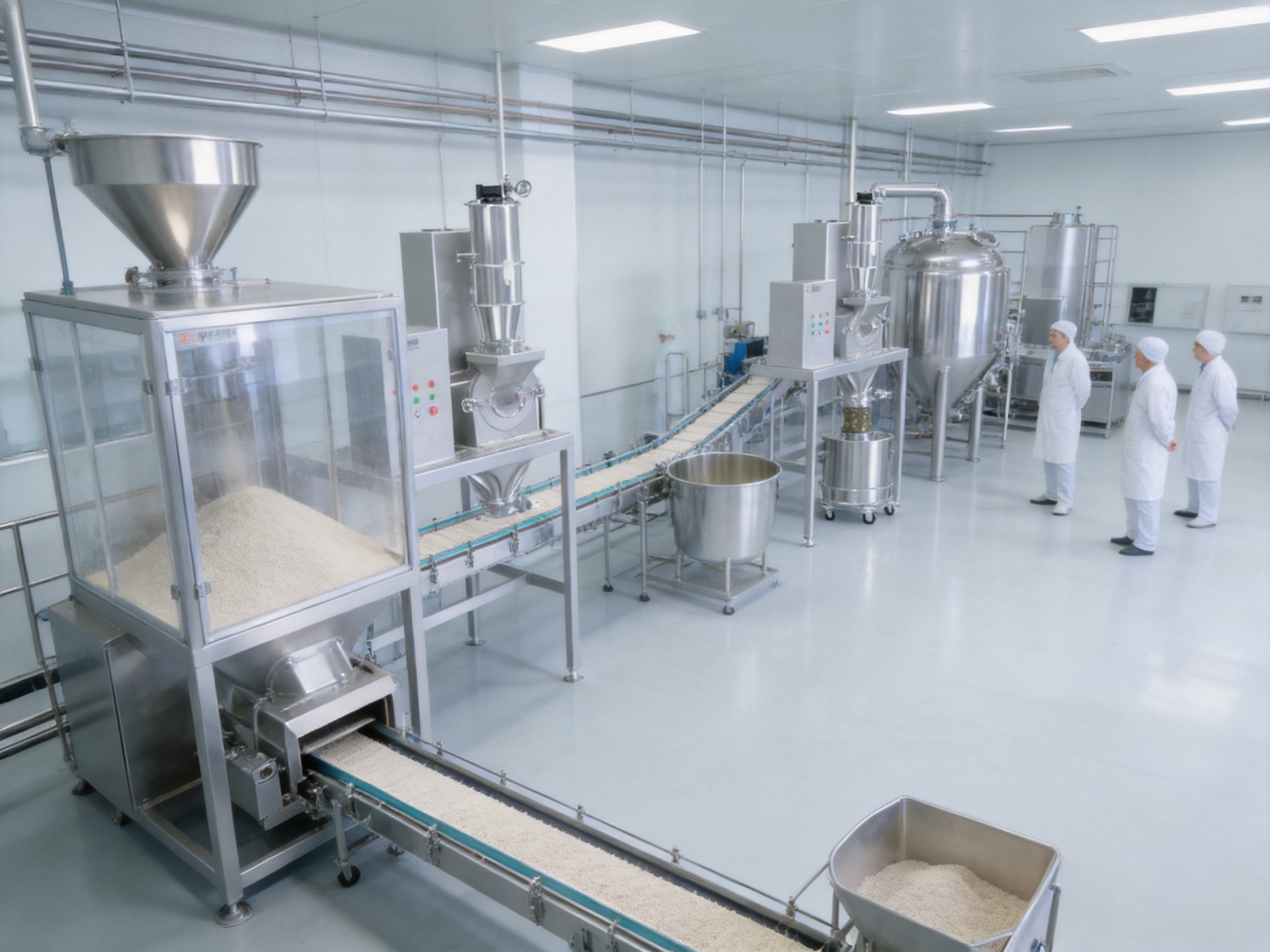
It is used for enclosed pulverizing and grinding of suitable pharmaceutical, food, nutraceutical, veterinary, additive, and related materials. It can function as an individual crushing unit or as a module within a larger powder-processing or oral solid dosage production line.
The grinding process takes place within a fully enclosed structure that limits the escape and dispersion of powder during feeding, pulverizing, and discharge. The term refers to dust-reduced, enclosed operation rather than an absolute guarantee that no airborne particles can exist under every condition. Proper installation, sealing, ventilation, filtration, cleaning, and operating procedures remain necessary.
The series covers approximately 10 to 2500 kilograms per hour under suitable conditions. The published model table lists rated ranges from 10–60 kilograms per hour for the WF-10B to 250–2000 kilograms per hour for the WF-100B. Actual output depends on material properties, feed size, target mesh, moisture, blade configuration, and operating conditions.
The listed discharge fineness range is 20 to 120 mesh. The final result depends on the material and machine configuration. Product testing is recommended to confirm the required particle-size distribution.
Yes. The machine includes real-time grinding temperature monitoring and can be equipped with an optional cooling water jacket. These features help operators observe and manage temperature during processing. Material-specific trials should be conducted to determine the most suitable operating conditions.
Yes. Pulverizer heads from WF-10B to WF-100B are available in stainless steel. The final material and surface requirements should be specified according to the product, cleaning procedure, and applicable production standards.
Yes. An alloy blade system can be selected according to material characteristics. Product hardness, abrasiveness, moisture, stickiness, and desired output should be considered when choosing the blade arrangement and material.
Yes. The equipment can be integrated with weighing systems for precise material control. It may also be connected with feeders, conveyors, collection units, mixers, granulators, dryers, and other process equipment.
The WF-10B and WF-20B are the smallest listed models and may be suitable for laboratory, development, pilot, or lower-volume production work. The correct choice depends on the required capacity, feed material, target fineness, and operating schedule.
The WF-60B, WF-80B, and WF-100B provide the higher capacity ranges in the series. Selection should also consider floor space, electrical power, structural loading, cooling requirements, material handling, and downstream equipment capacity.
Customers should provide the material name and properties, feed size, target fineness, required capacity, operating hours, temperature sensitivity, desired construction material, cleaning method, and details of upstream and downstream equipment. Representative samples are valuable for performance testing.
Yes. The machine can be used as part of a modular or complete powder-processing line. Its application may include weighing, conveying, mixing, granulation, drying, coating, and other auxiliary operations. Process integration should be designed according to the customer’s site conditions and production objectives.
The WF dust-free crushing machine provides a practical solution for enclosed powder pulverizing in pharmaceutical, food, nutraceutical, veterinary, and related industries. Its principal strengths include fully enclosed operation, a broad model range, stable discharge, real-time temperature monitoring, optional cooling, stainless-steel pulverizer heads, and material-specific alloy blade options.
Compared with conventional open or less configurable crushing equipment, it offers stronger support for dust reduction, process control, thermal management, and line integration. The equipment is suitable for applications where consistent material handling is as important as particle-size reduction itself.
Its value is further supported by the manufacturer’s process-engineering capability. With experience in laboratory, pilot, and full-scale equipment, as well as product coverage across mixing, granulation, drying, coating, conveying, and auxiliary systems, the company can evaluate the crusher within a complete production route.
For the best result, customers should select the model through material testing and process analysis rather than capacity comparison alone. When the feed characteristics, desired fineness, temperature limits, blade system, weighing arrangement, and downstream connections are properly matched, the WF machine can serve as a reliable and adaptable part of a modern powder-processing operation.
1. Product information for the WF dust-free crushing machine, including model specifications, operating principles, capacity ranges, and configuration options.
2. Technical information concerning pharmaceutical powder processing, oral solid dosage manufacturing, and enclosed material-handling systems.
3. General engineering principles for particle-size reduction, cutting and impact pulverization, powder flow, and temperature management.
4. General guidance on hygienic design, cleanable equipment surfaces, material-contact construction, and powder-processing safety.
5. Manufacturer information regarding powder-processing equipment, process integration, research and development, quality systems, and overseas equipment service.
Want to stay up to date?
Contact us via the email address below.
Don't worry about spam. We hate it too!
Mobile Client

Video Account
Phone:+86-15161130178
Tel:+86-519-88674267
Email:czzy188@163.com
Phone:+86-15161132798
Email:zy@zy-drying.com

WeChat ID

Copyright 2026 Changzhou Zhiyang Machinery Equipment Co., Ltd. All Rights Reserved  Oral Solid Dosage Equipment Manufacturer