 English
 Español
 русский
 中文简体
中文简体30B Dust-Collecting Crushing Machine
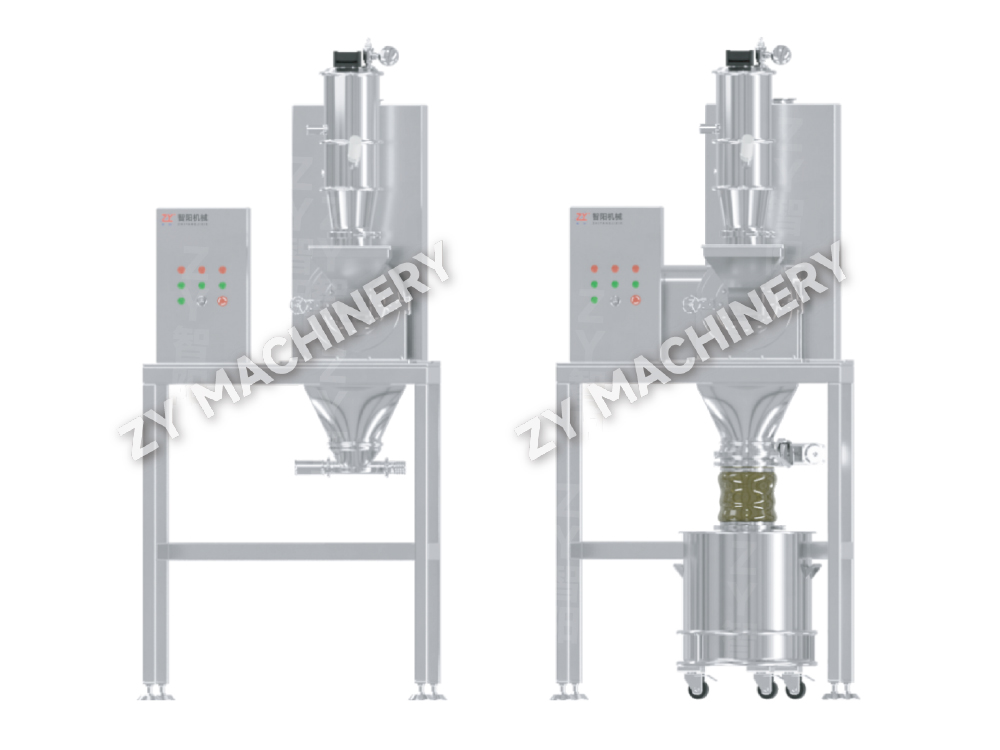
The 30B dust-collecting crushing machine is widely used for pulverizing var.....

Content
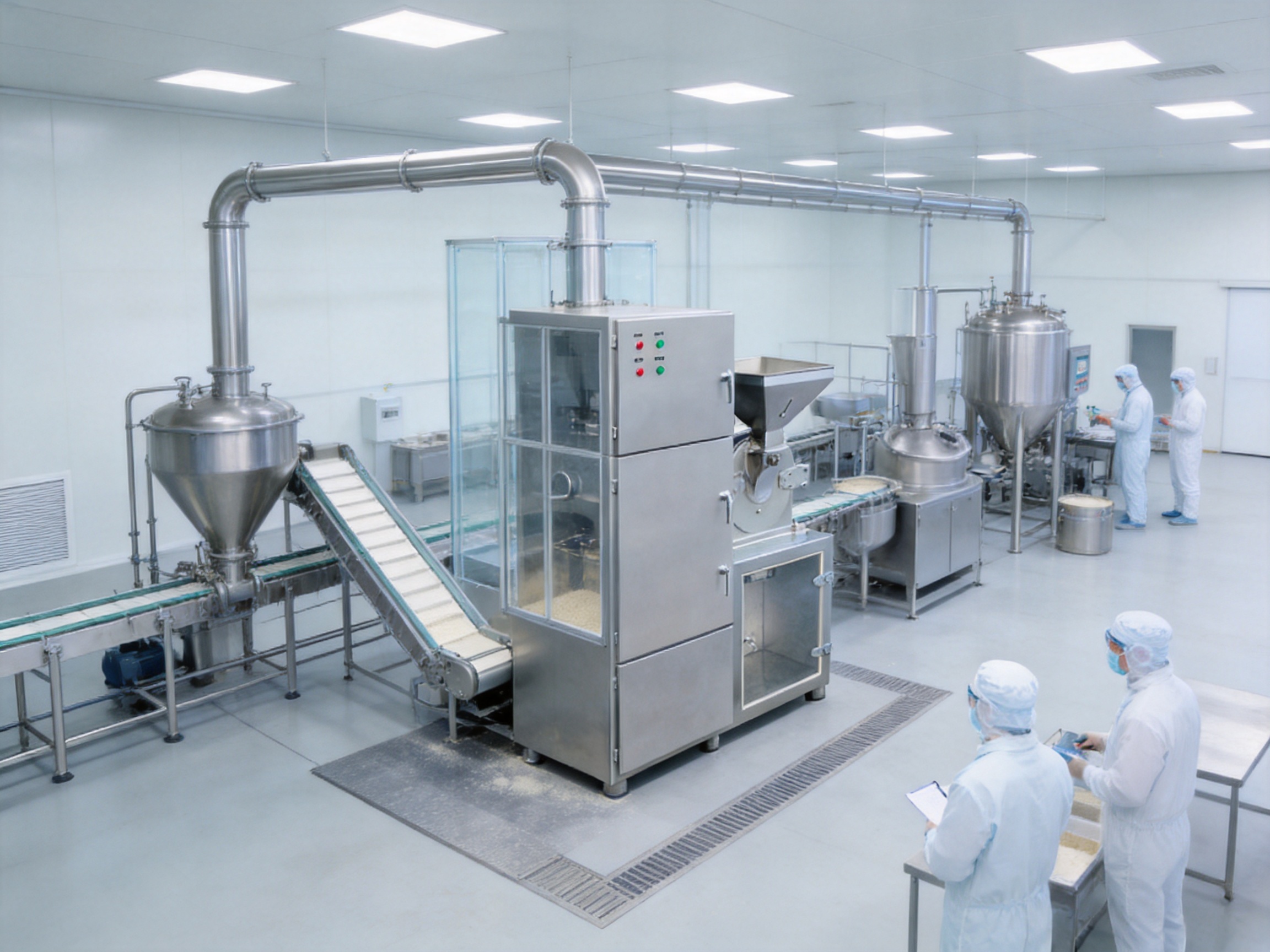
In pharmaceutical, food, and chemical manufacturing, size reduction is often one of the most important steps in preparing powders for mixing, granulation, drying, coating, encapsulation, tableting, and other downstream operations. A crusher must do more than reduce particle size. It must provide stable performance, protect the product from contamination, control airborne dust, support easy cleaning, and integrate smoothly with the wider production process. The 30B dust-collecting crushing machine is designed to meet these requirements in a compact and practical configuration.
The machine combines a feeding system, pulverizing chamber, and integrated dust-collection unit in one equipment package. Its primary function is to pulverize a broad range of dry materials while simultaneously capturing dust generated during operation. This integrated approach distinguishes the 30B from basic open crushing equipment, which may require separate dust-control arrangements and additional workplace protection measures.
With a rated capacity of 50 to 300 kilograms per hour, a main-shaft speed of 3,800 revolutions per minute, and a selectable crushed fineness of approximately 60 to 120 mesh, the machine can serve a variety of small- and medium-scale processing applications. Its stainless-steel material-contact surfaces, straightforward structure, and cleaning-friendly construction make it suitable for operations that place a high value on hygiene, process stability, and maintainability.
Manufactured by Changzhou Zhiyang Machinery Equipment Co., Ltd., the 30B is part of a wider equipment portfolio covering powder processing, oral solid dosage manufacturing, mixing, granulation, drying, coating, auxiliary processing, and conveying. This broader engineering background enables the crusher to be considered not merely as an isolated machine, but as a component in a complete and coordinated production route.
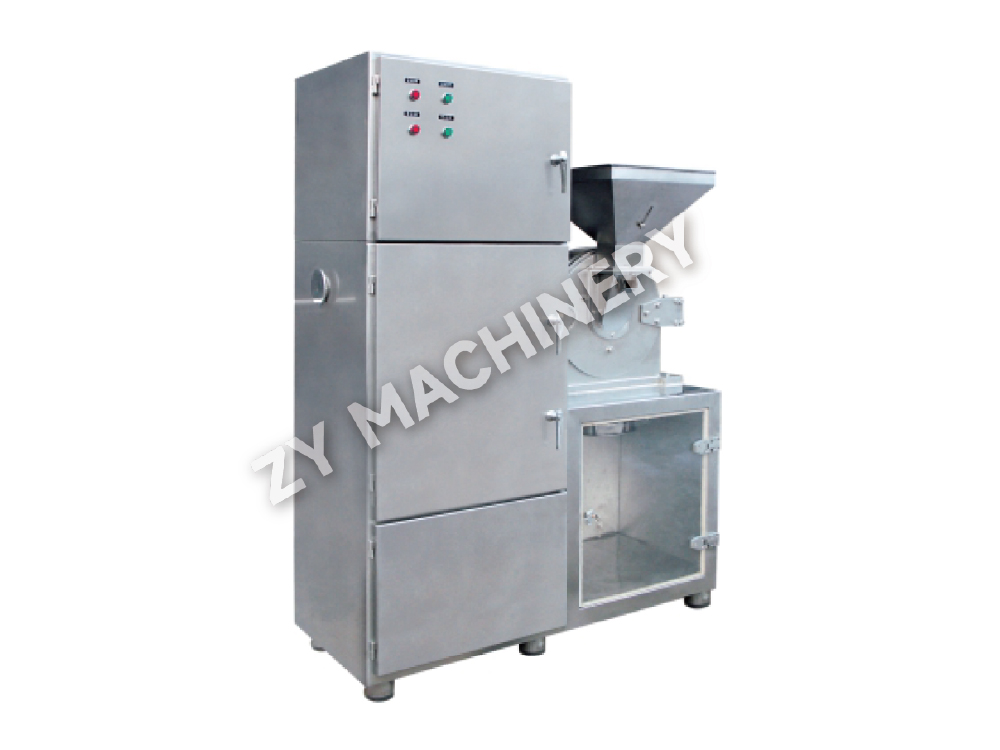
30B Dust-Collecting Crushing Machine
Raw materials rarely enter a production process in the exact physical condition required by the next operation. They may contain agglomerates, irregular particles, compacted sections, or oversized pieces formed during storage and transport. If these materials are introduced directly into a mixer, granulator, dryer, or tablet production line, they can reduce process consistency and create problems with feeding, blending, drying, and final product quality.
Controlled crushing helps establish a more uniform particle-size distribution. Smaller and more consistent particles generally provide better contact between ingredients, improve mixing behavior, and reduce the risk of localized concentration differences. In pharmaceutical applications, this can support more reliable formulation performance. In food and chemical applications, it can improve dissolution, dispersion, reaction behavior, and product appearance.
Crushing also influences the efficiency of subsequent processes. A material with an appropriate particle size may move more consistently through conveying systems, respond more predictably during wet or dry granulation, and dry more uniformly. When the material is intended for coating or further powder treatment, a controlled starting size can help improve process repeatability.
However, excessive crushing can be undesirable. Over-processing may create too many fines, increase heat generation, alter material properties, or make dust control more difficult. For this reason, a practical crushing machine must offer a balance between sufficient size reduction, production capacity, equipment reliability, and safe handling of airborne particles.
The 30B dust-collecting crushing machine addresses these requirements by combining high-speed pulverizing with a dust-capture system. The result is a compact solution for facilities that need effective dry-material size reduction without accepting the operational disadvantages of an open, poorly controlled crushing process.
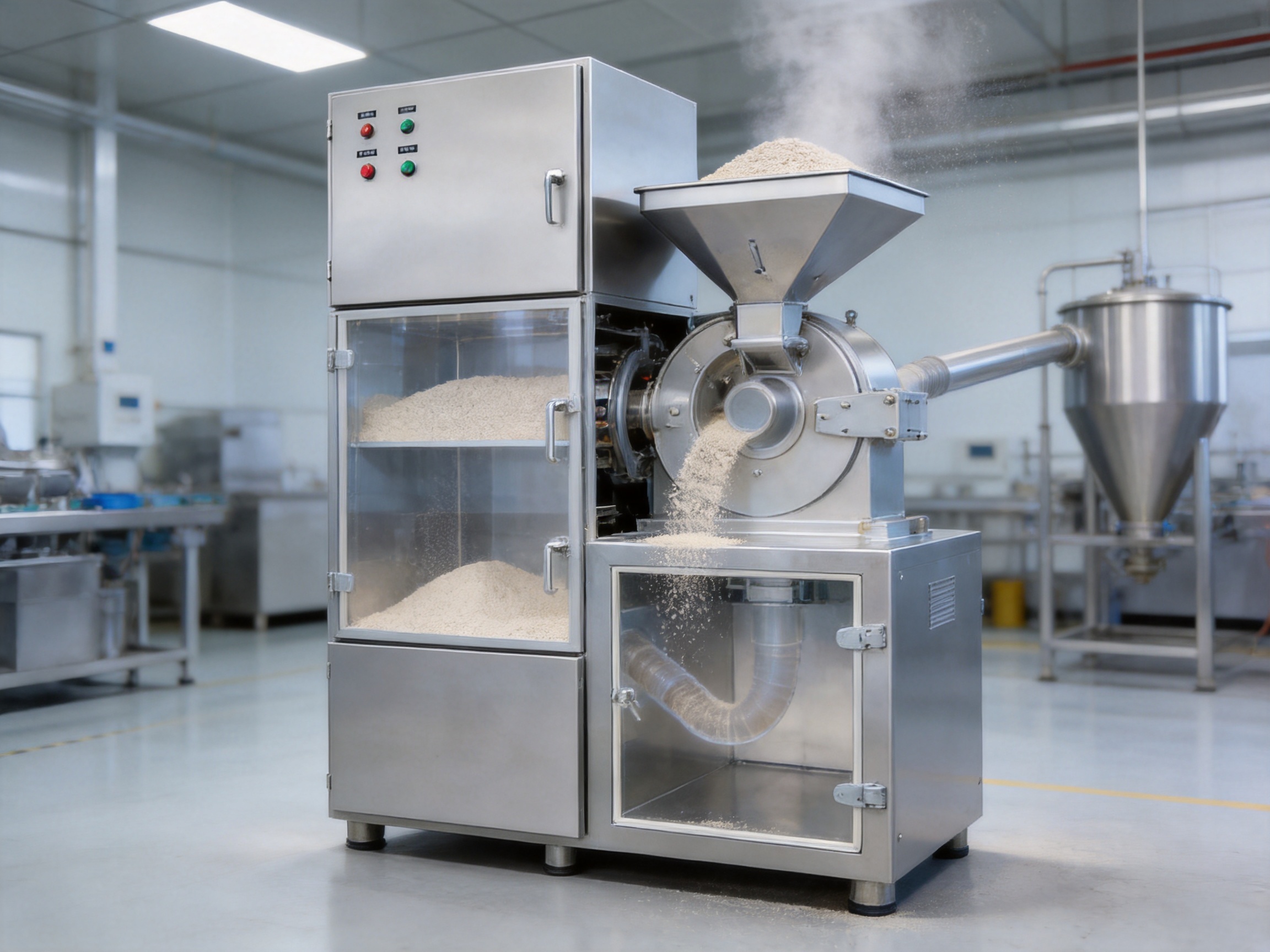
Material is introduced through the feeding system and transferred into the pulverizing chamber. Inside the chamber, the internal milling mechanism rotates at a high speed and applies mechanical force to the incoming material. Depending on the material properties and operating conditions, the product is reduced through impact, friction, and related milling actions.
As the material is pulverized, the resulting particles are directed toward the discharge and collection path. Dust produced during crushing is simultaneously drawn into the integrated dust-collection unit. This arrangement reduces the amount of fine material escaping into the surrounding workspace and helps maintain a cleaner operating environment.
The basic process can be summarized as follows:
1. Dry material is supplied to the feeding system.
2. The material enters the pulverizing chamber at a controlled rate.
3. The internal milling mechanism reduces the material to the required particle size.
4. Fine particles and process dust are directed toward the dust-collection unit.
5. The crushed product is collected for transfer to the next manufacturing stage.
The operating principle is simple, but the value of the design lies in the coordination of these functions. Feeding, pulverizing, and dust collection are not treated as unrelated operations. They are integrated into one machine, reducing the need for complicated external arrangements and helping operators manage the process more efficiently.
The machine is intended primarily for dry materials. Before production, users should evaluate the material’s moisture content, hardness, abrasiveness, heat sensitivity, fibrous characteristics, and tendency to agglomerate. These factors influence capacity, final fineness, cleaning requirements, and the most appropriate operating parameters.
The following table summarizes the principal parameters of the 30B dust-collecting crushing machine.
| Item | Unit | 30B Specification |
| Model | — | 30B |
| Capacity | kg/h | 50–300 |
| Rotating speed of main shaft | rpm | 3,800 |
| Feeding size | mesh | 8 |
| Crushed fineness | mesh | 60–120 |
| Crushing motor | kW | 5.5 |
| Dust-catching motor | kW | 1.5 |
| Overall dimensions | mm | 1,200 × 650 × 1,650 |
The stated capacity range of 50 to 300 kilograms per hour gives the machine flexibility for different production requirements. Actual output depends on the type of material, feed characteristics, moisture level, desired fineness, feeding rate, and operating conditions. Harder or more cohesive products may process at a lower rate than free-flowing, brittle materials.
A main-shaft speed of 3,800 rpm supports high-speed pulverizing for applications requiring fine particle reduction. The stated feeding size of 8 mesh indicates that the incoming material should be prepared within an appropriate size range before entering the pulverizing chamber. The output fineness range of 60 to 120 mesh provides options for producing relatively fine powders suitable for many pharmaceutical, food, and chemical processing applications.
The machine uses a 5.5-kilowatt motor for crushing and a separate 1.5-kilowatt motor for dust catching. This division of power supports the independent operation of the primary size-reduction and dust-management functions. The compact dimensions of 1,200 millimeters by 650 millimeters by 1,650 millimeters make the equipment suitable for facilities where floor space must be used efficiently.
One of the most significant advantages of the 30B is that dust collection is incorporated into the machine design. Conventional crushing arrangements may discharge fine powder directly into the production area or depend on a separate extraction system. Such arrangements can increase installation complexity, occupy additional space, and make dust management more dependent on the overall plant ventilation system.
The integrated dust-catching unit captures process dust as it is generated. This helps reduce visible dust, limit the spread of fine particles, and improve housekeeping around the equipment. A cleaner environment can lower the burden on operators and reduce the frequency of cleaning required in adjacent areas.
Dust control is particularly important in pharmaceutical and food production. Airborne powder may settle on nearby surfaces, create cross-contamination concerns, or complicate compliance with internal hygiene procedures. In chemical processing, dust may also affect worker comfort and create additional requirements for workplace safety management.
Although dust collection does not eliminate the need for proper ventilation, personal protective equipment, equipment inspection, and safe operating procedures, it provides an important first level of process control. It helps contain dust at the point where it is produced rather than allowing it to disperse throughout the room.
The dust-collection system also supports material recovery. Fine particles that would otherwise be lost to the surrounding environment can be directed into a controlled collection path. Depending on the product and process design, this may help improve material utilization and reduce waste.
Compared with an open crusher, the 30B therefore offers several practical benefits:
• Reduced airborne dust during normal operation.
• Cleaner working conditions around the equipment.
• Less dependence on a separate local extraction arrangement.
• Better control of fine powder generated during size reduction.
• Potentially improved recovery of valuable product particles.
• More convenient integration into a hygienic production area.
All parts that come into contact with materials are made of stainless steel. This is an important feature for pharmaceutical, food, nutraceutical, and other applications where cleanliness and material compatibility are essential.
Stainless-steel contact surfaces are resistant to corrosion and can be cleaned more easily than many ordinary carbon-steel surfaces. They also provide a durable and smooth material path for repeated production use. When the equipment is operated and maintained according to appropriate procedures, stainless-steel construction can help reduce the risk of product residue remaining on internal surfaces.
Hygienic design is not limited to the choice of metal. It also includes the accessibility of product-contact areas, the ability to dismantle or inspect relevant components, the avoidance of unnecessary collection points, and the suitability of the machine for the cleaning method used at the site. The 30B’s simple structure supports these requirements by making the main functional areas easier to understand and maintain.
For pharmaceutical operations, the use of stainless steel helps support manufacturing practices associated with cleanliness and GMP-oriented production. The equipment itself does not replace a company’s validation program, sanitation procedures, or quality system. Nevertheless, a cleanable stainless-steel product path provides a strong foundation for those procedures.
Food processors can also benefit from the corrosion resistance and cleanability of the construction. The same applies to chemical manufacturers processing dry powders where contact-surface durability and resistance to routine cleaning agents are important considerations.
Before purchasing, the user should confirm the exact stainless-steel grade, surface finish, gasket materials, and cleaning compatibility required for the intended product. Different applications may require different material specifications, particularly when handling corrosive, hygroscopic, abrasive, or highly sensitive substances.
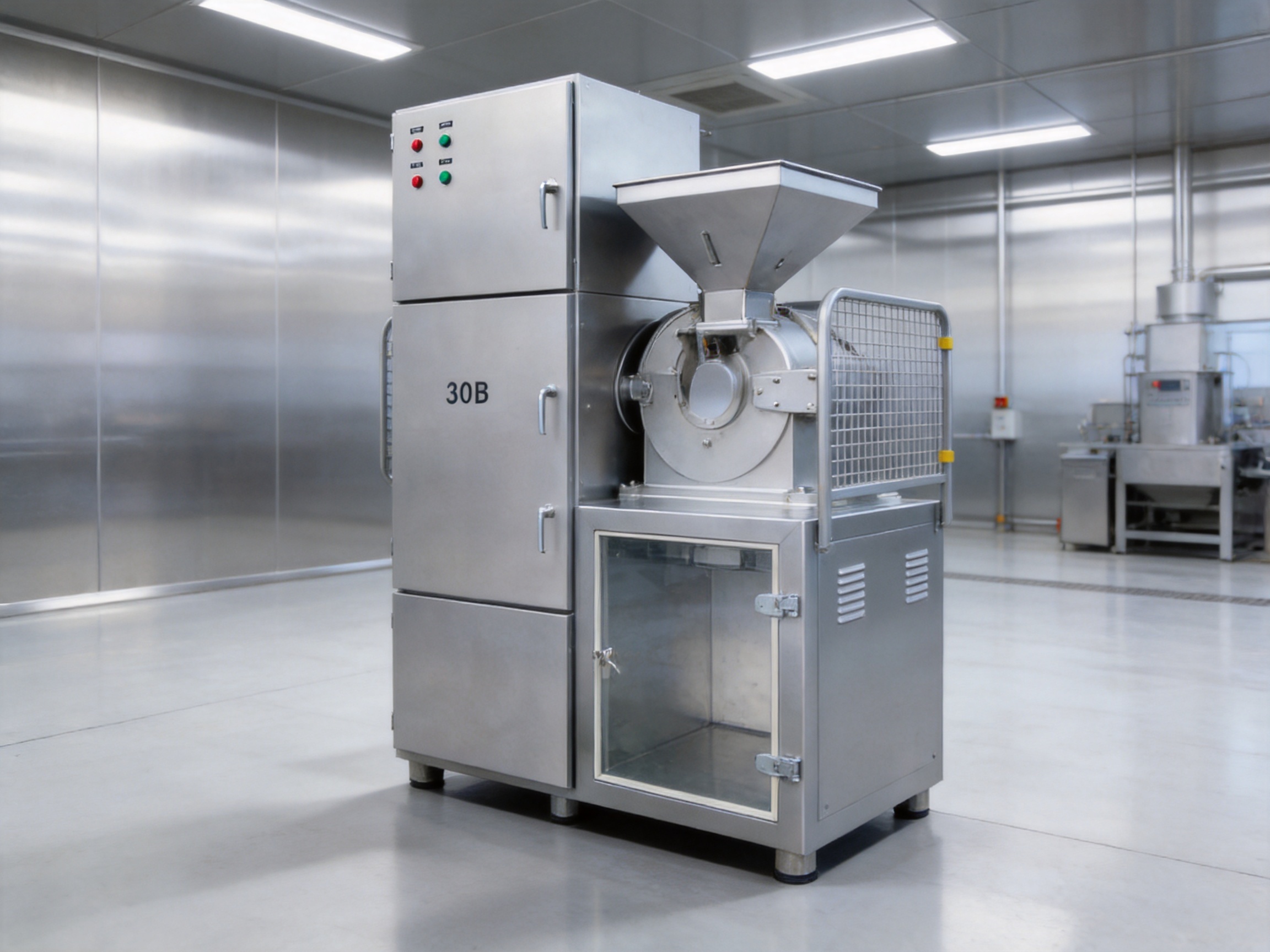
The 30B is built around three principal functional sections: feeding, pulverizing, and dust collection. This simple configuration makes the equipment relatively easy to understand for operators and maintenance personnel. A straightforward structure can reduce the time required for routine inspection and help identify the source of an operating issue more quickly.
Maintenance is essential for maintaining stable crushing performance. The milling mechanism, screens or related sizing components, seals, fasteners, collection areas, and motor assemblies should be checked regularly. Wear parts may require replacement depending on the abrasiveness and throughput of the processed material.
Easy cleaning is another practical advantage. In a multiproduct facility, cleaning between batches can be a major factor in production efficiency. Equipment that is difficult to access may require longer downtime and may create a greater risk of residual material remaining inside the system. The 30B’s simple construction and stainless-steel contact surfaces help support a more manageable cleaning routine.
Operators should establish documented procedures covering shutdown, isolation of power, disassembly where required, removal of residual powder, cleaning, drying, inspection, and reassembly. The exact procedure should be adapted to the product and the site’s quality and safety requirements.
A well-maintained crusher offers more than reliability. It also helps preserve the intended particle-size distribution. Worn or damaged milling components may change the crushing effect, reduce capacity, or increase the production of unwanted fines. Regular inspection therefore contributes to both equipment protection and product consistency.
The 30B provides several advantages over basic crushing machines that lack integrated dust management or hygienic construction. These advantages are especially relevant to customers seeking equipment for pharmaceutical, food, chemical, nutraceutical, and related powder-processing operations.
A basic crusher may perform size reduction adequately but leave dust control to external ventilation or manual housekeeping. The 30B combines both functions, reducing the number of separate systems required around the machine. This can simplify the production layout and provide more direct control over airborne particles.
Stainless-steel material-contact surfaces and a cleaning-friendly structure make the machine more appropriate for applications where sanitation and product protection are priorities. Compared with equipment using ordinary painted steel in the product path, the 30B offers a more suitable foundation for hygienic processing.
The stated crushed fineness range of 60 to 120 mesh allows users to select a target suitable for the downstream process. This flexibility can be valuable when one machine is used for several related products or when a production line requires different powder characteristics for different formulations.
With dimensions of approximately 1,200 × 650 × 1,650 millimeters, the machine can fit into many existing production rooms without requiring an unusually large installation area. Its compact arrangement may also reduce the length of transfer routes between crushing and subsequent processing steps.
The 50 to 300 kilogram-per-hour capacity range makes the machine suitable for laboratory-supporting production, pilot-scale work, and many small- to medium-scale manufacturing applications. It can be considered where a very large industrial crusher would be excessive but a small laboratory mill would not provide sufficient throughput.
Because the manufacturer also supplies mixing, granulation, drying, coating, conveying, and auxiliary processing equipment, the 30B can be evaluated as part of a coordinated process system. This may reduce the challenge of connecting equipment from unrelated suppliers with different design philosophies and operating requirements.
Pharmaceutical production frequently requires precise control over powder characteristics. Active ingredients, excipients, premixes, granules, and intermediate materials may need to be reduced to a defined size before mixing, granulation, drying, or compression.
The 30B can be used for suitable dry pharmaceutical materials where controlled pulverization is required. For example, it may support the preparation of excipients, the reduction of dry agglomerates, the processing of intermediate powders, or the conditioning of materials before a blending operation. The appropriate application depends on the material’s physical and chemical properties and the validation requirements of the user.
Uniform powder preparation can help improve blend consistency. If one ingredient contains oversized particles while another is already fine, the blend may segregate or require longer mixing. Crushing materials to a more compatible size range can contribute to more predictable mixing behavior.
The machine may also be used upstream of granulation. In wet or dry granulation processes, the initial particle size can influence liquid distribution, densification, granule formation, and drying behavior. A suitable feed condition can improve the stability of the overall process, although the exact relationship must be confirmed through product development and process trials.
Pharmaceutical use requires strict attention to product changeover, cleaning validation, dust containment, and documentation. Users should assess whether the machine is appropriate for potent, toxic, sterile, sensitizing, explosive, or otherwise hazardous materials. Additional containment, filtration, explosion protection, or specialized construction may be required for such products.
In food processing, dry ingredients may need to be crushed before blending, dissolution, dispersion, or further formulation. The 30B can support the preparation of suitable dry materials such as powders, dried ingredients, premixes, and other products compatible with the machine’s design.
Particle-size reduction can improve the uniformity of a food premix and help ingredients disperse more evenly. It may also support faster hydration or dissolution when the material is later combined with a liquid. In nutraceutical production, the machine may assist with the preparation of dry ingredients before mixing, encapsulation, granulation, or tableting.
Food and nutraceutical applications place particular emphasis on avoiding contamination and preserving product identity. Stainless-steel product-contact surfaces, effective cleaning routines, and integrated dust collection can help support these objectives.
The machine should not be used automatically for every food material. Sticky, oily, highly fibrous, or moisture-sensitive products may require a different crushing approach or additional conditioning. Testing is recommended to confirm that the desired fineness can be achieved without excessive heat, clogging, or product degradation.
Chemical manufacturers process a wide variety of dry materials with different hardness, brittleness, moisture sensitivity, and abrasiveness. A crusher may be needed to break down agglomerated powder, prepare a feed for blending, improve reaction uniformity, or establish a controlled particle size for packaging.
The 30B’s high-speed pulverizing mechanism and dust-collection system can be useful for compatible dry chemical materials. The stainless-steel product path may provide corrosion-resistance benefits, but the exact compatibility must always be evaluated against the chemical composition, concentration, temperature, and cleaning agents used.
Dust control is especially important in chemical facilities because airborne dust can affect product quality, worker exposure, equipment cleanliness, and environmental control. The integrated collection system provides a practical method for containing dust at the crushing point, while the site must still implement appropriate ventilation, monitoring, grounding, and safety controls.
For abrasive materials, wear evaluation is necessary. Excessive abrasion can reduce component life and change the final particle size. A material trial can help determine whether the standard configuration is appropriate or whether special wear-resistant components should be considered.
The performance of a processing machine depends not only on its published specifications but also on the engineering and manufacturing practices used to build it. Changzhou Zhiyang Machinery Equipment Co., Ltd. specializes in powder processing and oral solid dosage equipment and has developed a product range serving laboratory, pilot, and full-scale production environments.
The company was founded in 2010 and is based in Changzhou, China. Its work covers standalone machines, modular systems, and complete production lines for pharmaceutical, biopharmaceutical, biotechnology, nutraceutical, veterinary, additives, food, chemical, and related industries.
This product breadth is valuable because crushing rarely exists as an isolated operation. A customer may need to move from raw-material preparation to mixing, granulation, drying, coating, conveying, and packaging. A manufacturer familiar with the complete powder-processing route can better understand how the crusher should perform within the wider process.
ZY Machinery describes its approach as process-driven. Instead of supplying equipment based only on a standard catalog selection, the company considers material characteristics, capacity requirements, and site conditions when developing practical equipment and engineering plans. This approach can help customers select a suitable machine configuration and avoid mismatches between equipment capability and actual production demands.
The company has expanded its product portfolio, strengthened research and development capabilities, obtained quality system certification, developed patented technologies, and built overseas service capabilities. These activities indicate an emphasis on continuous improvement and long-term equipment support rather than one-time equipment delivery alone.
For the 30B, manufacturing strength can be reflected in several areas:
• Application knowledge in powder processing and oral solid dosage production.
• Experience supplying equipment for laboratory, pilot, and production-scale environments.
• Ability to coordinate crushing equipment with mixing, granulation, drying, coating, and conveying systems.
• Focus on stainless-steel construction and cleanable product-contact surfaces.
• Process-oriented selection based on material and capacity requirements.
• Research and development activity supporting product improvement.
• Overseas service capabilities for international customers.
These strengths are particularly useful when the customer requires more than a machine delivered without process guidance. Equipment selection, installation, commissioning, operator training, spare-parts planning, and after-sales response all influence the long-term value of a powder-processing system.
A crusher performs best when it is designed into the complete process rather than installed as an independent unit without regard to upstream and downstream conditions. The feeding system must receive material at a stable rate, and the discharge route must prevent bottlenecks after pulverization. Dust collection must also be considered in relation to room ventilation, product recovery, and cleaning procedures.
ZY Machinery’s wider scope in auxiliary processing and transfer and conveying equipment provides an opportunity to coordinate these functions. A customer may require a feeding hopper, screw conveyor, pneumatic transfer arrangement, intermediate storage vessel, mixer, granulator, dryer, or coating system. Coordinated engineering can help ensure that connection points, capacities, material-contact surfaces, and control requirements are compatible.
Process integration can also improve operational consistency. If the crusher produces material faster than the next machine can accept it, the line may experience accumulation or frequent stops. Conversely, if the crusher cannot supply enough material, downstream equipment may operate below its designed capacity. Matching the equipment capacities helps improve overall production efficiency.
Site conditions are equally important. Available floor space, ceiling height, electrical supply, ventilation, access for maintenance, material flow, operator movement, and cleaning routes should be evaluated before installation. The compact footprint of the 30B may simplify placement, but the machine still requires sufficient clearance for inspection, disassembly, cleaning, and safe operation.
For international customers, engineering support can also include layout planning, documentation, installation guidance, commissioning assistance, and spare-parts recommendations. These services can reduce the risks associated with installing equipment in a facility where the local team may not be familiar with the machine.
Pharmaceutical and regulated manufacturing environments require a complete quality system. A crusher’s stainless-steel design and cleanable structure support hygienic production, but they are only part of the overall compliance framework.
Users should define the required quality attributes before ordering. These may include surface finish, stainless-steel grade, weld quality, sealing arrangement, cleanability, documentation, calibration requirements, and inspection records. The machine should be assessed against the user’s applicable GMP procedures and validation strategy.
Installation qualification may confirm that the equipment has been installed according to approved specifications. Operational qualification may evaluate whether the machine operates as intended across defined conditions. Performance qualification may examine whether it consistently produces the required output when processing the intended material.
Important performance checks can include feed rate, output capacity, crushed fineness, dust-collection effectiveness, operating noise, temperature rise, cleaning effectiveness, and repeatability between batches. The appropriate testing plan depends on the application and the customer’s quality requirements.
Changeover procedures should be developed for facilities that process multiple products. Operators need clear instructions for removing residual powder, inspecting hidden or difficult-to-reach areas, checking seals, and confirming that the machine is ready for the next batch.
When the machine is used for sensitive or potent materials, additional containment and safety measures may be necessary. These may include closed transfer, specialized filtration, negative-pressure arrangements, personal protection, validated decontamination, and dedicated product-contact components.
Before the machine arrives, the customer should prepare the installation area and confirm the available electrical power, access route, ventilation, drainage or cleaning provisions, and material-flow arrangement. The foundation or support should be suitable for the equipment’s operating condition and allow safe access for operators.
The installation area should provide adequate room around the 30B. Although the machine has a compact footprint, maintenance personnel may need to access the pulverizing chamber, motor, dust-collection components, and electrical connections. Crowding the machine against walls or other equipment can make cleaning and repair more difficult.
During commissioning, the machine should first be checked without product to verify rotation direction, motor operation, dust-collection function, fastener security, abnormal vibration, and control response. Trial material can then be introduced gradually while operators monitor feeding stability, discharge condition, dust containment, noise, temperature, and final particle size.
Commissioning trials should use a representative material whenever possible. A machine may perform differently with a brittle crystalline powder than with a cohesive or slightly fibrous material. Production settings should therefore be based on actual material behavior rather than on a specification sheet alone.
Operators should be trained in correct feeding, emergency stopping, cleaning, inspection, dust-collection maintenance, and basic troubleshooting. Clear training helps prevent overload, improper operation, and avoidable wear.
Consistent operation begins with controlled feeding. Material should be introduced at a rate appropriate for the product and the target capacity. Sudden overfeeding can reduce crushing efficiency, increase motor load, create blockages, and affect output fineness.
The incoming material should be checked for oversized pieces, foreign objects, excessive moisture, and unexpected contamination. The specified feeding condition should be respected. If the material is larger than the recommended feed size, it may need pre-processing before entering the 30B.
During operation, the operator should observe the sound and vibration of the machine. Changes in sound may indicate an obstruction, worn component, loose fastener, or abnormal material condition. Excessive vibration should be investigated immediately rather than ignored.
The dust-collection unit should be inspected regularly to ensure that it is functioning correctly. Collection efficiency can be affected by blocked filters, damaged seals, accumulated material, or incorrect operating conditions. A poorly maintained dust system may reduce workplace cleanliness and place additional load on the equipment.
At the end of a production run, the machine should be stopped according to the recommended sequence. In many applications, it is useful to allow the system to clear remaining material before shutting down the dust-collection function, subject to the equipment manual and site safety procedure.
Preventive maintenance should include inspection of the milling mechanism, screens or sizing parts, bearings, seals, motors, electrical connections, and dust-collection components. Lubrication, where applicable, should be performed with suitable materials and in a way that prevents contamination of the product path.
Although the 30B is suitable for a wide range of dry materials, no crusher should be selected solely by capacity. The material’s properties determine whether the machine can achieve the desired output efficiently and safely.
Hardness affects the energy required for size reduction and the wear rate of internal parts. Moisture can cause sticking, clogging, and reduced throughput. Fibrous materials may behave differently from brittle materials and may require a different milling mechanism. Heat-sensitive products may require attention to residence time and temperature increase.
Particle-size requirements also influence the selection. A product intended for coarse conditioning may not require the same configuration as a powder requiring a narrow distribution at the finer end of the stated range. Users should communicate the feed size, target output, desired capacity, material density, moisture level, and any restrictions on heat or contamination.
For difficult or valuable materials, testing is strongly recommended. A sample trial can help assess capacity, fineness, dust behavior, product recovery, temperature, and cleaning requirements. Testing also gives the manufacturer a better basis for recommending operating conditions and auxiliary equipment.
The customer should additionally identify whether the product is abrasive, corrosive, explosive, toxic, sensitizing, or highly potent. These characteristics may require special engineering measures beyond the standard machine configuration.
Manufacturers often need to balance performance with capital cost, installation time, maintenance requirements, and future production flexibility. The 30B is designed as a practical machine for customers who need reliable powder size reduction without installing an unnecessarily complicated system.
Its compact structure can help reduce space requirements. Its integrated dust collection can simplify the surrounding layout. Its stainless-steel product-contact construction can support hygienic processing. Its capacity range can serve multiple production stages, and its adjustable fineness can provide flexibility for different materials.
The machine may also reduce the number of separate equipment suppliers involved in a project. When the same engineering partner can provide crushing, mixing, granulation, drying, coating, and conveying equipment, the customer may benefit from more consistent technical communication and easier coordination during project development.
Long-term value depends on more than the initial purchase price. Customers should consider availability of spare parts, service response, technical documentation, operator training, cleaning requirements, energy consumption, changeover time, and compatibility with future expansion plans.
For a growing pharmaceutical or food manufacturer, the 30B can serve as a dependable size-reduction unit within a modular production system. For a chemical producer, it can provide a controlled method of preparing dry materials while helping manage process dust. For a contract manufacturer, its flexibility may support a range of customer products, subject to suitable cleaning and validation procedures.
Every powder-processing project has different requirements. Some customers need a single crusher, while others require a complete production line. Some facilities have strict space limitations, while others need a high level of containment or automated material transfer. A standardized machine can provide the core function, but engineering adaptation may be needed for the complete project.
Changzhou Zhiyang Machinery Equipment Co., Ltd. positions itself as a manufacturer and process-integration partner rather than only a machine reseller. Its approach includes evaluating the customer’s material, capacity target, facility conditions, process route, and production objectives.
Possible areas of engineering discussion include feeding arrangements, connection to upstream equipment, discharge configuration, dust-collection requirements, conveying method, control interfaces, cleaning access, material-contact specifications, and integration with mixers, granulators, dryers, or coating machines.
Custom engineering should always be based on confirmed technical requirements. The customer should receive clear information about the machine’s operating range, utility requirements, expected output, limitations, maintenance needs, and documentation package.
The manufacturer’s experience across laboratory, pilot, and full-scale equipment can also help customers plan future expansion. A process route proven at a smaller scale may be developed into a larger production system, provided that scale-up behavior is evaluated correctly and the material’s processing characteristics remain suitable.
Safe operation requires a combination of equipment design, operator training, preventive maintenance, and site procedures. Before use, personnel should understand the machine’s controls, emergency-stop function, isolation requirements, cleaning method, and prohibited operating conditions.
Operators should never reach into the pulverizing chamber while the machine is connected to power or capable of starting. Lockout and tagout procedures should be followed during cleaning, inspection, and maintenance. Guards and covers should remain correctly installed during operation.
Dust hazards should be evaluated for each material. Some powders may be combustible or explosive under specific concentration and ignition conditions. The standard dust-collection arrangement should not be assumed to provide explosion protection unless the manufacturer and the customer’s safety specialists have confirmed the required design.
Grounding, bonding, ventilation, filter selection, pressure relief, static control, and electrical classification may be necessary depending on the powder. Special attention is also required for toxic or sensitizing materials that may create an exposure risk even at low concentrations.
Responsible operation protects personnel, preserves the equipment, and supports product quality. A machine with strong design features still requires an appropriate safety assessment before being placed into service.
The machine is designed for a wide range of dry materials used in pharmaceutical, food, and chemical industries. Suitability depends on hardness, moisture, abrasiveness, stickiness, heat sensitivity, and other material characteristics. A material trial is recommended for demanding applications.
The stated capacity range is 50 to 300 kilograms per hour. Actual capacity depends on the material, feed size, target fineness, moisture content, feeding method, and operating conditions. The upper end of the range should be confirmed through testing with the customer’s actual product.
The stated crushed fineness range is 60 to 120 mesh. The achievable result depends on the material and operating parameters. Users should define whether they require a particular average size, a specific range, or a controlled proportion of fines.
Integrated dust collection captures fine particles generated during pulverizing and helps reduce airborne dust in the operating area. It can improve cleanliness, support material recovery, and reduce dependence on a separate external extraction arrangement.
Yes. The material-contact surfaces of the 30B are made of stainless steel. Customers should confirm the required steel grade, finish, seals, and other construction details according to their product and regulatory requirements.
The stainless-steel material path, simple construction, and cleaning-friendly design support GMP-oriented processing. However, GMP compliance depends on the complete equipment specification, installation, operating procedures, cleaning validation, documentation, facility design, and quality system of the user.
Yes. It can be evaluated as part of a broader process involving mixing, granulation, drying, coating, auxiliary processing, and conveying equipment. Connection details should be confirmed during engineering design according to capacity, material flow, layout, and control requirements.
Customers should provide information about the material, feed size, required output fineness, target capacity, moisture, hardness, abrasiveness, heat sensitivity, dust behavior, cleaning method, available utilities, and site layout. Any hazardous characteristics should also be declared before equipment selection.
The main advantages are integrated dust collection, stainless-steel material-contact surfaces, a compact structure, a flexible fineness range, and suitability for hygienic powder-processing environments. An open crusher may have a simpler initial arrangement but can require additional dust-control equipment and more extensive housekeeping.
Maintenance normally includes inspection and cleaning of the pulverizing chamber, milling components, product-contact surfaces, seals, motor assemblies, dust-collection parts, and electrical connections. The exact schedule should be established according to the operating hours, material characteristics, and manufacturer’s instructions.
The 30B is primarily intended for dry materials. Wet, sticky, oily, or highly cohesive products may cause clogging or reduced performance. Such materials should be evaluated through testing before a purchase decision is made.
The machine includes an integrated dust-collection unit. Nevertheless, the complete facility may still require suitable general ventilation, environmental control, or additional containment depending on the material, production room, and applicable safety requirements.
The 30B dust-collecting crushing machine provides a balanced solution for manufacturers that need efficient dry-material pulverizing, controlled particle size, hygienic construction, and improved dust management in one compact unit. Its 50 to 300 kilogram-per-hour capacity, 3,800 rpm main-shaft speed, and 60 to 120 mesh crushed-fineness range make it adaptable to many pharmaceutical, food, nutraceutical, and chemical processing applications.
Its most important advantages are the integration of crushing and dust collection, stainless-steel material-contact surfaces, simple structure, convenient cleaning, compact dimensions, and compatibility with broader powder-processing systems. These features can help manufacturers improve workplace cleanliness, reduce process complexity, support product consistency, and simplify routine maintenance.
The equipment is strengthened by the manufacturing and engineering capabilities of Changzhou Zhiyang Machinery Equipment Co., Ltd. With experience in powder processing and oral solid dosage equipment, a product portfolio spanning multiple process stages, and an approach based on material characteristics and site conditions, the company can support both standalone-machine projects and integrated production-line requirements.
Before final selection, customers should conduct a complete technical review and, where appropriate, arrange material testing. Capacity, particle size, dust behavior, cleaning, safety, utilities, and downstream integration should all be confirmed. When correctly selected and operated, the 30B can serve as a dependable and flexible part of a modern powder-processing operation.
1. Changzhou Zhiyang Machinery Equipment Co., Ltd. Product information for the 30B dust-collecting crushing machine.
2. Changzhou Zhiyang Machinery Equipment Co., Ltd. Technical information covering powder processing, oral solid dosage equipment, and process integration.
3. Good Manufacturing Practice principles for pharmaceutical production and quality-risk management.
4. General industrial guidance on dry-powder handling, dust control, equipment sanitation, and preventive maintenance.
5. General engineering principles for particle-size reduction, powder conveying, mixing, granulation, drying, and coating operations.
Want to stay up to date?
Contact us via the email address below.
Don't worry about spam. We hate it too!
Mobile Client

Video Account
Phone:+86-15161130178
Tel:+86-519-88674267
Email:czzy188@163.com
Phone:+86-15161132798
Email:zy@zy-drying.com

WeChat ID

Copyright 2026 Changzhou Zhiyang Machinery Equipment Co., Ltd. All Rights Reserved  Oral Solid Dosage Equipment Manufacturer