 English
 Español
 русский
 中文简体
中文简体LCP Weighing and Feeding Station
The LCP Weighing and Feeding Station is designed to accurately dose multipl.....

Content
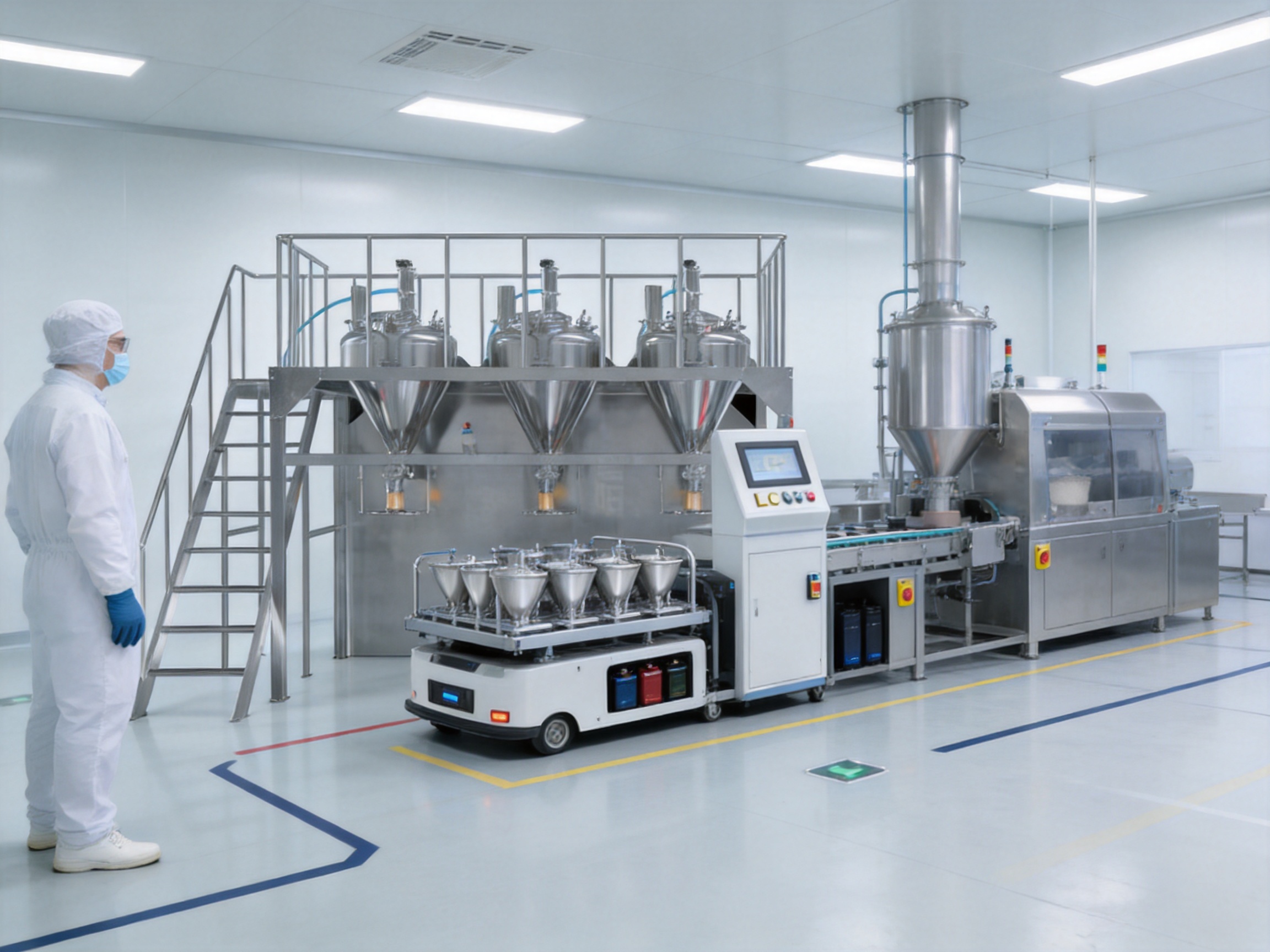
Accurate material dosing is one of the most important requirements in pharmaceutical, nutraceutical, veterinary, chemical, food, and other powder-processing applications. A formulation may contain several ingredients, each with a specific target weight and a defined order of addition. Even a small dosing deviation can affect product quality, process consistency, yield, and regulatory compliance. For this reason, manufacturers increasingly require integrated weighing and feeding systems that can manage material transfer, temporary storage, metering, weighing, and production control within one coordinated process.
The LCP Weighing and Feeding Station is designed for this purpose. It combines a dust-free feeding station, vacuum conveying, elevated temporary storage, screw feeding, precision weighing hoppers, and an automated guided vehicle (AGV) mobile cart. These functions work together to transport and dose multiple materials according to production orders and formulation requirements. Instead of relying on separate manual handling steps, the system creates a controlled route from material loading to final weighing.
Developed by Changzhou Zhiyang Machinery Equipment Co., Ltd., the LCP system reflects a process-oriented approach to powder handling. It is not simply a weighing scale or a conveying machine. It is an integrated dosing solution intended to improve accuracy, reduce dust exposure, shorten batching cycles, and support cleaner production environments. Its configuration can be adapted to different process demands, material characteristics, plant layouts, and production capacities.
This article explains the operating principle, equipment structure, performance advantages, manufacturing strengths, control concept, application value, maintenance considerations, and selection factors associated with the LCP Weighing and Feeding Station.
Powder processing often involves materials with different bulk densities, flow characteristics, particle sizes, moisture levels, and electrostatic behaviors. Some powders flow freely, while others bridge, cake, segregate, or adhere to contact surfaces. A weighing and feeding system must therefore do more than move material from one point to another. It must control the material in a repeatable way while maintaining a clean and stable operating environment.
In pharmaceutical and oral solid dosage production, the formulation may include active pharmaceutical ingredients, fillers, binders, disintegrants, lubricants, glidants, colors, or other functional powders. Each material may require a different target quantity. High-value or highly potent materials may demand particularly careful handling, while low-dose ingredients may require sensitive weighing and precise feed control.
Manual weighing can introduce several risks. Operators may need to open containers repeatedly, carry materials over long distances, transfer powders between vessels, and record weights by hand. These tasks can create dust, increase the possibility of cross-contamination, and cause delays between batches. Manual work may also lead to transcription errors or inconsistent dosing when production volumes increase.
A fully enclosed and automated weighing route addresses many of these challenges. Materials can be introduced into a controlled feeding station, conveyed without unnecessary exposure, stored temporarily above the weighing area, metered through a screw feeder, and collected in weighing hoppers. The resulting process is easier to monitor, easier to document, and more consistent from one production order to the next.
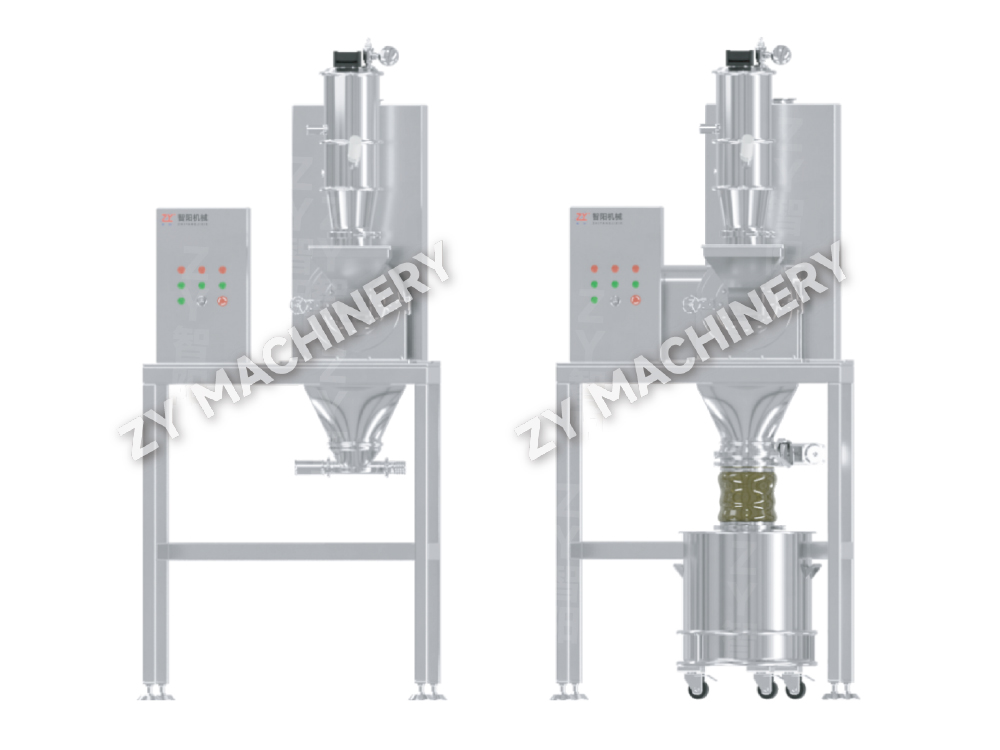
The LCP Weighing and Feeding Station is an integrated material dosing system for multiple ingredients. The core process begins when materials are loaded into a dust-free feeding station. A vacuum conveyor then transports the materials to an elevated temporary storage silo. From this silo, a screw feeder delivers material into weighing hoppers installed on an AGV mobile cart.
The AGV cart provides mobility within the production area. Once the required ingredients have been weighed, the cart can move the collection hoppers to the next process stage, depending on the plant layout and production workflow. This arrangement can reduce the need for manual lifting and improve the connection between batching and downstream operations.
The system is intended to maintain a controlled route for material movement. The feeding station supports the initial loading activity, the vacuum conveying section transfers material in a contained manner, the temporary storage silo provides an intermediate buffer, and the screw feeder performs controlled dosing. The weighing hoppers measure the delivered material, while the control system monitors the target weight and feed rate.
Multiple weighing systems can operate simultaneously. This enables different materials to be dosed according to individual formulation requirements rather than waiting for a single weighing point to complete every ingredient in sequence. The system can consequently reduce idle time and improve the utilization of the batching area.
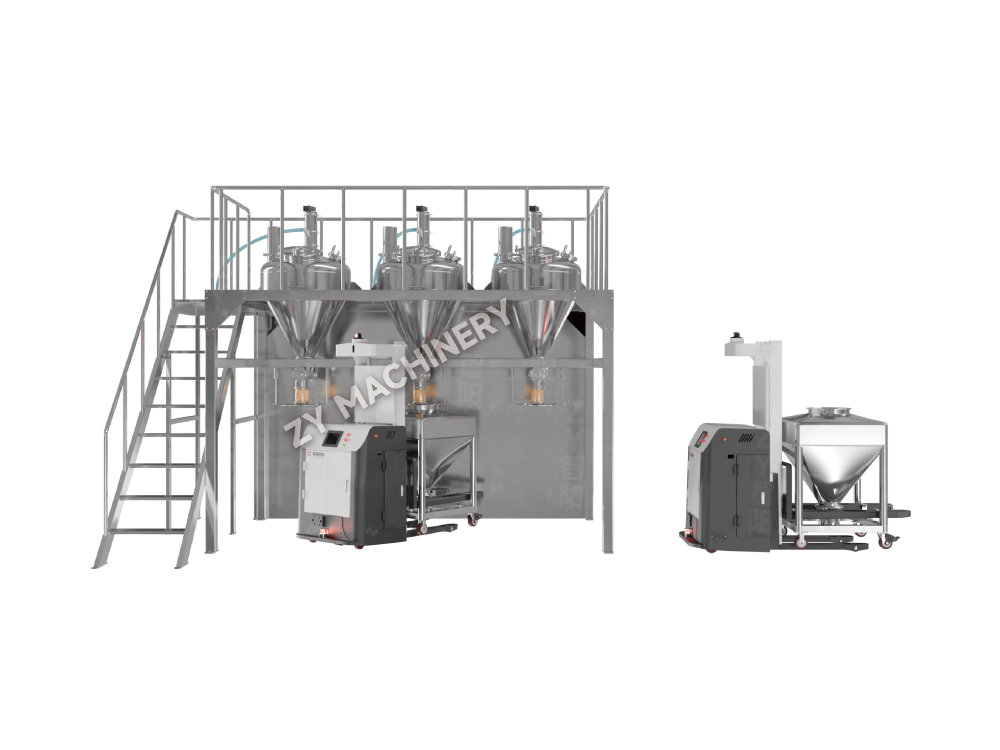
LCP Weighing and Feeding Station
The process starts at the feeding station, where raw materials are introduced into the system. The station is designed to limit the release of dust during charging. An enclosed or controlled loading arrangement can help protect operators and reduce the amount of powder entering the surrounding room.
Dust control is especially important when handling fine powders, dusty excipients, colored materials, or active substances. By creating a more contained loading point, the system can support cleaner working conditions and reduce the frequency of housekeeping activities. The exact loading arrangement may be configured according to the container type, material flowability, production scale, and site requirements.
After loading, the material is transported by vacuum conveying to an elevated temporary storage silo. Vacuum conveying is suitable for many powder-handling applications because the material travels through a closed pipeline rather than being carried in open containers or transferred manually over long distances.
The vacuum transfer stage also separates the loading point from the weighing area. This allows material to be introduced at a convenient and controlled location while the weighing hoppers remain available for dosing operations. The elevated silo functions as a buffer between conveying and feeding, helping the overall system maintain a stable supply of material.
Temporary storage is valuable in a multi-material system because the conveying cycle and the weighing cycle do not always occur at the same speed. The silo provides a controlled intermediate point, allowing the screw feeder to receive material as required. This can reduce interruptions and support more continuous production.
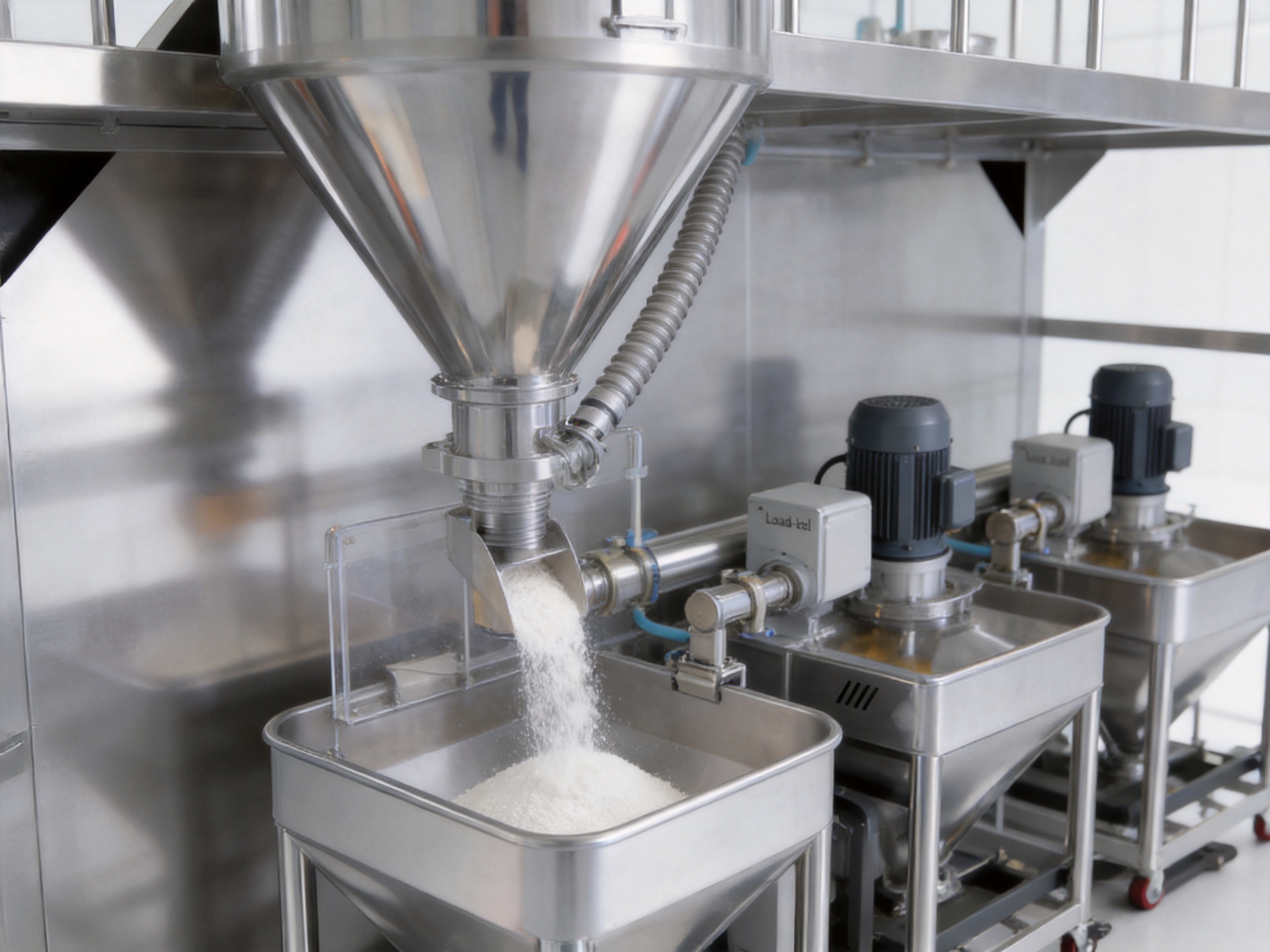
From the temporary storage silo, the screw feeder delivers material into the weighing hoppers. Screw feeding is commonly used when a controlled and measurable flow is needed. The screw speed and operating sequence can be adjusted to deliver material at a suitable rate during coarse and fine feeding stages.
A practical dosing sequence may begin with a faster feed rate to approach the target weight quickly. As the target is reached, the system can reduce the feed rate to minimize overshoot. Continuous monitoring of weight and feed rate allows the control system to make adjustments in accordance with the production formula.
The screw feeder also provides a more predictable dosing method than uncontrolled gravity discharge alone. This is especially useful when the material does not flow consistently or when the target quantity requires close control. Final performance depends on the physical characteristics of the powder, the feeder design, the weighing sensor, the control settings, and the commissioning process.
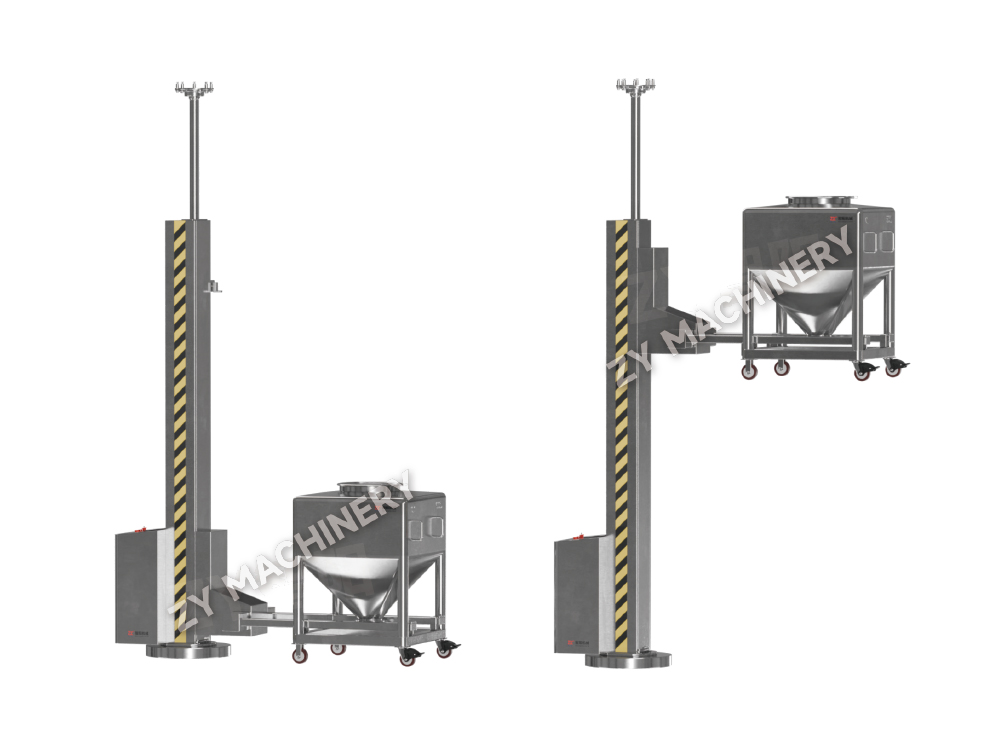
The weighing hoppers are mounted on an AGV mobile cart. This configuration combines precision weighing with mobility. The cart can be positioned at the required dosing points and moved after the weighing operation is completed.
Mobility can improve the flexibility of a production area. Rather than installing a fixed weighing station for every process route, a mobile cart can serve different batches or production zones. It can also simplify the transfer of weighed ingredients to a subsequent operation, subject to the plant’s automation and safety arrangements.
The AGV concept can help reduce manual transportation. Operators do not necessarily need to carry filled hoppers through the facility, which can lower physical workload and reduce the risk of accidental spillage. The mobile design may also be useful where the facility produces different products or operates multiple formulation routes.
The complete process is monitored to ensure that the quantity and feed rate correspond to the production formula. The system is intended to support accurate dosing of multiple materials, with each weighing hopper receiving the required ingredient quantity.
Formula-based operation helps establish a repeatable relationship between the production order and the actual material charge. It can also make the process easier to review because the target values, measured values, and operating sequence can be connected to the batch record or production documentation, depending on the customer’s control system and validation requirements.
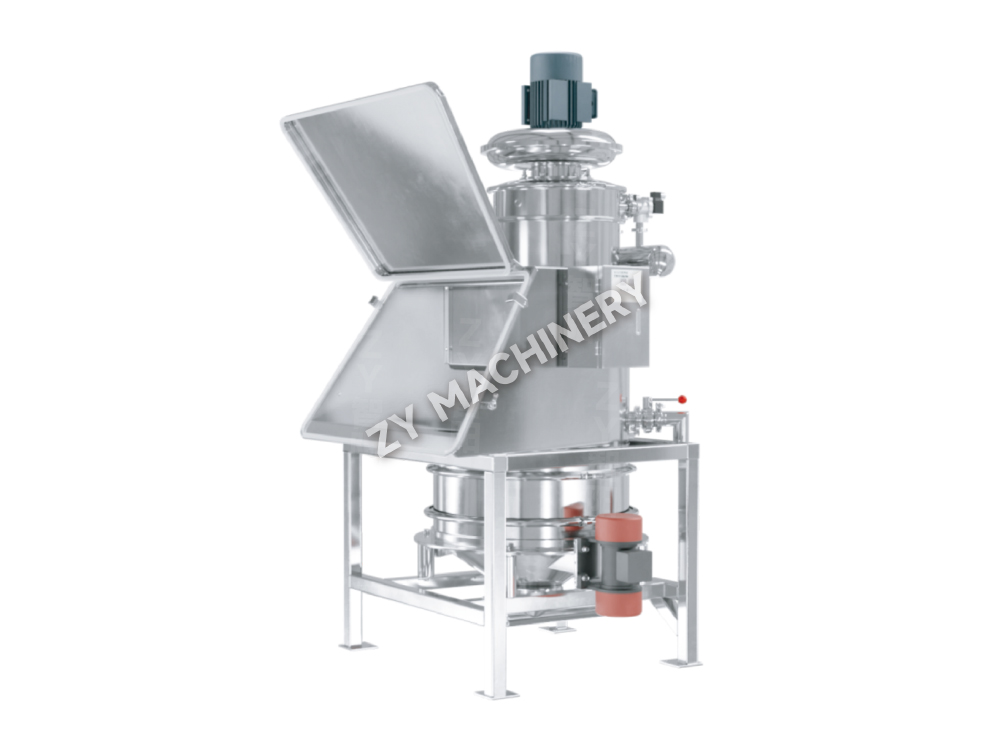
The feeding station provides the controlled interface between incoming raw materials and the conveying system. Its primary functions are to receive material, limit dust emission, and guide the material into the vacuum transport line.
A well-designed feeding station can improve operator visibility and reduce the risk of material loss. It can also support a more orderly material handling process by providing a defined charging location rather than allowing powders to be opened and transferred at multiple points.
The vacuum conveyor transfers material from the feeding station to the elevated storage silo. The closed conveying route helps reduce exposure to the surrounding environment. It can also support flexible equipment positioning because the transfer line can be arranged to suit the production layout.
Vacuum conveying is particularly useful where materials need to be moved vertically or across a room without extensive manual handling. The conveying parameters should be selected according to powder density, particle size, flowability, conveying distance, and the required throughput.
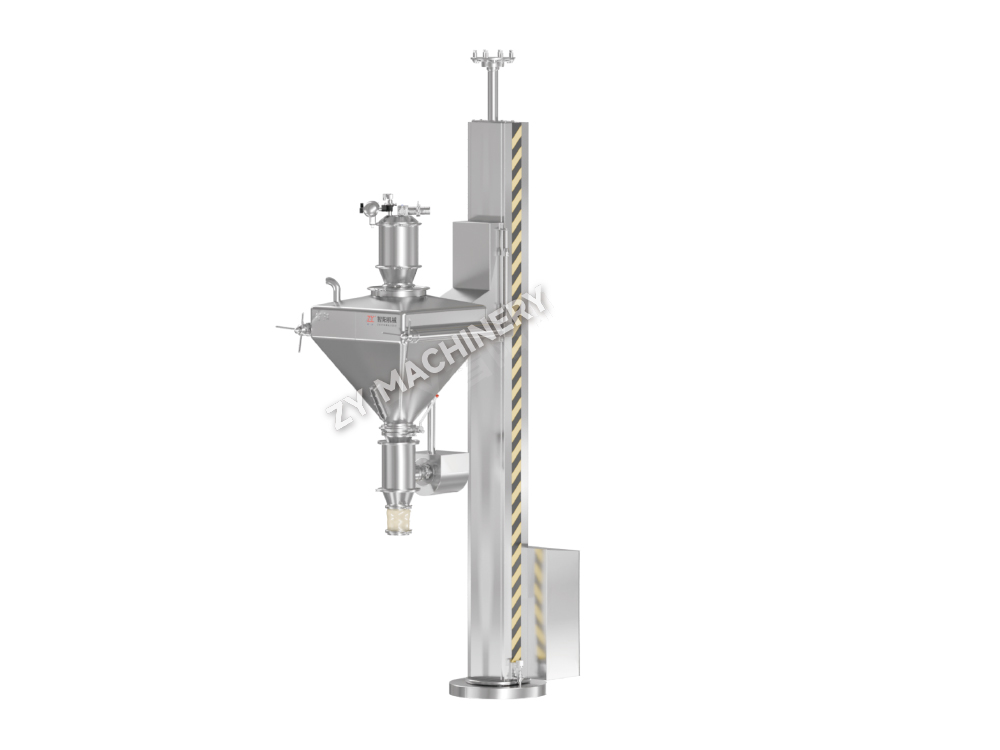
The temporary storage silo provides an intermediate reserve of material before dosing. It helps separate the transport function from the feeding function and can support a smoother material supply to the screw feeder.
The silo may be equipped with suitable discharge and level-monitoring arrangements. Depending on the material, additional measures may be considered to limit bridging, improve discharge reliability, or reduce segregation. The final design should be selected after evaluating the powder’s physical properties.
The screw feeder is the main metering device between the silo and weighing hopper. It is responsible for delivering material at a controlled rate. Its geometry, speed range, inlet design, outlet arrangement, and operating sequence influence the accuracy and stability of the dosing process.
For a formulation containing several ingredients, different feeder configurations may be used to accommodate different material behaviors. A feeder for a free-flowing excipient may not operate in exactly the same way as a feeder for a cohesive or low-dose powder. Process engineering is therefore important when defining the final configuration.
The weighing hoppers receive the metered material and measure the quantity delivered. They are the principal measurement points in the dosing operation. The weighing system must be mechanically stable, properly isolated from vibration, and protected against unnecessary external forces.
Weighing hopper capacity should be matched to the formulation, batch size, required accuracy, and operating cycle. The supplied product parameters identify configurations including LCP4-200/5 and LCP2-300. These models are associated with different numbers and capacities of weighing positions, allowing the system to be selected according to production needs.
The AGV mobile cart supports the movement of the weighing hoppers. Its use can improve production flexibility and reduce manual transport. The cart can be integrated into a larger material flow in which weighing, transfer, and downstream processing are coordinated.
AGV operation must be designed with suitable navigation, safety, charging, access, and traffic-management arrangements. These details depend on the customer’s facility and automation strategy. The mobile platform nevertheless provides an important advantage over a fixed weighing structure where production routes change frequently.
The available product information includes two representative model configurations. The figures below should be treated as reference parameters for the listed models. Final specifications may be confirmed according to material properties, plant conditions, formulation requirements, and the customer’s technical agreement.
| Item | Unit | LCP4-200/5 | LCP2-300 |
|---|---|---|---|
| Model | — | LCP4-200/5 | LCP2-300 |
| Number of weighing systems | — | 4 | 2 |
| Weighing capacity | kg | 200 kg and 5 kg | 300 kg |
| Accuracy class | — | X(0.1) | X(0.1) |
| Capacity | kg/h | 500–2,000 kg/h | 500–2,000 kg/h |
The LCP4-200/5 configuration is suitable where a production line requires four weighing positions and a combination of larger and smaller weighing capacities. The LCP2-300 configuration provides two weighing positions with a 300 kg weighing capacity. Both listed configurations have a stated capacity range of 500 to 2,000 kg/h and an accuracy class of X(0.1).
Capacity should not be evaluated only by the nominal hourly figure. Actual performance can be influenced by the number of ingredients, target weights, feed sequence, powder behavior, cleaning intervals, hopper discharge time, and the degree of simultaneous operation. A technical assessment is therefore recommended before final model selection.
A major advantage of the LCP system is the integration of several operations into one coordinated process. Conventional facilities may use separate charging stations, manual transport, individual storage containers, standalone scales, and manually operated discharge points. Each additional transfer creates another opportunity for dust emission, material loss, contamination, or weighing error.
The LCP arrangement links feeding, vacuum conveying, temporary storage, screw feeding, weighing, and mobile transfer. This integrated structure reduces unnecessary handling steps and provides a more logical material route. It can also make the system easier to manage because the equipment is designed around a defined production sequence.
Dust control is a critical competitive advantage in powder processing. Open transfer and repeated manual handling can release fine particles into the production room. The LCP system uses a dust-free feeding concept and enclosed conveying route to reduce the amount of powder exposed to the environment.
A cleaner process benefits both operators and products. It can reduce housekeeping demands, support a more comfortable work area, and help maintain a controlled production environment. In pharmaceutical applications, the enclosed design also supports the expectations associated with GMP-oriented manufacturing, subject to the complete facility design and validation program.
The system supports simultaneous operation of multiple weighing systems. This is important because sequential weighing can create a bottleneck when a formulation contains many ingredients. If each material must wait for the previous one to complete, the total batching time increases even when the individual weighing operations are relatively fast.
By coordinating several weighing positions, the LCP station can reduce waiting between hoppers. Intelligent control optimizes feeding time and helps shorten the overall batching cycle. The result is a more efficient use of the weighing area and potentially higher production output without relying solely on additional labor.
The combination of screw feeding and weighing feedback provides a controlled method for achieving target quantities. Instead of depending entirely on operator judgment or manual scale reading, the system monitors the material being delivered and adjusts the feeding sequence according to the formula.
Accuracy is particularly valuable when a formulation contains high-value materials, low-dose ingredients, or ingredients with narrow process tolerances. Consistent dosing can support product uniformity and reduce the need to investigate batch-to-batch variation caused by manual handling.
The AGV mobile cart provides a degree of flexibility that is not normally available with a permanently fixed weighing platform. The cart can support different production routes, move between designated areas, and connect the weighing operation with subsequent processing stages.
This mobility can be useful in facilities that produce several products, operate different batch sizes, or need to change equipment arrangements over time. It may also reduce the need for multiple fixed weighing stations, depending on production scheduling and cleaning requirements.
Automated conveying and mobile transport can reduce the need for operators to carry heavy containers or repeatedly lift filled hoppers. The system places more of the physical movement under controlled mechanical operation.
Improved ergonomics can contribute to safer and more sustainable production. Reduced manual handling may also help operators focus on material verification, process supervision, cleaning, and documentation rather than repetitive transport work.
An integrated system can provide a foundation for future automation. Once material identity, target weight, feed sequence, and weighing results are managed through a central control concept, additional functions may be connected according to project requirements.
Potential extensions may include recipe management, batch reporting, barcode verification, access control, production data collection, equipment status monitoring, or connection with a plant-level manufacturing execution system. The specific scope depends on the customer’s automation architecture.
Equipment performance is strongly influenced by the manufacturer’s engineering capability. A dosing station must be designed according to real process conditions rather than only general catalog specifications. Changzhou Zhiyang Machinery Equipment Co., Ltd. focuses on powder processing and oral solid dosage equipment and provides standalone machines, modular systems, and complete production lines.
The company’s stated approach is to design solutions according to material characteristics, capacity requirements, and site conditions. This is important because no two powders behave in exactly the same way. A system that works well for one formulation may require different feeding, conveying, or discharge arrangements for another.
Process-driven design begins with understanding the material. Important considerations include bulk density, particle size distribution, moisture content, flowability, cohesiveness, abrasiveness, sensitivity to shear, and electrostatic behavior. The formulation, target batch size, number of ingredients, required cycle time, and cleaning strategy must also be evaluated.
The company’s product scope covers laboratory equipment, mixing equipment, granulation equipment, drying equipment, coating equipment, auxiliary processing equipment, and transfer and conveying systems. This broader portfolio is valuable because the weighing and feeding station is usually part of a larger process rather than an isolated machine.
Knowledge of mixing, granulation, drying, coating, and conveying can help engineers understand how the dosed materials will be used downstream. This supports better decisions regarding hopper discharge, transfer methods, material segregation, batch traceability, and integration with the next process step.
The manufacturer provides standalone machines as well as modular systems and complete production lines. This allows customers to select a project scope that fits their current needs. A customer may begin with a dosing station and later integrate additional equipment, or may request a complete process route from powder handling through final dosage production.
Modular engineering can also simplify project planning. Equipment sections can be evaluated individually while still being designed for future connection. This approach can help manufacturers manage investment priorities without losing sight of the complete production process.
The company reports that it has strengthened its research and development capabilities, obtained quality system certification, developed patented technologies, and expanded its overseas service capabilities. These activities indicate a continuing focus on product improvement and engineering development.
In a weighing and feeding system, research and development may address improved metering stability, better dust containment, more reliable discharge, optimized control logic, easier cleaning, and improved equipment integration. Such improvements can directly affect production efficiency and long-term operating reliability.
A reliable dosing station requires more than correct mechanical design. Fabrication quality, welding consistency, surface finish, component selection, assembly accuracy, electrical installation, inspection, and commissioning all influence the final result.
Quality-focused manufacturing helps ensure that the equipment performs consistently after installation. It can also reduce problems related to vibration, leakage, difficult cleaning, unstable weighing signals, and premature wear. For pharmaceutical and regulated applications, documentation and traceability are also important parts of project implementation.
Changzhou Zhiyang Machinery Equipment Co., Ltd. serves customers in multiple countries and regions and has developed overseas service capabilities. International support is valuable for equipment that must be installed, commissioned, validated, and maintained across different time zones and regulatory environments.
Effective support may include technical clarification, layout coordination, installation guidance, commissioning assistance, operator training, spare-parts planning, and troubleshooting. The exact service package should be confirmed during the project stage.
The LCP system uses intelligent control to coordinate material feeding, weighing, and process timing. The objective is not simply to automate individual components but to optimize the complete batching sequence.
When several weighing systems operate together, the controller can organize the order in which materials are conveyed and fed. It can also manage target values, monitor current weights, identify completion status, and reduce unnecessary waiting. This type of coordination is especially important when ingredient quantities and feeding times vary significantly.
Control optimization can produce efficiency gains in several ways. First, it can prevent a hopper from remaining idle while another operation is unnecessarily delayed. Second, it can reduce operator intervention during routine dosing. Third, it can create a more consistent process sequence from one batch to the next. Fourth, it can provide a basis for recording process information.
In a regulated manufacturing environment, data management may be as important as mechanical performance. Customers may require records of material identity, target quantity, actual quantity, operator actions, alarms, deviations, and batch completion. The LCP system can be evaluated for integration with the customer’s preferred control and information systems.
The fully enclosed design is intended to prevent dust leakage and support a clean production environment. In pharmaceutical and nutraceutical applications, hygienic design should be evaluated across the entire system, including contact surfaces, seals, transfer points, hopper outlets, cleaning access, dead zones, and equipment drainage where applicable.
Surface finish and construction materials should be selected according to the product and cleaning method. Stainless steel is commonly used in pharmaceutical processing equipment, although the exact grade and finish should be confirmed for each application. Welded areas, corners, gaskets, and connection points should be designed to minimize material accumulation.
Containment and hygiene must be considered together. A system can be enclosed yet still be difficult to clean if access is limited or if powder collects in inaccessible areas. Therefore, equipment design should provide suitable access for inspection, cleaning, maintenance, and replacement of wear components.
Cross-contamination control is another important consideration. The required cleaning strategy may vary depending on whether the system handles one product, multiple products, potent materials, allergens, colors, or highly adhesive powders. Customers should define cleaning validation expectations and product changeover requirements at the beginning of the project.
The LCP station supports GMP-oriented production through its enclosed material route and controlled dosing concept. However, GMP compliance is achieved through the complete equipment, facility, operating procedure, documentation, validation, and quality-management system rather than through one machine alone.
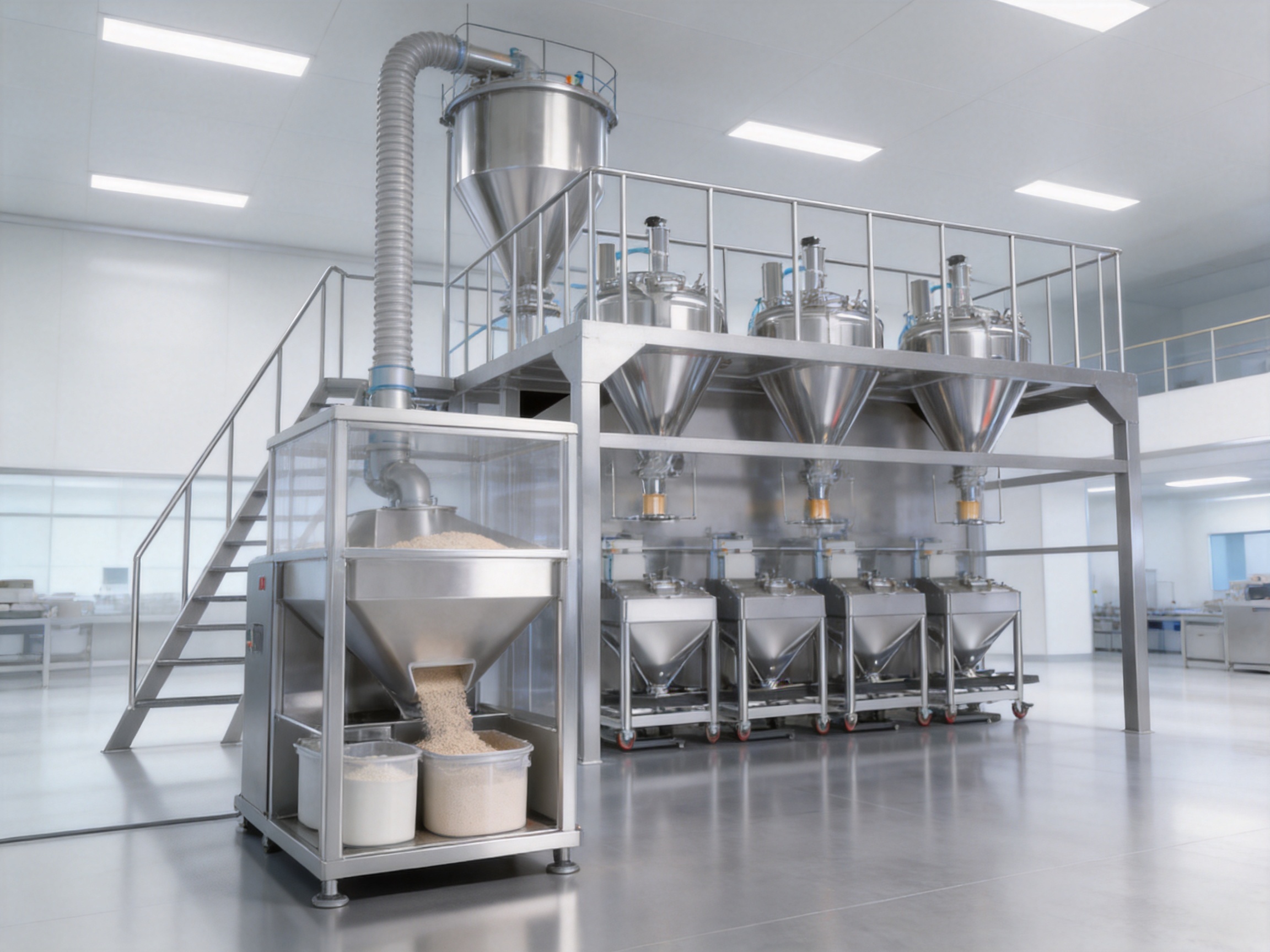
Pharmaceutical production is a natural application for the LCP Weighing and Feeding Station. Tablet, capsule, granulation, and other oral solid dosage processes often require multiple powders to be weighed according to a defined formulation.
The system can support the controlled preparation of premixes, granulation charges, dry blends, and other intermediate materials. Its dust-free design is useful where operator exposure and cross-contamination must be carefully controlled. The weighing and monitoring functions can also support batch documentation and process consistency.
Nutraceutical formulations may include vitamins, minerals, botanical extracts, amino acids, proteins, carriers, and other powdered ingredients. The number of ingredients can be high, and some materials may be required in relatively small quantities.
Multiple weighing systems and automated formula management can help nutraceutical manufacturers improve repeatability. The system may also reduce the time required to prepare different formulations, which is valuable for facilities that operate a wide product portfolio.
Veterinary powders and oral dosage products may use several active and functional ingredients. As with human pharmaceutical products, accurate dosing and clean handling are important for consistent product quality.
The LCP system can provide a contained and organized method of handling these materials. The mobile cart may also support flexible movement between weighing and downstream processing areas.
Industrial additives and specialty chemicals may require accurate batching of powders with different densities and flow characteristics. The enclosed transfer route can help reduce material loss and improve workplace cleanliness.
For abrasive, cohesive, or chemically sensitive materials, the equipment configuration should be selected after a detailed material assessment. Feeder materials, surface treatments, seals, and cleaning procedures may need to be adjusted to suit the application.
Biotechnology and biopharmaceutical facilities often place strong emphasis on controlled material handling, traceability, hygiene, and operator protection. Where powdered ingredients are used, the LCP station may serve as part of a broader controlled dispensing and process-integration strategy.
Such applications normally require detailed review of containment, cleaning, validation, environmental classification, and data integrity. The system can be engineered as part of a complete process solution when these requirements are clearly defined.
Successful performance depends on proper installation and commissioning. Before equipment delivery, the manufacturer and customer should confirm the process flow, available floor space, ceiling height, electrical supply, compressed air requirements if applicable, access routes, cleaning provisions, and safety boundaries.
The elevated temporary silo and vacuum conveying route require particular attention to building height and structural support. The AGV cart requires a suitable travel path, adequate turning space, floor flatness, charging arrangements, and protection from traffic conflicts. These site conditions should be assessed before finalizing the layout.
Commissioning normally includes mechanical inspection, electrical checks, control-system verification, no-load testing, material trials, weighing calibration, feeding adjustment, and operator training. Material trials are essential because powder behavior can differ substantially from theoretical assumptions.
For regulated applications, customers may require factory acceptance testing, site acceptance testing, installation qualification, operational qualification, and performance qualification. The test scope should be agreed in advance. Acceptance criteria may cover weighing accuracy, repeatability, throughput, dust containment, alarm handling, recipe operation, cleaning access, and data recording.
Calibration and verification should be performed using suitable reference weights and approved procedures. Load cells, weighing hoppers, feeder settings, and control parameters must be checked as a complete system. Mechanical vibration, air movement, material buildup, and improper hopper support can affect weighing performance and should be addressed during commissioning.
Preventive maintenance is necessary to preserve the accuracy and efficiency of the LCP station. Maintenance planning should include inspection of screw feeders, seals, flexible connections, vacuum filters, hopper supports, load cells, sensors, valves, drive systems, electrical cabinets, and AGV components.
Screw feeders should be checked for wear, contamination, abnormal noise, and changes in delivery behavior. A worn screw or damaged flight can affect feed rate and dosing accuracy. Seals and flexible connections should be inspected because leakage can reduce containment and conveying efficiency.
Weighing hoppers and load cells should be kept free from accumulated material and external mechanical interference. Hoppers must not contact nearby structures, cables, pipes, or platforms in a way that introduces force into the weighing system. Regular verification can help identify drift before it affects production.
Vacuum conveying components require inspection of filters and air paths. A blocked filter can reduce conveying performance, increase cycle time, or place additional load on the vacuum system. Cleaning schedules should be based on material dustiness, operating hours, and observed pressure changes.
The AGV cart requires inspection of wheels, drive systems, navigation components, battery condition, safety sensors, and charging equipment. The travel route should remain free of obstructions and spilled material. Software and control-system backups should also be managed according to the facility’s automation procedures.
Cleaning is an essential part of maintenance. The correct cleaning method depends on product sensitivity, material type, residue behavior, and validation requirements. Dry cleaning, vacuum cleaning, wet cleaning, or a combination may be used. Cleaning tools and procedures should avoid damaging seals, sensors, load cells, and finished surfaces.
Model selection should begin with the formulation rather than the machine name. The number of ingredients, minimum and maximum target weights, batch size, required accuracy, production capacity, and desired cycle time all affect the suitable configuration.
For facilities with many ingredients or a strong need for parallel operation, a configuration with more weighing systems may provide higher flexibility. For larger individual charges, a higher-capacity hopper may be more suitable. Where both large and small quantities are present in the same recipe, a combination configuration such as LCP4-200/5 may be advantageous.
Material testing is recommended for powders with unusual flow properties. Tests may include bulk-density measurement, flowability assessment, discharge testing, screw-feeding trials, conveying evaluation, and weighing repeatability. These tests help confirm whether the proposed feeder and hopper arrangement can meet the required performance.
Customers should also define the desired level of automation. Basic operation may focus on automatic feeding and weighing, while advanced operation may include recipe control, barcode verification, batch records, remote monitoring, and integration with other equipment.
Cleaning and product changeover requirements should be considered at the same time as capacity. A system that operates quickly but takes a long time to clean may not provide the best overall productivity in a multi-product facility. Accessibility, removable parts, smooth surfaces, and cleaning documentation should be reviewed during design.
The value of a weighing and feeding station should be measured across the entire production process. Initial purchase price is only one factor. Labor requirements, material loss, cleaning time, batch cycle time, error correction, maintenance, and future expansion can have a greater effect on the long-term cost of ownership.
By reducing manual material movement, the LCP system can lower the labor associated with repetitive weighing and transfer. By improving dosing consistency, it can reduce the risk of rejected or reworked batches. By containing dust, it can reduce cleaning requirements and help protect valuable materials from loss.
Shorter batching cycles may increase production capacity without requiring a proportional increase in floor space. Simultaneous weighing and intelligent control can help the system process more ingredients within the same operating period. This is particularly valuable for manufacturers seeking higher output from an existing facility.
The mobile cart can also provide economic flexibility. A mobile weighing platform may serve several production routes, reducing the need to install a separate fixed station for every product or process area. The actual benefit depends on scheduling, cleaning policy, and the degree to which equipment can be shared between products.
A weighing station performs best when it is designed as part of a complete process. Material loading, conveying, temporary storage, dosing, weighing, discharge, mixing, granulation, drying, coating, and final transfer should be considered together.
For example, a downstream mixer may require materials to arrive in a particular order or within a specific time window. A granulation process may require a controlled and traceable charge. A coating process may depend on a consistent intermediate blend. Integrating the weighing station with these requirements can improve the stability of the entire production route.
Changzhou Zhiyang Machinery Equipment Co., Ltd. provides equipment across several powder-processing categories, allowing customers to discuss individual machines and broader process solutions with one engineering partner. This can simplify communication during layout development, equipment matching, control integration, and commissioning.
The company’s process-integration approach also supports customized engineering. Different customers may require different hopper sizes, conveying distances, material-contact materials, control functions, cleaning methods, or mobile-cart arrangements. A practical solution should reflect the real production environment rather than force every customer into one standard configuration.
The main purpose is to accurately dose multiple materials according to production orders and formulations. The system combines dust-free feeding, vacuum conveying, temporary storage, screw feeding, weighing, and mobile transfer.
Materials are loaded into a dust-free feeding station and transported by a vacuum conveyor to an elevated temporary storage silo. A screw feeder then meters the material into weighing hoppers mounted on an AGV mobile cart.
Yes. The system supports simultaneous operation of multiple weighing systems. This allows different materials to be dosed in parallel according to the formulation and can reduce waiting between weighing operations.
The AGV mobile cart allows the weighing hoppers to move between designated production areas. It can reduce manual transport, improve layout flexibility, and help connect the weighing process with downstream operations.
Yes. The dust-free and fully enclosed design is intended to support clean, GMP-oriented production environments. Suitability for a specific pharmaceutical application must be confirmed through a complete review of material characteristics, containment, cleaning, validation, and facility requirements.
The listed reference configurations include LCP4-200/5 and LCP2-300. The LCP4-200/5 configuration includes four weighing systems with 200 kg and 5 kg capacities, while the LCP2-300 configuration includes two weighing systems with a 300 kg capacity. Both are listed with a capacity range of 500–2,000 kg/h.
The supplied product information identifies the accuracy class as X(0.1) for both listed models. The detailed interpretation, applicable weighing range, and testing method should be confirmed in the technical documentation and customer acceptance specification.
The system can be engineered for different powder applications, but the final configuration should be selected according to material properties. Flowability, cohesion, density, moisture, particle size, abrasiveness, and electrostatic behavior can affect feeder and conveying performance.
Dust reduction is supported through the dust-free feeding station, enclosed vacuum conveying route, controlled temporary storage, and enclosed dosing arrangement. The complete facility design, extraction system, seals, operating procedures, and cleaning program also influence actual containment performance.
Yes. It can be considered as a standalone dosing station, a modular process section, or part of a complete production line. Integration options depend on the customer’s process sequence, control architecture, layout, and data-management requirements.
Potential applications include pharmaceutical, biopharmaceutical, biotechnology, nutraceutical, veterinary, additives, specialty chemical, and related powder-processing industries.
Useful information includes the formulation, ingredient list, target weights, batch size, required throughput, material properties, number of products, cleaning requirements, site dimensions, available utilities, desired automation level, and downstream process connection points.
The LCP Weighing and Feeding Station provides a coordinated solution for accurate, efficient, and dust-controlled powder batching. Its material route begins with a dust-free feeding station, continues through vacuum conveying and temporary storage, and ends with screw-metered dosing into weighing hoppers mounted on an AGV mobile cart.
Compared with conventional manual or disconnected dosing methods, the system offers several important advantages: improved dosing consistency, reduced dust exposure, simultaneous operation of multiple weighing systems, shorter batching cycles, lower manual handling requirements, and greater production flexibility.
Its value is further supported by the manufacturer’s experience in powder processing, oral solid dosage equipment, modular systems, complete production lines, research and development, quality management, patented technologies, and international service. This broader engineering capability is important when the dosing station must work together with mixing, granulation, drying, coating, conveying, or other production equipment.
For manufacturers evaluating a new batching system, the most important step is to match the equipment configuration with actual process requirements. Material testing, formulation analysis, capacity planning, cleaning review, automation definition, and site assessment should all be completed before final selection. When properly engineered and commissioned, the LCP Weighing and Feeding Station can become an important foundation for reliable, hygienic, and efficient powder production.
1. Changzhou Zhiyang Machinery Equipment Co., Ltd. Product information for the LCP Weighing and Feeding Station.
2. Changzhou Zhiyang Machinery Equipment Co., Ltd. Company information and product portfolio for powder processing and oral solid dosage equipment.
3. Supplied technical parameters for LCP4-200/5 and LCP2-300 weighing and feeding configurations.
4. General principles of powder conveying, screw feeding, industrial weighing, and automated batch control.
5. General good manufacturing practice principles for hygienic pharmaceutical equipment design and material handling.
Want to stay up to date?
Contact us via the email address below.
Don't worry about spam. We hate it too!
Mobile Client

Video Account
Phone:+86-15161130178
Tel:+86-519-88674267
Email:czzy188@163.com
Phone:+86-15161132798
Email:zy@zy-drying.com

WeChat ID

Copyright 2026 Changzhou Zhiyang Machinery Equipment Co., Ltd. All Rights Reserved  Oral Solid Dosage Equipment Manufacturer