 English
 Español
 русский
 中文简体
中文简体FBDX Cyclone Fluid-bed Granulating & Coating Machine
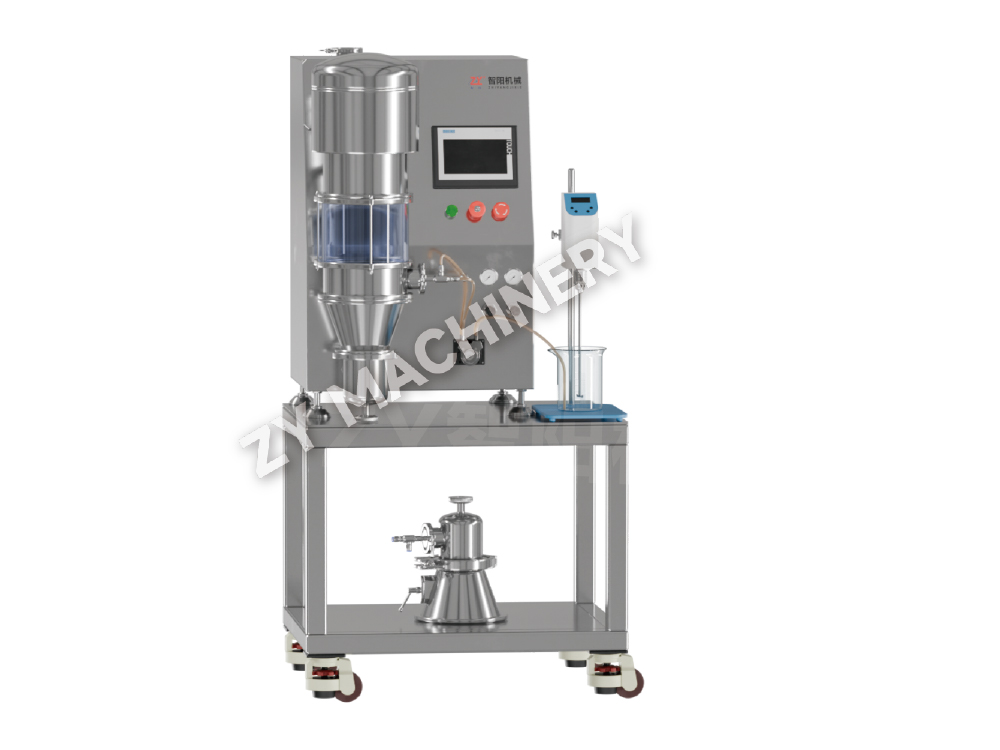
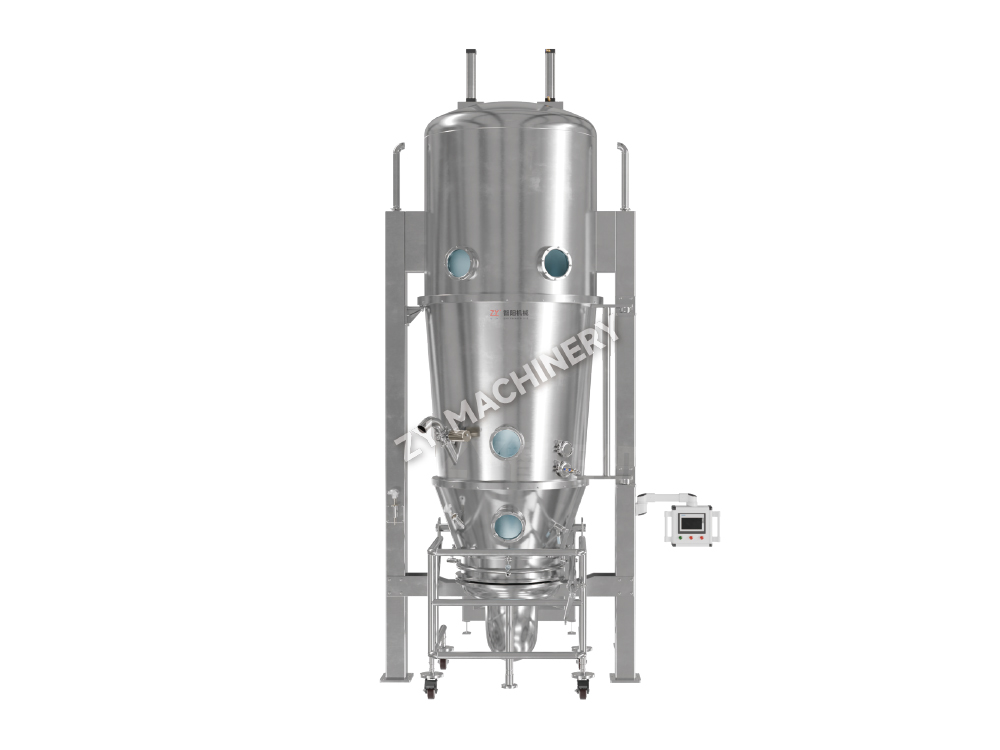
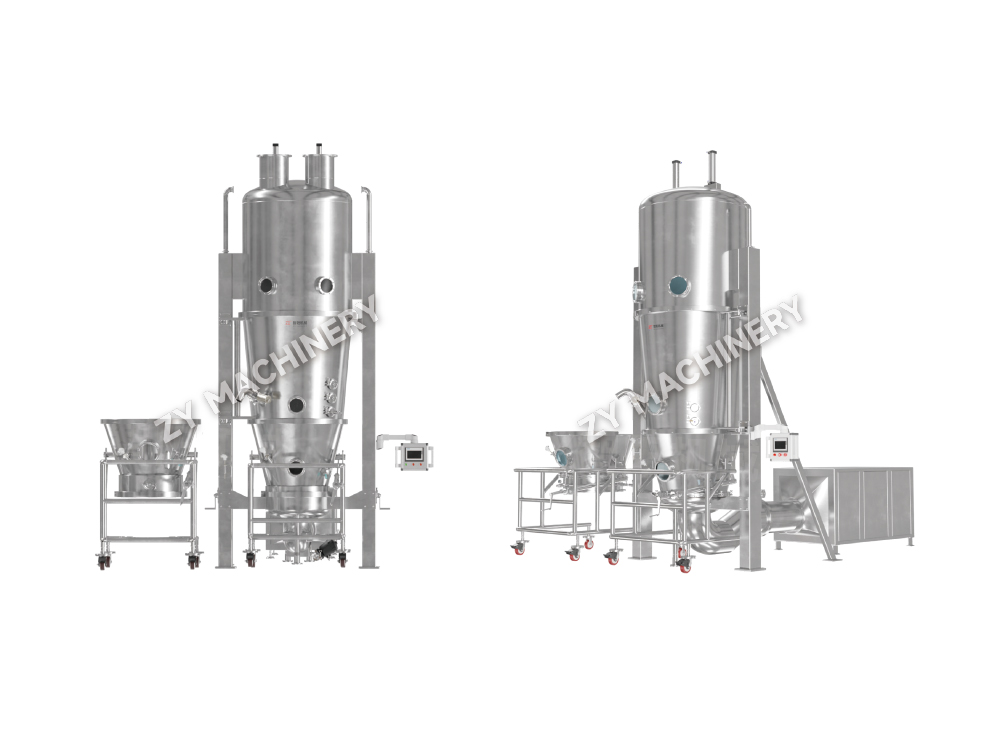
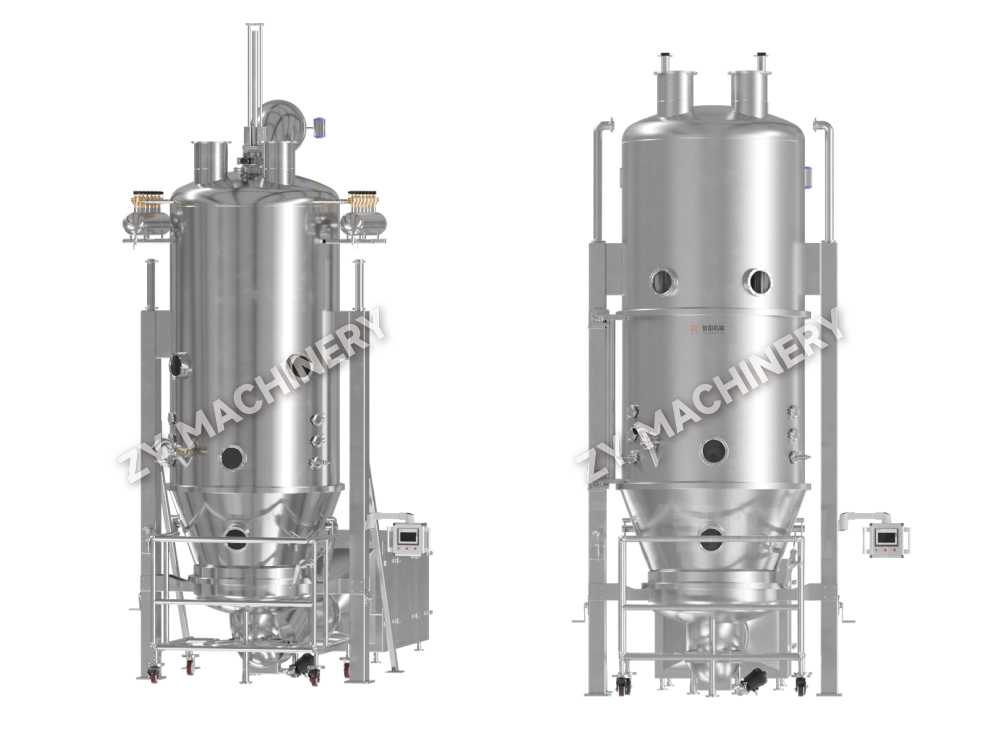
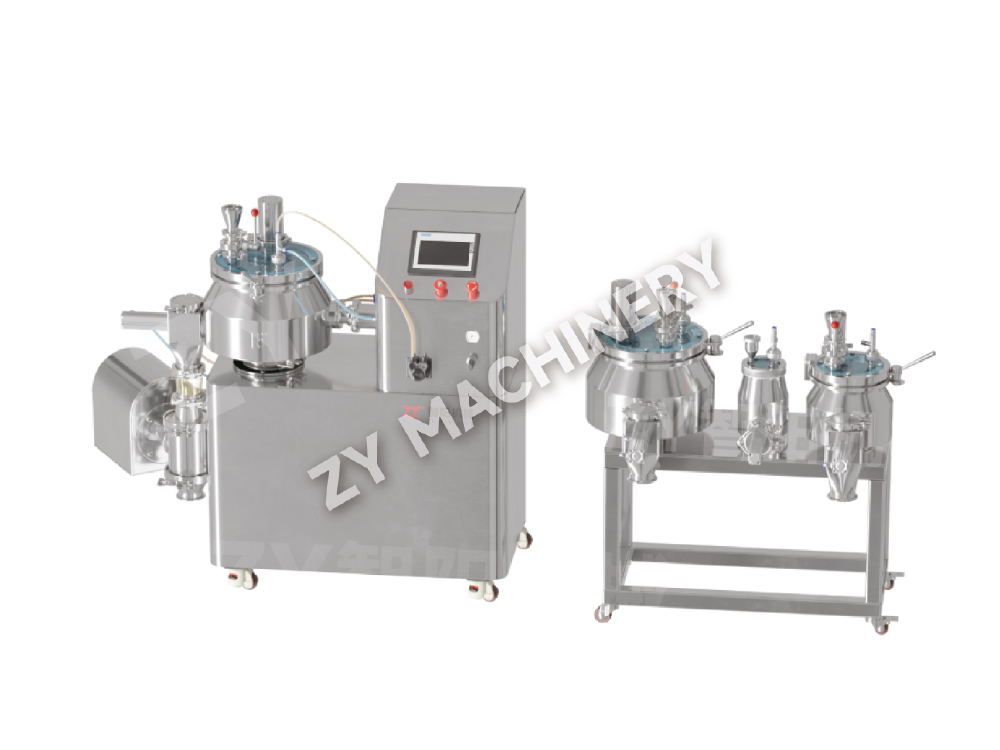
The FBDX Cyclone Fluidized Bed Granulation and Coating Machine features a b.....

Content
Modern pharmaceutical and specialty powder manufacturers require processing equipment that can perform more than one operation reliably. A single production system may need to granulate poorly flowing powders, produce porous and rapidly dissolving particles, apply thin functional films, support enteric or sustained-release formulations, and maintain stable quality from laboratory development through commercial production. These demands place high requirements on air distribution, material movement, liquid spraying, drying control, cleaning, scalability, and process repeatability.
The FBDX Cyclone Fluidized Bed Granulation and Coating Machine is designed to address these requirements through a blade-structured fluidized bed and a controlled cyclonic airflow pattern. Its angled blades create airflow passages that generate a powerful circulating vortex. As powders, granules, or pellets move through this organized airflow, pneumatic nozzles installed on the side walls introduce binder or coating solution into the moving material. The result is controlled granule growth or continuous, uniform coating deposition.
This design distinguishes the FBDX system from conventional fluidized-bed equipment that may depend on less organized upward airflow. By encouraging rotational and vortex-layered movement, the machine helps reduce channeling, dead zones, uneven wetting, localized overwetting, and excessive particle collision. It is suitable for powder granulation, thin-film coating, enteric coating, sustained-release coating, taste masking, moisture-proofing, waterproofing, coloring, heat insulation, and isolation applications.
Manufactured by Changzhou Zhiyang Machinery Equipment Co., Ltd., the FBDX machine forms part of a broader portfolio of powder processing and oral solid dosage equipment. The manufacturer combines equipment design, process development, modular integration, and production-line engineering to provide solutions for laboratory, pilot, and full-scale applications.
Fluid-bed processing is widely used because it combines material handling, spraying, heat transfer, and drying in one controlled environment. In a typical process, air passes through a product bed, suspending or partially suspending the particles. A liquid binder can then be sprayed into the moving material to join smaller particles into larger granules. Alternatively, a coating solution can be applied to existing granules or pellets to create a protective or functional film.
Although the basic principle is well established, the quality of the final product depends strongly on how the air and material move inside the chamber. If air distribution is uneven, some regions may fluidize too aggressively while others remain stagnant. If the material does not circulate adequately, spray exposure may vary from particle to particle. Some particles may become over-wetted, while others receive insufficient binder or coating solution.
These inconsistencies can affect particle size distribution, bulk density, flowability, residual moisture, coating thickness, dissolution behavior, mechanical strength, and appearance. In pharmaceutical applications, they may also influence dose uniformity and release performance. For nutraceuticals, food ingredients, additives, and veterinary products, the same issues can lead to poor handling, reduced stability, or inconsistent downstream compression and packaging.
The FBDX approach focuses on creating an orderly circulation pattern. Its angled blade structure does not merely support the material bed; it also shapes the airflow. The resulting cyclone-driven movement helps bring particles repeatedly through the active processing zone. This improves contact between the material and the sprayed liquid while supporting consistent heat and mass transfer.
The FBDX Cyclone Fluidized Bed Granulation and Coating Machine is a multifunctional processing unit for powders, granules, and pellets. It can be configured for wet granulation, film coating, enteric coating, sustained-release coating, and protective surface treatment. The equipment is available in models ranging from 10 kg to 500 kg per batch, allowing users to select a suitable capacity for development, pilot production, or industrial manufacturing.
Its core processing chamber includes a blade-structured air distributor. The blades are positioned at a defined angle, creating gaps through which process air passes. The geometry is intended to generate a strong vortex and promote orderly rotational movement instead of random or poorly distributed circulation.
Liquid binders and coating solutions are introduced through pneumatic nozzles mounted on the side walls. This side-wall arrangement allows the liquid to enter the vortex-layered material from a controlled position. Depending on the process objective, the system can support the formation of new granules or the deposition of a film on existing particles.
The machine can be integrated with air heating, filtration, exhaust, compressed-air supply, liquid preparation, and control systems. The electrical heater power is selected according to the customer’s process requirements. Steam consumption and compressed-air demand vary by model and capacity, while fan power is matched to the airflow requirement of each unit.
As a result, the FBDX is not limited to one type of pharmaceutical formulation. It can support a range of powder and particle characteristics, including materials with low flowability or relatively poor moisture resistance. Process parameters can be adjusted according to the formulation, target granule size, coating weight gain, drying requirement, and production capacity.
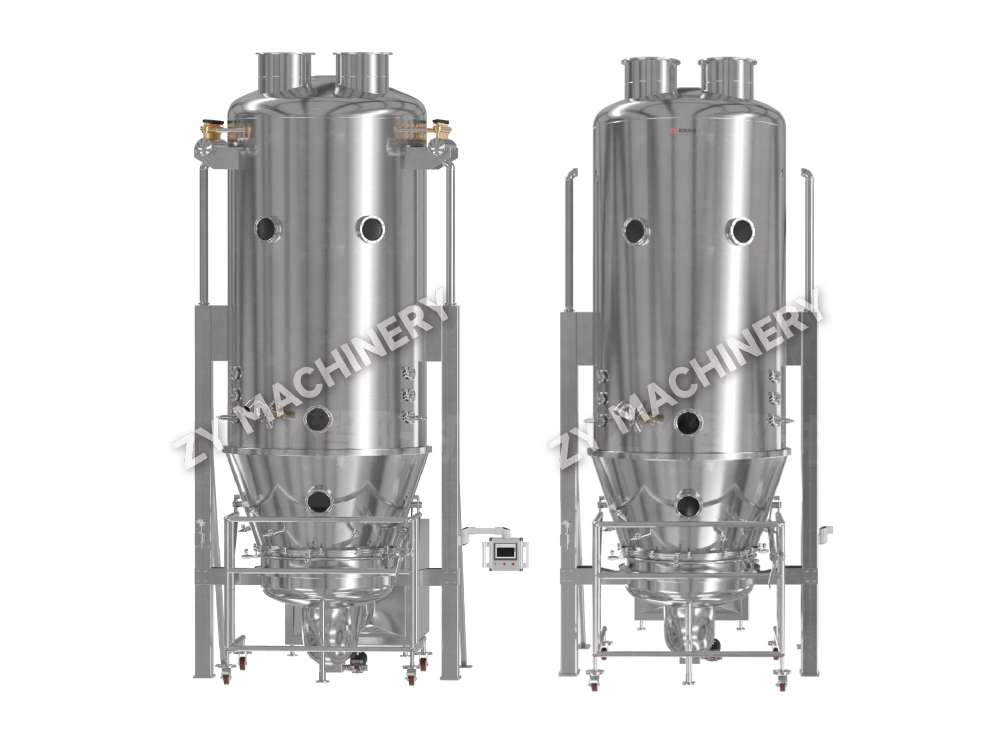
FBDX Cyclone Fluid-bed Granulating & Coating Machine
The defining feature of the FBDX machine is its angled blade air distributor. During operation, the process fan supplies air to the lower section of the equipment. The air passes through the gaps formed by the blades and enters the product zone in a directed pattern.
Because the blades are set at a specific angle, the airflow develops a rotational component. Instead of moving only vertically, the air encourages the product to circulate in a vortex. This vortex helps maintain a more orderly path for the particles and increases the frequency with which they pass through the processing region.
A controlled circulation pattern can be especially valuable when the material has a wide particle-size range or a tendency to segregate. The air movement helps redistribute the particles and supports more consistent exposure to the liquid spray. It also helps reduce areas in which particles may settle without receiving adequate heat or coating material.
Fluidization occurs when upward air forces balance part of the gravitational force acting on the particles. The particles become mobile and behave as a fluid-like mass. In the FBDX system, the blade geometry adds a directional and rotational component to this movement.
The objective is not simply to suspend the product at maximum velocity. Excessively aggressive fluidization can increase attrition, create unwanted fines, or damage fragile particles. Insufficient fluidization can cause agglomeration, uneven drying, and stagnant regions. The cyclone design supports a controlled operating window in which the product remains active without unnecessary mechanical stress.
During wet granulation, the particles repeatedly move through the binder spray zone. Binder droplets wet the powder surface, and particle-to-particle contact causes nuclei to form and grow. Continued circulation, drying, and controlled wetting help develop granules with the desired size and strength.
During coating, the same circulation principle helps individual granules or pellets receive repeated and relatively uniform exposure to the coating solution. The solvent or water evaporates as heated air passes through the bed. Over time, successive spray and drying cycles build the required film thickness.
The side-wall pneumatic nozzles are designed to atomize and distribute binders or coating liquids into the moving product. The nozzle system can be adapted to the formulation and process scale. Important operating factors include liquid viscosity, spray rate, atomization pressure, droplet size, product temperature, airflow, and drying capacity.
By introducing liquid into the active vortex layer, the nozzles support contact between droplets and a constantly moving particle population. This helps reduce the risk that a fixed group of particles will receive excessive liquid while another group receives very little.
The spraying system is also relevant to coating quality. Uniform film formation requires a balance between liquid deposition and solvent removal. If the spraying rate is too high for the available drying capacity, the product may become tacky or form agglomerates. If the spray rate is too low, processing time may increase unnecessarily. The FBDX design provides a process environment in which these parameters can be adjusted systematically.
Granulation converts fine powders into larger, more manageable particles. Properly formed granules may offer better flowability, improved compressibility, reduced dust, more consistent die filling, and more reliable downstream handling. The FBDX machine supports this operation by combining controlled wetting, circulation, and drying in one fluidized process.
The machine is designed to produce porous granules with fast-dissolving characteristics. Porosity can help liquid penetrate the granule structure, which may support rapid disintegration or dissolution when appropriate for the formulation. At the same time, controlled binder distribution can provide strong mechanical integrity and reduce the generation of fines during transfer.
High sphericity is another reported benefit of the cyclone fluidization pattern. More spherical granules often flow more easily and may produce a more consistent bulk behavior. A glossy surface can also be advantageous for appearance and may support the formation of a continuous coating film in later processing.
Granulation performance depends on many formulation variables, including powder particle size, moisture content, binder type, binder concentration, spray rate, inlet-air temperature, product temperature, airflow, and drying endpoint. The FBDX machine does not eliminate the need for process development, but its circulation pattern provides a strong platform for controlling these variables.
Materials with poor flowability can be difficult to process in systems that rely on simple vertical fluidization. They may bridge, channel, or settle unevenly. The cyclone-driven movement helps keep such materials active and improves the opportunity for uniform binder contact. Similarly, powders with limited moisture resistance can often be processed by carefully managing spray rate and drying conditions.
For a granulation process, manufacturers commonly evaluate particle-size distribution, moisture content, bulk density, tapped density, angle of repose, flow rate, friability, crushing strength, porosity, dissolution, and appearance. The FBDX can be applied to processes in which these attributes must be controlled within defined limits.
Uniform circulation supports consistency across the batch. The objective is to prevent a situation in which one region contains large, wet agglomerates while another contains dry, ungranulated powder. Stable airflow and appropriate liquid distribution are central to achieving a narrow and reproducible granule profile.
The machine’s ability to combine granulation and drying can also reduce intermediate handling. Fewer transfers may reduce material loss, dust generation, contamination risk, and labor requirements. It can also simplify the process route when the product can be granulated and dried in the same vessel.
Thin-film coating is used to improve appearance, protect the core material, modify handling characteristics, or prepare particles for a later processing step. A uniform film requires consistent exposure of each granule or pellet to the spray and adequate drying between applications.
The FBDX system promotes repeated circulation through the spray zone. This helps distribute the coating solution over the product population and supports gradual film development. With appropriate formulation and operating conditions, the machine can produce smooth, continuous, and visually consistent surfaces.
Enteric coating is used to delay release in the stomach and promote release under higher-pH conditions in the intestinal environment. Such coatings are sensitive to weight gain, film continuity, polymer distribution, and drying history. Incomplete coverage may result in premature release, while excessive or uneven coating may delay release beyond the intended profile.
The FBDX cyclone circulation principle is suitable for enteric coating because it encourages repeated contact between the particles and the coating spray. Uniform exposure can help reduce uncoated areas and support more consistent coating thickness. Final performance must still be confirmed through appropriate dissolution testing and product-specific qualification.
Sustained-release products require a carefully designed barrier or matrix that controls the rate at which the active ingredient becomes available. Coating thickness, polymer type, pore structure, plasticizer content, curing conditions, and particle size can all affect release behavior.
The FBDX machine provides a controlled environment for applying sustained-release films to granules or pellets. The orderly vortex movement can help distribute the polymer solution evenly, while the drying system supports the removal of water or solvent. Consistent processing is particularly important when small differences in film weight gain can produce measurable changes in release performance.
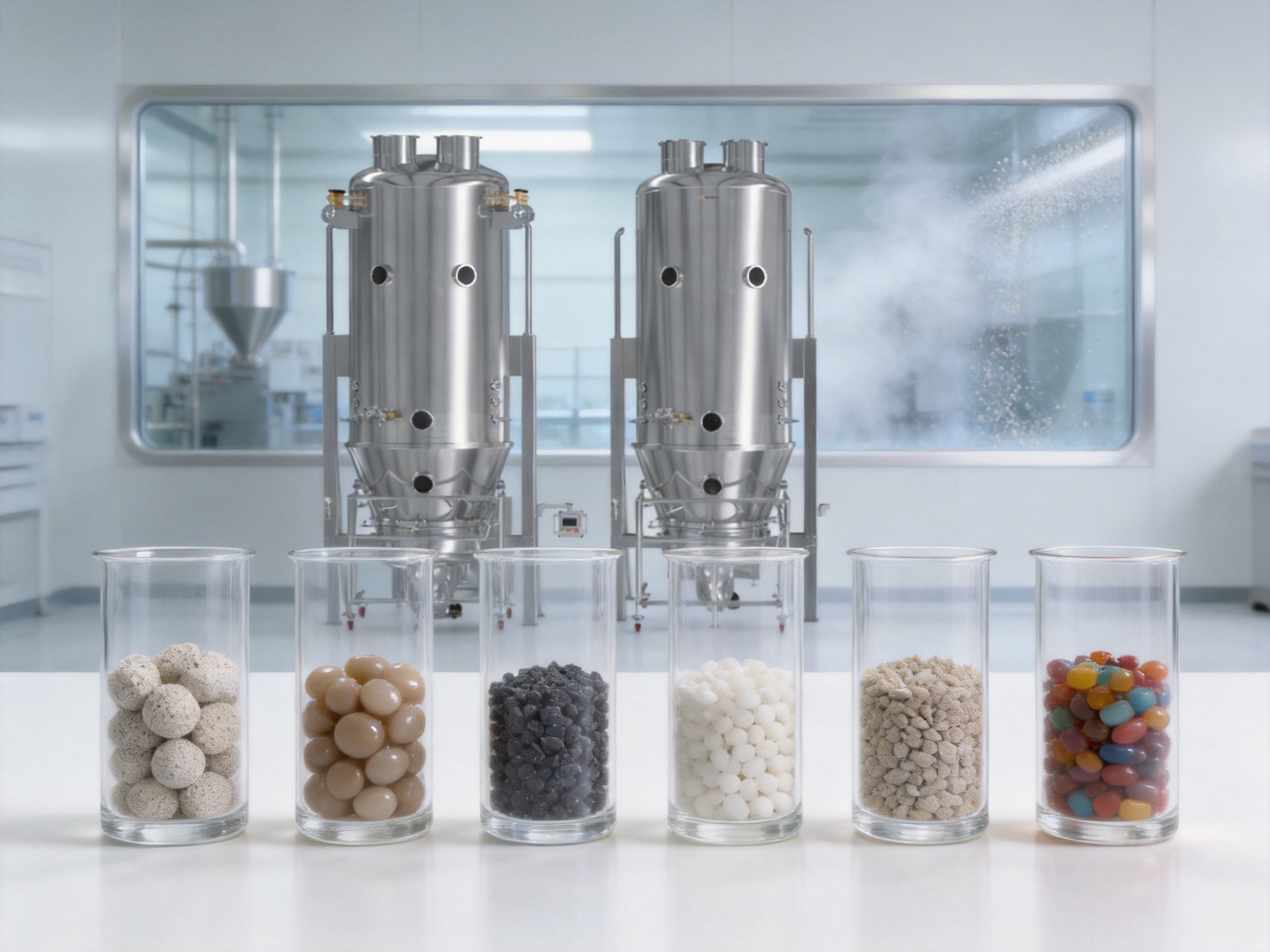
In addition to pharmaceutical release control, the machine can apply coatings for taste masking, moisture protection, waterproofing, coloring, heat insulation, and isolation. Taste masking may be required for bitter active ingredients, minerals, veterinary ingredients, or nutraceutical compounds. Moisture-proof coatings can help protect hygroscopic powders or granules during storage.
Color coating can improve product identification and appearance, while isolation layers can separate incompatible ingredients or protect a core from interaction with a later coating. Heat-insulating or protective films may be used in specialized applications where the surface needs additional resistance.
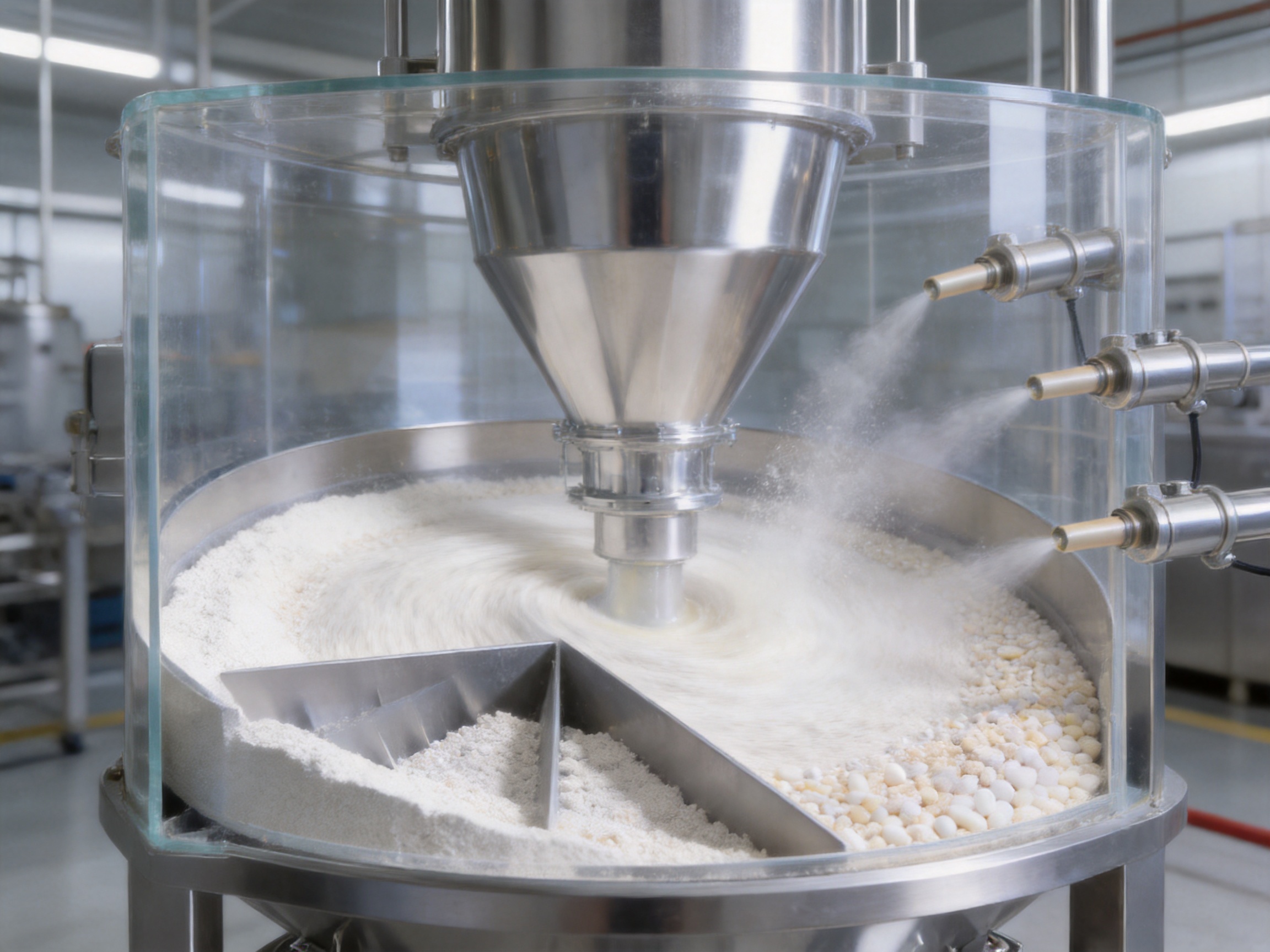
Many conventional fluid-bed systems rely primarily on upward airflow. While this principle can be effective, the quality of fluidization may be influenced by product loading, particle properties, air-distribution design, and chamber geometry. Uneven airflow may create preferential channels, stagnant areas, or inconsistent circulation.
The FBDX machine adds a cyclonic component through its angled blade structure. This promotes an organized vortex and helps the product move through the chamber in a more defined pattern. The result is a processing environment designed to reduce channeling and dead spots.
Uniform spraying is one of the most important requirements in wet granulation and coating. Poor contact may cause localized wetting, incomplete coating, or uncontrolled agglomeration. The FBDX circulation pattern repeatedly brings particles into the spray region, helping improve liquid-product contact.
This advantage is particularly relevant for coating delicate pellets or small particles. When the material moves in an orderly manner, the operator can adjust the spray rate and atomization conditions with greater confidence. Reduced variation in liquid exposure can contribute to more stable coating weight gain and surface quality.
Dead zones are regions in the processing chamber where product movement or airflow is insufficient. Material trapped in these areas may remain wet, dry slowly, or receive an inconsistent coating. In severe cases, dead zones can promote agglomeration and increase cleaning difficulty.
The cyclone-driven air distribution is intended to overcome these stagnant regions. By encouraging rotational circulation, the system helps keep more of the product in active motion. This can improve drying uniformity and reduce the likelihood of untreated or overtreated material remaining in the batch.
Excessive mechanical impact can damage fragile granules and coated pellets. Broken particles may create fines, affect flowability, and reduce coating uniformity. The FBDX system relies on airflow-driven movement rather than a high-speed mechanical agitator in the product chamber.
Its controlled vortex motion is designed to support efficient circulation while reducing unnecessary breakage. The actual result depends on the material’s mechanical strength and process settings, but the equipment concept is favorable for applications in which particle integrity is important.
The FBDX is suitable for both granulation and coating. This flexibility allows one equipment platform to support multiple products and process stages. It can be applied to powders, granules, and pellets and can accommodate different binders, polymers, colors, protective materials, and functional coating systems.
Compared with a single-purpose machine, a multifunctional unit may improve asset utilization and reduce the need for separate processing equipment. It can also support a more streamlined production layout, subject to the manufacturer’s process and containment recommendations.
The available models cover batch capacities from 10 kg to 500 kg. Smaller models can support laboratory development, formulation studies, and pilot trials, while larger models are intended for industrial production. This range helps manufacturers maintain a consistent equipment concept as a product moves from development to scale-up.
Using a related design across different scales can simplify operator training, process understanding, and technology transfer. Scale-up still requires engineering evaluation because airflow, spray geometry, heat transfer, and drying behavior change with equipment size. However, a coherent product family provides a practical foundation for that work.
The FBDX series includes thirteen listed models. Their nominal batch capacities and main fan powers are shown below. Actual operating capacity depends on formulation density, particle characteristics, target process conditions, and the selected process route.
| Model | Nominal Capacity (kg/batch) | Fan Power (kW) | Reference Installation Diameter (mm) |
| FBDX-10 | 10 | 4 | 550 |
| FBDX-15 | 15 | 5.5 | 550 |
| FBDX-20 | 20 | 7.5 | 550 |
| FBDX-30 | 30 | 11 | 700 |
| FBDX-45 | 45 | 11 | 850 |
| FBDX-60 | 60 | 15 | 1000 |
| FBDX-90 | 90 | 18.5 | 1100 |
| FBDX-100 | 100 | 18.5 | 1100 |
| FBDX-120 | 120 | 18.5 | 1200 |
| FBDX-150 | 150 | 18.5 | 1300 |
| FBDX-200 | 200 | 22 | 1400 |
| FBDX-300 | 300 | 37 | 1600 |
| FBDX-500 | 500 | 45 | 1800 |
The fan power increases with processing capacity to provide the airflow required for fluidization and drying. Noise is specified as no more than 75 dB when the fan is separated from the main machine. This configuration can help reduce noise exposure in the operating area and offers greater flexibility for plant layout.
Compressed-air pressure is specified at 0.4–0.6 MPa. Consumption ranges from approximately 0.9 m³/h on the smaller models to 4.0 m³/h on the largest listed model. Steam pressure is also specified at 0.4–0.6 MPa, with consumption increasing according to machine size. Electrical heater power is selected by the client, allowing the heating configuration to be matched to the available utilities and process needs.
Installation dimensions vary by model. The reference diameter ranges from 550 mm to 1800 mm. The listed length, width, height, and auxiliary dimensions should be used during preliminary layout planning, while final drawings should be confirmed for the specific project configuration.
For formulation development, the FBDX-10, FBDX-15, FBDX-20, and FBDX-30 models may be considered according to the required batch size. These units can help development teams investigate binder concentration, coating formulation, spray rate, drying conditions, granule growth, and release behavior.
Pilot-scale models such as FBDX-45, FBDX-60, FBDX-90, FBDX-100, and FBDX-120 may be suitable for process verification, scale-up studies, validation preparation, and limited production. The selected model should provide enough capacity for representative process behavior without creating excessive material requirements.
FBDX-150, FBDX-200, FBDX-300, and FBDX-500 are intended for larger batch applications. Selection should consider not only nominal batch weight but also bulk density, product volume, fill ratio, drying load, coating weight gain, batch cycle time, and future capacity requirements.
A technical evaluation should also review the available steam, compressed air, electrical power, exhaust capacity, room height, equipment access, cleaning method, and containment strategy. These factors help ensure that the selected unit can operate effectively within the customer’s facility.
Changzhou Zhiyang Machinery Equipment Co., Ltd. approaches equipment design from a process perspective. Rather than treating the machine as an isolated hardware product, the company evaluates material characteristics, target capacity, production conditions, and site limitations. This approach is important because granulation and coating results depend on the interaction between equipment, formulation, utilities, and operating procedure.
A process-driven design may include recommendations for airflow, spray configuration, heating, exhaust, liquid preparation, conveying, and control. It can also help define the appropriate route for laboratory development, pilot scale-up, and commercial production.
The company’s product scope includes laboratory equipment, mixing equipment, granulation equipment, drying equipment, coating equipment, auxiliary processing equipment, and transfer and conveying systems. This broad portfolio allows customers to source related units from one engineering partner.
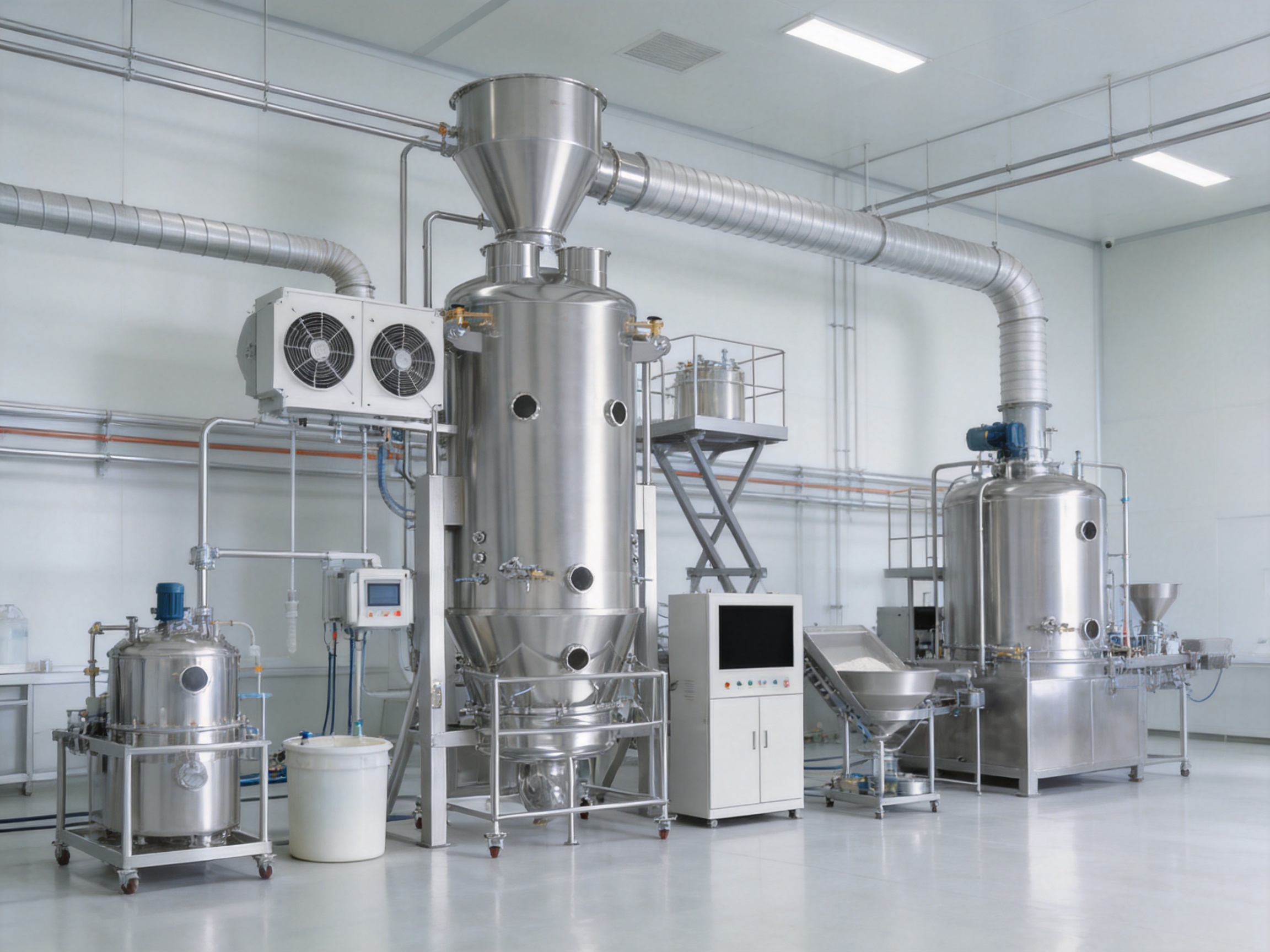
For a powder-processing project, equipment integration can be as important as the performance of an individual machine. A complete process may include material charging, premixing, wet granulation, fluid-bed drying, coating, lifting, transfer, screening, storage, and packaging. Compatibility between these stages can influence productivity, contamination control, cleaning time, and product loss.
Because the FBDX is part of a larger equipment family, it can be incorporated into modular systems or complete production lines. The company’s experience in auxiliary processing and conveying can support the design of a more coordinated plant solution.
The manufacturer serves pharmaceutical, biopharmaceutical, biotechnology, nutraceutical, veterinary, additives, and related industries. These sectors often require different levels of containment, cleanability, automation, documentation, and process flexibility.
Pharmaceutical applications may emphasize dose uniformity, coating performance, traceability, and validation support. Nutraceutical applications may prioritize high throughput, product protection, and flexible handling of plant-based or mineral ingredients. Veterinary and additive applications may involve larger batch sizes, specialized powders, or strong odor and dust-control requirements.
Serving several sectors helps the company understand a broad range of material behavior and production conditions. This experience supports practical recommendations when customers are evaluating a new granulation or coating process.
According to the supplied company information, Changzhou Zhiyang Machinery Equipment Co., Ltd. has strengthened its research and development capabilities, expanded its product portfolio, obtained quality system certification, and developed patented technologies. These efforts support the continuous improvement of machine structure, process performance, reliability, and serviceability.
The FBDX cyclone concept reflects this emphasis on technical development. The blade structure, airflow distribution, and side-wall spraying arrangement are aimed at solving common fluid-bed challenges such as channeling, dead zones, uneven wetting, and product breakage.
Equipment supply is only one part of a successful process project. Installation planning, utility coordination, commissioning, operator training, process trials, and production integration can all influence the final result. The company provides standalone machines, modular systems, and complete production lines, allowing the project scope to be matched to the customer’s requirements.
This flexibility is useful for manufacturers that may begin with one processing unit and later expand into a larger integrated line. It also supports customers that need a complete engineering implementation plan rather than a machine delivered without process context.
Reliable granulation and coating depend on the control of several interacting variables. Inlet-air temperature affects drying capacity and product temperature. Airflow influences fluidization intensity and particle movement. Spray rate controls liquid addition. Atomization pressure affects droplet size. Binder concentration influences granule growth and strength. Coating formulation determines film formation, surface properties, and release behavior.
The operator should establish a defined operating window for each formulation. The process may begin with a fluidization stage, followed by preheating or conditioning, spraying, drying, and endpoint confirmation. During spraying, product temperature and exhaust conditions should be monitored to avoid excessive wetting or premature drying.
For granulation, the endpoint may be evaluated using moisture analysis, particle-size testing, torque or pressure trends where applicable, sampling, and product performance tests. For coating, weight gain, appearance, surface morphology, dissolution, release profile, and residual solvent or moisture may be evaluated.
The FBDX design supports process development by creating a consistent circulation pattern, but the most effective settings must be determined for each formulation. Materials with different densities, particle sizes, moisture sensitivity, and binder requirements will respond differently to the same operating parameters.
Airflow must be high enough to maintain active circulation but controlled to avoid excessive attrition. The product load, bulk density, particle size, and desired movement pattern should be considered when setting the fan and air-handling system.
The cyclone air distributor is intended to reduce preferential flow and encourage movement across the chamber. This can make the process more stable, although the airflow should still be confirmed through commissioning trials and product-specific testing.
Spray rate should be matched to the drying capacity of the system. A high spray rate can shorten the liquid-addition phase but may increase the risk of overwetting, agglomeration, or sticking. A low spray rate may improve control but extend the batch cycle.
Nozzle selection, atomization pressure, nozzle position, liquid viscosity, and solids content all influence droplet formation. Regular nozzle inspection and cleaning are important for maintaining a consistent spray pattern. The side-wall pneumatic nozzle arrangement provides access to a controlled spray location within the vortex layer.
Drying removes water or solvent after granulation or coating. The process must be sufficiently strong to reach the target endpoint without damaging the product or affecting the coating film. Excessive temperature may degrade heat-sensitive ingredients or alter polymer properties, while insufficient drying may leave residual moisture and cause instability.
The FBDX can use steam or electrical heating according to the customer’s utility configuration. Steam pressure is listed at 0.4–0.6 MPa, and electrical heater power is selected by the client. This allows the thermal system to be aligned with the facility’s available energy source and process requirements.
Pharmaceutical and nutraceutical manufacturers need equipment that can be operated consistently and maintained efficiently. Product-contact surfaces, access points, gaskets, spray components, filters, and discharge arrangements should be considered during system selection.
The FBDX machine can be evaluated as part of a hygienic process design that includes appropriate materials, surface finishes, access for inspection, cleaning procedures, and product-changeover requirements. The final configuration should be specified according to the customer’s regulatory and contamination-control expectations.
Reduced breakage and more uniform processing can improve operational efficiency. Fewer fines may reduce product loss and dust loading. More consistent coating may reduce rejected batches or additional inspection. Combining processing stages in one machine may also reduce transfer time and the number of intermediate containers.
The separated-fan arrangement, with noise not exceeding 75 dB according to the provided specification, can improve the working environment when the fan is located away from the main operating area. It may also provide additional flexibility in arranging the production room and utility space.
In pharmaceutical production, the FBDX can be used for wet granulation of tablet or capsule ingredients, coating of granules and pellets, taste masking, enteric protection, and sustained-release systems. The machine is applicable to development, scale-up, and commercial batch processing.
Its process capabilities can support products that require improved flowability, controlled dissolution, reduced dust, enhanced mechanical strength, or protection against environmental moisture. Formulation and process development remain essential to confirm the required product attributes.
Nutraceutical powders frequently contain plant extracts, minerals, vitamins, proteins, or other ingredients with challenging flow and moisture characteristics. Granulation can improve handling, reduce segregation, and make the material more suitable for tablets, capsules, sachets, or controlled dispensing.
Coating can be used to mask taste, protect sensitive ingredients, improve appearance, or reduce moisture uptake. The FBDX cyclone circulation pattern is suited to these requirements because it supports controlled wetting and drying of moving particles.
Veterinary formulations may require taste masking, protective coatings, controlled release, or improved powder flow. The machine can process powders, granules, and pellets used in different dosage forms. Its broad capacity range allows the same equipment concept to be considered for development batches and larger production volumes.
Industrial additives and specialty powders may need granulation to reduce dust, improve transport, or produce a consistent particle size. Protective coatings may be applied to control moisture sensitivity, improve compatibility, or create a functional surface.
The FBDX is suitable for applications where material movement, liquid distribution, and drying must be coordinated. Process parameters should be selected according to the chemistry, thermal sensitivity, particle strength, and end-use requirements of the product.
Before purchasing a fluid-bed granulation and coating machine, customers should define the required batch capacity, product density, formulation type, coating weight gain, target cycle time, utilities, cleaning method, and production environment. These inputs help determine the appropriate model and configuration.
Plant layout should account for the machine body, separated fan, air-handling equipment, heating system, exhaust ducting, liquid preparation, compressed-air lines, steam connections, electrical controls, maintenance access, and material transfer route. The reference installation dimensions provide an initial basis for planning, but final engineering drawings should be reviewed before construction or installation.
Customers should also consider future expansion. Selecting a model only for current demand may create a capacity limitation if the product market grows. Conversely, selecting an oversized machine may reduce process flexibility during development. A staged approach using related laboratory, pilot, and production models can support more efficient scale-up.
Commissioning should include utility verification, empty-machine inspection, airflow testing, nozzle testing, temperature checks, control-system verification, and trial processing with representative material. The results should be documented as part of the equipment qualification and process-development record.
A specialized manufacturer can offer more than standard machine fabrication. Understanding powder behavior, granulation mechanisms, coating chemistry, air distribution, drying, and material transfer is important when designing a practical production system.
Changzhou Zhiyang Machinery Equipment Co., Ltd. was founded in 2010 and is based in Changzhou, China. The company focuses on powder processing and oral solid dosage equipment and provides solutions for laboratory, pilot, and full-scale production.
Its strengths include process-oriented design, a broad range of equipment categories, modular integration, complete production-line engineering, R&D development, patented technologies, quality-system certification, overseas service capabilities, and experience serving customers in multiple countries and regions.
For customers evaluating the FBDX machine, this broader capability can reduce the need to coordinate multiple unrelated suppliers. It can also help align granulation and coating with upstream mixing, downstream drying, conveying, screening, and packaging requirements.
The company’s stated values emphasize honesty, strength, quality, specialty, customer reputation, responsive service, research, and innovation. These values are relevant to equipment projects in which long-term reliability, technical communication, spare parts, service response, and process support are as important as the initial purchase price.
The FBDX machine is designed for fluid-bed powder granulation and coating. It can form granules from powders using liquid binders and apply thin-film, enteric, sustained-release, taste-masking, moisture-proof, waterproof, coloring, heat-insulating, or isolation coatings to powders, granules, and pellets.
The machine uses angled blades to create airflow passages with a rotational component. This produces a vortex-like circulation pattern rather than relying only on upward air movement. The design is intended to reduce channeling and dead zones while improving material circulation and liquid contact.
The listed models range from FBDX-10 with a nominal capacity of 10 kg per batch to FBDX-500 with a nominal capacity of 500 kg per batch. Intermediate models are available for 15, 20, 30, 45, 60, 90, 100, 120, 150, 200, and 300 kg per batch.
Yes. The cyclone fluidization pattern is designed to promote active and orderly movement, making the machine suitable for materials with poor flowability or challenging powder behavior. Actual performance depends on particle size, density, moisture, formulation, and operating parameters.
Yes. The FBDX is a multifunctional system that can be configured for wet granulation and coating. Using one processing platform may reduce intermediate handling and support a more streamlined production route.
The machine supports thin-film coating, enteric coating, sustained-release coating, taste masking, moisture-proofing, waterproofing, coloring, heat insulation, and isolation. Coating performance must be confirmed through formulation development and product-specific testing.
The supplied specifications include compressed air at 0.4–0.6 MPa and steam at 0.4–0.6 MPa. Steam consumption varies by model. Electrical heater power is selected by the client. The final utility list should include fan power, heating, exhaust, control systems, and any auxiliary equipment.
The specified noise level is no more than 75 dB when the fan is separated from the main machine. Final noise performance can depend on installation conditions, fan location, ducting, room construction, and operating mode.
Model selection should consider batch mass, bulk density, product volume, target fill level, spray load, drying requirement, cycle time, available utilities, room dimensions, and future production plans. The nominal capacity should not be considered in isolation.
Yes. The FBDX series includes laboratory, pilot, and production-scale capacities. Scale-up should be supported by comparative trials and evaluation of airflow, spray distribution, drying behavior, product temperature, and coating or granulation performance.
The FBDX Cyclone Fluidized Bed Granulation and Coating Machine is manufactured by Changzhou Zhiyang Machinery Equipment Co., Ltd., a China-based supplier of powder processing, oral solid dosage, and related production equipment.
Yes. The manufacturer provides standalone machines, modular systems, and complete production lines. Integration may include mixing, granulation, drying, coating, conveying, auxiliary processing, and other equipment according to the project requirements.
The FBDX Cyclone Fluidized Bed Granulation and Coating Machine offers a technically focused approach to powder granulation and particle coating. Its angled blade air distributor creates a strong circulating vortex that encourages orderly material movement, improves liquid-particle contact, and helps overcome channeling and dead zones.
These characteristics make the machine suitable for producing porous, fast-dissolving granules with high sphericity, glossy surfaces, and strong mechanical integrity. They also support thin-film, enteric, sustained-release, taste-masking, moisture-proof, waterproof, coloring, heat-insulating, and isolation coatings.
Compared with conventional fluid-bed designs that may experience uneven airflow or stagnant regions, the cyclone structure is intended to improve circulation and processing uniformity. Its broad model range, from 10 kg to 500 kg per batch, supports applications from laboratory development to full-scale manufacturing.
The value of the FBDX system is further supported by the manufacturer’s process-driven engineering approach and broad product portfolio. Changzhou Zhiyang Machinery Equipment Co., Ltd. can provide individual machines, modular systems, and complete production-line solutions for pharmaceutical, biopharmaceutical, biotechnology, nutraceutical, veterinary, additive, and related industries.
For manufacturers seeking a flexible and scalable platform for granulation and coating, the FBDX machine provides a combination of cyclonic fluidization, controlled pneumatic spraying, adaptable heating, broad capacity options, and integrated engineering support. Final equipment selection and process qualification should always be based on the specific material, formulation, site, regulatory expectations, and production objectives.
1. Changzhou Zhiyang Machinery Equipment Co., Ltd. Product information for the FBDX Cyclone Fluidized Bed Granulation and Coating Machine.
2. Changzhou Zhiyang Machinery Equipment Co., Ltd. Product parameters and model selection data for FBDX fluid-bed equipment.
3. General principles of fluidized-bed granulation, drying, and coating in pharmaceutical solid dosage manufacturing.
4. General principles of particle coating, film formation, enteric protection, and modified-release processing.
5. General engineering practices for powder processing equipment integration, utility planning, commissioning, and scale-up.
Want to stay up to date?
Contact us via the email address below.
Don't worry about spam. We hate it too!
Mobile Client

Video Account
Phone:+86-15161130178
Tel:+86-519-88674267
Email:czzy188@163.com
Phone:+86-15161132798
Email:zy@zy-drying.com

WeChat ID

Copyright 2026 Changzhou Zhiyang Machinery Equipment Co., Ltd. All Rights Reserved  Oral Solid Dosage Equipment Manufacturer