 English
 Español
 русский
 中文简体
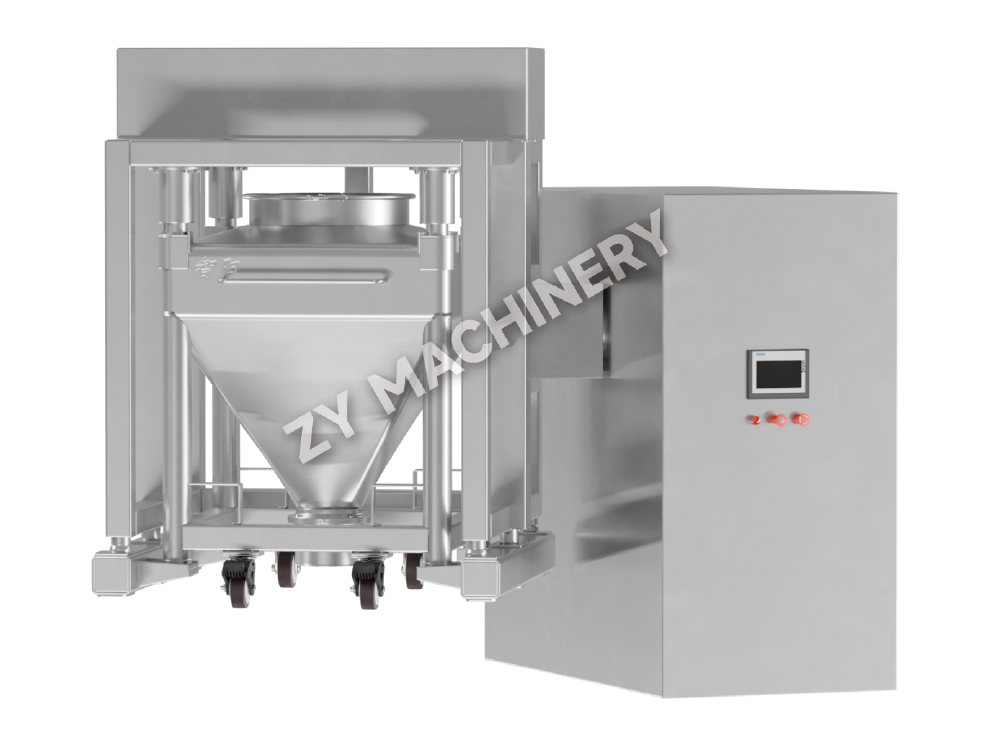
中文简体HGD Fixed-Bin Mixer (Square-Cone Mixer)
The HGD Fixed-Bin Mixer is designed for blending powders and granules in ph.....

Content
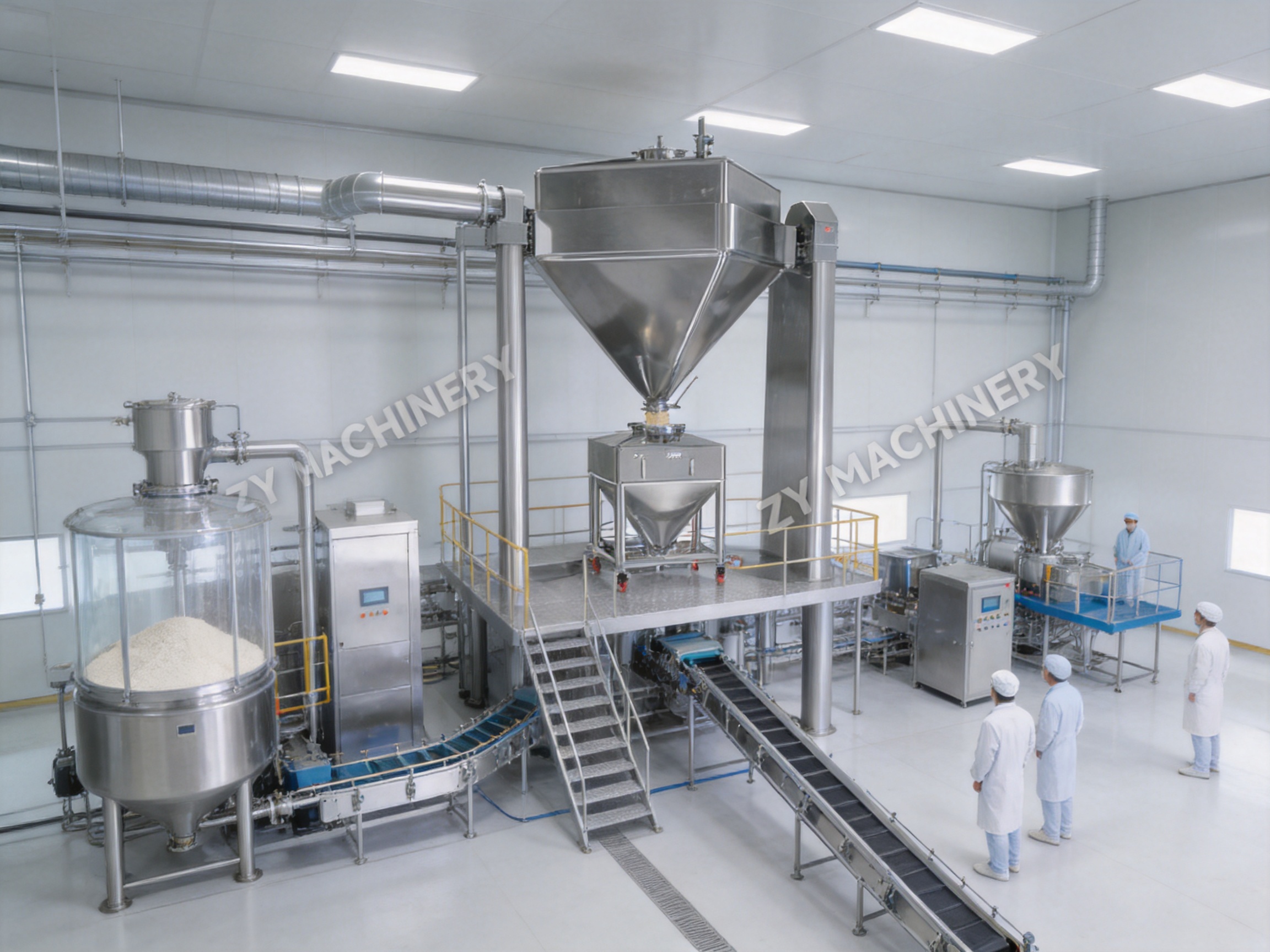
In pharmaceutical solid dosage manufacturing, blending is one of the most important operations in the production route. The quality of a tablet, capsule, granule, nutritional product, or other powder-based formulation depends heavily on whether its ingredients are distributed evenly throughout the batch. Even when the formulation, raw materials, and downstream equipment are carefully controlled, insufficient or inconsistent mixing can affect dosage uniformity, product performance, appearance, stability, and production efficiency.
The HGD Fixed-Bin Mixer, also known as a square-cone mixer, is designed to address these requirements through a large-capacity fixed-bin structure and a controlled rotational mixing process. It is suitable for granule-to-granule, granule-to-powder, and powder-to-powder applications. Its operating concept combines tumbling and tangential movement to promote thorough blending while maintaining a comparatively simple, hygienic, and maintainable internal design.
Developed for pharmaceutical solid dosage production, the mixer can also be applied in chemical, food, nutraceutical, veterinary, additive, and related powder-processing industries. Its available models cover hopper capacities from 200 to 10,000 liters, allowing the same equipment concept to serve laboratory-related development, pilot production, and large-scale manufacturing requirements.
Powder and granule formulations rarely consist of a single material. A typical batch may contain an active ingredient, fillers, binders, disintegrants, lubricants, pigments, flavors, or other functional additives. These components can differ substantially in particle size, density, shape, flowability, moisture content, and electrostatic behavior. As a result, achieving a consistent blend requires more than simply placing materials in a vessel and rotating them.
A suitable mixer must create enough movement to redistribute particles repeatedly without causing excessive segregation, particle breakage, heat generation, or unnecessary wear. It must also provide reliable control over speed and time so that operators can reproduce an established process from batch to batch.
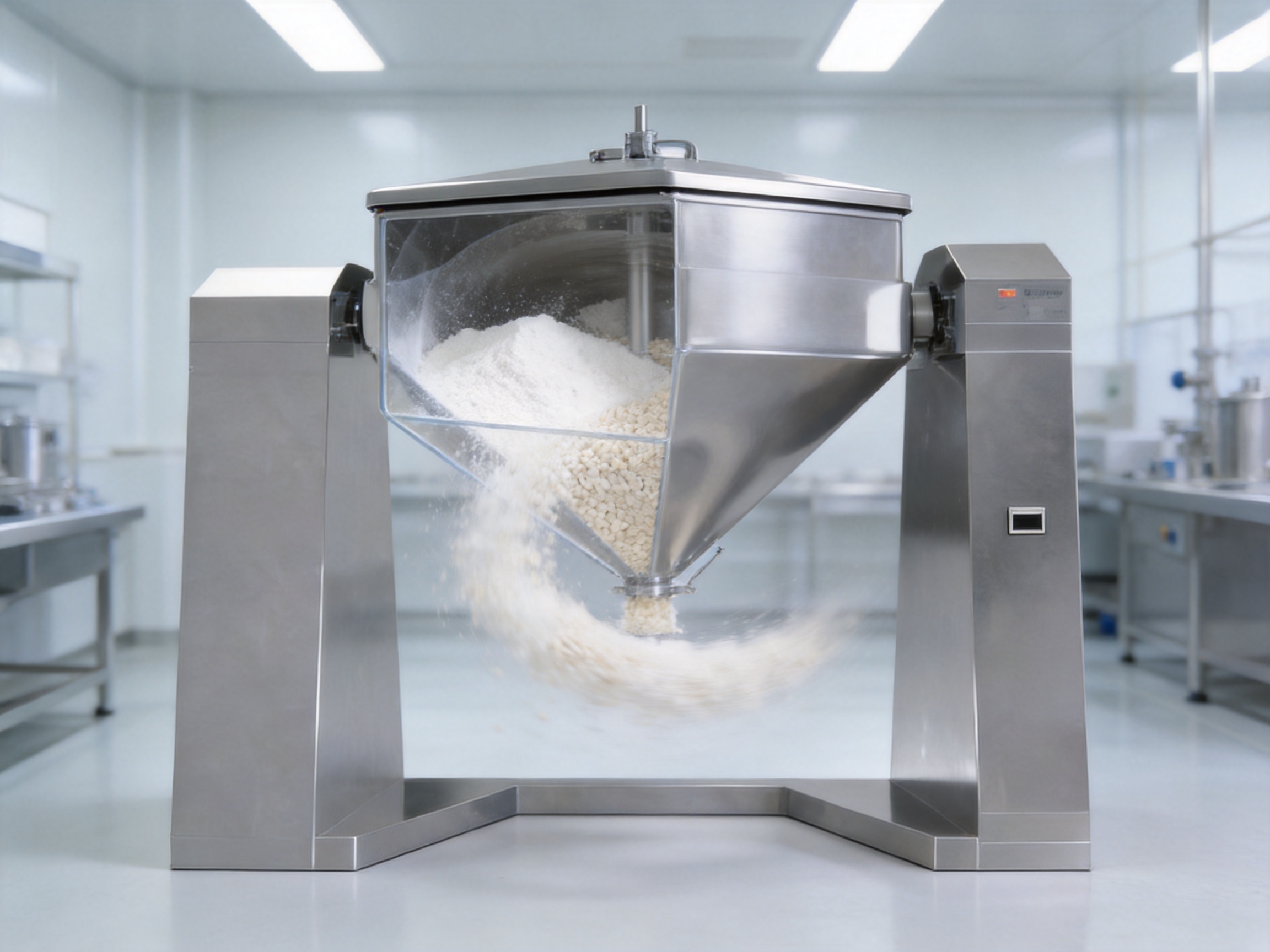
The HGD Fixed-Bin Mixer is configured to provide controlled movement for these types of materials. The fixed bin is positioned at an angle of approximately 30 degrees to the rotation axis. As the bin rotates, the material bed is lifted, rolled, cascaded, and redirected. This creates a combination of tumbling and tangential motion that encourages particles from different regions of the bin to exchange positions.
This type of movement is particularly valuable when the formulation includes both powders and granules. Granules can be incorporated into the powder mass, while fine components can be dispersed through the larger-particle structure. The actual process result depends on formulation properties, loading level, fill ratio, particle characteristics, and selected operating conditions, but the mixer provides a practical platform for developing and scaling the process.
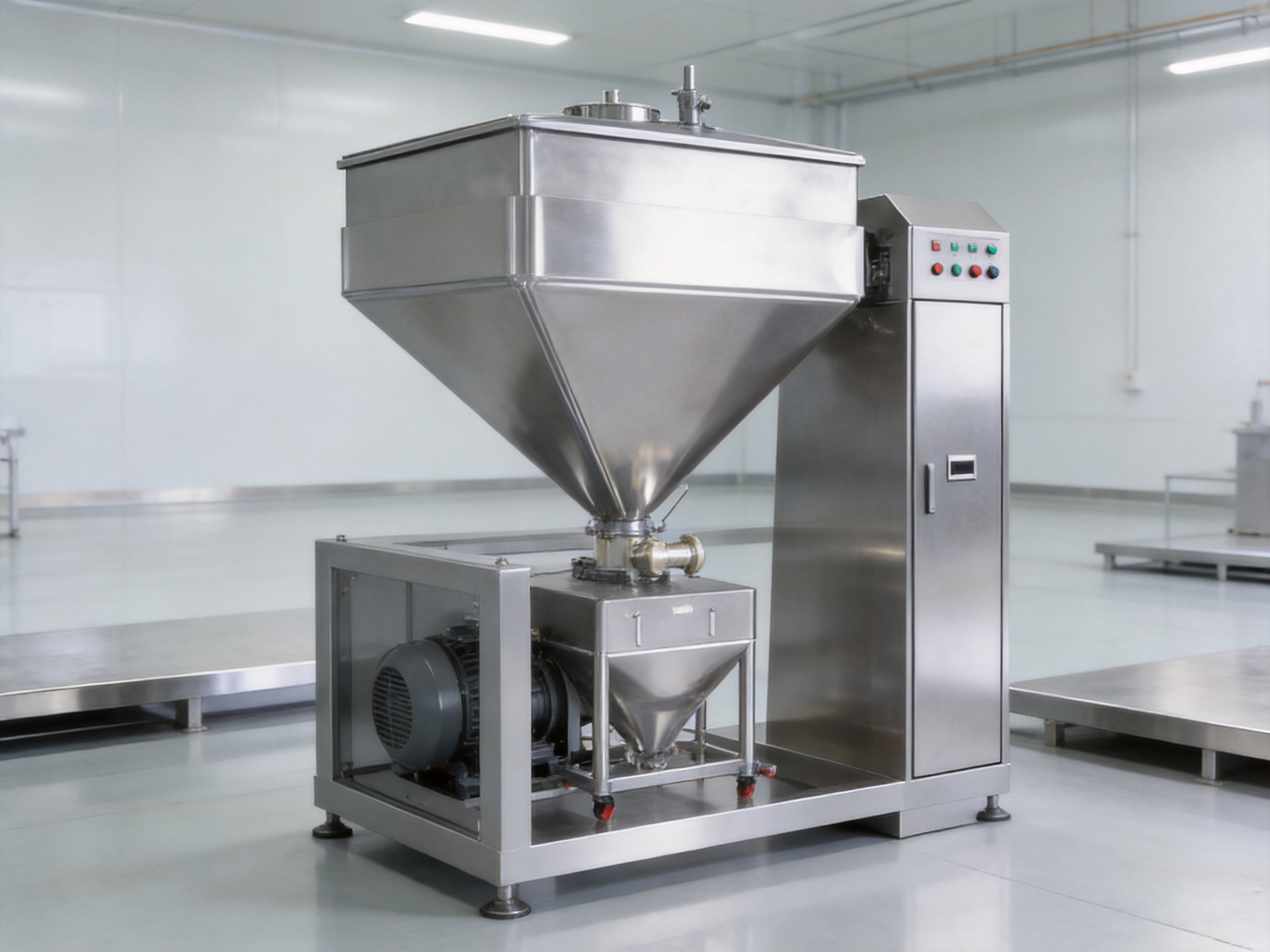
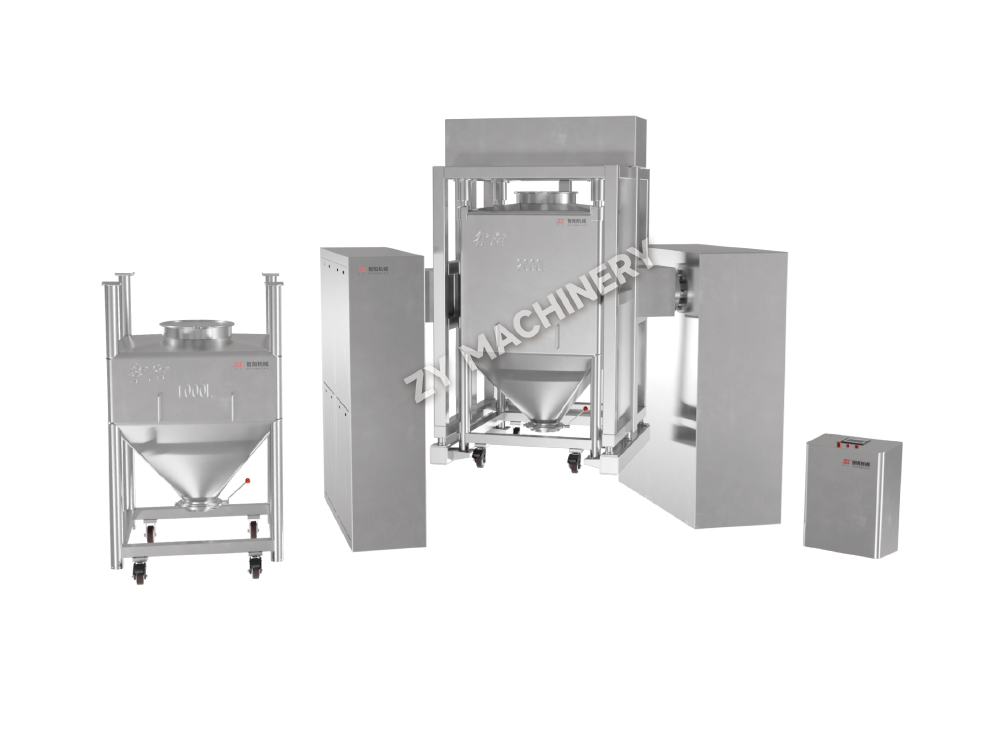
The HGD Fixed-Bin Mixer consists of four primary sections: the base, drive system, control unit, and mixing bin. Each section contributes to safe, stable, and repeatable operation.
The base supports the operating assembly and helps maintain mechanical stability during rotation. A stable base is important for large-capacity equipment because the mass of the bin and material changes significantly during loading, mixing, and discharge. Proper structural support also helps reduce unwanted vibration and contributes to the service life of the drive and bearings.
The drive system rotates the mixing bin at a controlled speed. Depending on the selected model, the working speed range extends from 3 to 20 revolutions per minute. Lower-capacity units generally provide a higher maximum speed range, while the largest models operate within a lower range that is appropriate for their greater mass and mechanical scale.
The control unit allows operators to establish mixing speed and mixing time according to the process recipe. Once the preset time is reached, the system stops automatically. This reduces reliance on manual timing and helps operators achieve a consistent process sequence.
The mixing bin provides the working volume for the formulation. Materials are loaded into the bin, the lid is secured, and the bin rotates according to the selected program. After blending is completed, the material is discharged for the next production step.
The name square-cone mixer reflects the geometry and movement of the mixing bin. Unlike a conventional fixed vessel equipped with internal agitator blades, the HGD design uses movement of the bin itself to create mixing action. This can provide a relatively open and clean internal working area without exposed screws, shafts, or complex internal mixing elements.
Before operation, the materials are loaded into the fixed bin. The lid is then closed and secured. The operator selects the required speed and mixing time through the control system. When the drive starts, the bin rotates around its axis while its angled geometry promotes changes in the material bed.
As the bin turns, material near the lower portion is carried upward. When the material reaches a suitable height, it flows or cascades downward. At the same time, the angled bin generates tangential movement that changes the direction of material travel. Repeated cycles of lifting, rolling, falling, and redirection gradually distribute the formulation throughout the available volume.
This action is different from high-shear mixing. The HGD Fixed-Bin Mixer is intended primarily for blending rather than aggressive deagglomeration or wet granulation. It is therefore well suited to formulations that require uniform distribution while retaining the physical characteristics of the granules.
The process can be stopped automatically when the programmed time has elapsed. The finished blend can then be discharged through the designated discharge arrangement. The anti-misoperation discharge valve is intended to help prevent accidental opening during mixing and to support safer handling during transfer.
One of the main applications is final blending before tablet compression or capsule filling. At this stage, active and inactive ingredients must be distributed as uniformly as possible. The mixer can be used for powder-to-powder blends, granule-to-granule blends, or combinations of preformed granules and fine powders.
Uniform final blending supports more consistent downstream feeding and helps reduce the risk of localized concentration differences. The exact mixing recipe should be established through process development and validated according to the product, but the equipment provides the necessary speed and time controls for repeatable operation.
Granules produced by wet granulation or dry granulation may require blending with other granules or excipients before compression. The HGD machine offers a large working volume for these operations and can process substantial batch quantities on larger models.
Because the mixing action is based on controlled tumbling rather than exposed internal screws, it can be appropriate for materials where excessive mechanical force could damage granule structure. Operators should still evaluate friability, particle-size distribution, moisture, and segregation behavior during process qualification.
The mixer can also process dry powder combinations. This includes formulations containing excipients, nutritional ingredients, food powders, chemical powders, and other dry particulate products. The angled bin and rotational action help bring different powder fractions into repeated contact.
For cohesive or difficult-flowing powders, the process may require careful selection of fill level, speed, loading order, and mixing time. In some cases, screening, preconditioning, or an additional deagglomeration stage may be necessary. The value of the HGD unit is that it offers a stable, clean, and scalable blending stage within a broader process system.
Pharmaceutical and nutraceutical plants often need equipment that can support multiple products and batch sizes. The HGD range includes models from 200-liter hopper capacity through 10,000 liters, allowing users to select a suitable machine according to production requirements.
This broad range can help manufacturers standardize their process approach across development and commercial operations. Smaller equipment may be used for process trials or limited batches, while larger machines can support routine production. The precise relationship between hopper capacity and usable working capacity must be determined for each formulation because the net carrying amount depends on bulk density, flowability, and loading conditions.
A major advantage of the HGD Fixed-Bin Mixer is its ability to accommodate large batches. The available models provide hopper capacities from 200 liters to 10,000 liters and net carrying capacities from approximately 60 kilograms to 3,000 kilograms, depending on the model and material characteristics.
Large-capacity blending can reduce the number of batches required for a production order. Fewer batch changes may reduce handling, cleaning frequency, scheduling complexity, and opportunities for operator error. For high-volume production, this can contribute to a more efficient manufacturing route.
Large capacity does not mean that every formulation should be filled to the maximum stated volume. Powder flow properties, bulk density, particle size, and required mixing performance must be considered. Nevertheless, the wide model range gives manufacturers flexibility when matching equipment to product demand.
The approximately 30-degree relationship between the bin and rotation axis is a defining feature of the design. This geometry helps produce strong tumbling and high-speed tangential movement during rotation. As a result, the material is not confined to a simple circular path. It is continually redirected within the bin.
This multidirectional movement is useful for improving contact between particles and promoting distribution throughout the batch. Compared with a basic rotating drum that may create limited movement patterns, the square-cone arrangement is intended to produce more complex material circulation.
The mixer has a smooth and hygienic construction without exposed screws or internal dead zones associated with complex mechanical agitators. A more open internal design can simplify cleaning and reduce locations where powder may accumulate.
For pharmaceutical and food production, cleanability is a significant equipment consideration. Residual powder can create cross-contamination risks, affect batch yield, and increase cleaning time. The HGD design is optimized for practical cleaning and supports manufacturing environments where hygiene and product changeover are important.
Stable operation is particularly important for large mixers. Uneven movement, excessive vibration, or irregular drive performance can affect both equipment life and mixing consistency. The HGD design incorporates a dedicated base, drive system, and controlled operating sequence to support dependable batch processing.
The automatic stop function provides a repeatable endpoint for the mixing cycle. When combined with documented operating parameters, it helps reduce variation caused by manual timing. This is valuable for manufacturers seeking consistent production records and reproducible blending conditions.
The operating sequence is straightforward: load the materials, secure the lid, set the speed and time, start the mixer, and discharge the completed blend after the cycle ends. A simple operating method can reduce training requirements and make the equipment easier to integrate into existing production procedures.
The absence of complex exposed internal mixing components can also simplify maintenance. Fewer internal mechanical elements may reduce inspection and replacement requirements within the product-contact area. Routine maintenance should still include inspection of the drive, bearings, seals, discharge valve, safety devices, electrical controls, and structural components.
Accidental discharge during rotation could create a serious safety risk and cause material loss. The anti-misoperation discharge valve is designed to help prevent this type of event. Safety controls should be used together with proper operating procedures, guarding, lockout practices, and operator training.
The lid must be secured before rotation begins, and operators should confirm that the working area is clear. Safety design is most effective when integrated into a complete operating system that includes documented procedures and regular inspection.
Pharmaceutical equipment must support more than basic mechanical operation. It must also be compatible with controlled manufacturing practices, cleaning procedures, material traceability, and process documentation. The HGD Fixed-Bin Mixer is optimized for GMP-oriented production requirements and is intended for use in pharmaceutical, chemical, and food environments.
The smooth construction and lack of exposed screws inside the mixing area can help reduce powder retention points. A hygienic design also supports more efficient inspection after cleaning. Operators can more readily examine accessible surfaces and identify any remaining material, damage, or irregularity.
The machine can be incorporated into a production line with upstream and downstream equipment. For example, a typical pharmaceutical process may include material dispensing, screening, granulation, drying, blending, lubrication, compression, capsule filling, coating, and packaging. The HGD unit can function as the blending stage within this sequence, depending on the product formulation and process design.
Integration planning should consider material transfer routes, loading height, discharge height, dust control, room classification, cleaning access, electrical requirements, operator access, and maintenance clearance. The published installation dimensions provide reference values, but the final layout should be confirmed for the selected model and site conditions.
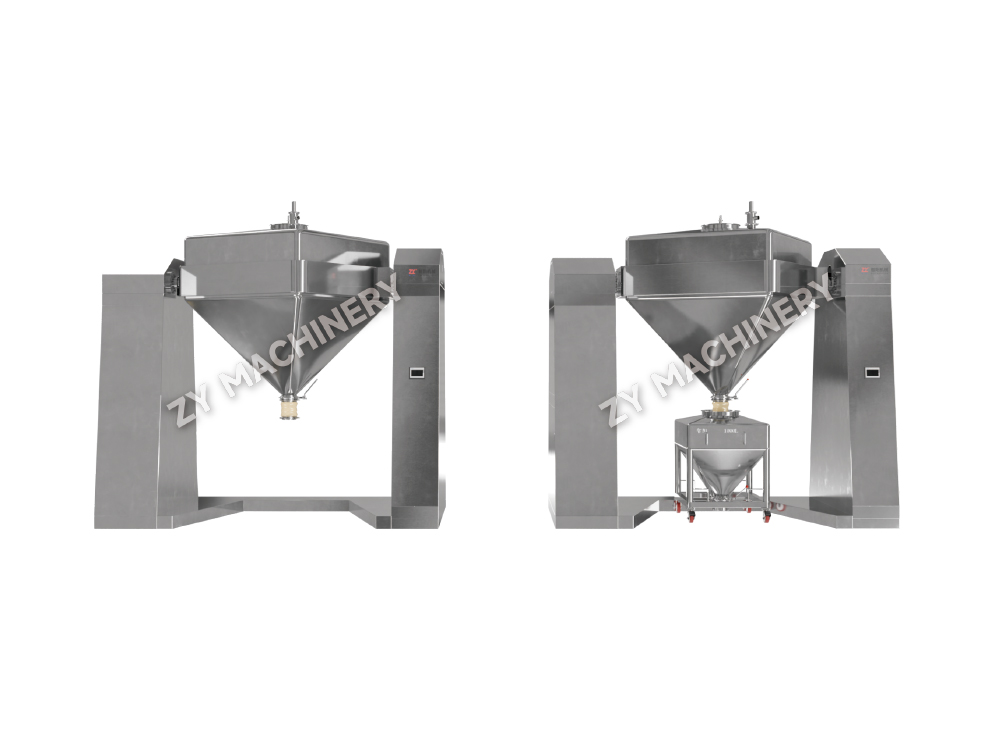
HGD Fixed-Bin Mixer (Square-Cone Mixer)
The HGD series is offered in multiple sizes. The following table summarizes the principal parameters supplied for the product range. “Net carrying” refers to the stated material carrying capacity, while hopper capacity refers to the nominal bin volume. Installation dimensions are reference values and should be confirmed during technical specification and project engineering.
| Item | Unit | HGD-200 | HGD-300 | HGD-400 | HGD-600 | HGD-800 | HGD-1000 | HGD-1200 | HGD-1500 | HGD-2000 | HGD-2500 | HGD-3000 | HGD-4000 | HGD-5000 | HGD-6000 | HGD-8000 | HGD-10000 |
| Power | kW | 1.5 | 1.5 | 1.5 | 2.2 | 3 | 4 | 4 | 4 | 5.5 | 5.5 | 7.5 | 7.5 | 11 | 11 | 15 | 15 |
| Mixing speed | rpm | 3–20 | 3–20 | 3–20 | 3–20 | 3–20 | 3–15 | 3–15 | 3–15 | 3–15 | 3–12 | 3–12 | 3–12 | 3–12 | 3–8 | 3–8 | 3–8 |
| Net carrying capacity | kg | 60 | 100 | 120 | 200 | 250 | 300 | 400 | 500 | 800 | 900 | 1,000 | 1,200 | 1,500 | 2,000 | 2,500 | 3,000 |
| Hopper capacity | L | 200 | 300 | 400 | 600 | 800 | 1,000 | 1,200 | 1,500 | 2,000 | 2,500 | 3,000 | 4,000 | 5,000 | 6,000 | 8,000 | 10,000 |
| Reference width W | mm | 1,000 | 1,200 | 1,200 | 1,300 | 1,400 | 1,400 | 1,400 | 1,400 | 1,600 | 1,700 | 1,700 | 1,700 | 2,000 | 2,100 | 2,200 | 2,200 |
| Reference width W1 | mm | 1,110 | 1,470 | 1,450 | 1,450 | 1,630 | 1,800 | 1,900 | 1,950 | 2,150 | 2,300 | 2,750 | 2,970 | 3,200 | 3,260 | 3,350 | 4,500 |
| Reference length L | mm | 1,700 | 2,000 | 2,000 | 2,280 | 2,380 | 2,600 | 2,900 | 3,000 | 3,150 | 3,300 | 3,600 | 3,800 | 4,300 | 4,400 | 4,600 | 4,860 |
| Reference height H1 | mm | 700 | 700 | 750 | 750 | 750 | 750 | 750 | 750 | 750 | 750 | 750 | 750 | 1,000 | 1,000 | 1,000 | 1,000 |
| Reference height H2 | mm | 1,270 | 1,300 | 1,460 | 1,480 | 1,550 | 1,650 | 1,720 | 1,750 | 1,820 | 1,900 | 2,130 | 2,430 | 2,560 | 2,630 | 2,650 | 2,800 |
| Reference height H3 | mm | 1,580 | 1,860 | 1,900 | 2,000 | 2,080 | 2,200 | 2,300 | 2,300 | 2,470 | 2,600 | 2,780 | 3,250 | 3,400 | 3,600 | 3,700 | 3,950 |
| Reference height H4 | mm | 1,810 | 2,170 | 2,200 | 2,200 | 2,380 | 2,550 | 2,650 | 2,700 | 2,900 | 3,050 | 3,500 | 3,720 | 4,200 | 4,260 | 4,350 | 4,600 |
The range demonstrates a progressive increase in power, carrying capacity, and overall installation size. The smallest models operate at speeds up to 20 rpm, while the largest models use lower maximum speeds of approximately 8 rpm. This relationship reflects the need to control mechanical load and material movement as the bin size increases.
For equipment selection, capacity alone should not determine the final model. The manufacturer and customer should review product density, batch size, target fill level, material behavior, loading method, discharge requirements, cleaning procedure, and available floor space. A process trial may also be useful for confirming blend uniformity and selecting the optimum mixing time.
The HGD Fixed-Bin Mixer is supplied by Changzhou Zhiyang Machinery Equipment Co., Ltd., a Chinese manufacturer focused on powder processing and oral solid dosage equipment. Founded in 2010, the company develops equipment for pharmaceutical, biopharmaceutical, biotechnology, nutraceutical, veterinary, additive, chemical, food, and related applications.
The company’s strength is not limited to supplying individual machines. Its stated business approach combines equipment design with process integration. This means that the mixer can be considered as part of a broader manufacturing route rather than as an isolated item of equipment.
Powder processing equipment cannot be selected successfully through capacity comparison alone. A machine that performs well with one product may require different conditions for another because particle properties vary significantly. The manufacturer’s process-driven approach considers material characteristics, capacity requirements, and site conditions when developing practical solutions.
For the HGD mixer, this approach can include reviewing the type of blend, material flow behavior, required production quantity, loading and unloading arrangements, cleaning expectations, and the relationship with upstream and downstream equipment. Such evaluation helps reduce the risk of selecting a technically suitable machine that is difficult to integrate into the actual plant.
The manufacturer’s product scope includes laboratory equipment, mixing equipment, granulation equipment, drying equipment, coating equipment, auxiliary processing equipment, and transfer and conveying systems. This broad portfolio supports a more coordinated approach to equipment selection.
A customer may need to connect a mixer with a granulator, dryer, coating machine, lifting system, vacuum transfer unit, or other auxiliary equipment. Working with a supplier that understands multiple stages of the process can simplify engineering communication and improve compatibility between machines.
The company provides standalone machines, modular systems, and complete production lines for laboratory, pilot, and full-scale production. This supports a staged development model in which a formulation is evaluated at a smaller scale before being transferred to larger manufacturing equipment.
Scale-up is not achieved by multiplying volume alone. Mixing time, rotational speed, fill ratio, particle movement, discharge behavior, and segregation tendencies must be evaluated. A supplier with experience across different equipment sizes can help customers consider these factors when moving from development to commercial production.
In addition to equipment manufacture, the company provides process routes and engineering implementation plans. This service orientation is valuable for customers who require more than a catalog machine. Site conditions, material flow, room layout, transfer distances, operator access, and production sequence all affect the final installation.
For a large fixed-bin mixer, engineering implementation may include foundation planning, service access, clearance for lid operation, material charging, discharge connection, electrical integration, and coordination with dust-control systems. Proper planning helps ensure that the equipment can be operated and maintained efficiently after installation.
The company states that it has strengthened its research and development capabilities, obtained quality system certification, developed patented technologies, and expanded overseas service capabilities. These activities indicate an ongoing focus on product improvement, engineering reliability, and international customer support.
For buyers, the importance of this background lies in the potential for continued technical communication after delivery. A powder-processing machine often requires application guidance, spare parts support, maintenance recommendations, and assistance during process optimization. A manufacturer with product development and service capabilities is better positioned to support the equipment throughout its working life.
Ribbon mixers use rotating horizontal ribbons to move material through a trough. They can be effective for many powder and granular applications, but their internal shafts and ribbon assemblies create additional product-contact components. These components may require inspection and can create areas that need careful cleaning.
The HGD Fixed-Bin Mixer uses movement of the bin rather than a conventional internal ribbon assembly. Its comparatively open working area can be advantageous when hygienic access, reduced internal obstruction, and simplified cleaning are priorities. The best choice depends on material behavior, desired shear level, production method, and discharge requirements.
Paddle mixers use rotating paddles to move and fold materials. They can deliver active mechanical movement and may be selected for challenging blends or formulations requiring a specific shear profile. However, the internal paddles, shaft, and seals can increase mechanical complexity.
The HGD design provides a gentler tumbling-oriented approach. It is attractive for applications where the goal is uniform distribution without aggressive internal agitation. This can be beneficial for preserving granule integrity, although product-specific trials remain necessary.
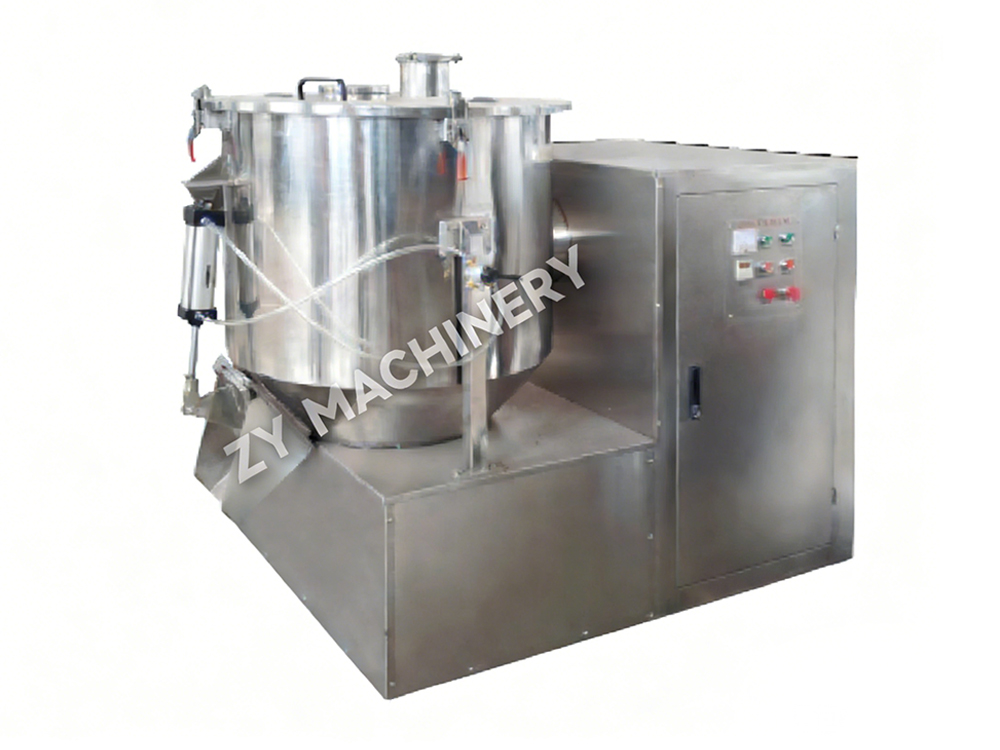
High-shear mixers are often used for intensive wet mixing, agglomeration, or granulation. They are not intended to perform exactly the same role as a fixed-bin blender. High-shear equipment may be appropriate when the process requires rapid dispersion, binder distribution, or controlled agglomerate formation.
The HGD Fixed-Bin Mixer is primarily a dry blending machine. Its strengths are large-volume tumbling, controlled rotational speed, hygienic construction, and straightforward operation. It can therefore complement rather than replace high-shear granulation equipment in a complete production line.
Simple drum mixers rotate a cylindrical container and can provide basic blending. However, their movement pattern may be less complex, and the internal shape may not produce the same combination of lifting, tumbling, and tangential motion as the angled square-cone structure.
The HGD arrangement is designed specifically to create multidirectional movement. Its approximately 30-degree angle helps produce a dynamic material path and supports uniform blending across a broad range of powder and granule combinations.
Before loading, materials should be identified, weighed, and prepared according to the approved process. Lumps, foreign matter, excessive moisture, or large particle-size differences can affect blend quality. Screening or preconditioning may be required for some formulations.
Loading order can influence the final result, especially when a low-dose active ingredient or a small quantity of a functional additive is involved. Operators should follow the validated loading sequence and avoid unnecessary delays between material additions.
The stated hopper capacity is a nominal volume rather than a universal operating recommendation. The optimum fill level depends on the formulation and the material’s ability to move within the bin. If the bin is underfilled, there may be insufficient material interaction. If it is overfilled, movement may be restricted and blending may become less efficient.
Process development should establish the acceptable operating range. Bulk density and particle shape can also influence the relationship between volume and mass, which is why the stated net carrying capacity should be used as a reference rather than as a substitute for product-specific evaluation.
The mixer provides a variable speed range, allowing the process to be adjusted according to material properties. A higher speed may increase movement intensity, while a lower speed may be more suitable for fragile granules or formulations that are susceptible to segregation.
Speed should be selected together with mixing time. Increasing speed does not automatically improve the blend, and excessive movement may increase attrition or cause particles with different densities to separate. The appropriate condition should be determined using blend-uniformity testing and observation of the material after mixing.
Mixing time should be long enough to achieve the required uniformity but not unnecessarily long. Overmixing can consume energy, reduce productivity, and in certain formulations increase the possibility of segregation after the desired blend has already been reached.
The automatic timing function helps establish a repeatable cycle. Once the suitable time has been confirmed through process development, it can be incorporated into the operating recipe and production documentation.
Discharge should be performed in a manner that protects the blend from segregation. The receiving container, transfer equipment, and downstream process should be ready before the bin is opened. The discharge valve should be checked for correct operation, and the anti-misoperation feature should not be bypassed.
For large batches, discharge time and material flow rate may affect the final product. If the blend contains particles with substantially different densities or sizes, excessive drop height or prolonged transfer may contribute to separation. The complete transfer route should therefore be considered during process design.
Cleaning requirements depend on the product, facility standards, material hazards, and changeover strategy. The smooth internal construction and absence of exposed screws can support easier cleaning, but the actual cleaning procedure must be established and verified by the user.
Operators should remove residual material from the bin, lid, discharge area, seals, and accessible product-contact surfaces. Any cleaning agent must be compatible with the construction materials and the product requirements. After cleaning, surfaces should be inspected for remaining powder, moisture, corrosion, damage, or seal deterioration.
Routine maintenance should include inspection of the drive system, rotating supports, fasteners, safety devices, discharge valve, electrical controls, and structural components. Unusual noise, vibration, speed fluctuation, leakage, or difficulty during discharge should be investigated before the equipment returns to service.
For GMP-oriented production, maintenance and cleaning activities should be documented. Changeover procedures, inspection records, calibration or verification activities, and corrective actions should be managed through the facility’s quality system.
The manufacturer’s emphasis on customer reputation, quality, research and development, and responsive service supports the expectation that equipment should be considered as part of a managed production asset. Reliable machinery is important, but consistent results also depend on procedures, training, preventive maintenance, and process control.
The mixer can be supplied as a standalone unit or included in a modular or complete process solution. In a typical oral solid dosage plant, materials may first be dispensed and screened, then granulated, dried, blended, lubricated, compressed, coated, and packaged.
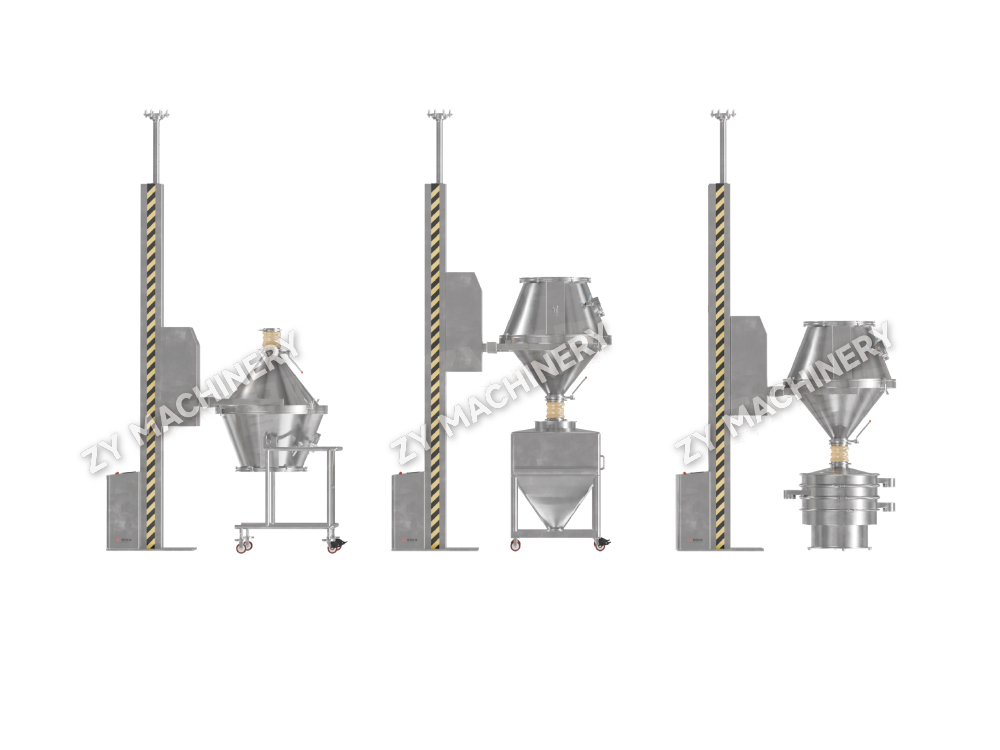
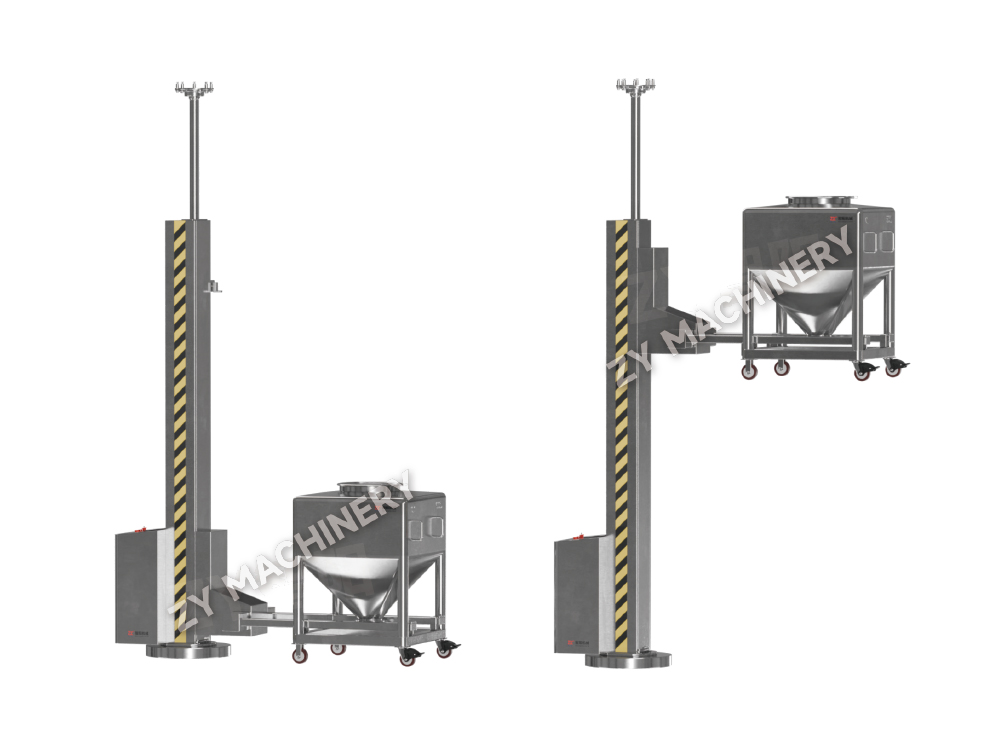
The HGD unit can be positioned after drying or granulation when the process requires blending of granules and excipients. It may also be used for final blending before compression or capsule filling. Auxiliary transfer and conveying equipment can be used to move materials into and out of the mixing area, reducing manual handling and improving process continuity.
When integrating the mixer, engineers should examine the complete material path. The charging point must be accessible and compatible with the upstream equipment. The discharge outlet must align with the receiving container or transfer system. The installation must allow operators to open, inspect, clean, and maintain the machine without obstructing adjacent operations.
Dust control is another important consideration. Dry powder handling may generate airborne particles during charging and discharge. The mixer should be integrated with the site’s containment, extraction, and occupational safety strategy where necessary. The selected configuration should also reflect the product’s hazard classification and the facility’s environmental requirements.
For international projects, electrical standards, documentation, validation expectations, local regulations, and service arrangements should be addressed at the quotation and engineering stages. Early clarification reduces the likelihood of modifications during installation.
The selection process should begin with the required batch size and the material’s bulk density. The HGD-200 through HGD-400 models provide smaller hopper capacities and may be suitable for development, limited production, or lower-volume applications. The HGD-600 through HGD-1500 models cover medium-scale requirements. The HGD-2000 through HGD-5000 models support larger production quantities, while the HGD-6000, HGD-8000, and HGD-10000 models are intended for very large batch volumes.
However, a larger model is not always the best choice. The machine should operate within a practical fill range that allows the material to move correctly. If production demand varies significantly, the customer may consider multiple units or a carefully selected model that accommodates the main product range.
Available space is also important. The reference length, width, and heights increase substantially as the model size increases. The HGD-10000, for example, has a reference length of 4,860 millimeters, a reference width W of 2,200 millimeters, and a reference height H4 of 4,600 millimeters. Such dimensions affect room planning, access routes, ceiling height, maintenance clearance, and installation logistics.
Power requirements increase from 1.5 kW on the smallest models to 15 kW on the largest models. The customer should confirm the facility’s electrical supply, motor requirements, control configuration, and local standards before finalizing the order.
A mixer contributes to product quality by making the blending step more controllable. The ability to set speed and time provides defined process parameters. The automatic stop function creates a consistent endpoint. The stable rotational system supports repeatable material movement. The hygienic construction can reduce retained product and support cleaner changeovers.
These features do not eliminate the need for formulation development or validation. Instead, they provide the mechanical and control foundation required for a robust process. Blend sampling plans, analytical methods, acceptance criteria, and post-discharge handling must be established by the user’s quality and process teams.
For low-dose formulations, special attention should be given to sampling locations, loading sequence, powder adhesion, and transfer losses. For fragile granules, particle-size analysis before and after mixing can help determine whether the selected speed and time are appropriate. For cohesive powders, flow and agglomeration should be evaluated.
The mixer’s value is therefore best measured not only by its nominal capacity but also by its ability to support a controlled and documented process. This is where equipment design, process engineering, operator practice, and quality assurance work together.
The mixer is designed for powders and granules, including granule-to-granule, granule-to-powder, and powder-to-powder combinations. It is intended for dry blending applications in pharmaceutical, chemical, food, nutraceutical, veterinary, additive, and related industries.
Yes. It can be used for blending stages associated with pharmaceutical solid dosage production, including final blending before tablet compression or capsule filling. The exact position in the process depends on the formulation and manufacturing route.
The HGD Fixed-Bin Mixer is primarily a dry blending machine. It is not described as a high-shear wet granulator. It can be installed downstream of granulation and drying equipment to blend granules with other materials.
The largest listed model is the HGD-10000, with a nominal hopper capacity of 10,000 liters and a stated net carrying capacity of 3,000 kilograms.
The HGD-200 is the smallest listed model. It has a nominal hopper capacity of 200 liters, a stated net carrying capacity of 60 kilograms, a 1.5 kW motor, and a mixing speed range of 3 to 20 rpm.
The bin is positioned at approximately 30 degrees to the rotation axis. During rotation, this geometry promotes a combination of tumbling and tangential movement, repeatedly lifting, cascading, and redirecting the material to encourage uniform distribution.
Yes. The listed models provide variable speed ranges. Depending on the model, the range extends from 3 to 20 rpm, 3 to 15 rpm, 3 to 12 rpm, or 3 to 8 rpm. The appropriate speed should be established according to the material and process requirements.
Yes. The control system allows the operator to set a mixing time, and the machine stops automatically when the preset time is reached.
The design features smooth construction, no exposed screws in the mixing area, and no intended dead zones. These characteristics can help reduce powder retention and simplify cleaning and inspection.
The straightforward structure and limited internal mechanical complexity support practical maintenance. Regular inspection of the drive system, supports, discharge valve, controls, safety devices, seals, and structural components is still required.
The mixer includes anti-misoperation discharge valves intended to help prevent accidental discharge during operation. These features must be used together with guarding, operating procedures, training, and appropriate lockout practices.
Yes. It can be supplied as a standalone machine, a modular system component, or part of a broader powder-processing and oral solid dosage production line. Integration may include granulation, drying, coating, transfer, conveying, and other auxiliary equipment.
Selection should consider batch size, bulk density, required fill level, material flowability, particle size, mixing behavior, production frequency, available space, power supply, cleaning strategy, and upstream and downstream equipment. Product-specific trials are recommended where blend performance is critical.
Yes. In addition to pharmaceutical applications, the HGD Fixed-Bin Mixer is widely applicable to chemical and food industries. The final configuration should reflect the relevant product-contact, safety, cleaning, and regulatory requirements.
Customers should confirm final dimensions, floor loading, access routes, ceiling height, maintenance clearance, electrical specifications, discharge arrangement, material transfer method, dust-control requirements, cleaning access, and local compliance requirements.
The HGD Fixed-Bin Mixer provides a scalable solution for powder and granule blending in pharmaceutical solid dosage production and related industries. Its principal strengths include a large model range, controlled rotational speed, automatic timing, angled square-cone geometry, tumbling and tangential material movement, hygienic construction, anti-misoperation discharge protection, and stable operation.
Compared with more mechanically complex internal-agitator mixers, the fixed-bin design offers a clean and accessible product-contact area with fewer internal obstructions. Compared with a basic rotating drum, its angled geometry is intended to create more active and multidirectional material movement. These characteristics make it a practical option for manufacturers seeking reliable blending with straightforward operation and maintenance.
The equipment is supported by a manufacturer whose capabilities extend across powder processing, oral solid dosage equipment, process integration, research and development, modular systems, and complete production lines. This broader engineering perspective can help customers address not only the mixer itself but also its connection to the complete manufacturing process.
As with all powder-processing equipment, final performance depends on the formulation, loading method, fill level, speed, mixing time, discharge route, and cleaning program. When these variables are developed and controlled properly, the HGD Fixed-Bin Mixer can contribute to improved batch consistency, efficient production, hygienic operation, and dependable long-term service.
1. Product technical information for the HGD Fixed-Bin Mixer, including operating principle, features, model range, capacities, speeds, power ratings, and reference installation dimensions.
2. Changzhou Zhiyang Machinery Equipment Co., Ltd. company information concerning powder processing equipment, oral solid dosage systems, process integration, research and development, and engineering services.
3. General good manufacturing practice principles for pharmaceutical equipment design, cleaning, maintenance, documentation, and process control.
4. General powder-mixing and solid-dosage manufacturing principles concerning particle flow, blend uniformity, segregation, scale-up, and material transfer.
Want to stay up to date?
Contact us via the email address below.
Don't worry about spam. We hate it too!
Mobile Client

Video Account
Phone:+86-15161130178
Tel:+86-519-88674267
Email:czzy188@163.com
Phone:+86-15161132798
Email:zy@zy-drying.com

WeChat ID

Copyright 2026 Changzhou Zhiyang Machinery Equipment Co., Ltd. All Rights Reserved  Oral Solid Dosage Equipment Manufacturer