 English
 Español
 русский
 中文简体
中文简体
CT / CT-C Hot Air Circulating Oven
The CT and CT-C hot air circulating ovens are designed to maximize energy e.....

Content
Reliable drying is one of the most important stages in pharmaceutical, chemical, food, nutraceutical, and related manufacturing processes. Moisture content affects product stability, flowability, compressibility, shelf life, handling performance, and final quality. A drying system must therefore do more than simply raise the temperature of a material. It must deliver controlled heat, consistent airflow, repeatable operating conditions, appropriate capacity, and practical energy performance.
The CT and CT-C Hot Air Circulating Ovens are designed to meet these requirements through forced hot-air convection, internal air recirculation, and adjustable airflow distribution. By circulating most of the heated air inside the chamber, the ovens reduce unnecessary heat loss and improve energy utilization. At the same time, the built-in fan system promotes uniform heat transfer around the materials, helping minimize temperature differences between the upper and lower zones of the chamber.
Available in several models and capacities, the CT and CT-C series can support different production scales, from relatively compact 25 kg drying loads to 400 kg loads per cycle. The equipment is suitable for organizations seeking a dependable drying platform for powders, granules, pharmaceutical materials, food products, chemical products, and other heat-processable materials.
Manufactured by Changzhou Zhiyang Machinery Equipment Co., Ltd., the ovens form part of a broader product portfolio covering powder processing, oral solid dosage production, mixing, granulation, drying, coating, auxiliary processing, and material transfer systems. This wider engineering background enables the manufacturer to consider the oven not only as a standalone machine but also as part of a complete and coordinated process line.
Drying is often used to remove free moisture or solvent from a product after wet granulation, washing, extraction, mixing, or other upstream operations. Although the objective may appear straightforward, industrial drying involves several interacting variables. These include material properties, particle size, bed depth, loading density, inlet temperature, airflow, drying time, exhaust conditions, and the required final moisture level.
If heating is uneven, some parts of a batch may become over-dried while other areas remain too wet. In pharmaceutical applications, this can create variation in dissolution, tablet compression behavior, chemical stability, and downstream coating performance. In food and chemical processing, nonuniform drying may affect texture, color, flowability, concentration, or product consistency.
A high-quality circulating oven addresses these challenges by creating a more stable thermal environment. Instead of relying primarily on natural convection, the CT and CT-C series use a fan-assisted air circulation system. The moving air transfers heat more effectively to the product surfaces and helps distribute heat throughout the chamber.
Another important consideration is energy use. Conventional heating arrangements may lose a significant portion of generated heat through exhaust air or inadequate chamber circulation. The CT and CT-C design recycles the majority of hot air within the chamber. This reduces the amount of energy required to maintain the target temperature and supports more economical operation over repeated production cycles.
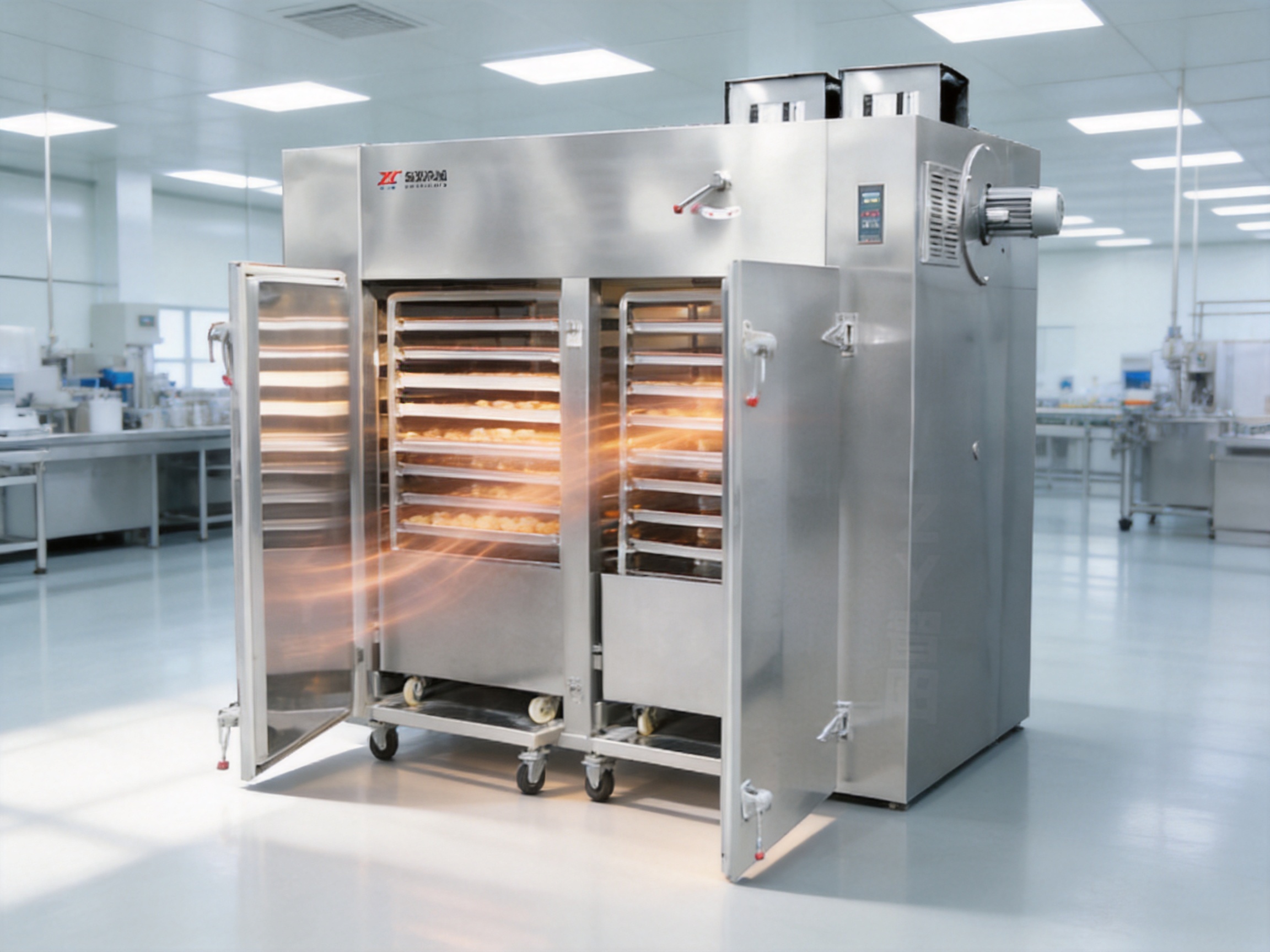
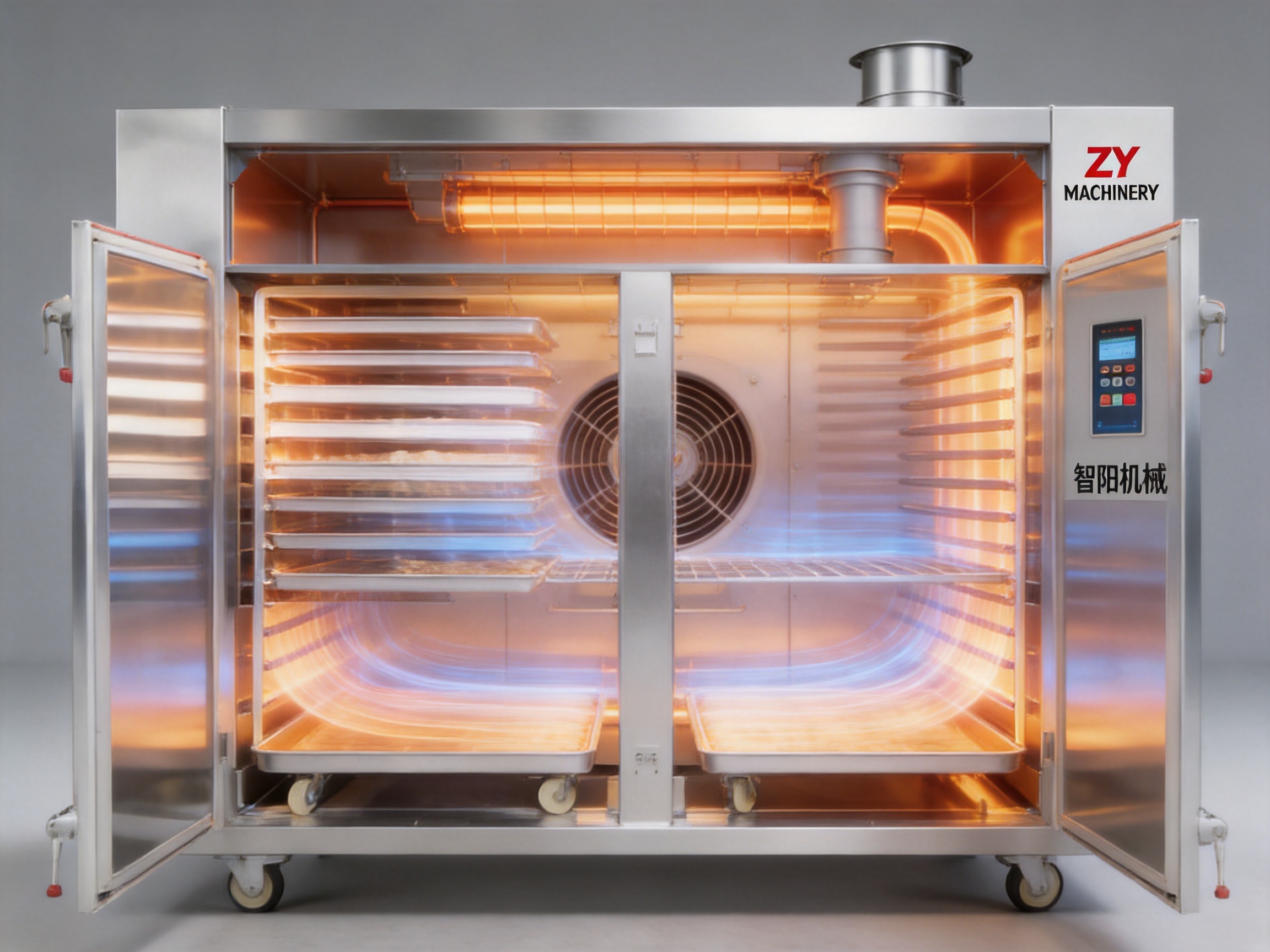
The ovens operate on the principle of forced hot-air circulation. A heating source raises the temperature of the process air, and a built-in fan moves the heated air through the oven chamber. The air flows around the trays, baking disks, or other product-holding arrangements before returning through the circulation path.
Because the air is continuously moved, heat is not concentrated in one static region. The circulation helps reduce thermal stratification, which is the tendency for warmer air to accumulate in one part of a chamber while cooler air remains in another. This is especially important in large ovens, where the distance between the top and bottom areas can otherwise result in noticeable temperature differences.
The oven includes an adjustable air distribution system. Operators can adjust the air distribution blades before operation to optimize the movement of air through the loaded chamber. This feature is valuable because different materials and loading arrangements can create different airflow resistance patterns. A configuration that works well for a light, open load may not be optimal for a dense or deep load.
During operation, the heated air transfers energy to the material. Moisture evaporates from the product surface and is carried away through the appropriate exhaust path. At the same time, a large proportion of the air remains within the circulation loop. This combination of recirculation and controlled exhaust supports efficient drying while maintaining a stable chamber environment.
The forced convection system also helps reduce the difference between upper and lower areas. According to the supplied product parameters, the listed CT and CT-C models provide an upper-to-lower temperature difference of approximately ±2°C under specified operating conditions. Actual performance may depend on loading, installation, material characteristics, calibration, and operating procedures, but the specification demonstrates the design objective of maintaining strong temperature uniformity.
Uniform heating is one of the most significant advantages of the CT and CT-C oven design. Static or poorly circulated air can create hot spots and cold zones, particularly when the chamber is large or heavily loaded. The fan-driven circulation system reduces these differences by constantly moving heated air around the product.
Improved uniformity can support more consistent moisture removal throughout a batch. It also reduces the need for excessive temperature settings intended to compensate for cold areas. Lower compensation requirements can help protect heat-sensitive materials and prevent unnecessary thermal exposure.
For pharmaceutical powders and granules, uniform heating is particularly important because the product may be distributed across multiple trays or baking disks. A consistent environment helps reduce the risk that one tray will reach the desired moisture level much earlier than another.
The ovens are designed to circulate most of the hot air within the chamber rather than continuously discarding heated air. Internal recycling reduces the energy required to reheat incoming air and supports efficient use of the heating source.
Energy performance is influenced by several factors, including insulation, loading, operating temperature, exhaust settings, door opening frequency, and material moisture content. Nevertheless, the recirculating principle provides a practical foundation for reducing avoidable heat losses. Over many production cycles, efficient circulation can contribute to lower operating costs and improved process sustainability.
The adjustable air distribution blades distinguish the system from basic ovens that provide limited control over airflow. Operators can fine-tune the air path before a batch begins, helping match the circulation pattern to the arrangement of the material.
This adjustment capability is useful when the oven is used for different products, tray configurations, or batch sizes. It also gives production personnel a practical way to improve temperature uniformity without redesigning the entire chamber or changing the fundamental heating system.
The product range includes CT models designated CT-1 through CT-4 and CT-C models designated CT-C-0 through CT-C-4. The stated dry capacity per cycle ranges from 25 kg for the CT-C-0 to 400 kg for several larger models.
This range allows users to select equipment according to production requirements rather than being forced into a single standard chamber size. Smaller operations, pilot facilities, and specialized production areas can consider a compact model, while larger manufacturers can select a higher-capacity unit for routine batch production.
The CT and CT-C ovens are suitable for various drying and heating applications in the pharmaceutical, chemical, and food industries. They can also support nutraceutical, veterinary, additive, and related processing environments where controlled hot-air treatment is appropriate.
The broad applicability comes from the basic flexibility of the forced-circulation concept. Depending on the product and process, the oven may be used after granulation, before compression, for general material drying, or for other controlled heating duties. Process suitability must always be confirmed through product trials and engineering review, especially for materials that are highly heat-sensitive, solvent-rich, explosive, or prone to oxidation.
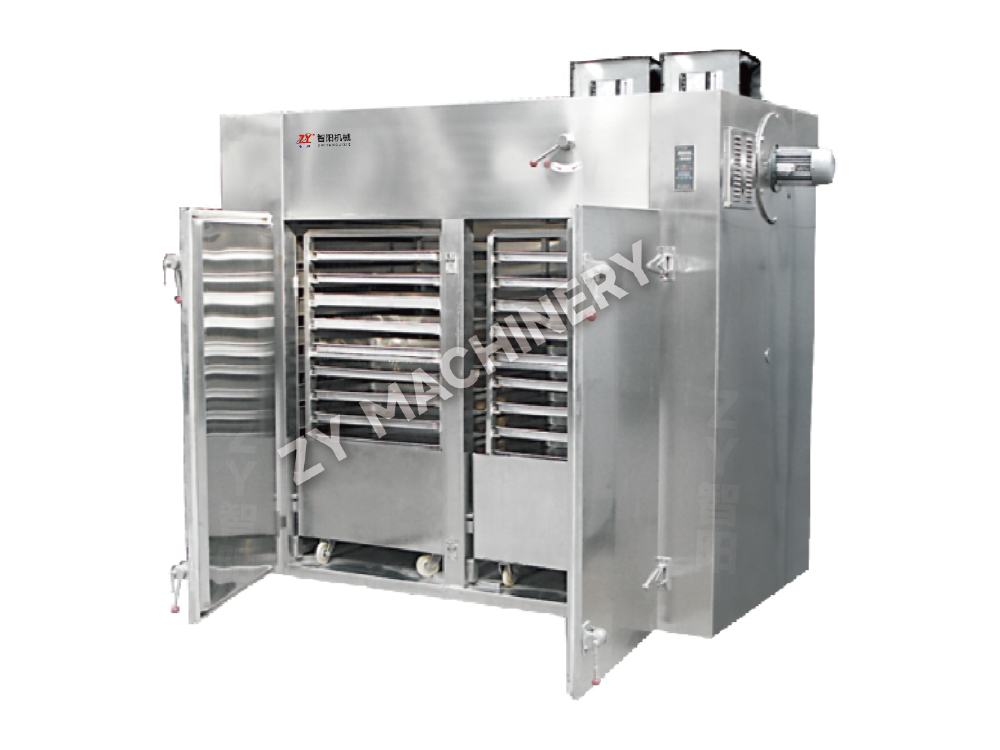
CT / CT-C Hot Air Circulating Oven
The CT series and CT-C series share the same fundamental objective: to provide controlled hot-air circulation and consistent heating. Their available configurations differ in capacity, dimensions, air volume, power, and supporting accessories.
The CT-1 has a stated dry capacity of 100 kg per cycle, while the CT-2, CT-3, and CT-4 provide 200 kg, 300 kg, and 400 kg, respectively. The CT-C range begins with the smaller CT-C-0 at 25 kg and extends through CT-C-4 at 400 kg. This gives the range a useful progression for pilot, medium-scale, and larger production demands.
Equipped power varies from 0.45 kW on the CT-C-0 and CT-C-1 to 2.2 kW on the CT-3 and CT-4. The listed power rating should be understood as the supplied equipment power in the product information; complete site utilities may also include the selected heating source, controls, ventilation, and other installation requirements.
Steam consumption is listed from 15 kg/h for the CT-C-0 to 80 kg/h for the CT-4 and CT-C-4. The specified radiation area ranges from 15 m² to 100 m², while air volume ranges from 1,400 m³/h to 13,800 m³/h, depending on the model.
| Item | Unit | CT-1 | CT-2 | CT-3 | CT-4 | CT-C-0 | CT-C-1 | CT-C-2 | CT-C-3 | CT-C-4 |
| Dry capacity each time | kg | 100 | 200 | 300 | 400 | 25 | 100 | 200 | 300 | 400 |
| Equipped power | kW | 1.1 | 1.1 | 2.2 | 2.2 | 0.45 | 0.45 | 0.9 | 1.35 | 1.8 |
| Consumption of steam | kg/h | 20 | 40 | 60 | 80 | 15 | 20 | 40 | 60 | 80 |
| Radiation area | m² | 20 | 40 | 80 | 100 | 15 | 20 | 40 | 80 | 100 |
| Volume of air | m³/h | 1,400 | 5,200 | 9,800 | 9,800 | 3,450 | 3,450 | 6,900 | 10,350 | 13,800 |
| Difference between upper and lower zones | °C | ±2 | ±2 | ±2 | ±2 | ±2 | ±2 | ±2 | ±2 | ±2 |
| Baking disk quantity | A | 48 | 96 | 144 | 192 | 24 | 48 | 96 | 144 | 192 |
| Overall dimensions | mm | 2430×1200×2375 | 2430×2200×2433 | 3430×2200×2620 | 4380×2200×2620 | 1550×1000×2044 | 2300×1200×2300 | 2300×2200×2300 | 2320×3200×2000 | 4460×2200×2290 |
| Baking dolly quantity | A | 2 | 4 | 6 | 8 | 1 | 2 | 4 | 6 | 8 |
The table provides a useful initial comparison, but model selection should not be based on capacity alone. Buyers should also consider the physical characteristics of the product, tray loading method, required batch time, available floor area, material handling route, heating utility, exhaust requirements, and cleaning procedure.
Airflow quality is central to the performance of any circulating oven. A high fan volume by itself does not guarantee uniform drying. The air must be distributed effectively, and the product arrangement must allow sufficient contact between the moving air and the material surface.
The CT and CT-C ovens address this through a built-in fan system and adjustable distribution blades. The fan supplies the driving force for circulation, while the distribution system helps guide air through the chamber. Operators can make adjustments during setup to reduce local restrictions or improve the balance between different chamber areas.
Temperature uniformity is important in both product quality and process validation. If a chamber has significant differences from one location to another, the qualification process becomes more difficult and the acceptable operating window becomes narrower. The supplied specification of approximately ±2°C between upper and lower zones indicates an emphasis on reducing vertical temperature variation.
Uniformity does not mean that every product will dry at exactly the same rate under every condition. Moisture migration inside the material, differences in tray loading, particle size distribution, and local bed depth can still influence drying. However, a stable and uniform chamber environment reduces one major source of variation and makes it easier to establish a repeatable process.
For best results, operators should avoid overloading trays, maintain consistent product depth, use an established loading pattern, and allow adequate space for air movement. The air distribution system should be adjusted during commissioning and rechecked if the product, batch size, or tray arrangement changes substantially.
In pharmaceutical manufacturing, hot-air ovens are commonly associated with the drying of wet granules and other intermediate materials. After wet granulation, the product contains liquid that must be removed to achieve a moisture range suitable for milling, blending, compression, or encapsulation.
The CT and CT-C series can be considered for applications in which tray-based forced-air drying is appropriate. Their circulation system helps expose the granules to a consistent thermal environment, while the range of capacities allows the equipment to be matched to different production scales.
For oral solid dosage operations, drying performance can influence several downstream steps. Granules that retain excessive moisture may exhibit poor flow, sticking, instability, or inconsistent compression. Granules that are excessively dry may become brittle, generate more fines, or behave differently during compaction. A controlled oven helps manufacturers pursue a balanced and repeatable drying endpoint.
The equipment may also be integrated into a larger process route that includes powder mixing, wet or dry granulation, milling, blending, tablet compression, capsule filling, coating, and transfer. Because the manufacturer specializes in several of these equipment categories, customers can discuss process coordination rather than treating the dryer as an isolated purchase.
Pharmaceutical users should evaluate the oven according to their own quality and regulatory requirements. Important considerations may include materials of construction, surface finish, cleanability, access for inspection, temperature recording, calibration, batch traceability, and validation documentation. The supplied product information confirms the circulation concept and basic parameters; detailed compliance requirements should be defined during technical specification and project engineering.
The same controlled circulation principles can benefit chemical and food processing applications. Chemical products may require drying after filtration, crystallization, washing, or wet processing. Food and nutraceutical products may need moisture reduction to improve storage stability, powder flow, or handling characteristics.
In food processing, uniform heating can help reduce differences in final moisture content and support consistent product quality. In nutraceutical production, drying may be required for botanical extracts, functional ingredients, granules, or blended materials. In veterinary and additive manufacturing, the oven can support intermediate drying where a controlled, repeatable thermal environment is needed.
Application suitability depends on the material. Products containing volatile solvents, combustible dust, oxygen-sensitive ingredients, or thermally unstable compounds may require special engineering, explosion protection, inerting, solvent recovery, or an alternative drying technology. A responsible equipment selection process should therefore include material safety information, thermal sensitivity data, moisture characteristics, and required production conditions.
The broad industry coverage of the CT and CT-C product description should be understood as an indication of application flexibility, not as a substitute for process testing. A trial using representative material is the most reliable way to determine drying time, temperature, loading depth, airflow setting, and final moisture performance.
The value of a drying oven depends not only on its operating principle but also on the quality of its engineering, manufacturing, assembly, and support. Changzhou Zhiyang Machinery Equipment Co., Ltd. specializes in the design and manufacture of powder processing and oral solid dosage equipment. Founded in 2010 and based in Changzhou, China, the company serves pharmaceutical, biopharmaceutical, biotechnology, nutraceutical, veterinary, additives, and related industries.
This industry focus gives the manufacturer experience with processes in which powder behavior, moisture control, batch consistency, and equipment integration are important. Rather than limiting its role to the supply of a single machine, the company develops standalone equipment, modular systems, and complete production lines for laboratory, pilot, and full-scale applications.
A process-oriented approach begins with the material and the desired production outcome. Factors such as material characteristics, capacity requirements, site conditions, and upstream and downstream equipment influence the final configuration. For an oven, this may include product loading, tray arrangement, airflow path, heat source, exhaust management, access, and material handling.
This approach can provide an advantage over purchasing a generic dryer without considering the complete process. A machine that is correctly sized and properly integrated is more likely to deliver stable throughput and practical day-to-day operation.
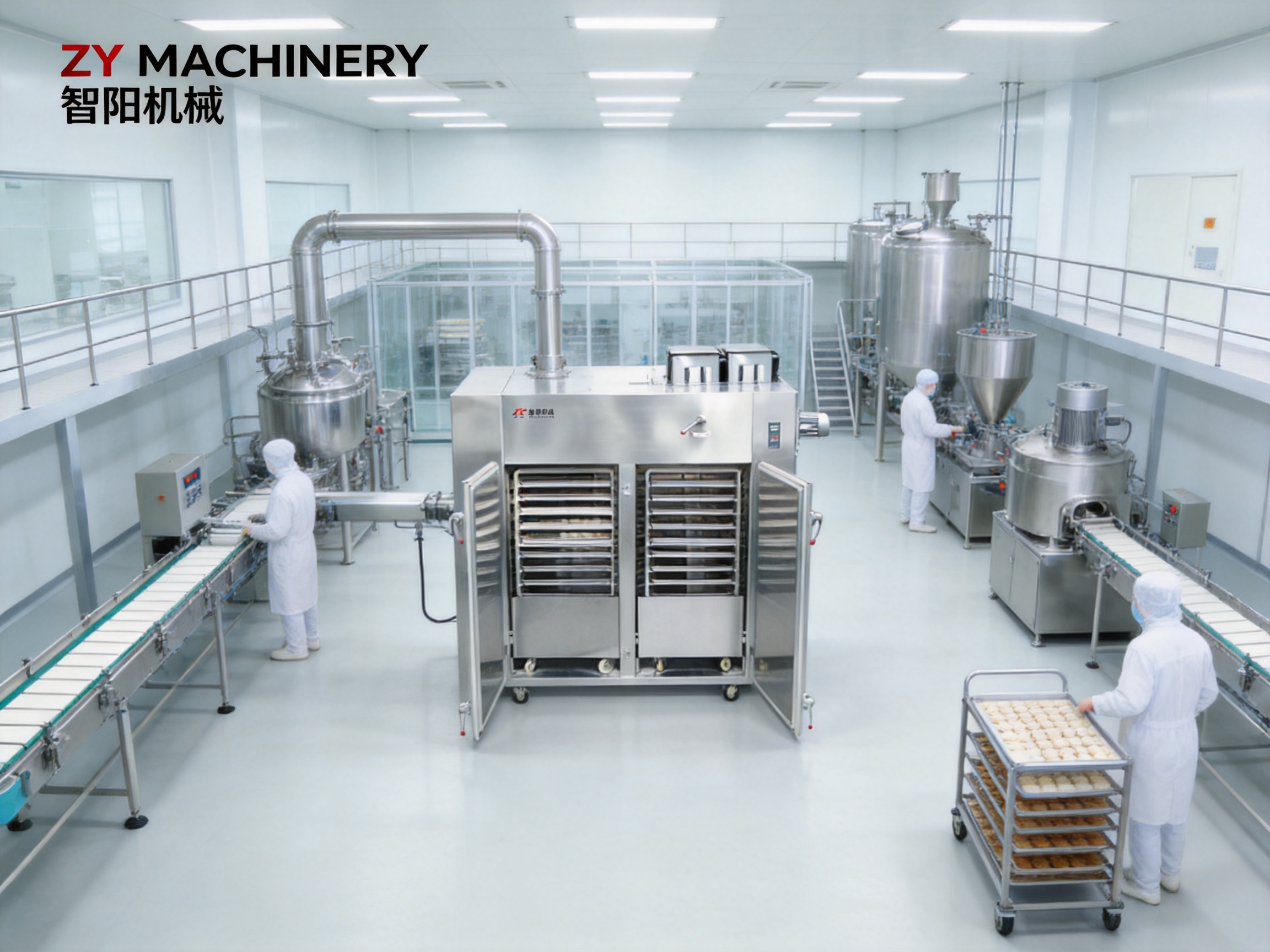
Drying is often connected to other powder processing stages. A wet granulation line may require a transfer system between granulation and drying, followed by milling and blending. A tablet production line may require controlled movement from blending to compression and coating. The manufacturer’s portfolio includes mixing, granulation, drying, coating, auxiliary processing, and transfer and conveying equipment.
Such portfolio breadth can simplify engineering coordination. It allows customers to review process interfaces, equipment arrangement, transfer routes, and production objectives with a supplier familiar with multiple stages of the line. It may also help reduce the risk of mismatched discharge heights, unsuitable transfer methods, or inconsistent process capacities.
Manufacturing organizations often need to transfer a process from development to commercial production. Equipment that is available across different scales can support this progression. A laboratory or pilot process may provide information about drying behavior, while a larger CT or CT-C unit can be selected for production based on capacity and process requirements.
Scale-up is not simply a matter of multiplying batch size. Air velocity, product depth, heat transfer, moisture removal, and loading geometry can all change with equipment size. A supplier with experience in laboratory, pilot, and full-scale systems can help customers identify the process variables that must be controlled during scale-up.
The company states that it has strengthened its research and development capabilities, obtained quality system certification, developed patented technologies, and expanded its product portfolio. These activities indicate an ongoing effort to improve equipment design and respond to changing customer requirements.
For drying equipment, development priorities may include better airflow distribution, improved temperature control, more convenient cleaning, more efficient energy use, stronger structural reliability, and easier integration with automated production systems. The practical benefit to customers is the availability of equipment designed with process performance and long-term usability in mind.
The company has delivered equipment and engineering solutions to customers in multiple countries and regions and has developed overseas service capabilities. International experience can be valuable because projects often involve different utility standards, documentation expectations, installation conditions, and production practices.
Effective support should include clear technical communication, appropriate operating documentation, commissioning assistance where required, spare-parts coordination, and responsive communication after installation. These factors influence the total value of an industrial oven just as much as the initial equipment price.
Many industrial ovens can heat air, but the quality of the circulation pattern determines how effectively that heat reaches the product. A system with limited airflow adjustment may work acceptably for one standard load but perform less consistently when product characteristics or loading patterns change.
The adjustable airflow distribution system in the CT and CT-C series provides an additional operating variable. Rather than accepting a fixed airflow pattern, the user can optimize the distribution before production. This is especially useful for manufacturers that process several products or operate different batch sizes in the same equipment family.
Adjustability may also reduce commissioning time. Engineers can observe temperature mapping results, review product moisture data, and make airflow adjustments to improve the chamber response. The final setting can then be documented as part of the standard operating procedure for that product and load configuration.
Compared with a basic oven that depends mainly on chamber size and heater capacity, the CT and CT-C system combines heat generation, forced circulation, recirculation, and airflow tuning. This integrated approach can provide better control of the conditions that directly affect drying uniformity.
Energy efficiency has become an important consideration for manufacturers facing rising utility costs and sustainability targets. Drying is often one of the more energy-intensive operations because it requires both heating and evaporation. Any reduction in avoidable heat loss can improve operating economics.
The CT and CT-C ovens recycle most of the hot air inside the chamber. This means that the heating system does not need to repeatedly raise the temperature of a completely new volume of cold air. The recirculation loop retains useful thermal energy and supports a more stable operating condition.
Efficient operation also depends on the production method. Proper loading, correct product depth, suitable drying temperature, timely exhaust control, and limited door opening can all improve energy performance. Operators should avoid using higher temperatures than necessary, as excessive heat may increase energy consumption and harm sensitive materials without shortening the process proportionally.
The best economic comparison should consider total cost of ownership rather than purchase price alone. Relevant factors include throughput per cycle, drying time, energy consumption, labor, cleaning, maintenance, product yield, batch rejection risk, and equipment service life. A uniform and repeatable dryer may provide economic benefits by reducing rework and improving production planning.
Before installation, the user should confirm the oven’s overall dimensions, access route, floor loading, utility connections, ventilation provisions, and relationship to adjacent equipment. The listed dimensions vary significantly among models, so the selected unit must be checked against the available production area and material flow path.
Commissioning should include inspection of the chamber, fan system, heating system, controls, airflow distribution, and safety functions. Temperature mapping at representative empty and loaded conditions can help determine the actual thermal profile. If the oven is used for pharmaceutical or regulated production, the commissioning plan may also include documented installation, operational, and performance qualification activities.
Air distribution adjustment should be treated as an engineering activity rather than an informal operating change. The preferred settings should be recorded for each validated product or loading arrangement. If the product depth, tray type, or batch size changes, the airflow configuration may need to be reviewed.
Utilities should be sized according to the selected model and project requirements. The product parameters list steam consumption and equipped power, but the complete installation may require additional provisions for control systems, ventilation, condensate management, drainage, and electrical protection.
Consistent loading is essential for repeatable drying. Operators should distribute material evenly across the baking disks or trays and avoid excessive variation in bed depth. Uneven loading can create differences in resistance to airflow and moisture migration, even when the oven temperature is well controlled.
Where the process requires it, the oven should be allowed to reach and stabilize at the target operating condition before the batch is loaded. Stabilization allows the fan, heating source, and airflow distribution system to reach a steady state and can reduce the variation between the beginning and end of the loading operation.
Temperature alone does not always provide a complete indication of drying progress. Product moisture should be evaluated using an appropriate method established by the user. Samples may be taken from locations representing different trays or chamber zones during process development and validation.
Cleaning procedures should be established according to the product, materials of construction, contamination risk, and facility requirements. Operators should inspect trays, chamber surfaces, seals, fan components, and airflow openings at suitable intervals. Removing accumulated material helps preserve airflow performance and reduces the possibility of cross-contamination.
Routine maintenance should include inspection of the fan, bearings or related drive components, heating system, temperature sensors, electrical connections, seals, and control components. Preventive maintenance can reduce unexpected downtime and help preserve the intended air volume and temperature performance.
Model selection should begin with the required dry capacity per batch. The user should distinguish between the nominal capacity listed in the catalogue and the practical capacity for a specific product. A material that must be spread in a thin layer may require more tray area than a free-flowing material that can be loaded more deeply.
The required production schedule is also important. A smaller oven may be sufficient if batches are infrequent, while a larger oven may be justified when throughput and labor efficiency are priorities. Users should calculate the number of cycles per shift, drying time, loading and unloading time, and cleaning time.
Available floor space and material handling should be considered alongside capacity. The product information lists baking dolly quantities for each model. These dollies can support the movement of loaded baking disks or trays, but the facility must provide adequate clearance for safe movement, door access, and cleaning.
Air volume is another important selection factor. Higher-capacity models generally require greater circulation volume, and the facility should be prepared to accommodate the associated utility and ventilation requirements. The selected heating method and steam consumption should also be reviewed by the plant engineering team.
Finally, the product’s thermal sensitivity and moisture specification should be discussed with the equipment supplier. Testing with representative material can help establish the most appropriate model, airflow setting, temperature range, and batch time.
Industrial equipment reliability is influenced by design quality, material selection, fabrication accuracy, component choice, assembly, testing, installation, and maintenance. A drying oven must operate repeatedly under thermal cycling, fan vibration, loading activity, cleaning procedures, and production pressure.
The manufacturer’s focus on quality, process integration, research and development, and customer reputation supports a long-term equipment perspective. Customers benefit when the supplier considers not only whether the machine can operate on the day of delivery but also whether it can remain practical and serviceable throughout its working life.
Reliable temperature control contributes directly to process stability. Reliable airflow supports repeatable heat transfer. Reliable structure and accessories support safe loading and unloading. Reliable technical support helps resolve issues before they become extended production interruptions.
The CT and CT-C series combine these practical priorities with an energy-conscious circulation concept. Their competitive position comes from the combination of uniform forced convection, internal hot-air recycling, adjustable distribution, multiple capacity options, and access to broader process engineering support.
Many pharmaceutical and powder-processing projects require more than one machine. A typical process may include raw material handling, screening, mixing, granulation, drying, milling, blending, tablet compression, capsule filling, coating, and final transfer. Each interface can influence product quality and production efficiency.
For example, the discharge from a granulator must be transferred to the drying stage without unnecessary contamination or material loss. The dried product may then require milling or sizing before blending. If the dryer capacity does not match the output of the upstream machine, production may experience bottlenecks or excessive waiting time.
A manufacturer with expertise in mixing, granulation, drying, coating, auxiliary equipment, and conveying can evaluate these relationships more effectively. The CT and CT-C oven can therefore be specified as part of a modular system or complete production line, depending on the customer’s objectives.
Complete-line engineering also supports better use of plant space. Equipment orientation, access routes, operator movement, cleaning zones, and utility routing can be considered during the design stage. This approach may reduce later modifications and improve the overall usability of the facility.
Before a new material is processed commercially, development work should establish the relationship between temperature, airflow, loading, time, and moisture reduction. The CT and CT-C ovens provide a controlled platform for this work, but the exact process must be developed for the material and intended application.
Important development questions include the starting moisture content, target final moisture, acceptable product temperature, sensitivity to oxidation or heat, preferred bed depth, sampling method, and maximum allowable drying time. The product may require a gradual temperature increase, a fixed temperature hold, or a staged exhaust strategy.
Validation should demonstrate that the established operating procedure consistently produces acceptable results. Temperature mapping can confirm chamber performance, while product testing can confirm moisture uniformity and product quality. The adjustable airflow system may be included in the documented setup so that the validated distribution pattern can be reproduced.
When a process moves to a different model, scale-up should be supported by comparative data. The larger oven may have a different chamber geometry, air volume, tray count, and loading pattern. A scale-up plan should therefore identify which parameters remain constant and which must be re-optimized.
Operators should review all material safety information before using a hot-air oven. The presence of combustible dust, flammable solvents, reactive compounds, or oxygen-sensitive substances may require specialized design features or a different type of dryer.
Safe operation also requires appropriate temperature limits, functional controls, ventilation, electrical protection, door handling procedures, and operator training. The oven should be installed and used according to the technical documentation supplied for the selected configuration.
Heat can create hazards even when the product itself is not flammable. Hot surfaces, heated trays, steam connections, exhaust air, and residual product temperature should all be considered in the operating procedure. Personal protective equipment and lockout procedures should be established according to the facility’s safety system.
These considerations do not reduce the usefulness of the CT and CT-C series. Instead, they emphasize the importance of correct engineering selection. The most suitable drying solution is the one that matches the material, process, facility, and safety requirements.
The CT and CT-C Hot Air Circulating Ovens provide several advantages for manufacturers seeking controlled and efficient batch drying:
Forced convection helps distribute heated air more evenly around the product.
Internal hot-air recycling reduces avoidable heat loss and supports energy-efficient operation.
Adjustable airflow distribution blades allow the circulation pattern to be optimized before production.
The stated upper-to-lower temperature difference of approximately ±2°C supports the goal of uniform chamber heating.
Multiple models provide dry capacities from 25 kg to 400 kg per cycle.
Different air volumes, power levels, steam consumption values, tray quantities, and physical dimensions support varied production requirements.
The equipment can be used in pharmaceutical, chemical, food, nutraceutical, veterinary, additive, and related processing applications, subject to material and safety evaluation.
The manufacturer’s broader portfolio supports integration with mixing, granulation, coating, conveying, and complete oral solid dosage systems.
Process-driven engineering considers material properties, capacity, site conditions, and production objectives rather than relying only on a standard machine configuration.
Laboratory, pilot, and full-scale equipment capabilities support process development and manufacturing expansion.
The two product families offer different capacity and configuration options within the same general forced-circulation drying concept. The CT-C range includes a smaller CT-C-0 model with a listed 25 kg dry capacity, while the CT range begins at 100 kg. The specific difference for a particular project should be confirmed through the technical configuration, chamber arrangement, accessories, and application requirements.
A built-in fan continuously circulates heated air through the chamber. The forced convection reduces thermal stratification, and adjustable air distribution blades allow the operator to optimize the airflow pattern. The listed models specify an upper-to-lower temperature difference of approximately ±2°C under stated conditions.
The design circulates the majority of hot air within the chamber. Controlled exhaust is still required to remove evaporated moisture and maintain suitable process conditions. The exact balance between recirculation and exhaust depends on the product, moisture load, operating temperature, and process requirements.
The oven is described as suitable for various drying and heating applications in pharmaceutical, chemical, and food industries, as well as related nutraceutical, veterinary, and additive applications. Suitability must be confirmed for each material, especially when the product is heat-sensitive, solvent-containing, combustible, reactive, or oxygen-sensitive.
Yes. The airflow distribution blades can be adjusted before operation to optimize the circulation pattern. If products have different loading depths, tray arrangements, or airflow resistance, separate operating settings may be established and documented.
The CT-4, CT-C-4, and certain related configurations are listed with a dry capacity of 400 kg per cycle. The practical working capacity depends on product properties, loading depth, required moisture endpoint, and process validation.
It may be suitable for pharmaceutical granule drying where tray-based forced hot-air drying is appropriate. The user should evaluate the required moisture range, granule sensitivity, airflow, temperature, cleaning, contamination control, and validation requirements before final selection.
Selection should consider required batch capacity, product moisture, drying time, tray loading, available floor space, air volume, heat source, utility availability, material handling, and future production growth. Product trials and engineering consultation are recommended for critical applications.
Yes. The manufacturer supplies equipment for mixing, granulation, drying, coating, auxiliary processing, transfer, and conveying. This allows the oven to be considered as a standalone unit, part of a modular system, or a component of a complete oral solid dosage or powder-processing line.
Commissioning should verify installation, utilities, fan operation, heating performance, temperature control, airflow distribution, safety functions, access, and loading arrangements. Temperature mapping and representative product testing can help establish the operating procedure.
Internal hot-air recirculation is the primary design feature supporting energy efficiency. Operators can further improve performance through correct loading, appropriate temperature selection, optimized airflow, limited door opening, proper exhaust control, and regular maintenance of the circulation and heating systems.
The listed steam consumption is a product parameter for each model. Complete plant requirements may also include utilities for controls, ventilation, condensate handling, and other connected systems. The final utility specification should be confirmed during project engineering.
The CT and CT-C Hot Air Circulating Ovens offer a practical solution for controlled batch drying where temperature uniformity, energy utilization, and capacity flexibility are important. Their built-in fan system promotes forced convection, while the internal recirculation of hot air reduces unnecessary heat loss. Adjustable airflow distribution gives users an additional method for optimizing chamber performance for different products and loading arrangements.
With listed capacities from 25 kg to 400 kg per cycle, the series can serve a broad range of applications. The equipment is relevant to pharmaceutical and oral solid dosage manufacturing, chemical processing, food production, nutraceuticals, veterinary products, additives, and other industries requiring dependable hot-air treatment.
The product’s value is strengthened by the manufacturer’s broader engineering capabilities. Changzhou Zhiyang Machinery Equipment Co., Ltd. develops standalone machines, modular systems, and complete production lines for powder processing and oral solid dosage production. Its process-driven design philosophy considers material characteristics, production capacity, site conditions, and equipment integration.
For customers seeking more than a basic heating chamber, the CT and CT-C series provide a combination of circulation, airflow adjustment, thermal consistency, scalable capacity, and process engineering support. Proper model selection, product testing, commissioning, validation, and maintenance will help users obtain the greatest long-term benefit from the equipment.
1. Changzhou Zhiyang Machinery Equipment Co., Ltd., CT / CT-C Hot Air Circulating Oven Product Information.
2. Changzhou Zhiyang Machinery Equipment Co., Ltd., Product Parameters for CT and CT-C Drying Ovens.
3. General principles of forced-convection drying in pharmaceutical, chemical, food, and nutraceutical processing.
4. General engineering practices for industrial oven selection, temperature uniformity testing, and process commissioning.
5. General principles of powder processing, wet granulation, moisture control, and oral solid dosage manufacturing.
Want to stay up to date?
Contact us via the email address below.
Don't worry about spam. We hate it too!
Mobile Client

Video Account
Phone:+86-15161130178
Tel:+86-519-88674267
Email:czzy188@163.com
Phone:+86-15161132798
Email:zy@zy-drying.com

WeChat ID

Copyright 2026 Changzhou Zhiyang Machinery Equipment Co., Ltd. All Rights Reserved  Oral Solid Dosage Equipment Manufacturer