 English
 Español
 русский
 中文简体
中文简体
GFG High-Efficiency Fluid-bed Dryer
The GFG high-efficiency fluidized bed dryer is designed for drying wet gran.....

Content
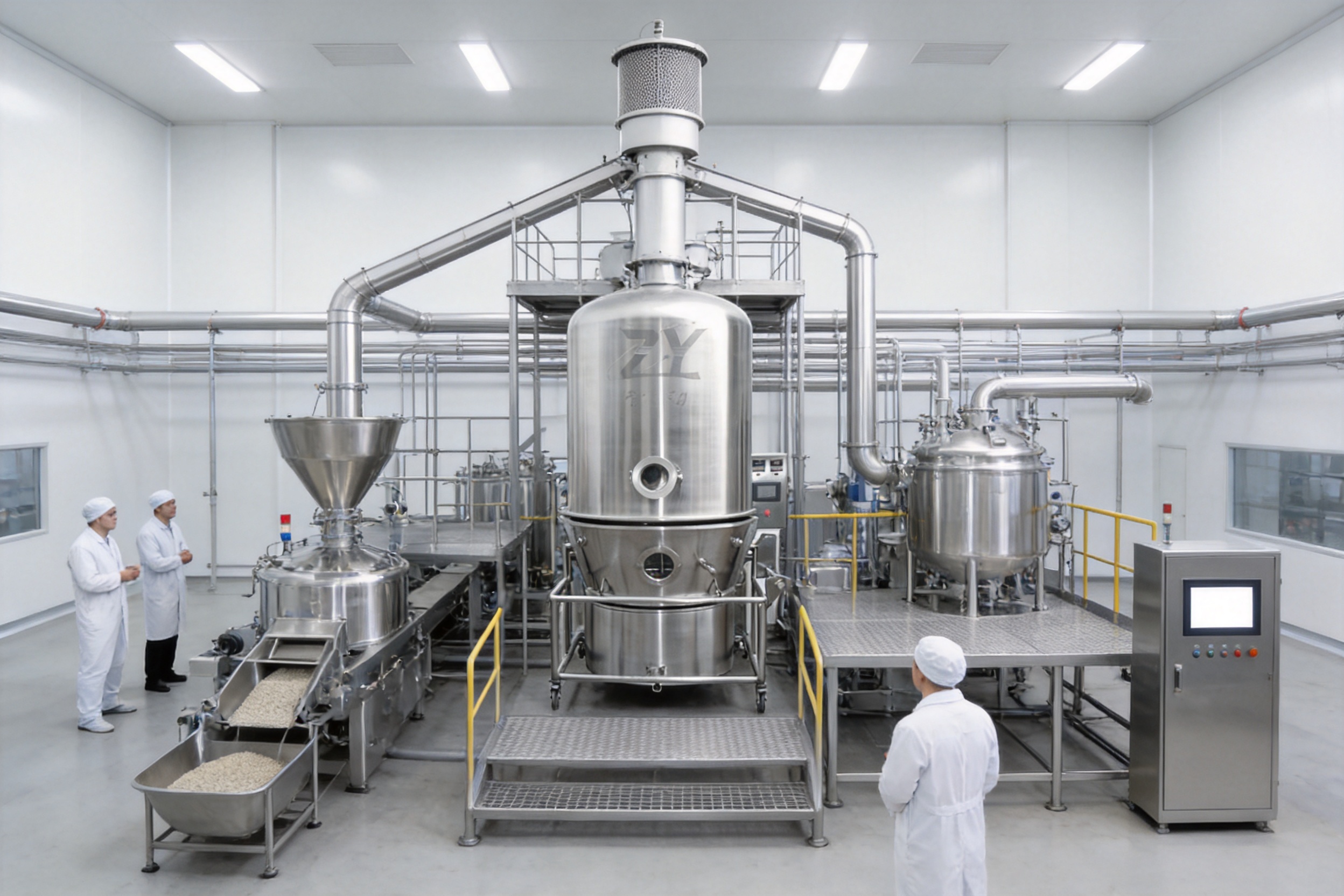
Fluidized bed drying is one of the most important operations in the production of pharmaceutical granules, food ingredients, chemical materials, feed products, and other particulate solids. Moisture must be removed efficiently, but drying speed alone is not enough. A successful drying process must also protect particle structure, preserve active ingredients, achieve consistent residual moisture, limit contamination risks, and support repeatable production from batch to batch. The GFG High-Efficiency Fluid-bed Dryer is designed to address these requirements through controlled air fluidization, internal agitation, sealed negative-pressure operation, and a practical tilting discharge structure.
Developed for wet granular materials, the dryer combines rapid heat and mass transfer with a design intended to minimize dead zones, clumping, channeling, and uneven moisture distribution. It is suitable for pharmaceutical, chemical, feed, and food applications where hygienic construction, reliable process control, and flexible capacity are essential. Available in several standard models, the equipment can serve small and medium production requirements while also allowing customized configurations for larger installations.
Manufactured by Changzhou Zhiyang Machinery Equipment Co., Ltd., the GFG series reflects a process-oriented approach to powder and oral solid dosage equipment. The company does not limit its role to supplying an individual machine. It develops equipment and complete process routes according to material properties, production capacity, installation conditions, and customer requirements. This approach helps users select a drying solution that is technically appropriate rather than simply choosing equipment based on nominal capacity.
Many production materials enter the drying stage as wet granules formed through wet granulation, agglomeration, washing, crystallization, or other preceding operations. These granules contain surface moisture and internal moisture that must be removed before subsequent processing. In pharmaceutical production, drying may be followed by blending, sizing, lubrication, capsule filling, or tablet compression. In food and chemical manufacturing, the dried material may proceed to milling, packaging, coating, blending, or reaction.
Conventional tray drying can provide acceptable results, but it may require long drying times, manual handling, and significant floor space. Static beds can also create differences between material positioned near the heat source and material located in less active areas of the chamber. Rotary and tumble dryers improve movement, but some materials may be damaged by excessive mechanical action. A fluidized bed dryer addresses these limitations by suspending individual particles or groups of particles in an upward stream of heated air.
When the air velocity is correctly controlled, the granular bed behaves like a fluid. Air contacts a large surface area of the particles, creating efficient convective heat transfer and accelerating moisture evaporation. The continuous movement of the granules helps expose wet surfaces and reduces the risk of localized overheating. This makes fluidized bed drying particularly suitable for free-flowing or partially free-flowing wet granules.
The performance of a fluidized bed dryer depends on more than the air heater and fan. The shape of the drying chamber, distribution of airflow, movement of the material, filter design, discharge arrangement, temperature control, pressure management, and cleaning strategy all influence the final result. The GFG dryer is engineered as an integrated system in which these elements work together.
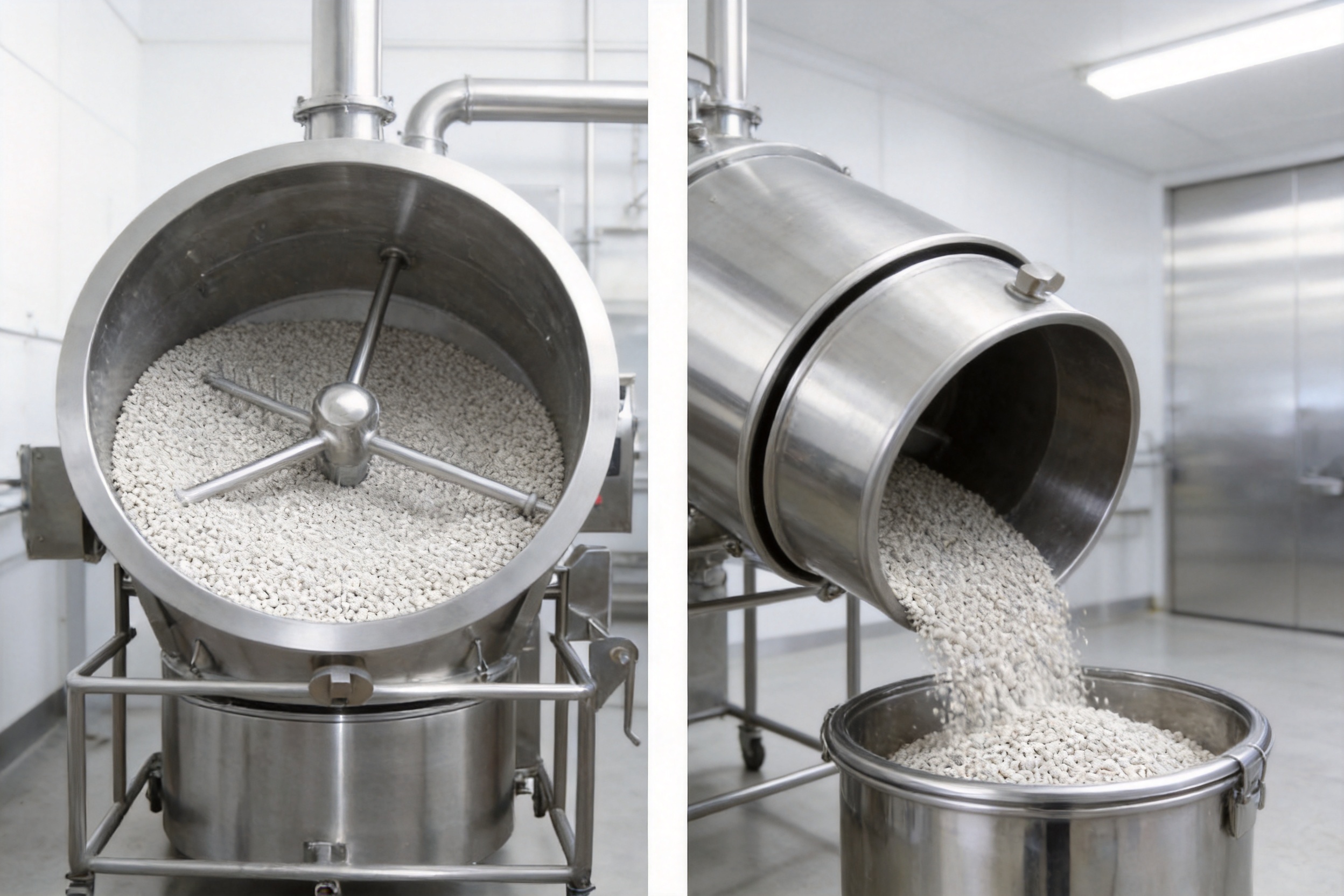
The GFG High-Efficiency Fluid-bed Dryer is designed for batch drying of wet granular materials. Its circular fluidized bed allows heated air to pass through the product while an internal agitator supports movement and helps prevent aggregation. The equipment operates under controlled temperature and negative pressure, helping maintain a contained process environment.
The dryer is available in models ranging from GFG-60 to GFG-500, with larger GFG-800 to GFG-1000 configurations available according to customer requirements. Standard rated capacity ranges from 60 kilograms per batch to 500 kilograms per batch. For the largest configurations, capacity and dimensions are determined by the material, process requirements, and site conditions.
Typical applications include the drying of pharmaceutical wet granules, chemical granules, food powders, nutritional ingredients, feed materials, and other products that require controlled moisture removal. The same equipment platform can be adapted to different heating systems, loading methods, discharge arrangements, and automation levels.
A typical drying cycle may be completed in approximately 20 to 30 minutes under suitable material and operating conditions. The specified working time range is 15 to 90 minutes per batch, reflecting the fact that actual drying time depends on initial moisture, final moisture target, particle size, bulk density, air temperature, airflow, and material sensitivity.
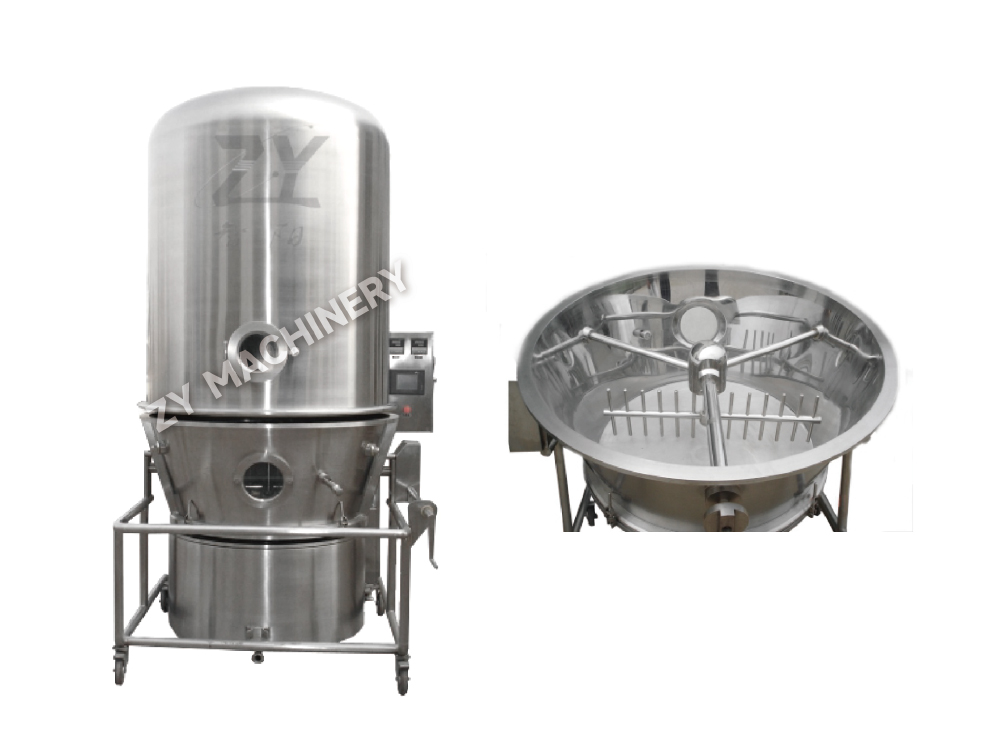
GFG High-Efficiency Fluid-bed Dryer
Wet granular material is introduced into the circular drying chamber. A fan draws air through the air treatment and heating section, and the heated air enters the product bed through the air distribution system. As the upward air stream reaches the required fluidization velocity, the particles become suspended and move continuously within the chamber.
The fluidized condition increases the contact area between air and solid particles. Moisture at the particle surface evaporates into the air, while moisture from inside the granules gradually migrates toward the surface. The exhaust air carries the vapor away from the drying chamber. Temperature, airflow, pressure, and drying time can be adjusted to achieve the required final moisture level.
The internal agitator provides additional movement within the bed. Wet granules can be cohesive, irregularly shaped, or prone to forming lumps. Without sufficient movement, these materials may create channels through which air passes preferentially, leaving some areas insufficiently dried. The agitator breaks up developing agglomerates and promotes more even exposure to the heated air stream.
The circular chamber design helps reduce corners and stagnant regions. In rectangular or poorly proportioned chambers, particles may collect in difficult-to-reach areas where air exchange is weaker. A circular structure supports smoother circulation and simplifies the removal of material after the process is completed.
During operation, the top-mounted filter retains product particles while allowing humid air to pass toward the exhaust system. The filter is made from anti-static special fibers, helping reduce the risk associated with electrostatic accumulation in applications where fine powders or combustible dust may be present. Proper grounding, validated operating conditions, and suitable plant safety measures remain essential.
The drying process takes place under sealed negative pressure. Maintaining pressure below ambient conditions helps reduce the escape of dust and process air into the surrounding room. This arrangement is particularly valuable in pharmaceutical and fine chemical facilities, where containment, hygiene, and cross-contamination control are important.
The circular fluidized bed is one of the fundamental design features of the GFG dryer. It eliminates sharp internal corners where wet material may accumulate and creates a more consistent flow pattern. This supports uniform contact between the product and heated air and can reduce the amount of material retained after discharge.
A circular geometry also supports easier cleaning and inspection. When product-contact surfaces are smooth and free from unnecessary recesses, operators can more easily identify and remove residual material. This is important when one product is processed after another or when different active ingredients are handled on the same production line.
Wet granular materials frequently exhibit cohesive behavior. Particles may stick together because of liquid bridges, binder residues, surface roughness, or high moisture content. The internal agitator helps separate these developing clusters, redistributes the bed, and reduces channeling.
Agitation is not intended to replace appropriate formulation or granulation control. Instead, it provides an additional mechanical action that improves the stability of the drying operation. The stirring power is selected according to the model, while the standard listed stirring speed is 11 revolutions per minute. The relatively controlled speed supports material movement without unnecessarily intense mechanical treatment.
The top-mounted bag filter performs two important functions. First, it retains valuable product particles so that they do not leave the chamber with the exhaust air. Second, it supports a cleaner operating environment by limiting the release of dust.
The use of anti-static special fibers is especially relevant to dry powders and fine granules. Static electricity can develop when particles move against equipment surfaces or filter media. The filter material and equipment grounding strategy should be integrated into the user's overall explosion protection and electrical safety program. The machine design provides a foundation for safer operation, but site-specific risk assessment and compliance procedures remain necessary.
After drying, the product can be discharged through a tilting arrangement. Tilting the drying vessel helps the material flow out quickly and completely, reducing the need for manual scraping or prolonged equipment intervention. Faster discharge can improve batch turnover and reduce operator exposure to product dust.
Complete discharge is also important for cleaning validation and product changeover. Less retained material means a lower risk of carryover into the next batch. The actual effectiveness of discharge depends on particle flowability, moisture level, formulation, vessel surface condition, and operating procedure.
The GFG dryer is designed to operate in a sealed negative-pressure environment. This helps prevent process air from escaping through minor openings and supports better containment of pharmaceutical or chemical dust. It also contributes to a more controlled relationship between the drying chamber, filter, fan, and exhaust system.
For facilities following Good Manufacturing Practice principles, a sealed configuration can support hygienic production and more reliable environmental control. The final GMP suitability of an installation depends on the complete system, including construction materials, surface finish, seals, cleaning procedures, instrumentation, documentation, and validation activities.
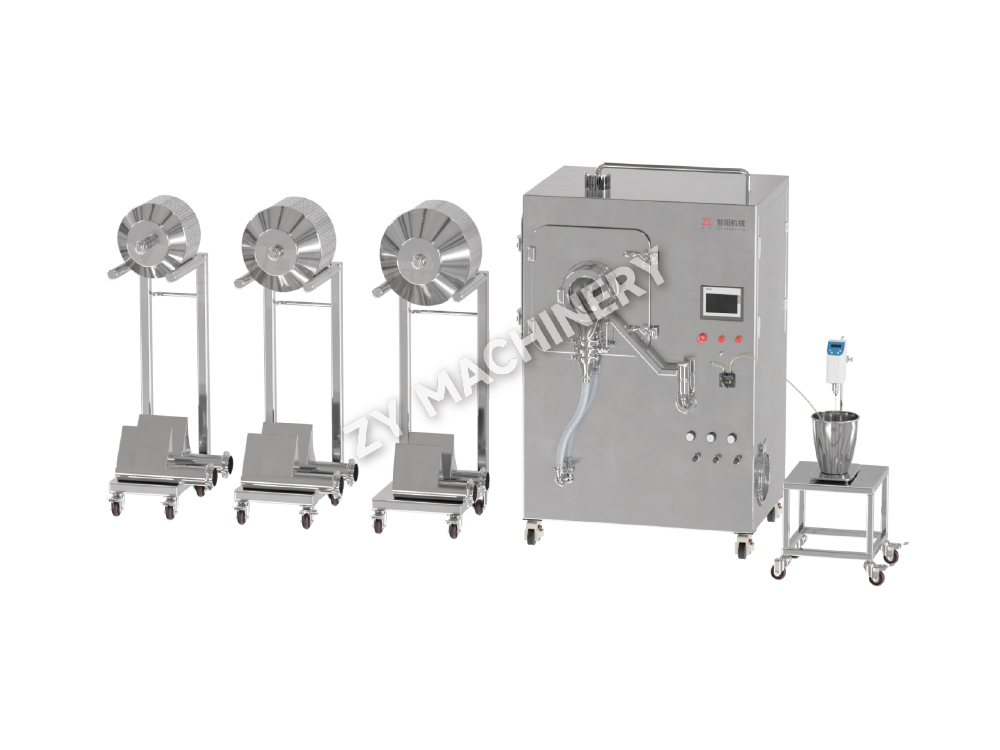
An automatic loading and unloading system can be configured when the production line requires reduced manual handling or higher throughput. Automatic transfer may be connected to upstream wet granulation equipment, intermediate bins, vacuum conveying systems, or downstream sizing and blending equipment.
Automation can provide more consistent batch transfer, reduce lifting requirements, and improve process traceability. It may also help reduce the possibility of product exposure during loading and unloading. The appropriate level of automation depends on the user's process layout, batch size, labor model, containment requirements, and control system architecture.
The following table summarizes the principal standard parameters supplied for the GFG series. Dimensions are reference installation sizes and should be confirmed during technical design. The GFG-800 to GFG-1000 range is customized according to the customer's process and site requirements.
| Item | Unit | GFG-60 | GFG-100 | GFG-120 | GFG-150 | GFG-200 | GFG-300 | GFG-500 | GFG-800~1000 |
| Capacity | kg/batch | 60 | 100 | 120 | 150 | 200 | 300 | 500 | By client |
| Fan power | kW | 7.5 | 11 | 11 | 15 | 22 | 30 | 37 | By client |
| Stirring power | kW | 0.55 | 1.1 | 1.1 | 1.1 | 1.1 | 1.1 | 1.5 | By client |
| Stirring speed | rpm | 11 | 11 | 11 | 11 | 11 | 11 | 11 | By client |
| Steam consumption | kg/h | 141 | 170 | 210 | 240 | 282 | 366 | 451 | By client |
| Steam pressure | MPa | 0.4–0.6 | 0.4–0.6 | 0.4–0.6 | 0.4–0.6 | 0.4–0.6 | 0.4–0.6 | 0.4–0.6 | By client |
| Working time | min/batch | 15–90 | 15–90 | 15–90 | 15–90 | 15–90 | 15–90 | 15–90 | By client |
| Reference installation height H1 | mm | 2676 | 2842 | 2862 | 2940 | 3014 | 3300 | 3650 | Customized |
| Reference installation height H2 | mm | 2366 | 2532 | 2532 | 2630 | 2704 | 2800 | 3150 | Customized |
| Reference dimension A | mm | 2440 | 2540 | 2540 | 2740 | 2840 | 2940 | 3140 | Customized |
Capacity values should be understood as nominal batch ratings rather than universal guarantees for every material. A wet granule with high bulk density, high viscosity, or poor flowability may require a different operating load from a dry, free-flowing granule. The correct model should therefore be selected after reviewing initial moisture, final moisture, product density, particle size distribution, temperature sensitivity, and target production schedule.
Uniformity is a major advantage of fluidized bed drying. Because heated air contacts a large portion of the particle surface and the agitator continually redistributes the bed, the difference between wetter and drier regions can be reduced. This helps manufacturers achieve a more consistent residual moisture profile.
Compared with static tray drying, the GFG configuration provides active movement throughout the bed rather than relying mainly on heat conduction and natural air circulation. Compared with systems that depend only on air velocity, the internal agitator provides an additional mechanism for dealing with cohesive wet granules.
Efficient air-to-particle contact promotes rapid evaporation. Under suitable process conditions, the typical drying time per batch is approximately 20 to 30 minutes, although the available working range is 15 to 90 minutes. Shorter drying cycles can increase production capacity, reduce work-in-progress inventory, and support more responsive scheduling.
Short processing time may also reduce the period during which a moisture-sensitive product is exposed to heat. However, the shortest possible cycle is not necessarily the best cycle. A validated process must balance drying rate, product temperature, final moisture, particle strength, and other quality attributes.
The circular chamber eliminates dead corners that may occur in less suitable geometries. This can improve product recovery and make cleaning more straightforward. Reduced retention is especially valuable when processing expensive active pharmaceutical ingredients, high-value nutritional materials, or products with strict cross-contamination controls.
Product retention also influences yield calculations. Material left behind in the dryer may be difficult to recover or may require additional cleaning effort. A more efficient discharge design can therefore deliver benefits beyond mechanical convenience.
Some competitor dryers may provide airflow but insufficient mechanical movement for sticky or partially agglomerated materials. The GFG internal agitator helps prevent wet granules from forming large lumps and reduces the risk of channeling. This can make the system more tolerant of variations in wet granulation conditions.
The agitator does not eliminate the need for appropriate upstream granulation control. Excessive binder, nonuniform wetting, or over-wet material can still affect performance. Nevertheless, the integrated movement mechanism gives the operator an important tool for managing difficult product behavior.
Open or semi-open drying processes can increase the risk of dust release, environmental exposure, and product contamination. The sealed negative-pressure configuration of the GFG dryer helps maintain a more controlled process envelope. The top-mounted bag filter further supports containment by collecting product fines before the exhaust air leaves the system.
This arrangement is advantageous for pharmaceutical, chemical, and nutraceutical manufacturers that need to control operator exposure and protect the product from the surrounding environment. It can also support cleaner production rooms and reduce the spread of airborne particulate matter.
The range from 60 to 500 kilograms per batch allows users to select equipment according to production scale. Smaller units may be appropriate for pilot production, product development, or moderate batch sizes, while larger units can support established manufacturing operations. Customized larger systems provide a route for continued capacity expansion.
A family of related models can also simplify technology transfer. Once a drying recipe is developed on a smaller unit, the manufacturer can review airflow, loading depth, agitation, and heat transfer behavior when scaling to a larger model. Scale-up must still be supported by process testing, but a coherent equipment platform can reduce unnecessary design variation.
Changzhou Zhiyang Machinery Equipment Co., Ltd. specializes in powder processing and oral solid dosage equipment. Its product range includes laboratory equipment, mixing equipment, granulation equipment, drying equipment, coating equipment, auxiliary processing equipment, and transfer and conveying systems.
This broad product scope is important because drying rarely operates as an isolated activity. A pharmaceutical line may include dispensing, mixing, wet granulation, drying, milling, blending, compression, coating, and conveying. By understanding connected operations, an equipment manufacturer can design more practical interfaces between machines and reduce problems caused by incompatible transfer methods or mismatched batch sizes.
The company develops solutions according to material characteristics, capacity requirements, and site conditions. This means the engineering process can consider issues such as powder flowability, product density, heat sensitivity, dust behavior, available utilities, room height, cleaning access, operator movement, and integration with existing systems.
The dryer is intended for pharmaceutical, chemical, feed, and food applications. Experience across these sectors can strengthen engineering judgment because each industry presents different process priorities. Pharmaceutical users may emphasize GMP, containment, cleaning validation, and documentation. Food processors may focus on throughput, energy consumption, and product appearance. Chemical manufacturers may require resistance to aggressive materials, special sealing, or explosion protection. Feed producers may prioritize capacity, durability, and operating economy.
A manufacturer that understands these different requirements can adapt the fundamental fluidized bed design without losing sight of the specific production objective. The result is a machine that can be configured as part of a practical process rather than treated as a generic dryer.
According to the supplied company information, ZY Machinery has strengthened its research and development capabilities, obtained quality system certification, developed patented technologies, and expanded its product portfolio. These activities support continuous improvement in equipment structure, process performance, control, and serviceability.
Research and development in drying equipment may involve airflow distribution, filter performance, agitation behavior, thermal efficiency, discharge reliability, automation, sealing, and cleaning access. Even apparently small design improvements can influence production yield, maintenance time, and product consistency over many operating cycles.
Reliable drying equipment requires consistent fabrication and assembly. Product-contact surfaces must be appropriately finished, structural components must withstand repeated thermal and mechanical loads, and moving parts must be correctly aligned. Seals, filters, valves, sensors, and electrical components must work together as a complete system.
A quality-oriented manufacturing process should include design review, material verification, dimensional inspection, welding and surface treatment control, component testing, assembly checks, and functional testing. For pharmaceutical equipment, documentation and traceability are also important. The company’s focus on quality systems and engineering implementation provides a foundation for these expectations.
Customers often need more than a machine quotation. They may require process selection, layout planning, utility calculations, equipment interfaces, installation guidance, commissioning, operator training, and after-sales support. ZY Machinery’s stated focus on process routes and engineering implementation plans is intended to address this broader need.
Such support can be particularly valuable when the dryer is integrated with a wet granulator, wet mill, lifting system, automatic weighing equipment, intermediate hopper, or downstream tablet production line. Correct coordination between equipment reduces transfer delays and helps avoid manual handling that can compromise containment or batch traceability.
In oral solid dosage manufacturing, wet granules must be dried to a controlled moisture range before sizing and compression. If the granules remain too wet, they may stick to screens, form unstable agglomerates, or create compression problems. If they are overdried, they may become friable, generate excessive fines, or affect tablet hardness and disintegration.
The GFG dryer supports pharmaceutical production through uniform air contact, internal agitation, sealed operation, and controlled discharge. The final process must be validated for each formulation because active ingredients, binders, excipients, and granule structures respond differently to heat and airflow.
Chemical granules may require drying after crystallization, wet agglomeration, filtration, or washing. The material may be abrasive, hygroscopic, corrosive, or sensitive to oxidation. A suitable equipment configuration can take account of material compatibility, temperature limits, dust control, and exhaust treatment.
The broad model range enables the dryer to serve laboratory-to-production development paths and commercial chemical operations. Customized construction materials, controls, and safety features should be evaluated according to the chemical composition and hazard profile of the product.
Food ingredients and nutraceutical granules often require careful moisture control to preserve flowability, shelf stability, texture, and packaging performance. Excessive heat can affect color, flavor, nutrients, or active compounds. Rapid and uniform drying can help limit thermal exposure while achieving the required moisture target.
For food and nutraceutical applications, hygienic construction, ease of cleaning, and prevention of residue accumulation are especially important. The circular chamber and tilting discharge design support these objectives, while the final configuration should be selected with consideration for food-contact standards and the specific product.
Feed granules and additives may be processed in relatively large batches and may contain materials with different densities and moisture characteristics. The GFG series offers larger standard capacities and can be customized for higher requirements. Internal agitation can assist with cohesive materials, while controlled air movement supports more consistent drying throughout the batch.
The most important process variables are inlet air temperature, air volume, bed pressure, product loading, agitation, drying time, and exhaust condition. These variables should be adjusted according to the product's drying curve rather than based only on a fixed recipe.
Inlet temperature influences the drying rate and product temperature. Higher temperature may accelerate evaporation, but heat-sensitive materials may require a lower setting. Air volume determines whether the bed is adequately fluidized. Insufficient airflow may produce poor circulation, while excessive airflow can carry fines into the filter or damage fragile granules.
Product loading affects bed depth and airflow resistance. Overloading may prevent complete fluidization and extend drying time. Underloading may create unstable movement or inefficient use of equipment capacity. The correct loading range should be established during development and confirmed during scale-up.
Agitation helps maintain a uniform bed, but excessive mechanical action may alter granule size or generate fines. The standard stirring speed is designed as a controlled operating parameter, while customized configurations may be considered for unusual material behavior.
Moisture testing should be performed using a validated analytical method. Sampling must represent the batch and should account for possible differences in particle size or location within the chamber. Temperature sensors, pressure indicators, airflow controls, and filter monitoring instruments should be checked regularly and calibrated according to the site's quality system.
Because the dryer operates under negative pressure, the fan and exhaust arrangement must be correctly designed. Exhaust ducts should be appropriately sized, and the facility should provide suitable treatment or filtration where required. Heating utilities, including steam at the specified pressure range of 0.4 to 0.6 MPa, should be stable and properly connected.
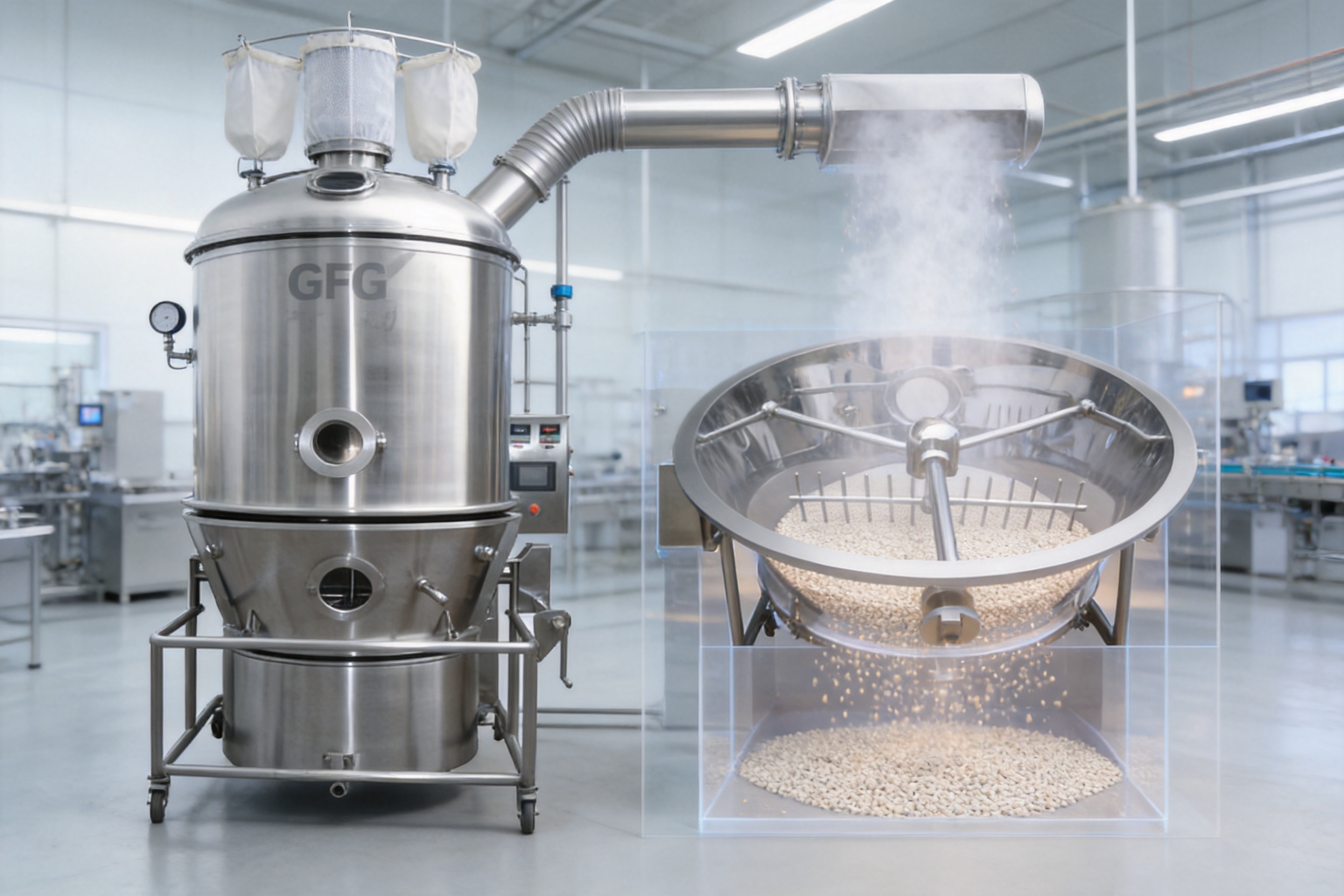
Pharmaceutical and food manufacturers require equipment that supports hygienic operation. The design objective is not simply to prevent visible contamination; it is also to reduce hidden retention points, support repeatable cleaning, and permit inspection of critical areas.
The circular drying chamber helps avoid difficult internal corners. The tilting discharge arrangement can reduce residual product after a batch. The sealed negative-pressure process helps contain dust. The anti-static filter supports safer powder handling. Together, these features contribute to a more controlled production environment.
GMP compliance is a system-level responsibility. The equipment should be evaluated for product-contact materials, surface finish, weld quality, gasket compatibility, accessibility, cleaning method, drainability where applicable, and documentation. Cleaning validation or verification should be developed for the actual product family and cleaning agents used at the facility.
Safety planning should include thermal hazards, moving parts, pressure conditions, dust exposure, electrical safety, and potential combustible dust risks. Operators should not open the equipment while the agitator or fan is moving. Lockout and tagout procedures should be followed during maintenance. The anti-static filter should be correctly installed and grounded as part of the plant safety design.
Where powders may create an explosion hazard, a formal dust hazard assessment is required. Depending on the product and regulatory environment, the installation may require explosion relief, inerting, isolation, specialized electrical components, or other protective measures. These items should be defined during technical consultation rather than added after installation.
Installation planning begins with the reference dimensions. The listed H1, H2, and A dimensions provide an initial indication of equipment height and footprint, but the final layout must include access space, filter removal clearance, electrical cabinets, heating connections, exhaust ducts, maintenance routes, and material transfer equipment.
Room height is especially important for top-mounted filter access and maintenance. Operators may need sufficient space to inspect or replace filter bags, and the lifting path should be considered before the dryer is positioned. The installation area must also support safe operation around the tilting discharge mechanism.
The dryer can be connected to upstream wet granulation equipment through gravity transfer, vacuum conveying, lifting equipment, or other material handling solutions. Downstream connections may include a wet mill, dry mill, sieve, intermediate container, blender, tablet press, capsule filling line, or packaging system. Good integration reduces transfer steps and supports a smoother batch flow.
Utilities commonly include electrical power, heating steam, compressed air where applicable, exhaust ventilation, and process control connections. The fan power varies by model, from 7.5 kW on the GFG-60 to 37 kW on the GFG-500. Utility planning should account for starting current, operating load, ventilation, and the requirements of auxiliary equipment.
Selecting the correct model requires more information than the desired batch capacity. The user should provide the amount of wet material per batch, initial and final moisture, product density, particle size, material temperature limit, expected drying time, heating source, and production schedule.
For a 60-kilogram batch requirement, the GFG-60 may be an appropriate starting point, while 100-, 120-, 150-, 200-, 300-, and 500-kilogram models provide progressively greater capacity. However, the ideal model may change if the material is difficult to fluidize or if the process requires a deep safety margin between normal load and maximum equipment capacity.
The production schedule should also be considered. A facility may require several smaller dryers for flexible multiproduct operation, or one larger unit for a high-volume product. Multiple units can reduce scheduling conflicts and allow different formulations to be processed at the same time. A large unit may reduce floor space per kilogram but could create a bottleneck if it requires long changeover or cleaning periods.
Automation level is another selection factor. Manual loading and unloading may be sufficient for development or low-volume production. Automatic transfer is more attractive where labor reduction, containment, repeatability, and integration with a complete solid dosage line are priorities.
The dryer’s mechanical design is only one part of the purchase decision. Long-term value also depends on whether the manufacturer can understand the process, adapt the machine, document the system, and provide support after delivery.
Changzhou Zhiyang Machinery Equipment Co., Ltd. was founded in 2010 and is based in Changzhou, China. The company focuses on powder processing and oral solid dosage equipment and serves pharmaceutical, biopharmaceutical, biotechnology, nutraceutical, veterinary, additives, and related industries.
Its capabilities cover laboratory, pilot, and full-scale production. This range allows customers to work with a supplier that understands development as well as commercial manufacturing. A laboratory or pilot unit can help establish material behavior, while full-scale equipment can be designed around the validated process and plant capacity.
The company emphasizes honesty, quality, specialized expertise, responsive service, research, and innovation. It has also expanded overseas service capabilities and supplied equipment and engineering solutions to customers in multiple countries and regions. For international customers, this can be important when installation, commissioning, spare parts, training, and technical communication must be coordinated across borders.
A process-driven supplier can also help customers avoid common specification errors. For example, selecting a dryer solely by wet material weight may result in an unsuitable unit if the product has poor fluidization characteristics. Similarly, ignoring room height may create installation problems, while overlooking filter access may increase maintenance difficulty. Engineering consultation helps identify these issues before fabrication.
High-quality drying equipment should be evaluated across its entire lifecycle. Purchase price is important, but operating reliability, energy use, maintenance, cleaning time, product recovery, and technical support also affect the total cost of ownership.
The GFG design can create lifecycle value through rapid drying, reduced product retention, practical discharge, and support for automatic transfer. Shorter cycles may improve equipment utilization. More uniform drying can reduce rejected batches or rework. Easier cleaning can reduce changeover time. Reliable filter performance can support a cleaner environment and protect product yield.
Manufacturing quality directly influences these benefits. Accurate fabrication supports correct airflow and reliable sealing. Proper alignment supports stable agitator operation. Durable surface treatment helps resist wear and simplifies cleaning. Correct assembly of filters and ducts supports containment and process efficiency.
Serviceability should also be considered. Wear components, filter bags, seals, bearings, sensors, and electrical elements should be accessible for inspection and replacement. Maintenance instructions and recommended spare parts help the user plan preventive maintenance rather than relying only on emergency repairs.
For regulated production, the dryer should be incorporated into a documented qualification program. The scope may include design qualification, installation qualification, operational qualification, and performance qualification, according to the user's quality system and regulatory requirements.
Design qualification confirms that the selected equipment meets the process and user requirements. Installation qualification verifies that the machine, utilities, instruments, and documentation are installed correctly. Operational qualification tests controls, alarms, temperature behavior, pressure operation, agitation, fan performance, and filter-related functions.
Performance qualification demonstrates that the dryer consistently produces acceptable material under defined operating conditions. The study may evaluate residual moisture, uniformity, drying time, product temperature, particle size distribution, bulk density, flowability, and other critical quality attributes.
Process validation should include appropriate worst-case considerations. These may involve minimum and maximum load, high and low initial moisture, different product formulations, extended operation, and cleaning changeover. The final acceptance criteria should be defined by the product owner and quality organization.
Operators benefit from a dryer that is straightforward to load, monitor, and discharge. The internal agitator reduces the need for manual intervention during drying. The tilting vessel assists with product removal. The sealed negative-pressure arrangement helps create a cleaner working environment. These features can reduce routine handling and improve operational consistency.
Production managers benefit from a relatively short drying cycle and a range of available capacities. The equipment can be specified for pilot production, commercial batches, or customized larger systems. The possibility of automatic loading and unloading supports future expansion and line integration.
Quality teams benefit from a design that supports controlled temperature, negative pressure, contained filtration, and consistent material movement. While validation remains necessary, the machine provides process features that align with the requirements of regulated powder and granule manufacturing.
Engineering teams benefit from working with a supplier that also manufactures mixing, granulation, coating, conveying, and auxiliary equipment. This can simplify the development of complete production lines and reduce the effort required to coordinate interfaces between separate vendors.
The dryer is designed for wet granular materials used in pharmaceutical, chemical, feed, and food industries. It can also be considered for nutraceutical, additive, veterinary, and related powder-processing applications. Suitability depends on particle size, moisture, density, flowability, heat sensitivity, and safety characteristics.
The typical drying time per batch is approximately 20 to 30 minutes under suitable conditions. The listed working time range is 15 to 90 minutes per batch. Actual time must be established through trials because formulation, initial moisture, final moisture target, air temperature, and loading have a direct effect on drying performance.
The agitator helps prevent wet granules from clumping and reduces channeling inside the bed. It promotes more even movement and exposure to heated air. This is particularly useful for cohesive or partially sticky materials that may not fluidize uniformly through airflow alone.
The circular structure eliminates dead corners and reduces areas where material may accumulate. It supports more consistent circulation, easier discharge, and simpler cleaning compared with a design that contains multiple sharp internal corners.
The GFG dryer operates under sealed negative pressure. This helps limit the escape of process air and product dust into the surrounding room. The complete installation must still include suitable exhaust, filtration, sealing, grounding, and safety measures.
Yes. An optional automatic material loading and unloading system can be configured. The appropriate arrangement depends on the upstream and downstream equipment, required containment level, batch size, available floor space, and desired automation strategy.
The listed steam pressure is 0.4 to 0.6 MPa. Steam consumption varies by model, from 141 kilograms per hour for the GFG-60 to 451 kilograms per hour for the GFG-500. Final utility requirements should be confirmed during detailed engineering.
No. The capacities are standard reference ratings. Actual performance depends on the characteristics of the wet material and the selected operating conditions. A technical evaluation or process trial is recommended before final model selection, especially for cohesive, fragile, heat-sensitive, or high-density granules.
The equipment is designed to operate in a sealed negative-pressure configuration and includes features that support GMP-oriented production, such as a circular chamber, top-mounted filter, and tilting discharge. GMP suitability must be assessed for the complete installation, including materials, surface finish, cleaning, documentation, instrumentation, and validation.
Users should evaluate room height, footprint, filter access, maintenance clearance, discharge space, utility connections, exhaust routing, material transfer, electrical requirements, and operator access. The reference H1, H2, and A dimensions are useful for preliminary planning but should not replace a final installation drawing.
The GFG design combines a circular bed, internal agitation, anti-static top-mounted filtration, tilting discharge, sealed negative-pressure operation, and optional automatic material handling. Together, these features address uniformity, containment, clumping, discharge, cleaning, and production integration rather than focusing only on air heating.
Yes. The manufacturer’s product scope includes laboratory equipment, mixing equipment, granulation equipment, drying equipment, coating equipment, auxiliary processing equipment, and transfer and conveying systems. This supports the design of modular systems and complete production lines for powder and oral solid dosage processing.
The GFG High-Efficiency Fluid-bed Dryer is designed to provide fast, uniform, and controlled drying of wet granular materials. Its circular fluidized bed reduces dead corners, while the internal agitator helps prevent clumping and channeling. The anti-static top-mounted bag filter supports product recovery and safer powder handling. Sealed negative-pressure operation improves containment, and the tilting discharge arrangement promotes fast and complete material removal.
With standard capacities from 60 to 500 kilograms per batch and customized options for larger requirements, the series can serve laboratory, pilot, and commercial production needs. Its typical drying time of 20 to 30 minutes per batch offers strong productivity potential, while the broader 15- to 90-minute operating range allows the process to be adapted to different materials.
The equipment’s competitive value comes from the combination of mechanical design, process flexibility, containment features, practical discharge, and optional automation. Equally important is the capability of Changzhou Zhiyang Machinery Equipment Co., Ltd. to support equipment selection, process integration, manufacturing, commissioning, and service. With expertise across mixing, granulation, drying, coating, conveying, and auxiliary systems, the company can help customers build a coherent powder-processing or oral solid dosage solution rather than purchasing disconnected machines.
For manufacturers seeking a reliable fluidized bed dryer, the correct decision should be based on material behavior, batch requirements, cleaning strategy, utility availability, containment needs, and long-term production objectives. When these factors are evaluated carefully, the GFG series provides a strong platform for efficient, hygienic, and repeatable granule drying.
1. Changzhou Zhiyang Machinery Equipment Co., Ltd. Product information for the GFG High-Efficiency Fluid-bed Dryer.
2. Changzhou Zhiyang Machinery Equipment Co., Ltd. Company profile and powder-processing equipment portfolio information.
3. Current Good Manufacturing Practice principles for pharmaceutical manufacturing equipment and process control.
4. General engineering principles of convective drying and fluidized bed heat and mass transfer.
5. Industrial guidance on powder handling, electrostatic control, dust containment, and combustible dust risk assessment.
Want to stay up to date?
Contact us via the email address below.
Don't worry about spam. We hate it too!
Mobile Client

Video Account
Phone:+86-15161130178
Tel:+86-519-88674267
Email:czzy188@163.com
Phone:+86-15161132798
Email:zy@zy-drying.com

WeChat ID

Copyright 2026 Changzhou Zhiyang Machinery Equipment Co., Ltd. All Rights Reserved  Oral Solid Dosage Equipment Manufacturer