 English
 Español
 русский
 中文简体
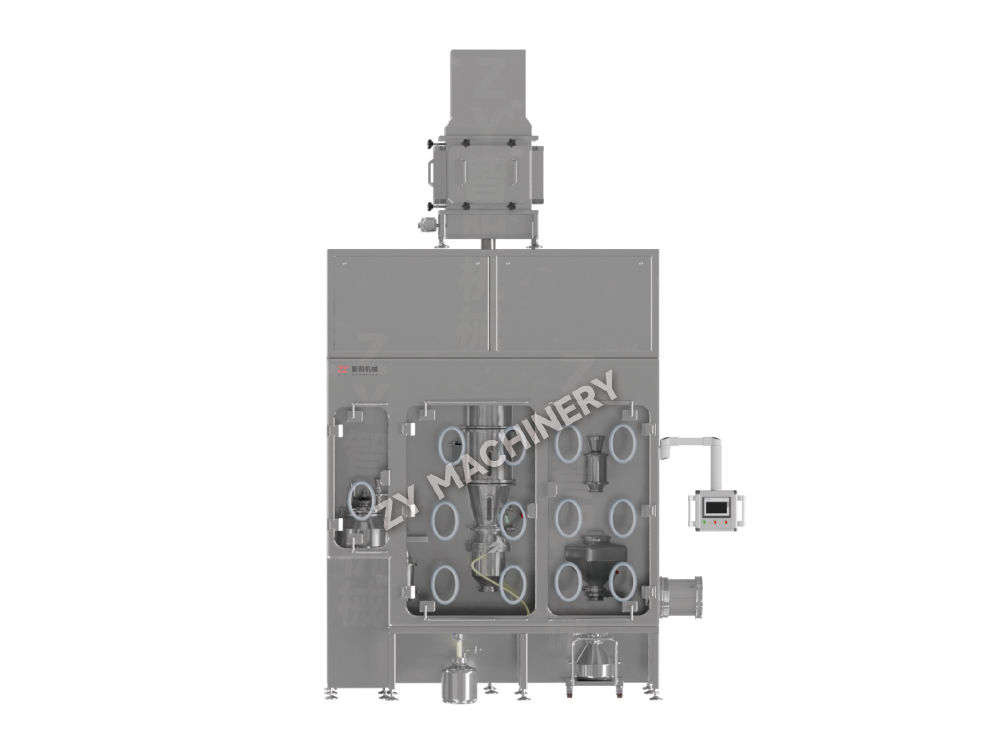
中文简体TLZ Dust-Free Feeding Station
The TLZ Dust-Free Feeding Station is designed to address dust generation du.....

Content
In pharmaceutical, food, chemical, nutraceutical, and related manufacturing environments, powder feeding is often treated as a simple transfer step. In practice, it can be one of the most demanding operations in the entire process. Powders may be light, cohesive, electrostatic, moisture-sensitive, abrasive, or easily dispersed into the surrounding air. When a sack, drum, container, or intermediate bulk vessel is opened for charging, the resulting dust cloud can affect operator safety, product hygiene, equipment cleanliness, and regulatory compliance.
The TLZ Dust-Free Feeding Station is developed to control these challenges at the point where materials enter a production process. It combines an enclosed feeding structure, dust capture, high-efficiency filtration, airflow management, vibration-assisted discharge, and optional material-processing functions. The result is a more controlled approach to handling powders and granular materials before mixing, granulation, drying, blending, conveying, or other downstream operations.
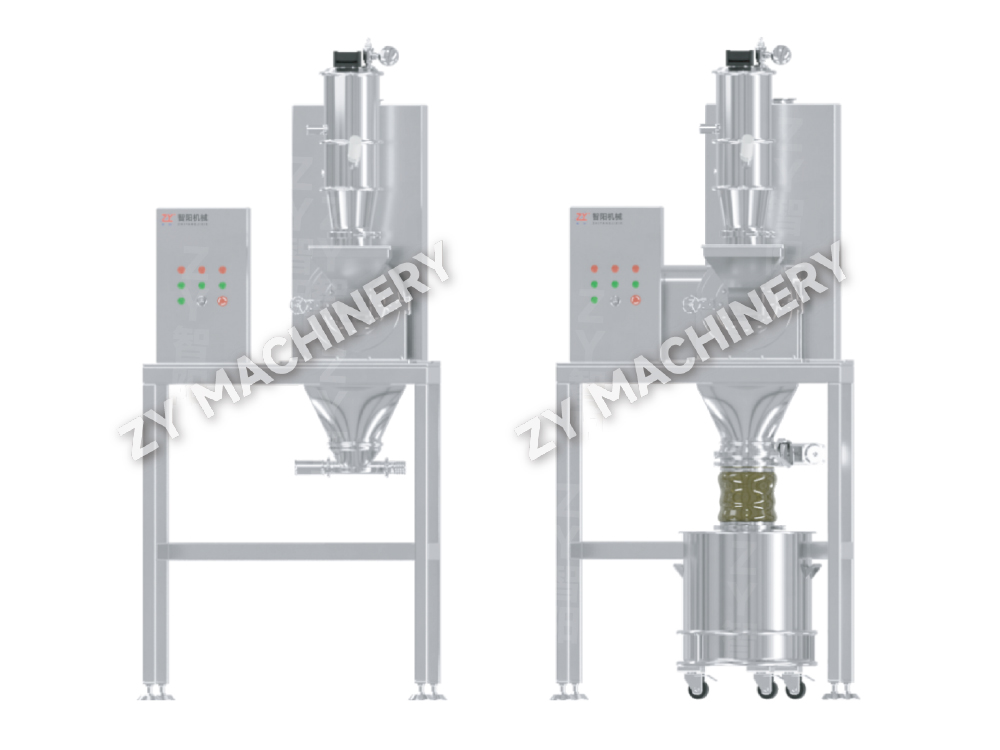
Unlike a basic receiving hopper or open charging table, the TLZ system is designed around containment and controlled airflow. Its dust capture mechanism creates a unidirectional airflow that draws airborne particles toward the filtration area instead of allowing them to escape into the working environment. A high-pressure centrifugal fan maintains the air movement, while the dust filter separates particles from the air stream. This arrangement supports a cleaner feeding area and helps reduce the burden placed on operators and surrounding production equipment.
For manufacturers seeking reliable powder processing equipment and oral solid dosage equipment solutions, the feeding stage deserves the same level of engineering attention as blending, granulation, drying, and coating. A well-designed feeding station can improve the entire process by stabilizing material introduction, reducing contamination risks, supporting GMP-oriented production, and simplifying cleaning and maintenance.
Powder handling is affected by particle size distribution, bulk density, flowability, moisture content, cohesion, and electrostatic behavior. Fine powders are especially difficult because their particles can remain suspended in air for extended periods. Even materials that appear relatively stable in a container may create significant dust when poured, tipped, or transferred through an opening.
Uncontrolled dust can create several operational problems. First, it can reduce the cleanliness of the production room. Accumulated powder may settle on floors, platforms, machine surfaces, electrical components, and ventilation ducts. Second, airborne material can create cross-contamination concerns when multiple products are processed in the same facility. Third, operators may need to perform additional cleaning, increasing labor requirements and reducing equipment availability.
Dust can also represent a product-loss issue. Valuable active ingredients, excipients, food additives, and specialty chemicals may be lost during open charging. If the material is expensive or potent, even small losses can influence production economics. In addition, an inconsistent feeding operation may cause variation in the quantity of material entering the next process stage.
A dust-free feeding station addresses these problems by placing the charging operation within a controlled structure. The feeding station captures airborne particles at the source, separates them from the air, and directs the material into the following processing or conveying step. This approach is more effective than relying solely on general room ventilation, because the dust is controlled before it spreads through the production area.
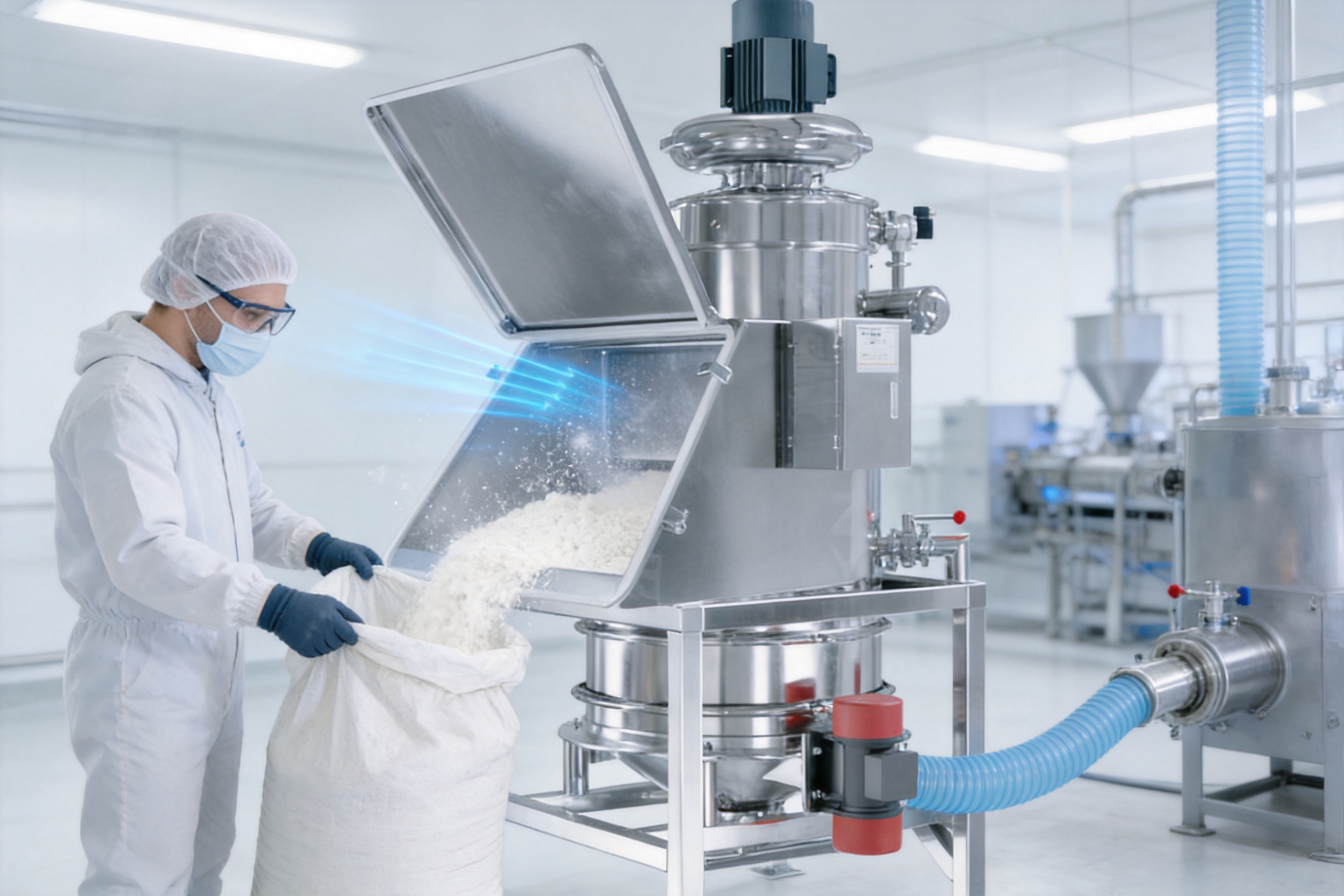
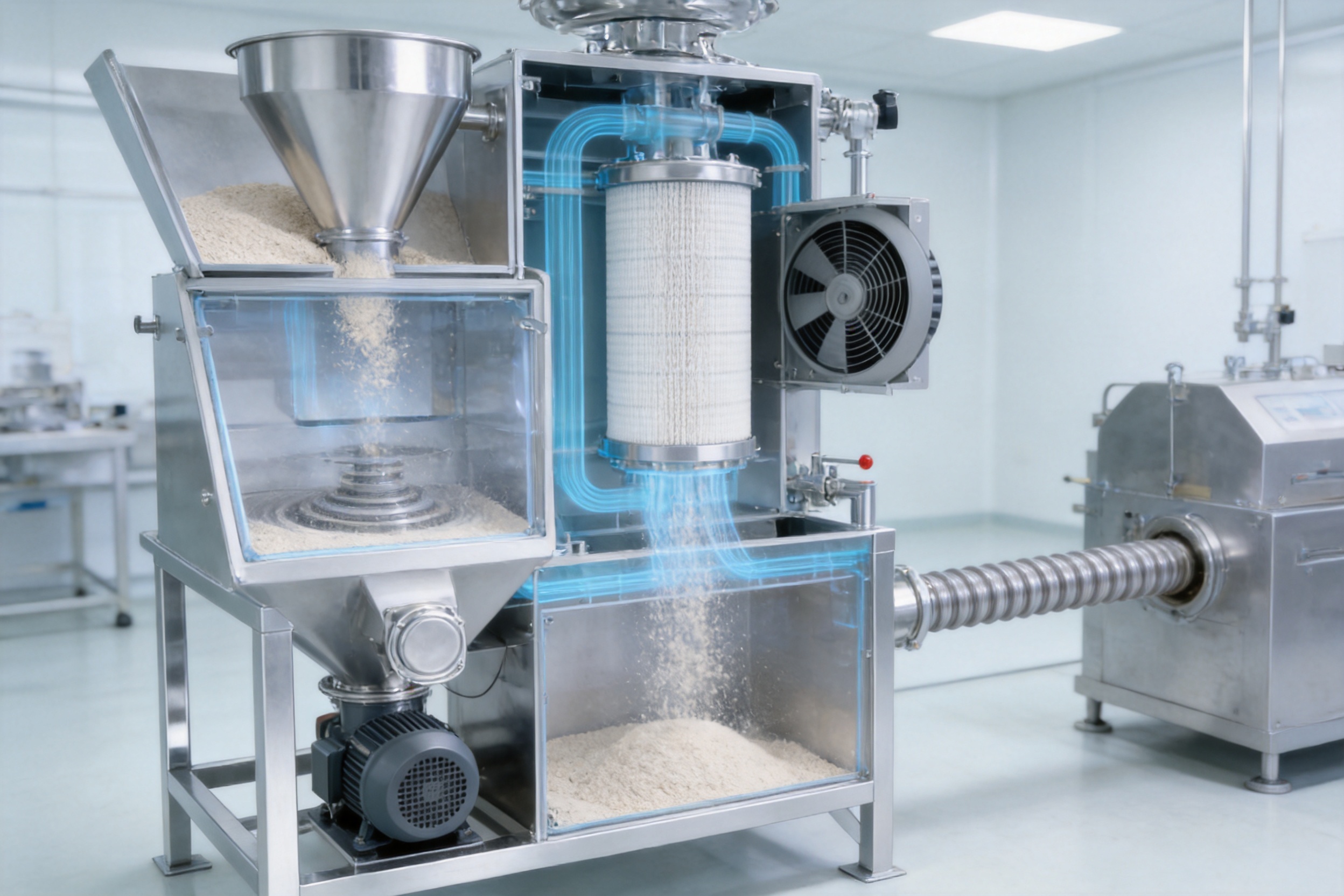
The TLZ Dust-Free Feeding Station uses a coordinated airflow and filtration system. When the dust collection fan operates, air is drawn through the feeding area toward the filtration section. The airflow is arranged to create a unidirectional movement, helping prevent powder from escaping through the operator access area.
During charging, the material is placed into the receiving section of the station. Fine particles released during tipping or pouring are carried by the controlled airflow toward the dust filter. The filter retains the airborne powder while cleaner air passes through the filtration media. A high-pressure centrifugal fan provides the force required to maintain effective air movement and support stable dust capture.
The system is not based on a single component. Its effectiveness depends on the relationship among the enclosure, air inlet and outlet arrangement, filter area, fan performance, material discharge structure, and cleaning system. This integrated approach is important because a powerful fan alone cannot guarantee good containment. If the airflow is poorly distributed, dust may still escape or the material may be disturbed unnecessarily.
The TLZ design therefore focuses on a balanced operating condition. The feeding zone must remain accessible enough for loading and inspection, while airflow must be sufficient to capture dust. The discharge area must allow material to move reliably into the next stage without creating an additional dust release point. The filtration system must retain particles while remaining serviceable over repeated production cycles.
A vibrating motor is incorporated to assist material movement. Vibration can help reduce bridging and improve the discharge of powders or granules that do not flow easily under gravity alone. This is particularly useful when the material has a tendency to adhere to the hopper wall or form an unstable arch above the outlet.
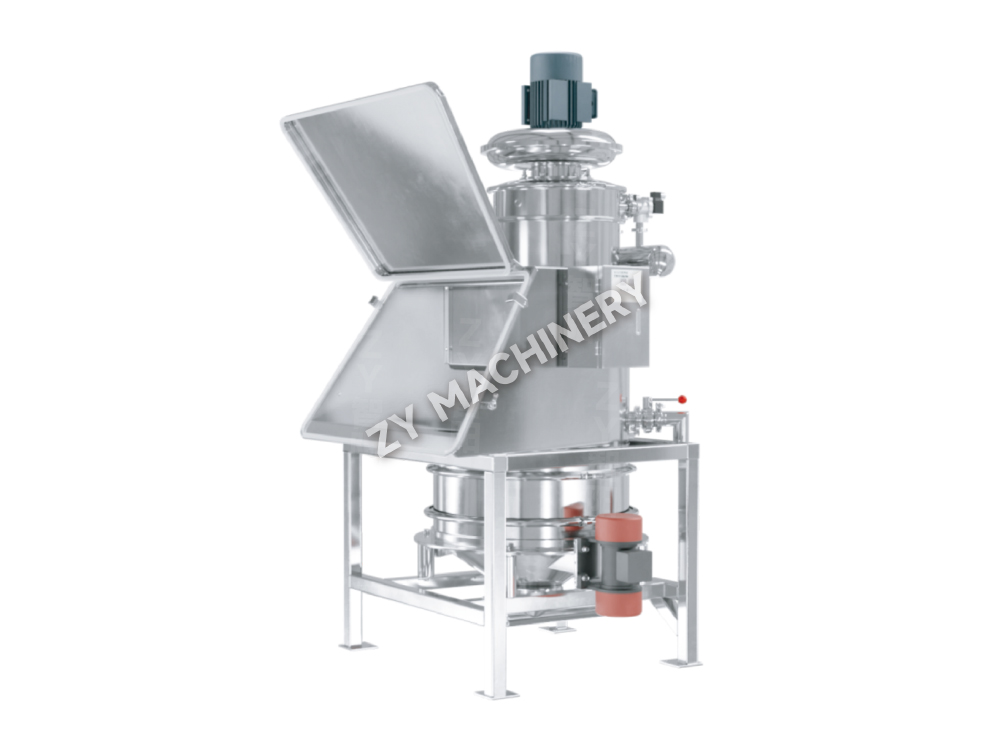
TLZ Dust-Free Feeding Station
The principal advantage of the TLZ system is that it captures dust at the feeding location. Conventional open feeding may allow airborne particles to spread before general ventilation can remove them. By contrast, the TLZ station creates a localized airflow pattern that draws dust toward the filter as soon as it is generated.
This source-control principle can reduce visible dust, improve room cleanliness, and support a more comfortable working environment. It also minimizes the chance that airborne material will settle on nearby machinery or be transported into adjacent processing zones.
Operators are often closest to the material during manual charging. An open process can expose them to dust clouds, particularly when bags or drums are emptied quickly. The enclosed feeding area and controlled air extraction of the TLZ station help separate the operator from the most concentrated release point.
Actual protection depends on the material, operating procedure, personal protective equipment, facility design, and appropriate risk assessment. Nevertheless, local containment is an important engineering control and can reduce reliance on personal protective equipment as the only line of defense.
Dust control contributes directly to hygienic manufacturing. When powder is prevented from escaping, fewer surfaces require cleaning and the risk of unintended material transfer is reduced. The TLZ station is suitable for production environments that place strong emphasis on cleanliness and GMP-oriented process control.
The use of FDA-compliant laminated needle felt filter media provides an additional advantage for applications requiring carefully selected product-contact or dust-capture materials. The filter material is designed to provide efficient particle capture while supporting the hygiene expectations associated with pharmaceutical and food processing.
Dust that escapes from an open feeding point is material that is no longer available for the intended formulation. A properly designed capture system can recover airborne powder on the filter, helping reduce unnecessary product loss. This is especially valuable when the material has a high purchase cost or when formulation accuracy is critical.
Recovered dust must, of course, be handled according to the user’s quality procedures. Whether it can be returned to the process depends on product specifications, contamination controls, validation requirements, and applicable regulations. The feeding station provides the physical means for capture, while the user’s quality system determines the appropriate disposition.
Feeding is not only a cleanliness issue; it is also a process-control issue. If powder enters the next machine irregularly, the downstream process may experience fluctuations in fill level, mixing ratio, residence time, or load. The TLZ station combines a receiving hopper with vibration-assisted discharge to promote more stable material flow.
Consistent feeding can help improve the repeatability of blending, granulation, conveying, or other operations. It may also reduce the need for operators to manually intervene when material begins to bridge or accumulate around the outlet.
Production facilities rarely handle only one type of material. A feeding solution must therefore accommodate different powders, granules, container formats, throughput expectations, and downstream machines. The TLZ platform can be configured with optional functions such as iron removal, sieving, and crushing.
These options allow the feeding station to serve as more than a simple dust-control enclosure. It can become a preliminary conditioning point where foreign metal is removed, oversized particles are separated, or agglomerates are broken before the material enters the main process.
Filter selection is central to feeding-station performance. The filter must retain airborne particles efficiently without causing excessive resistance to the fan. It must also tolerate repeated cleaning, regular inspection, and the chemical and physical properties of the handled material.
The TLZ Dust-Free Feeding Station is specified with a 0.4 micrometer coated polyester filter cartridge or a titanium membrane filter, depending on the selected configuration. These filtration options are intended to provide fine-particle capture for demanding powder-handling applications.
The coated polyester filter cartridge offers a practical balance of filtration performance, durability, and serviceability. The coating can help limit particle penetration into the filter structure and support cleaning. The titanium membrane filter option provides a robust alternative for applications requiring a different material construction or enhanced resistance characteristics.
Filter performance is also influenced by the nature of the powder. A low-density, highly cohesive powder may behave differently from a free-flowing granule. Moisture, oil content, electrostatic charge, and particle shape can affect dust loading and cleaning frequency. For that reason, filter selection should be confirmed through a process review rather than based only on nominal particle size.
The station includes a pulse-reverse air cleaning system to help prevent filter clogging. During cleaning, a controlled reverse pulse dislodges accumulated dust from the filter surface. The released powder falls back into the collection or feeding area, depending on the equipment configuration.
This cleaning method has several practical benefits. It helps maintain airflow over an extended operating period, reduces the rate of filter resistance increase, and supports repeated use of filter materials. Instead of stopping frequently for manual filter cleaning, the system can clean the filter during operation or at defined intervals according to the user’s procedure.
Pulse cleaning must be adjusted appropriately. Excessive pulse pressure may place unnecessary stress on the filter, while insufficient cleaning may allow dust cake to build up. The correct settings depend on the filter construction, powder properties, operating time, and desired pressure range. Proper commissioning and routine inspection are therefore important parts of system performance.
The high-pressure centrifugal fan provides the airflow needed for dust capture and filter operation. Centrifugal fans are widely used in industrial dust-collection applications because they can generate the pressure required to move air through ducting and filtration media.
For the TLZ-1 model, the dust collection fan is rated at 1.1 kW. The TLZ-2 model uses a 1.5 kW dust collection fan. The difference allows users to select a configuration suited to the intended operating scale and airflow demand.
Fan performance should always be considered together with filter resistance, duct arrangement, material loading conditions, and room environment. A fan that is correctly selected for one installation may not deliver the same practical result if the ducting is extended, additional bends are introduced, or the filter becomes heavily loaded. This is why equipment integration and site-specific engineering are important when installing a feeding station.
Powders do not all flow in the same way. Some materials discharge freely, while others form bridges, ratholes, lumps, or compacted layers. A feeding station that only depends on gravity may perform inconsistently when material properties change.
The TLZ station incorporates a vibrating motor to assist discharge. Both the TLZ-1 and TLZ-2 models are equipped with a 0.18 kW vibrating motor. Controlled vibration transfers energy to the hopper or feeding structure, helping loosen material and encourage movement toward the outlet.
Vibration should be used carefully. Too little vibration may not solve a flow problem, while too much may cause segregation, excessive noise, or unwanted compaction in certain materials. The best operating conditions depend on the bulk density, moisture level, particle distribution, and required feeding rate.
In a complete production line, the feeding station may discharge into a screw conveyor, vacuum conveying system, lifting device, mixer, granulator, mill, or other processing machine. The outlet arrangement must be compatible with the receiving equipment. Attention should be given to elevation, connection size, sealing, cleaning access, and the potential for dust release at the transfer point.
A correctly integrated outlet helps maintain the benefits of dust containment beyond the station itself. If the downstream connection is open or poorly sealed, dust may escape after it has been captured successfully inside the feeding station.
An iron-removal option can help identify and remove ferrous contaminants before the material proceeds to the next stage. This may be useful when raw materials arrive in bags, drums, or other containers that could introduce metal fragments through handling, transport, or wear.
Metal separation supports product protection and equipment protection. It can reduce the possibility of foreign material entering a mixer, granulator, mill, or tablet-processing line. The correct magnetic or separation arrangement depends on the material, throughput, particle size, and required sensitivity.
Sieving can remove oversized particles, foreign matter, or agglomerates before feeding. It may also help establish a more uniform particle size distribution for downstream processing. In pharmaceutical and food production, this preliminary classification can contribute to improved blending and more predictable material behavior.
The sieve design should be selected according to the material’s flowability, screen aperture, desired capacity, and cleaning requirements. Quick-release access is particularly valuable because screen surfaces can become loaded or require frequent inspection when handling cohesive powders.
Crushing or de-lumping can improve the handling of materials that have formed compacted blocks during storage. Powders may agglomerate because of moisture absorption, pressure from stacking, temperature variation, or natural cohesion. If these lumps are introduced directly into a downstream process, they may create inconsistent feeding or prolong the mixing and granulation cycle.
An integrated crushing function can reduce the need for separate manual de-lumping. This can improve operator efficiency and provide a more consistent feed to the next machine. Crushing intensity should be controlled to avoid excessive fines, heat generation, or unwanted changes to the material’s physical properties.
Cleaning and maintenance are major considerations in pharmaceutical, food, and chemical production. A machine that performs well but takes too long to disassemble can reduce production availability and increase the risk of incomplete cleaning. The TLZ station uses a modular, quick-release design to support installation, cleaning, inspection, and maintenance.
Modularity provides flexibility during equipment layout and line integration. Components can be arranged or connected according to the available space and the position of upstream and downstream machines. It also simplifies the replacement of selected parts because maintenance personnel do not necessarily need to dismantle the entire unit.
Quick-release access is especially useful for the filter, hopper, screen, discharge area, and other locations where powder may accumulate. Operators can remove parts more efficiently, inspect contact surfaces, and return the station to service with less downtime.
Ease of cleaning should not be judged only by how quickly a panel opens. The internal geometry, surface finish, corners, welds, seals, gaskets, and dead zones all influence cleanability. A good cleaning program combines equipment design with documented procedures, suitable cleaning tools, inspection methods, and verification practices.
For multi-product facilities, cleaning flexibility can help support shorter product changeovers. The exact changeover time will depend on the material, cleaning method, validation requirements, and operator practices, but a quick-release structure provides a stronger foundation than a permanently sealed or difficult-to-access arrangement.
The following specifications summarize the principal electrical and filtration configurations identified for the TLZ Dust-Free Feeding Station.
| Item | Model | TLZ-1 | TLZ-2 |
| Dust collection fan | kW | 1.1 | 1.5 |
| Vibrating motor | kW | 0.18 | 0.18 |
| Dust removal filter | Filter type | 0.4 μm coated polyester filter cartridge / titanium membrane filter | 0.4 μm coated polyester filter cartridge / titanium membrane filter |
These parameters should be evaluated together with the application requirements. Fan power alone does not define dust-capture capacity, and filter rating alone does not determine total system performance. Material characteristics, loading method, working height, connection design, airflow arrangement, and downstream equipment all influence the final result.
Pharmaceutical production commonly involves powders and granules that must be handled with strict attention to cleanliness, traceability, and cross-contamination control. The TLZ feeding station can be used before blending, wet granulation, dry granulation, milling, conveying, or other oral solid dosage operations.
In tablet and capsule production, excipients and active ingredients may be charged from bags or containers into a process line. Controlling dust during this step helps maintain a cleaner room and reduces the chance of material spreading outside the intended processing zone.
The station may also be used as part of a contained material-transfer strategy. When combined with appropriate upstream packaging, downstream conveying, and validated cleaning procedures, it can contribute to a more controlled production route.
Food ingredients such as flour, starch, sweeteners, powdered flavors, proteins, and nutritional premixes can generate significant dust during loading. Dust may affect housekeeping, allergen control, product recovery, and worker comfort.
A dust-free feeding station can help isolate the charging point and improve the consistency of ingredient introduction. Optional sieving and de-lumping functions may be useful when ingredients arrive with agglomerates or when a more uniform feed is required.
Chemical powders and granules vary widely in density, abrasiveness, moisture sensitivity, and hazard classification. The feeding system must therefore be selected with full consideration of the material safety data, explosion risk, corrosion potential, and required containment level.
The TLZ platform provides a basis for controlled feeding, but application-specific safety engineering remains essential. Depending on the chemical, additional grounding, explosion protection, specialized seals, corrosion-resistant materials, or dedicated containment may be required.
Veterinary medicines, feed additives, catalysts, and specialty premixes often require accurate and clean material handling. Small quantities of potent or high-value ingredients can create disproportionate dust and contamination concerns if they are charged through an open process.
By capturing dust at the source and allowing optional screening or metal removal, the TLZ station can support a more disciplined feeding operation for these applications.
Changzhou Zhiyang Machinery Equipment Co., Ltd. specializes in powder processing and oral solid dosage equipment. Founded in 2010 and based in Changzhou, China, the company develops standalone equipment, modular systems, and complete production lines for pharmaceutical, biopharmaceutical, biotechnology, nutraceutical, veterinary, additives, and related industries.
The company’s strength is based on process integration rather than isolated machine supply. A feeding station must work with the equipment before and after it. For this reason, the design process considers material characteristics, production capacity, site conditions, process routes, connection points, cleaning expectations, and future expansion requirements.
This process-oriented approach helps reduce the risk of selecting a machine based solely on a catalog specification. A technically suitable feeding station must also fit the customer’s building, operator workflow, utility availability, material containers, and downstream production sequence.
Different materials require different feeding strategies. A free-flowing granule may need only gravity discharge, while a cohesive powder may require vibration, de-lumping, or specialized conveying. A dusty material may require enhanced filtration, while an abrasive product may require wear-resistant components.
ZY Machinery’s engineering approach emphasizes the relationship between material properties and equipment design. This includes considering powder flowability, particle size, density, moisture, temperature, electrostatic behavior, and sensitivity to shear or impact.
Such evaluation can improve the likelihood that the selected feeding station will perform consistently after installation. It also provides a basis for determining whether optional iron removal, sieving, crushing, or additional conveying equipment should be included.
Modular design supports a broad range of customer requirements. Some users may need a standalone dust-free charging unit, while others may require integration with a complete powder-processing line. A modular platform allows the solution to be adapted without redesigning every component from the beginning.
Modularity can also simplify logistics, installation, maintenance, and future upgrades. If the production line changes, the feeding station may be connected to new downstream equipment or equipped with additional process functions, subject to engineering review.
The company has expanded its product portfolio, strengthened research and development capabilities, obtained quality system certification, developed patented technologies, and built overseas service capabilities. These activities support ongoing improvements in equipment reliability, process performance, and user convenience.
For equipment such as a dust-free feeding station, continuous improvement may involve better airflow distribution, improved filter cleaning, more accessible maintenance points, enhanced sealing, more efficient vibration control, or improved integration with conveying systems.
Advanced manufacturing is not limited to the fabrication of individual machine parts. It also includes the ability to control assembly quality, verify component fit, manage electrical systems, test airflow-related functions, and prepare equipment for reliable field installation.
A feeding station contains several interacting subsystems. The enclosure must be structurally stable, the filter housing must seal effectively, the fan must be correctly connected, the vibration system must be mounted securely, and optional sieving or crushing devices must operate without compromising cleaning access.
Process integration expertise helps ensure that these elements function as a complete unit. It also supports the preparation of practical engineering implementation plans, including equipment placement, connection requirements, operator access, maintenance clearance, and line coordination.
Buyers sometimes compare feeding stations by looking only at fan power, filter area, or hopper volume. These specifications are useful, but they do not provide a complete picture. Two machines with similar motor ratings may produce different practical results if their airflow paths, filter arrangements, sealing structures, or discharge designs are different.
The most meaningful comparison considers the entire operating cycle. Can the material be loaded safely? Does the system capture dust during the highest-release moment? Can the filter be cleaned without excessive interruption? Does the powder discharge steadily? Can operators access all surfaces for cleaning? Can the station connect properly to the next machine?
The TLZ Dust-Free Feeding Station is advantageous because its design combines dust control with feeding and maintenance functions. It is not simply an extraction fan mounted near an open hopper. It is a coordinated station intended to manage material loading, airborne particles, filtration, discharge, and optional conditioning within one process point.
This integrated concept may reduce the need for separate dust-control arrangements, manual de-lumping steps, or additional screening equipment. The actual benefit depends on the selected configuration and the user’s production conditions, but the platform provides more flexibility than a basic open receiving vessel.
Correct installation is essential to achieving reliable dust capture. The station should be positioned so that operators can load materials without obstruction and maintenance personnel can access the filter, fan, electrical components, and discharge connections.
The downstream connection should be designed to prevent powder leakage. Flexible connections, clamps, seals, and gaskets must be selected for the material and operating environment. If a conveying system is connected, the conveying rate should be coordinated with the feeding rate to prevent overfilling or unstable material flow.
Electrical power, grounding, compressed air for pulse cleaning, and other utilities should be confirmed before installation. The pulse-reverse cleaning system requires an appropriate source of clean compressed air at the pressure and flow recommended for the selected filter arrangement.
During commissioning, the operator should verify airflow direction, fan rotation, filter installation, pulse-cleaning action, vibration response, and material discharge. Testing should be performed with the intended material whenever possible, because water, sand, or another substitute may not reproduce the behavior of the actual powder.
Commissioning should also include an assessment of dust escape points. The loading opening, access doors, filter housing, discharge connection, and optional equipment interfaces should be inspected under normal operating conditions. Any unexpected leakage should be corrected before routine production begins.
A dust-free feeding station should be included in the facility’s preventive maintenance and cleaning program. The filter should be inspected regularly for damage, excessive loading, loss of elasticity, or abnormal pressure resistance. A damaged filter should not remain in service because it may reduce dust-capture performance.
The pulse-reverse system reduces manual cleaning requirements but does not eliminate inspection. Filters accumulate dust over time, and some materials may adhere strongly to the media. Cleaning intervals should be determined from operating data, differential pressure trends, product properties, and the facility’s standard operating procedures.
The fan and motor should be checked for unusual vibration, noise, temperature, and bearing condition. The vibrating motor should be inspected for secure mounting and correct operation. Electrical connections, switches, and protective devices should be maintained according to the equipment documentation and local safety requirements.
Quick-release components should be removed and cleaned using methods compatible with the material and equipment construction. Operators should avoid tools or cleaning techniques that may damage filter media, seals, polished surfaces, or protective coatings.
When the station is used for multiple products, cleaning verification should reflect the highest-risk material and the most difficult-to-clean areas. The design’s accessible structure supports this work, but successful cleaning still depends on disciplined procedures and trained personnel.
The TLZ station is intended to support cleaner and safer powder feeding, but no single machine can replace a complete process-safety program. Users must evaluate the hazards associated with each material, including toxicity, sensitization, flammability, explosibility, reactivity, and environmental impact.
Fine powders can create combustible dust hazards under certain conditions. Where applicable, the installation may require explosion-risk assessment, grounding and bonding, electrical classification, pressure-relief measures, spark prevention, or other protective systems. These requirements vary by material and jurisdiction and should be addressed by qualified safety personnel.
Operators should be trained in correct loading techniques, filter inspection, emergency shutdown, cleaning, and personal protective equipment. Containers should be handled in a way that avoids sudden uncontrolled dumping, which can overload the dust-capture system.
For pharmaceutical and food applications, the user should establish procedures for material identification, batch segregation, cleaning, inspection, and release. The use of FDA-compliant laminated needle felt filter material supports material-selection requirements, but final compliance depends on the complete equipment configuration and the customer’s process validation program.
Before selecting a TLZ model or configuration, buyers should prepare a clear application profile. Important information includes the material name, particle size, bulk density, flowability, moisture content, dustiness, temperature, corrosiveness, and whether the material is hazardous or combustible.
The loading method should also be defined. The station may be used for manual charging from bags, sacks, drums, or other containers, but the operating height, container weight, frequency of loading, and expected batch size influence the ergonomic and structural requirements.
Capacity is another key factor. Buyers should identify the required hourly throughput, batch volume, discharge rate, and acceptable feeding variation. If the station is connected to a mixer, granulator, or conveyor, the capacities of all connected machines should be balanced.
Customers should also specify whether iron removal, sieving, crushing, or other optional functions are necessary. Adding these functions at the feeding stage may reduce the need for separate equipment, but each option influences cleaning, maintenance, power consumption, and process control.
Finally, the facility layout should be reviewed. Available floor space, ceiling height, access routes, utility points, operator movement, cleaning zones, and future production expansion can all affect the best configuration.
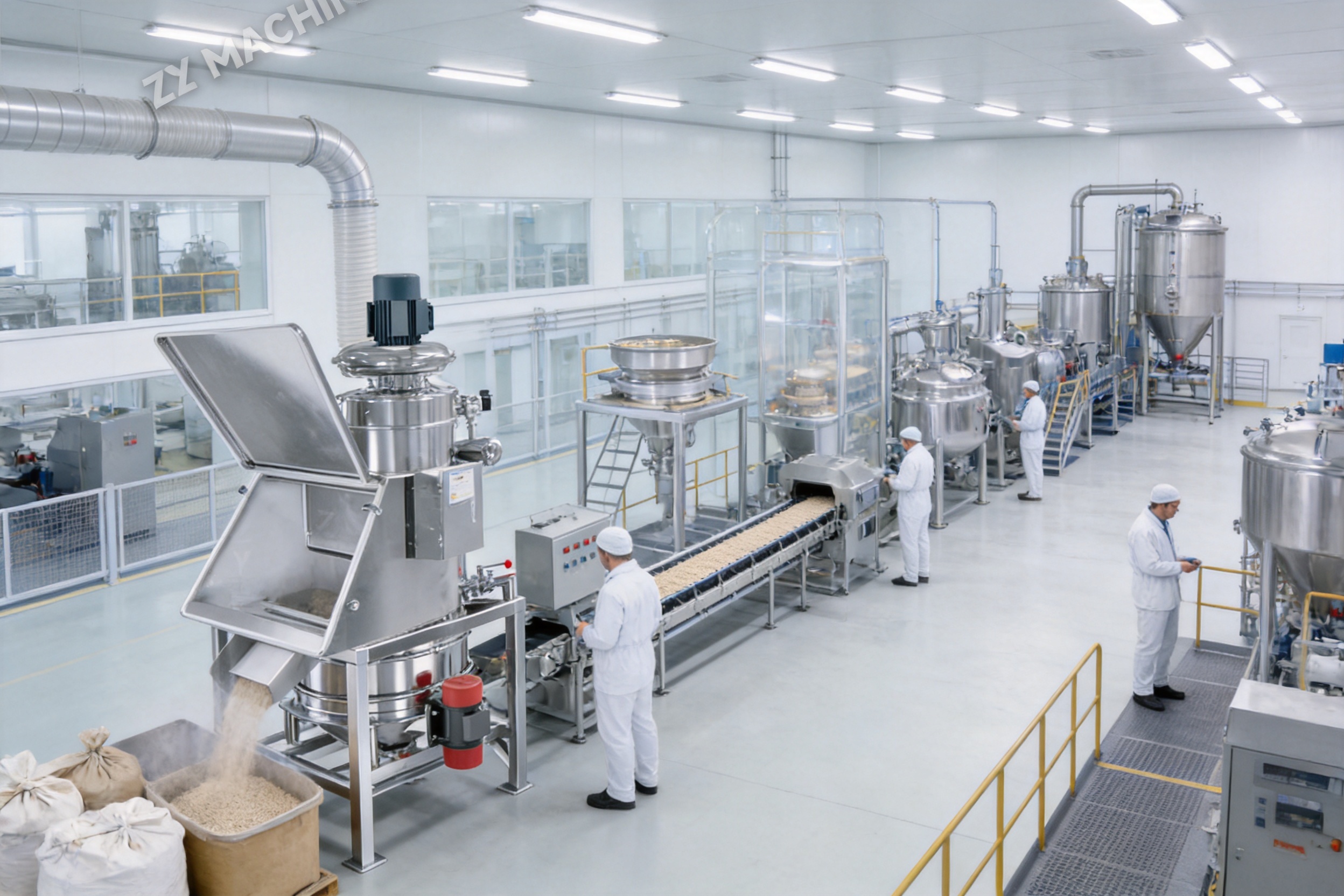
The TLZ Dust-Free Feeding Station can function as an independent unit or as part of a broader powder-processing solution. A typical process route may include raw-material loading, dust-free feeding, iron removal or sieving, conveying, mixing, granulation, drying, milling, blending, and final transfer.
In an oral solid dosage production line, the station may feed excipients or active ingredients into a high-shear mixer, wet granulator, dry granulator, fluid-bed dryer, or intermediate conveying system. The appropriate connection depends on the process route, material characteristics, and required containment strategy.
In food or nutraceutical production, the station may introduce ingredients into a ribbon blender, paddle mixer, powder homogenizer, or packaging preparation system. Sieving and de-lumping can be especially valuable when raw materials have been stored for long periods.
In chemical applications, the station may be integrated with reactors, mixers, granulators, dryers, or bagging systems. Here, compatibility with chemical exposure, temperature, grounding, and hazard-control requirements must be confirmed in advance.
Complete-line integration provides an opportunity to improve more than one machine. It can help coordinate material identification, batch movement, equipment sequencing, dust control, cleaning access, and operator workflow. ZY Machinery’s experience with laboratory, pilot, and full-scale equipment allows projects to be considered across different development stages.
Product development often begins at laboratory scale and later moves to pilot or commercial production. Equipment selection should consider this development path where possible. A laboratory process may require small quantities and frequent cleaning, while a commercial line may prioritize throughput, automation, and continuous operation.
The dust-free feeding concept is relevant at each scale. Laboratory personnel can benefit from localized dust capture when handling fine powders, while pilot and full-scale facilities may require higher-capacity fans, larger filter areas, additional discharge equipment, or integrated conveying.
Using equipment from a supplier with experience across different scales may simplify future process development. Data collected during laboratory and pilot operation can help inform commercial equipment selection, even though scale-up must be evaluated carefully rather than based solely on geometric enlargement.
Material flow, dust generation, filter loading, and discharge behavior may change significantly with scale. Engineering review and application testing remain important when moving from one production level to another.
A well-designed dust-free feeding station can improve daily work in several ways. Operators spend less time cleaning powder from surrounding surfaces. Filter cleaning is supported by a pulse-reverse system instead of depending entirely on manual intervention. Quick-release components make routine access more practical.
Production supervisors may benefit from greater consistency in material charging and fewer interruptions caused by bridging, filter blockage, or uncontrolled dust release. Maintenance teams gain more direct access to key components, which can support faster inspection and planned service.
Quality teams may benefit from a cleaner material-transfer area and better control of product-contact and dust-capture components. Engineering teams can integrate the station with existing or new equipment using a modular approach.
These benefits are cumulative. Dust control, reliable discharge, accessible maintenance, and optional preprocessing each address a different source of production inefficiency. Together, they can improve the overall reliability of the material-handling stage.
The station is designed for powders and granular materials used in pharmaceutical, food, nutraceutical, chemical, veterinary, additive, and related production. Final suitability depends on the material’s flowability, dustiness, moisture, abrasiveness, chemical compatibility, and safety classification.
A dust capture mechanism creates a unidirectional airflow that draws airborne particles toward a high-efficiency filter. A high-pressure centrifugal fan maintains the airflow, helping prevent dust from escaping into the surrounding work area.
The pulse-reverse system sends controlled air pulses through the filter in the reverse direction. These pulses dislodge accumulated dust and help prevent filter clogging, allowing repeated use of the filter material and helping maintain airflow.
The listed filter options include a 0.4 micrometer coated polyester filter cartridge and a titanium membrane filter. The appropriate choice depends on the material, process requirements, cleaning method, chemical environment, and user specifications.
Sieving and crushing are available as optional integrated functions. Sieving can remove oversized particles or agglomerates, while crushing can break up compacted lumps before the material enters the next process stage.
The vibrating motor assists material discharge by reducing bridging and encouraging powder movement toward the outlet. Its operating condition should be adjusted according to the material’s flow behavior to avoid excessive vibration or segregation.
The listed difference is the dust collection fan rating. The TLZ-1 uses a 1.1 kW fan, while the TLZ-2 uses a 1.5 kW fan. Both models list a 0.18 kW vibrating motor and the same general filter options. Final selection should be based on the intended airflow and application requirements.
The station is designed to support dust-free and hygienic feeding suitable for GMP-oriented production lines. However, compliance depends on the complete equipment configuration, materials, facility design, cleaning validation, operating procedures, documentation, and applicable regulatory requirements.
Yes. It can be integrated with conveying systems, mixers, granulators, dryers, mills, blending equipment, and other powder-processing machines. Connection dimensions, elevation, sealing, capacity, and control coordination should be confirmed during project engineering.
There is no universal interval because filter life depends on powder properties, operating hours, dust loading, pulse-cleaning settings, and cleaning practices. Users should monitor filter condition and airflow performance and follow a documented preventive-maintenance program.
Potentially, but this requires a specific hazard assessment. Combustible, toxic, reactive, or potent powders may require additional protection such as grounding, explosion-control measures, special containment, or certified electrical components. The application must be reviewed before equipment selection.
Useful information includes material properties, bulk density, particle size, dustiness, moisture, temperature, required throughput, batch size, loading container, downstream equipment, available utilities, site dimensions, cleaning requirements, and any GMP, hygiene, containment, or safety standards that apply.
The TLZ Dust-Free Feeding Station provides a practical response to one of the most common challenges in powder processing: controlling dust while maintaining reliable material flow. Its unidirectional airflow, high-efficiency filtration, high-pressure centrifugal fan, pulse-reverse cleaning, vibration-assisted discharge, and modular construction work together to create a more controlled feeding operation.
Compared with conventional open charging methods, the station offers advantages in dust containment, operator comfort, room cleanliness, product recovery, feeding consistency, and maintenance accessibility. Optional iron removal, sieving, and crushing further expand its usefulness by allowing material conditioning to take place at the feeding point.
The equipment’s value is strengthened when it is selected and integrated through a process-engineering approach. Changzhou Zhiyang Machinery Equipment Co., Ltd. brings experience in powder processing, oral solid dosage equipment, modular systems, and complete production lines for pharmaceutical, biopharmaceutical, biotechnology, nutraceutical, veterinary, food, chemical, and related industries.
For manufacturers planning a new line, upgrading an existing process, or improving dust control around manual charging, the TLZ platform offers a flexible foundation. The most effective solution will be determined by the material, capacity, facility, downstream equipment, cleaning strategy, and safety requirements. With those factors properly evaluated, a dust-free feeding station can become an important part of a cleaner, safer, and more consistent production process.
1. United States Food and Drug Administration. Current Good Manufacturing Practice Regulations for Finished Pharmaceutical Products.
2. World Health Organization. Good Manufacturing Practices for Pharmaceutical Products.
3. International Society for Pharmaceutical Engineering. Good Practice Guides for Pharmaceutical Manufacturing Facilities and Equipment.
4. European Commission. EudraLex, Volume 4: Good Manufacturing Practice Guidelines for Medicinal Products.
5. National Fire Protection Association. Standards and Recommended Practices for Combustible Dust Safety.
6. Occupational safety guidance concerning industrial ventilation, local exhaust ventilation, and workplace exposure control.
7. General engineering principles for powder flow, filtration, pneumatic conveying, screening, and dust collection in process industries.
8. Manufacturer-provided technical information for the TLZ Dust-Free Feeding Station, including model specifications, filtration options, operating principles, and optional functions.
Want to stay up to date?
Contact us via the email address below.
Don't worry about spam. We hate it too!
Mobile Client
Video Account
Phone:+86-15161130178
Tel:+86-519-88674267
Email:czzy188@163.com
Phone:+86-15161132798
Email:zy@zy-drying.com

WeChat ID

Copyright 2026 Changzhou Zhiyang Machinery Equipment Co., Ltd. All Rights Reserved  Oral Solid Dosage Equipment Manufacturer