 English
 Español
 русский
 中文简体

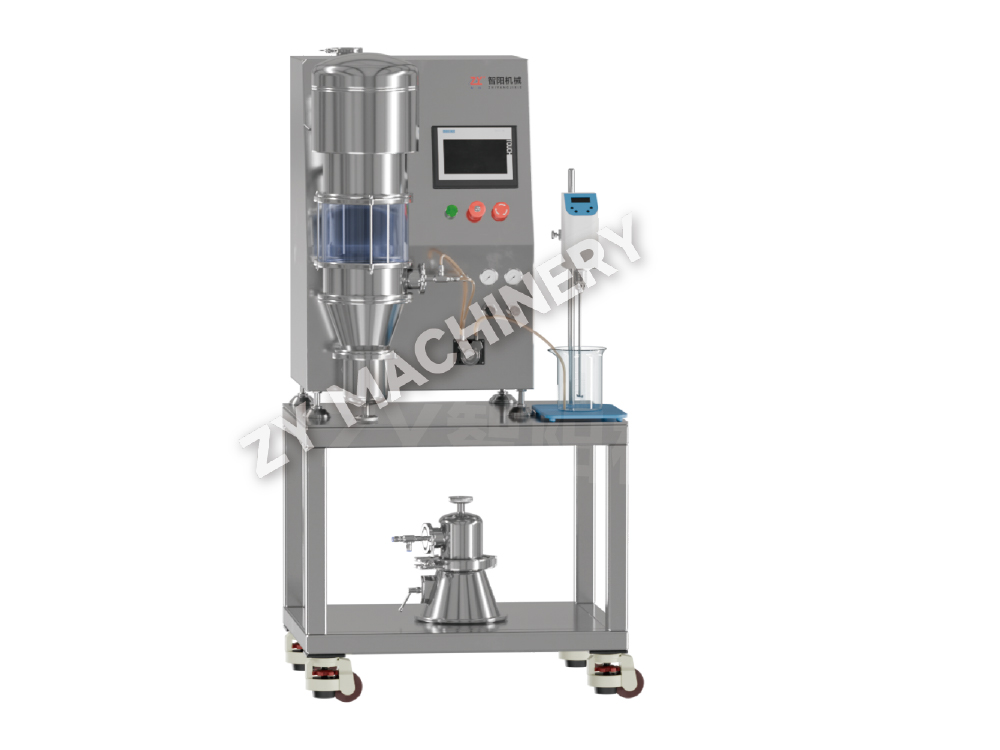
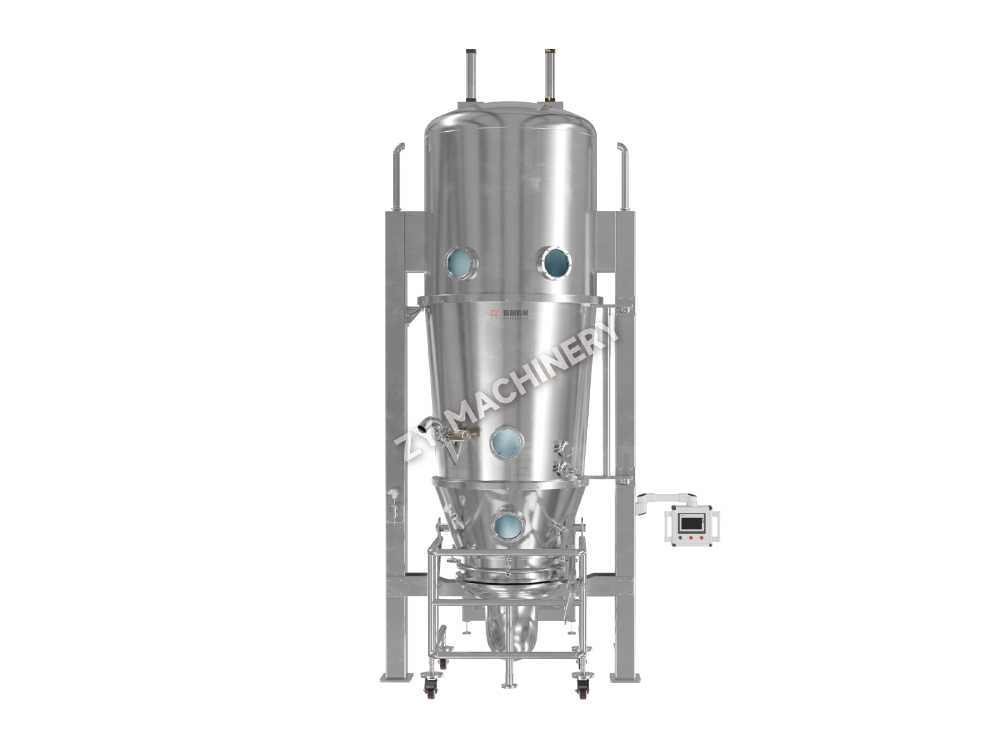
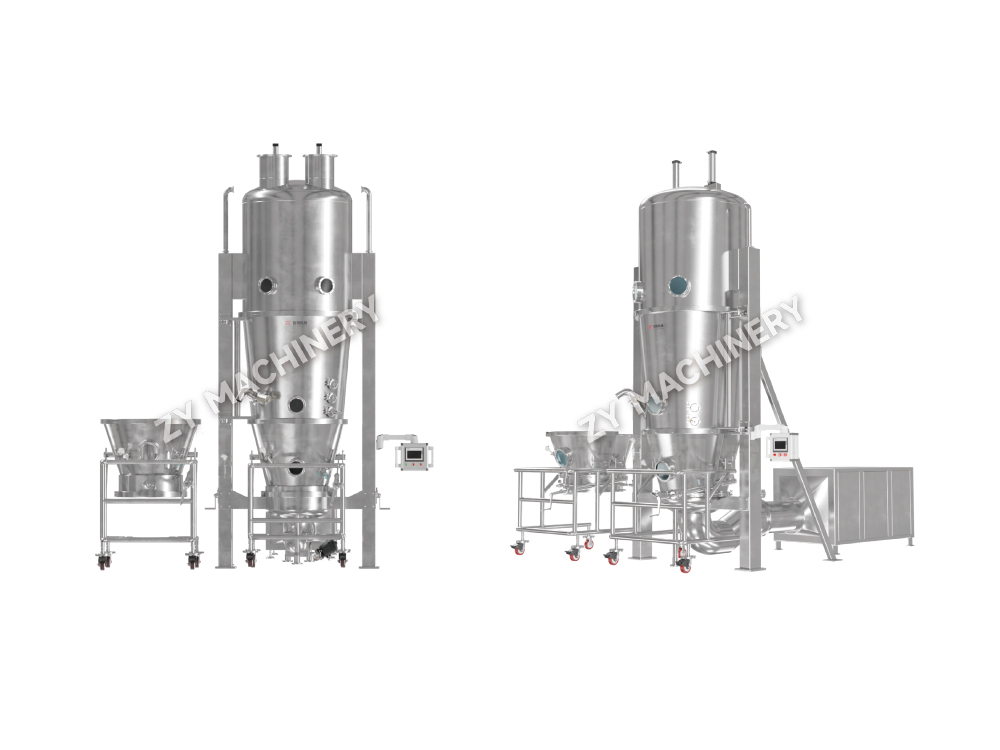
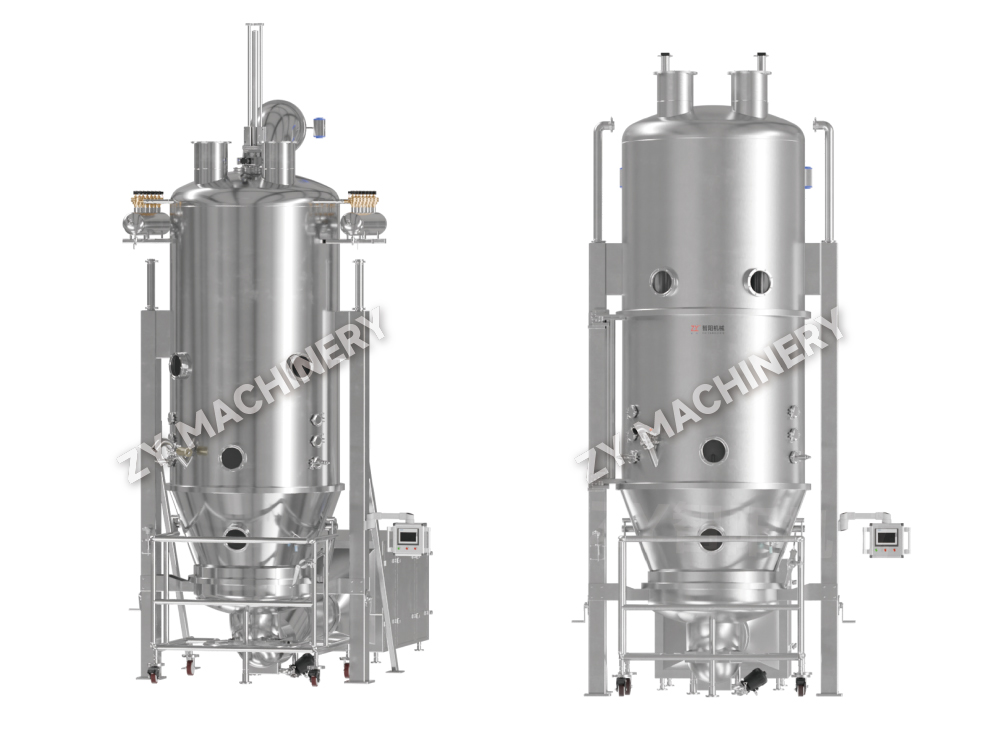
FBDX Cyclone Fluid-bed Granulating & Coating Machine
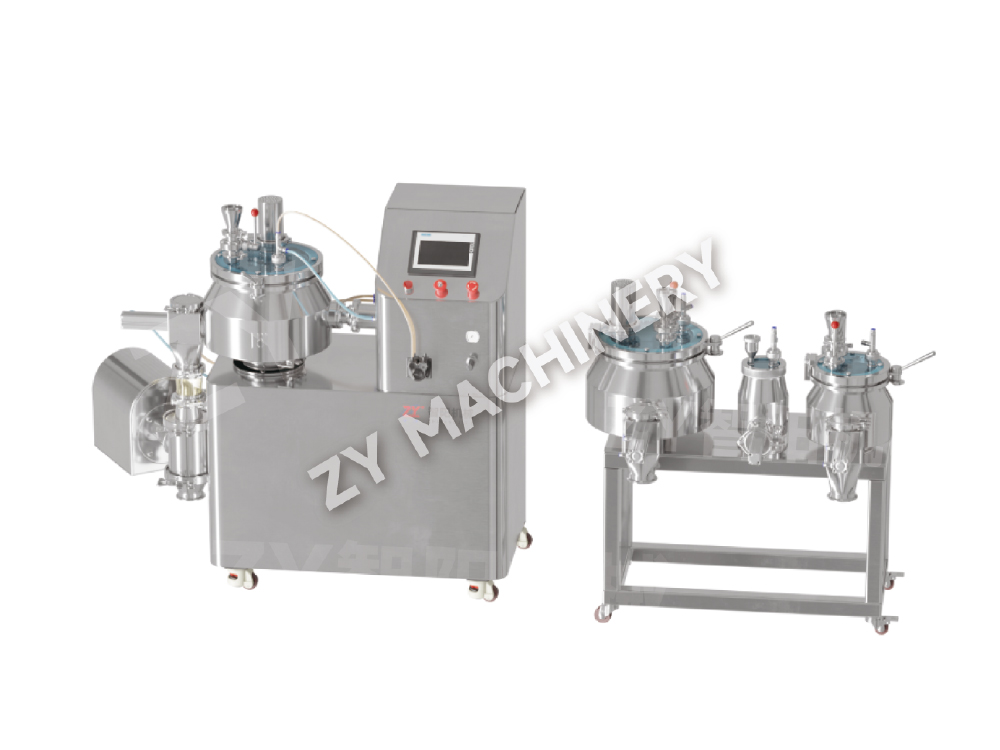
The FBDX Cyclone Fluidized Bed Granulation and Coating Machine features a b.....

Content
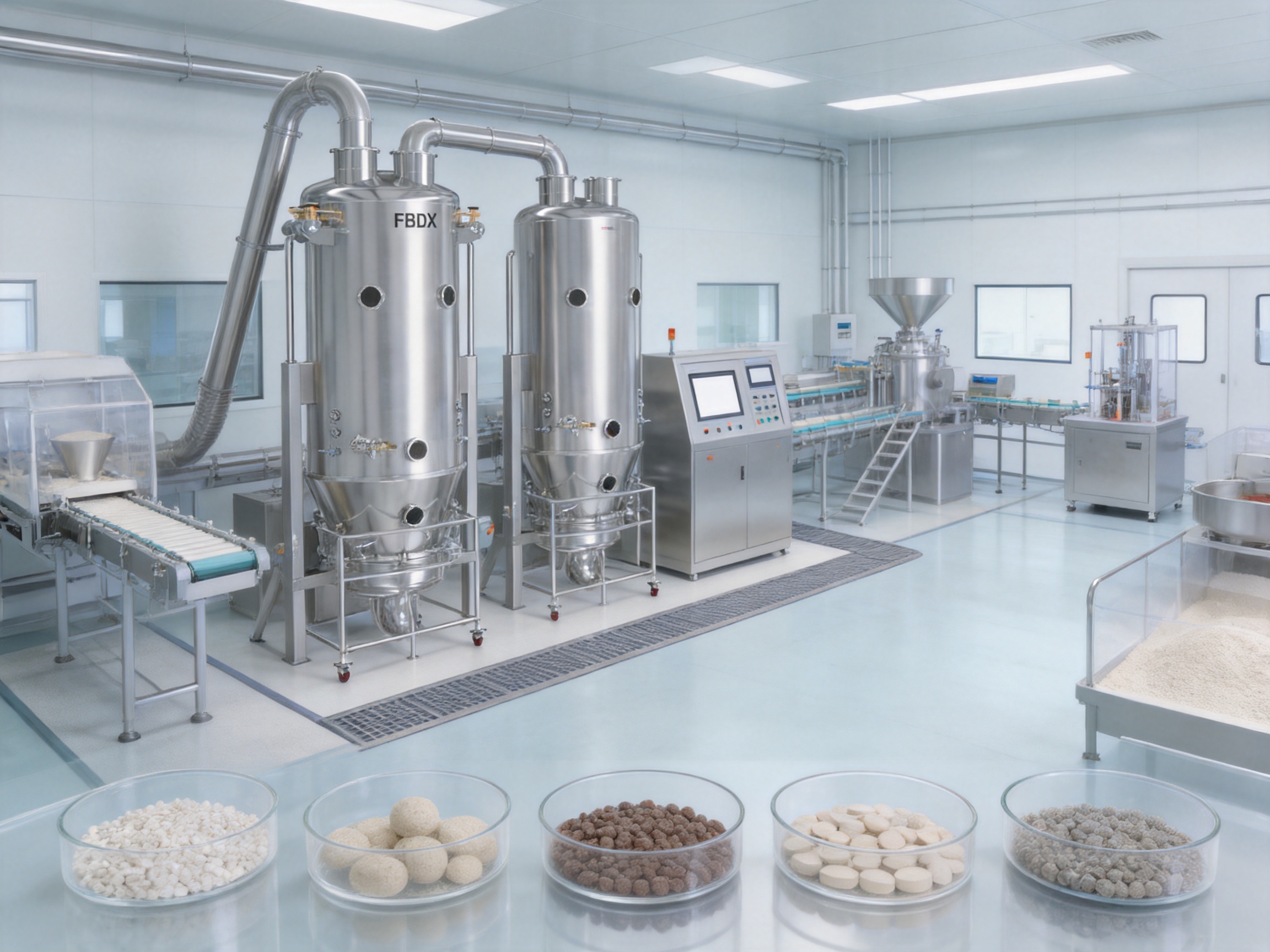
Modern pharmaceutical, nutraceutical, veterinary, biotechnology, food-additive, and specialty chemical manufacturers increasingly require equipment that can perform more than one powder-processing operation. Granulation, drying, particle rounding, film coating, enteric coating, sustained-release coating, color coating, and protective treatment are often connected within the same production route. When these operations are carried out with separate machines, manufacturers may face additional transfers, longer processing times, more material loss, inconsistent product quality, and greater cleaning and validation demands.
The FBDX Cyclone Fluid-bed Granulating and Coating Machine is designed to address these challenges through a controlled vortex fluidization system. Its blade-structured fluidized bed directs airflow through angled gaps, generating a powerful and orderly circulating air pattern. As particles move through the vortex layer, pneumatic nozzles positioned on the side walls spray binder or coating liquid into the moving material. This arrangement supports uniform granulation and coating while maintaining strong control over particle movement, moisture exposure, and process consistency.
The equipment is suitable for powders, granules, and pellets. It can be used to produce porous and fast-dissolving granules, improve flowability, form particles with higher sphericity, and apply thin or functional coatings. It is also appropriate for enteric coating, sustained-release coating, taste masking, moisture-proofing, waterproofing, coloring, heat insulation, and isolation applications.
Powder processing is one of the most sensitive stages in the production of oral solid dosage forms and many other particulate products. Raw materials may differ significantly in particle size, density, moisture sensitivity, cohesion, flowability, and surface properties. These differences affect feeding, mixing, granulation, drying, compression, encapsulation, coating, packaging, and final product stability.
Granulation is commonly used to transform fine powders into larger, more stable, and more flowable particles. A well-designed granulation process can reduce dust, improve content uniformity, increase bulk density where required, and make the material more suitable for tablet compression or capsule filling. However, granulation must be carefully controlled. Excessive liquid addition can create dense or oversized agglomerates, while insufficient binder distribution can produce weak granules and excessive fines.
Coating is equally dependent on uniform particle movement and liquid distribution. Whether the objective is taste masking, enteric protection, moisture resistance, color development, or controlled release, the coating liquid must be deposited consistently over the available particle surface. Uneven coating may result in variable dissolution, poor appearance, inadequate protection, or premature release of the active ingredient.
Fluid-bed technology combines particle movement, liquid spraying, and hot-air drying in a single controlled environment. The particles are suspended or circulated by airflow while the sprayed liquid is distributed over their surfaces. Evaporation then removes the solvent or water, allowing the deposited binder or coating material to remain on the particles.
In conventional fluid-bed systems, the quality of processing depends heavily on airflow distribution. Poor air distribution can create channeling, stagnant zones, irregular circulation, wet pockets, and localized over-drying. These problems may cause particle agglomeration, coating variation, long processing times, and difficulties during scale-up.
The FBDX design focuses on airflow organization. Instead of relying only on upward fluidization, its angled blade structure guides the airflow through gaps and generates a controlled cyclonic movement. This organized circulation helps bring particles repeatedly into contact with the spray zone and the drying air, improving the overall uniformity of processing.
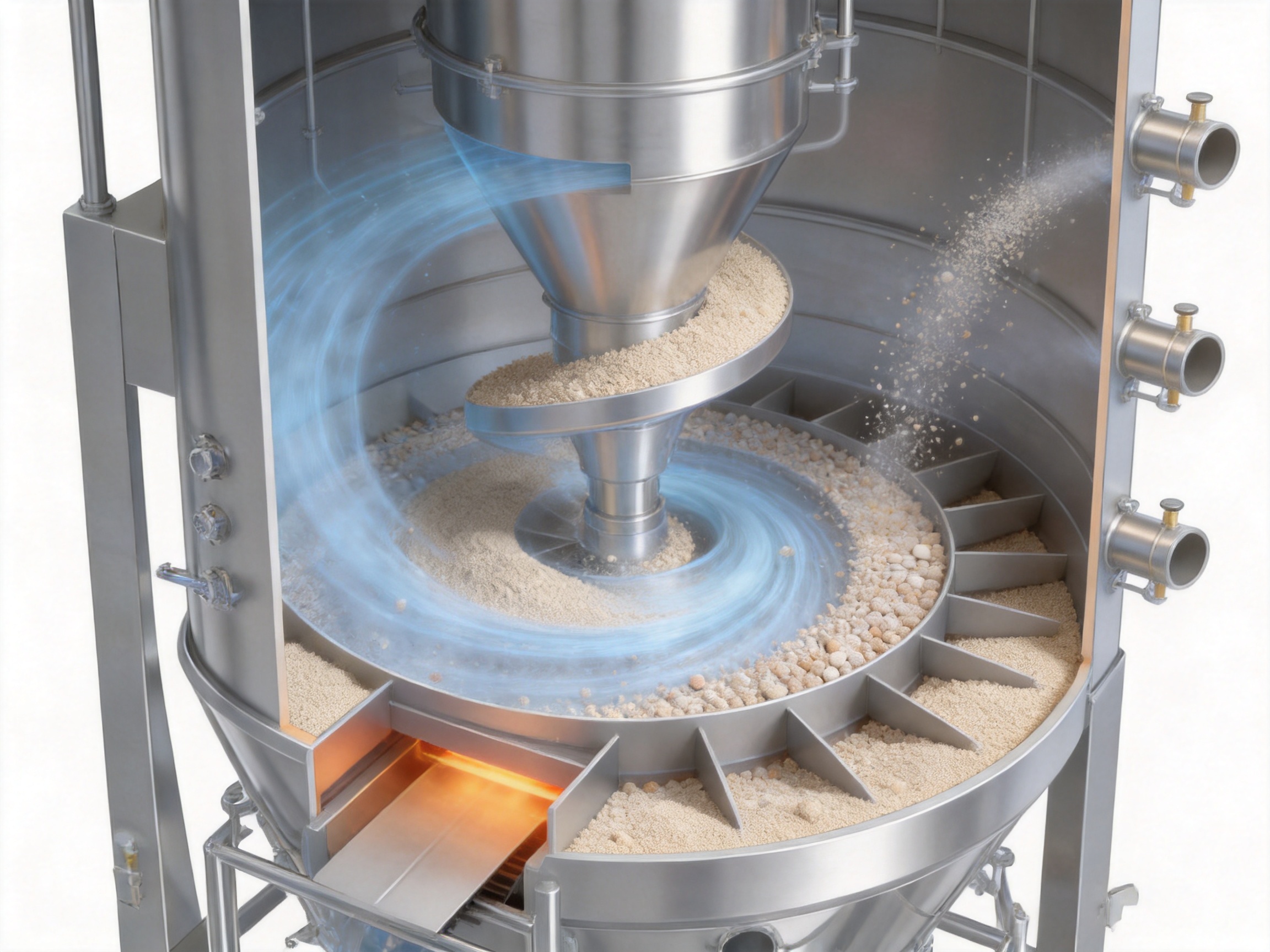
The central operating feature of the FBDX machine is its blade-structured fluidized bed. Blades are positioned at a defined angle so that air can pass through the spaces between them. As the process air enters the equipment, the angled configuration changes the direction and behavior of the airflow. Instead of producing only a simple vertical lift, the air creates a strong circulating pattern.
The material becomes fluidized and moves in an orderly vortex motion. Particles travel through the circulating layer, pass through the spray region, and return into the drying and mixing zones. This circulation helps expose the particle population repeatedly to the binder or coating spray without depending on random movement alone.
Pneumatic nozzles are installed on the side walls of the processing chamber. These nozzles atomize the binder solution or coating liquid into fine droplets. The droplets contact the moving particles and spread across their surfaces. During granulation, the liquid bridges smaller particles and promotes agglomeration. During coating, the liquid forms a deposited film that becomes progressively thicker as the process continues.
At the same time, heated process air removes moisture or solvent from the particle surface. The balance between liquid spraying and drying is important. If spraying is too fast in relation to drying, particles may become excessively wet and form large lumps. If drying is too aggressive, the liquid may dry before it spreads evenly, causing rough surfaces or incomplete coating. The cyclonic airflow helps maintain a stable relationship between spraying, circulation, and evaporation.
The air distribution design also helps reduce dead zones and channeling. Dead zones are areas where material remains relatively stationary or receives insufficient process air. Channeling occurs when air follows preferred pathways instead of passing evenly through the material. Both conditions can reduce uniformity. By creating an organized circulating airflow, the FBDX system is designed to keep a greater proportion of the material in active motion.
The operating sequence can be summarized as follows:
1. The prepared powder, granules, or pellets are loaded into the processing chamber.
2. Process air passes through the angled blade structure and establishes the required fluidization pattern.
3. The material enters a controlled vortex motion.
4. Binder or coating solution is atomized through pneumatic side-wall nozzles.
5. Liquid droplets contact and spread over the moving material.
6. Heated air evaporates moisture or solvent from the particle surfaces.
7. The spray and drying cycle continues until the required granule or coating condition is achieved.
8. The finished material is discharged for subsequent processing or packaging.
Granulation quality is determined by more than the formation of larger particles. The final granules must also possess suitable strength, porosity, flowability, density, moisture content, and size distribution. The requirements vary according to the application. A direct-compression formulation may require excellent flow and compressibility, while an instant-dissolution product may prioritize porosity and rapid wetting.
The FBDX cyclone fluidization pattern supports the formation of porous granules with a relatively high degree of sphericity. Porosity can help liquid penetrate the granule more rapidly, supporting fast dissolution in suitable formulations. Spherical or rounded particles may improve flow characteristics and reduce irregular contact points between particles.
Another stated performance benefit is the production of granules with glossy surfaces and strong mechanical integrity. A smoother surface can reduce dust generation and improve handling. Stronger granules are less likely to break during transfer, storage, blending, compression, or capsule filling. At the same time, the process can be adjusted to avoid excessive densification when a porous structure is desired.
Materials with poor moisture resistance or low flowability can be difficult to granulate using less controlled systems. Cohesive powders may bridge, form stagnant masses, or resist uniform movement. Poorly flowing materials may also receive uneven binder distribution. The cyclone arrangement is intended to improve the circulation of such materials and support more stable granulation.
Uniform particle movement is especially valuable when the formulation contains components with different densities or particle sizes. Without sufficient circulation, heavier particles may settle while lighter particles move preferentially with the air. Controlled vortex movement helps promote repeated redistribution, although the final process settings must still be established through formulation trials.
In pharmaceutical applications, granule quality can affect downstream tablet and capsule performance. Better-flowing granules can support more consistent die filling and reduce weight variation. Stronger granules can reduce the formation of fines, helping control dust and improving material recovery. Suitable porosity can support dissolution performance and may influence tablet disintegration after compression.
The FBDX machine is designed for a broad range of coating operations involving powders, granules, and pellets. Its side-wall pneumatic nozzles introduce the coating solution directly into the vortex-layered material. Because the particles remain in active circulation, fresh particle surfaces are continually presented to the spray zone.
Thin-film coating is used when a light and even layer is required. The coating may improve appearance, reduce dust, protect the material from the environment, or modify surface characteristics. Thin-film applications require good atomization, stable airflow, and precise control of the liquid feed rate. Excess liquid can produce agglomeration, while insufficient liquid may create discontinuous coverage.
Enteric coating is used to protect an active ingredient from the acidic environment of the stomach or to delay release until the dosage form reaches a higher-pH region of the gastrointestinal tract. Uniformity is particularly important in this application. Areas with insufficient coating may compromise the intended protection, while excessive coating may delay release beyond the desired point.
Sustained-release coating is applied to regulate the release of an active ingredient over an extended period. The release profile can depend on polymer type, coating weight, film continuity, particle size, and drying conditions. The FBDX system provides a circulating environment that is suitable for building a consistent film on granules or pellets, subject to formulation and process development.
Taste masking is another important use. Bitter or unpleasant-tasting ingredients can be coated with suitable materials to reduce contact with taste receptors. Moisture-proof and waterproof coatings can protect moisture-sensitive materials during storage and handling. Coloring and appearance-improvement coatings may be used to support product identification or visual quality.
Protective coatings may also provide heat insulation or isolation between incompatible components. In nutraceuticals, veterinary products, food additives, and specialty chemicals, coatings may be selected to control odor, reduce dust, separate reactive materials, or improve handling performance.
Equipment selection should be based on the specific formulation and production objective. Nevertheless, the FBDX cyclone design offers several potential advantages compared with fluid-bed systems that rely primarily on less organized airflow patterns.
The angled blade structure creates a defined vortex movement rather than allowing material circulation to depend only on random turbulence. Orderly circulation can improve the repeatability of exposure to spray droplets and drying air. It may also reduce the risk that certain portions of the batch remain outside the effective processing zone.
Uneven air distribution can lead to channeling, localized over-fluidization, or stagnant areas. The cyclone-driven airflow is designed to overcome these conditions by creating a stronger and more comprehensive circulation pattern. This can support more uniform moisture removal and liquid distribution throughout the batch.
Low-flowability and moisture-sensitive materials often present challenges for conventional granulation. A system that promotes active circulation can help maintain material movement when powders are cohesive or difficult to fluidize. Process development remains essential, but the machine design provides a more suitable starting point for difficult formulations.
The same equipment can support multiple processing routes. Manufacturers may use it for wet granulation, drying, thin-film coating, enteric coating, sustained-release coating, and protective surface treatment. Combining these capabilities can reduce the need for separate machines and minimize intermediate transfers.
Compared with systems that rely heavily on high-speed mechanical agitation, controlled fluidized movement can reduce direct mechanical impact on fragile granules or pellets. The FBDX design is intended to provide active circulation while reducing breakage, helping preserve particle shape and coating integrity.
The combination of controlled vortex movement, pneumatic spraying, and efficient drying can support granules with good sphericity, porous structure, smooth appearance, and mechanical strength. These characteristics can benefit handling, downstream blending, compression, encapsulation, and packaging.
The FBDX series includes models with nominal batch capacities from 10 kg to 500 kg. This range allows laboratories, pilot plants, and full-scale production facilities to select a machine according to their required throughput. A broad model range can also support process development and subsequent scale-up.
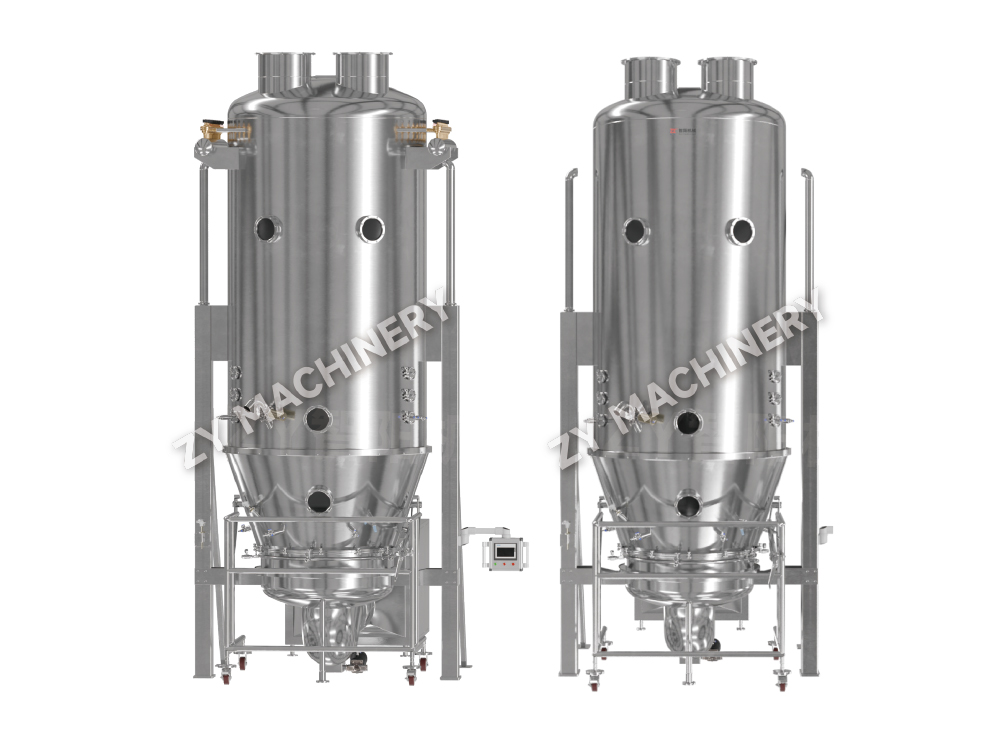
FBDX Cyclone Fluid-bed Granulating & Coating Machine
The FBDX series is available in multiple configurations identified by model numbers from FBDX-10 through FBDX-500. The number generally corresponds to the nominal processing capacity in kilograms per batch. Actual working capacity depends on bulk density, particle characteristics, formulation behavior, liquid addition rate, coating weight, and the selected process conditions.
| Model | Nominal Capacity | Fan Power | Reference Installation Diameter |
| FBDX-10 | 10 kg/batch | 4 kW | 550 mm |
| FBDX-15 | 15 kg/batch | 5.5 kW | 550 mm |
| FBDX-20 | 20 kg/batch | 7.5 kW | 550 mm |
| FBDX-30 | 30 kg/batch | 11 kW | 700 mm |
| FBDX-45 | 45 kg/batch | 11 kW | 850 mm |
| FBDX-60 | 60 kg/batch | 15 kW | 1,000 mm |
| FBDX-90 | 90 kg/batch | 18.5 kW | 1,100 mm |
| FBDX-100 | 100 kg/batch | 18.5 kW | 1,100 mm |
| FBDX-120 | 120 kg/batch | 18.5 kW | 1,200 mm |
| FBDX-150 | 150 kg/batch | 18.5 kW | 1,300 mm |
| FBDX-200 | 200 kg/batch | 22 kW | 1,400 mm |
| FBDX-300 | 300 kg/batch | 37 kW | 1,600 mm |
| FBDX-500 | 500 kg/batch | 45 kW | 1,800 mm |
The fan power increases with machine capacity to provide the airflow required for the larger processing chamber and material load. Noise is specified as no more than 75 dB when the fan is separated. Compressed-air pressure is generally 0.4 to 0.6 MPa, while compressed-air consumption varies by model.
Steam pressure is also specified in the range of 0.4 to 0.6 MPa where steam heating is selected. Steam consumption increases with machine size. Electrical heater power is determined according to the client’s heating method and site conditions. This approach allows the heating configuration to be matched with available utilities, energy strategy, and plant design.
Reference installation dimensions vary by model. The actual layout should be confirmed during technical design because the complete installation may include the processing chamber, fan, air-treatment system, heating equipment, exhaust arrangement, control cabinet, access area, service space, and material handling equipment.
A granulation and coating machine is not simply a vessel with a fan and spray nozzles. Its performance depends on the interaction of air distribution, mechanical construction, liquid atomization, heating, filtration, controls, cleaning access, and process development. The manufacturing strength of the supplier is therefore an important part of equipment selection.
Changzhou Zhiyang Machinery Equipment Co., Ltd. specializes in the design, manufacture, and process integration of powder-processing and oral solid dosage equipment. Its product scope covers laboratory equipment, mixing systems, granulation equipment, drying equipment, coating equipment, auxiliary processing equipment, and transfer and conveying systems. This broad scope allows the company to consider the FBDX machine as part of a complete process rather than as an isolated unit.
The company was founded in 2010 and is based in Changzhou, China. Its equipment and engineering solutions serve pharmaceutical, biopharmaceutical, biotechnology, nutraceutical, veterinary, additive, and related industries. The product range covers laboratory, pilot, and full-scale production requirements.
A major engineering strength is the process-driven approach. Equipment is selected and configured according to material characteristics, production capacity, and site conditions. Powder density, flowability, moisture sensitivity, particle size, binder viscosity, coating-solid content, desired coating weight, available utilities, room height, and cleaning requirements can all influence the final configuration.
This approach is valuable because two formulations with the same nominal batch weight may behave very differently. A light, cohesive powder may require a different airflow strategy from a dense pellet. A water-based binder may require different drying conditions from an organic or polymer-based coating system. A laboratory formulation may prioritize flexibility and observation, while a production line may prioritize throughput, containment, automation, and cleaning efficiency.
Manufacturing quality also depends on the coordination of design, fabrication, assembly, inspection, and testing. The cyclone fluid-bed system must be assembled so that the blade structure, processing chamber, air passages, spray system, filters, fan, and heating components work together. Dimensional accuracy and appropriate surface finishing are important for stable operation and practical cleaning.
ZY Machinery emphasizes reliable products, customer reputation, research and development, innovation, and responsive service. The company has expanded its product portfolio, strengthened its R&D capabilities, obtained quality-system certification, developed patented technologies, and built overseas service capabilities. These strengths support the development of machinery for customers that require more than a standard catalog configuration.
Another advantage is the ability to provide standalone machines, modular systems, and complete production lines. The FBDX unit can be integrated with upstream mixing and weighing equipment, downstream transfer systems, dry-milling or sizing equipment, tablet or capsule production, packaging, and other auxiliary machinery as required by the project.
Standardized machine models provide a useful foundation, but process success depends on application-specific development. The FBDX system should be evaluated using the actual material and coating formulation whenever possible. Small-scale or pilot testing can help determine the suitable air volume, inlet temperature, spray rate, atomization pressure, binder concentration, liquid-to-solid ratio, and endpoint criteria.
For granulation, development typically considers the initial powder condition, binder selection, liquid addition rate, spray droplet size, fluidization intensity, and drying endpoint. The objective may be a specific granule-size distribution, bulk density, porosity, strength, or dissolution profile. Adjustments should be made gradually to identify the operating window that provides stable results.
For coating, process development may focus on coating uniformity, weight gain, surface appearance, film continuity, release behavior, moisture protection, and resistance to abrasion. The coating suspension must remain adequately dispersed, and the spray system must be compatible with its viscosity and solids content.
Materials may require different approaches depending on their sensitivity. Heat-sensitive products may need lower inlet temperatures and careful control of residence time. Moisture-sensitive materials may require rapid drying and a controlled environment. Sticky formulations may need a lower spray rate, different atomization conditions, or a modified formulation to prevent excessive agglomeration.
Site conditions also influence equipment design. Available steam pressure, compressed-air quality, electrical supply, exhaust capacity, room height, floor loading, cleaning facilities, and environmental-control requirements should be reviewed before installation. The reference dimensions supplied for each model are useful for planning, but final engineering drawings should be prepared for the selected configuration.
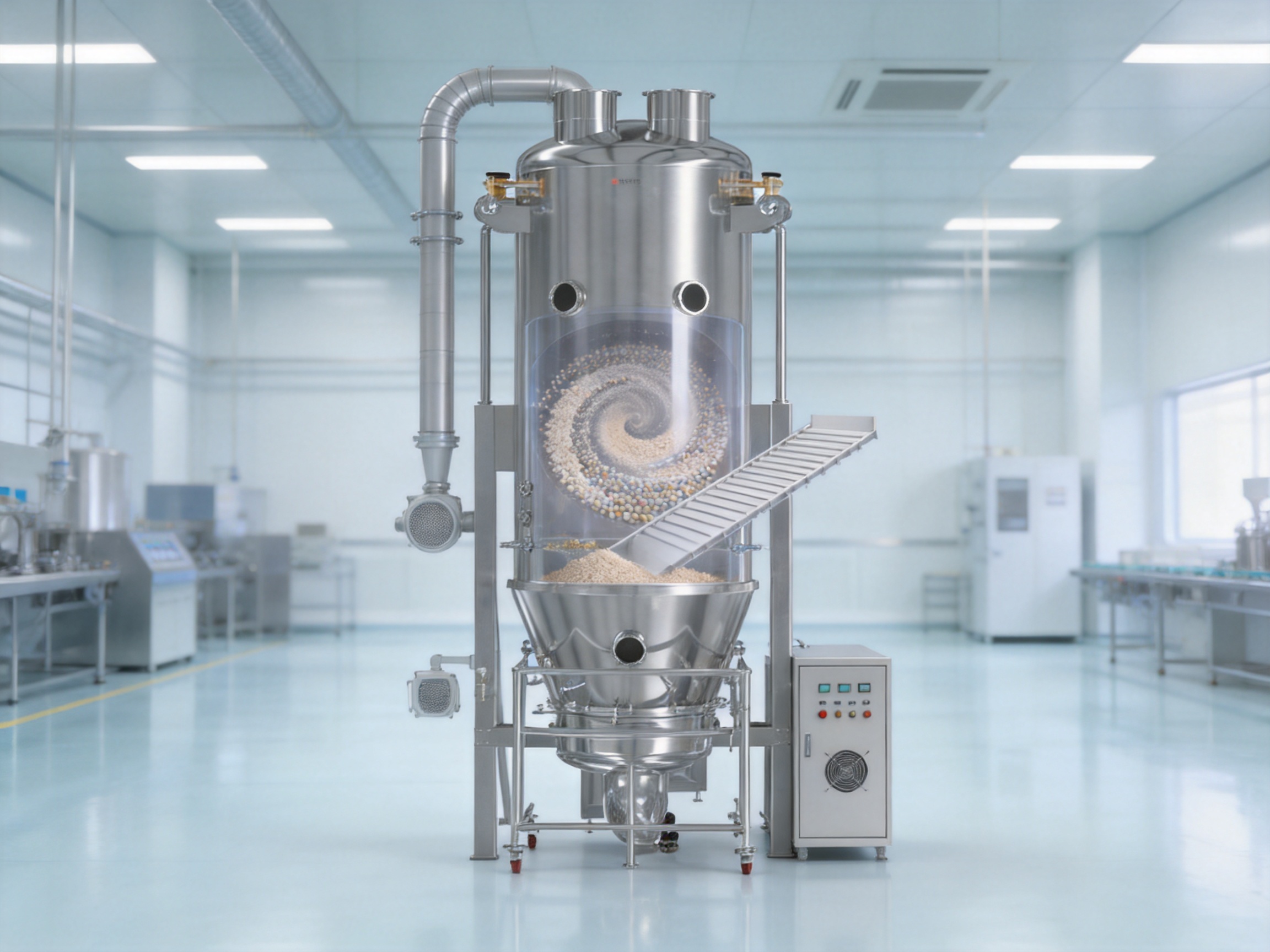
The FBDX machine can function as part of a larger powder-processing system. A typical pharmaceutical process may begin with material dispensing and screening, followed by dry mixing or wet mixing. The prepared material then enters the FBDX unit for granulation and drying. Afterward, the granules may be sized, blended with additional excipients, compressed into tablets, encapsulated, or transferred to another coating stage.
In some applications, the same machine may be used for granulation and coating at different stages of the process. This can reduce handling and limit the number of times the product is exposed to the surrounding environment. It may also simplify material transfer and reduce the space required for separate process equipment.
For pellet coating, the machine can be positioned within a production route that includes pellet formation, drying, coating, and final blending or filling. For nutraceutical and veterinary products, the coating process may focus on odor control, taste masking, moisture protection, or improved handling. For specialty additives, the objective may be better dispersion, controlled dissolution, reduced dust, or improved storage stability.
Transfer and conveying equipment should be selected carefully. Fragile granules and coated pellets can be damaged by unsuitable mechanical transfer. Gentle and controlled conveying helps preserve the particle structure developed in the fluid-bed process.
Automation can be added according to project requirements. Basic systems may provide manual adjustment of airflow, temperature, spray rate, and process time. More advanced installations may include recipes, data recording, alarms, interlocks, automatic endpoint control, and integration with a plant-level manufacturing execution system.
The appropriate level of automation depends on the product, production scale, regulatory environment, and investment plan. A laboratory machine may require flexible manual control, while a high-volume production system may benefit from comprehensive recipe management and electronic records.
Pharmaceutical and nutraceutical processing equipment must be designed with cleaning and cross-contamination control in mind. The processing chamber, product-contact surfaces, spray components, filters, and discharge areas should be accessible for inspection and cleaning according to the facility’s procedures.
Product-contact materials and surface finishes should be selected according to the formulation and regulatory requirements. Smooth surfaces can reduce the retention of powder and coating residues. The spray nozzles require particular attention because dried binder or polymer residue can affect atomization and cause inconsistent spraying during the next batch.
Operators should follow a defined cleaning procedure that addresses the chamber, air-distribution structure, filters, nozzles, liquid lines, gaskets, discharge points, and connected ductwork. The cleaning method may include dry cleaning, wet cleaning, validated detergents, or a combination of methods, depending on the product and equipment configuration.
Filters must also be maintained correctly. Filter condition affects airflow, pressure drop, powder retention, and process stability. Damaged or overloaded filters can reduce performance and may create a contamination risk. Routine inspection and replacement schedules should be included in the operating and maintenance program.
Compressed air used for pneumatic nozzles should meet the required quality specification. Moisture, oil, and particulate contamination in the air supply may affect product quality and nozzle performance. Heating utilities should also be monitored to ensure stable inlet-air conditions.
Model selection should begin with the desired batch size and the material’s processing characteristics. Nominal capacity is an important reference, but it should not be treated as the only selection criterion. Bulk density, minimum fluidization behavior, liquid addition, required coating weight, and acceptable batch cycle time may all affect the practical working capacity.
For research and formulation development, smaller models such as FBDX-10, FBDX-15, or FBDX-20 may provide a suitable platform. Pilot-scale operations may consider the FBDX-30 through FBDX-100 range, depending on the development strategy. Production facilities requiring larger batches may select FBDX-120, FBDX-150, FBDX-200, FBDX-300, or FBDX-500.
The correct model should also provide adequate space for the required particle movement. An overloaded chamber may reduce circulation and create uneven processing, while an excessively large chamber may reduce process efficiency at very small batch sizes. The best choice is established through material testing and engineering evaluation.
Heating method is another consideration. Steam heating may be preferred where a central steam system is available. Electrical heating may be suitable where electrical infrastructure is more practical or where independent temperature control is desired. The machine allows electrical heater power to be determined by the client, which supports adaptation to different site conditions.
Utility requirements should be reviewed early. Compressed-air consumption, pressure, steam consumption, fan power, exhaust capacity, and electrical load influence both the equipment cost and the plant infrastructure. Noise control may also be considered, particularly where the fan is installed close to production or laboratory areas.
The value of a granulation and coating machine is determined not only by its initial purchase price. Lifecycle value includes productivity, batch consistency, product recovery, maintenance, cleaning time, utility consumption, spare-parts availability, operator training, and technical support.
A system that reduces dead zones and improves circulation may help lower the frequency of reprocessing caused by uneven granulation or coating. Better particle integrity may reduce breakage and fines, improving yield and reducing dust. A machine that supports multiple process applications can also reduce the need for additional equipment as the product portfolio expands.
Reliable operation depends on the quality of the fan, air-distribution components, spray system, filters, seals, heating equipment, controls, and structural assembly. Maintenance planning should include inspection of moving and pressurized components, spray nozzles, filters, ducting, electrical systems, and temperature sensors.
Technical support is particularly important during commissioning and process transfer. Operators must understand how changes in airflow, spray rate, atomization pressure, inlet temperature, and material loading affect the final product. Clear operating procedures and training help reduce startup time and improve repeatability.
ZY Machinery’s combination of equipment manufacturing and process integration allows customers to obtain support for individual units as well as complete production routes. This can be beneficial for companies that are building a new facility, expanding an existing line, or transferring a product from laboratory scale to commercial production.
The machine is designed for powders, granules, and pellets. It can be used for pharmaceutical ingredients and excipients, nutraceutical materials, veterinary products, additives, and other suitable particulate materials. Final suitability depends on material flowability, moisture sensitivity, thermal behavior, density, particle size, and formulation properties.
Yes. The FBDX series is designed for powder granulation, thin-film coating, enteric coating, sustained-release coating, taste masking, moisture-proofing, waterproofing, coloring, heat insulation, and isolation. The selected process route depends on the formulation, liquid system, particle condition, and desired product performance.
The angled blade structure guides air through gaps and generates a strong circulating vortex. This orderly movement helps keep the material active within the processing chamber, reduces channeling and dead zones, and promotes more consistent exposure to sprayed liquid and drying air.
Pneumatic nozzles are installed on the side walls of the processing chamber. They atomize binder or coating solution into the moving material. The nozzle arrangement and operating conditions should be selected according to liquid viscosity, solids content, spray rate, and required coating or granulation performance.
The FBDX series covers nominal capacities from 10 kg per batch to 500 kg per batch. Available models include FBDX-10, FBDX-15, FBDX-20, FBDX-30, FBDX-45, FBDX-60, FBDX-90, FBDX-100, FBDX-120, FBDX-150, FBDX-200, FBDX-300, and FBDX-500.
No. The stated capacity is a reference value. Practical capacity depends on bulk density, particle behavior, fluidization characteristics, liquid addition, coating weight, and required process time. Material testing and engineering review should be completed before final model selection.
The equipment may require electrical power for the fan and controls, compressed air for pneumatic spraying, and either steam or electrical heating for process air. Compressed-air pressure and steam pressure are generally specified at 0.4 to 0.6 MPa. Exact utility consumption depends on the selected model and configuration.
The cyclone fluidization design is intended to improve the movement of materials with poor flowability or limited moisture resistance. However, process conditions must still be optimized. Binder selection, spray rate, airflow, temperature, and batch loading may need to be adjusted to prevent excessive wetting or agglomeration.
Yes. The machine is suitable for sustained-release coating applications involving granules or pellets. The final release behavior depends on the polymer system, coating weight, film structure, particle size, and process conditions. Product-development testing is required to establish the target release profile.
The FBDX unit can be connected with mixing, screening, granulation, drying, sizing, blending, transfer, compression, encapsulation, and packaging equipment. Integration should consider material flow, containment, cleaning, room layout, utility supply, automation, and the required production capacity.
The supplier specializes in powder-processing and oral solid dosage equipment and provides standalone machines, modular systems, and complete production lines. Its process-driven approach considers material characteristics, production requirements, and site conditions rather than relying only on a standard machine configuration.
Useful information includes material name and characteristics, target batch size, bulk density, particle-size range, moisture sensitivity, binder or coating liquid, desired coating weight, heating method, available utilities, plant dimensions, cleaning requirements, automation expectations, and applicable quality or regulatory standards.
The FBDX Cyclone Fluid-bed Granulating and Coating Machine combines organized vortex fluidization, pneumatic side-wall spraying, and controlled drying in a single processing platform. Its blade-structured air distributor is designed to improve material circulation, overcome channeling and dead zones, and promote uniform contact between particles, spray droplets, and process air.
The equipment supports a wide range of applications, including powder granulation, thin-film coating, enteric coating, sustained-release coating, taste masking, moisture-proofing, waterproofing, coloring, heat insulation, and isolation. It is available in models ranging from 10 kg to 500 kg per batch, allowing use in laboratory, pilot, and full-scale production environments.
Compared with less organized fluid-bed arrangements, the cyclone design offers potential benefits in circulation control, coating uniformity, product integrity, process flexibility, and suitability for difficult powders. Its value is further strengthened when it is integrated with the supplier’s broader range of mixing, drying, granulation, coating, conveying, and auxiliary processing equipment.
Changzhou Zhiyang Machinery Equipment Co., Ltd. supports customers through equipment design, manufacturing, process integration, research and development, and technical service. By considering material characteristics, production objectives, and site conditions together, the company can help manufacturers develop practical powder-processing solutions for pharmaceutical, biopharmaceutical, biotechnology, nutraceutical, veterinary, additive, and related applications.
For customers seeking a versatile and scalable approach to granulation and coating, the FBDX system provides a strong technical foundation. Final performance should be confirmed through application testing, model selection, process optimization, and site-specific engineering.
1. Product technical information for the FBDX Cyclone Fluid-bed Granulating and Coating Machine.
2. Fluidized-bed granulation and coating process-development principles for pharmaceutical and particulate products.
3. General engineering practices for powder handling, pneumatic spraying, drying, and particle coating.
4. Technical information on powder-processing, oral solid dosage, mixing, granulation, drying, coating, and conveying equipment.
5. General guidance for equipment selection, utility planning, cleaning, maintenance, and process integration in pharmaceutical manufacturing.
Want to stay up to date?
Contact us via the email address below.
Don't worry about spam. We hate it too!
Mobile Client

Video Account
Phone:+86-15161130178
Tel:+86-519-88674267
Email:czzy188@163.com
Phone:+86-15161132798
Email:zy@zy-drying.com

WeChat ID

Copyright 2026 Changzhou Zhiyang Machinery Equipment Co., Ltd. All Rights Reserved  Oral Solid Dosage Equipment Manufacturer