 English
 Español
 русский
 中文简体
中文简体
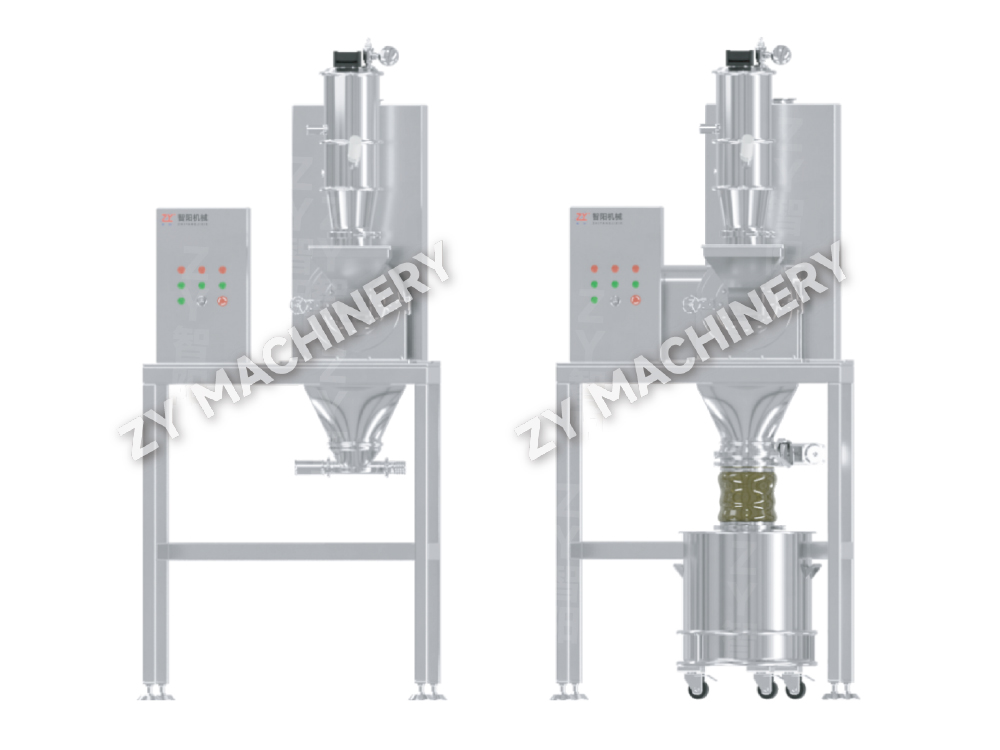
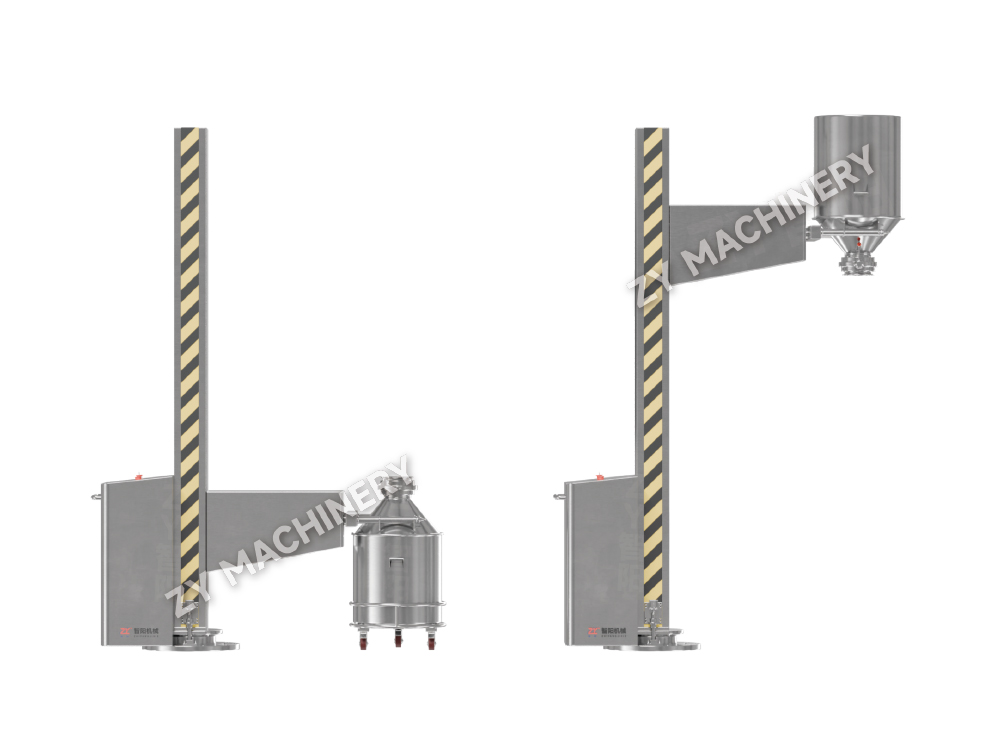
TLZ Dust-Free Feeding Station
The TLZ Dust-Free Feeding Station is designed to address dust generation du.....

Content
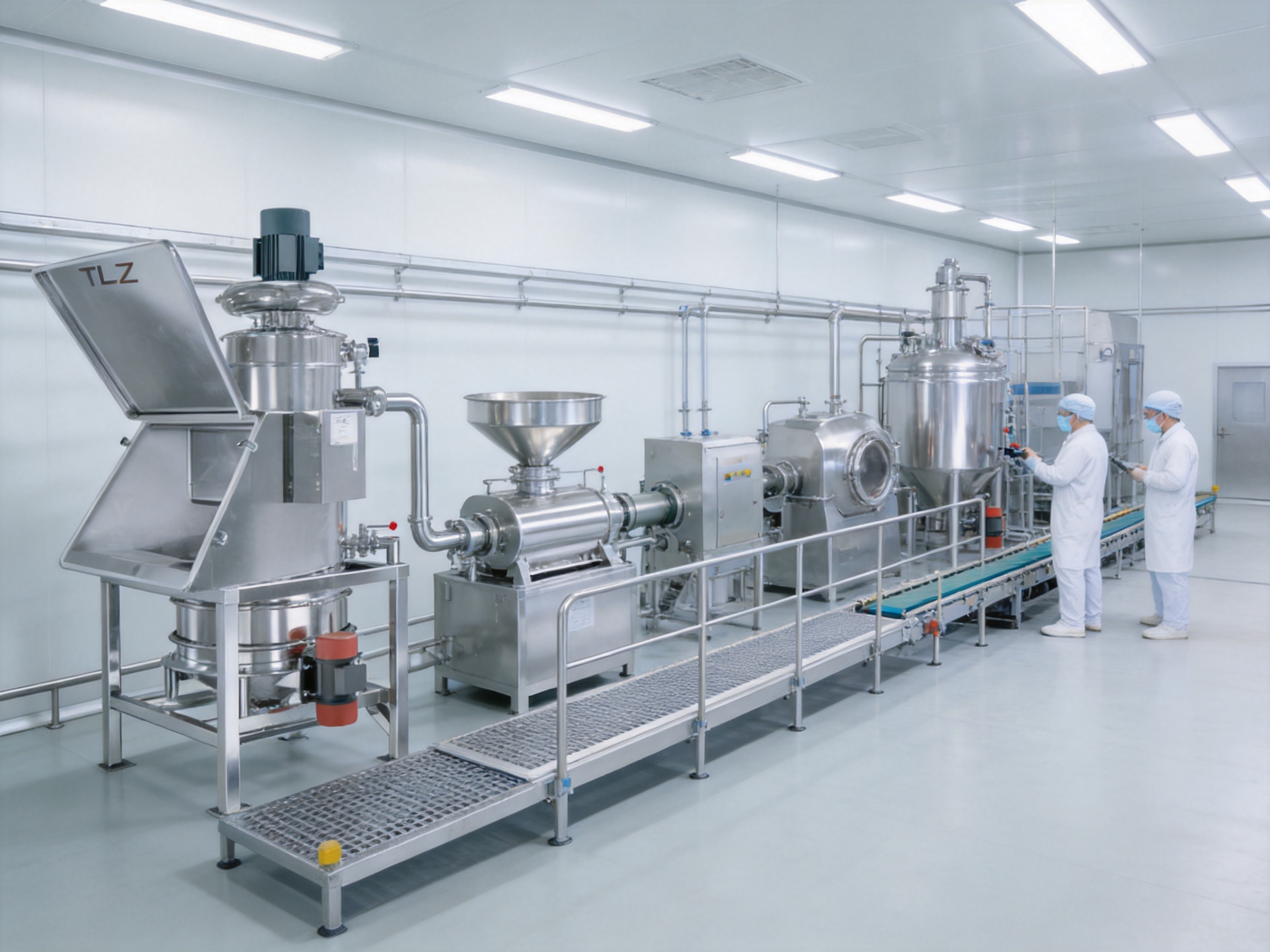
In modern pharmaceutical, food, chemical, nutraceutical, and related manufacturing environments, the transfer of powders and granular materials is one of the most important points in the production process. It is also one of the areas most likely to create airborne dust. When bags, drums, bins, or other containers are opened and emptied, fine particles can escape into the working area. This may affect operator comfort, product hygiene, equipment cleanliness, material recovery, and compliance with controlled production requirements.
The TLZ Dust-Free Feeding Station is engineered to provide a controlled and cleaner method for feeding powders and granular materials into downstream processing equipment. By combining enclosed feeding, unidirectional airflow, high-efficiency filtration, centrifugal fan extraction, and pulse-reverse filter cleaning, the system helps prevent dust from spreading through the surrounding environment. It is designed for production lines that require improved hygiene, safer handling, and reliable material transfer.
Unlike a basic receiving hopper or an open feeding table, a dust-free feeding station actively manages airborne particles during loading. This makes it particularly suitable for applications in which cleanliness, operator protection, material containment, and repeatable production conditions are important. The station can also be configured with optional iron removal, sieving, and crushing functions, allowing manufacturers to adapt the feeding stage to the characteristics of different materials.
The equipment is manufactured by Changzhou Zhiyang Machinery Equipment Co., Ltd., a China-based machinery company specializing in powder processing, oral solid dosage equipment, modular systems, and complete production lines. The company combines equipment manufacturing with process integration, allowing the feeding station to be selected and configured according to material properties, capacity requirements, and site conditions.
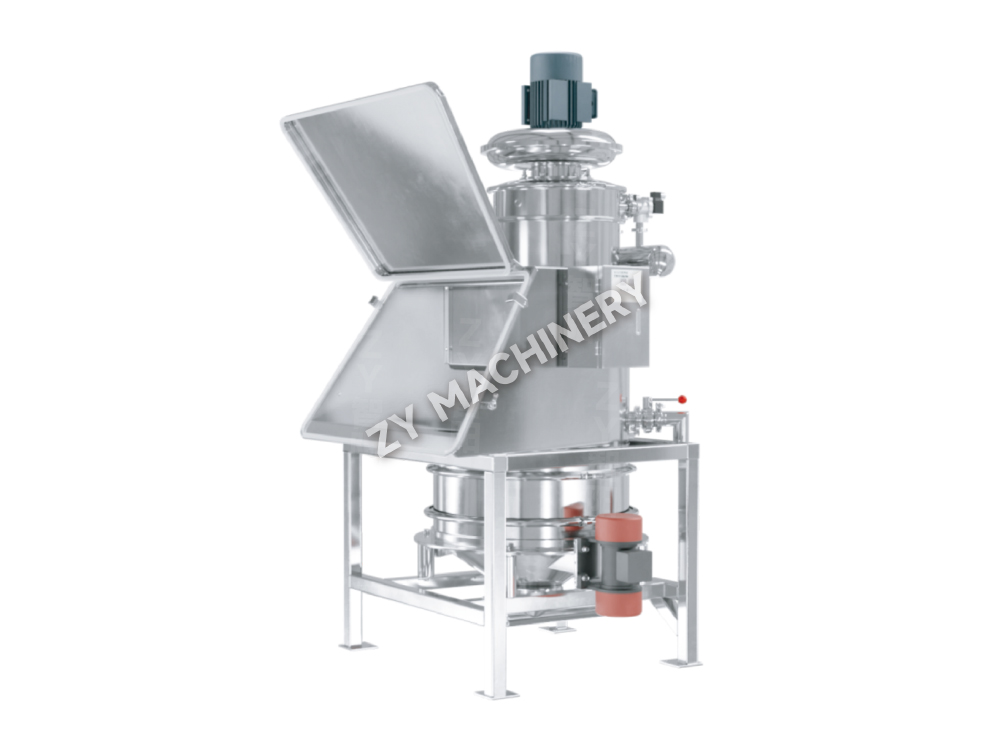
TLZ Dust-Free Feeding Station
Material feeding is often treated as a simple operation, but it can influence the performance of the entire production line. Powders may be cohesive, highly dispersible, electrostatic, abrasive, hygroscopic, or sensitive to cross-contamination. Granules may break apart when handled roughly or may generate fines during transfer. These characteristics can make open loading unsuitable for pharmaceutical and high-hygiene applications.
Dust released during feeding can settle on floors, walls, machine surfaces, electrical components, and nearby containers. Over time, this can increase cleaning requirements and create additional risks of product carryover. In facilities producing multiple materials, uncontrolled airborne particles may also contribute to cross-contamination concerns. A controlled feeding station reduces the opportunity for dust to migrate beyond the point of loading.
Worker exposure is another important consideration. Fine powders can remain suspended in the air and may be inhaled if effective local extraction is not provided. A feeding station with a dedicated dust capture mechanism creates airflow toward the filtration system, helping to retain airborne particles rather than allowing them to enter the operator’s breathing zone or the general room environment.
Dust control also supports more stable housekeeping and maintenance routines. When less material escapes during loading, operators can spend less time cleaning surrounding areas. Reduced dust accumulation may also help protect adjacent equipment and maintain a more orderly production space. These benefits are particularly valuable in GMP-oriented facilities, where controlled cleanliness and documented operating procedures are essential.
A well-designed feeding station should therefore do more than hold material. It should provide a controlled interface between the incoming container and the downstream process. It should support safe loading, consistent discharge, convenient cleaning, practical access to filters and components, and compatibility with the overall production system. The TLZ design addresses these requirements through a combination of airflow control, filtration, vibration, and modular construction.
The working principle is based on controlled dust capture. When material is loaded into the station, a high-pressure centrifugal fan generates an airflow that draws airborne particles toward the dust collection section. The airflow is arranged to create a unidirectional movement, helping prevent dust from escaping into the surrounding work area.
Airborne particles are retained by a high-efficiency dust filter. The filtered air can then pass through the appropriate outlet while captured dust remains within the collection system. This process continuously removes suspended particles during the feeding operation, creating a cleaner and more controlled environment around the loading point.
The equipment uses a pulse-reverse air cleaning system to reduce filter clogging. During operation, short pulses of reverse air dislodge accumulated dust from the filter surface. The detached particles fall back into the appropriate collection area, allowing the filter to continue functioning effectively. This cleaning method supports repeated filter use and helps reduce interruptions caused by frequent manual cleaning.
Material movement through the feeding area can be supported by a vibrating motor. Vibration helps promote a more uniform flow of powders and granules, especially when materials have a tendency to bridge, compact, or remain in corners. The specific vibration requirements depend on material characteristics, feeding rate, and downstream equipment design.
The TLZ station is not limited to one material category. It can be used for powder and granular products in pharmaceutical production, food processing, chemical manufacturing, nutraceutical production, veterinary product manufacturing, additives processing, and other industries where controlled feeding is required. The final configuration should be selected according to the material’s particle size, moisture, flowability, density, sensitivity, and any special containment requirements.
| Item | Specification | TLZ-1 | TLZ-2 |
| Dust collection fan | Power | 1.1 kW | 1.5 kW |
| Vibrating motor | Power | 0.18 kW | 0.18 kW |
| Dust removal filter | Filter type | 0.4 μm coated polyester filter cartridge or titanium membrane filter | |
| Filter cleaning | System | Pulse-reverse air cleaning | |
| Optional functions | Configuration | Iron removal, sieving, and crushing | |
The TLZ-1 and TLZ-2 models provide different dust collection fan capacities while maintaining the same listed vibrating motor power. The selection between models should be based on the desired airflow, material loading arrangement, operating scale, and connection requirements of the production line.
The dust removal filter is available as a 0.4 micrometer coated polyester filter cartridge or a titanium membrane filter. The suitable choice depends on the process objective, material properties, cleaning expectations, and project specification. Filter selection should be confirmed with the equipment supplier after reviewing the application and required cleanliness level.
A conventional open hopper may allow dust to disperse into the room each time a sack or container is emptied. In contrast, the TLZ station incorporates a dedicated extraction and filtration system into the feeding equipment. This integrated arrangement places dust control directly at the point where dust is generated, which is generally more effective than relying only on general room ventilation.
Point-of-generation capture can reduce the distance that particles travel before they are collected. This supports a cleaner local environment and helps limit the spread of dust to nearby surfaces. The approach is especially useful for facilities that need to protect adjacent equipment or maintain controlled conditions around multiple processing operations.
The system is designed to create a controlled airflow path. Instead of allowing air to move unpredictably around an open loading area, the feeding station directs air and airborne particles toward the filter. This makes the dust control process more stable and easier to understand during operation.
Controlled airflow also helps reduce the effect of random drafts caused by doors, personnel movement, or nearby machinery. Although the final result depends on room layout and operating procedures, an engineered airflow path provides a stronger foundation for containment than an unprotected loading point.
Filter clogging can reduce airflow, increase fan load, and interrupt production. The pulse-reverse cleaning system addresses this issue by periodically removing accumulated dust from the filter. This can extend the useful operating period between manual interventions and support repeated use of the filter media.
Compared with simple filters that must be removed and cleaned frequently, a pulse-cleaned filter arrangement can reduce routine labor and make the equipment more convenient for continuous or repeated production. It also helps maintain more consistent dust capture as the loading operation progresses.
The equipment can be fitted with filters made from FDA-compliant laminated needle felt for applications requiring suitable contact and processing materials. The filter material is selected to provide effective particle capture while supporting hygienic operation.
Filter media should always be evaluated in relation to the actual application. Material compatibility, temperature, moisture, chemical exposure, cleaning method, and regulatory requirements all influence the most appropriate filter construction. The availability of suitable filter options gives manufacturers greater flexibility when specifying the station for different products.
The modular design enables components to be installed, removed, cleaned, and maintained more conveniently. Quick-release access is valuable in pharmaceutical and food production, where equipment cleaning may be required between batches or products.
Easy access can also reduce the time needed for inspection. Operators and maintenance personnel can examine filters, seals, hoppers, discharge areas, and other key components without dismantling the complete machine. This supports practical preventive maintenance and helps identify wear or contamination before it becomes a serious problem.
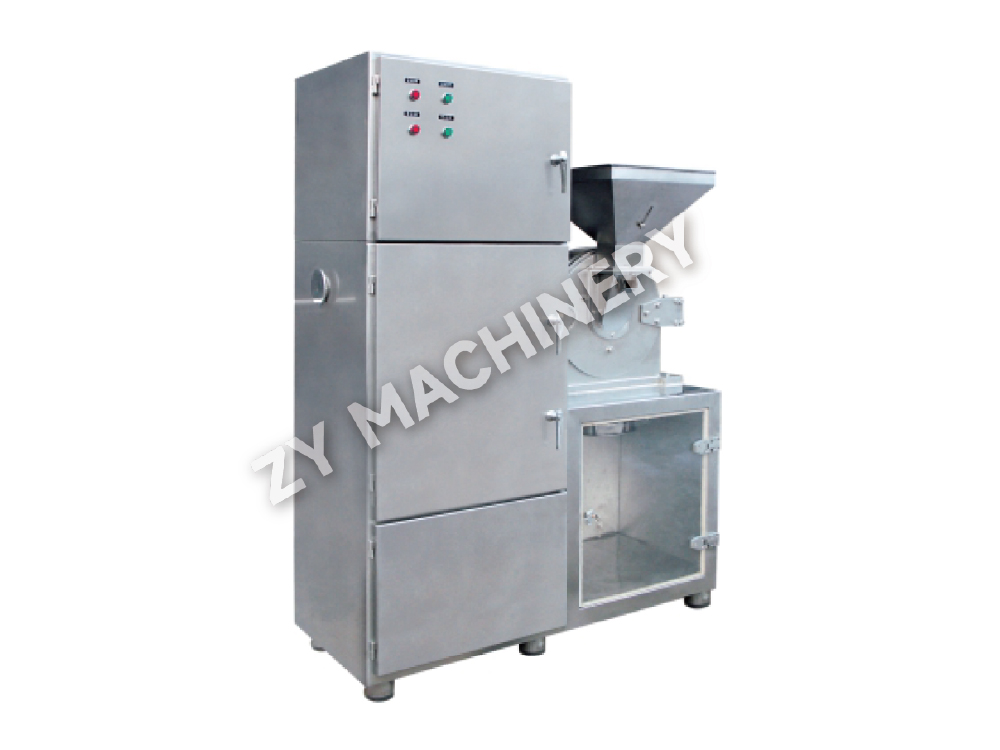
The TLZ station can be equipped with optional iron removal, sieving, and crushing functions. These features allow the feeding stage to perform additional preparation before material enters the next unit operation.
Iron removal may help protect downstream equipment and reduce the possibility of unwanted ferrous particles entering the process. Sieving can help remove oversized particles, agglomerates, or foreign material and can promote more consistent feed quality. Crushing may be used when material has compacted during storage or transport and requires size reduction before further processing.
Combining these functions in one feeding area can reduce the need for separate handling steps. It may also save floor space and simplify the process layout. The final configuration should be based on the material and the quality requirements of the finished product, because excessive crushing or screening may not be appropriate for every formulation.
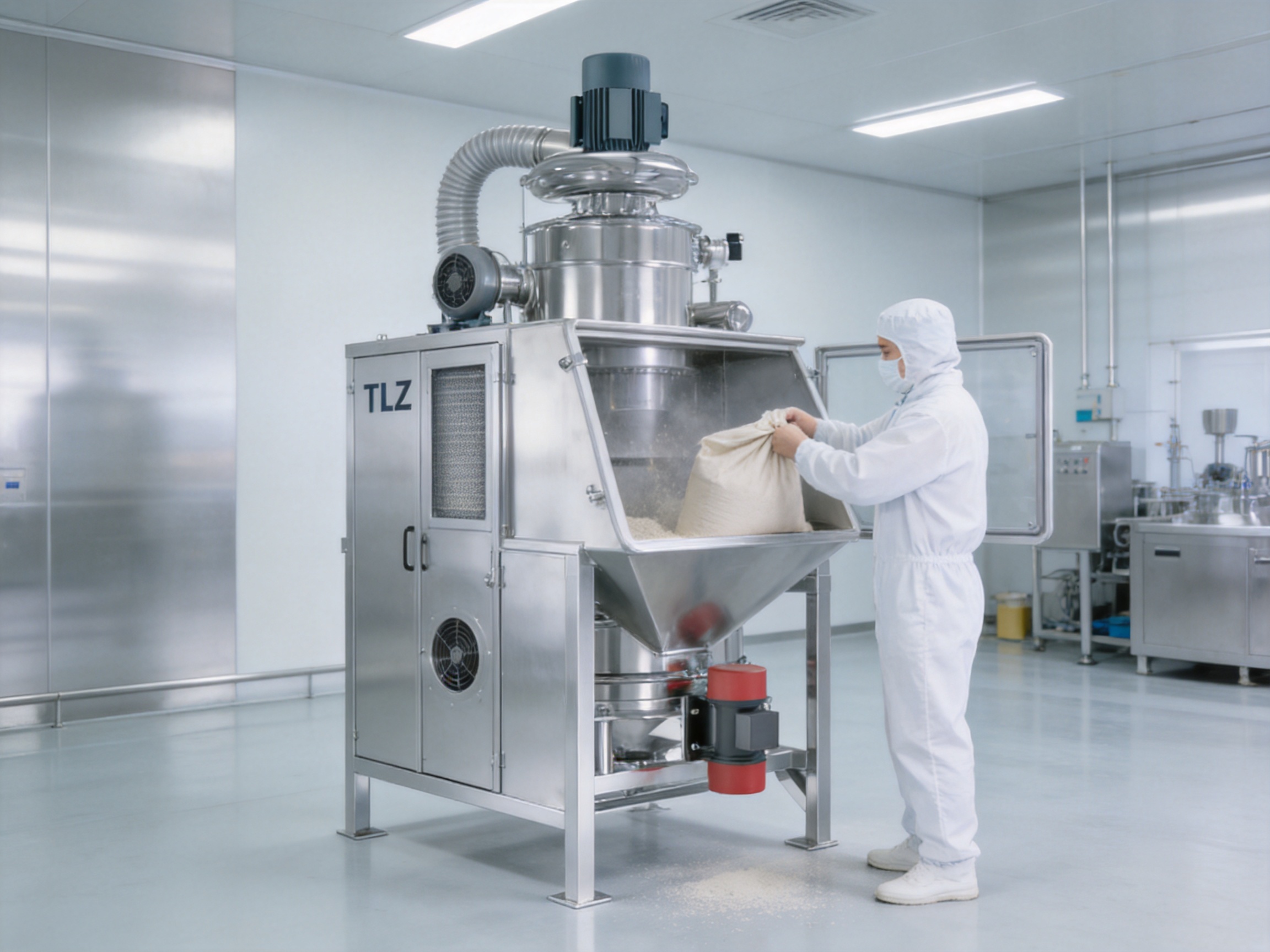
Hygiene is a central consideration when handling materials used in pharmaceutical, food, nutraceutical, and health-related production. Equipment surfaces should be accessible for cleaning, unnecessary accumulation points should be minimized, and components that contact process materials should be suitable for the intended application.
The TLZ Dust-Free Feeding Station supports hygienic feeding by enclosing the loading area and controlling airborne particles. Its modular construction and quick-release access contribute to easier cleaning and inspection. These features can help production teams establish consistent procedures for batch changeover and routine sanitation.
A dust-free feeding station also helps separate the material handling operation from the general factory environment. When airborne particles are captured near the source, there is less opportunity for them to settle on nearby equipment or enter other production zones. This is important in plants that operate several product lines or handle materials with different risk profiles.
GMP compliance is supported by many elements beyond the machine itself, including facility design, validation, documentation, operator training, cleaning procedures, material traceability, and maintenance records. The TLZ station is designed to be suitable for GMP-compliant production lines, but each installation must still be evaluated and qualified according to the customer’s regulatory and process requirements.
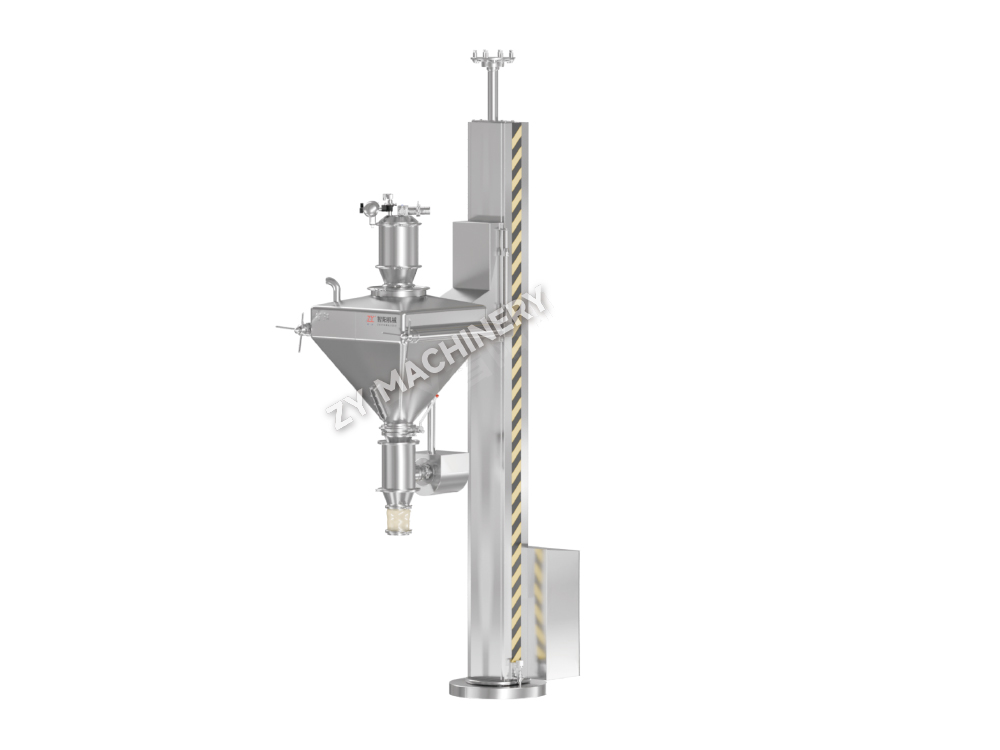
For pharmaceutical applications, the feeding station may be connected with mixers, granulators, dryers, mills, tablet production systems, capsule filling systems, or other oral solid dosage equipment. Its role is to provide a controlled and repeatable material entry point before the material reaches the next processing stage.
In pharmaceutical manufacturing, powders and granules may include active ingredients, excipients, binders, lubricants, and other formulation components. These materials can differ substantially in density, flowability, particle size, and dustiness. Controlled feeding helps protect the working environment and supports cleaner transfer into weighing, mixing, granulation, or other operations.
The station is also relevant to oral solid dosage production. Powders may be transferred into a blender, wet granulator, dry granulator, fluid bed dryer, or other processing machine. By controlling the material loading point, the feeding station contributes to a more integrated and hygienic process route.
Food powders and granular ingredients can generate significant dust during manual loading. Flour, starch, sweeteners, seasoning blends, protein powders, and powdered additives are examples of materials that may benefit from enclosed feeding and filtration.
Cleaner feeding can improve housekeeping around production equipment and reduce the amount of airborne material in the processing room. Where several ingredients are handled in the same facility, controlled loading may also support improved product separation and cleaning practices.
Chemical powders may be abrasive, reactive, fine, or difficult to handle. A suitable feeding system helps operators manage material transfer while reducing uncontrolled dust release. The selection of construction materials, seals, filters, and optional devices should be based on the chemical properties of the product.
Where chemicals are sensitive to moisture or contamination, the feeding station can be incorporated into a process layout that limits unnecessary exposure during transfer. Specific safety assessments are required for hazardous, combustible, or toxic materials.
Nutraceutical products frequently use botanical powders, minerals, vitamins, proteins, and functional ingredients. These materials may have different flow properties and may require screening or deagglomeration before blending. The optional sieving and crushing functions can help prepare the material for subsequent operations.
The controlled feeding environment is also useful for facilities that emphasize clean production, consistent batch quality, and efficient changeover between different formulations.
Veterinary formulations and industrial additives often require accurate and clean handling of fine powders. An enclosed feeding station can assist with dust management while providing a practical connection to downstream mixers, granulators, or conveying systems.
The appropriate filter and configuration should be selected according to the product’s physical and chemical characteristics. Where products have strong odors or special containment requirements, additional engineering controls may be necessary.
Changzhou Zhiyang Machinery Equipment Co., Ltd. specializes in the design, manufacturing, and process integration of powder processing and oral solid dosage equipment. The company was founded in 2010 and is based in Changzhou, China. Its product range includes laboratory equipment, mixing equipment, granulation equipment, drying equipment, coating equipment, auxiliary processing equipment, and transfer and conveying systems.
This broad product scope is an important advantage when developing a feeding solution. A manufacturer focused only on one machine may not fully understand the interaction between feeding, mixing, granulation, drying, coating, and conveying. A company with experience across these unit operations can evaluate how the feeding station should connect with the rest of the process.
The company provides standalone machines, modular systems, and complete production lines for pharmaceutical, biopharmaceutical, biotechnology, nutraceutical, veterinary, additives, and related industries. This allows customers to select a solution appropriate to their current scale while keeping open the possibility of future process expansion.
ZY Machinery follows a process-driven approach. Equipment selection is based on material characteristics, capacity requirements, plant layout, and operating conditions rather than relying only on a standard machine configuration. This is important because powders with similar names may behave very differently in practice. A customized assessment can help determine whether the project requires vibration, screening, crushing, iron removal, a particular filter medium, or a different discharge arrangement.
Process integration is another manufacturing strength. The company does not only supply individual machines; it also develops process routes and engineering implementation plans. This can help customers understand how the feeding station will interact with upstream receiving operations and downstream processing equipment.
The company has expanded its product portfolio, strengthened research and development capabilities, obtained quality system certification, developed patented technologies, and built overseas service capabilities. These activities demonstrate a long-term focus on product development and engineering support. For customers purchasing equipment for an international production facility, service capability and technical communication can be as important as the initial machine specification.
Equipment and engineering solutions have been delivered to customers in multiple countries and regions. International project experience can help a manufacturer understand different plant standards, documentation expectations, installation conditions, and production practices. Each project still requires specific technical review, but an established overseas service capability can support smoother implementation.
The performance of a dust-free feeding station depends on more than the fan and filter. The equipment must be assembled accurately, sealed correctly, and checked against the intended process conditions. Manufacturing quality influences airflow stability, material discharge, cleaning convenience, and long-term reliability.
A process-oriented manufacturer normally begins by reviewing the material and the desired production route. Important questions include whether the material is powder or granule, how easily it flows, whether it forms bridges, how much dust it produces, whether it contains foreign particles, and whether it requires crushing or screening. The answers influence the design of the feeding chamber, vibration system, filter arrangement, and optional equipment.
Component selection is also important. The centrifugal fan must provide suitable extraction capacity for the application. The filter must capture the expected particle range without creating excessive resistance. The vibrating motor must assist discharge without damaging fragile granules or creating unnecessary noise and mechanical stress.
Manufacturing should include inspection of structural parts, filter components, electrical assemblies, seals, and connection points. Proper alignment and sealing are essential because air leakage can reduce dust capture performance. Access doors and quick-release parts should operate consistently, while removable components should be easy to reinstall correctly after cleaning.
Quality control is especially important for equipment used in regulated industries. Customers may require material certificates, equipment drawings, operating instructions, inspection records, testing documentation, and maintenance recommendations. The exact documentation package depends on the project, but a professional manufacturing process should be prepared to support traceability and technical review.
Research and development also contribute to product improvement. Feedback from different materials and applications can guide improvements in airflow, filter cleaning, discharge behavior, access design, and system integration. A manufacturer with experience in powder processing can use this knowledge to refine standard designs while continuing to accommodate customized requirements.
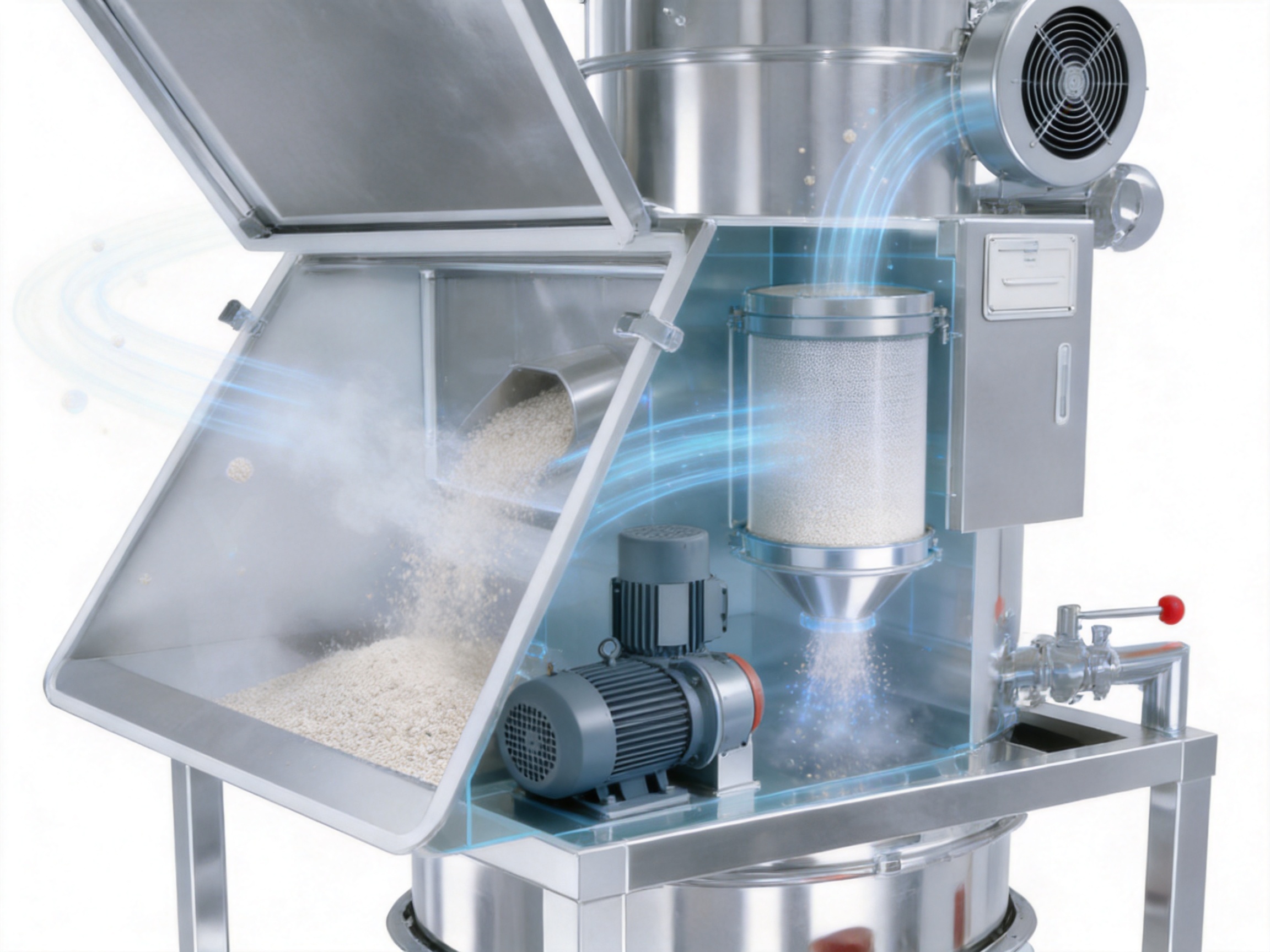
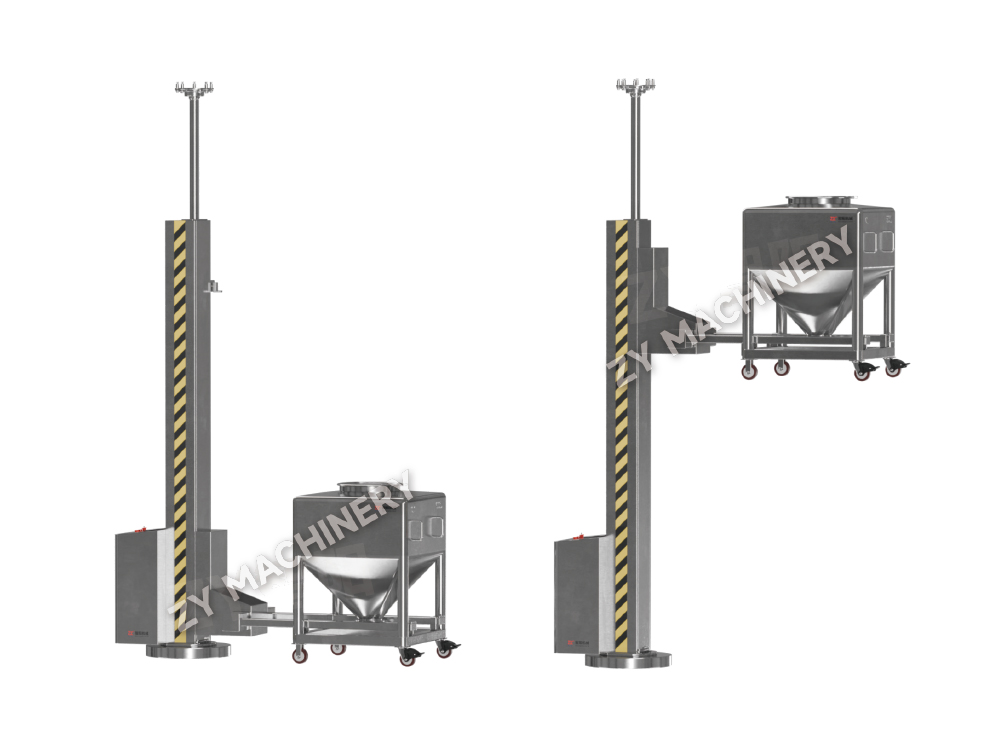
The TLZ Dust-Free Feeding Station can be installed as an independent feeding unit or integrated with other equipment. Common connections may include screw conveyors, vacuum conveying systems, mixers, granulators, dryers, mills, and storage or weighing systems. The connection arrangement should be confirmed during project design.
Installation planning should consider the available floor area, operator access, loading height, discharge height, filter removal space, cleaning access, electrical supply, and ventilation arrangement. The station should be positioned so that operators can safely load material without obstructing walkways or creating unnecessary lifting hazards.
The airflow outlet and dust collection arrangement should be coordinated with the room ventilation system. A feeding station should not be installed in a way that causes the extracted air to interfere with other controlled areas. The surrounding room pressure conditions and air balance may need to be reviewed by the facility engineering team.
Before commissioning, the system should be inspected for correct assembly, electrical connection, filter installation, fan rotation, vibration operation, and discharge performance. A trial using representative material can help confirm that the selected model and optional functions are appropriate.
Operators should be trained in loading procedures, filter inspection, pulse-cleaning operation, cleaning methods, abnormal condition response, and routine maintenance. Training is particularly important when the station is connected to automated conveying or downstream equipment, because the operation of one machine may affect the performance of another.
Routine maintenance helps preserve dust collection efficiency and extend equipment life. Operators should inspect the filter condition, fan operation, vibration motor, seals, discharge outlet, and electrical components according to the site’s maintenance schedule.
The pulse-reverse cleaning system reduces filter blockage during operation, but it does not eliminate the need for inspection. Over time, filter media may become worn, damaged, or permanently loaded with fine particles. Replacement timing depends on operating hours, material properties, cleaning frequency, and the condition of the filter.
Quick-release components make it easier to remove selected parts for cleaning. This is useful when changing products or when the production schedule requires frequent sanitation. Cleaning procedures should be developed according to the material, the level of hygiene required, and the compatibility of the filter and machine surfaces with the selected cleaning agents.
Operators should avoid using cleaning methods that could damage filter media, seals, electrical components, or surface finishes. If wet cleaning is required, the equipment should be designed and prepared for that method, and all components should be completely dry before the next production run.
Maintenance records can help identify changes in performance. A gradual increase in fan load, reduced airflow, unusual vibration, or increased dust escape may indicate filter blockage, leakage, fan wear, or an installation problem. Early detection can prevent larger interruptions and support more reliable production.
Equipment value should be evaluated over the entire operating life rather than only by initial purchase price. A dust-free feeding station may reduce costs associated with cleaning, product loss, manual handling, filter replacement, and production interruptions.
By capturing dust at the loading point, the station can reduce material losses caused by uncontrolled dispersion. Depending on the value of the material and the production scale, recovered product may represent a meaningful economic benefit. Cleaner surroundings can also reduce the labor required for housekeeping and protect nearby equipment from dust accumulation.
The pulse-reverse cleaning system supports repeated use of filter materials. This may reduce the frequency of manual filter replacement and help maintain more stable airflow. The actual savings depend on the product, operating schedule, filter type, and maintenance practices.
Optional functions can also influence total cost. If iron removal, sieving, or crushing is required, integrating these functions into the feeding station may reduce the need for separate machines, additional conveyors, and extra transfer points. Fewer transfer points can simplify the layout and reduce the number of locations where dust or product loss might occur.
Because the company provides equipment ranging from individual machines to complete systems, customers can select a scale appropriate to their current needs. A modular approach may allow a production facility to begin with a feeding station and later add other process equipment as capacity or product requirements develop.
Before selecting a dust-free feeding station, buyers should prepare information about the product and the intended process. Useful information includes the material name, particle size, bulk density, moisture content, flowability, dustiness, temperature, corrosiveness, and sensitivity to impact or shear.
The required production capacity should also be identified. This includes the amount of material per batch, loading frequency, desired feeding rate, and the operating hours per day. These details help determine whether the TLZ-1 or TLZ-2 model is more appropriate and whether additional conveying equipment is required.
Customers should define the required hygiene level and cleaning method. Pharmaceutical and food applications may have specific expectations for contact materials, filter media, surface treatment, access, documentation, and cleaning validation. The use of FDA-compliant laminated needle felt or a titanium membrane filter should be considered in relation to these requirements.
It is also important to identify any foreign material risks. If ferrous particles are a concern, the optional iron removal function may be considered. If the material contains lumps or oversized particles, sieving or crushing may be required. These functions should be assessed carefully so that the preparation step improves process consistency without damaging the product.
Finally, buyers should review the installation environment. Floor loading, ceiling height, operator access, downstream connection, electrical power, room ventilation, and maintenance space all affect the final design. Early cooperation between the customer, equipment manufacturer, and facility engineering team can help avoid installation delays.
A dust-free feeding station is an enclosed material loading system designed to capture airborne particles during the transfer of powders and granules. The TLZ station uses controlled airflow, a centrifugal fan, a high-efficiency filter, and pulse-reverse cleaning to reduce dust escape during feeding.
The station is suitable for pharmaceutical, food, chemical, nutraceutical, veterinary, additives, and related industries. It can be used wherever powders or granular materials must be transferred in a cleaner and more controlled manner.
The system creates a unidirectional airflow that draws airborne particles toward the dust removal filter. The fan continuously extracts air from the feeding area, while the filter captures particles before the air leaves the collection section.
Pulse-reverse air cleaning sends short bursts of reverse air through the filter to remove accumulated dust. This helps prevent filter clogging, supports stable airflow, and allows repeated use of the filter material.
The listed filter options include a 0.4 micrometer coated polyester filter cartridge and a titanium membrane filter. FDA-compliant laminated needle felt filter materials are also available for suitable applications. The final selection should be confirmed according to the product and process requirements.
The primary listed difference is the dust collection fan power. TLZ-1 uses a 1.1 kilowatt fan, while TLZ-2 uses a 1.5 kilowatt fan. Both models list a 0.18 kilowatt vibrating motor. Model selection should be based on the required airflow and operating conditions.
Yes. Iron removal is available as an optional integrated function. This option may help reduce the risk of ferrous contamination and protect downstream equipment, subject to the requirements of the specific material and process.
Yes. Sieving and crushing are available as optional functions. These features can help remove oversized material, break up agglomerates, and prepare the product for subsequent processing.
The station is designed for hygienic feeding and is suitable for GMP-compliant production lines. However, GMP compliance involves the complete facility, procedures, documentation, validation, personnel, and equipment qualification. The individual installation must be assessed according to the applicable requirements.
The modular and quick-release design makes installation, cleaning, inspection, and maintenance more convenient. It allows selected components to be accessed without dismantling the complete machine, which can support faster product changeover and routine service.
Selection should consider material properties, production capacity, loading frequency, required airflow, filter requirements, downstream equipment, available space, cleaning procedures, and optional functions. A technical review with the equipment manufacturer is recommended before final specification.
Yes. The station can be used as a standalone machine or integrated with mixers, granulators, dryers, mills, conveying systems, and other powder processing equipment. Connection dimensions and process interfaces should be confirmed during engineering design.
The TLZ Dust-Free Feeding Station provides a practical solution for controlling dust during powder and granular material loading. Its combination of unidirectional airflow, high-efficiency filtration, centrifugal fan extraction, pulse-reverse cleaning, vibration, and modular access addresses several common challenges associated with open feeding arrangements.
Its main advantages include improved dust containment, cleaner working conditions, easier filter maintenance, flexible filter selection, convenient cleaning, and optional iron removal, sieving, and crushing. These features make the station suitable for pharmaceutical, food, chemical, nutraceutical, veterinary, and related production environments.
The equipment is supported by a manufacturer with experience in powder processing, oral solid dosage equipment, process integration, modular systems, and complete production lines. The company’s process-driven engineering approach allows the station to be considered as part of a broader production route rather than as an isolated machine.
For manufacturers seeking to improve hygiene, operator protection, material handling consistency, and production efficiency, a dust-free feeding station can be an important upgrade. Proper selection, installation, commissioning, training, cleaning, and maintenance will help ensure that the equipment delivers reliable performance throughout its service life.
1. Changzhou Zhiyang Machinery Equipment Co., Ltd. Product information for the TLZ Dust-Free Feeding Station.
2. Changzhou Zhiyang Machinery Equipment Co., Ltd. Technical information concerning powder processing and oral solid dosage equipment.
3. General principles of hygienic equipment design for pharmaceutical and food processing applications.
4. General principles of local exhaust ventilation and dust capture in industrial material handling.
5. General guidance on filter selection, pulse-reverse cleaning, and maintenance for powder processing systems.
6. General good manufacturing practice principles for controlled production environments.
Want to stay up to date?
Contact us via the email address below.
Don't worry about spam. We hate it too!
Mobile Client
Video Account
Phone:+86-15161130178
Tel:+86-519-88674267
Email:czzy188@163.com
Phone:+86-15161132798
Email:zy@zy-drying.com

WeChat ID

Copyright 2026 Changzhou Zhiyang Machinery Equipment Co., Ltd. All Rights Reserved  Oral Solid Dosage Equipment Manufacturer