 English
 Español
 русский
 中文简体
中文简体HGD Fixed-Bin Mixer (Square-Cone Mixer)
The HGD Fixed-Bin Mixer is designed for blending powders and granules in ph.....

Content
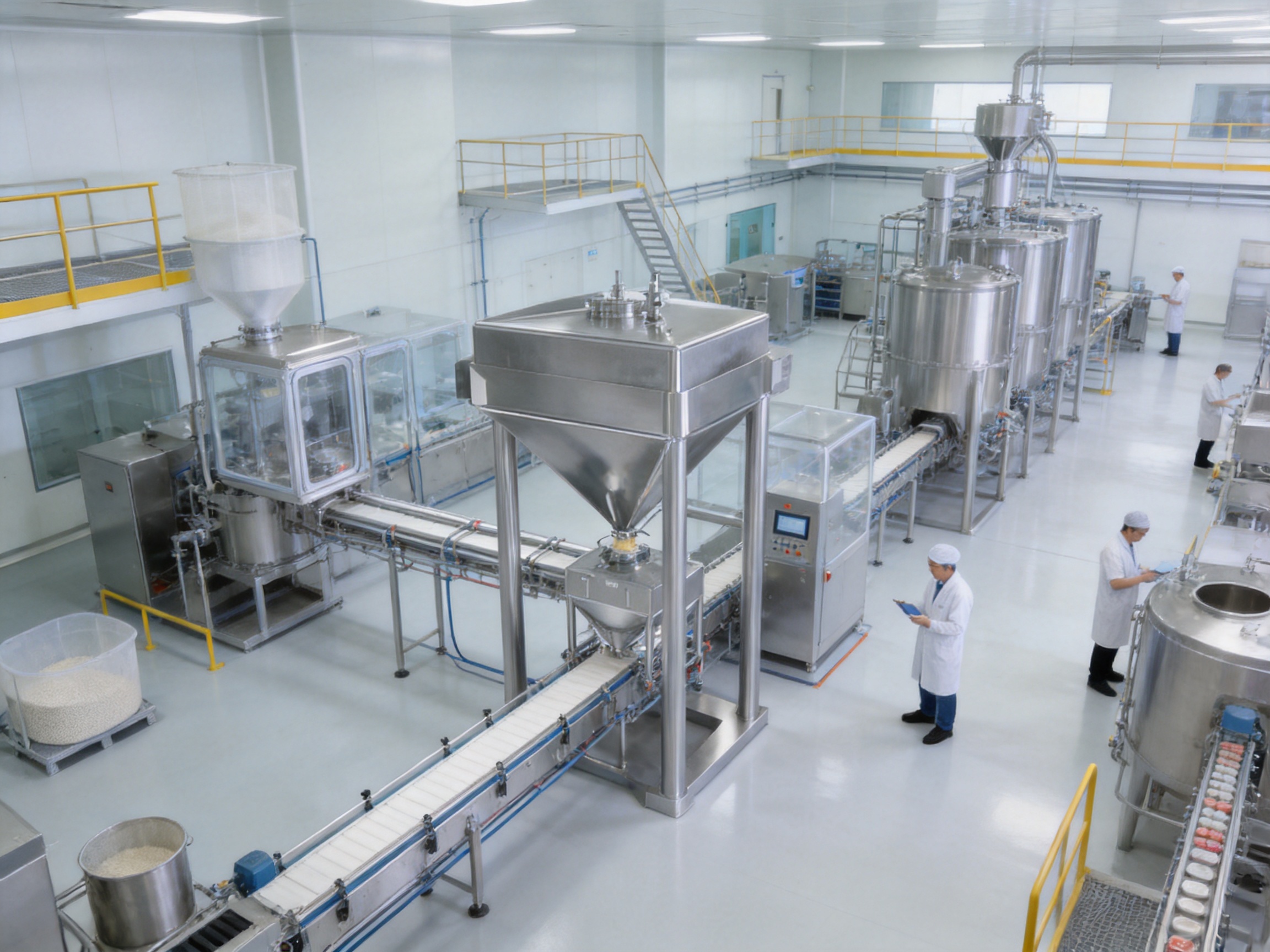
Modern pharmaceutical manufacturing depends on consistent, repeatable, and hygienic powder-processing technology. Whether a production line is preparing direct-compression blends, granule-based formulations, nutritional products, or chemical mixtures, the blending stage has a direct effect on downstream performance and final product quality. Uniform distribution of active ingredients, excipients, granules, lubricants, and other components is essential for dose consistency, tablet quality, capsule filling, flowability, and process stability.
The HGD Fixed-Bin Mixer, also known as a square-cone mixer, is designed to address these requirements in pharmaceutical solid dosage production and other industries that process powders and granules. Its fixed-bin configuration, inclined rotational geometry, controlled speed range, large working capacity, and hygienic construction provide a practical solution for batch blending. The equipment is suitable for granule-to-granule, granule-to-powder, and powder-to-powder applications, making it adaptable to a wide range of formulations and production scales.
Developed and manufactured by Changzhou Zhiyang Machinery Equipment Co., Ltd., the HGD series forms part of a broader product portfolio covering powder processing, oral solid dosage production, granulation, drying, coating, auxiliary processing, and material transfer. The company combines equipment manufacturing with process integration, enabling the mixer to be considered not merely as an isolated machine but as part of a complete production route.
This article examines the working principle, construction, operating advantages, technical parameters, manufacturing strengths, application value, and selection considerations associated with the HGD Fixed-Bin Mixer. It also explains why the equipment can offer practical advantages over less specialized mixers when pharmaceutical hygiene, batch consistency, scalability, operator safety, and process integration are important.
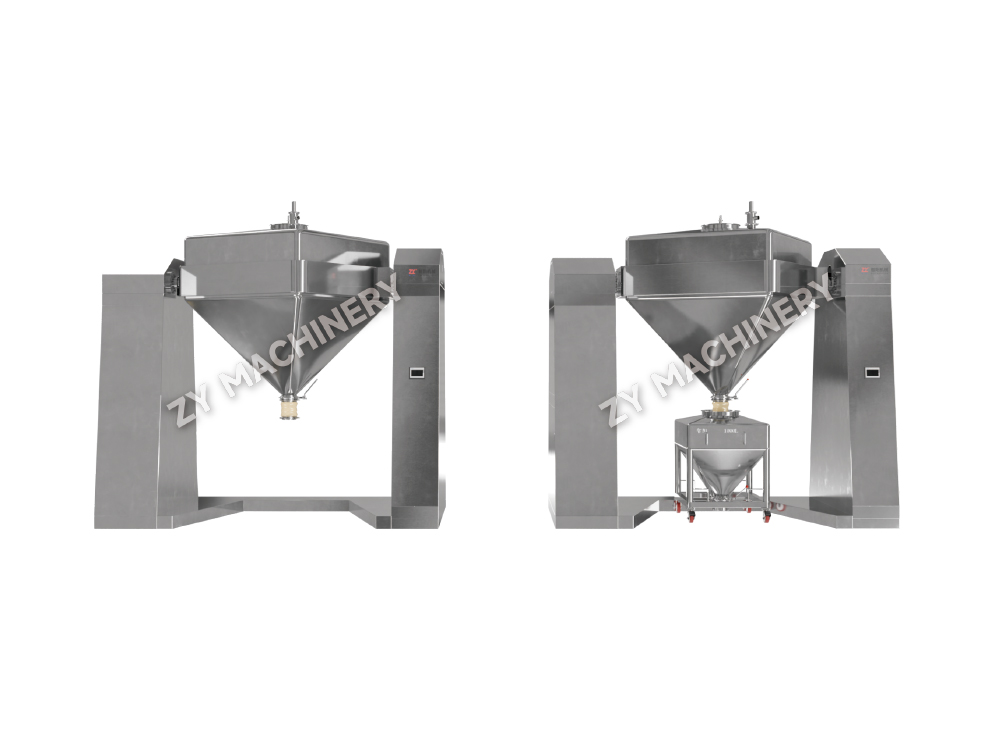
HGD Fixed-Bin Mixer (Square-Cone Mixer)
Mixing is one of the most influential unit operations in oral solid dosage manufacturing. Before granulation, compression, capsule filling, or other downstream operations, different materials must be distributed throughout a batch with the required degree of uniformity. The materials may differ significantly in particle size, density, shape, moisture content, flow properties, and electrostatic behavior. A suitable mixer must therefore generate effective particle movement without causing excessive segregation, degradation, or heat generation.
Pharmaceutical formulations often contain active pharmaceutical ingredients in relatively small proportions compared with fillers, binders, disintegrants, glidants, or lubricants. A poorly designed mixing process can produce regions with different concentrations, creating risks for content uniformity and product performance. Even when the main ingredients are present in similar proportions, differences in particle characteristics can lead to separation during charging, blending, discharge, or transfer.
The HGD Fixed-Bin Mixer is intended for controlled batch blending in this environment. Rather than relying on exposed internal screws or complex high-shear components, it uses the movement of an inclined bin to create a combination of tumbling and tangential motion. This approach encourages repeated lifting, cascading, rolling, and redistribution of material throughout the vessel.
For pharmaceutical producers, this type of mixing mechanism can be useful where the formulation requires gentle but thorough blending. It is particularly appropriate for dry powders and granules that need uniform distribution without the intensive mechanical action associated with some high-shear mixers. The result is a flexible machine that can be used in both routine production and customized process development.
The HGD Fixed-Bin Mixer consists of four primary systems: the structural base, the drive system, the control unit, and the mixing bin. Materials are loaded into the bin, the lid is secured, and the operator selects the required mixing time and speed through the control system. When the machine starts, the bin rotates around its inclined axis. The material moves through a combined tumbling and tangential pattern until the preset cycle is completed.
At the end of the cycle, the mixer stops automatically. The blended product can then be discharged for the next operation, such as granulation, drying, lubrication, compression, capsule filling, coating, or packaging. The fixed-bin arrangement provides a stable production configuration and supports large batch capacities, including models with hopper capacities from 200 liters to 10,000 liters.
The HGD range includes models from HGD-200 through HGD-10000. This broad size range allows the same general mixing concept to be applied in laboratory-related scale-up, pilot production, medium-scale manufacturing, and high-volume industrial production. The equipment can therefore support manufacturers that want to standardize their blending approach across several production levels.
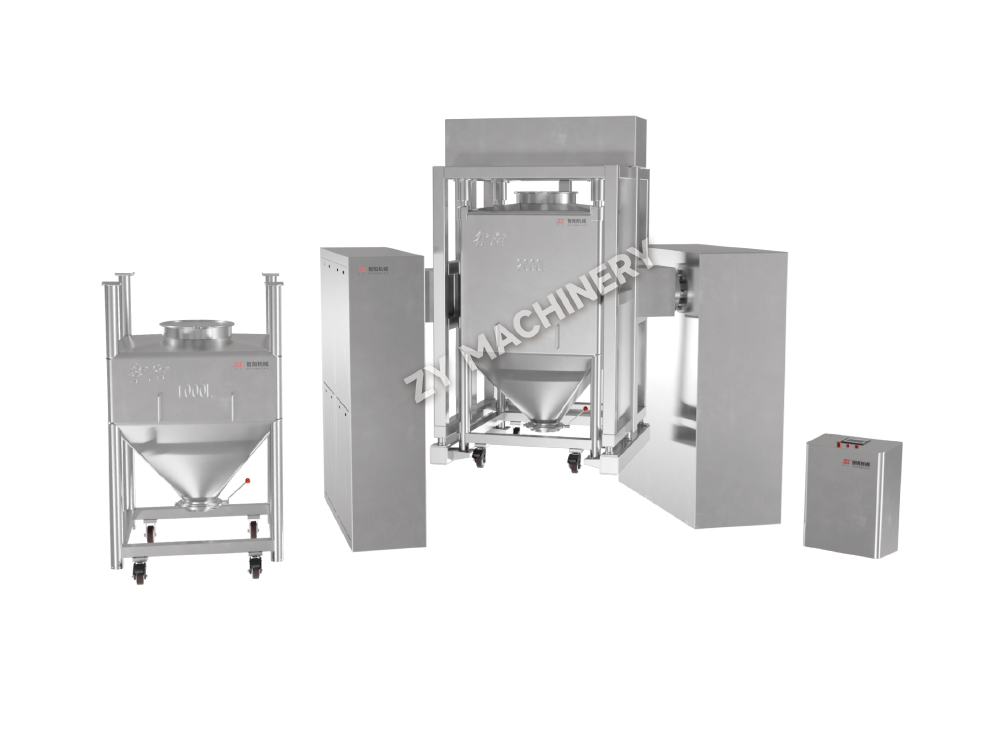
The term “fixed-bin” refers to the permanent mounting of the mixing bin on the machine rather than the use of a removable bin that is exchanged between batches. This design can be advantageous where a dedicated mixer is assigned to a particular product family, where high production throughput is required, or where the installation is integrated into a fixed process line.
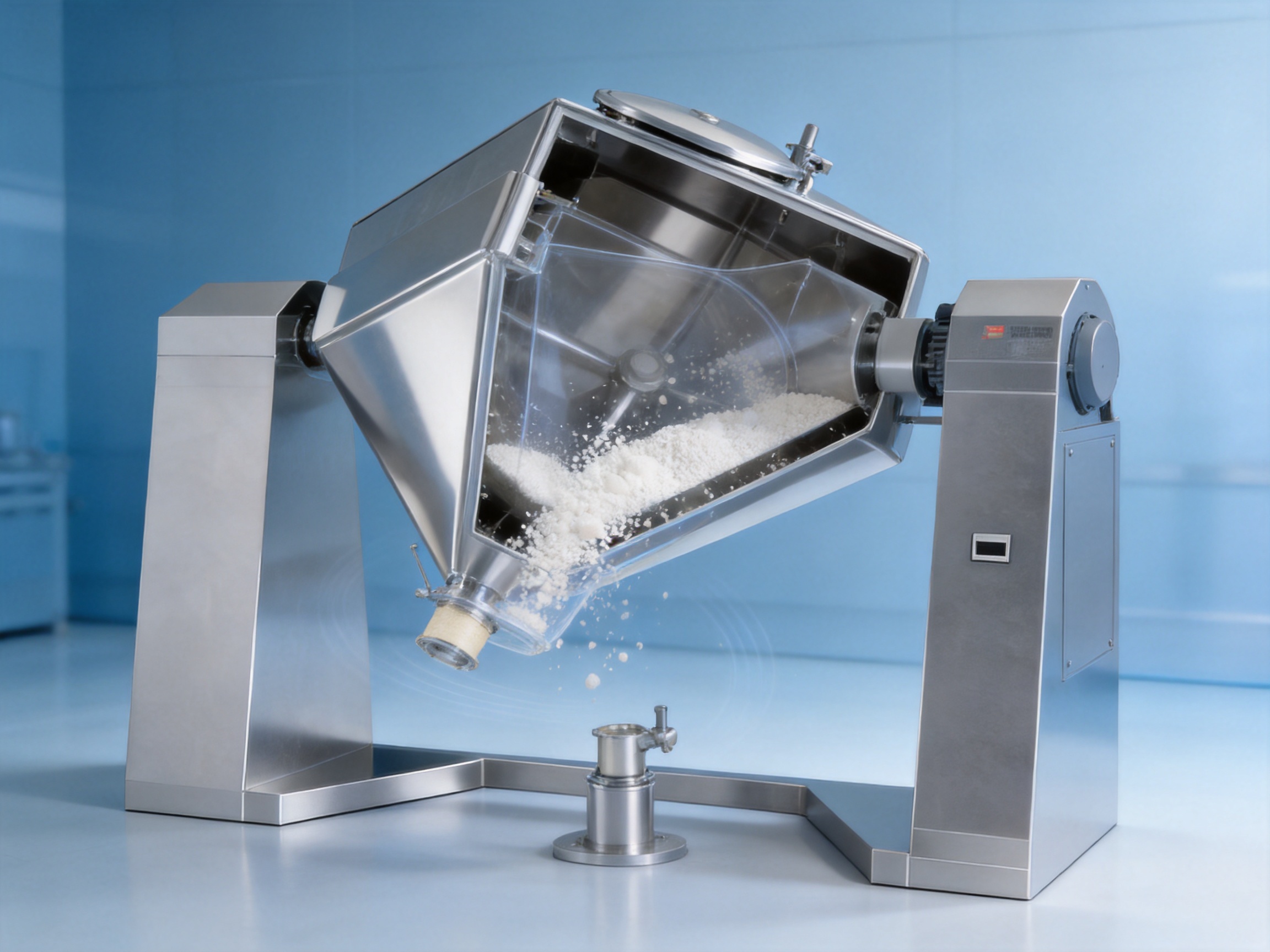
The mixing bin is positioned at an angle of approximately 30 degrees between the bin and the rotational axis. This geometry is central to the operating behavior of the HGD mixer. As the bin rotates, the material is repeatedly raised along the internal surface and then allowed to fall or roll under gravity. At the same time, the inclined arrangement creates tangential movement that changes the direction and distribution of the material mass.
The combination of tumbling and tangential motion increases the number of contact and redistribution events experienced by individual particles. Material from the center can move toward the sides, while material near the walls can return toward the center. This repeated three-dimensional movement helps reduce concentration gradients and supports a more uniform batch.
The operating speed can be adjusted according to model and process requirements. Smaller models provide speed ranges of approximately 3 to 20 revolutions per minute, while larger models generally operate at lower maximum speeds because of their greater mass and volume. Lower rotational speeds on large machines still generate effective movement due to the size and geometry of the bin.
Mixing time is set through the control system. The correct cycle depends on the formulation, fill level, material properties, particle size distribution, and required uniformity. A carefully developed process does not necessarily require excessive mixing time. In many cases, controlled movement at an appropriate speed can achieve a suitable blend while limiting unnecessary mechanical stress.
Unlike an impeller-based mixer, the square-cone configuration does not depend on a central shaft, exposed mixing blades, or internal screws to move the product. This reduces the number of internal components that come into direct contact with the formulation. It can also simplify cleaning, inspection, and maintenance.
The HGD Fixed-Bin Mixer is designed for powders, granules, and combinations of both. This gives it a broader operating range than equipment intended only for free-flowing powders or only for granulated products. Pharmaceutical manufacturers can use the same machine family for pre-blending excipients, mixing dried granules, adding smaller quantities of powder, and preparing final blends before compression or encapsulation.
The ability to handle granule-to-granule, granule-to-powder, and powder-to-powder combinations is especially useful in facilities that manufacture several product types. It reduces the need to install separate mixing technologies for each formulation category and supports more efficient use of production space.
Many competitive mixers are limited by relatively small vessel volumes or by mechanical constraints that make large-capacity designs difficult to operate. The HGD range extends to a 10,000-liter hopper capacity, with a maximum stated net carrying capacity of approximately 3,000 kilograms for the largest listed model. This makes the series suitable for high-volume production where repeated small batches would increase labor, cleaning, validation, and transfer requirements.
Large capacity can also improve production planning. Fewer batches may be required to produce a campaign quantity, reducing the number of charging and discharging operations. When the formulation and process have been properly validated, this can support lower handling time and more consistent batch-to-batch scheduling.
The 30-degree inclined design creates more than simple circular movement. The material is lifted, cascaded, rolled, and redirected as the bin rotates. This promotes mixing throughout the working volume rather than concentrating movement in a narrow zone.
Some basic mixers may create limited motion, leaving stagnant regions or requiring long operating times to achieve acceptable uniformity. The HGD geometry is intended to reduce such dead areas by encouraging material to move across different sections of the bin. The result is a strong yet relatively gentle mixing action suitable for many dry solid formulations.
Pharmaceutical equipment must be designed to limit contamination risks and facilitate cleaning. The HGD Fixed-Bin Mixer has a smooth construction without exposed screws or unnecessary internal protrusions. The absence of complex internal mixing tools can reduce locations where powder accumulates and can make visual inspection more straightforward.
A hygienic design is valuable not only for product safety but also for manufacturing efficiency. Cleaning personnel can access the relevant surfaces more easily, and maintenance teams have fewer internal components to inspect. When appropriate materials, seals, surface finishes, and cleaning procedures are selected, the mixer can support GMP-oriented production environments.
The machine uses a dedicated drive system and a fixed structural base to support stable rotation. Stable mechanical operation is important for maintaining repeatable mixing conditions, especially when handling high batch weights. Excessive vibration, irregular rotation, or inconsistent speed can influence blending behavior and place additional stress on mechanical components.
Controlled operation also improves process repeatability. Once speed and mixing time have been established for a formulation, the same settings can be applied to subsequent batches. This supports process documentation, operator training, and quality assurance activities.
The HGD mixer includes safety features such as anti-misoperation discharge valves. These features are intended to reduce the possibility of accidental discharge or unsafe operation. The control system allows the operator to set the mixing cycle and enables automatic stopping when the preset time is reached.
Automatic cycle control can reduce dependence on manual timing and help standardize operating procedures. Safety interlocks and protective arrangements can be configured according to the final machine specification and the requirements of the installation site.
Simple internal construction can make routine cleaning and maintenance less demanding than systems with numerous blades, shafts, seals, and complex transmission components inside the product zone. Reduced mechanical complexity may also lower the number of wear points requiring regular attention.
Maintenance requirements still depend on operating frequency, material characteristics, cleaning methods, and installation conditions. However, the fixed-bin mixer is designed with practical serviceability in mind. Drive components, controls, valves, and structural elements can be included in a planned preventive-maintenance program.
The HGD series covers a wide range of hopper capacities and carrying capacities. The following table summarizes the principal parameters supplied for the standard models. Actual dimensions, electrical configurations, materials of construction, and optional features should be confirmed for the specific project.
| Model | Power (kW) | Speed (rpm) | Net Carrying Capacity (kg) | Hopper Capacity (L) |
|---|---|---|---|---|
| HGD-200 | 1.5 | 3–20 | 60 | 200 |
| HGD-300 | 1.5 | 3–20 | 100 | 300 |
| HGD-400 | 1.5 | 3–20 | 120 | 400 |
| HGD-600 | 2.2 | 3–20 | 200 | 600 |
| HGD-800 | 3 | 3–20 | 250 | 800 |
| HGD-1000 | 4 | 3–15 | 300 | 1,000 |
| HGD-1200 | 4 | 3–15 | 400 | 1,200 |
| HGD-1500 | 4 | 3–15 | 500 | 1,500 |
| HGD-2000 | 5.5 | 3–15 | 800 | 2,000 |
| HGD-2500 | 5.5 | 3–12 | 900 | 2,500 |
| HGD-3000 | 7.5 | 3–12 | 1,000 | 3,000 |
| HGD-4000 | 7.5 | 3–12 | 1,200 | 4,000 |
| HGD-5000 | 11 | 3–12 | 1,500 | 5,000 |
| HGD-6000 | 11 | 3–8 | 2,000 | 6,000 |
| HGD-8000 | 15 | 3–8 | 2,500 | 8,000 |
| HGD-10000 | 15 | 3–8 | 3,000 | 10,000 |
The stated net carrying capacity is lower than the nominal hopper capacity because a mixer should not generally be filled to its total geometric volume. Adequate free space is required for the material to move, cascade, and redistribute. The ideal fill level depends on bulk density, flowability, particle size, formulation behavior, and the target mixing mechanism.
Large industrial mixers require careful site planning. The supplied installation dimensions include width values, W1, length, and four height references identified as H1, H2, H3, and H4. These dimensions vary considerably across the model range, and the largest units require substantial vertical and horizontal clearance.
| Model | Reference Width W (mm) | W1 (mm) | Length L (mm) | H1 (mm) | H2 (mm) | H3 (mm) | H4 (mm) |
|---|---|---|---|---|---|---|---|
| HGD-200 | 1,000 | 1,110 | 1,700 | 700 | 1,270 | 1,580 | 1,810 |
| HGD-600 | 1,300 | 1,450 | 2,280 | 750 | 1,480 | 2,000 | 2,200 |
| HGD-1000 | 1,400 | 1,800 | 2,600 | 750 | 1,650 | 2,200 | 2,550 |
| HGD-2000 | 1,600 | 2,150 | 3,150 | 750 | 1,820 | 2,470 | 2,900 |
| HGD-4000 | 1,700 | 2,970 | 3,800 | 750 | 2,430 | 3,250 | 3,720 |
| HGD-6000 | 2,100 | 3,260 | 4,400 | 1,000 | 2,630 | 3,600 | 4,260 |
| HGD-10000 | 2,200 | 4,500 | 4,860 | 1,000 | 2,800 | 3,950 | 4,600 |
The values in this table are representative reference dimensions rather than a substitute for an approved general arrangement drawing. Before installation, the user should confirm access routes, floor loading, equipment clearance, ceiling height, charging arrangements, discharge height, service access, electrical connection points, and cleaning provisions.
The fixed-bin design can be integrated into a dedicated production room or a continuous material-handling route. Depending on the facility layout, the mixer may be positioned between upstream granulation or drying equipment and downstream compression, encapsulation, or coating equipment. Transfer systems, lifting devices, dust-control equipment, and intermediate containers should be assessed as part of the full installation.
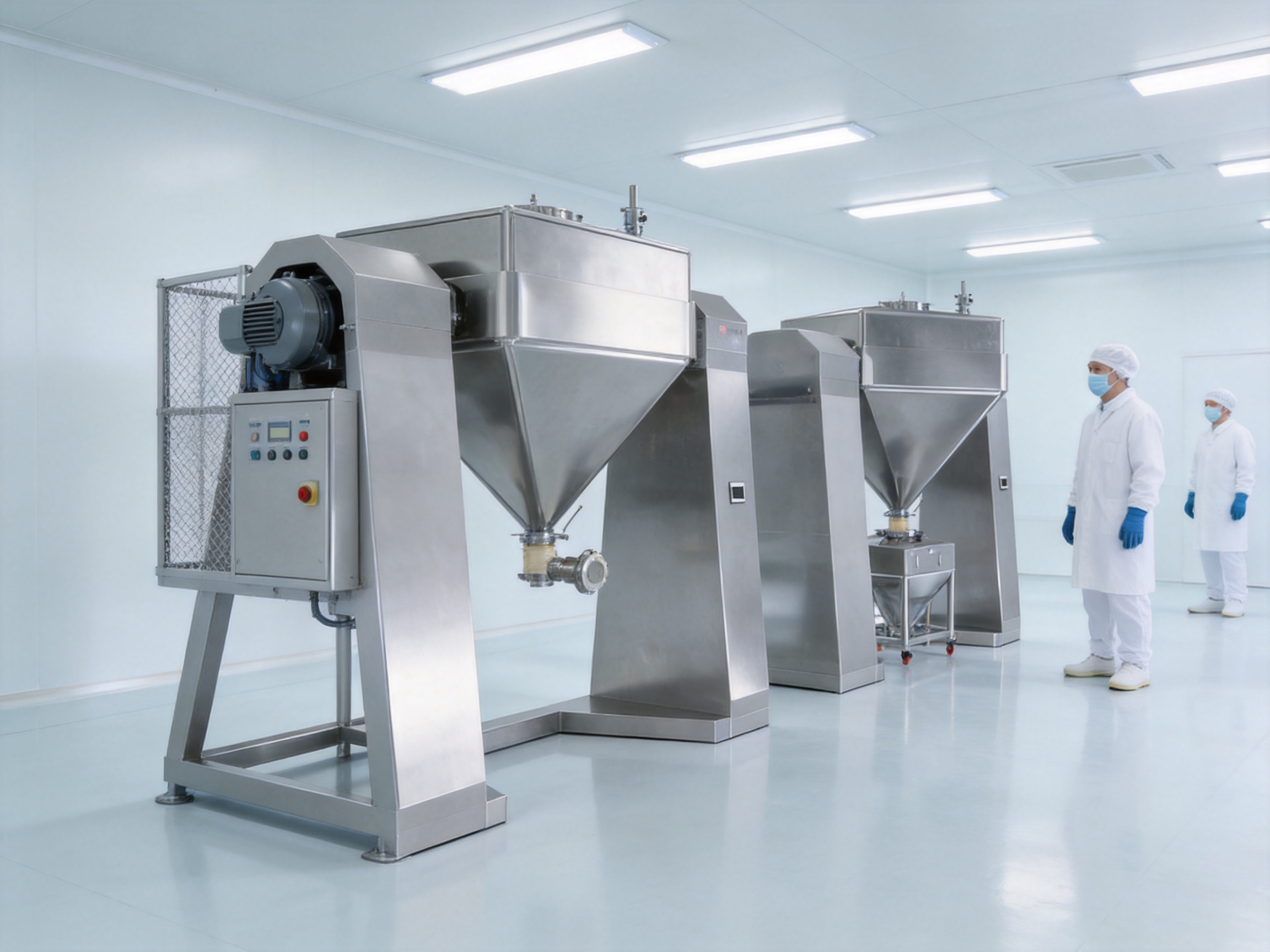
Pharmaceutical manufacturers require equipment that supports contamination control, cleaning validation, traceability, and consistent production. No mixer alone can guarantee GMP compliance, because compliance depends on the complete design, operating procedure, facility, utilities, materials, documentation, and quality system. Nevertheless, equipment geometry and construction have an important influence on the ability of a plant to meet its requirements.
The HGD Fixed-Bin Mixer is designed with smooth product-contact surfaces and a layout intended to avoid unnecessary dead zones. The lack of exposed internal screws is a practical advantage because screws and shaft assemblies can create areas where fine powders accumulate. These areas may be difficult to inspect and may increase the risk of cross-contamination if cleaning is incomplete.
The mixer can be specified with product-contact materials and surface finishes appropriate to the application. Stainless steel is commonly selected for pharmaceutical contact surfaces because it can provide corrosion resistance, durability, and compatibility with established cleaning practices. The final material grade should be determined according to the formulation, cleaning agents, temperature, regulatory requirements, and customer specifications.
Hygienic design also includes the discharge area. An anti-misoperation discharge valve helps control when the blended material leaves the machine. The discharge connection can be coordinated with an intermediate bulk container, transfer system, or downstream process. A well-designed connection reduces powder exposure and supports orderly product transfer.
Cleaning procedures should define the sequence for emptying, inspection, removal of residues, wet or dry cleaning where applicable, drying, and release for the next batch. The equipment supplier can support the development of cleaning and operating procedures, but the pharmaceutical user remains responsible for validation within the specific production environment.
Changzhou Zhiyang Machinery Equipment Co., Ltd. specializes in powder processing and oral solid dosage equipment. Its product scope includes laboratory equipment, mixing equipment, granulation equipment, drying equipment, coating equipment, auxiliary processing equipment, and transfer and conveying systems. This broad scope is significant because the performance of a mixer is strongly influenced by the equipment that feeds it and receives its output.
A supplier focused only on one machine may provide limited support for upstream and downstream compatibility. By contrast, a process-oriented manufacturer can evaluate the complete route: raw material charging, pre-mixing, wet or dry granulation, drying, sizing, final blending, lubrication, compression, coating, transfer, and packaging. This wider perspective can help identify practical issues involving capacity balance, material residence time, dust control, cleaning, and operator access.
The company was founded in 2010 and is based in Changzhou, China, an area with an established machinery-manufacturing base. Its stated business model combines standalone equipment, modular systems, and complete production lines. This enables customers to select a single HGD mixer for an existing plant or develop a more comprehensive project involving several process stages.
Its manufacturing approach is described as process-driven. Rather than supplying identical equipment without considering the application, the company designs solutions according to material characteristics, capacity requirements, and site conditions. For a mixer project, this may involve reviewing bulk density, flowability, particle size, moisture, formulation ratios, batch size, required mixing time, discharge method, room layout, and cleaning strategy.
Such process knowledge is particularly valuable when a product is difficult to blend. Powder behavior can change significantly with humidity, electrostatic charge, particle morphology, and the addition sequence. A manufacturer that understands these factors can help determine whether a fixed-bin mixer is appropriate and how it should be configured.
The company reports continued investment in research and development, patented technologies, quality-system certification, and overseas service capabilities. These elements support the long-term development of machinery intended for regulated and quality-sensitive industries.
Research and development in mixing equipment is not limited to increasing motor power. It also involves studying movement patterns, reducing residue, improving sealing, enhancing control accuracy, optimizing energy use, strengthening the frame, simplifying maintenance, and adapting the machine to different production scales. A useful development program must balance performance, reliability, cleanability, safety, and cost.
Equipment installation can become difficult when a machine is purchased without adequate engineering coordination. The HGD range includes large models that require substantial floor area, height, structural support, and transfer planning. Engineering implementation therefore becomes as important as the mixer itself.
ZY Machinery states that it provides practical process routes and engineering implementation plans. This type of service can include equipment selection, layout coordination, production-line integration, utility planning, commissioning support, and operator guidance. The exact scope depends on the project, but the principle is important: the mixer should be evaluated as part of the facility rather than as an isolated catalog item.
The HGD models range from 200-liter to 10,000-liter hopper capacity. This allows a customer to choose a machine based on actual production needs rather than forcing a single standard size across all applications. A smaller model may be suitable for pilot or specialty production, while a larger model can support high-volume manufacturing.
Using a consistent equipment family across scales can also simplify operator training and process documentation. Although scale-up must always be validated, similar mixing principles can make it easier to transfer knowledge from one model to another.
The primary application is pharmaceutical solid dosage production. The mixer can be used for blending granules after drying and sizing, preparing powder mixtures before granulation, adding excipients to active ingredients, or homogenizing final blends before tablet compression or capsule filling.
For granulated formulations, the machine provides a relatively gentle tumbling action that can help preserve granule structure when compared with more aggressive systems. The appropriate speed and mixing time must be established through formulation trials, since fragile granules may require different conditions from dense, robust granules.
Nutraceutical manufacturers commonly process powders, granules, vitamins, minerals, botanical extracts, amino acids, and functional ingredients. These materials may have substantial differences in density and particle size, making uniform blending important. The HGD mixer can support batch preparation for tablets, capsules, sachets, and other oral products.
The equipment is also applicable to selected chemical products, including dry additives, blended powders, granulated materials, and intermediate compounds. Chemical applications must be evaluated for corrosion, dust explosibility, temperature sensitivity, toxicity, and other process hazards. Appropriate construction materials and safety systems should be selected accordingly.
Food manufacturers may use the mixer for dry ingredient blending, seasoning mixtures, powdered beverages, premixes, nutritional powders, and other granular products. In food applications, hygienic construction, cleanability, controlled discharge, and protection against ingredient cross-contact are important considerations.
Veterinary medicines, animal-health supplements, agricultural additives, and specialty dry products may also benefit from batch mixing. In these sectors, the ability to process different batch sizes and formulations with one mixer family can improve manufacturing flexibility.
A typical operating cycle begins with inspection of the mixer, confirmation that the bin is clean, and verification that the discharge valve is closed and secured. Materials are charged according to the approved formulation and loading sequence. The lid is then closed, and the operator confirms that guards, interlocks, and safety systems are in their correct positions.
The required mixing speed and time are entered into the control system. The operator starts the cycle and observes the equipment for abnormal vibration, unusual noise, leakage, or other irregularities. The mixer stops automatically after the preset time. The blended material is then discharged through the designated outlet into the next container or processing stage.
Process development should evaluate more than nominal mixing time. Important variables include fill level, loading sequence, ingredient order, bulk density, particle size, material moisture, rotational speed, discharge method, and the time between mixing and downstream processing. A blend can become segregated after leaving the mixer if the transfer system is poorly designed, so the entire handling route should be considered.
Sampling plans are also important. Samples should be taken from representative locations and analyzed using an appropriate method. The objective is to establish the relationship between operating conditions and blend uniformity. Once suitable settings are confirmed, they can be incorporated into batch records and standard operating procedures.
For new formulations, it is advisable to conduct trials before selecting the final machine size. These trials can reveal whether the powder flows freely, whether the blend tends to segregate, whether the product adheres to the surfaces, and whether the discharge is complete. They can also help identify the ideal fill ratio and mixing cycle.
Safety begins with correct installation and continues through daily operation. Operators should be trained in loading, lid closure, start-up, emergency stopping, discharge control, cleaning, and fault reporting. The mixer should not be operated with guards removed or with access points open.
The anti-misoperation discharge arrangement is intended to reduce accidental release of material. Additional safeguards may include lid interlocks, emergency stop devices, overload protection, protective covers, and access-control measures. The final safety configuration should be reviewed according to local regulations and the specific risk assessment.
Routine inspections can include checking the drive system, fastening points, seals, discharge valve, control panel, structural supports, and product-contact surfaces. Any abnormal vibration or noise should be investigated before continued production. Lubrication requirements should follow the equipment documentation and should be managed to prevent contamination of the product zone.
Preventive maintenance is generally more effective than waiting for a failure. A maintenance schedule can separate daily, weekly, monthly, and annual tasks. Records should identify inspection dates, findings, replacement parts, corrective actions, and responsible personnel. In regulated facilities, these records also support equipment history and audit readiness.
Cleaning and maintenance activities should be coordinated. Residue should be removed before it hardens, and the machine should be fully dry before release when wet cleaning is used. Electrical components and drive systems must be protected from inappropriate exposure to water or cleaning chemicals.
Model selection should begin with the required batch size rather than hopper capacity alone. The net carrying capacity is a more useful starting point because the material needs sufficient free space to move. The customer should provide the required batch weight, bulk density, number of batches per shift, formulation type, and desired production capacity.
Material properties should also be documented. Relevant information includes particle-size distribution, angle of repose, moisture content, flowability, cohesiveness, friability, density differences, abrasiveness, and sensitivity to mechanical stress. These factors influence the required mixing time and may affect the choice of construction materials and optional systems.
The installation environment must be considered at the same time. Large models may require high ceilings, wide doors, lifting equipment, reinforced floors, and carefully planned discharge connections. The dimensions listed in the product parameters are useful for preliminary planning, but certified drawings should be used for final construction and equipment placement.
Electrical requirements, control preferences, local standards, dust-control arrangements, and cleaning methods should be confirmed during technical discussions. Customers may also need to specify the required product-contact finish, valve arrangement, access platform, safety guarding, and connection to upstream or downstream equipment.
| Selection Factor | Questions to Confirm | Why It Matters |
|---|---|---|
| Batch size | What is the minimum, normal, and maximum batch weight? | Determines useful working volume and model suitability. |
| Material characteristics | Are the materials cohesive, fragile, abrasive, or density-sensitive? | Influences speed, mixing time, construction, and validation. |
| Required output | How many batches or kilograms must be produced per shift? | Supports capacity and production scheduling decisions. |
| Hygiene requirements | What cleaning method and surface finish are required? | Helps define product-contact materials and cleanability. |
| Process integration | How will the mixer be charged and discharged? | Prevents transfer bottlenecks and excessive manual handling. |
| Site conditions | Are floor loading, height, access, and utility requirements available? | Ensures safe and practical installation. |
| Control requirements | What speed, timing, data, and safety functions are needed? | Aligns the machine with production and quality systems. |
The purchase price of a mixer is only one part of its total cost. A more meaningful evaluation considers throughput, labor, cleaning time, maintenance, energy consumption, product loss, downtime, validation effort, and the cost of inconsistent batches. The HGD Fixed-Bin Mixer can contribute value through its capacity range, stable operation, and relatively simple product-zone construction.
Large batch capability may reduce the number of individual cycles needed for a production campaign. Fewer cycles can mean fewer charging and discharging operations, less repeated handling, and lower exposure to operator-dependent variation. The benefit will depend on the formulation and the facility’s production schedule.
Simple internal construction may also reduce cleaning and inspection time. This is especially relevant in multiproduct facilities where equipment turnaround affects the overall manufacturing schedule. Easier inspection can support more reliable release decisions and reduce the risk of carrying residues into the next product.
Reliable operation can lower the indirect cost of unplanned downtime. A mechanically stable system with a planned maintenance program is less likely to interrupt production unexpectedly. The actual reliability outcome depends on correct installation, operating discipline, maintenance quality, and the suitability of the machine for the material.
The company’s ability to provide standalone equipment, modular systems, or complete lines may also reduce engineering complexity. A coordinated project can minimize interface problems between the mixer and connected granulators, dryers, conveyors, intermediate containers, and packaging systems.
Mixing performance cannot be separated from the behavior of the material or the design of the surrounding process. A supplier with experience in powder processing can contribute more than mechanical fabrication. It can help the customer understand how a formulation should be charged, blended, discharged, transferred, and cleaned.
Changzhou Zhiyang Machinery Equipment Co., Ltd. presents itself as a process-focused manufacturer serving pharmaceutical, biopharmaceutical, biotechnology, nutraceutical, veterinary, additive, chemical, and related industries. Its equipment is intended for laboratory, pilot, and full-scale production. This range of sectors and scales provides a foundation for discussing different material behaviors and production requirements.
The company emphasizes honesty, quality, specialized expertise, customer reputation, research and development, and responsive service. These values are relevant to equipment projects because a mixer is typically used for many years. Customers need technical communication during selection, fabrication, installation, commissioning, troubleshooting, and future modification.
International service capability is another consideration for overseas customers. Clear documentation, spare-parts support, remote communication, installation guidance, and timely technical responses can influence the overall value of the equipment. The best machine design can still underperform if the customer cannot obtain adequate support after delivery.
The HGD Fixed-Bin Mixer can be installed as part of a broader oral solid dosage line. A common process may begin with material dispensing and screening, followed by pre-blending, granulation, drying, sizing, final blending, lubrication, compression, coating, and packaging. The exact route depends on the formulation and product type.
In a wet-granulation process, the mixer may be used before granulation to distribute powders or after drying and sizing to combine granules with additional excipients. In a dry-granulation process, it may support pre-blending or final blending before compression. In direct compression, the mixer can be used to create a uniform blend without a granulation step.
Transfer and conveying equipment must be designed to preserve the blend after mixing. Excessive vibration, long drops, narrow outlets, or poorly controlled pneumatic transport may cause segregation. A process-integrated supplier can assess the discharge arrangement and recommend a suitable material-transfer approach.
Where dust control is important, the charging and discharge points should be enclosed as far as practical. The control system, valve arrangement, and local extraction should be coordinated with the facility’s containment strategy. For potent or hazardous materials, a separate containment assessment may be necessary.
Coating equipment is normally downstream of tablet compression, but the quality of the initial blend can affect tablet strength, weight variation, disintegration, and coating behavior. Stable mixing therefore contributes indirectly to the performance of later process stages.
Pharmaceutical users should establish documented acceptance criteria for the mixer and the mixing process. Equipment qualification may include design qualification, installation qualification, operational qualification, and performance qualification, according to the organization’s quality system and applicable regulations.
Mechanical inspection can verify dimensions, materials, weld quality where applicable, surface condition, guarding, valve operation, and control functions. Operational checks can confirm the speed range, timer accuracy, automatic stopping, emergency stop response, interlocks, and alarm functions.
Performance qualification should use representative materials or approved substitutes. The evaluation may include blend uniformity, discharge completeness, repeatability, and the impact of different fill levels. Sampling locations and analytical methods should be scientifically justified.
Documentation is a major part of quality assurance. Customers may require operating manuals, electrical drawings, component lists, material certificates, inspection records, calibration information, spare-parts lists, cleaning guidance, and factory acceptance test documentation. The exact documentation package should be agreed before manufacturing begins.
Validation should also consider the worst-case product or batch condition. A process that performs well with a free-flowing material may behave differently with a cohesive or low-dose formulation. Establishing robust operating ranges helps ensure that the equipment remains effective beyond a single ideal test condition.
Although the HGD Fixed-Bin Mixer offers broad capabilities, it should not be treated as a universal solution for every material. Highly cohesive powders, extremely low-dose formulations, sticky products, liquid-containing mixtures, temperature-sensitive substances, or materials requiring intensive dispersion may need additional process equipment or a different mixer type.
Uniformity depends on more than the mixer geometry. Incorrect loading sequence, excessive fill level, insufficient free space, unsuitable speed, overmixing, or poor discharge design can all reduce performance. A proper trial and process-development program is therefore recommended for new materials.
Product segregation can occur after mixing if particles differ substantially in size or density. The mixer can reduce concentration differences during the mixing cycle, but it cannot eliminate the physical tendency of a poorly designed transfer route to separate the blend. The material-handling system should be designed to minimize drops, vibration, and unnecessary transfers.
Capacity should also be selected realistically. A larger nominal hopper is not automatically better if the normal batch is too small to move effectively. The selected model should provide a suitable working range for the customer’s actual batch sizes.
Pharmaceutical manufacturers increasingly require equipment that can support flexible production, shorter changeover times, reliable documentation, and consistent quality. The HGD series offers a scalable platform that can grow with production requirements. A company may begin with a smaller model for pilot work and later adopt larger models using similar mixing principles.
Future upgrades may involve more advanced control systems, recipe management, production data recording, remote diagnostics, automated material handling, or integration with plant-wide manufacturing systems. The fixed-bin structure provides a stable basis for such enhancements, provided the selected control architecture and mechanical interfaces are planned accordingly.
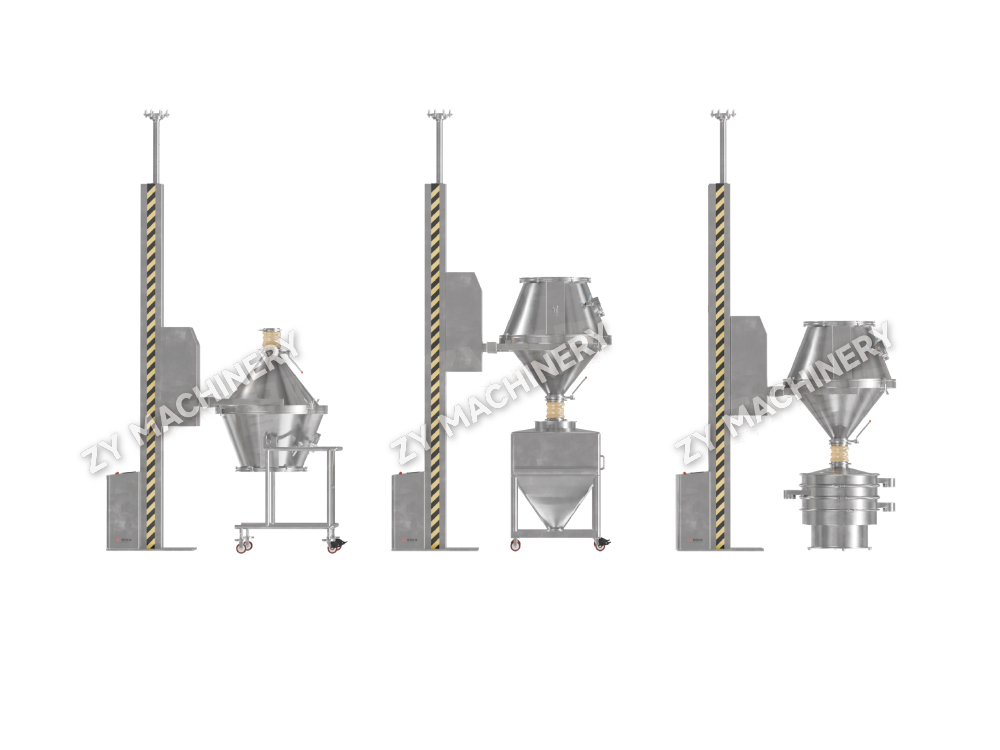
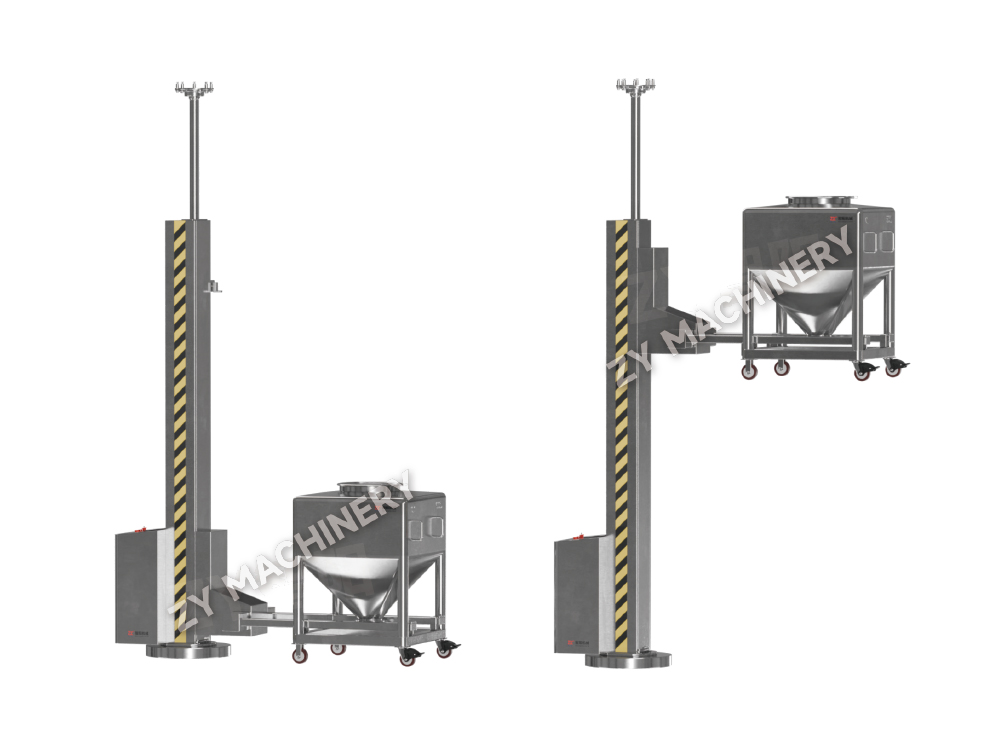
Process integration is also becoming more important as manufacturers seek to reduce manual handling and improve containment. The mixer can be combined with lifting systems, closed transfer containers, automated weighing, dust extraction, and downstream conveying. These improvements can reduce operator exposure and support more consistent material flow.
Sustainability considerations may influence equipment selection as well. Efficient batch planning, reduced rework, lower product loss, manageable cleaning requirements, and durable construction can all contribute to better resource utilization. The most sustainable solution is generally one that performs reliably over a long operating life while minimizing unnecessary processing and maintenance.
The mixer is designed for dry powders, granules, and combinations of powders and granules. Typical combinations include granule-to-granule, granule-to-powder, and powder-to-powder blends. Material suitability should be confirmed through process evaluation, especially when products are highly cohesive, sticky, fragile, abrasive, or sensitive to segregation.
A fixed-bin mixer has its bin permanently mounted to the machine. A removable-bin mixer allows the vessel to be detached and exchanged. The fixed-bin arrangement is well suited to dedicated production, large batch capacities, stable installation, and integration into a defined process line. A removable-bin design may be preferred where rapid changeover between several containers is a primary requirement.
The approximately 30-degree relationship between the bin and its rotational axis helps generate combined tumbling and tangential movement. This causes the material to lift, cascade, roll, and redistribute through the vessel, supporting three-dimensional blending and reducing the likelihood of stagnant zones.
The mixer is designed with hygienic construction and features appropriate for GMP-oriented production. However, GMP compliance applies to the complete equipment specification, facility, utilities, cleaning process, documentation, validation program, and operating procedures. The customer must qualify the equipment within its own quality system.
The listed range extends to the HGD-10000 model, which has a nominal hopper capacity of 10,000 liters and a stated net carrying capacity of approximately 3,000 kilograms. The correct working load depends on bulk density, fill level, flow behavior, and process requirements.
The operator sets the required mixing time through the control system. The mixer stops automatically when the preset cycle is complete. The correct time should be established through formulation trials and blend-uniformity testing rather than selected only by nominal machine capacity.
Yes. The listed models provide adjustable speed ranges. Smaller models generally offer ranges up to approximately 20 revolutions per minute, while larger models operate at lower maximum speeds. The appropriate setting depends on material properties, batch size, and the desired mixing behavior.
Yes. The series includes models with capacities up to 10,000 liters and carrying capacities up to approximately 3,000 kilograms. Large units require detailed planning for floor loading, access, ceiling height, charging, discharge, utilities, and service clearance.
Cleaning should follow the approved procedure for the specific product and facility. The general approach includes complete discharge, removal of visible residue, cleaning of product-contact surfaces, inspection, drying where necessary, and documented release. The final method may be dry, wet, or a combination, depending on material and validation requirements.
Yes. It can be considered as part of a larger powder-processing or oral solid dosage system involving granulators, dryers, screens, conveyors, intermediate containers, tablet presses, capsule fillers, or coating equipment. Interface dimensions and material-transfer methods should be finalized during engineering design.
Useful information includes formulation type, material names or categories, bulk density, particle size, batch weight, required number of batches, desired cycle time, cleaning method, product-contact material, site dimensions, electrical requirements, charging and discharge arrangements, and applicable regulatory standards.
The company’s stated product scope includes standalone machines, modular systems, and complete production lines. The actual project scope should be discussed according to the customer’s process route, capacity, facility, automation level, and engineering requirements.
The HGD Fixed-Bin Mixer is a practical solution for controlled blending of pharmaceutical powders and granules. Its square-cone geometry creates combined tumbling and tangential movement, while its adjustable speed and timed operation support repeatable batch processing. The broad model range, from 200-liter to 10,000-liter hopper capacity, allows the equipment to serve laboratory-related, pilot, medium-scale, and high-volume production needs.
Compared with less specialized mixing solutions, the HGD series offers several important advantages: broad material compatibility, large batch capacity, hygienic construction, reduced internal complexity, stable operation, automatic cycle control, anti-misoperation protection, and straightforward maintenance. These features are especially relevant to pharmaceutical, nutraceutical, chemical, food, veterinary, and specialty-material manufacturers.
The equipment’s value is strengthened by the process-integration capabilities of Changzhou Zhiyang Machinery Equipment Co., Ltd. The company combines machinery manufacturing with engineering planning for powder processing and oral solid dosage production. Its portfolio includes mixing, granulation, drying, coating, auxiliary processing, and conveying equipment, allowing the mixer to be evaluated within a complete production route.
Successful implementation still depends on proper model selection, formulation trials, fill-level control, validation, cleaning procedures, safety management, and transfer-system design. When these factors are addressed systematically, the HGD Fixed-Bin Mixer can contribute to uniform product quality, efficient production, lower handling requirements, and reliable long-term operation.
1. Changzhou Zhiyang Machinery Equipment Co., Ltd. Product information for the HGD Fixed-Bin Mixer, including working principle, features, model range, and technical parameters.
2. Changzhou Zhiyang Machinery Equipment Co., Ltd. Company information concerning powder processing, oral solid dosage equipment, process integration, engineering services, and manufacturing capabilities.
3. World Health Organization. Good Manufacturing Practices for Pharmaceutical Products: Main Principles.
4. United States Pharmacopeia. General principles and guidance related to pharmaceutical powder blending and dosage-unit uniformity.
5. International Society for Pharmaceutical Engineering. Baseline considerations for pharmaceutical manufacturing facilities, equipment design, and qualification.
6. Aulton, M. E. and Taylor, K. Pharmaceutical manufacturing principles, powder flow, blending, granulation, and solid dosage processing.
7. Perry’s Chemical Engineers’ Handbook. Principles of particulate solids handling, mixing, conveying, and process equipment selection.
8. General engineering practices for hygienic design, equipment qualification, preventive maintenance, cleaning validation, and powder-processing safety.
Want to stay up to date?
Contact us via the email address below.
Don't worry about spam. We hate it too!
Mobile Client

Video Account
Phone:+86-15161130178
Tel:+86-519-88674267
Email:czzy188@163.com
Phone:+86-15161132798
Email:zy@zy-drying.com

WeChat ID

Copyright 2026 Changzhou Zhiyang Machinery Equipment Co., Ltd. All Rights Reserved  Oral Solid Dosage Equipment Manufacturer