 English
 Español
 русский
 中文简体
中文简体NTF Fixed Lifting and Tilting Transfer Machine
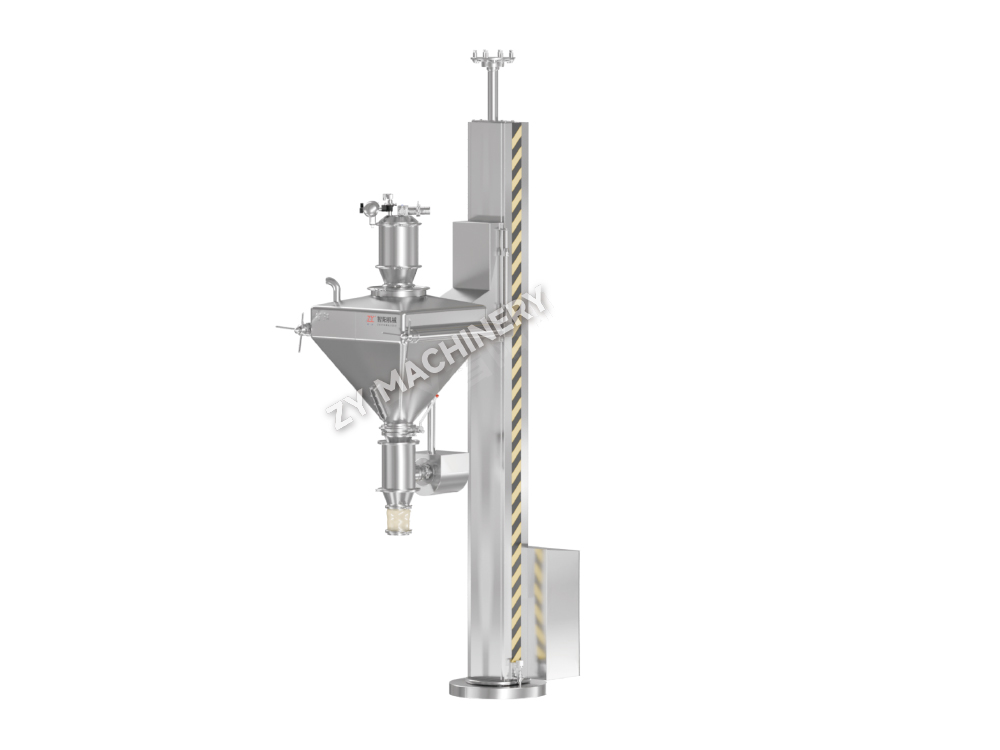
The NTF Fixed Lifting and Tilting Transfer Machine is designed for the tran.....

Content
Reliable material transfer is a critical part of pharmaceutical solid dosage manufacturing. Even when granulation, drying, milling, and blending operations are individually well controlled, poor handover between process stages can create dust, product loss, cross-contamination, operator exposure, and inconsistent batch performance. A transfer system must therefore do more than move material from one location to another. It must support hygienic processing, accurate positioning, safe operation, flexible equipment integration, and efficient cleaning.
The NTF Fixed Lifting and Tilting Transfer Machine is designed to address these requirements in pharmaceutical, chemical, food, nutraceutical, and related powder-processing applications. It is intended for the enclosed transfer and feeding of solid materials, particularly when used with fluid bed granulators, fluid bed dryers, milling machines, and other process equipment. By combining vertical lifting, horizontal alignment, controlled tilting, and enclosed discharge, the machine provides a practical connection between upstream and downstream operations.
Manufactured by Changzhou Zhiyang Machinery Equipment Co., Ltd., the NTF series reflects a process-oriented approach to equipment design. The company develops powder-processing and oral solid dosage solutions according to material behavior, production capacity, equipment layout, cleaning requirements, and site conditions. This approach enables the transfer machine to function as part of a complete process route rather than as an isolated handling device.
Compared with basic lifting platforms, open transfer carts, or manually handled containers, the NTF machine provides a more integrated solution. It can raise a conical bin to the required level, rotate the bin up to 180 degrees for discharge preparation, align the bin with downstream machinery, and release the material through a butterfly valve under enclosed conditions. The result is a controlled material path that supports productivity and helps protect both product quality and personnel.
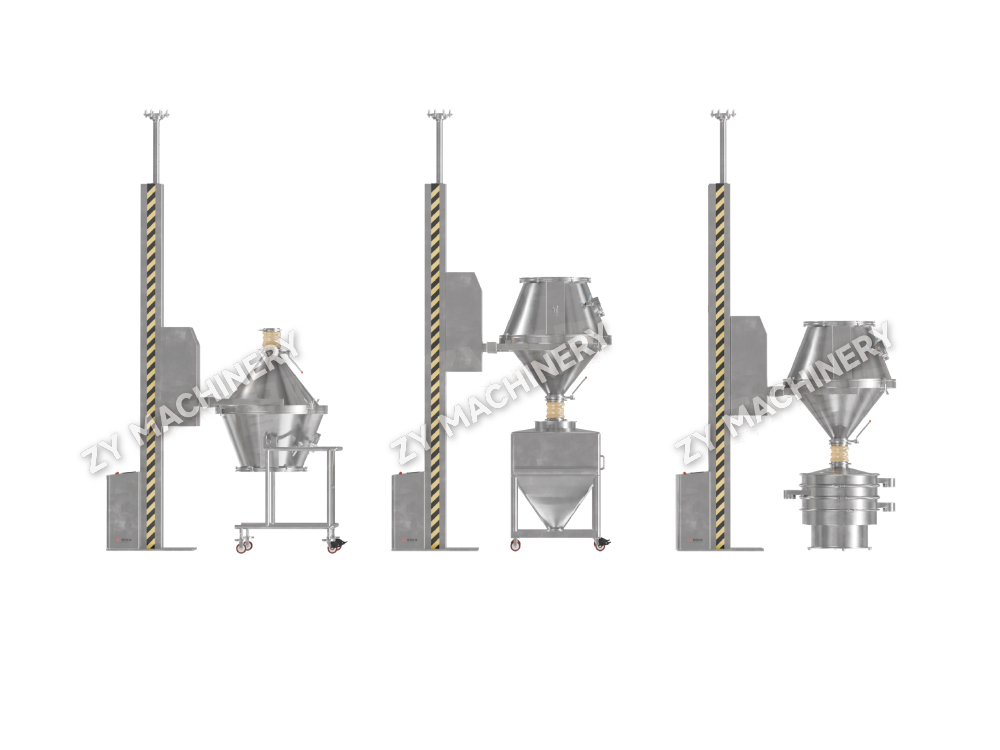
NTF Fixed Lifting and Tilting Transfer Machine
Solid dosage production often includes a sequence of operations such as dispensing, mixing, wet or dry granulation, drying, milling, blending, lubrication, compression, and coating. Material must be transferred between these operations without compromising the physical and chemical properties developed during each stage.
For example, granulated material leaving a fluid bed granulator may need to be transferred to a fluid bed dryer. After drying, the material may be moved to a mill for particle-size adjustment or to a blending system for further processing. Each transfer point introduces potential risks. Material may become exposed to the surrounding environment, settle in inaccessible corners, generate airborne dust, or remain in a container after discharge. If the transfer interface is not correctly positioned, operators may need to perform manual adjustments that increase handling time and safety risks.
A well-designed transfer machine helps solve these problems by providing a defined mechanical route. The bin can be lifted and positioned in relation to the process equipment, reducing the need for manual lifting or improvised supports. The enclosed docking arrangement also limits the escape of powder during discharge. This is especially important when processing potent, fine, hygroscopic, or dusty materials.
Transfer equipment also influences cleaning validation and changeover performance. Pharmaceutical manufacturers commonly handle multiple products in the same production area. Equipment with exposed fasteners, sharp internal transitions, dead corners, or difficult-to-remove valves can require extended cleaning time and may increase the risk of carryover. The NTF machine is designed with accessible and cleanable contact surfaces to support routine sanitation and maintenance.
The NTF Fixed Lifting and Tilting Transfer Machine is particularly suitable for connections involving:
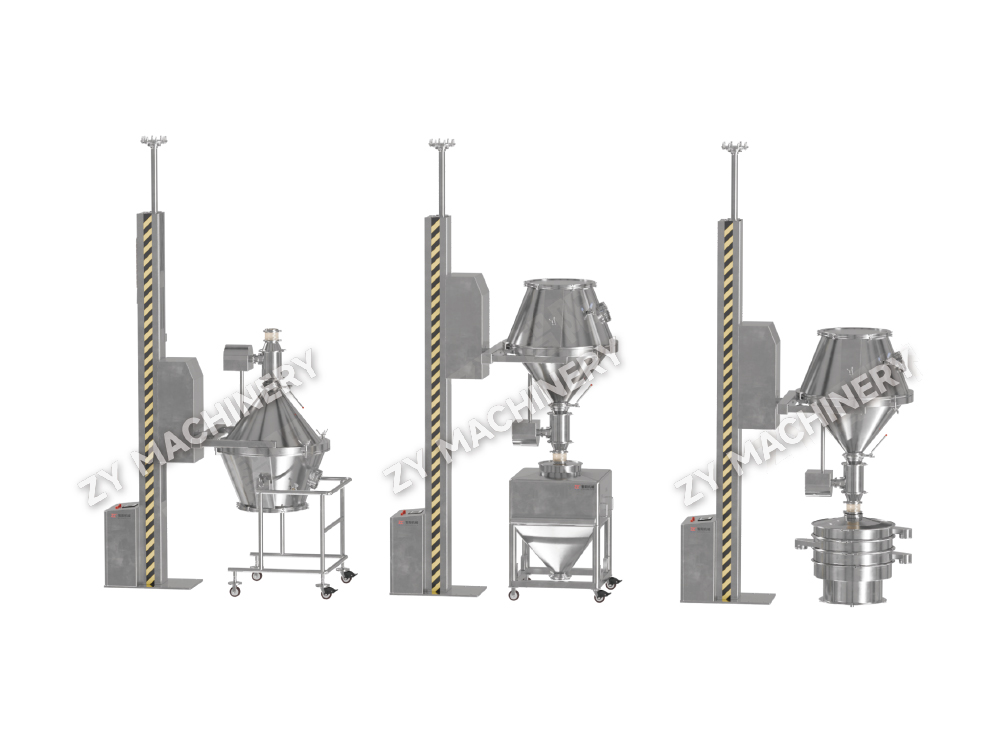
Fluid bed granulators and fluid bed dryers, where the conical bin must be positioned at a defined inlet or discharge height.
Milling units, where dried or granulated material needs to be transferred in a controlled and enclosed manner.
Pharmaceutical blending and feeding systems, where the machine can support the movement of material from a mobile or conical bin into the next processing stage.
Chemical and food-processing equipment, where hygienic handling and reduced dust emission are important.
Modular production systems, where one transfer machine may serve several compatible process units according to the plant layout.
Material transfer is not simply a matter of raising a container. The bin must be positioned accurately in three dimensions so that the outlet, inlet, and sealing surfaces match correctly. A height mismatch can make docking difficult and may place stress on the process connection. An incorrect horizontal orientation can prevent the butterfly valve from aligning with the receiving equipment. Excessive manual intervention may also disturb the bin or create an unsafe working condition.
The NTF design combines lifting and tilting functions to address these practical requirements. The lifting mechanism establishes the working height. The tilting mechanism rotates the conical bin into a discharge-ready position. The column can then be rotated horizontally after the brake is released, allowing alignment with the downstream process. Once the bin reaches the required position, the controlled opening of the butterfly valve allows the product to move forward.
The machine consists of a base frame, a vertical column, a lifting mechanism, and a tilting system. These main assemblies work together to support positioning, transfer, and discharge of a conical bin.
The base frame provides the supporting foundation for the lifting column and moving assemblies. A stable frame is essential because the equipment must carry the combined load of the bin, product, and transfer components while the system is lifted or rotated. The frame also helps maintain alignment during docking and discharge.
In a production environment, the frame must be compatible with the available floor space and installation conditions. The NTF series is offered in several model sizes, allowing the user to select a configuration according to the working dimensions and process requirements. Final installation should always be confirmed against the actual bin, receiving equipment, ceiling height, access routes, and required safety clearances.
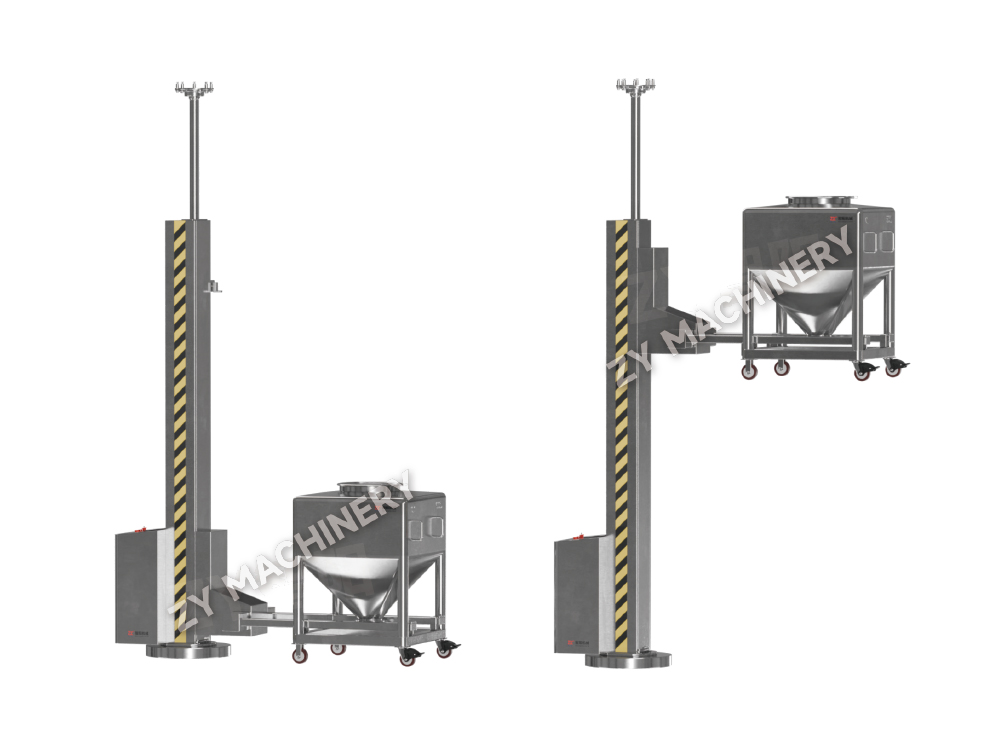
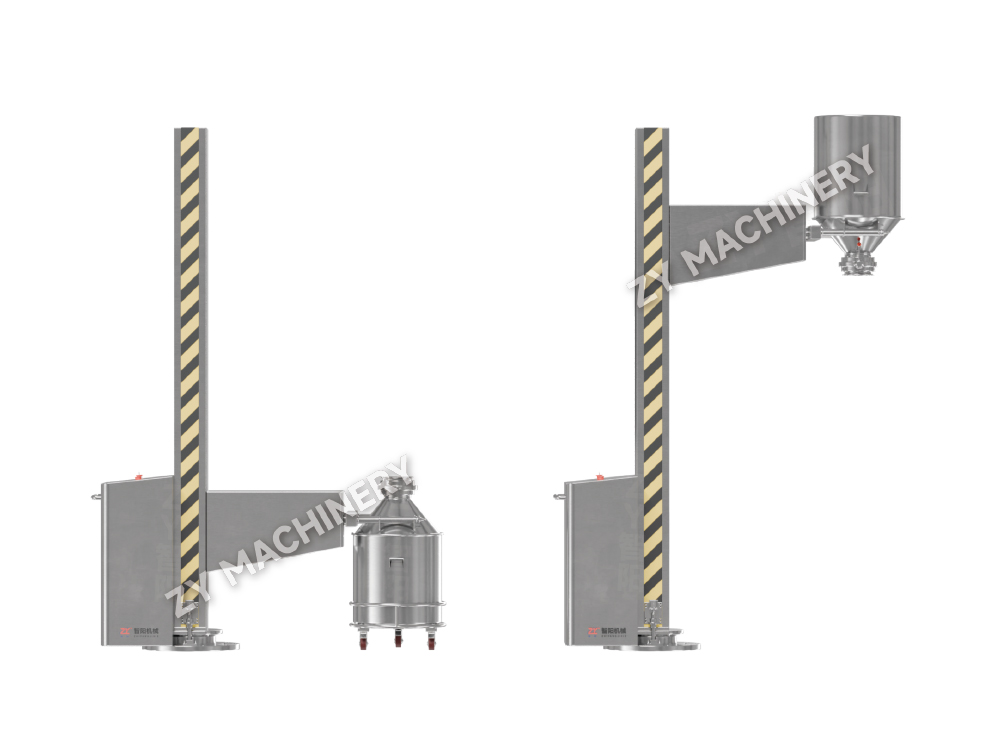
The vertical column supports the lifting assembly and enables the conical bin to move between its lower and upper working positions. During operation, the bin is first connected or docked with the relevant process equipment. The lifting mechanism then raises the bin to the designated height.
This vertical movement is useful when different machines in a production line are installed at different elevations. It can also reduce dependence on fixed platforms and manual hoists. By providing a dedicated lifting function, the NTF machine helps establish a repeatable transfer procedure for different batches and operating cycles.
The lifting mechanism is designed for controlled movement rather than sudden positioning. Controlled movement helps protect the product container, reduces mechanical shock, and supports accurate alignment with the receiving inlet. The operator can position the bin at the required height before the discharge valve is opened.
Once the bin reaches the required height, the tilting mechanism rotates it by up to 180 degrees to prepare for discharge. This function is particularly valuable when the process arrangement requires the conical bin to change orientation before the material can enter the next unit.
Tilting also supports gravity-assisted product flow. Depending on the material properties and the geometry of the bin, the inclined or inverted position can help reduce retained material and improve discharge efficiency. Actual discharge performance will depend on powder cohesion, moisture content, particle size distribution, bulk density, electrostatic behavior, and the design of the conical bin and valve.
After the bin has been lifted and tilted, the column can be rotated horizontally by releasing the brake. This enables the bin to align with the downstream process equipment. Once alignment is complete, the bin is lowered to the desired operating position.
The horizontal rotation function provides layout flexibility. In many plants, process equipment is not arranged in a single straight line. A transfer machine that can rotate and align the bin can support more adaptable equipment placement than a fixed open chute or a simple vertical lift. It may also reduce the number of dedicated transfer points required in a modular production area.
When the bin has been positioned and securely docked, the butterfly valve is opened to permit material transfer. The enclosed connection helps limit the release of dust into the production environment and reduces direct contact between the material and surrounding air.
The butterfly valve includes a misoperation prevention design intended to reduce the chance of unsafe or unintended opening. It can also be dismantled for cleaning. This is an important feature for pharmaceutical applications, where valve hygiene, inspection, and changeover procedures are essential parts of the manufacturing process.
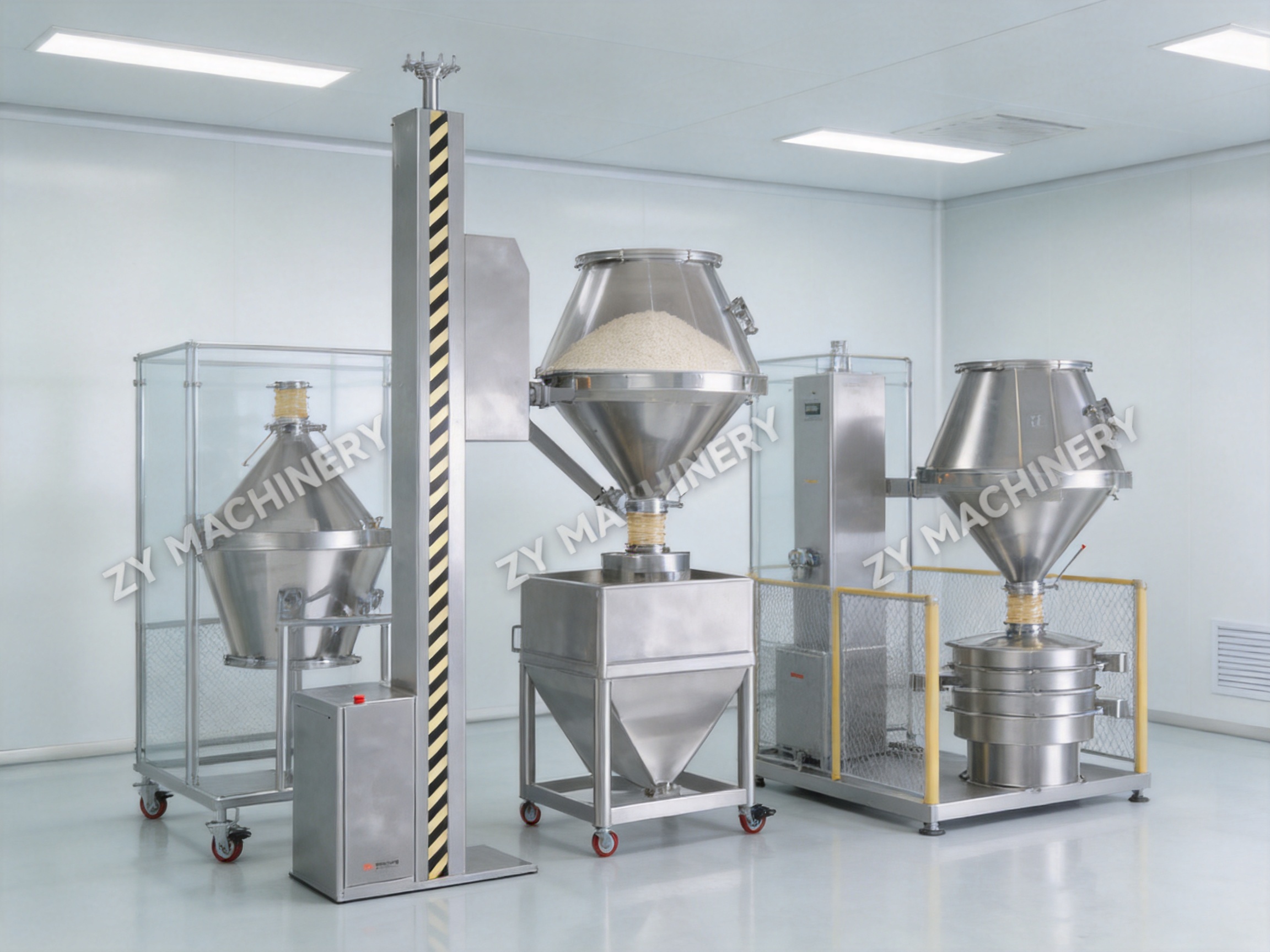
One of the most important benefits of the NTF machine is its ability to support enclosed material movement. Open manual transfer can expose powders to the room environment and create dust around the receiving equipment. Enclosed docking and valve-controlled discharge provide a more contained route.
Reduced exposure can help lower the risk of environmental contamination and product contamination. It can also improve working conditions by limiting the amount of airborne material generated during transfer. For facilities that process active pharmaceutical ingredients, fine excipients, colored products, or allergenic materials, containment at transfer points is particularly valuable.
The machine is not a substitute for a complete containment strategy. Room pressure, local extraction, personal protective equipment, cleaning procedures, and process validation remain important. However, the enclosed transfer design provides a strong mechanical foundation for a cleaner and more controlled production system.
Contact surfaces are designed without unnecessary dead corners or exposed fasteners. These design details are directly related to cleaning efficiency. Powder can accumulate in narrow gaps, recessed fittings, and inaccessible joints. Over time, such accumulation may increase the risk of cross-contamination or create a source of microbial and material buildup.
A smoother and more accessible contact design makes it easier for operators and maintenance personnel to inspect surfaces. It can also support cleaning validation by making the cleaning route more consistent and repeatable. The exact cleaning method should be selected according to the material handled, the construction materials, site procedures, and the customer's validation protocol.
The discharge butterfly valve is a key control point in the transfer process. It determines when material begins to enter the next stage. The NTF valve includes a misoperation prevention arrangement that is intended to improve operational safety and reduce accidental opening.
The valve can be removed for cleaning, inspection, and maintenance. Easy dismantling is useful during product changeover because the valve is one of the areas most likely to contact concentrated product residue. A removable design can also simplify the replacement of seals or other service components when required.
The NTF machine can be used with different process heights and equipment configurations. The granulating or milling unit can be lifted synchronously with the conical bin to help match the height of the process connection. This supports sealed docking with downstream equipment and increases the flexibility of the overall line.
Compared with a fixed-height transfer arrangement, an adjustable system can be more suitable for facilities that use different bin sizes, process units, or production recipes. It can also simplify future layout changes, provided that the installation dimensions, load capacity, and safety requirements are reviewed before modification.
Manual lifting and positioning of filled bins can place considerable physical demands on operators. The NTF machine performs the principal lifting and orientation functions mechanically, reducing the need for manual handling of heavy containers.
Improved ergonomics can contribute to more consistent operating procedures. When the machine performs the same lift, rotation, alignment, and discharge sequence each time, operators are less dependent on physical strength or improvised methods. This can reduce variability and support safer routine production.
The NTF machine incorporates several features that are aligned with good manufacturing practice expectations, including enclosed transfer, cleanable contact surfaces, controlled discharge, and reduced opportunities for cross-contamination. These features can support a broader GMP system covering equipment qualification, cleaning validation, preventive maintenance, operator training, and documented procedures.
GMP compliance is achieved by the complete manufacturing and quality system rather than by one machine alone. Nevertheless, equipment design has a direct influence on the ease with which a facility can implement and document hygienic processes. A transfer machine that is difficult to clean or operate consistently can create avoidable challenges during qualification and routine production.
Many facilities begin with simple transfer methods such as manual lifting, open carts, fixed chutes, or general-purpose hoists. These approaches may appear economical during initial installation, but they can become less suitable as production volume, product variety, and containment requirements increase.
Manual handling may require operators to move or tilt a heavy bin by hand. This can increase the risk of injury, spillage, and inconsistent discharge. It also exposes the product to more handling steps and may require additional labor.
The NTF machine reduces these demands by mechanizing the primary movement functions. The bin is lifted, rotated, and positioned through a defined sequence. Operators remain responsible for correct docking, inspection, and valve control, but they do not need to manually support the full load during transfer.
Open carts are flexible, but they can expose the material to the production environment. They may also allow dust to spread when material is poured from one container into another. Cleaning an open cart and its associated transfer tools may require additional procedures, especially when several products share the same area.
The NTF system provides a more enclosed route and connects directly with compatible process equipment. This reduces the number of open handling steps and can help improve containment and product protection.
Fixed chutes and platforms can be effective when equipment layout and product flow remain unchanged. However, they offer limited flexibility if process heights differ or if the production line is reorganized. A fixed-height connection may also make it difficult to accommodate different equipment models.
The lifting, tilting, and horizontal rotation capabilities of the NTF machine allow it to serve a wider range of process arrangements. This flexibility can be valuable in multipurpose pharmaceutical plants and pilot-scale facilities.
A general-purpose hoist can raise a container but may not provide controlled tilting, accurate horizontal alignment, hygienic contact design, or an integrated discharge valve. The operator may still need to guide and stabilize the bin manually.
The NTF machine is developed specifically for process transfer. Its lifting, rotating, docking, and discharge functions are considered as part of one system. This integrated design can reduce the need for additional handling devices and make the transfer sequence easier to standardize.
When comparing the NTF series with alternative transfer equipment, buyers should evaluate more than purchase price. Important criteria include:
Whether the machine provides enclosed product transfer rather than open pouring.
Whether it can accommodate the actual height and orientation of the connected equipment.
Whether the valve and contact surfaces are easy to remove, inspect, and clean.
Whether the lifting and rotating functions are controlled and suitable for the expected load.
Whether the supplier can support process integration, installation, validation documentation, and after-sales service.
Whether the machine can be adapted to different bin sizes, product properties, and production capacities.
On these criteria, the NTF machine is positioned as a process-integrated solution rather than a basic lifting device. Its main competitive value lies in the combination of hygienic design, mechanical flexibility, controlled positioning, and pharmaceutical-oriented engineering.
The NTF series includes several models: NTF-200, NTF-300, NTF-500, NTF-800, and NTF-1000. The model selection should be based on the bin size, material load, working height, installation space, connected equipment, and production requirements.
| Item | Unit | NTF-200 | NTF-300 | NTF-500 | NTF-800 | NTF-1000 |
| Power | kW | 1.30 | 1.65 | 2.75 | 2.75 | 2.55 |
| Reference installation length L1 | mm | 2200 | 2440 | 2940 | 3170 | 3370 |
| Reference installation length L2 | mm | 1075 | 1200 | 1600 | 1730 | 1830 |
| Reference width W1 | mm | 700 | 700 | 700 | 700 | 700 |
| Reference width W2 | mm | 1080 | 1280 | 1480 | 1680 | 1880 |
| Reference height H1 | mm | 2000 | 2000 | 2000 | 2000 | 2000 |
| Reference height H2 | mm | 3550 | 3700 | 3950 | 4050 | 4400 |
| Reference height H3 | mm | 3700 | 3800 | 4100 | 4200 | 4500 |
The listed dimensions are reference installation dimensions and should not be treated as a substitute for a project-specific layout drawing. Actual clearances may be affected by the bin geometry, valve configuration, connected process equipment, guard arrangements, room height, maintenance access, and customer safety requirements.
The NTF-200 and NTF-300 models may be suitable for smaller production systems, development areas, laboratories, or pilot-scale applications, depending on the material and bin configuration. The NTF-500, NTF-800, and NTF-1000 models provide larger reference installation envelopes for higher-capacity process arrangements.
Model selection should not be based only on nominal container volume. Powder bulk density can vary considerably, and a smaller volume of dense material may create a higher load than a larger volume of lightweight material. The supplier should therefore review the product characteristics, maximum working load, center of gravity, discharge behavior, and process cycle before confirming the equipment configuration.
Installation planning should include a review of access for cleaning and maintenance. The machine must have sufficient surrounding space for operators to inspect the valve, connect the bin, access control components, and remove service parts. Ceiling height is particularly important because the listed H2 and H3 dimensions extend to approximately 3,550–4,500 mm across the model range.
The performance of a transfer machine depends on more than its basic mechanical concept. Manufacturing precision, material selection, welding quality, assembly control, surface finishing, testing, and process integration all influence long-term reliability. Changzhou Zhiyang Machinery Equipment Co., Ltd. combines equipment manufacturing with process engineering, allowing the company to address both the machine and its position within the production line.
The company develops equipment according to the characteristics of the customer's material and process. Powder behavior is influenced by moisture, particle size, density, cohesiveness, flowability, electrostatic properties, and sensitivity to shear or impact. A transfer machine must be selected and configured with these factors in mind.
For example, a free-flowing granule may discharge easily through a standard conical outlet, while a cohesive or hygroscopic powder may require a different transfer strategy, discharge angle, or process sequence. By reviewing the complete process route, the engineering team can help determine whether the selected bin, valve, lifting sequence, and receiving equipment are compatible.
A transfer machine is most effective when its mechanical interfaces match the process units on both sides. The company supplies equipment for laboratory, pilot, and full-scale production, including granulation, drying, milling, mixing, coating, and auxiliary processing applications. This broad product scope supports system-level integration.
When the NTF machine is used with a fluid bed granulator or dryer, the engineering review can include docking height, inlet geometry, outlet dimensions, bin rotation, valve position, and available space. When used with a mill, the review may also consider feed consistency, mill inlet height, dust control, and the required rate of material delivery.
Pharmaceutical equipment requires careful fabrication of product-contact areas. Smooth surfaces, clean welds, appropriate transitions, and minimized crevices help reduce the retention of material. The NTF design philosophy of avoiding dead corners and exposed fasteners supports this objective.
Hygienic fabrication must be supported by controlled production practices. These may include material identification, drawing control, welding procedure management, dimensional inspection, surface inspection, assembly verification, and final functional testing. The precise manufacturing and documentation package should be agreed with the customer according to the intended application and regulatory expectations.
ZY Machinery has developed its product portfolio through research and development, patented technologies, quality system certification, and practical experience in powder-processing equipment. Continuous product development allows the company to refine equipment structures, improve operating convenience, and respond to changing requirements in pharmaceutical and related industries.
The company has also expanded its overseas service capabilities. For international projects, technical communication, layout confirmation, installation support, commissioning, spare-parts planning, and operator training are all important parts of a successful equipment delivery. A supplier with experience across different regions can help identify practical issues before manufacturing begins.
Standard models provide a starting point, but pharmaceutical production lines often require customization. The NTF machine may need to match a particular conical bin, room height, process connection, control philosophy, material grade, or cleaning method. Engineering customization can also involve interface dimensions and the arrangement of protective devices.
Customization should be managed through a documented technical review. The customer and supplier should confirm the product, maximum load, working cycle, operating environment, electrical requirements, available space, discharge connection, and required documentation. This process helps prevent late-stage changes and supports a smoother installation.
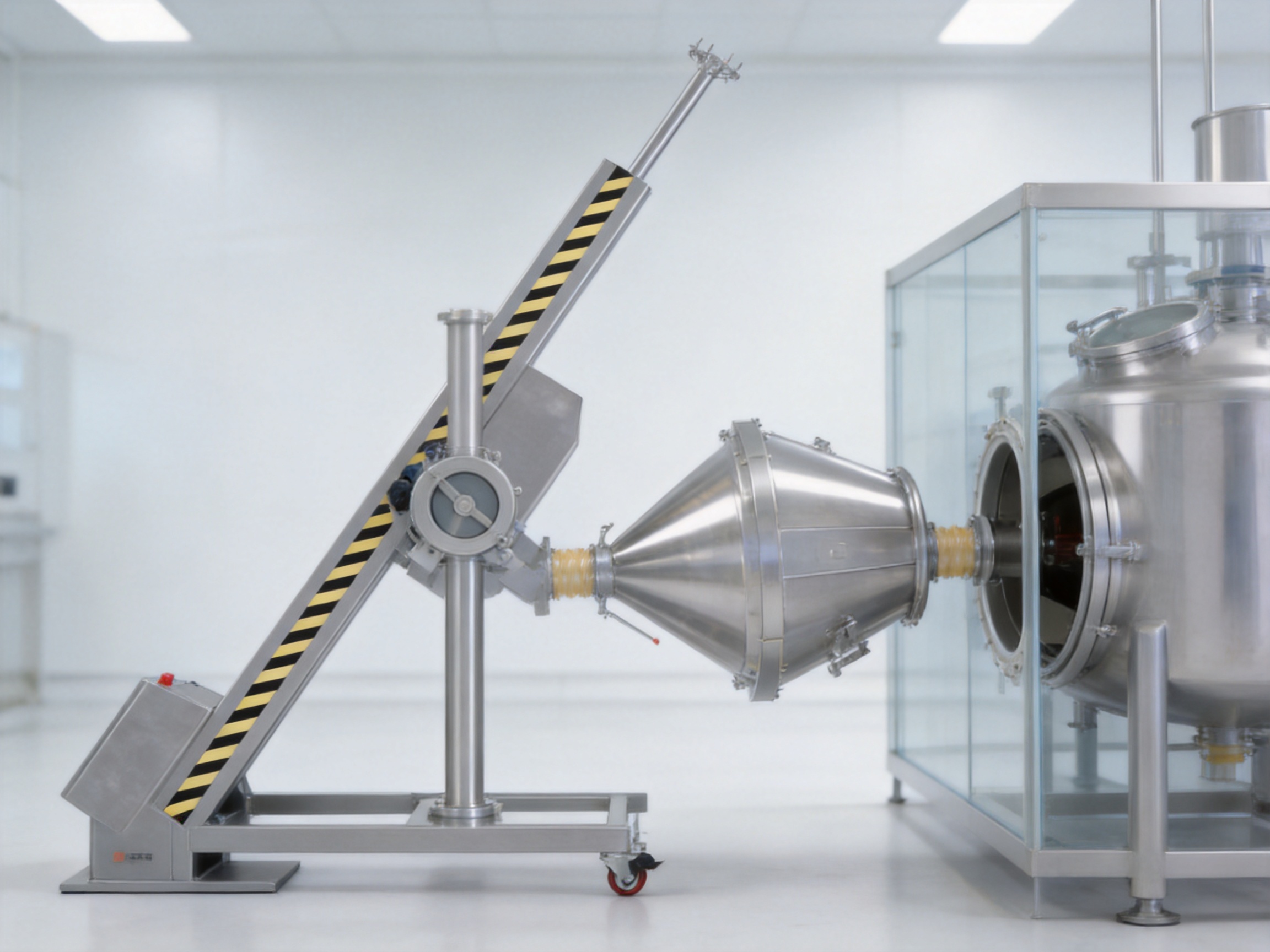
The primary application of the NTF machine is pharmaceutical solid dosage production. It can support transfer between granulation, drying, milling, blending, and feeding operations. The enclosed design is suitable for facilities seeking to improve dust control and reduce manual material handling.
In a typical process, a conical bin containing wet or dry granules is brought into position. The lifting system raises the bin, the tilting function changes its orientation, and the rotating column aligns it with the next unit. After lowering and docking, the butterfly valve is opened to release the material. This sequence can be incorporated into standard operating procedures and batch documentation.
Nutraceutical production may involve powders, granules, herbal extracts, mineral blends, and other materials that require hygienic handling. Product variety and frequent changeovers make cleanability and controlled transfer especially important. The NTF machine can help reduce open handling steps and support more organized production flows.
Chemical plants may handle powders with different flow characteristics, densities, and safety classifications. The machine can be considered for transfer applications where a conical bin must be lifted and aligned with a processing unit. The suitability of the equipment must be reviewed against the chemical properties, temperature, environmental classification, material compatibility, and safety requirements of the specific project.
Food and ingredient manufacturers frequently transfer flour-like powders, premixes, granules, additives, and functional ingredients. Enclosed movement can help protect the product from the surrounding environment and reduce dust in the work area. The cleanable structure can also support sanitation programs and product changeovers.
ZY Machinery supplies equipment for laboratory, pilot, and full-scale production. Transfer requirements differ across these environments. Laboratories may prioritize compact installation and flexibility, pilot plants may require multiple process configurations, and commercial plants may focus on throughput, repeatability, and integration with automated production controls.
The NTF model range enables the transfer concept to be considered across different scales. The final selection must be matched to the bin and process rather than determined solely by the nameplate model.
Successful installation begins with accurate site information. Before equipment manufacture or delivery, the customer should provide the relevant process layout, equipment elevations, bin dimensions, load data, available floor area, ceiling height, access routes, and utility information.
The reference dimensions in the product parameters provide an initial basis for layout planning. The installation area should also include clearance for bin connection, operator access, inspection, valve removal, cleaning, and maintenance. If the machine rotates horizontally, the swept path of the column and bin must be considered.
Insufficient clearance can make operation difficult and may prevent the safe removal of components. A three-dimensional layout review is recommended for installations involving multiple process units or limited room height.
The docking interface should be designed so that the bin and receiving equipment align without excessive force. Seals, clamps, and connection surfaces must be compatible with the process requirements. Correct docking helps maintain the enclosed transfer path and minimizes the potential for leakage or dust escape.
The listed power requirements range from 1.30 kW to 2.75 kW depending on the model. Electrical specifications, control voltage, motor protection, emergency stops, sensors, interlocks, and local regulations should be confirmed during the technical review.
Depending on the customer's automation strategy, the machine may be operated through local controls or integrated into a wider production control system. Interlocks may be used to prevent lifting, rotation, or valve operation when the bin is not correctly positioned. The final control configuration should reflect the actual risk assessment and process sequence.
The butterfly valve and product-contact components should be accessible for cleaning and inspection. Operators should be able to verify that the bin is empty, the valve is clean, and the docking surfaces are free from residue before the next batch.
Preventive maintenance should include inspection of lifting components, rotating parts, brakes, fasteners, valve seals, electrical connections, and safety devices. Maintenance frequency should be established according to operating cycles, load conditions, cleaning methods, and the manufacturer's technical instructions.
The following sequence describes the general working principle of the NTF Fixed Lifting and Tilting Transfer Machine. The actual procedure should be documented and approved for the specific installation.
First, the conical bin is prepared and connected to the machine or docking position according to the operating procedure. The operator verifies that the bin, valve, seals, and receiving equipment are clean and correctly configured.
Second, the lifting system raises the bin to the designated process height. Movement should be monitored to ensure that there is no obstruction and that the load remains stable.
Third, the tilting system rotates the bin up to 180 degrees as required by the process. The operator confirms that the intended discharge orientation has been reached.
Fourth, the brake is released so that the column can rotate horizontally. The bin is aligned with the downstream granulator, dryer, mill, or other receiving unit.
Fifth, the bin is lowered to the required working height and docked with the receiving inlet. The connection is checked before discharge begins.
Sixth, the butterfly valve is opened using the approved operating method. Material flows into the next process stage under enclosed conditions.
Finally, the valve is closed after transfer is complete. The bin and transfer interface are inspected, and the machine is returned to its designated position or prepared for cleaning and the next batch.
Cleaning is a central consideration in any pharmaceutical transfer system. Product residue may remain in the bin outlet, butterfly valve, seals, docking interfaces, and adjacent contact surfaces. The NTF design supports cleaning by reducing inaccessible areas and allowing the valve to be dismantled.
A customer-specific cleaning procedure should define the cleaning agent, temperature, contact time, mechanical action, rinsing method, drying method, inspection requirements, and acceptance criteria. The procedure should consider whether the machine is cleaned in place, partially dismantled, or cleaned using removable components.
Cleaning validation may include visual inspection, swab sampling, rinse sampling, and other analytical methods selected by the manufacturer and end user. The validation approach should be based on the products handled, the health-based exposure limits where applicable, and the company's quality system.
Cross-contamination control also depends on production scheduling, area segregation, air handling, operator practices, material flow, and cleaning verification. The enclosed transfer design reduces one source of exposure, but it should be integrated into the complete contamination-control strategy.
Safe operation depends on both machine design and correct procedures. The operator should receive training in bin connection, lifting, rotation, docking, valve operation, emergency stopping, cleaning, and fault response.
The misoperation prevention design of the butterfly valve is intended to reduce unintended discharge. Other safety provisions may include movement controls, brake systems, protective guards, emergency stop arrangements, and interlocks. The final safety configuration should be reviewed against applicable standards and the customer's risk assessment.
Reliability is also influenced by correct loading. The bin must remain within the specified load and dimensional limits. The center of gravity should be compatible with the lifting and tilting arrangement. Excessive or uneven loading may affect movement, stability, or component life.
Regular inspection can identify wear before it becomes a major problem. Particular attention should be paid to the lifting mechanism, rotating column, brake, valve, seals, electrical controls, and structural connections. A preventive maintenance schedule helps maintain consistent performance and reduces unplanned downtime.
Purchasing a transfer machine from a general equipment vendor may provide a basic lifting function, but pharmaceutical manufacturers often require broader engineering support. The machine must connect to existing equipment, meet hygienic expectations, fit the site, and operate within a documented production process.
Changzhou Zhiyang Machinery Equipment Co., Ltd. focuses on powder processing and oral solid dosage equipment. Its product range covers laboratory equipment, mixing systems, granulation equipment, drying equipment, coating equipment, auxiliary processing equipment, and transfer and conveying systems. This range gives the company a wider perspective on how the NTF machine interacts with surrounding operations.
The company has operated since 2010 and is based in Changzhou, China. Its engineering approach emphasizes material characteristics, capacity requirements, site conditions, process consistency, reliability, and cost control. This is especially relevant when customers need more than a standard machine and require a practical production solution.
ZY Machinery also serves pharmaceutical, biopharmaceutical, biotechnology, nutraceutical, veterinary, additives, chemical, food, and related industries. Experience across these applications can help the engineering team understand different product behaviors and plant requirements.
For overseas customers, service capability is an important part of supplier selection. Technical communication, documentation, remote support, commissioning assistance, spare-parts planning, and training can all influence the long-term value of the equipment. A supplier that combines manufacturing with engineering implementation is better positioned to support the full project lifecycle.
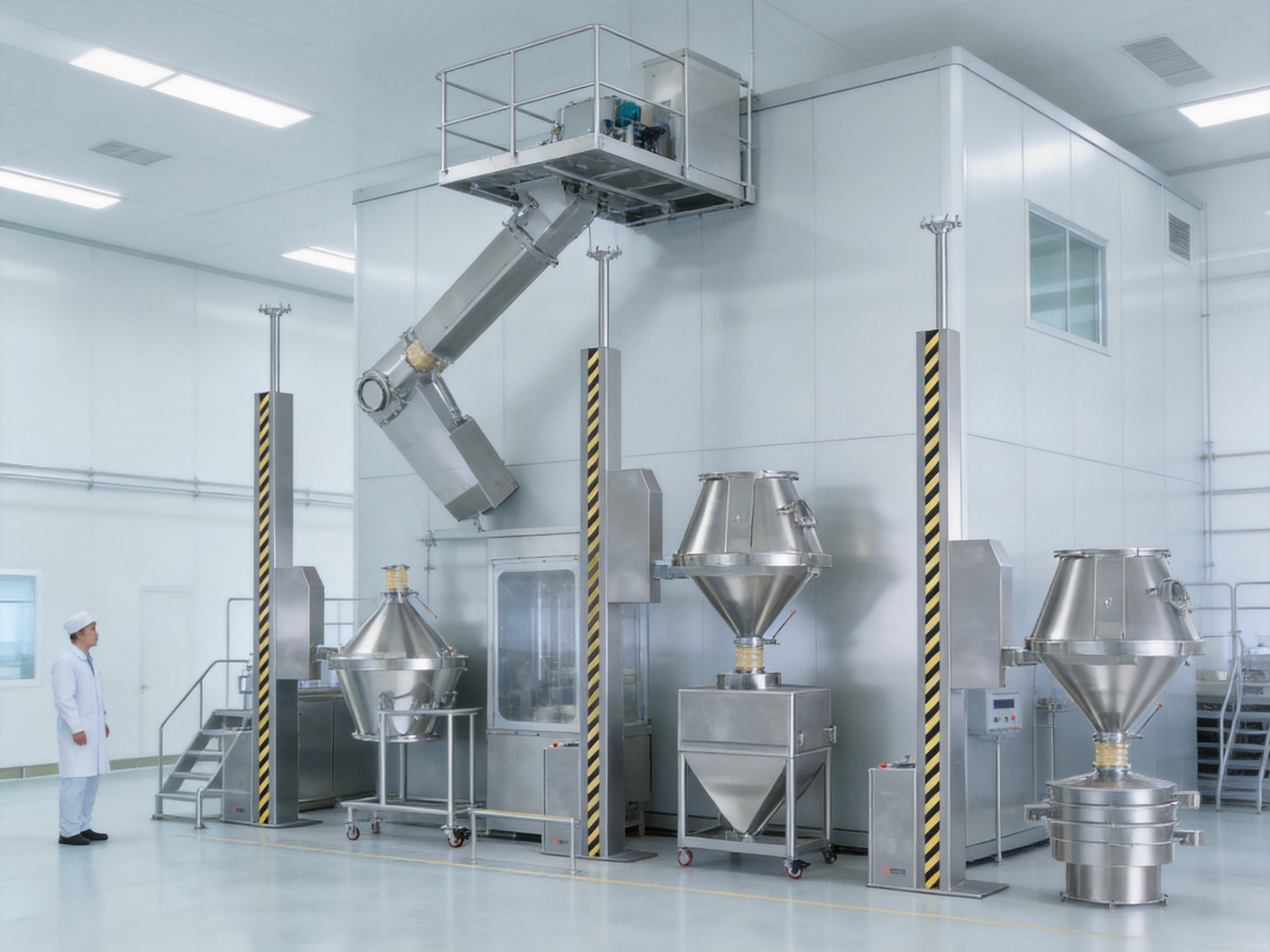
Before ordering an NTF Fixed Lifting and Tilting Transfer Machine, the buyer should prepare a complete technical data sheet. The following questions can support the review:
What type of material will be transferred, and what are its bulk density, moisture, particle size, flowability, and dust characteristics?
What is the maximum batch weight and the required transfer frequency?
Which conical bin or container will be used with the machine?
What are the inlet and outlet dimensions of the connected granulator, dryer, mill, blender, or feeder?
What lifting height and horizontal rotation range are required?
Is a 180-degree tilting movement necessary for the intended discharge process?
What are the available floor dimensions and ceiling height?
What material grades and surface-finish requirements apply to product-contact parts?
How will the machine be cleaned, and which components must be removable?
What control system, sensors, interlocks, and emergency devices are required?
What documentation is needed for qualification, validation, inspection, and maintenance?
Are there special requirements related to explosive dust, hazardous chemicals, temperature, humidity, or environmental classification?
These questions allow the supplier to evaluate the application accurately and recommend the appropriate model and configuration. They also reduce the risk of discovering dimensional or process conflicts after delivery.
The value of a transfer machine should be assessed through its effect on the complete process. A machine that reduces manual handling, shortens changeover, limits dust, improves alignment, and provides repeatable transfer may deliver benefits beyond its initial purchase price.
Reduced manual intervention can lower labor requirements and improve ergonomics. Enclosed transfer can reduce the need for extensive post-transfer cleaning in the surrounding area. A cleanable valve and accessible contact surfaces can help shorten product changeover. Flexible positioning can allow the machine to serve multiple process units or adapt to future layout requirements.
Reliability also contributes to return on investment. Unplanned downtime in a pharmaceutical production line can affect schedules, labor utilization, and equipment availability. A machine supported by preventive maintenance, spare-parts planning, and responsive technical service is more likely to deliver consistent operating value over its service life.
The actual return depends on production scale, product value, operating frequency, labor costs, cleaning requirements, and the extent of integration. Customers should evaluate the NTF machine as part of a process economics review rather than as a standalone mechanical purchase.
The machine is used to lift, rotate, tilt, align, and discharge solid materials from a conical bin into a downstream process unit. It is commonly used between fluid bed granulators, fluid bed dryers, milling units, and other pharmaceutical processing equipment.
Yes. The NTF machine is also suitable for chemical, food, nutraceutical, additive, and related powder-processing applications, provided that the selected configuration is compatible with the material, load, environment, and required hygiene level.
The tilting mechanism can rotate the bin by up to 180 degrees. The required angle depends on the bin design, material flow properties, receiving equipment, and discharge procedure.
Yes. The conical bin can be docked with the inlet of the receiving equipment, and material is discharged through a butterfly valve under enclosed conditions. Proper sealing and docking are essential for achieving the intended containment performance.
Yes. The butterfly valve is designed to be dismantled for cleaning and maintenance. The valve also includes a misoperation prevention design intended to improve operational safety.
Yes. The lifting mechanism allows the bin to be raised to a designated working height. The equipment can also be engineered to match the heights and interfaces of different process units, subject to technical review.
The standard range includes NTF-200, NTF-300, NTF-500, NTF-800, and NTF-1000. The correct model should be selected according to the bin, maximum load, required dimensions, and process configuration.
No. The dimensions provided are reference installation dimensions. Final dimensions should be confirmed through project-specific drawings that consider the bin, connected equipment, rotation path, maintenance clearance, and site conditions.
The machine supports enclosed product transfer, reduces open handling, and uses cleanable contact surfaces with fewer dead corners and exposed fasteners. These features should be combined with validated cleaning procedures, suitable room controls, and documented GMP practices.
Customization may be possible for process interfaces, dimensions, controls, materials, safety devices, and installation requirements. The final scope should be confirmed through a technical review between the customer and Changzhou Zhiyang Machinery Equipment Co., Ltd.
The customer should provide material characteristics, maximum batch weight, bin dimensions, process equipment details, required working heights, site layout, electrical requirements, cleaning method, environmental conditions, and documentation expectations.
The NTF range includes models that may be suitable for laboratory, pilot, and full-scale process environments. Suitability depends on the size of the bin, required load, installation space, and the process connection.
The NTF Fixed Lifting and Tilting Transfer Machine provides a structured solution for one of the most important interfaces in solid material processing: the transfer between process stages. Its combination of vertical lifting, 180-degree tilting, horizontal column rotation, controlled lowering, and butterfly-valve discharge enables a conical bin to connect with granulators, dryers, mills, and other equipment in a practical and repeatable manner.
Its main advantages over simpler transfer methods include enclosed material handling, improved positioning, reduced manual lifting, flexible process integration, cleanable contact surfaces, and a valve design intended to prevent misoperation. These features make the machine particularly relevant to pharmaceutical manufacturers seeking better dust control, improved hygiene, more consistent operation, and stronger support for GMP-oriented production.
The value of the NTF series is further supported by the engineering capabilities of Changzhou Zhiyang Machinery Equipment Co., Ltd. With a product portfolio covering powder processing and oral solid dosage equipment, the company can approach transfer requirements as part of a complete process solution. Its focus on material characteristics, capacity, site conditions, research and development, quality systems, and overseas service enables customers to receive more than a standalone lifting device.
For the best result, the equipment should be selected through a detailed review of the product, bin, connected machinery, building layout, cleaning method, safety requirements, and production objectives. When correctly configured and integrated, the NTF machine can contribute to a cleaner, safer, and more efficient solid material transfer process.
1. World Health Organization. Good Manufacturing Practices for Pharmaceutical Products: Main Principles.
2. International Society for Pharmaceutical Engineering. Pharmaceutical Engineering Guidance for Oral Solid Dosage Manufacturing.
3. United States Pharmacopeia. General Principles for Pharmaceutical Manufacturing and Cleaning Verification.
4. European Commission. Guidelines for Good Manufacturing Practice for Medicinal Products.
5. International Organization for Standardization. Hygienic Design Principles for Machinery Used in Food and Pharmaceutical Processing.
6. Changzhou Zhiyang Machinery Equipment Co., Ltd. NTF Fixed Lifting and Tilting Transfer Machine Product Information.
7. Changzhou Zhiyang Machinery Equipment Co., Ltd. Powder Processing and Oral Solid Dosage Equipment Engineering Information.
Want to stay up to date?
Contact us via the email address below.
Don't worry about spam. We hate it too!
Mobile Client

Video Account
Phone:+86-15161130178
Tel:+86-519-88674267
Email:czzy188@163.com
Phone:+86-15161132798
Email:zy@zy-drying.com

WeChat ID

Copyright 2026 Changzhou Zhiyang Machinery Equipment Co., Ltd. All Rights Reserved  Oral Solid Dosage Equipment Manufacturer