 English
 Español
 русский
 中文简体
中文简体
YK-160 Oscillating Granulator
The YK-160 Oscillating Wet Granulator is a next-generation granulation and .....

Content
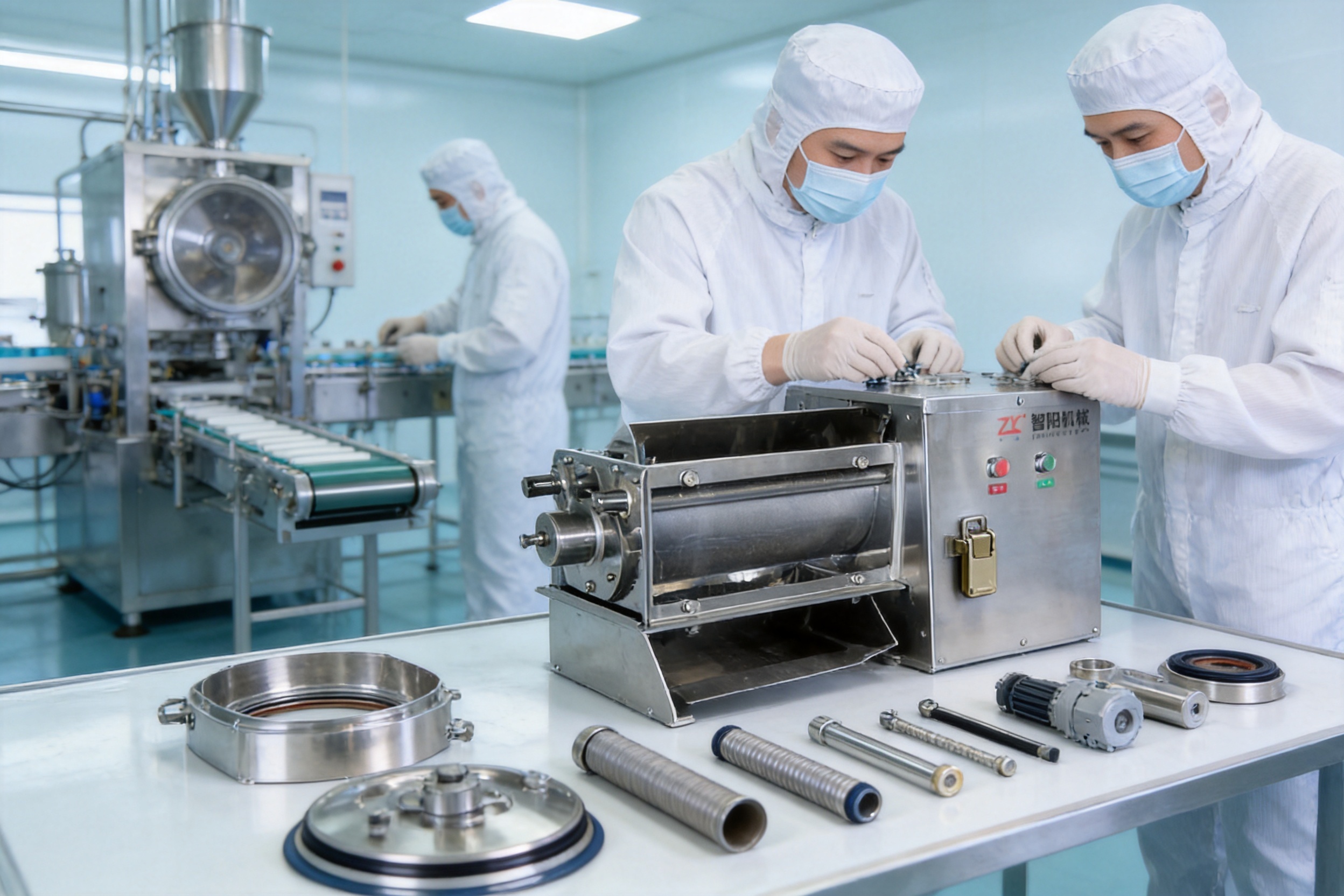
Granulation is one of the most important operations in pharmaceutical powder processing. It transforms fine powders and powder blends into larger, more uniform particles that can be handled, dried, mixed, compressed, coated, and packaged more reliably. In oral solid dosage manufacturing, the quality of granules directly influences flowability, compressibility, content uniformity, drying performance, tablet weight variation, and the overall stability of the production process.
The YK-160 Oscillating Granulator is designed for wet granulation and pelletizing applications in pharmaceutical, nutraceutical, veterinary, biotechnology, food additive, and related powder-processing industries. It combines a compact mechanical structure with oscillating pressure and shear action to produce uniform wet granules. Its design is especially suitable for production environments that require straightforward operation, convenient cleaning, practical maintenance, and reliable integration with upstream and downstream equipment.
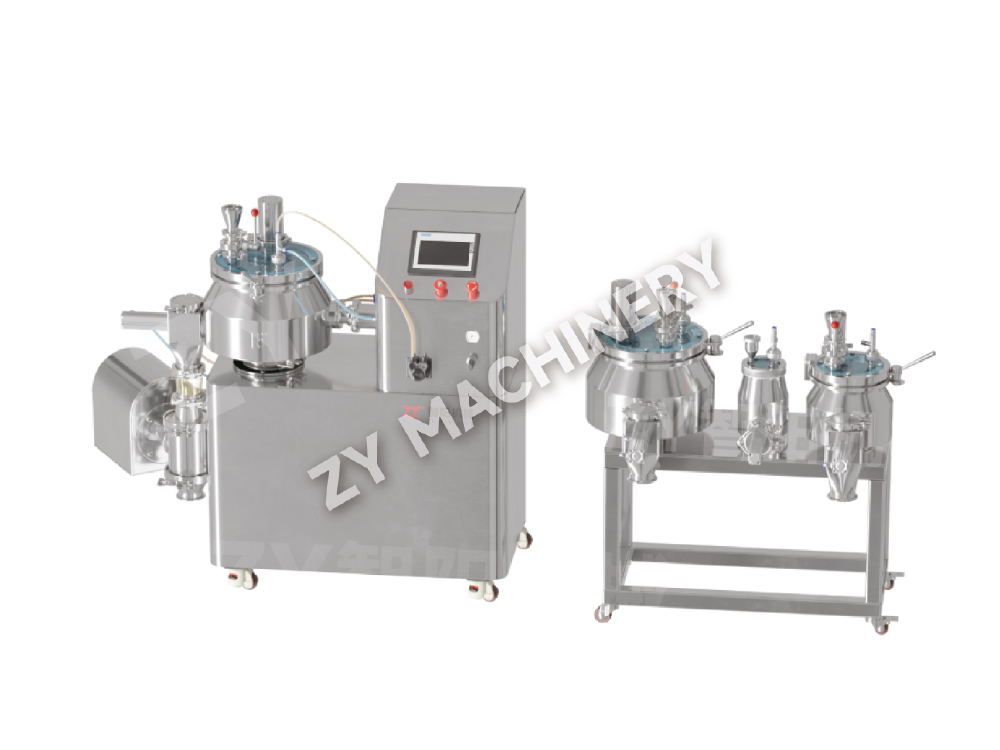
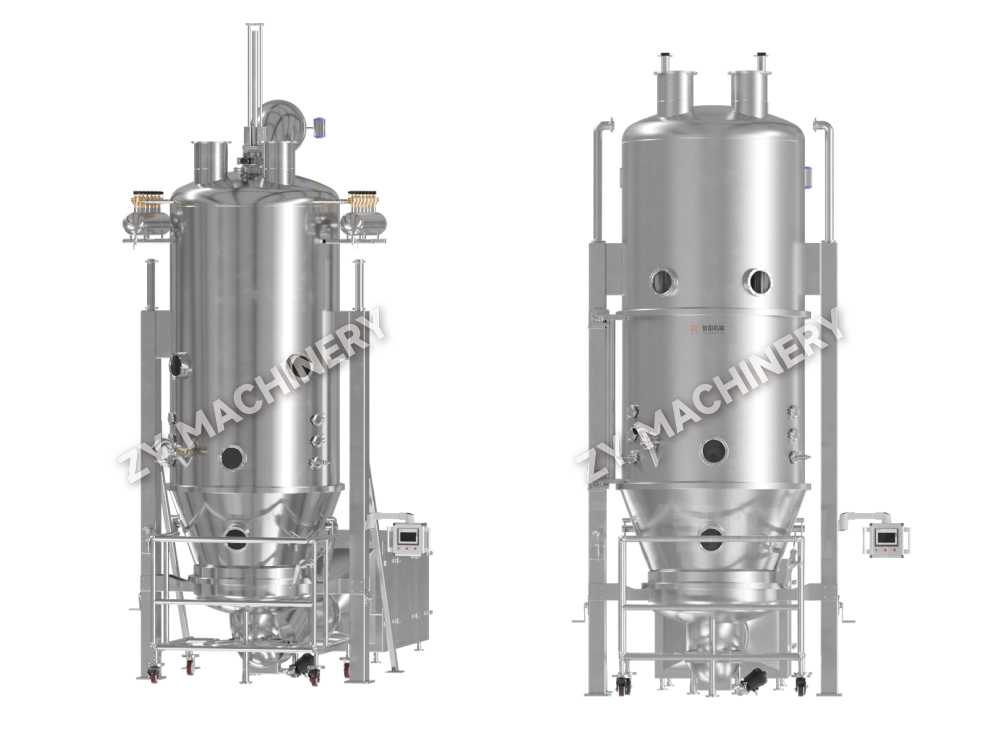
Unlike a standalone granulator that operates as an isolated unit, the YK-160 can be connected with a GHL High-Efficiency Wet Granulator and an FL or PGL Fluidized Bed Granulation Dryer to create a continuous, pipeline-style process. This arrangement reduces manual handling, minimizes exposure of the material to the surrounding environment, lowers the possibility of secondary contamination, and improves production continuity.
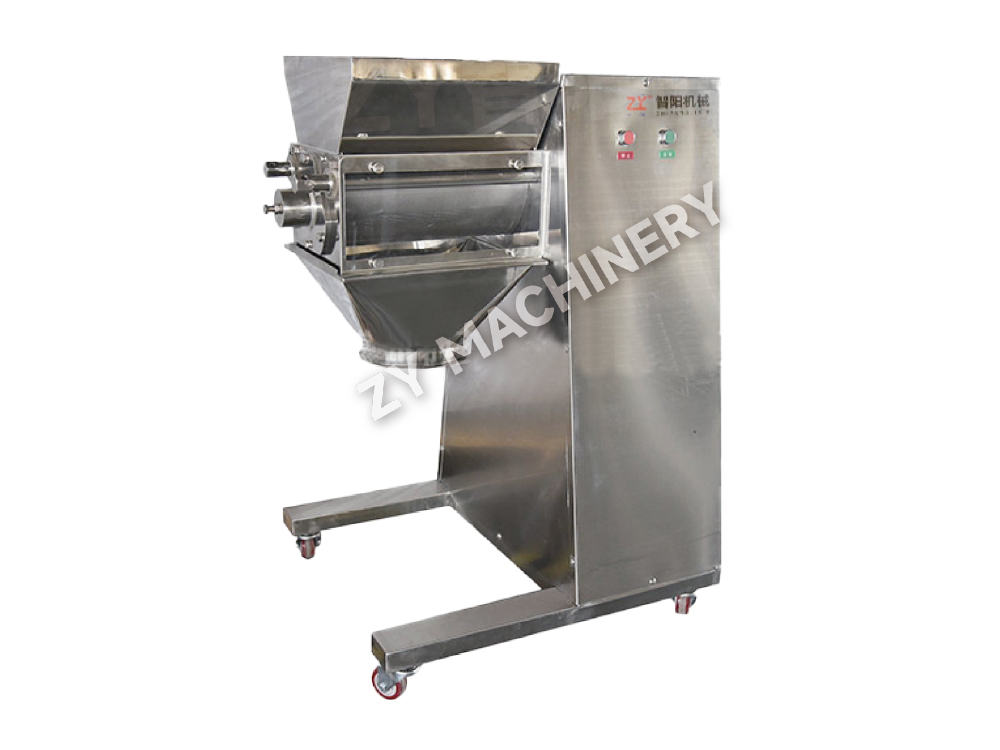
YK-160 Oscillating Granulator
Many pharmaceutical powders cannot be processed efficiently in their original state. Fine powders may have poor flowability, low bulk density, high dust generation, or insufficient compressibility. During tablet compression, these characteristics can cause irregular die filling, inconsistent tablet weight, capping, lamination, or inadequate mechanical strength. Granulation addresses these challenges by combining fine particles into larger, more stable agglomerates.
Wet granulation is widely used when a formulation needs improved flow, enhanced compactability, better content distribution, or controlled particle size. In a typical process, active pharmaceutical ingredients and excipients are blended, a binder solution or other liquid is added, and the resulting wet mass is shaped into granules. The granules are then dried and may subsequently be sized, lubricated, compressed, or coated.
Every stage of this process affects the next. If the wet mass is not granulated uniformly, the dryer may receive material with inconsistent moisture content. If the granules are too large, drying may be slow and incomplete. If they are too small, dust formation and poor flow may become problems. The granulator must therefore deliver stable mechanical action and predictable particle formation while maintaining a hygienic and serviceable design.
The YK-160 is developed around these practical production requirements. Its oscillating rollers generate pressure and shear forces that break down and shape the wet mass into granules. The machine is intended to provide consistent processing while allowing operators to access, dismantle, clean, and maintain the product-contact areas without unnecessary complexity.
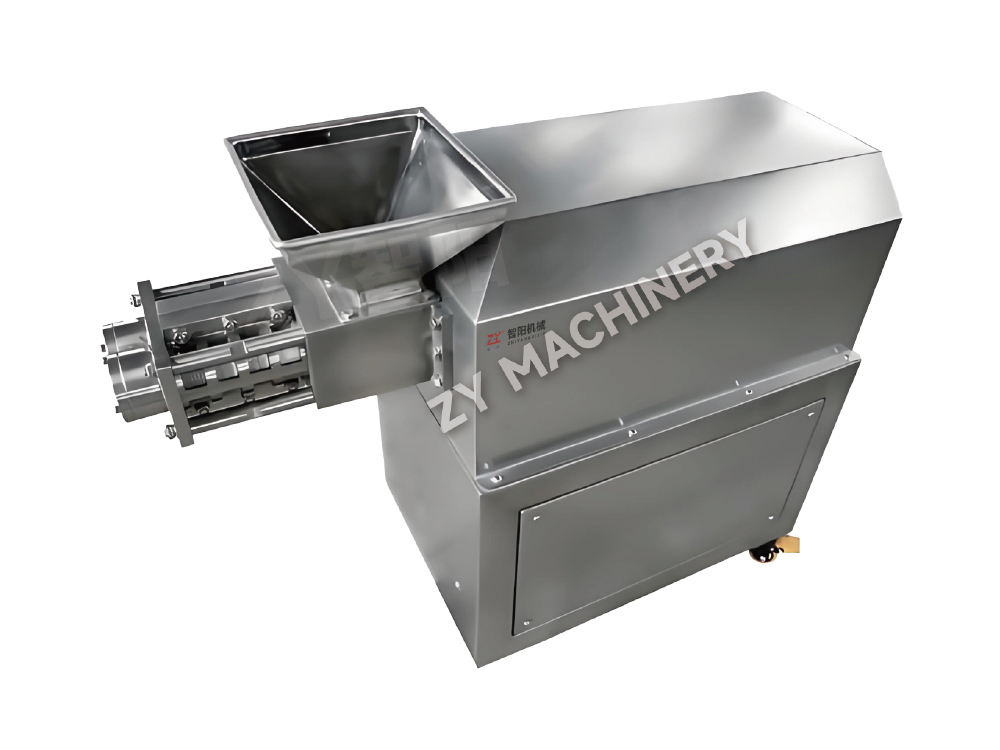
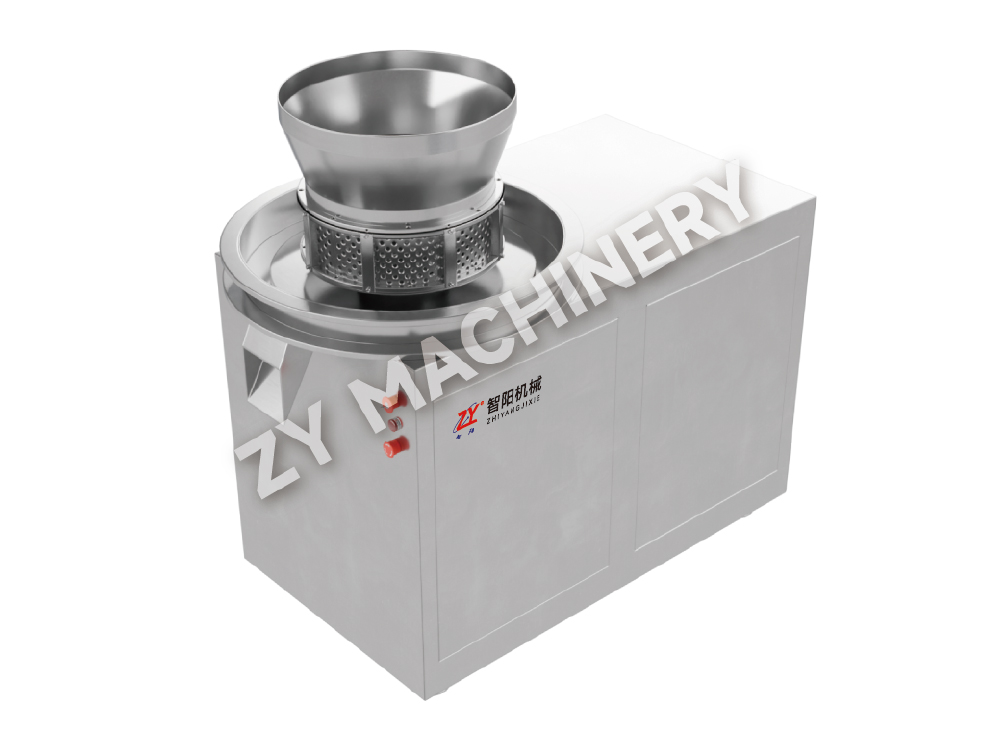
The YK-160 is a wet granulation and pelletizing machine in the oscillating granulator category. Its primary function is to convert prepared wet powder blends into granules of a more uniform and manageable form. The equipment consists of several principal systems, including the oscillating rollers, main frame, transmission system, and locking mechanism.
The oscillating rollers move in a reciprocating or right-and-left rotating motion. As the wet mass enters the granulation zone, the rollers apply controlled pressure and shear. This action forces the material through the working area and promotes the formation of granules. The exact result depends on the formulation, moisture level, binder characteristics, feed condition, and process settings, but the mechanical design provides the basic forces required for efficient wet granulation.
With a production capacity of approximately 50 to 200 kilograms per hour, the YK-160 occupies a useful position between smaller laboratory or pilot machines and higher-capacity industrial models. It can support development work, pilot-scale production, and commercial manufacturing where the required throughput falls within its operating range.
The machine is also part of a broader equipment portfolio that includes smaller and larger oscillating granulator models. This allows users to select equipment according to required capacity, power availability, installation conditions, and process scale. The YK-60 is listed for approximately 25 to 50 kilograms per hour, while the YK-320 is listed for approximately 200 to 500 kilograms per hour. The YK-160 therefore provides a practical middle-range solution for manufacturers seeking production capability without moving immediately to the largest machine size.
The operating principle of the YK-160 begins with the preparation of a suitable wet mass. Powder components are first blended, and a liquid binder or granulating liquid may be added according to the formulation requirements. The wet mixture must have sufficient cohesion to form granules while remaining processable by the oscillating rollers.
Once fed into the granulator, the wet material enters the area of the oscillating rollers. The rollers move at a listed speed of 60 revolutions per minute in the right-and-left rotating direction. The movement provides repeated mechanical contact with the wet mass. Pressure compresses and consolidates the material, while shear forces divide and reshape it into smaller, more consistent granules.
The oscillating action differs from simple one-directional crushing or uncontrolled tearing. Repeated movement across the working area can help distribute mechanical treatment more evenly throughout the feed. The material is progressively shaped as it passes through the granulation zone, producing granules that are more suitable for subsequent drying and handling.
After granulation, the product can be conveyed to downstream equipment. In an integrated line, the granules may travel directly to a fluidized bed dryer, where controlled airflow removes moisture. Depending on the product route, the dried granules can then proceed to sizing, blending, compression, or coating. This closed or pipeline-style arrangement reduces the amount of manual transfer between individual operations.
The transmission system supplies the mechanical power required for the rollers and supports stable operation. Reliable transmission is important because irregular movement, inadequate torque, or excessive vibration can negatively affect granule quality. The locking mechanism helps maintain the equipment configuration during operation while also supporting controlled access during disassembly and cleaning.
One of the main advantages of the YK-160 is its compact footprint. Floor space is an important consideration in pharmaceutical production, where facilities must accommodate processing equipment, material flow paths, personnel movement, cleaning areas, and utility connections. A compact machine can make it easier to plan a logical production layout and may reduce the distance between connected processing units.
The integrated structure also helps reduce unnecessary external components and complicated machine arrangements. Compared with a conventional design that may require more independent assemblies, the YK-160 is intended to provide a streamlined equipment configuration. This can support easier installation, more direct access to essential components, and a clearer operator interface.
Space efficiency is particularly valuable when the granulator is installed as part of a continuous line. The machine can be positioned between a wet granulation unit and a fluidized bed dryer, helping the overall line maintain a short and practical material path. A shorter path can reduce manual movement and simplify production organization.
Complex equipment can increase the training burden for operators and make routine maintenance more difficult. The YK-160 emphasizes a streamlined structure and user-oriented operation. Its primary systems are clearly defined, and the operating concept is straightforward: feed the prepared wet material, apply oscillating mechanical action, and transfer the resulting granules to the next process stage.
A simple operating concept does not eliminate the need for qualified personnel or process validation. However, it can make standard operating procedures easier to establish and follow. Operators can focus on material preparation, feed consistency, equipment status, cleaning, and process controls rather than managing an unnecessarily complicated mechanical arrangement.
For manufacturers operating several production lines or working with multiple product formulations, operational simplicity may also help improve consistency between shifts. Clear procedures and accessible components can support repeatable setup and reduce the risk of errors during changeover.
The oscillating rollers provide both compression and shear, two important mechanical effects in wet granulation. Compression helps consolidate the wet mass, while shear helps divide and shape the material. The combined action is intended to support efficient granulation and the formation of particles with a more uniform size distribution.
Uniform granules can provide several downstream benefits. They may flow more consistently into dryers, reduce the presence of oversized lumps, and provide more predictable moisture removal. In tablet production, a more uniform granule population can improve die filling and support more consistent tablet weight and hardness, provided that the formulation and other process parameters are appropriately controlled.
Granule uniformity is not determined by the machine alone. Binder concentration, liquid addition rate, mixing quality, feed rate, wet mass properties, and screen or working-zone conditions all influence the final result. The strength of the YK-160 is that its oscillating mechanism provides a stable and repeatable mechanical foundation for optimizing these variables.
Pharmaceutical equipment must be designed with hygiene and changeover requirements in mind. Residual powder or wet material trapped in inaccessible areas can create risks during product changeover. It may also increase cleaning time and complicate inspection. The YK-160 is designed for simple disassembly and cleaning, with no dead corners in its relevant structure.
The absence of difficult-to-access areas supports more thorough cleaning and visual inspection. Operators can remove or open relevant components, clean product-contact areas, and reassemble the machine according to established procedures. This is particularly important for facilities that process different formulations or products on shared equipment.
Easy cleaning may also improve equipment availability. When a machine takes less time to dismantle, clean, inspect, and reassemble, the production team can reduce nonproductive changeover time. The result can be a more efficient manufacturing schedule without sacrificing hygiene procedures.
The YK-160 is described as fully compliant with GMP standards in its product information. Its compact structure, cleanable design, accessible components, and lack of dead corners are all aligned with the basic expectations of hygienic pharmaceutical equipment design.
GMP compliance in a complete manufacturing environment involves more than a single machine. It also includes facility design, documentation, validation, personnel practices, material control, cleaning procedures, maintenance records, and quality systems. Nevertheless, a granulator designed to support cleanability and controlled operation can contribute significantly to a GMP-oriented process.
For users evaluating equipment, it is important to review the machine’s actual configuration, materials of construction, contact-part finish, sealing arrangements, documentation package, and validation requirements for the intended application. The YK-160 provides a suitable design foundation for these evaluations.
Manual transfer between separate machines can expose wet granules to the production environment. Each open handling step may increase the possibility of foreign matter ingress, product loss, dust generation, or cross-contamination. An integrated pipeline-style arrangement can reduce the number of open transfers and shorten the time during which the material is exposed.
When the YK-160 is combined with a high-efficiency wet granulator and a fluidized bed granulation dryer, material can move through a more continuous route. The reduction in manual handling is beneficial not only for contamination control but also for labor efficiency and process repeatability.
Closed or connected processing does not replace good manufacturing practice. Equipment must still be cleaned, inspected, maintained, and operated according to approved procedures. However, reducing unnecessary intervention can make the process more controlled and easier to manage.
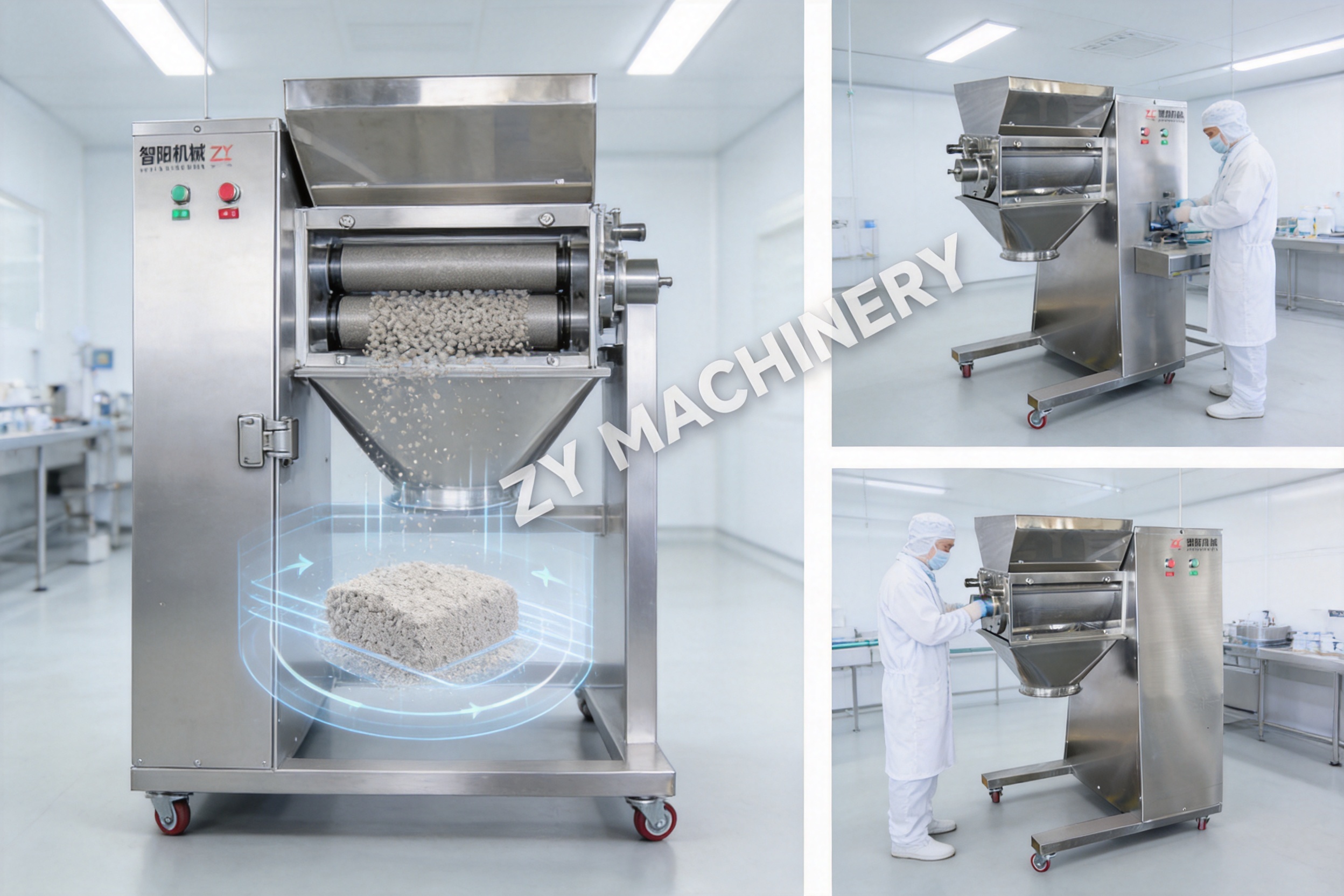
The following table summarizes the listed technical parameters for the YK oscillating granulator range. The YK-160 model is the principal product discussed in this article.
| Item | Unit or specification | YK-60 | YK-160 | YK-320 |
| Production capacity | kg/h | 25–50 | 50–200 | 200–500 |
| Power | kW | 1.1 | 4 | 11 |
| Pendulum roller speed | rpm, right-and-left rotation | 60 | 60 | 60 |
| Pendulum roller diameter | mm | 60 | 160 | 320 |
| Pendulum roller length | mm | 356 | 356 | 356 |
| Pendulum rod quantity | units | 6 | 6 | 12 |
| Pendulum angle | degrees | 360 | 360 | 360 |
The YK-160 is specified with a production capacity of 50 to 200 kilograms per hour and a motor power of 4 kW. Actual capacity may vary according to material properties, wetness, binder system, feed condition, desired granule characteristics, and operating practices. Capacity should therefore be confirmed through process trials or technical evaluation before final equipment selection.
The listed roller diameter for the YK-160 is 160 millimeters, and the roller length is 356 millimeters. The unit is equipped with six pendulum rods and operates with a listed 360-degree pendulum angle. These specifications define the basic mechanical configuration and distinguish the model from the smaller YK-60 and larger YK-320 versions.
Capacity selection should be based on more than the nominal hourly output. Manufacturers should consider batch size, operating hours, cleaning intervals, product changeover frequency, upstream wet-mass preparation, dryer capacity, and downstream tablet or coating requirements. The best machine is the one that balances output with the complete process route rather than maximizing the capacity of one isolated step.
The YK-160 is particularly valuable when used as part of an integrated process. A typical route may begin with powder weighing and dispensing, followed by dry blending. A liquid binder is then introduced in a high-efficiency wet granulator, creating a cohesive wet mass. The mass is passed to the oscillating granulator, where it is formed into more uniform wet granules. These granules are then conveyed to a fluidized bed dryer for moisture removal.
The GHL High-Efficiency Wet Granulator performs the intensive mixing and wetting function. It helps distribute the liquid phase through the powder blend before the material reaches the YK-160. Consistent upstream preparation is essential because the oscillating granulator performs best when the feed has a reasonably uniform moisture level and cohesive structure.
After the YK-160, an FL or PGL Fluidized Bed Granulation Dryer can dry the granules using controlled airflow. Fluidized bed drying is commonly used because it can provide efficient heat and mass transfer when the granules are properly sized and distributed. Uniform granules generally support more consistent air contact and moisture removal.
The integrated arrangement can be configured as a connected production line or pipeline-style process. This may reduce the need for intermediate containers, manual shoveling, and repeated exposure to the production room. It can also improve process visibility because the movement of material between stages becomes more structured.
A connected system should be designed around the behavior of the specific formulation. Factors such as transfer distance, pneumatic or mechanical conveying method, granule friability, moisture content, and the possibility of segregation must be assessed. The role of the YK-160 is to provide a reliable granulation stage within this wider process architecture.
In pharmaceutical production, the YK-160 can be used for wet granulation of active ingredients combined with excipients. The resulting granules may be dried and processed into tablets, capsules, or other oral solid dosage forms. Its cleanable structure and integration capability make it suitable for facilities where hygiene, repeatability, and changeover efficiency are important.
The machine can support both established formulations and process-development work. During development, technical teams can study the relationship between liquid addition, wet-mass properties, granule formation, drying behavior, and final dosage-form performance. During production, the same mechanical principle can be applied at a larger operational scale within the machine’s rated capacity.
Nutraceutical powders and functional ingredients may also require granulation to improve flow, reduce dust, or support downstream filling and compression. The YK-160 can be considered for applications involving suitable powders and excipients, provided that product-contact materials, cleaning procedures, and regulatory requirements are confirmed for the formulation.
Food additives may benefit from granulation when a free-flowing product is needed for dosing, blending, or packaging. Granules can be easier to transport and handle than very fine powders. The appropriate process conditions depend on whether the material is sensitive to heat, moisture, shear, or pressure.
Veterinary pharmaceutical products often use powder blends that must be converted into granules before tablet production or other dosage-form processing. A reliable oscillating granulator can provide a practical connection between wet-mass preparation and drying, helping manufacturers organize the process into a more consistent route.
Biotechnology, additives, and specialty powder applications may have demanding requirements for gentle handling, uniformity, and controlled moisture. Before selecting the YK-160, users should evaluate whether the material can tolerate the mechanical action of oscillating granulation. Trials can help determine whether the machine produces the desired particle structure without excessive fines or degradation.
Changzhou Zhiyang Machinery Equipment Co., Ltd., also known as ZY Machinery, specializes in the design, manufacture, and process integration of powder-processing and oral solid dosage equipment. Founded in 2010 and located in Changzhou, China, the company supplies standalone machines, modular systems, and complete production lines.
The company’s product scope covers laboratory equipment, mixing equipment, granulation equipment, drying equipment, coating equipment, auxiliary processing equipment, and transfer and conveying systems. This broad range is important because granulation equipment rarely operates independently in a complete pharmaceutical process. A supplier that understands mixing, granulation, drying, coating, and conveying can approach the line as a connected system.
ZY Machinery describes its approach as process-driven. Instead of supplying equipment without considering the production route, the company develops solutions according to material characteristics, capacity requirements, and site conditions. This method can help customers avoid mismatches between individual machines and improve the compatibility of the complete process line.
Material behavior is central to powder processing. Two formulations with the same nominal capacity may require different mixing intensity, wetting methods, granulation conditions, drying times, or conveying arrangements. By considering the material, required output, and available facility space together, an equipment supplier can provide a more practical engineering proposal.
The company serves pharmaceutical, biopharmaceutical, biotechnology, nutraceutical, veterinary, additives, and related industries. Its equipment is intended for laboratory, pilot, and full-scale production. This range of application levels gives customers the possibility of developing a process at a smaller scale and then selecting a suitable production configuration as demand grows.
According to the provided company information, ZY Machinery has expanded its product portfolio, strengthened research and development capabilities, obtained quality system certification, developed patented technologies, and built overseas service capabilities. These activities indicate a continuing focus on product development and international market support.
The company’s stated values emphasize honesty, strength, quality, and specialty. In practical terms, these values are reflected in attention to product reliability, customer reputation, responsive service, engineering implementation, and innovation. For equipment purchasers, these factors are important because the value of a granulator depends not only on its initial purchase price but also on its service life, maintainability, process compatibility, and support after installation.
Manufacturing pharmaceutical machinery requires coordination between mechanical design, fabrication, assembly, inspection, process engineering, and customer requirements. A granulator must not only perform its mechanical function; it must also fit into a hygienic process, allow cleaning, provide reliable access for maintenance, and integrate with other machines.
A process-oriented manufacturer begins with the intended application. The equipment configuration can be evaluated according to material characteristics, required production capacity, granule quality targets, available utilities, installation space, and downstream equipment. This reduces the likelihood that a machine will be selected solely on nominal output without considering the complete production environment.
Mechanical integration is another important aspect. The oscillating rollers, main frame, transmission system, and locking mechanism must work together as a stable unit. The transmission system must deliver sufficient power for the intended operation, while the frame must support the working components. Access points must be arranged so that operators can conduct routine inspection, cleaning, and maintenance.
Quality system certification and documented manufacturing procedures can support consistency between machines and production orders. A structured quality approach may include design review, component inspection, assembly checks, operational testing, and final verification. Specific inspection and documentation requirements should be confirmed with the supplier for each project.
Research and development also contribute to equipment advancement. Product improvements may involve structural optimization, easier disassembly, improved integration, more efficient power transmission, or better adaptation to different process routes. The development of patented technologies, as noted in the company information, further indicates the company’s effort to build proprietary technical capabilities.
Overseas service capabilities are valuable for international customers. Installation planning, operator training, spare-parts support, troubleshooting, and process communication can all influence the success of an equipment project. A supplier with experience serving customers in different countries and regions may be better prepared to coordinate technical requirements across languages, standards, and facility conditions.
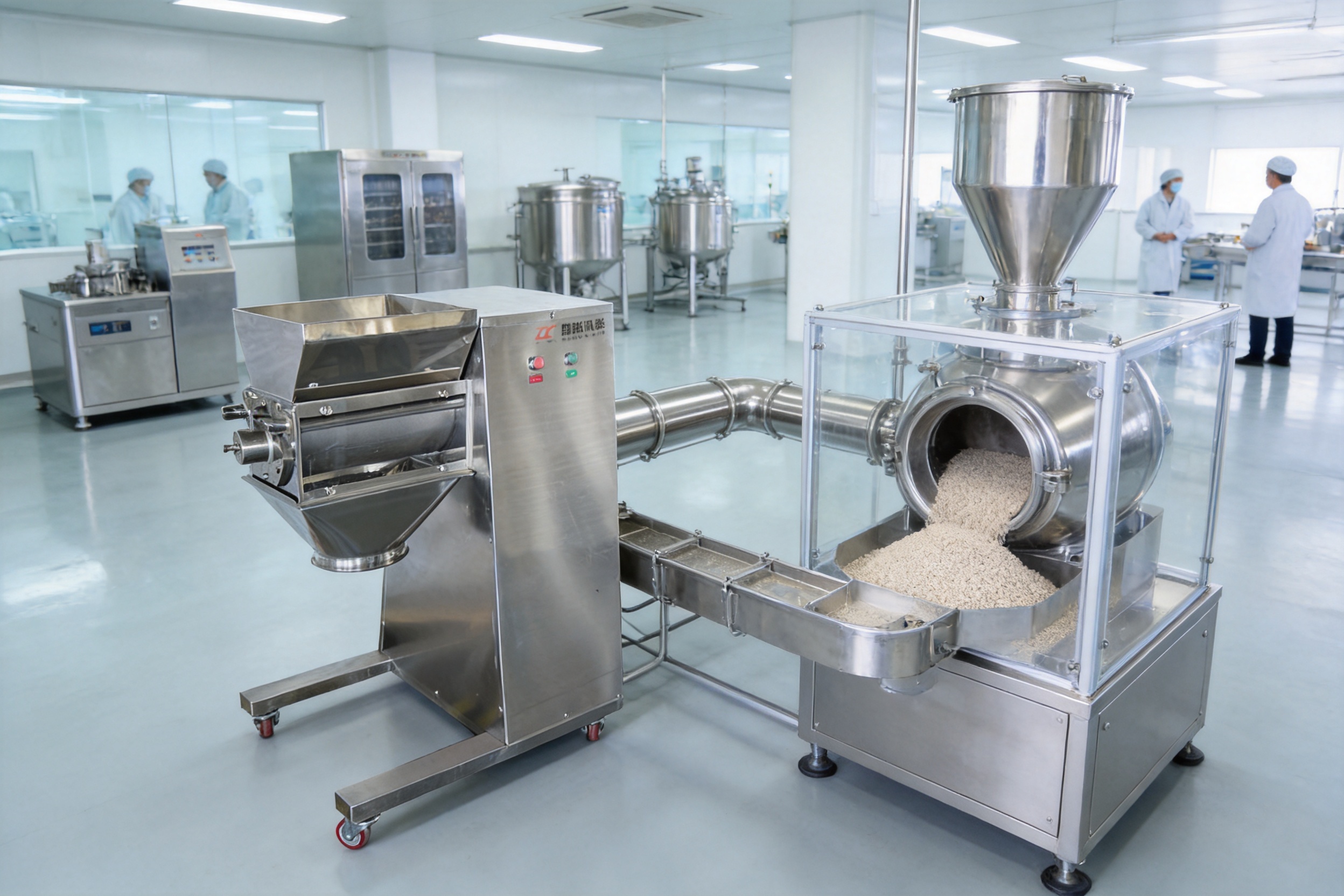
Routine cleaning is a fundamental part of granulator operation. After processing, residual wet material can harden or adhere to product-contact surfaces. If it is not removed promptly, the next production run may be affected and cleaning may become more difficult. The YK-160’s simple disassembly concept is intended to support timely and thorough cleaning.
Operators should establish a documented cleaning procedure covering shutdown, material removal, component access, washing or dry cleaning as appropriate, inspection, drying, reassembly, and release for the next batch. The exact method should be based on the formulation and the materials used in the equipment. Cleaning agents and temperatures must be compatible with the machine and product-contact surfaces.
Maintenance should include inspection of the transmission system, oscillating rollers, locking mechanism, fasteners, seals, and other wear-prone components. Unusual noise, vibration, resistance, or changes in granulation performance may indicate that inspection is required. Preventive maintenance is generally preferable to waiting for a failure during production.
Because the YK-160 has a compact and integrated structure, maintenance personnel can focus on a defined group of core components. This can simplify troubleshooting and reduce the time needed to identify the source of a mechanical problem. Spare parts and service intervals should be specified during the purchasing and commissioning stages.
Reliability also depends on correct operation. The feed should be prepared consistently, the equipment should not be overloaded, and the machine should be operated within the intended process range. Training should cover start-up, normal operation, shutdown, cleaning, emergency response, and the recognition of abnormal conditions.
Before installation, the user should review the available floor space, material flow, access for cleaning, power supply, ventilation, drainage, and connection points for upstream and downstream equipment. The compact design of the YK-160 can simplify layout planning, but sufficient space must still be reserved for inspection, maintenance, and safe operator movement.
The granulator should be positioned to support a logical material route. If the machine is placed close to the wet granulator and fluidized bed dryer, the transfer distance may be reduced. This can help limit manual intervention and improve production continuity. The arrangement should also prevent unnecessary crossing of raw-material and finished-product pathways.
Connection design depends on the complete process line. The transfer method may be mechanical, gravity-assisted, or another suitable conveying arrangement. The selected method should protect granule integrity and prevent excessive segregation or dust. The interface between machines should be reviewed during engineering design rather than treated as an afterthought.
Commissioning normally involves mechanical inspection, no-load testing, loaded testing, and process verification. The user may assess granule size distribution, moisture uniformity after drying, throughput, cleaning time, and operator procedures. These tests provide evidence that the equipment and the process route are functioning as intended.
For regulated pharmaceutical production, qualification and validation requirements should be defined in the project documentation. Installation qualification, operational qualification, performance qualification, cleaning validation, and process validation may be required depending on the facility and product. The scope should be agreed upon between the equipment supplier and the end user.
The granulator can only produce consistent results when the incoming material is reasonably uniform. Powder blending should be sufficiently controlled, and liquid addition should be distributed throughout the batch. Variations in wetness can produce a mixture of fines, oversized pieces, and properly formed granules.
Overfeeding can increase the load on the machine and reduce the consistency of granulation. Underfeeding may lower productivity and create unstable material flow. A controlled and consistent feed supports more uniform treatment by the oscillating rollers.
The granulator and dryer should be evaluated as connected stages. Granules that are too wet may extend drying time, while overly fine granules may create dust or fluidization challenges. The working conditions should be selected to provide granules that can be dried efficiently and transferred without excessive breakage.
Useful quality indicators may include particle size distribution, bulk density, flowability, moisture content, compressibility, and the percentage of fines. Monitoring these properties helps the process team determine whether adjustments are needed in wet-mass preparation, feed rate, or mechanical operation.
When multiple products are processed on the same machine, changeover procedures should be standardized. The procedure should identify removable parts, cleaning locations, inspection points, drying requirements, and release criteria. The YK-160’s accessible structure can support this type of controlled changeover program.
Different granulation technologies are suitable for different materials and production objectives. High-shear wet granulators are often used to mix powders and distribute liquid binders. Fluidized bed granulation can combine spraying, granulation, and drying in one system. Dry granulators use compaction rather than liquid addition. Oscillating granulators are commonly used to shape and size wet masses after preparation.
The YK-160 is not intended to replace every other type of granulation equipment. Its principal advantage is its role as an efficient wet granulation and pelletizing stage that can be integrated with upstream wet mixing and downstream fluidized bed drying. This makes it especially suitable for manufacturers that want a structured, connected process rather than a series of heavily manual transfers.
Compared with a basic or conventional oscillating granulator, the YK-160 emphasizes compact construction, simplified operation, easy cleaning, and integration with related equipment. These advantages can be important for pharmaceutical plants that must manage space, hygiene, labor, and throughput at the same time.
Compared with relying on manual screening or uncontrolled wet-mass breakup, the YK-160 offers a defined mechanical action. The rollers apply repeatable pressure and shear, which can help improve particle formation and reduce variability. The actual performance will still depend on formulation development and operating control, but the machine provides a more consistent platform than informal manual methods.
For pharmaceutical manufacturers, the YK-160 provides a practical granulation stage for oral solid dosage production. It can contribute to improved flow and compressibility while supporting a hygienic, maintainable processing environment.
For contract manufacturers, the ability to handle a range of pharmaceutical powders and excipients can be valuable. Contract operations frequently manage different products and batch sizes, so equipment that supports cleaning and changeover can help improve scheduling flexibility.
For emerging companies, the YK-160 offers a mid-range capacity option. It may provide more production capability than a small laboratory machine without requiring the facility investment associated with the largest industrial model. Its suitability should be assessed against projected demand and the capacity of the associated wet granulator and dryer.
For established manufacturers expanding production, the machine can be included in a modular line or used to supplement existing equipment. The supplier’s wider product portfolio may simplify the design of connected granulation, drying, coating, and conveying systems.
For international customers, engineering support and overseas service capabilities can assist with equipment selection, process planning, installation coordination, and after-sales communication. These services are particularly useful when the machine is part of a complete line rather than a standalone purchase.
Equipment cost should be evaluated over the complete operating life of the machine. Purchase price is only one factor. Other considerations include installation, utilities, labor, cleaning time, maintenance, spare parts, downtime, product loss, and the ability to integrate with existing equipment.
The YK-160 can support cost control in several ways. Its compact structure may reduce space requirements. Its integrated design may simplify installation and operation. Its cleanable construction may reduce changeover time. Its compatibility with pipeline-style production may lower manual handling and improve throughput.
Improved granule uniformity can also produce indirect economic benefits. More consistent granules may reduce rework, minimize oversized or undersized fractions, improve dryer utilization, and support more stable tablet compression. These benefits must be confirmed through product-specific trials, but they are important factors when assessing the value of granulation equipment.
Power consumption is another consideration. The YK-160 is listed with a 4 kW power rating. Actual energy use depends on operating time, load, process conditions, and the wider line configuration. Efficient transmission and appropriate capacity selection help prevent the machine from being unnecessarily oversized for the application.
Operators should receive training before using the machine. Training should cover the operating principle, permitted materials, loading procedures, start-up and shutdown, cleaning, maintenance, and emergency actions. Guards and locking mechanisms should remain in their intended positions during operation.
The machine should not be opened or disassembled while moving components are active. Power should be isolated before maintenance or cleaning activities that require access to internal parts. Procedures should also address the handling of wet materials, cleaning chemicals, electrical systems, and any dust generated during the process.
Safety requirements may differ according to the facility, product, local regulations, and complete line configuration. The end user should conduct a site-specific risk assessment and incorporate the equipment into the plant’s overall safety management system.
The YK-160 is designed to granulate and pelletize wet powder mixtures. Its oscillating rollers apply pressure and shear to transform a prepared wet mass into more uniform granules suitable for drying and downstream oral solid dosage processing.
The listed production capacity is approximately 50 to 200 kilograms per hour. Actual performance depends on the formulation, moisture content, binder system, feed characteristics, desired granule size, and operating conditions.
The YK-160 is listed with a power rating of 4 kW.
The listed pendulum roller speed is 60 revolutions per minute in the right-and-left rotating direction.
Yes. It can be integrated with a GHL High-Efficiency Wet Granulator and an FL or PGL Fluidized Bed Granulation Dryer to form a continuous, pipeline-style production route. The exact transfer and connection arrangement should be designed according to the formulation and facility layout.
The YK-160 is described as fully compliant with GMP standards and is designed for easy disassembly, cleaning, and inspection. Users should confirm the complete equipment configuration, documentation, materials, and validation requirements for their specific regulatory environment.
The principal advantages include a compact footprint, streamlined structure, user-friendly operation, convenient maintenance, easy disassembly, cleanable construction without dead corners, efficient granulation, and compatibility with integrated wet granulation and drying lines.
The machine is suitable for a wide range of pharmaceutical powders and excipients. It may also be considered for nutraceutical, veterinary, additive, and related materials. A formulation trial is recommended for materials with unusual flow, moisture, cohesion, heat sensitivity, or shear sensitivity.
When integrated into a connected process line, the YK-160 reduces manual transfers and limits the amount of time material is exposed to the surrounding environment. Its cleanable structure also supports controlled product changeover and sanitation.
Users should evaluate required capacity, batch size, material characteristics, wet-mass preparation, drying requirements, granule quality, facility space, utilities, cleaning procedures, downstream equipment, documentation, validation, installation, training, and after-sales support.
No. The YK-160 and a high-efficiency wet granulator perform related but distinct functions. The GHL unit prepares and mixes the wet mass, while the YK-160 applies oscillating granulation action to form more uniform wet granules. They can be used together in an integrated process.
Yes. The product information specifically describes integration with FL or PGL Fluidized Bed Granulation Dryers. The granulator can transfer formed wet granules to the dryer as part of a connected production route.
Capacity should be verified through material trials or a technical evaluation using the actual formulation or a representative product. Nominal capacity is a useful reference, but final output depends on wetness, feed rate, granule requirements, and the complete line balance.
Routine maintenance should include inspection of the oscillating rollers, transmission system, locking mechanism, fasteners, seals, and other relevant components. Cleaning and preventive maintenance schedules should be established according to production frequency and material characteristics.
The YK-160 Oscillating Granulator is a practical solution for manufacturers seeking efficient wet granulation, reliable granule formation, and improved process integration. Its 50 to 200 kilogram-per-hour capacity makes it suitable for a broad range of pilot and production applications. The 4 kW power rating, 160-millimeter roller diameter, 356-millimeter roller length, six pendulum rods, and 60-rpm oscillating speed define a balanced mid-range configuration.
Its strongest advantages are not limited to the granulation mechanism. The compact footprint, streamlined structure, easy operation, simple disassembly, cleanable design, and GMP-oriented construction address the practical needs of modern pharmaceutical production. When connected with wet granulation and fluidized bed drying equipment, the machine can help create a more continuous route with fewer manual transfers and reduced secondary contamination risk.
ZY Machinery strengthens the value of the YK-160 through its broader engineering capability. The company provides equipment for mixing, granulation, drying, coating, auxiliary processing, and conveying, allowing customers to develop complete production routes instead of isolated machine purchases. Its process-driven approach considers materials, capacity, and site conditions, while its reported research and development, quality system certification, patented technologies, and overseas service capabilities support long-term equipment projects.
For organizations developing or upgrading pharmaceutical powder-processing lines, the YK-160 should be evaluated as part of the complete process. With appropriate formulation trials, capacity verification, equipment integration, cleaning procedures, maintenance planning, and operator training, it can serve as a reliable link between wet-mass preparation and efficient downstream drying or dosage-form production.
1. Product information for the YK-160 Oscillating Granulator, including operating principle, features, specifications, and integration guidance.
2. Changzhou Zhiyang Machinery Equipment Co., Ltd. Company profile and equipment portfolio information.
3. General principles of wet granulation and particle-size control in oral solid dosage manufacturing.
4. Good Manufacturing Practice principles for pharmaceutical equipment design, cleaning, maintenance, and process control.
5. General engineering considerations for integrating wet granulators, oscillating granulators, fluidized bed dryers, coating machines, and powder-conveying systems.
Want to stay up to date?
Contact us via the email address below.
Don't worry about spam. We hate it too!
Mobile Client

Video Account
Phone:+86-15161130178
Tel:+86-519-88674267
Email:czzy188@163.com
Phone:+86-15161132798
Email:zy@zy-drying.com

WeChat ID

Copyright 2026 Changzhou Zhiyang Machinery Equipment Co., Ltd. All Rights Reserved  Oral Solid Dosage Equipment Manufacturer