 English
 Español
 русский
 中文简体
中文简体
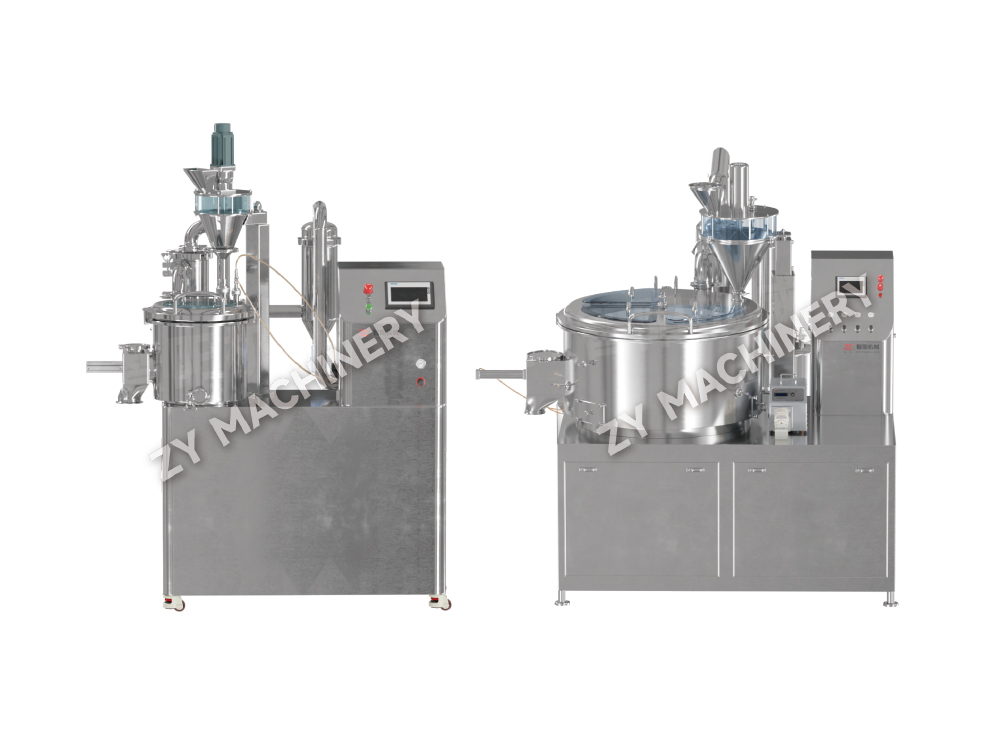
QWL Centrifugal Pelletizing Machine
The QWL machine is designed to transform wet granules into high-quality sph.....

Content
Modern pharmaceutical and powder-processing operations increasingly require granules that are not only chemically consistent but also physically uniform. Particle shape, density, flowability, size distribution, and surface quality can influence downstream drying, coating, compression, encapsulation, packaging, and storage. When wet granules leave an upstream granulation process, they may have irregular shapes, variable moisture content, weak agglomeration, or a tendency to generate fines. A controlled pelletizing stage can transform this intermediate material into dense, highly spherical pellets that are easier to process and more consistent in performance.
The QWL Centrifugal Pelletizing Machine is designed for this purpose. It receives wet granules from a preceding process and guides them through a rotating centrifugal disc. As the disc rotates, centrifugal force, gravity, and air movement in the working gap act together on the material. The granules move in a helical and circular pattern, gradually becoming more compact, rounded, and uniform. The resulting pellets offer excellent sphericity and controlled size characteristics for a wide range of pharmaceutical, nutraceutical, veterinary, additive, and related powder-processing applications.
This article explains the operating principle, process advantages, equipment design considerations, model selection, integration possibilities, and manufacturing strengths behind this type of centrifugal pelletizing solution. It also examines why a process-oriented equipment supplier can offer greater value than a machine supplier focused only on individual components.
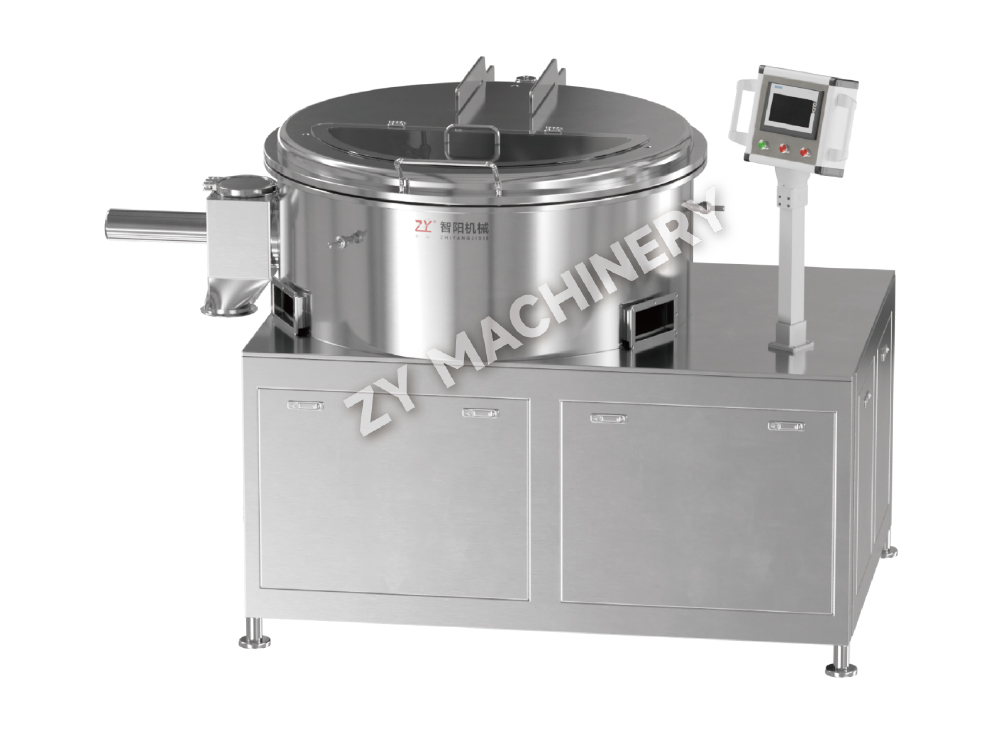
QWL Centrifugal Pelletizing Machine
Centrifugal pelletizing is a size-enlargement and rounding process in which wet granules are exposed to controlled rotational movement. The material enters a rotating disc or pan and is subjected to several forces at the same time. Centrifugal force drives the granules outward and around the disc, gravity causes them to move downward and return through the working zone, and airflow helps lift and separate particles in the gap above the disc. The combination produces a repeated rolling, circulating, and compacting action.
Unlike a simple mixing operation, centrifugal pelletizing is intended to modify the shape and physical structure of wet granules. Irregular pieces are continuously exposed to movement that encourages corners and rough surfaces to be smoothed. Smaller particles and fines can attach to larger wet granules, while repeated circulation improves uniformity. Depending on the formulation, feed condition, rotational speed, and process time, the equipment can produce pellets with a more compact structure and a more spherical profile.
The process is particularly useful when a production line requires a controlled intermediate material before drying or coating. Spherical pellets generally move more predictably, distribute more evenly in drying equipment, and provide a more consistent surface for subsequent coating. Their improved flow can also simplify transfer between machines and reduce the risk of bridging or uneven feeding.
Wet granules are continuously introduced into the rotating centrifugal disc. Once the blower is activated and the disc reaches its operating speed, the material enters a dynamic movement pattern. Airflow in the gap provides a lifting effect, while centrifugal force moves the granules along the disc surface. Gravity returns the material toward lower areas, creating a continuous circulation.
Through this combined action, the granules travel in a helical and circular route. They roll against one another and repeatedly pass through the active zone. Moisture and surface plasticity allow particles to attach and consolidate, while the movement of the disc gradually removes sharp irregularities from the granule surface. The material does not simply remain in one location; instead, it is exposed to repeated treatment until the desired pellet characteristics are achieved.
The adjustable rotational speed is important because different formulations respond differently to mechanical energy. A higher speed may increase centrifugal force and intensify the movement of the material. A lower speed may provide gentler treatment for formulations that are sensitive to excessive compaction or mechanical stress. By adjusting operating conditions, users can influence pellet size, density, circulation behavior, and residence time.
The blower also contributes to process stability. Air movement can help maintain separation between particles and the disc, reduce excessive adhesion, and support the circulation of material through the working gap. When the airflow and disc speed are appropriately balanced, the process can achieve efficient rounding with limited accumulation and reduced fines.
Centrifugal force pushes the wet granules outward from the center of the rotating disc. This movement gives the material a strong circular trajectory and helps create the energy required for rolling and consolidation. It also improves the circulation of material across the active surface, allowing more granules to receive similar treatment.
The force must be controlled carefully. Excessive mechanical intensity may create unnecessary compaction, breakage, or agglomeration, while insufficient intensity may result in incomplete rounding. The QWL design allows rotational speed adjustment so that operators can select a suitable operating range for the formulation and target pellet quality.
Airflow in the gap above the disc helps lift and separate wet granules. This can reduce the likelihood of material remaining stuck to the disc surface or forming large uncontrolled agglomerates. The air movement also supports a more active circulation pattern, allowing particles to move through different zones of the disc.
In a well-balanced process, the blower does not replace mechanical movement; it complements the centrifugal action. The interaction between air lift and disc rotation helps maintain a dynamic material bed. This is one of the reasons the equipment can achieve efficient rounding while limiting adhesion and fines.
Gravity provides the downward component of the movement. As granules are lifted and moved outward, gravity encourages them to return through the working zone. This creates repeated circulation rather than one-directional transport. The resulting helical motion exposes the granules to multiple cycles of rolling and consolidation.
The simultaneous presence of centrifugal force, airflow, and gravity makes the process different from ordinary agitation. Each force contributes to the final pellet structure, and the quality of the product depends on their combined balance rather than on one operating variable alone.
The primary advantage of centrifugal pelletizing is the production of pellets with excellent sphericity and relatively uniform size. A spherical or near-spherical shape can provide several benefits in later processing. It may improve flow through hoppers, support more consistent feeding, reduce uneven contact during drying, and offer a more regular surface for coating.
Uniform pellets are also valuable from a quality-control perspective. When particle size and shape vary widely, downstream operations may experience uneven drying rates, inconsistent coating thickness, segregation, and fluctuating bulk density. By improving the physical consistency of the wet granules before drying, the pelletizing stage can help reduce variation across the production process.
The machine is also designed to minimize adhesion and reduce fines. Wet granules can stick to process surfaces or adhere to one another in uncontrolled clusters. Excessive adhesion reduces usable yield and can create cleaning difficulties. Fines may lead to dust generation, poor flow, and an unstable size distribution. The combined air and centrifugal design supports a more controlled material movement that helps address these issues.
Another advantage is the possibility of producing denser pellets. Repeated rolling and consolidation can improve the physical integrity of the material, depending on the formulation and process settings. A denser pellet may be easier to handle during transfer and may demonstrate better resistance to attrition before drying or coating.
Many production lines use basic mixing, tumbling, or manual screening to improve granule shape. These approaches may be appropriate for limited applications, but they do not always provide the same level of controlled movement as a dedicated centrifugal pelletizer. A simple mixer may distribute material without consistently creating the rolling action required for spherical shaping. A conventional pan may provide agglomeration but may not offer the same combination of air lift and rotational control.
The QWL machine is differentiated by the way its disc, blower, and adjustable operating conditions work together. Instead of relying only on gravity or random tumbling, it creates a coordinated process environment. Wet granules are exposed to controlled centrifugal force, airflow, and gravity at the same time. This increases the opportunity for repeated rounding and helps produce a more consistent pellet profile.
Compared with processes that depend heavily on manual intervention, the machine offers a more repeatable operating method. Operators can control the rotational speed and establish a defined process route. This makes it easier to reproduce results between batches, provided that feed properties and other process conditions are kept within the appropriate range.
Compared with equipment that generates strong mechanical impact, centrifugal pelletizing can provide a more progressive rounding action. The objective is not simply to crush or force the granules into a shape, but to guide them through continuous circulation. This can help maintain a balance between densification and gentle handling.
The machine also supports integration with upstream wet granulation processes. This is important because pelletizing is rarely an isolated operation. In a complete production line, wet granules may be discharged from a high-shear mixer, wet granulator, or another forming unit and then transferred directly to the centrifugal disc. An integrated arrangement can reduce manual handling, shorten transfer distances, and limit exposure of the wet material to uncontrolled environmental conditions.
The machine is designed to transform irregular wet granules into highly rounded pellets. The circular and helical movement allows the material to roll repeatedly, improving its external shape. The process is especially suitable when consistent pellet geometry is important for drying, coating, encapsulation, or other downstream steps.
The rotating disc generates the principal mechanical movement required for pellet formation. Its centrifugal action supports efficient treatment of the material and helps achieve practical throughput. The design is available in multiple models, allowing the equipment to serve laboratory, pilot, and production-oriented requirements within the stated capacity ranges.
Wet materials can be difficult to handle because they may stick to equipment surfaces or form large masses. The airflow and active disc movement help maintain material circulation and reduce excessive adhesion. This supports smoother operation and can make cleaning and product recovery more manageable.
Uncontrolled granulation and harsh mechanical treatment can create a high proportion of fines. The QWL process focuses on repeated rounding and consolidation, which can reduce the creation of small fragments during operation. Lower fines generation may improve yield, flowability, and downstream process stability.
Different materials require different levels of mechanical energy. The ability to adjust disc speed gives operators a practical method for managing pellet size and density. Speed adjustment also assists in process development, because laboratory or pilot trials can be used to identify a suitable operating range before scale-up.
The equipment can be placed after an upstream wet granulation step and before drying. This arrangement supports a continuous or coordinated process route. When combined with suitable transfer, drying, screening, and coating equipment, the pelletizer can become part of a complete oral solid dosage or powder-processing system.
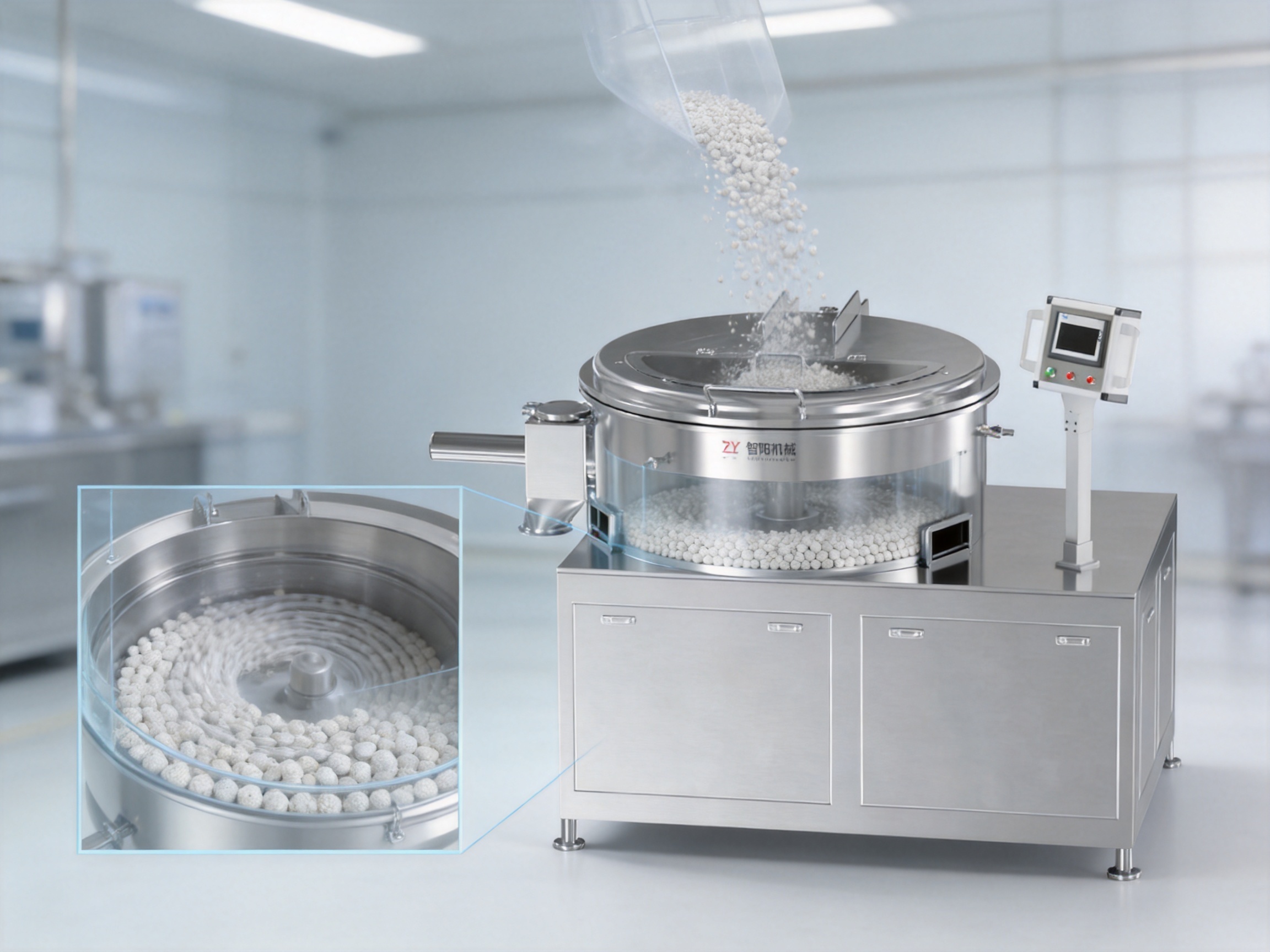
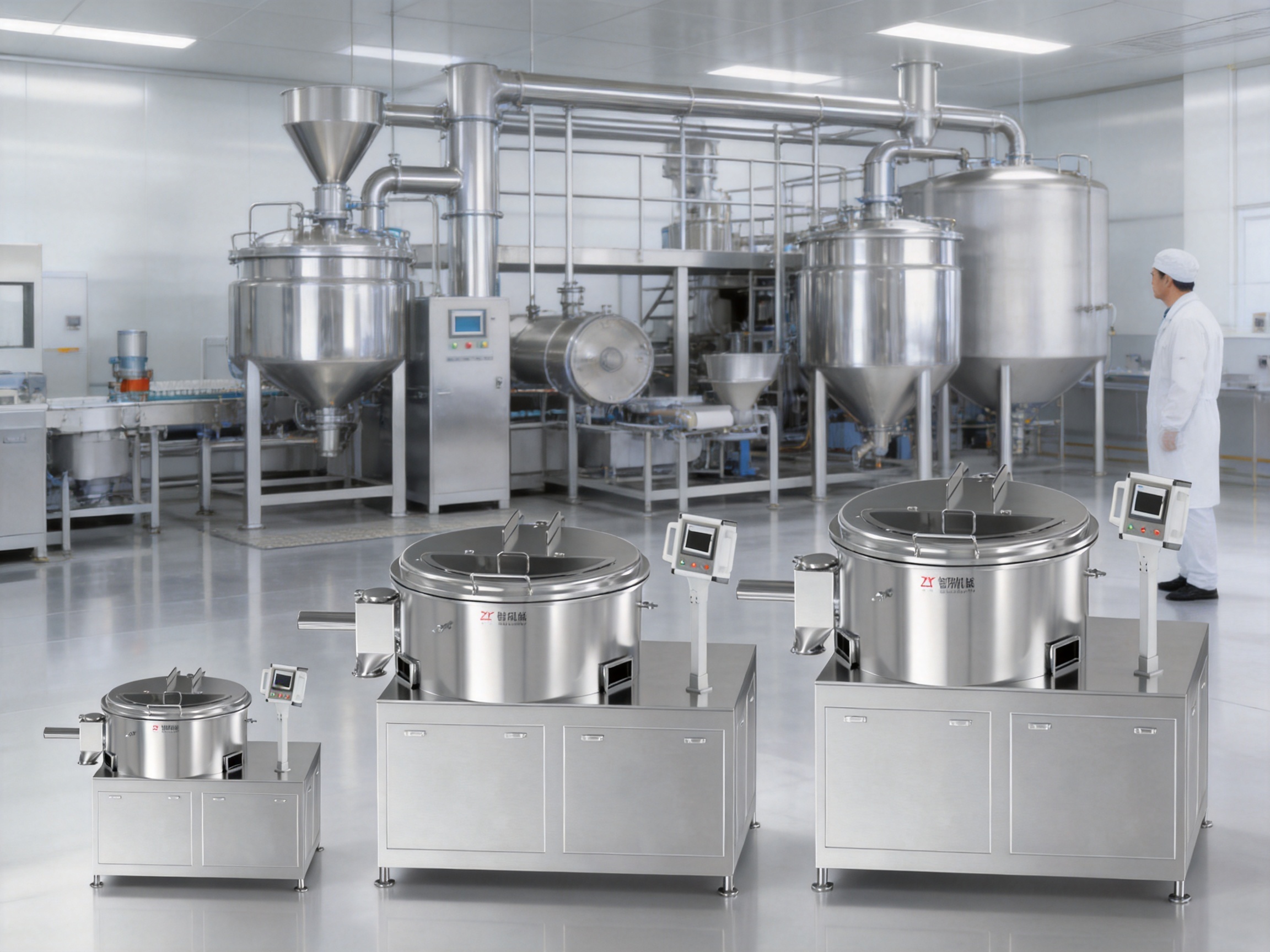
The product range includes six models: QWL-230, QWL-400, QWL-550, QWL-700, QWL-1000, and QWL-1300. The models cover different power levels and stated capacity ranges. Selection should be based on actual material properties, required production rate, batch size, process configuration, and available installation space rather than on capacity alone.
| Item | Unit | QWL-230 | QWL-400 | QWL-550 | QWL-700 | QWL-1000 | QWL-1300 |
| Power | kW | 0.75 | 2.2 | 3 | 3.7 | 5.5 | 7.5 |
| Capacity | kg/h | 0.5–4 | 5–8 | 10–50 | 40–80 | 70–200 | 100–300 |
The QWL-230 is suitable for small-scale evaluation, laboratory work, and low-throughput applications requiring a compact pelletizing solution. With a stated capacity of 0.5 to 4 kg/h and power of 0.75 kW, it can be useful during formulation development or early process studies.
The QWL-400 offers a higher capacity range of 5 to 8 kg/h and a power rating of 2.2 kW. It may be considered for pilot work or applications requiring more material throughput than a laboratory model can provide.
The QWL-550 has a stated capacity range of 10 to 50 kg/h and a power rating of 3 kW. This broader range may suit pilot production or smaller commercial systems where flexibility is important.
The QWL-700 provides a stated capacity of 40 to 80 kg/h with a power rating of 3.7 kW. It is designed for users who require a larger working capacity while maintaining the same fundamental centrifugal pelletizing principle.
The QWL-1000 has a stated capacity of 70 to 200 kg/h and a power rating of 5.5 kW. It can support higher-output production lines and may be selected when the pelletizer must match the throughput of larger wet granulation and drying equipment.
The QWL-1300 is the largest listed model, with a stated capacity range of 100 to 300 kg/h and a power rating of 7.5 kW. It is intended for high-throughput applications requiring substantial material handling capability.
Actual capacity may depend on material density, moisture, formulation behavior, feed rate, target pellet size, desired density, and operating conditions. For this reason, capacity figures should be treated as selection references rather than universal guarantees for every formulation. A process consultation and material trial can help confirm the appropriate model.
Equipment performance depends not only on the machine concept but also on the manufacturing discipline used to produce it. A centrifugal pelletizer must provide stable mechanical movement, reliable material contact, appropriate airflow, and repeatable operating control. Inconsistent fabrication or inadequate process understanding can reduce the benefits of the design.
Changzhou Zhiyang Machinery Equipment Co., Ltd. is a process-oriented manufacturer specializing in powder processing and oral solid dosage equipment. Founded in 2010 and based in Changzhou, China, the company develops standalone machines, modular systems, and complete production lines for pharmaceutical, biopharmaceutical, biotechnology, nutraceutical, veterinary, additives, and related industries.
This broad product scope supports a more integrated approach to machine development. The company’s portfolio includes laboratory equipment, mixing equipment, granulation equipment, drying equipment, coating equipment, auxiliary processing equipment, and transfer and conveying systems. A centrifugal pelletizer can therefore be considered within a wider process route rather than as an isolated piece of equipment.
A major strength of a process-based manufacturer is the ability to evaluate how a machine will operate within the customer’s complete production sequence. Material characteristics, production capacity, building layout, transfer requirements, and downstream equipment all affect the final result. A machine selected without considering these factors may not deliver its full potential.
ZY Machinery emphasizes solutions based on material characteristics, capacity requirements, and site conditions. This approach is particularly important for wet granules because their behavior can change with moisture, binder content, particle size, temperature, and feed consistency. Understanding the material route helps determine how the pelletizer should be connected to upstream and downstream equipment.
Some users need only a pelletizing machine, while others require a coordinated production system. The ability to supply standalone machines, modular systems, and complete lines gives customers more flexibility. A laboratory customer may begin with a compact unit, while a commercial manufacturer may require wet granulation, pelletizing, drying, screening, coating, and conveying equipment in one engineered route.
This modular capability can also support future expansion. A customer may initially install a single machine and later add auxiliary equipment or a larger production module. A supplier familiar with the original process can help maintain compatibility as the system develops.
Pelletizing performance depends on the interaction between mechanical design and material behavior. Continued research and development is therefore important for improving process stability, operating flexibility, and integration. The company has expanded its product portfolio, strengthened its R&D capabilities, developed patented technologies, and obtained quality system certification according to the supplied company information.
R&D is valuable not only for creating new equipment but also for refining practical solutions. Improvements may involve material flow, speed control, air movement, equipment arrangement, process repeatability, or connection with other machines. For customers, this can translate into a more suitable solution for specific production requirements.
Equipment used in pharmaceutical and related industries often requires more than delivery. Installation planning, commissioning, operator instruction, process adjustment, spare-parts support, and troubleshooting can all affect the success of a project. The company has developed overseas service capabilities and delivered equipment and engineering solutions to customers in multiple countries and regions.
International experience can help a supplier understand the practical differences between sites, regulations, utilities, working environments, and customer expectations. Responsive communication is especially important when a machine becomes part of a larger production line and must coordinate with equipment from different suppliers.
Drying is one of the most important operations after wet pellet formation. Irregular granules can dry unevenly because their exposed surface area and internal structure vary. Some pieces may dry too quickly and become brittle, while larger or denser agglomerates may retain moisture. A more spherical and uniform pellet population can improve the predictability of drying behavior.
Pellets with similar dimensions are more likely to present comparable surface-area-to-volume relationships. This may help the drying system operate more consistently and can reduce the variation between individual particles. More uniform pellets may also move through fluidized, air-based, or other drying systems in a more stable manner, depending on the complete process design.
The pelletizing step does not replace drying control. Moisture content, air temperature, airflow, residence time, and product sensitivity remain important. However, producing a more consistent wet intermediate can provide a better starting condition for the dryer and reduce one source of variability.
Coating quality depends strongly on the surface and shape of the substrate. Highly irregular granules may create uneven coating thickness, shadowed areas, or excessive spray requirements. Spherical pellets generally present a more regular surface and can move more predictably during coating.
Uniformity is particularly important when the coating provides functional performance, such as modified release, protection from environmental conditions, taste masking, or improved appearance. A controlled pellet shape can support more consistent exposure to the coating spray and more even movement in the coating chamber.
The centrifugal pelletizer is therefore a useful preparatory stage for applications where pellets will later be dried and coated. Its value is not limited to the pelletizing machine itself; it can improve the quality of the material entering the next operation.
Pharmaceutical manufacturing is a principal application area for spherical pellets. Pelletized materials may be used in oral solid dosage production, multiparticulate systems, capsule filling, controlled-release formulations, and other dosage forms. The exact application depends on the formulation and the complete process route.
Nutraceutical producers may also benefit from improved granule shape and flow. Vitamins, minerals, botanical ingredients, and functional blends can have challenging flow or density characteristics. Pelletizing may help create a more manageable intermediate for drying, coating, blending, or packaging.
Veterinary products can require robust and consistent granules for dosage accuracy and handling. The equipment’s adjustable speed and multiple model sizes allow the process to be considered for different scales of production.
Biotechnology, additives, and related powder-processing applications may also use centrifugal pelletizing when wet granules must be rounded, densified, or prepared for drying. Each material should be evaluated individually because formulation behavior varies substantially between products.
Moisture is one of the most important factors in wet pelletizing. If the granules are too dry, they may not adhere sufficiently to one another and may remain irregular. If they are excessively wet, they may become sticky and form uncontrolled agglomerates. A stable feed condition helps the machine produce a more predictable pellet structure.
The size and distribution of the incoming wet granules influence the final pellet result. A consistent feed makes it easier to achieve uniform rounding. If the feed contains a wide range of sizes or large compact masses, additional screening, preconditioning, or process adjustment may be required.
Disc speed affects centrifugal force and material circulation. Operators can adjust speed to match the characteristics of the formulation and the required pellet size or density. Process development should identify a range that provides effective rounding without excessive breakage or over-compaction.
The blower setting influences the lifting and separation behavior of the wet granules. Adequate airflow supports circulation and can reduce adhesion. However, airflow must be balanced with material properties and pellet strength so that useful fines are not unnecessarily carried away.
The time spent in the active zone affects the degree of rounding and consolidation. Short residence time may produce incomplete shaping, while excessive treatment may increase densification or alter the desired particle structure. Feed rate and machine loading should therefore be coordinated with disc speed and material behavior.
The final pellet target should be defined according to the next process. Pellets intended for drying may require one set of characteristics, while pellets intended for coating or capsule filling may require another. Establishing the downstream specification helps determine the appropriate pelletizing conditions.
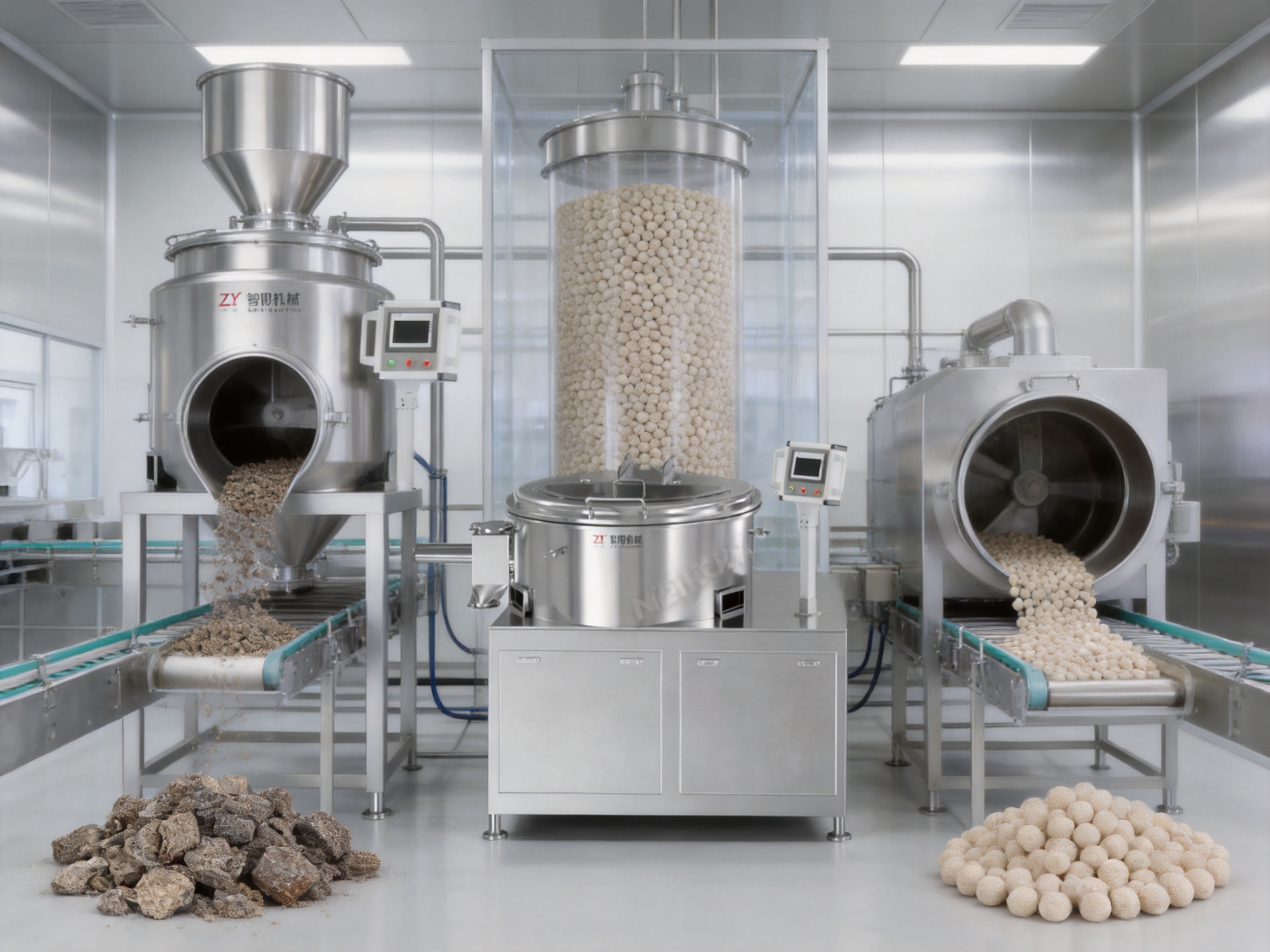
A centrifugal pelletizer should be installed as part of a planned process route. The location of the upstream wet granulator, the transfer method, the dryer, and any screening or coating equipment can affect material quality and production efficiency. Short and well-designed transfer paths can reduce material loss and limit unnecessary handling.
Utilities, ventilation, access for maintenance, cleaning requirements, and operator safety should be considered during layout planning. The blower and drive system require appropriate electrical and air-management arrangements. The installation area should also provide sufficient space for inspection, cleaning, product changeover, and service activities.
When the machine is integrated into a larger line, the feed rate of the upstream process should be compatible with the pelletizer’s working range. If the upstream machine delivers material faster than the pelletizer can process it, accumulation may occur. If the feed is too slow or intermittent, the disc may not operate at its most stable loading condition.
Downstream equipment should also be selected with the pellet characteristics in mind. A dryer, screen, conveyor, or coating machine may require a specific size range, moisture condition, or bulk density. Coordinating these specifications from the beginning can improve the overall performance of the line.
Pharmaceutical and nutraceutical production requires careful attention to cleaning and product changeover. Wet granules can leave residues on process surfaces, particularly when binders or sticky ingredients are used. A practical cleaning routine should include appropriate inspection of the disc, working gap, airflow path, discharge area, and material-contact components.
Routine maintenance should focus on the rotating assembly, drive system, blower, controls, fasteners, and other operating components. Operators should monitor unusual vibration, abnormal noise, unstable rotation, changes in airflow, and unexpected material accumulation. Early identification of these conditions can help prevent interruptions and protect pellet quality.
Reliable operation also depends on correct loading and suitable feed preparation. The machine should not be expected to compensate for excessively wet, oversized, or poorly mixed feed material. A stable upstream process and a defined operating procedure contribute significantly to equipment reliability.
Because the product range includes multiple models, maintenance planning should be matched to the selected unit and the production schedule. A supplier with experience in complete process systems can provide useful guidance on operating procedures, spare parts, and service intervals.
Choosing a pelletizer based only on nameplate capacity can lead to problems. The best machine for a particular application depends on the material, target pellet characteristics, production scale, and surrounding equipment. A supplier that understands powder processing can evaluate these factors more effectively than a vendor that offers a machine without process support.
ZY Machinery’s experience across mixing, granulation, drying, coating, auxiliary processing, and conveying gives it a broader basis for engineering recommendations. This is particularly valuable when customers are planning a new production line or upgrading an existing one. The supplier can consider how the pelletizer will affect the entire process rather than treating it as an isolated unit.
The company’s stated emphasis on honesty, quality, specialization, customer reputation, R&D, and innovation also reflects the long-term nature of industrial equipment projects. A machine may remain in service for many years, so communication, documentation, technical support, and parts availability are important considerations alongside the initial purchase price.
Advanced manufacturing should therefore be understood as more than fabrication. It includes process design, equipment selection, engineering coordination, quality control, testing, installation support, and after-sales service. These elements help convert a machine concept into a dependable production solution.
The first step is to define the material. Important information includes formulation, moisture content, initial granule size, bulk density, stickiness, sensitivity to mechanical force, and any requirements related to hygiene or containment.
The second step is to define the target pellet. The desired size range, sphericity, density, moisture condition, strength, and acceptable fines level should be identified. These requirements should be connected to the downstream drying, screening, coating, filling, or packaging process.
The third step is to determine the required throughput. Production rate should be considered together with batch size, working hours, feeding pattern, and future expansion plans. The QWL model range provides stated capacities from 0.5 to 300 kg/h, enabling selection across different scales.
The fourth step is to evaluate the complete process route. The pelletizer may need to connect to a wet granulator, transfer system, dryer, screen, coating machine, or packaging line. The layout, discharge direction, utilities, and control requirements should be reviewed before final selection.
The fifth step is to conduct process testing when necessary. Testing can help establish suitable disc speed, airflow, feed rate, and residence time. It can also reveal how the formulation behaves under different operating conditions and whether the selected model provides the intended result.
The final step is to confirm the service plan. Installation, commissioning, operator training, maintenance, spare parts, and technical response should be discussed before the order is finalized. This reduces uncertainty during startup and supports stable long-term operation.
The machine is designed for wet granules produced by an upstream granulation process. The material should have sufficient moisture and binding characteristics to support rounding and consolidation. The exact suitability depends on the formulation and should be confirmed through process evaluation.
Its main purpose is to transform irregular wet granules into dense, highly spherical pellets with improved uniformity. The process prepares the material for operations such as drying, screening, coating, transfer, or dosage-form production.
Wet granules move on a rotating centrifugal disc while airflow lifts and separates the material and gravity returns it through the working area. The combined forces create a helical and circular motion that repeatedly rolls and consolidates the granules.
Yes. Adjustable rotational speed allows operators to influence pellet size and density. Other conditions, including feed moisture, feed rate, initial granule size, airflow, and residence time, also affect the final result.
The design is intended to minimize fines through controlled circulation, rounding, and consolidation. Actual fines generation depends on the material and operating conditions, so the process should be optimized for each formulation.
Yes. The listed models range from QWL-230 to QWL-1300, with stated capacities from 0.5–4 kg/h to 100–300 kg/h. The appropriate model depends on the required throughput, material behavior, process configuration, and future production plans.
The QWL-230, with a stated capacity of 0.5–4 kg/h and power of 0.75 kW, is the smallest listed model and may be suitable for laboratory or small-scale process development. Final selection should consider the actual trial requirements.
Yes. The machine is suitable for integration with upstream wet granulation processes and can be positioned before a drying stage. The complete layout should be designed according to material flow, feed rate, moisture condition, and downstream equipment requirements.
Potential applications include pharmaceutical, biopharmaceutical, biotechnology, nutraceutical, veterinary, additive, and related powder-processing industries. The specific application should be evaluated according to formulation characteristics and quality requirements.
Improved sphericity can support better flow, more consistent transfer, more predictable drying, and more uniform coating. It may also help reduce irregular contact points and improve the handling behavior of the pellets.
A conventional mixer primarily distributes or blends material, while the centrifugal pelletizer is designed to create repeated rolling and rounding. Its rotating disc, airflow, and gravity work together to form a controlled pelletizing environment.
Useful information includes the material formulation, moisture content, initial granule size, desired pellet size, target capacity, bulk density, downstream process, available installation space, and any cleaning or containment requirements.
The company supplies standalone machines, modular systems, and complete production lines. Its product scope includes mixing, granulation, drying, coating, auxiliary processing, and transfer and conveying equipment.
Wet granules can behave differently depending on their formulation and moisture condition. Trials help confirm the suitable model and establish practical settings for rotational speed, airflow, feed rate, and residence time before full-scale production.
The QWL Centrifugal Pelletizing Machine provides a controlled method for transforming wet granules into uniform spherical pellets. Its operating principle combines centrifugal force, air lift, and gravity to create a helical and circular material movement. This repeated circulation improves rounding, supports densification, limits adhesion, and helps reduce fines.
Adjustable rotational speed gives operators control over pellet size and density, while the range of six models supports laboratory, pilot, and higher-throughput production requirements. The machine is also suitable for integration with upstream wet granulation and downstream drying or coating operations, making it a practical component of a broader oral solid dosage or powder-processing system.
The principal competitive advantage is the combination of controlled centrifugal pelletizing and process-oriented engineering. Rather than focusing only on equipment supply, Changzhou Zhiyang Machinery Equipment Co., Ltd. develops standalone machines, modular systems, and complete production lines based on material properties, capacity requirements, and site conditions. Its experience in mixing, granulation, drying, coating, conveying, R&D, quality systems, patented technologies, and overseas service provides a strong foundation for customized industrial solutions.
For manufacturers seeking better pellet sphericity, more consistent handling, reduced fines, and improved downstream process stability, centrifugal pelletizing can be an important process upgrade. Proper model selection, material testing, operating optimization, and complete-line coordination are the keys to achieving the best results.
1. Product information for the QWL Centrifugal Pelletizing Machine, including operating principle, key features, model data, power ratings, and capacity ranges.
2. Company information for Changzhou Zhiyang Machinery Equipment Co., Ltd., including corporate history, product scope, engineering approach, R&D activities, quality development, and overseas service capabilities.
3. General pharmaceutical engineering principles concerning wet granulation, pellet rounding, particle flow, drying preparation, and coating substrate uniformity.
4. General powder-processing practices related to material characterization, process integration, equipment selection, cleaning, maintenance, and scale-up.
Want to stay up to date?
Contact us via the email address below.
Don't worry about spam. We hate it too!
Mobile Client

Video Account
Phone:+86-15161130178
Tel:+86-519-88674267
Email:czzy188@163.com
Phone:+86-15161132798
Email:zy@zy-drying.com

WeChat ID

Copyright 2026 Changzhou Zhiyang Machinery Equipment Co., Ltd. All Rights Reserved  Oral Solid Dosage Equipment Manufacturer