 English
 Español
 русский
 中文简体
中文简体
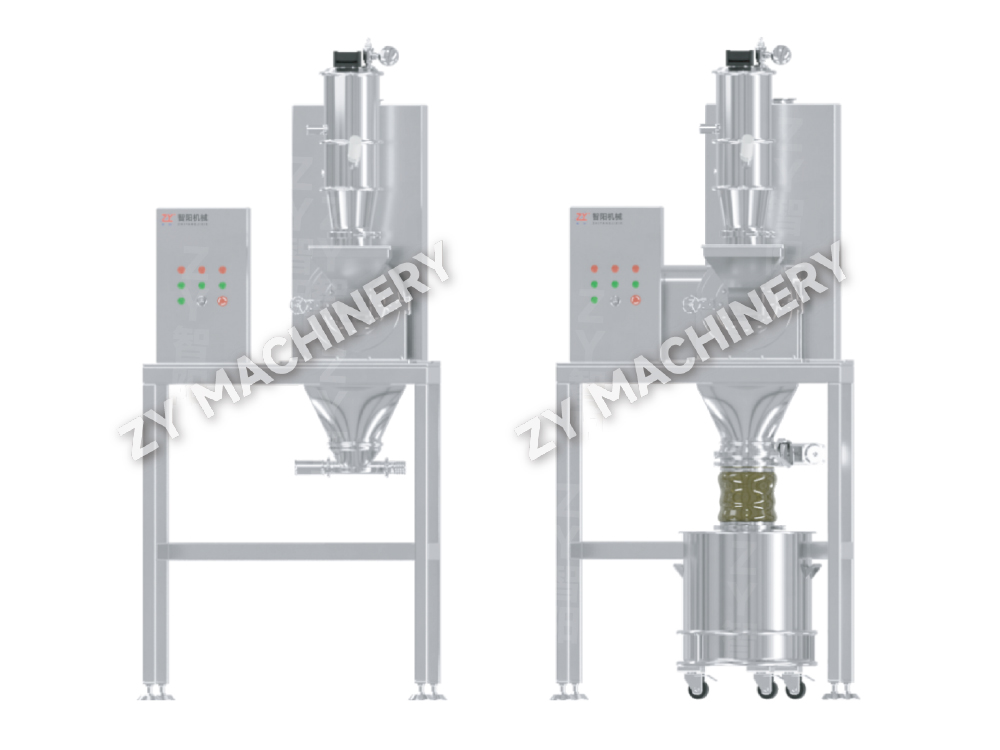
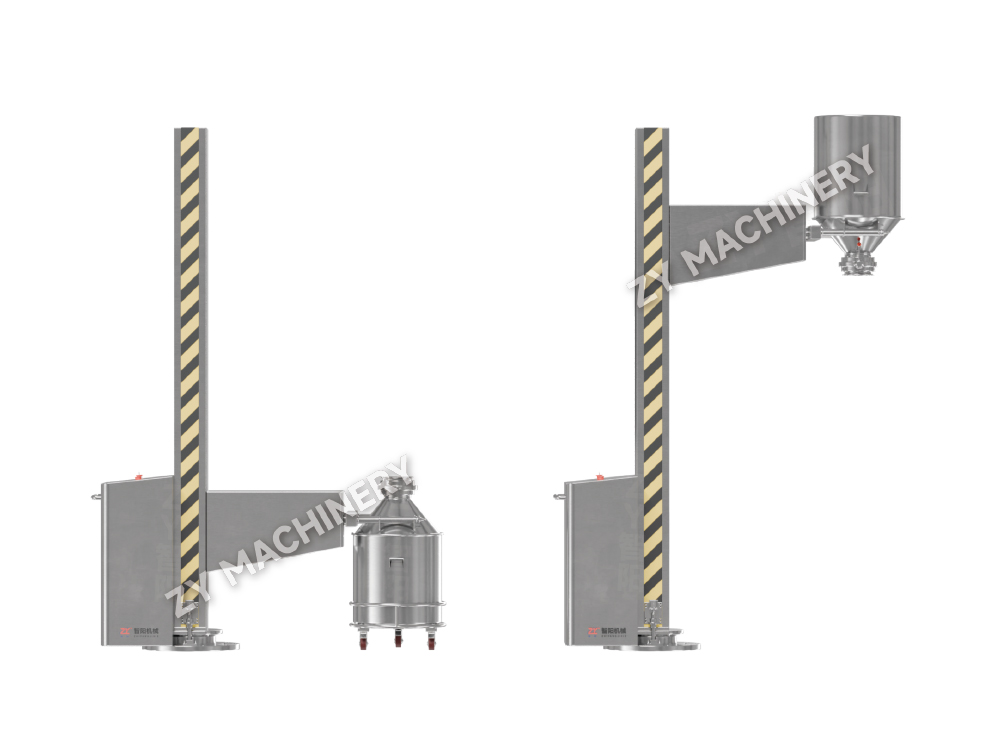
TLZ Dust-Free Feeding Station
The TLZ Dust-Free Feeding Station is designed to address dust generation du.....

Content
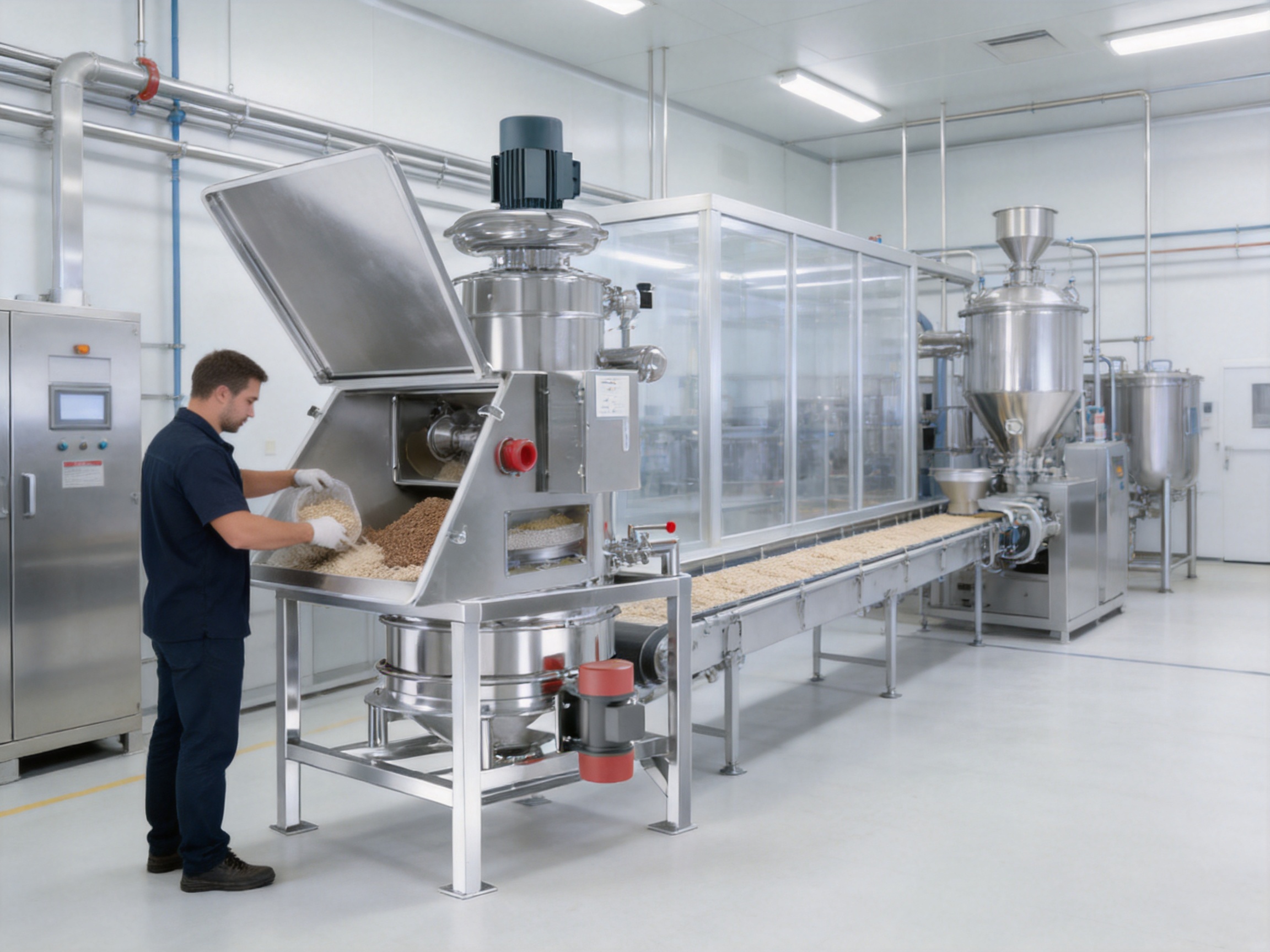
In pharmaceutical, food, chemical, nutraceutical, and related manufacturing operations, the feeding stage is often one of the first points at which raw materials are exposed to the production environment. Powders and granules must be transferred from bags, drums, containers, or other packaging into downstream equipment, yet this seemingly simple activity can create airborne dust, product loss, operator exposure, cross-contamination risks, and difficult cleaning conditions. A well-designed feeding station therefore contributes far more than material transfer. It supports process safety, hygiene, production stability, and regulatory compliance.
The TLZ Dust-Free Feeding Station is designed to control dust during the loading of powder and granular materials. It combines an enclosed feeding area, unidirectional airflow, high-efficiency filtration, continuous fan-assisted extraction, and pulse-reverse filter cleaning. The result is a controlled feeding operation that helps prevent airborne particles from escaping into the surrounding workplace.
Manufactured and supplied by Changzhou Zhiyang Machinery Equipment Co., Ltd., the TLZ system is part of a broader portfolio of powder processing, oral solid dosage, and process integration equipment. The company provides standalone machines, modular systems, and complete production-line solutions for pharmaceutical, biopharmaceutical, biotechnology, nutraceutical, veterinary, additive, food, and chemical applications.
This article examines the operating principles, design advantages, application value, manufacturing strengths, and selection considerations associated with the TLZ Dust-Free Feeding Station. It also explains why an integrated approach to dust control can offer important advantages over conventional open feeding arrangements and less adaptable dust collection solutions.
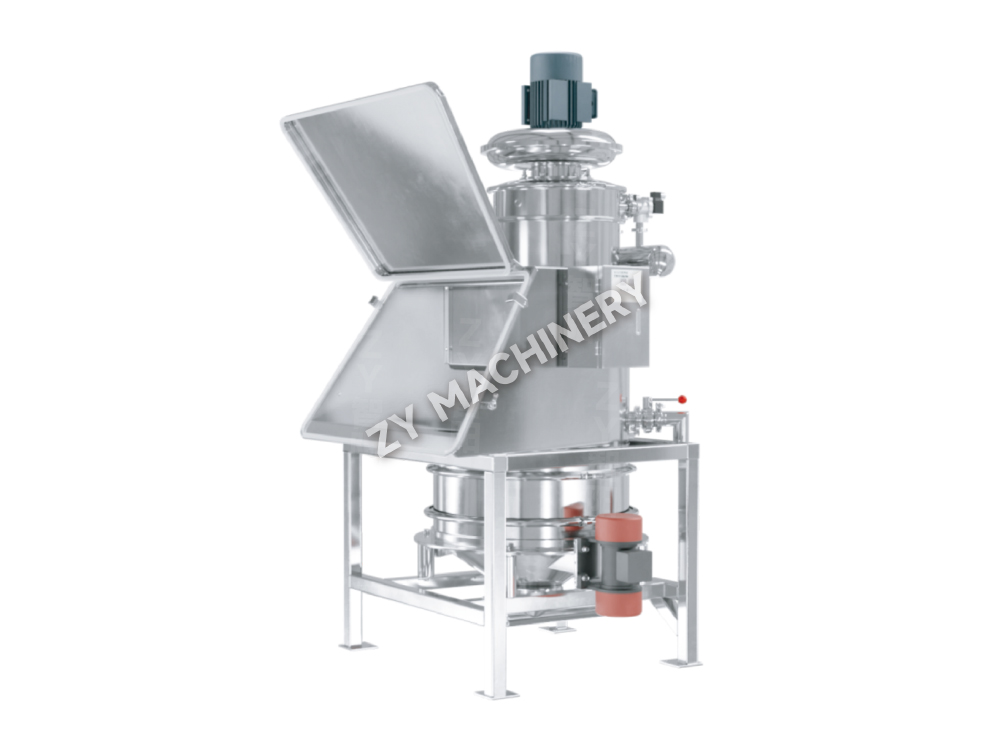
TLZ Dust-Free Feeding Station
Dust is generated whenever dry materials are poured, tipped, conveyed, vibrated, or discharged. During manual feeding, a bag or container may be opened above a hopper while material falls through the air. Fine particles can become suspended because of the impact of the material, the movement of packaging, the displacement of air from the receiving vessel, or vibration caused by nearby equipment.
Without effective containment and extraction, these particles may spread beyond the immediate feeding point. They can settle on floors, machine surfaces, electrical enclosures, structural elements, and other production equipment. In a pharmaceutical or food manufacturing area, accumulated powder can create cleaning burdens and may increase the possibility of material carryover between batches.
Operator exposure is another important concern. Even materials that are not classified as highly hazardous can irritate the respiratory system or create uncomfortable working conditions when airborne concentrations rise. Certain active pharmaceutical ingredients, chemical powders, enzymes, and fine additives may require significantly more rigorous containment and handling procedures.
Dust can also affect production efficiency. Material lost to the surrounding environment represents a direct reduction in yield. Deposits on equipment can require additional cleaning time. Frequent manual filter replacement may interrupt operations. If the feeding process is unstable, downstream equipment may receive material irregularly, affecting mixing, granulation, drying, compression, filling, or other process stages.
The feeding station is consequently a strategic control point. By capturing airborne dust close to its source, it is possible to reduce the amount of contamination that must be managed elsewhere. Source capture is generally more effective than relying only on general room ventilation because the extraction force is concentrated where dust is generated.
The TLZ Dust-Free Feeding Station is intended for the controlled loading of powders and granular materials. It provides a dedicated station in which material can be introduced into the process while airborne particles are drawn toward a filtration system instead of being released into the production area.
The system uses a dust capture mechanism to create a unidirectional airflow. This airflow guides dust-laden air through a high-efficiency filter while helping prevent escape into the surrounding environment. A high-pressure centrifugal fan provides the air movement required for continuous extraction during feeding.
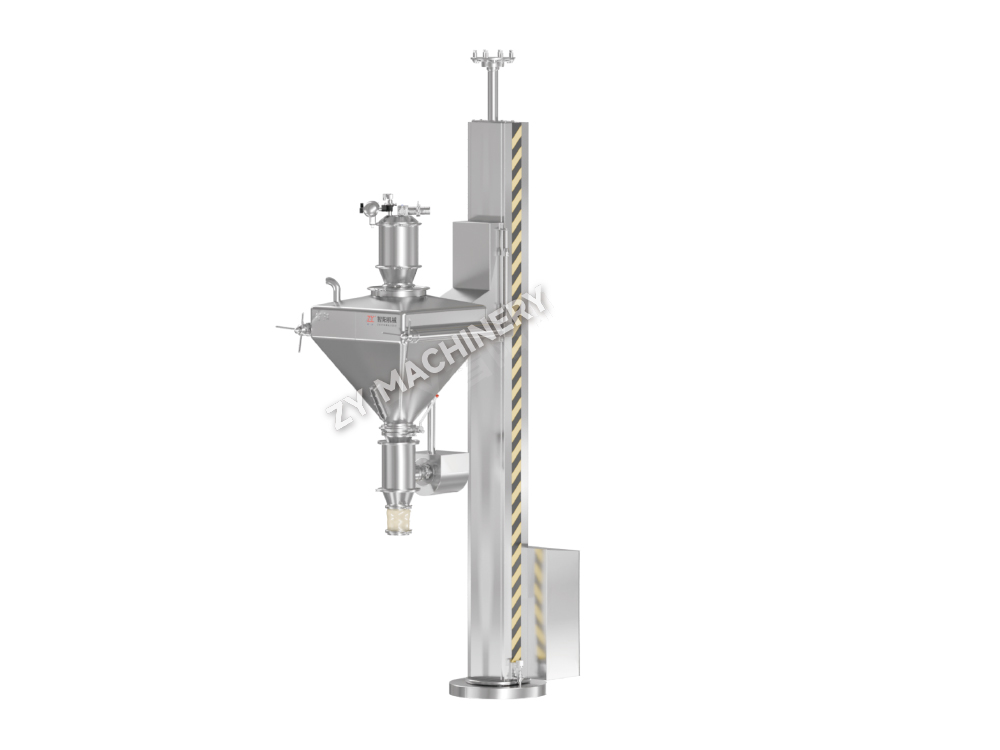
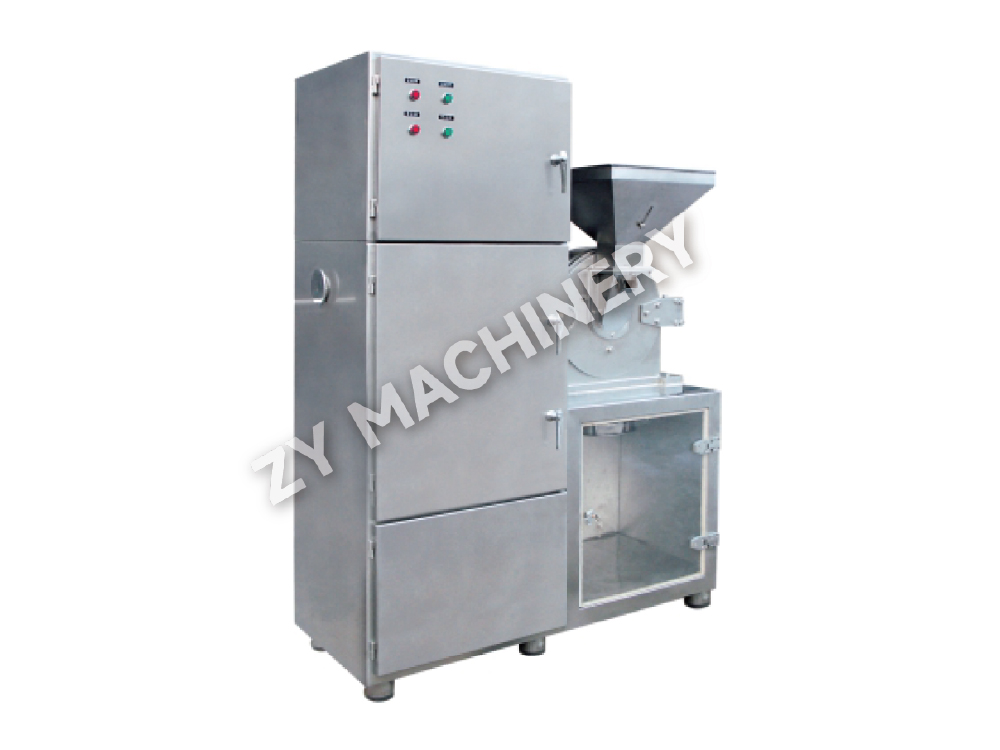
The station can be configured for different production needs. Optional functions include iron removal, sieving, and crushing. These additions allow the feeding operation to perform more than one preparation task before material enters the next piece of equipment. Depending on the application, the station can therefore serve as a basic dust-controlled loading point or as a more comprehensive raw-material preparation module.
The TLZ range includes the TLZ-1 and TLZ-2 models in the supplied product data. The principal difference shown in the available specifications is the rated power of the dust collection fan. The TLZ-1 uses a 1.1 kW dust collection fan, while the TLZ-2 uses a 1.5 kW fan. Both models use a 0.18 kW vibrating motor, and the filtration specification includes a 0.4 micrometer coated polyester filter cartridge or a titanium membrane filter.
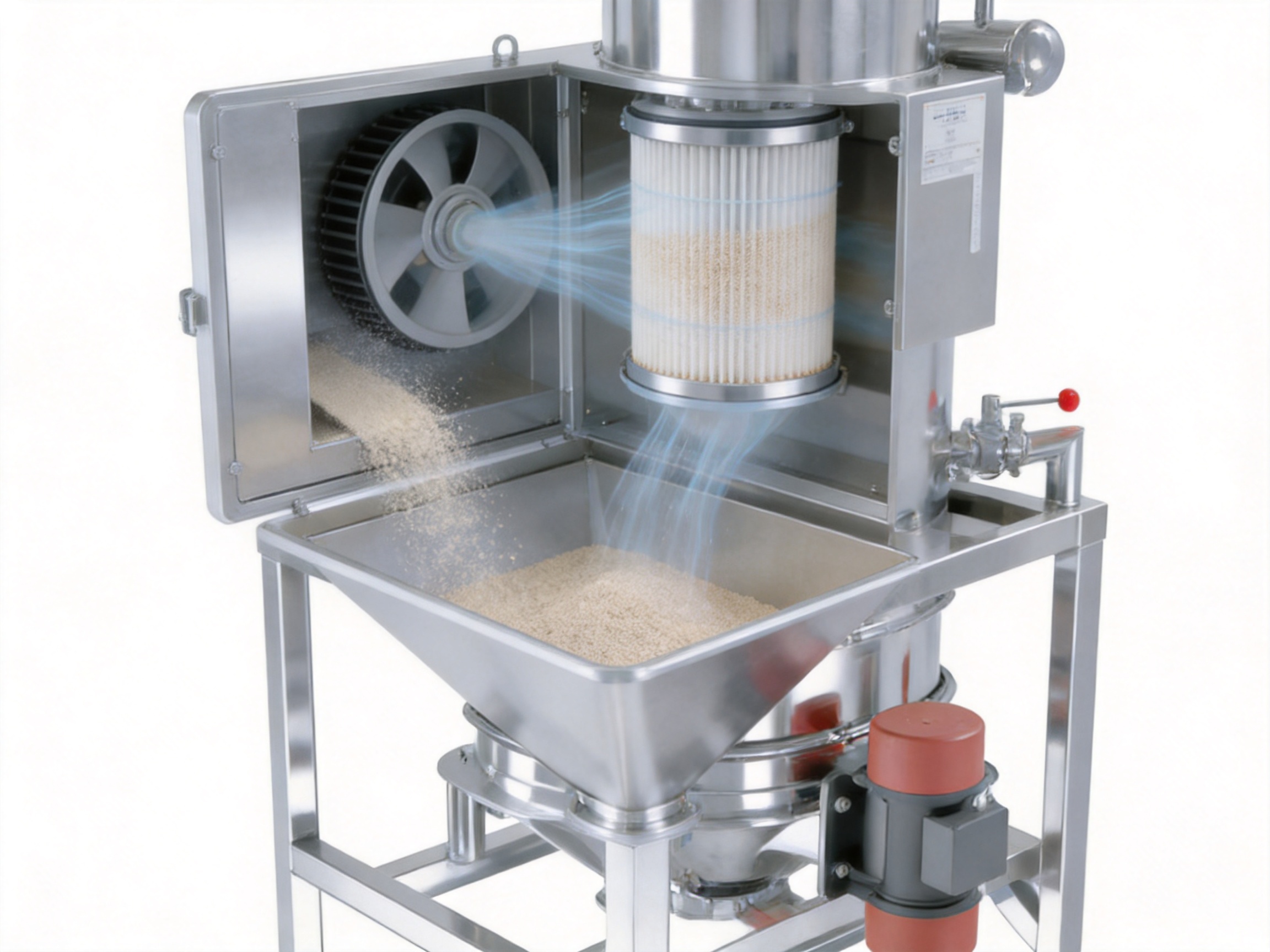
The operating principle of the TLZ station is based on controlled airflow, source capture, and high-efficiency filtration. When the operator loads material into the feeding station, the centrifugal fan creates negative pressure and draws air toward the dust removal section. The airflow is arranged to reduce the movement of dust away from the loading zone.
As the contaminated air passes through the filter, suspended particles are retained on the filter surface. Cleaner air continues through the filtration system, while collected powder remains contained within the equipment. This arrangement helps maintain a cleaner working environment and reduces the amount of airborne dust available to spread through the room.
The use of a high-pressure centrifugal fan is particularly important when airflow must overcome resistance created by a fine filter, ducting, screens, or other optional components. The fan must maintain suitable air movement throughout the feeding cycle rather than providing only a momentary extraction effect. Continuous extraction supports stable operating conditions during manual loading and material discharge.
A vibrating motor assists the movement of material through the feeding area. Vibration can help reduce bridging, improve material flow, and support more consistent discharge, particularly when powders have poor flowability or when the receiving opening is relatively compact. The appropriate vibration level and operating time should be determined according to the properties of the material and the requirements of the downstream process.
In a typical operating sequence, the station is started before feeding begins. The operator places the container or bag in the loading area, opens or empties it under controlled airflow, and allows the material to pass through the relevant screen, magnet, or crushing device when those options are installed. Extracted air passes through the selected filter, while the prepared material continues toward the next process stage.
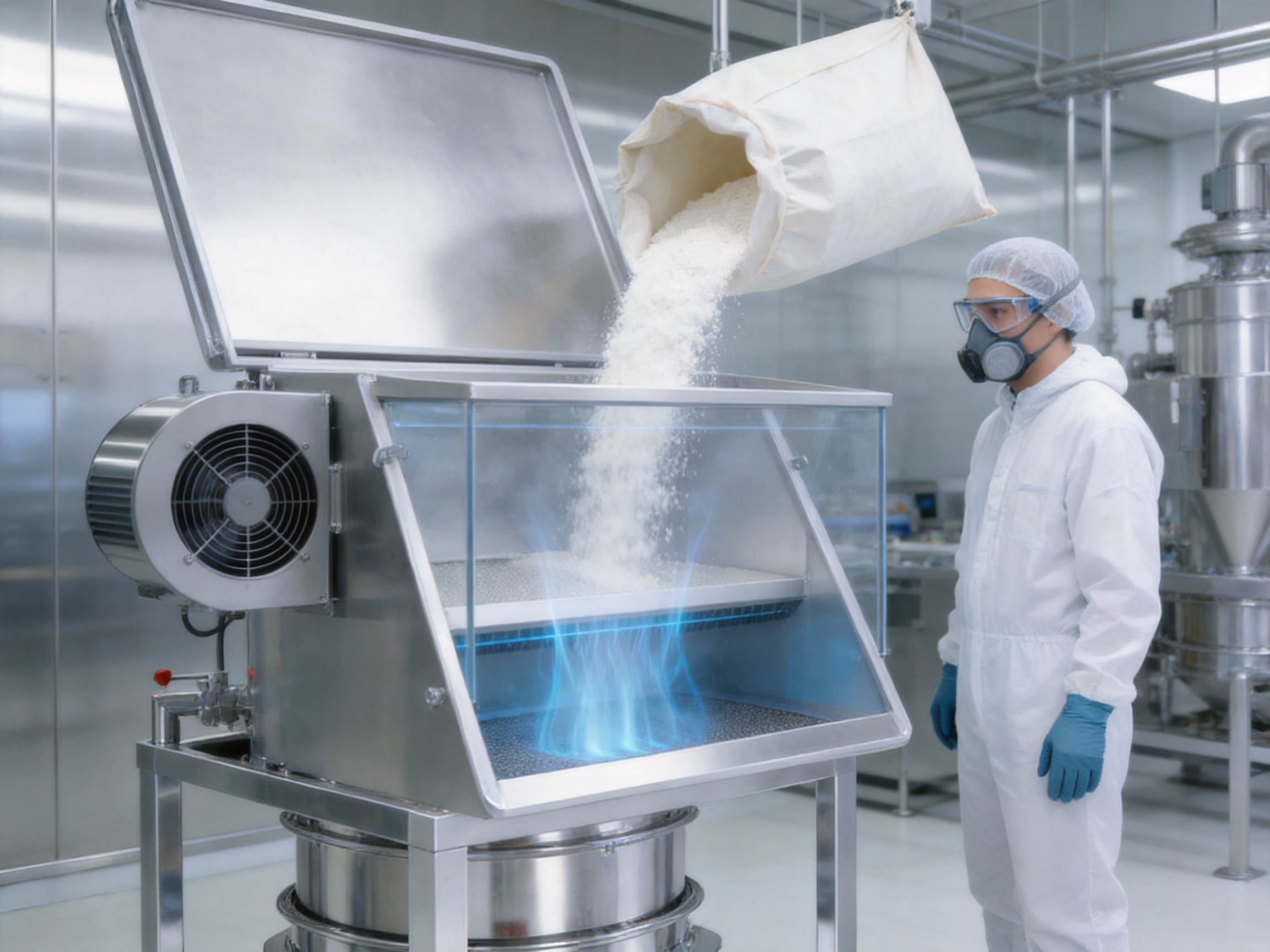
The airflow arrangement is one of the most important features of the TLZ design. Rather than allowing air to move unpredictably around an open feeding point, the station establishes a defined direction of air movement toward the filter. This helps focus dust capture at the source and reduces the likelihood that particles will move toward the operator or adjacent equipment.
A controlled airflow pattern can also support more predictable performance from batch to batch. Although actual airflow requirements depend on material behavior, feeding method, room conditions, and optional components, the principle remains consistent: dust should be captured as close as possible to the point of release.
The filtration system is designed to retain fine airborne particles generated during loading. The supplied specification identifies a 0.4 micrometer coated polyester filter cartridge or a titanium membrane filter as available dust removal filter options.
Coated polyester filter media can provide a durable surface for particle collection and cleaning. A coated surface may also help reduce the penetration of fine particles into the body of the filter material, supporting easier cleaning and longer service life when correctly operated.
Titanium membrane filtration offers another option for applications that require a robust and highly efficient filter construction. The final selection should be based on the particle size distribution, chemical compatibility, temperature, humidity, cleaning method, and validation requirements of the intended application.
Filter loading is a natural consequence of dust collection. As powder accumulates on the filter surface, airflow resistance may increase. If the accumulated layer is not removed, extraction performance can decline and the fan may need to work harder to maintain airflow.
The TLZ station is equipped with a pulse-reverse air cleaning system. This system periodically sends a reverse pulse through the filter to dislodge collected dust. The loosened material can then fall back into the controlled product or collection area, depending on the system configuration.
Pulse cleaning offers several practical advantages. It helps prevent filter clogging, supports more stable airflow, reduces the frequency of manual filter cleaning, and allows repeated use of filter materials. This is especially valuable in production environments where frequent disassembly would increase labor requirements or create additional opportunities for exposure.
The filtration material is described as FDA-compliant laminated needle felt. This type of construction is intended to combine effective dust retention with suitability for applications in which contact materials and processing conditions must be carefully controlled.
For food, pharmaceutical, and nutraceutical operations, filter selection is not based only on particle efficiency. Operators and quality departments may also consider material composition, cleanability, chemical resistance, temperature tolerance, extractables, and documentation. A suitable filter must be compatible with the product and with the cleaning and sanitation procedures used at the facility.
Customers should confirm the specific filter construction, compliance documentation, and material compatibility for each project. Product formulation, regulatory classification, and site validation requirements can vary significantly between applications.
The modular, quick-release design supports installation, cleaning, inspection, and maintenance. Equipment used for powders must be accessible because residues can accumulate in corners, under screens, around seals, or near transfer points if the design does not provide adequate access.
Quick-release components can reduce the time required to remove filter housings, screens, covers, or other product-contact parts. Faster disassembly supports more frequent cleaning and inspection, which is particularly important when multiple products are processed on the same line.
Modularity also assists project planning. A basic station may be installed first, with additional functions introduced later if production requirements change. Alternatively, a system can be supplied as part of a larger process line that includes mixing, granulation, drying, coating, conveying, or other operations.
Raw materials may require preparation before entering the next stage. Packaging fragments, metallic particles, lumps, oversized material, and agglomerates can create problems in downstream equipment. The TLZ station can integrate optional iron removal, sieving, and crushing functions to address these conditions at the feeding point.
Iron removal can help protect downstream machinery and improve product cleanliness by capturing ferrous contaminants. Sieving can separate oversized particles and break the incoming material stream into a more controlled size range. Crushing can reduce lumps or agglomerates that might otherwise interfere with conveying, mixing, or dosing.
Combining these functions in a single feeding station may reduce manual handling and eliminate the need for separate intermediate operations. It can also reduce the number of transfer points where dust may be released. The correct configuration depends on the material, required throughput, particle-size targets, contamination-control strategy, and downstream equipment.
The following table summarizes the available technical information for the TLZ models.
| Item | Unit | TLZ-1 | TLZ-2 |
| Dust collection fan | kW | 1.1 | 1.5 |
| Vibrating motor | kW | 0.18 | 0.18 |
| Dust removal filter | — | 0.4 micrometer coated polyester filter cartridge or titanium membrane filter | 0.4 micrometer coated polyester filter cartridge or titanium membrane filter |
These listed values provide a starting point for model selection, but they should not be treated as a complete engineering specification for every installation. Final selection should consider the material bulk density, moisture content, particle size, flowability, dustiness, feeding rate, bag or container size, conveying distance, filter resistance, room classification, and optional equipment.
Open feeding frequently allows dust to escape into the working area. Operators may need to clean surrounding surfaces after each batch, and powder deposits may accumulate in areas that are difficult to reach. The TLZ station moves the feeding activity into a controlled capture zone, helping reduce airborne and settled dust.
Cleaner surroundings can improve operator comfort and reduce the time spent on housekeeping. In regulated environments, better control of residues can also support documented cleaning procedures and inspection readiness.
Dust capture at the source can reduce the amount of material entering the operator’s breathing zone. This does not eliminate the need for appropriate personal protective equipment, safe work procedures, or hazard assessments. However, it adds an engineering control that can complement administrative and personal protection measures.
Compared with manually emptying bags into an open hopper, a dust-controlled station creates a more structured method of handling dry materials. This can be particularly valuable when powders are fine, irritating, potent, or otherwise difficult to manage.
Material that becomes airborne or settles outside the process may be lost from the batch. In addition to the cost of the material itself, uncontrolled loss can affect batch reconciliation and complicate cleaning. By containing dust within the extraction and filtration system, the TLZ station can help improve material utilization.
The integrated vibrating motor and optional preparation functions can help create a more consistent material flow. Removing lumps, separating oversized particles, and controlling the input condition of the material may improve the performance of downstream mixers, granulators, dryers, and other equipment.
Stable feeding is especially important when the downstream process is sensitive to changes in material quantity or particle distribution. A smoother input stream can support better process repeatability and reduce interruptions caused by bridging or blockages.
Compared with systems that depend primarily on disposable filter elements, pulse-cleaned filter media can reduce the frequency of replacement. Reusable filter materials may lower consumable costs and reduce maintenance waste, provided that they are cleaned, inspected, and replaced according to an appropriate maintenance schedule.
A fixed-purpose feeding device may be adequate for one material and one process, but production requirements often change. The TLZ platform can be configured with different filtration options and integrated functions. This flexibility makes it more suitable for facilities that handle a range of powders and granules or that expect future process expansion.
General extraction hoods can remove some airborne dust, but they may not provide the same level of source control as an enclosed or semi-enclosed feeding station. A hood positioned above a hopper must capture particles after they have already entered the room air. Its effectiveness can be influenced by cross-drafts, operator movement, room ventilation, and the distance between the dust source and the hood.
The TLZ station brings the capture mechanism closer to the point where dust is generated. Its unidirectional airflow is designed around the feeding operation rather than relying only on broad room extraction. The integrated filter and fan also provide a dedicated system for handling the collected dust.
Another distinction is process integration. A simple hood generally performs only an extraction function. The TLZ station can incorporate vibration, iron removal, sieving, or crushing. This enables the feeding point to become a controlled preparation stage rather than merely a ventilation accessory.
These advantages do not mean that every application requires the same configuration. A low-dust, free-flowing granule may need less control than a fine pharmaceutical powder. Correct engineering requires a review of the material hazard, handling method, required containment level, and production environment.
Pharmaceutical production frequently involves active ingredients, excipients, granules, lubricants, pigments, and other powdered materials. These materials may be introduced into mixers, granulators, fluid-bed systems, tablet presses, capsule machines, or intermediate bulk containers.
At the feeding stage, dust control supports operator protection, batch cleanliness, and GMP-oriented production practices. A station with sieving or iron removal may also help ensure that raw materials meet defined input conditions before processing.
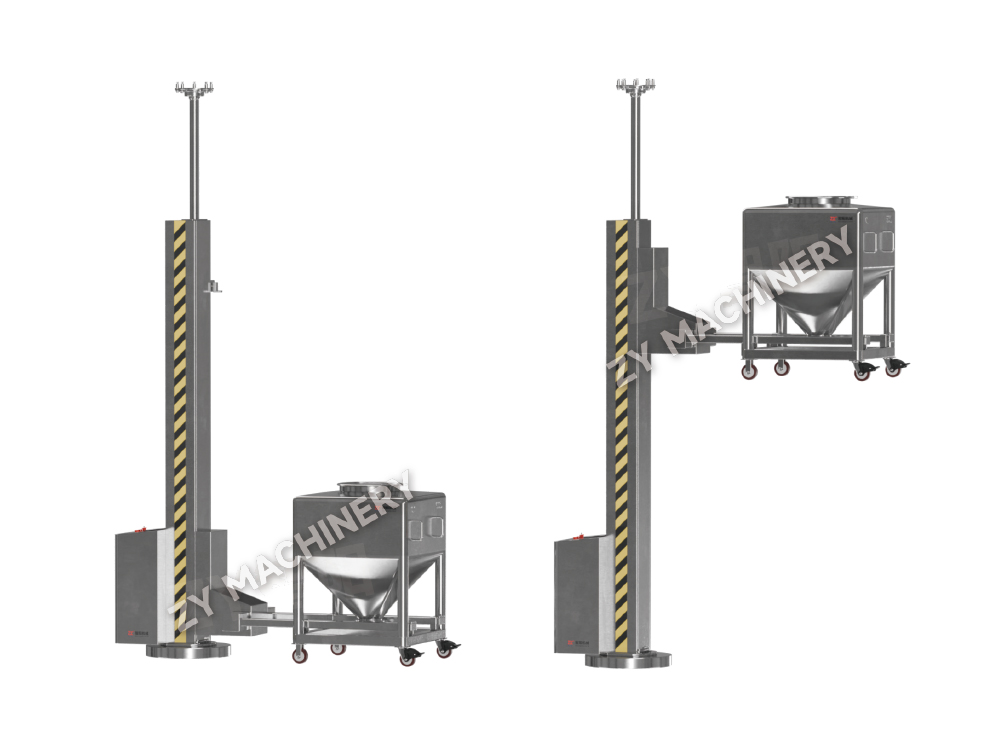
For facilities manufacturing oral solid dosage products, the feeding station can function as part of a broader process route that includes powder mixing, wet or dry granulation, drying, sizing, lubrication, compression, and coating. The selection of downstream equipment and transfer methods should be coordinated so that dust control is maintained throughout the line.
Food ingredients and nutraceutical powders can be highly dusty and may include flour, starch, protein, vitamins, minerals, flavors, sweeteners, and functional additives. Even nonhazardous powders can create housekeeping problems and affect product quality when they spread between production areas.
The TLZ station can help establish a cleaner receiving and feeding point. Filter material selection, surface finish, cleanability, and sanitation procedures should be evaluated according to the food safety program and the nature of the products being handled.
Chemical powders and granules may vary widely in particle size, abrasiveness, hygroscopicity, corrosiveness, and toxicity. Some materials may also present combustible dust concerns. The feeding station should therefore be selected as part of a complete risk assessment.
Where applicable, customers should review grounding, electrical classification, explosion protection, material compatibility, ventilation design, and any special containment requirements. The standard product information describes dust capture and filtration but does not by itself define a complete hazardous-area or combustible-dust solution.
Veterinary products, feed additives, premixes, and specialty ingredients often require accurate handling of relatively small quantities of fine materials. Dust control can support operator safety and prevent cross-contamination between formulations.
When different products are processed in the same facility, the quick-release construction and accessible components can assist cleaning and changeover. Validation requirements should determine the cleaning method, inspection points, and documentation process.
Changzhou Zhiyang Machinery Equipment Co., Ltd. approaches equipment development through process requirements rather than treating each machine as an isolated product. The company designs solutions according to material characteristics, production capacity, site conditions, and the intended process route.
This approach is important for feeding systems because dust performance cannot be separated completely from the material and the equipment connected to the station. Fan selection, filter area, vibrating action, discharge arrangement, and optional preparation functions must work together with the receiving machine and the plant’s ventilation strategy.
Founded in 2010 and based in Changzhou, China, ZY Machinery specializes in powder processing and oral solid dosage equipment. Its product scope includes laboratory equipment, mixing equipment, granulation equipment, drying equipment, coating equipment, auxiliary processing equipment, and transfer and conveying systems.
This broader equipment portfolio gives the company a useful perspective when integrating a feeding station into a complete production line. The supplier can consider how material enters the process, how it is mixed or granulated, how moisture is removed, how products are coated, and how materials are conveyed between stages.
Different customers require different levels of project support. Some need only a standalone feeding station for an existing process. Others require a modular production system with several connected machines. New plants may require a complete production line with process planning, equipment coordination, and engineering implementation.
ZY Machinery provides all three approaches. This enables the TLZ station to be specified for a single installation or incorporated into a larger material-handling and powder-processing solution. Modular planning may also allow a facility to expand gradually as production volumes or product categories increase.
The company has expanded its product portfolio, strengthened research and development capabilities, obtained quality system certification, and developed patented technologies. These efforts indicate a focus on continuous improvement rather than relying only on standard equipment configurations.
For a dust-free feeding system, ongoing development may involve improvements in filtration, filter cleaning, airflow control, hygienic design, discharge stability, component accessibility, and integration with upstream and downstream equipment. Customers should request the current technical documentation and project-specific compliance information when evaluating an installation.
ZY Machinery has delivered equipment and engineering solutions to customers worldwide and has developed overseas service capabilities. International support is valuable because powder-processing projects often involve documentation, installation coordination, commissioning, operator training, spare parts, and after-sales communication across different time zones and regulatory environments.
A supplier with experience in overseas projects may also be better prepared to coordinate technical drawings, utility requirements, shipping arrangements, factory acceptance activities, and site acceptance procedures. These services should be defined clearly in the commercial and technical agreements for each project.
A dust-free feeding station can contribute to GMP-oriented production, but GMP compliance is achieved through the complete facility, process, documentation system, and operating practice. The equipment must be evaluated together with the room classification, personnel flow, material flow, cleaning validation, preventive maintenance, and quality management system.
Important design considerations include the accessibility of product-contact surfaces, the elimination of unnecessary powder-retention areas, the compatibility of seals and filter materials, the control of cleaning tools, and the ability to inspect components after cleaning.
The quick-release design of the TLZ station supports this objective by making selected parts easier to remove and clean. However, the precise cleaning method must be established according to the product properties. Dry cleaning may be preferred for some powders, while wet cleaning or specialized methods may be required for others.
Facilities should also define procedures for filter inspection and replacement. A filter may appear visually acceptable while having damaged seams, degraded media, or reduced performance. A documented inspection program helps ensure that the dust removal system continues to function as intended.
Before installation, the project team should confirm the available floor space, operator access, ceiling height, discharge elevation, utility connections, electrical requirements, and relationship to the receiving equipment. The station should be positioned so that operators can load materials safely without creating unnecessary lifting, reaching, or twisting movements.
The connecting process equipment should be reviewed carefully. If the receiving machine draws air strongly or intermittently, it may affect the airflow balance of the feeding station. If a long transfer line is installed downstream, additional conveying resistance may influence the overall system design.
Dust collection performance also depends on the room environment. Cross-drafts from doors, air-conditioning outlets, or nearby machines can disturb the intended airflow pattern. The feeding station should be evaluated under realistic operating conditions rather than only when isolated from the rest of the facility.
Commissioning should include checks of fan rotation, airflow direction, filter installation, pulse-cleaning operation, vibrating motor performance, discharge stability, noise, access panels, and emergency-stop functions where applicable. Trial runs with representative material can help identify bridging, dust leakage, accumulation, or uneven feeding before routine production begins.
Operators should start the dust collection system before opening bags or containers. Allowing the fan to establish airflow in advance helps ensure that dust capture is active at the beginning of the feeding cycle. Loading should be performed at a controlled rate rather than by suddenly dumping a large quantity of material into the station.
Filter cleaning should be performed according to the operating schedule and actual filter loading. The pulse-reverse system reduces manual intervention, but it does not remove the need for inspection. Operators should monitor unusual changes in airflow, fan noise, vibration, pressure behavior, or visible dust escape.
Routine maintenance may include inspecting filter media, checking seals, tightening fasteners, cleaning product-contact components, inspecting the vibrating motor, and verifying the condition of electrical and pneumatic connections. The maintenance frequency should be adjusted according to duty cycle, material abrasiveness, dust concentration, and cleaning practices.
When changing from one product to another, the station should be cleaned and inspected in accordance with the site’s approved procedure. Special attention should be given to filter housings, screen surfaces, corners, discharge areas, and any optional crushing or magnetic separation components.
Spare filters, seals, vibration components, and other wear parts should be identified during project planning. Maintaining appropriate spares can shorten downtime and support reliable operation, particularly in facilities with continuous or multi-shift production.
The TLZ-1 and TLZ-2 models differ in the listed dust collection fan power, with the TLZ-2 providing the higher rated fan power. The correct model should be selected after reviewing the required airflow, filter resistance, process configuration, and operating conditions.
Material properties are central to selection. Fine, low-density, highly dusty powders may require more careful airflow management than larger, free-flowing granules. Hygroscopic products may need humidity control or special cleaning procedures. Cohesive powders may benefit from vibration, crushing, or other flow-assistance measures.
Capacity is another major factor. The supplier should receive information about the expected feeding rate, batch size, number of bags or containers per hour, and the required connection to downstream equipment. A station that is too small may restrict production, while an unnecessarily large system may increase energy consumption and capital cost.
The project team should also determine whether iron removal, sieving, or crushing is required. Integrating these functions at the feeding point may provide significant process benefits, but each additional function affects maintenance access, pressure loss, cleaning, and validation requirements.
Finally, the facility should define its documentation needs. Depending on the industry and project, this may include technical drawings, material certificates, filter documentation, electrical diagrams, operating manuals, cleaning instructions, factory testing records, and installation qualification support.
The value of a dust-free feeding station should be assessed over its operating life rather than only by its initial purchase price. A system that reduces manual cleaning, product loss, filter replacement, and unplanned stoppages may provide a lower total cost of ownership.
Pulse-reverse cleaning can extend the useful operating period of filter media and reduce labor associated with frequent manual cleaning. The modular construction can shorten maintenance and changeover activities. Optional integrated functions can reduce the need for separate equipment and additional transfer steps.
Improved cleanliness may also reduce indirect costs. These can include the labor required for housekeeping, investigation of cross-contamination events, replacement of contaminated materials, and interruptions caused by blocked or poorly flowing product.
Energy use should be considered as part of the overall assessment. Fan power, operating hours, pressure drop, and cleaning-cycle settings all influence consumption. Proper model selection and system balancing can help avoid using more extraction capacity than necessary while still maintaining effective dust capture.
A dust-free feeding station is an important engineering control, but it should form part of a wider safety program. A hazard assessment should identify whether the material is toxic, sensitizing, corrosive, reactive, combustible, explosive, or otherwise hazardous.
Where combustible dust may be present, the facility should obtain appropriate engineering guidance regarding ignition sources, grounding, bonding, explosion venting, suppression, isolation, electrical equipment, and housekeeping. The standard features described for the TLZ station should not be assumed to provide complete explosion protection unless specifically engineered and documented for that application.
Operators should receive training in safe loading, filter inspection, cleaning, personal protective equipment, emergency response, and abnormal-condition reporting. Written procedures should explain what to do if dust escapes, airflow decreases, the fan stops, or material becomes blocked.
Site-specific occupational exposure limits, environmental requirements, and local regulations must also be considered. The final system should be reviewed and approved by the customer’s engineering, safety, quality, and regulatory teams before routine use.
Its main purpose is to control dust generated while powders and granular materials are loaded into a process. It uses directed airflow, a centrifugal fan, and high-efficiency filtration to capture airborne particles near the feeding point.
The system is suitable for applications in pharmaceutical, food, chemical, nutraceutical, veterinary, additive, and related powder-processing industries. The final configuration must be matched to the material and the facility’s safety, hygiene, and regulatory requirements.
The station creates a unidirectional airflow that draws dust-laden air toward the filter. The centrifugal fan maintains extraction, while the filter captures suspended particles before the air returns to the surrounding environment or proceeds through the designated exhaust arrangement.
Pulse-reverse cleaning sends a short burst of air through the filter in the opposite direction of normal airflow. This dislodges accumulated dust from the filter surface, helping prevent clogging and supporting repeated use of the filter material.
The listed filtration options include a 0.4 micrometer coated polyester filter cartridge and a titanium membrane filter. The appropriate option depends on the product, particle characteristics, chemical compatibility, cleaning method, and project requirements.
Iron removal, sieving, and crushing are available as optional integrated functions. These features can help remove ferrous contaminants, separate oversized particles, and break up lumps before the material enters downstream equipment.
According to the available product parameters, TLZ-1 is equipped with a 1.1 kW dust collection fan, while TLZ-2 uses a 1.5 kW fan. Both models list a 0.18 kW vibrating motor. Final selection should be based on airflow and process requirements.
It can be considered for integration with existing mixers, granulators, conveying systems, hoppers, and other processing equipment, subject to mechanical, electrical, airflow, and process compatibility checks. Connection dimensions and project-specific requirements should be confirmed during engineering.
The station is designed to support dust-free and hygienic feeding suitable for GMP-oriented production lines. However, complete GMP compliance depends on the entire facility, operating procedures, cleaning program, validation strategy, documentation, and quality system.
Useful information includes the material name and properties, bulk density, particle size, dustiness, moisture content, feeding rate, batch size, bag or container dimensions, downstream equipment, required optional functions, room conditions, cleaning method, and applicable safety or regulatory standards.
The feeding stage has a direct effect on workplace cleanliness, operator protection, material utilization, downstream process stability, and production efficiency. Conventional open feeding can release dust, increase cleaning requirements, and create avoidable risks. A dedicated dust-controlled station provides a more systematic way to manage these challenges.
The TLZ Dust-Free Feeding Station combines unidirectional airflow, high-pressure centrifugal extraction, high-efficiency filtration, pulse-reverse cleaning, a vibrating motor, and modular quick-release construction. Optional iron removal, sieving, and crushing functions further expand its role from a simple loading point to an integrated raw-material preparation station.
Its value is strengthened by the broader capabilities of Changzhou Zhiyang Machinery Equipment Co., Ltd. The company’s experience in powder processing, oral solid dosage equipment, process integration, research and development, modular engineering, and overseas project support enables the feeding station to be considered as part of a complete production strategy.
For facilities seeking cleaner powder handling and more reliable process integration, the most important step is to match the equipment configuration to the actual material, capacity, safety, hygiene, and maintenance requirements. With appropriate engineering and operating procedures, the TLZ system can provide a practical foundation for safer and more controlled feeding across a wide range of production environments.
1. Product information supplied for the TLZ Dust-Free Feeding Station, including model parameters, filtration options, operating principle, and optional functions.
2. Changzhou Zhiyang Machinery Equipment Co., Ltd. Corporate information concerning powder processing equipment, oral solid dosage systems, process integration, research and development, and overseas service capabilities.
3. Good Manufacturing Practice principles for pharmaceutical production, with emphasis on equipment hygiene, cleaning, contamination control, and documented process operation.
4. General industrial guidance on local exhaust ventilation, source dust capture, filter maintenance, and workplace airborne-particle control.
5. General engineering guidance for combustible-dust risk assessment, equipment grounding, ignition-source control, and production-area housekeeping.
Want to stay up to date?
Contact us via the email address below.
Don't worry about spam. We hate it too!
Mobile Client
Video Account
Phone:+86-15161130178
Tel:+86-519-88674267
Email:czzy188@163.com
Phone:+86-15161132798
Email:zy@zy-drying.com

WeChat ID

Copyright 2026 Changzhou Zhiyang Machinery Equipment Co., Ltd. All Rights Reserved  Oral Solid Dosage Equipment Manufacturer