 English
 Español
 русский
 中文简体

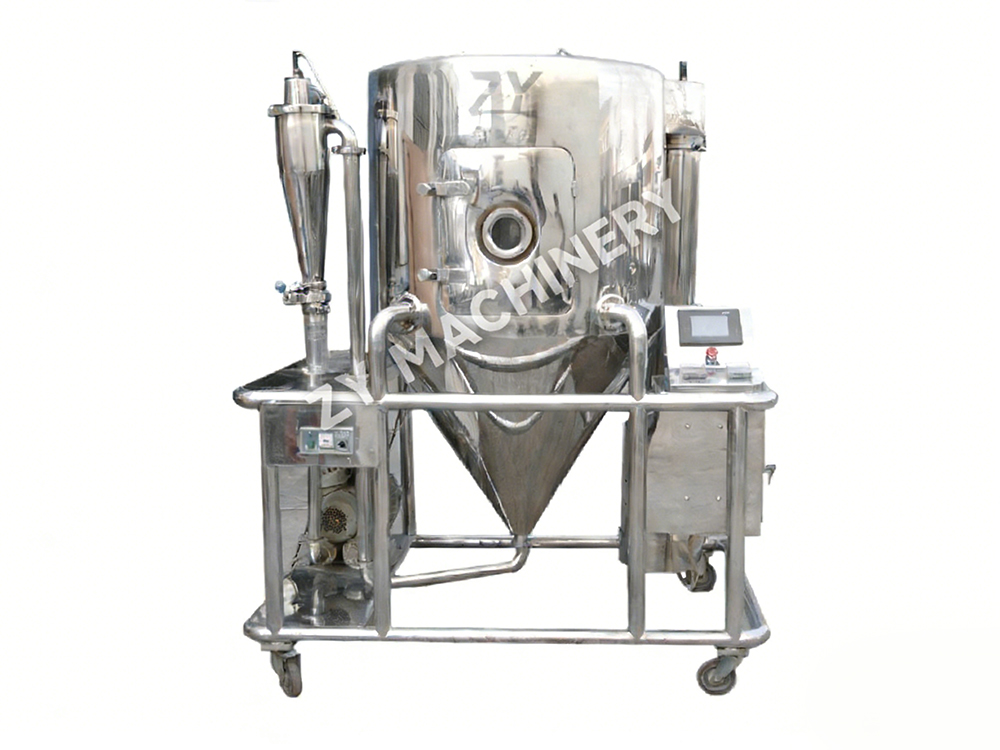
LPG High-Speed Centrifugal Spray Dryer
Spray drying is one of the most widely applied processes in liquid formulat.....

Content
Uniform pellet formation is an important requirement in pharmaceutical, nutraceutical, veterinary, food additive, chemical, and related powder-processing applications. In many production processes, wet granules must be converted into dense, free-flowing, and consistently sized spherical pellets before drying, coating, packaging, or further processing. The quality of this shaping stage can influence downstream drying behavior, coating uniformity, dissolution performance, flowability, handling efficiency, and final product consistency.
The QWL Centrifugal Pelletizing Machine is designed for this specific purpose. It transforms wet granules into high-quality spherical pellets through the combined action of centrifugal force, controlled airflow, gravity, and rotational movement. Wet granules supplied from an upstream granulation process enter a rotating centrifugal disc. As the disc accelerates, the material moves through a carefully balanced motion pattern and gradually develops a dense, rounded, and highly uniform shape.
This equipment is part of a broader range of powder processing and oral solid dosage equipment supplied by Changzhou Zhiyang Machinery Equipment Co., Ltd. The company provides individual machines, modular process systems, and complete production-line solutions for laboratory, pilot-scale, and industrial applications. Its approach combines equipment manufacturing with process analysis, helping customers select practical solutions according to material properties, production capacity, and site conditions.
Compared with basic rounding devices or less controlled pelletizing methods, centrifugal pelletizing offers a more efficient and repeatable route for producing spherical granules. The QWL design emphasizes high sphericity, adjustable operating conditions, reduced adhesion, lower fines generation, and compatibility with continuous upstream wet granulation processes. These features make it suitable for applications where pellet quality and process stability are more important than simple mechanical shaping alone.
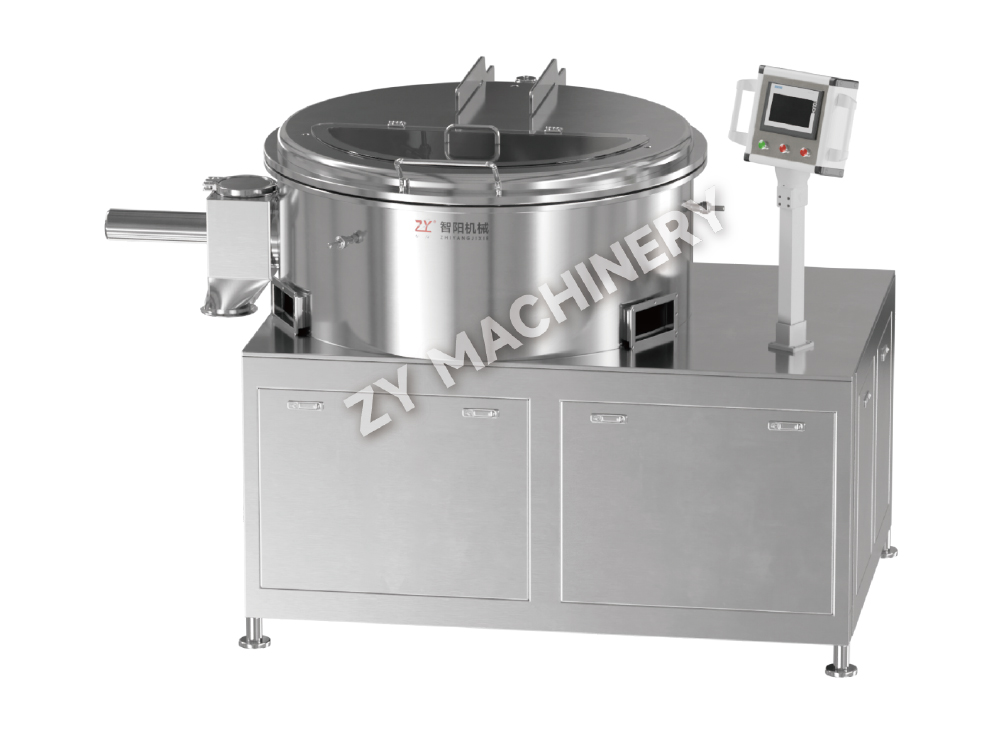
QWL Centrifugal Pelletizing Machine
Spherical pellets are valued because their shape provides several practical advantages during subsequent processing. Compared with irregular granules, true-spherical or highly rounded pellets generally exhibit improved flowability, more consistent bulk behavior, and better resistance to mechanical interlocking. Their regular external surface can also help improve the uniformity of coating, drying, and controlled-release treatments.
In pharmaceutical applications, pellet shape may affect the distribution of active ingredients, the application of functional coatings, and the reproducibility of dosage-form performance. In nutraceutical and veterinary products, rounded pellets can support more consistent handling and blending. In chemical and additive production, spherical particles may provide improved feeding behavior, reduced dust formation, and more predictable packing characteristics.
However, producing consistent spherical pellets from wet granules is not simply a matter of spinning material at high speed. The process must balance several variables, including wetness, binder distribution, granule size, feed rate, disc speed, airflow, residence time, and material adhesion. If the force balance is not properly controlled, the result may be excessive fines, oversized agglomerates, flattened particles, irregular granules, or material accumulation inside the machine.
The QWL Centrifugal Pelletizing Machine addresses these challenges by creating a controlled movement pattern inside the rotating disc. Wet granules are repeatedly influenced by centrifugal force, gravity, and air lift in the gap around the disc. This movement encourages particles to roll, circulate, collide, and densify. Over time, the repeated motion gradually changes the granules from irregular wet agglomerates into compact and rounded pellets.
The central component of the machine is a rotating centrifugal disc. Wet granules from a preceding process are continuously introduced onto this disc. When the blower is activated and the disc begins rotating, the granules are exposed to a combination of mechanical and aerodynamic forces.
Centrifugal force moves the wet granules outward from the center of rotation. Gravity influences the vertical movement and return path of the particles. Airflow creates an air-lift effect in the gap surrounding the disc, helping suspend, circulate, and separate the material. The interaction of these forces forms a helical and circular motion pattern rather than a simple radial discharge.
As the granules move through this pattern, they repeatedly contact one another and the working surfaces of the equipment. Moisture and binder within the granules allow smaller particles and irregular agglomerates to consolidate. Repeated rolling and impact gradually reduce sharp edges and surface irregularities. The particles become denser and more spherical as they continue to circulate.
The pelletizing process can be understood as a controlled rounding and densification operation. The machine does not depend solely on compression. Instead, it uses repeated movement, rolling, collision, and air-assisted circulation. This approach can help achieve a more natural spherical shape while reducing the need for excessive mechanical pressure.
Material behavior depends on the formulation and upstream granulation conditions. A suitable wet granule must possess enough cohesion to remain intact during movement while still being able to roll and reshape. If the granules are too dry, they may generate excessive fines or fail to round effectively. If they are too wet, adhesion and oversized agglomeration may occur. For this reason, the machine is most effective when integrated with a properly controlled wet granulation process.
The adjustable rotational speed is an important operating feature. Speed influences centrifugal force, material residence time, collision intensity, and the final balance between rounding and discharge. By selecting an appropriate speed for the product, operators can influence pellet size, density, and surface quality. The proper setting depends on the formulation, feed condition, target pellet specification, and required production rate.
Centrifugal force pushes the material toward the outer region of the rotating disc. Gravity then contributes to the downward component of movement, allowing the granules to follow a circular and helical route through the processing zone. This combination prevents the material from remaining in a single static layer and supports continuous circulation.
The repeated movement is especially important for spherical shaping. A granule that remains stationary may retain an irregular form, while a granule that rolls and collides with neighboring particles has more opportunities to lose protrusions and develop a rounded profile. The controlled balance of forces therefore contributes directly to pellet uniformity.
The blower provides airflow in the gap around the rotating disc. This air-lift action can help reduce direct surface contact, improve material circulation, and support the separation of particles during processing. The airflow also helps limit the tendency of wet granules to remain attached to the working surface.
Airflow must be considered together with material moisture and disc speed. Excessive airflow may disturb the material pattern or increase the movement of fines, while insufficient airflow may contribute to adhesion. The practical advantage of the QWL configuration is that centrifugal movement and airflow work together rather than acting as separate operations.
The helical movement within the disc gives the granules repeated opportunities to circulate through the active processing area. Particles can move outward, upward, downward, and around the disc before leaving the machine. This increases the effective shaping path and supports a gradual transition from wet granules to spherical pellets.
Compared with a simple high-speed impact process, the helical circulation pattern can provide more controlled shaping. The material is exposed to repeated moderate interactions instead of relying entirely on a single intense event. This supports a more uniform final shape and can help reduce unnecessary breakage.
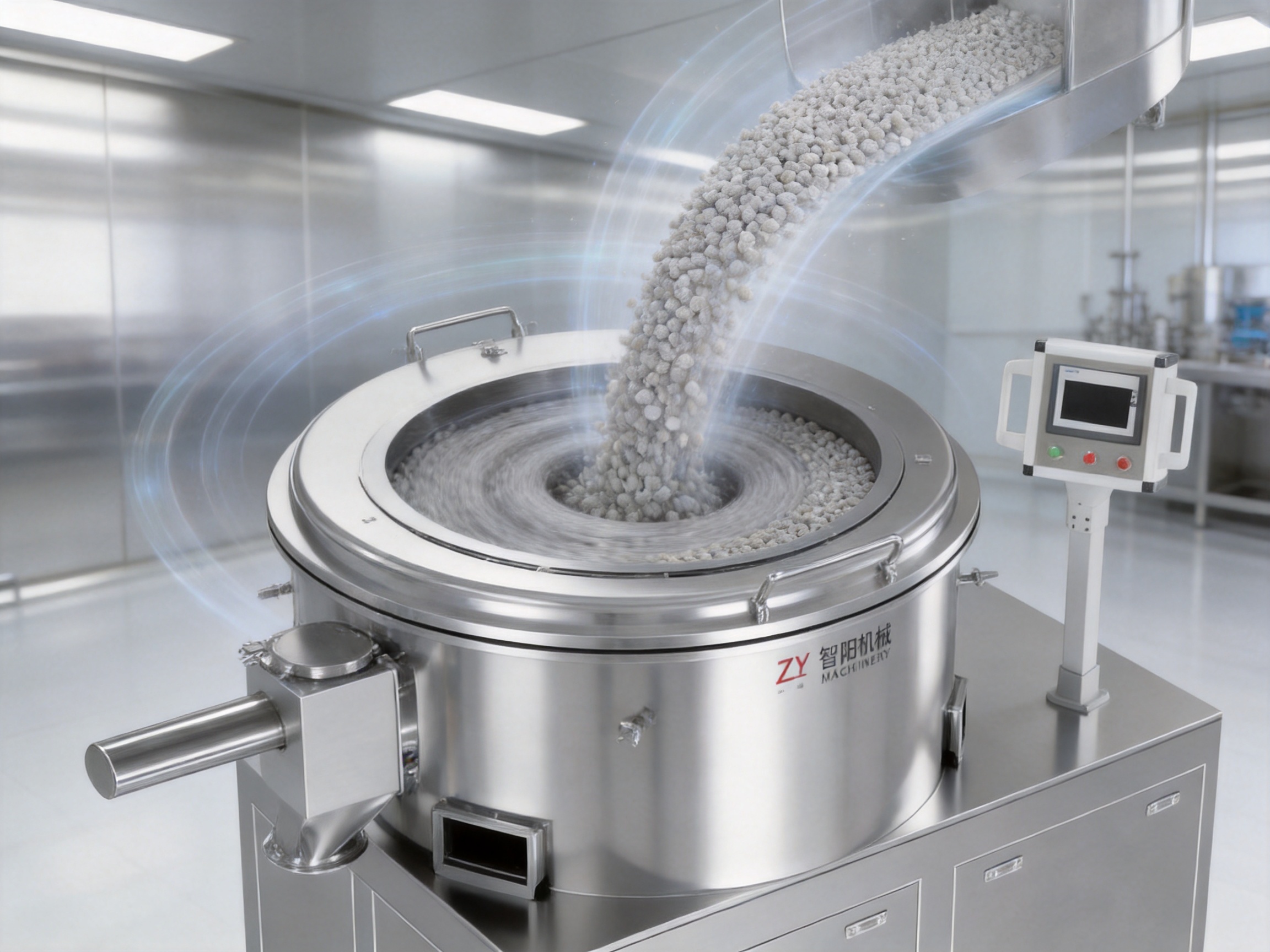
The most important benefit of the QWL machine is its ability to produce pellets with excellent sphericity and relatively uniform dimensions. The combined centrifugal, gravitational, and aerodynamic forces encourage wet granules to roll and densify. This is particularly useful when the final product requires predictable coating coverage, consistent flow, or stable downstream processing.
High sphericity can also improve the appearance and handling characteristics of the product. Rounded particles generally flow more smoothly through hoppers, feeders, transfer systems, and packaging equipment. They are less likely to form bridges or interlock than sharply irregular granules. The result can be more stable feeding and fewer interruptions in automated production.
The centrifugal design supports continuous material circulation and efficient use of the processing space. Instead of depending on a slow batch-by-batch manual rounding operation, wet granules can be fed continuously from an upstream process. This makes the machine suitable for integrated production routes in which wet granulation, pelletizing, drying, and coating are connected.
The available models cover a wide capacity range. The smallest listed model has a capacity of approximately 0.5 to 4 kilograms per hour, while the largest listed model has a capacity of approximately 100 to 300 kilograms per hour. This range allows the equipment to serve laboratory development, pilot production, and larger manufacturing applications.
Wet processing frequently creates a risk of material sticking to the working surfaces. Adhesion may reduce effective capacity, create cleaning challenges, disturb the material balance, and affect product quality. The QWL machine uses airflow and centrifugal motion to help maintain material circulation and reduce prolonged contact between wet granules and fixed surfaces.
Reduced adhesion is not only a product-quality advantage. It may also improve operational efficiency by minimizing manual intervention and reducing the frequency of unplanned stoppages. Actual adhesion performance depends on the formulation, moisture level, binder system, temperature, and operating conditions, but the machine configuration is designed to address this common wet-processing difficulty.
Excessive fines can create problems in drying, conveying, dust control, blending, and packaging. A well-controlled pelletizing process should round and densify the wet granules without causing unnecessary attrition. The QWL design relies on circulating and rolling motion rather than an excessively aggressive crushing action.
Lower fines generation may help improve the usable yield of the process and support a narrower particle-size distribution. It can also reduce the load on dust-collection systems and make downstream handling more predictable. Operators should still optimize feed moisture, speed, and throughput because formulation and process conditions have a direct influence on fines formation.
Different materials require different pelletizing conditions. The speed suitable for a cohesive pharmaceutical formulation may not be appropriate for a less cohesive nutraceutical or chemical mixture. Adjustable rotational speed gives operators an important process-control parameter.
Speed can influence pellet size, density, surface smoothness, residence time, and discharge behavior. A lower speed may provide gentler handling, while a higher speed may increase centrifugal action and promote more intensive circulation. The correct setting should be established through material trials and confirmed using product-quality measurements.
The QWL machine is designed to receive wet granules from a preceding process. This makes it suitable for process lines in which the granulator, pelletizer, dryer, and coating system are configured as a coordinated sequence. Integration can reduce manual transfer, improve process continuity, and limit unnecessary exposure of the wet material to the surrounding environment.
When integrated properly, the pelletizing stage becomes part of a complete process strategy rather than an isolated piece of equipment. Feed systems, discharge arrangements, conveying equipment, drying capacity, and control logic can be considered together. This integrated approach is one of the important strengths of a process-focused equipment supplier.
Pelletizing technologies vary according to material characteristics, production objectives, and required particle properties. Some systems depend primarily on extrusion and spheronization, while others use high-shear mixing, impact, tumbling, or fluidized movement. Each method can be effective in an appropriate application, but the choice should reflect the desired balance of shape, throughput, moisture handling, energy use, and process integration.
The QWL centrifugal method is differentiated by the way it combines rotational motion with airflow and gravity. Its objective is not merely to break or compact granules. It creates a dynamic circulation pattern that gradually rounds wet granules into spherical pellets. This can be advantageous where high sphericity and uniform shape are priorities.
Compared with simple tumbling equipment, centrifugal pelletizing can provide a more active and controlled force environment. Tumbling alone may require longer processing times or larger working volumes to achieve comparable rounding. The centrifugal disc increases the movement intensity and supports efficient use of the working zone.
Compared with highly aggressive impact-based systems, the QWL process may offer a gentler route for materials that could be damaged by excessive mechanical stress. The repeated rolling and circulation action can help reduce unnecessary breakage while still promoting densification. This is valuable when preserving particle integrity and limiting fines are important objectives.
Compared with equipment designed only for batch operation, the QWL machine is suitable for continuous feeding from upstream wet granulation. Continuous compatibility can support more efficient production planning and reduce intermediate handling. It may also simplify the layout of a complete production line.
These advantages should not be interpreted as a universal replacement for every pelletizing technology. Product characteristics, target particle size, binder system, moisture content, production capacity, and regulatory requirements must be evaluated before selecting equipment. The main advantage of the QWL design is its focused suitability for wet-granule rounding, spherical pellet formation, and integration with powder-processing systems.
| Evaluation Factor | QWL Centrifugal Pelletizing Approach | Practical Benefit |
| Particle shape | Rotational circulation, rolling, and densification | High sphericity and improved uniformity |
| Material movement | Combined centrifugal force, airflow, and gravity | Continuous circulation through the working zone |
| Wet-material handling | Air-assisted movement with reduced prolonged contact | Lower tendency toward adhesion |
| Process mode | Suitable for continuous feeding from upstream wet granulation | Improved line integration and reduced manual transfer |
| Operating flexibility | Adjustable rotational speed | Control over pellet size and density |
| Scale range | Laboratory through larger production capacities | Equipment selection according to process demand |
The QWL product family includes six listed models. The series begins with the QWL-230 for small-scale work and extends to the QWL-1300 for higher-capacity applications. This range allows users to select a machine according to production requirements rather than forcing every application into one standard size.
The power rating increases from 0.75 kilowatts for the QWL-230 to 7.5 kilowatts for the QWL-1300. The rated capacity increases correspondingly, from approximately 0.5 to 4 kilograms per hour to approximately 100 to 300 kilograms per hour. Intermediate models cover capacities from 5 to 8 kilograms per hour, 10 to 50 kilograms per hour, 40 to 80 kilograms per hour, and 70 to 200 kilograms per hour.
| Item | Unit | QWL-230 | QWL-400 | QWL-550 | QWL-700 | QWL-1000 | QWL-1300 |
| Power | kW | 0.75 | 2.2 | 3 | 3.7 | 5.5 | 7.5 |
| Capacity | kg/h | 0.5–4 | 5–8 | 10–50 | 40–80 | 70–200 | 100–300 |
Capacity values should be treated as reference ranges rather than guaranteed results for every formulation. Actual output depends on feed moisture, granule strength, binder content, target pellet size, feeding stability, operating speed, and required product quality. A practical equipment-selection process should include material testing and confirmation of the desired output specification.
The smaller models are appropriate for laboratory development, formulation evaluation, process feasibility studies, and small-batch production. Pilot-scale users may select an intermediate model to confirm process parameters before transferring the method to a larger machine. The larger models support higher-throughput manufacturing where continuous material supply and downstream drying capacity are available.
Laboratory-scale pelletizing is useful during formulation development because it allows engineers and researchers to examine the effect of binder concentration, wetness, granule size, and rotational speed. A small model can support controlled trials without requiring the resources of a full industrial line.
Development work should record the input granule condition, feed rate, speed, processing time, pellet-size distribution, moisture content, fines percentage, and visual appearance. These data can provide a basis for selecting a larger model and establishing a scale-up strategy.
Pilot and production models are intended for users who need a stable process route with greater capacity. At these scales, the equipment must be evaluated together with feeding, transfer, drying, dust collection, electrical control, cleaning, and maintenance requirements.
For continuous production, the upstream granulator must deliver a consistent supply of wet granules. Sudden changes in feed rate or moisture can affect the movement pattern inside the centrifugal disc. A properly coordinated line helps maintain stable operation and improves the repeatability of the pelletizing stage.
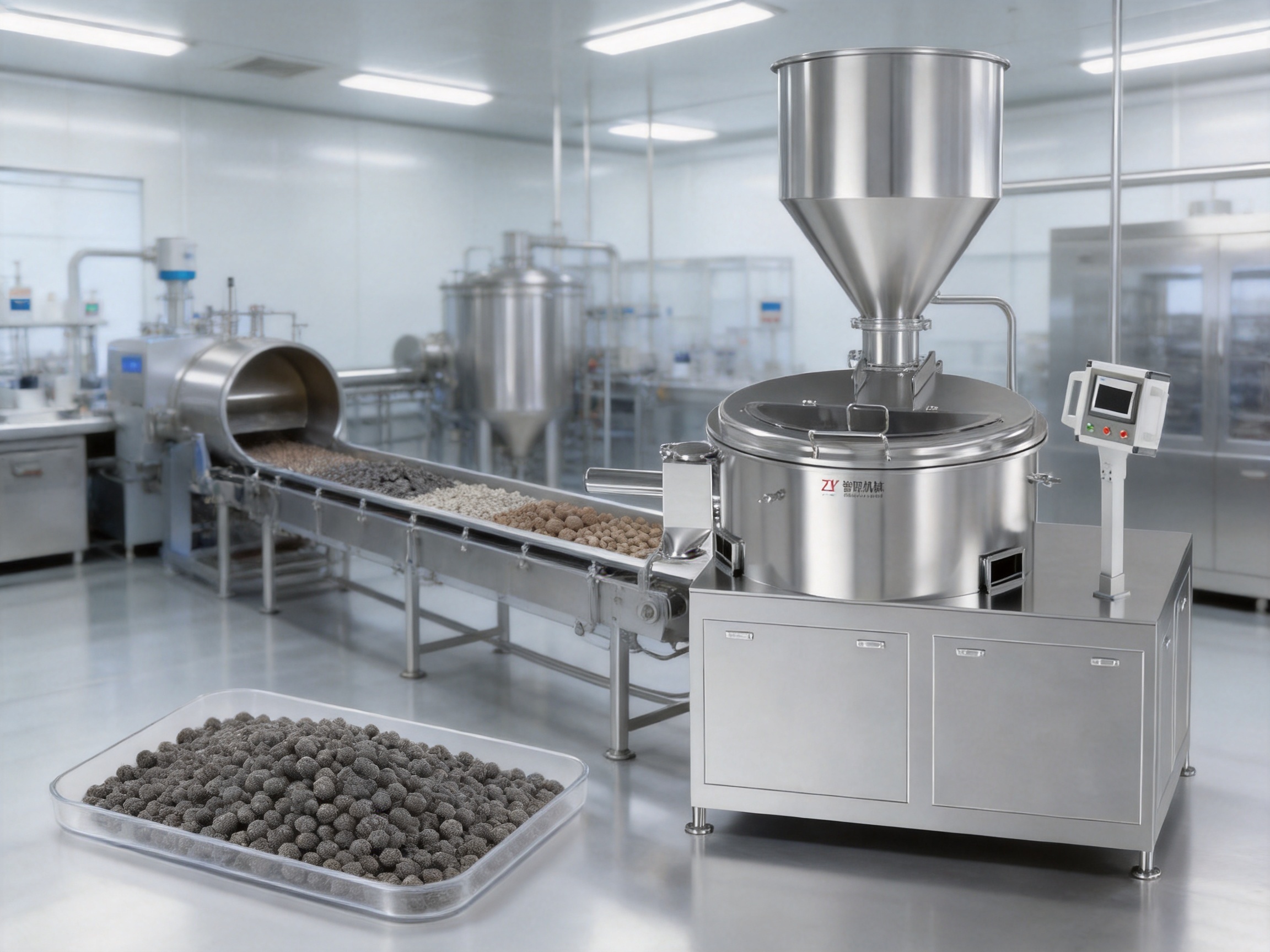
The performance of a pelletizing machine depends not only on its operating principle but also on the quality of its engineering, fabrication, assembly, testing, and process support. Changzhou Zhiyang Machinery Equipment Co., Ltd. combines equipment manufacturing with process-integration experience. This is significant because pelletizing performance is closely related to the upstream and downstream stages surrounding the machine.
Founded in 2010 and based in Changzhou, China, the company specializes in powder processing and oral solid dosage equipment. Its scope covers laboratory equipment, mixing equipment, granulation equipment, drying equipment, coating equipment, auxiliary processing equipment, and transfer and conveying systems.
A process-oriented manufacturer begins with the material and production objective rather than selecting a machine in isolation. Material characteristics such as cohesion, moisture sensitivity, bulk density, particle-size distribution, and binder response can influence the appropriate equipment configuration.
ZY Machinery states that it develops solutions according to material characteristics, capacity requirements, and site conditions. This approach allows the QWL machine to be considered within a wider process route. For example, a customer may require a wet granulator, centrifugal pelletizer, dryer, coating system, and conveying equipment that operate as a coordinated line.
Process-oriented design can also help identify practical issues before installation. These issues may include available floor space, material transfer height, cleaning access, utility connections, discharge direction, operator access, and compatibility with existing equipment. Addressing such factors during engineering can reduce modification work at the customer site.
Research and development are important in powder processing because materials do not all respond in the same way. A formulation that performs well in one machine may require different operating conditions in another. Ongoing development helps manufacturers improve equipment functionality, operating flexibility, and process compatibility.
The company has expanded its product portfolio, strengthened its research and development capabilities, and developed patented technologies. These activities support the continuous improvement of equipment used in pharmaceutical, biopharmaceutical, biotechnology, nutraceutical, veterinary, additives, and related industries.
For centrifugal pelletizing, development may involve improving air distribution, material circulation, speed adjustment, discharge behavior, internal accessibility, and integration with adjacent equipment. Even small changes in these areas can affect pellet uniformity, cleaning requirements, and production efficiency.
Reliable equipment requires consistent control over design, material selection, fabrication, assembly, and inspection. The company has obtained quality system certification, demonstrating an emphasis on organized quality management. A quality system can help establish procedures for documentation, production control, inspection, nonconformance handling, and customer support.
In practical equipment manufacturing, quality control should extend beyond the finished appearance of the machine. Critical elements include dimensional accuracy, alignment of rotating components, stable drive operation, secure electrical connections, proper blower performance, accessible cleaning areas, and verification of operating functions.
Manufacturing quality is particularly important for rotating equipment. Disc balance, shaft alignment, bearing installation, drive stability, and structural rigidity can influence vibration, noise, service life, and pelletizing consistency. Careful assembly and testing are therefore essential to the long-term performance of the machine.
Some customers require only a pelletizing machine, while others need a complete production system. ZY Machinery provides standalone machines, modular systems, and complete production lines. This flexibility allows customers to choose the level of support appropriate for their project.
A standalone QWL machine may be installed after an existing wet granulator. A modular solution may combine pelletizing with drying, conveying, and auxiliary processing. A complete line may include the full sequence from powder preparation and mixing through wet granulation, pelletizing, drying, coating, and final transfer.
Offering multiple equipment categories under one engineering framework can simplify communication and improve compatibility between units. It may also reduce the need for a customer to coordinate several unrelated suppliers for basic process integration.
The company has developed overseas service capabilities and delivered equipment and engineering solutions to customers in multiple countries and regions. International support is important because installation conditions, electrical standards, operator practices, documentation requirements, and production expectations can vary between markets.
Responsive support can assist with equipment selection, layout planning, installation coordination, commissioning, operation guidance, troubleshooting, and process optimization. For a pelletizing machine, support may also include recommendations for feed preparation, speed adjustment, cleaning procedures, and integration with drying or coating equipment.
In pharmaceutical production, wet granules may need to be rounded before drying or coating. Spherical pellets can be useful for multiparticulate dosage forms, modified-release systems, and products in which coating uniformity is important. The QWL machine can serve as a shaping stage between wet granulation and drying.
Pharmaceutical users should assess the machine according to applicable material-contact requirements, cleaning procedures, validation expectations, containment needs, and documentation requirements. The specific equipment configuration should be selected according to the product and facility standards.
Nutraceutical formulations often contain powders with different flow, binding, and moisture characteristics. Pelletizing can help convert irregular wet agglomerates into more manageable particles with improved flow and handling behavior.
The adjustable speed of the QWL machine can support trials across different formulations. Operators can evaluate pellet density, appearance, moisture distribution, and downstream drying performance to establish suitable conditions for each product.
Veterinary formulations may require controlled particle handling, consistent dosing, and compatibility with coating or drying operations. Spherical pellets can support stable feeding and improve the uniformity of subsequent processing steps.
Biotechnology materials and specialty additives may have specific sensitivity to mechanical stress, moisture, or temperature. A centrifugal pelletizing process can provide a controlled shaping route when material circulation and low-fines operation are important.
Because every material behaves differently, application testing remains essential. The QWL machine provides the process platform, while the actual operating conditions should be developed according to the formulation and desired pellet specification.
Successful pelletizing begins with consistent wet granules. The upstream process should produce a reasonably uniform feed with controlled moisture and suitable cohesion. Large variations in granule size or wetness may create uneven pellet growth and reduce the consistency of the final product.
Feed rate should be stable. An excessive feed rate can overload the disc and reduce effective circulation, while an insufficient feed rate may lower productivity and alter the material movement pattern. The feed system should be coordinated with the selected model and downstream drying capacity.
Rotational speed should be adjusted gradually. Operators should observe pellet shape, surface condition, fines, adhesion, discharge behavior, and vibration. Any speed change should be recorded together with the resulting product data so that a reliable operating window can be established.
Airflow should be sufficient to support circulation and minimize adhesion without disturbing the desired material pattern. The blower and disc should be started and stopped according to an established operating sequence. This helps prevent accumulation and supports consistent process behavior.
Cleaning and inspection should be included in the standard operating procedure. Wet material can accumulate in gaps, discharge areas, and contact surfaces if cleaning is delayed. Regular inspection of the disc, drive assembly, blower, seals, fasteners, and electrical controls can help identify issues before they affect production.
Useful quality measurements may include pellet-size distribution, sphericity, bulk density, moisture content, friability, fines percentage, flowability, and visual uniformity. The appropriate measurements depend on the application and downstream requirements.
For coated or controlled-release products, additional tests may be required after drying and coating. The goal is to determine whether the pelletizing stage supports the performance of the complete process rather than evaluating shape alone.
Reliable operation depends on proper maintenance as well as sound process control. Rotating components should be inspected for abnormal noise, vibration, or temperature. Drive components should be checked according to the maintenance schedule. The blower and air passages should remain free from blockage so that airflow remains stable.
Contact surfaces should be cleaned using procedures suitable for the processed material and the equipment construction. Cleaning methods should account for moisture, binder residues, powders, and any product-specific contamination risks. Operators should verify that the machine is isolated from power before inspection or manual cleaning.
Maintenance records can help identify recurring issues such as unstable feeding, increased adhesion, unusual vibration, or declining throughput. These symptoms may indicate changes in material properties, wear, misalignment, airflow restrictions, or incorrect operating settings.
The engineering support provided by a process-focused manufacturer can be valuable when troubleshooting involves more than one machine. For example, pellet quality may be affected by the wet granulator, transfer system, pelletizer, dryer, or coating equipment. A complete-line perspective helps determine the actual source of the problem.
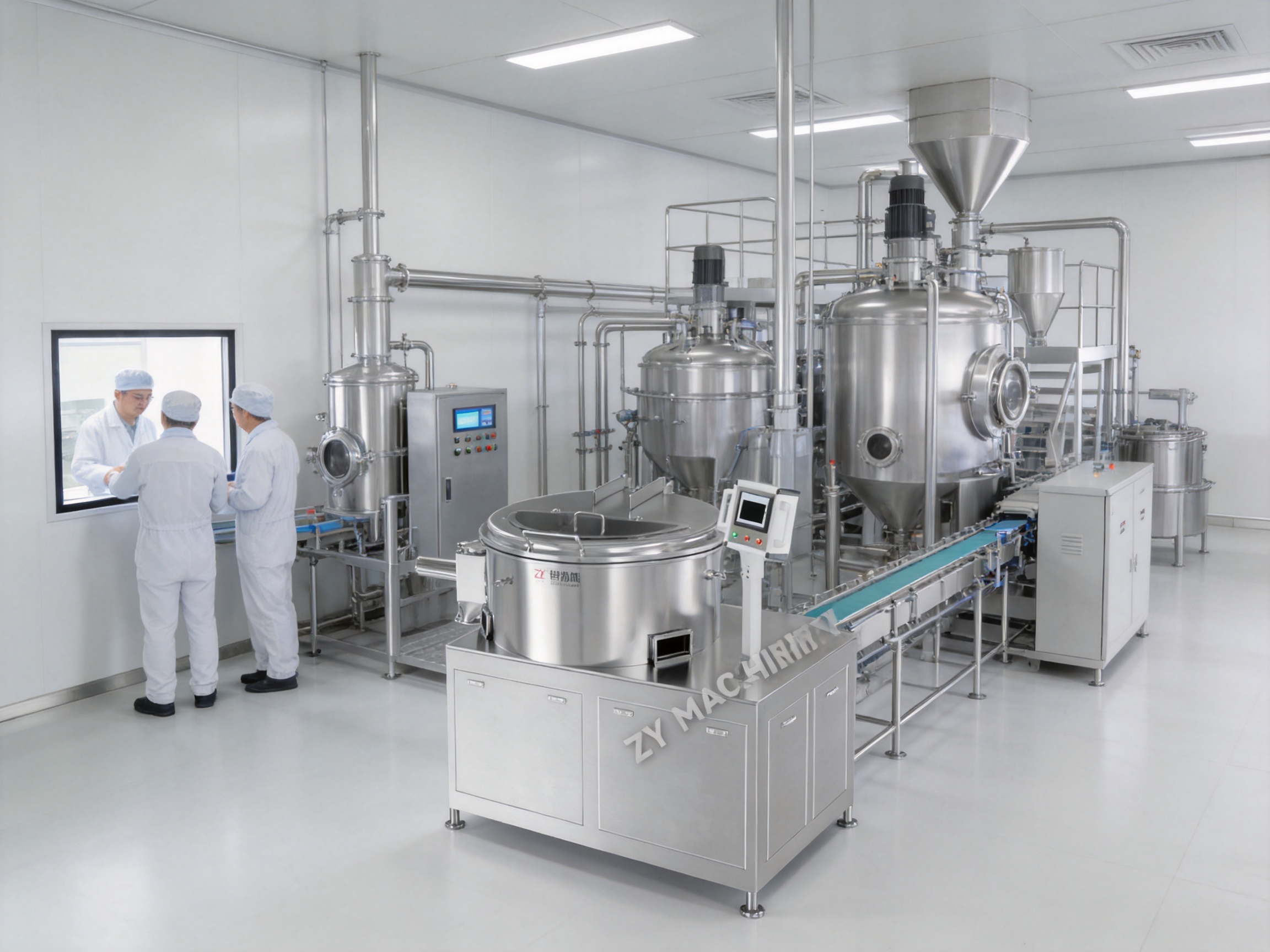
When selecting a QWL model, buyers should begin with the required production capacity and the characteristics of the wet granules. The rated range provides an initial reference, but material trials are recommended before finalizing the equipment size.
Important selection questions include the following:
What is the expected hourly throughput?
What is the moisture range of the wet granules?
What pellet size and density are required?
How cohesive is the material after wet granulation?
What percentage of fines is acceptable?
Will the machine operate continuously or intermittently?
What equipment will supply the wet granules?
What dryer, coating system, or conveying equipment will receive the pellets?
What cleaning, containment, and material-contact requirements apply?
What utilities, floor area, discharge height, and access space are available?
Answers to these questions help determine not only the correct model but also the appropriate auxiliary equipment and line arrangement. Selecting a machine solely by nominal capacity may lead to an unsuitable process if the feed properties or downstream requirements are not considered.
Customers should also evaluate the supplier’s ability to provide process guidance, documentation, installation support, spare parts, training, and after-sales service. Equipment value is influenced by the entire ownership experience, including commissioning time, operating stability, cleaning convenience, maintenance access, and future expandability.
The machine transforms wet granules into dense, rounded, and highly spherical pellets. It is generally installed after an upstream wet granulation process and before drying, coating, conveying, or other downstream operations.
Wet granules move on a rotating centrifugal disc while being influenced by centrifugal force, airflow, and gravity. The resulting helical and circular motion causes the granules to roll, collide, consolidate, and gradually become spherical.
The QWL machine is designed primarily for wet granules. Dry powder normally requires a suitable preparation or granulation stage before entering the pelletizer. The material should have sufficient cohesion and moisture to support rounding.
Pellet size is influenced by feed conditions, granule size, formulation, residence time, and rotational speed. The adjustable speed allows operators to control an important part of this relationship, but the final result should be established through process trials.
The centrifugal design creates a more active material movement pattern by combining rotation, airflow, and gravity. This can support efficient circulation, high sphericity, reduced adhesion, and lower fines generation when the process is correctly operated.
Yes. The QWL machine is suitable for integration with upstream continuous wet granulation processes. Stable feeding and appropriate coordination with downstream equipment are important for consistent operation.
The QWL-230 is the smallest listed model, with a reference capacity of approximately 0.5 to 4 kilograms per hour. It may be suitable for laboratory studies, formulation trials, and small-scale development, subject to material testing.
The QWL-1300 has the highest listed capacity, approximately 100 to 300 kilograms per hour, with a rated power of 7.5 kilowatts. Actual performance depends on the formulation and operating conditions.
Adhesion can be influenced by material moisture, binder content, disc speed, airflow, feed rate, and cleaning condition. The machine’s air-lift and centrifugal movement are designed to reduce prolonged contact, but process optimization remains necessary.
No. Changzhou Zhiyang Machinery Equipment Co., Ltd. supplies equipment covering mixing, granulation, drying, coating, auxiliary processing, transfer, conveying, laboratory work, and complete production-line integration.
Pellet quality depends on the condition of the feed and the requirements of downstream equipment. Coordinating wet granulation, pelletizing, drying, coating, and conveying can improve continuity, reduce manual handling, and support more stable production.
Users should evaluate pellet shape, size distribution, moisture, density, fines, adhesion, throughput, and downstream drying behavior. Material trials help confirm the appropriate model and operating range.
The QWL Centrifugal Pelletizing Machine provides a focused solution for converting wet granules into uniform, dense, and highly spherical pellets. Its working principle combines centrifugal force, airflow, and gravity to create a continuous helical and circular material movement pattern. Through repeated rolling, collision, and densification, irregular wet granules can develop into high-quality spherical particles.
The main advantages of the equipment include high sphericity, efficient throughput, reduced adhesion, lower fines generation, adjustable rotational speed, and compatibility with upstream wet granulation. The six-model range covers laboratory, pilot, and larger production requirements, with listed capacities from approximately 0.5 to 300 kilograms per hour.
Beyond the machine itself, the strength of the solution lies in the manufacturer’s broader engineering capability. Changzhou Zhiyang Machinery Equipment Co., Ltd. combines equipment manufacturing, process development, research and development, quality-system management, modular design, complete-line integration, and overseas service support. This gives customers the option to purchase an individual pelletizer or develop a coordinated powder-processing and oral solid dosage production system.
For buyers comparing centrifugal pelletizing solutions, the most important considerations are not only nominal capacity or equipment appearance. The ability to produce consistent pellets, integrate with upstream and downstream processes, support material trials, simplify maintenance, and provide long-term engineering assistance should also be evaluated. When these factors are considered together, the QWL machine offers a practical and flexible approach to wet-granule spherical pellet production.
1. Product information supplied for the QWL Centrifugal Pelletizing Machine, including working principle, features, model range, power ratings, and capacity data.
2. Changzhou Zhiyang Machinery Equipment Co., Ltd. company information concerning powder processing equipment, oral solid dosage systems, process integration, research and development, quality management, and overseas service.
3. General principles of wet granulation, pellet rounding, particle-size control, and pharmaceutical solid-dosage processing.
4. General engineering principles for centrifugal material movement, airflow-assisted processing, equipment integration, cleaning, and maintenance.
5. General process-development practices for laboratory, pilot-scale, and industrial powder-processing equipment selection.
Want to stay up to date?
Contact us via the email address below.
Don't worry about spam. We hate it too!
Mobile Client

Video Account
Phone:+86-15161130178
Tel:+86-519-88674267
Email:czzy188@163.com
Phone:+86-15161132798
Email:zy@zy-drying.com

WeChat ID

Copyright 2026 Changzhou Zhiyang Machinery Equipment Co., Ltd. All Rights Reserved  Oral Solid Dosage Equipment Manufacturer