 English
 Español
 русский
 中文简体

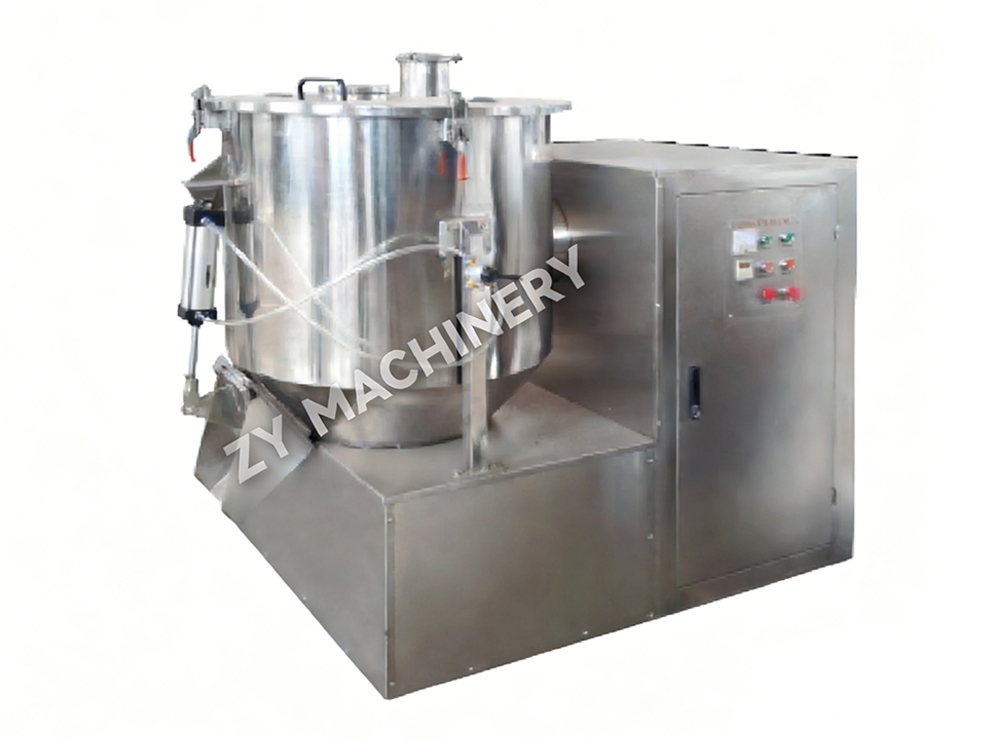
GHL High Speed Mixing Granulator
The GHL High-Speed Mixing and Granulation Machine is a highly efficient sys.....

Content
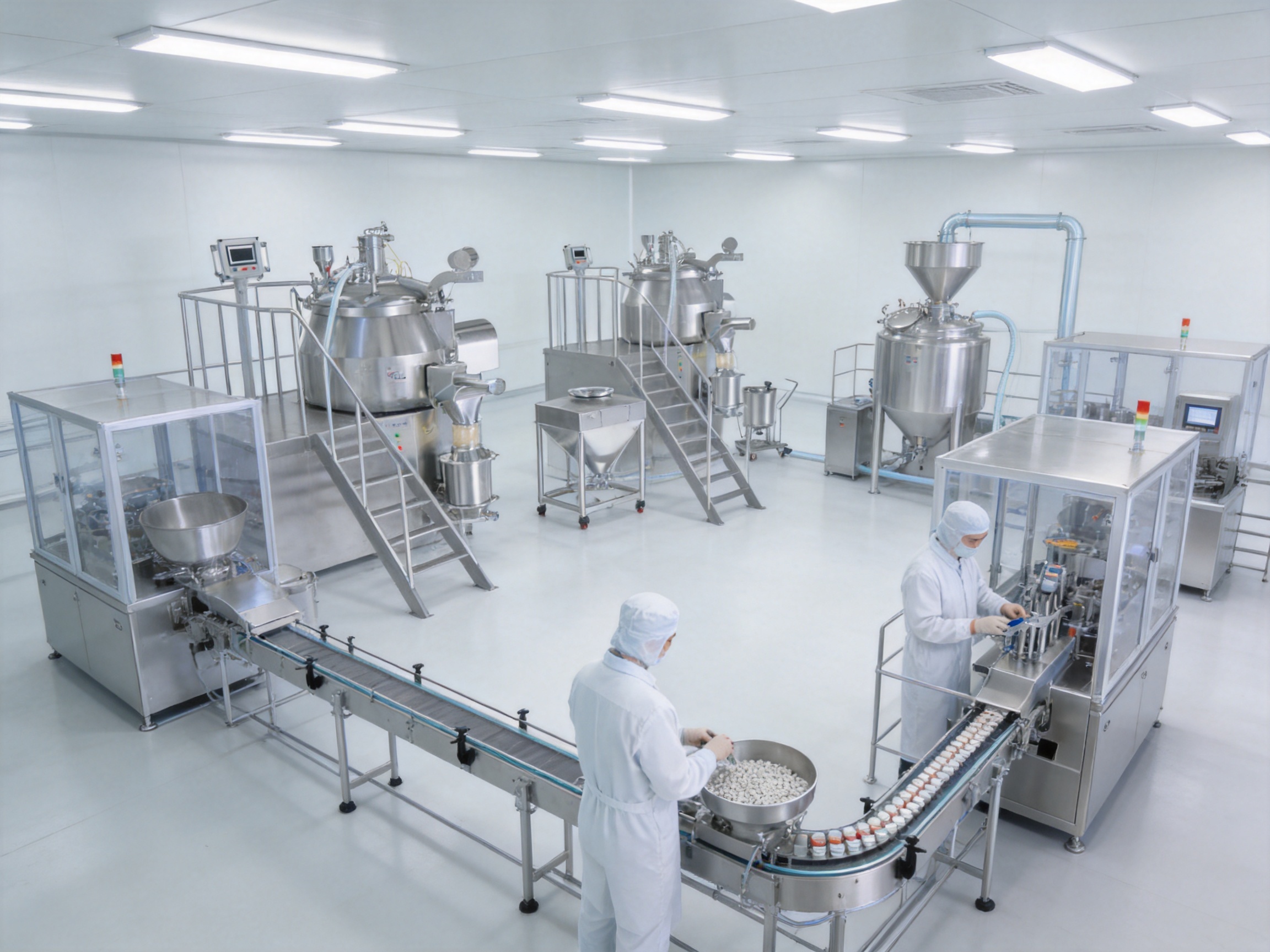
Wet granulation remains one of the most important powder-processing operations in pharmaceutical manufacturing. It improves powder flowability, reduces segregation, enhances compressibility, and helps manufacturers produce tablets and capsules with consistent weight, strength, and active-ingredient distribution. However, conventional wet granulation methods can require several separate stages, extensive handling, large quantities of binder, and long drying cycles. These limitations can increase production costs and make process control more difficult.
The GHL High-Speed Wet Granulator is designed to address these challenges through an integrated, single-step process that combines powder mixing and wet granulation in one enclosed machine. It is suitable for pharmaceutical, nutraceutical, food, chemical, and related applications in which powders must be transformed into uniform, free-flowing granules. By combining high-speed mixing, controlled binder addition, and rapid granulation, the equipment supports efficient production while helping manufacturers achieve reliable product quality.
The machine is available in a broad range of sizes, from laboratory and small-batch models to large production units. Its configuration, enclosed processing chamber, high-speed cutting system, and GMP-oriented design make it suitable for a variety of formulations and production environments. It can be used as a standalone machine or integrated into a wider powder-processing line containing material transfer, drying, milling, screening, coating, and packaging equipment.
Many pharmaceutical powders cannot be compressed or handled efficiently in their original form. Fine particles may have poor flow properties, low bulk density, inadequate compactibility, or a tendency to segregate during transfer. Differences in particle size, density, moisture content, or surface characteristics can cause active ingredients and excipients to separate. Such segregation may lead to unacceptable variation in tablet or capsule dosage.
Wet granulation helps overcome these problems by joining smaller powder particles into larger, more stable agglomerates. A binder solution or other granulating liquid is distributed through the powder mixture while mechanical agitation breaks down lumps and promotes the formation of granules. The resulting material generally has better flowability and improved compressibility than the original powder blend.
For a wet granulation process to perform effectively, several variables must be controlled. These include the order and duration of powder mixing, the speed and geometry of the mixing tools, the quantity and distribution of binder, the moisture level, the granulation time, and the final granule size. Poor control can create oversized lumps, excessive fines, uneven moisture distribution, or inconsistent granule strength.
The GHL High-Speed Wet Granulator is designed around these process requirements. Its working chamber enables intensive mixing and granulation in a contained environment. The combination of a high-speed mixing mechanism and a cutting system allows the equipment to rapidly distribute the binder and break down wet agglomerates into a more uniform granule structure.
The GHL High-Speed Wet Granulator is an efficient single-step machine for blending powders and converting them into wet granules. It is suitable for formulations in which uniform distribution of active ingredients and excipients is essential. The equipment can be used before drying, sizing, tableting, encapsulation, or other downstream operations.
In a typical operation, the dry materials are loaded into the processing container. The high-speed mixing mechanism distributes the ingredients and reduces the possibility of dead zones. After the dry blend reaches the required level of uniformity, a binder is introduced. The binder wets the powder particles and promotes agglomeration. The cutting system then controls the size and structure of the developing granules.
Because the mixing and granulation operations take place in the same machine, the process can reduce intermediate transfers and manual handling. This may improve containment, simplify cleaning procedures, and reduce the risk of material loss or cross-contamination. It can also make production planning more straightforward because fewer separate machines are required for the initial stages of granulation.
The equipment is offered in horizontal cylindrical or conical configurations. This gives processors greater flexibility when selecting a machine for a particular formulation, batch size, material behavior, or facility layout. The selected configuration may depend on factors such as fill level, powder density, required mixing intensity, discharge requirements, cleaning strategy, and available installation space.
With container volumes ranging from 20 to 1,200 liters, the product family can support development work, pilot production, and large-scale manufacturing. The published capacity range extends from approximately 5 kilograms per batch to 400 kilograms per batch when the material density is calculated at 0.6 grams per cubic centimeter.
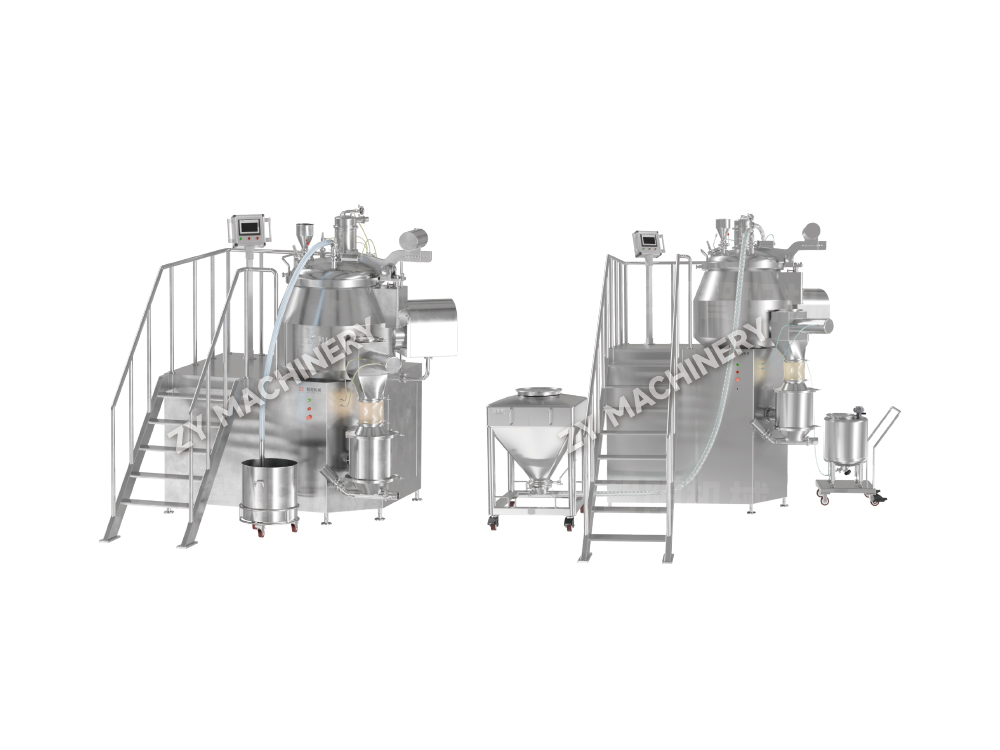
GHL High-Speed Wet Granulator
The process begins with the loading of the formulation components into the enclosed processing container. These components may include active pharmaceutical ingredients, fillers, binders, disintegrants, lubricants, or other functional excipients, depending on the formulation and process design.
The high-speed mixing mechanism creates movement throughout the powder bed. The objective is to distribute each component evenly while minimizing stagnant areas. An effective mixing action is particularly important when the active ingredient is present at a low concentration or when the active and inactive ingredients have significantly different particle sizes or densities.
The machine is designed to complete dry mixing rapidly. Under suitable operating conditions, dry mixing may take approximately two minutes. Actual mixing time depends on formulation characteristics, loading level, material density, equipment configuration, and required uniformity. Process development trials are normally used to determine the optimum time for a specific formulation.
After the dry components have been mixed, a binder solution or other granulating liquid is added. The binder connects powder particles and gives the developing granules sufficient cohesion. The quality of binder distribution has a direct effect on granule size, strength, moisture distribution, and downstream drying requirements.
High-speed agitation helps spread the binder through the powder mass. Uniform distribution can reduce the risk of localized overwetting, which may otherwise produce hard lumps or extended drying times. It can also prevent areas of insufficient binder addition that may result in weak granules and excessive fines.
The GHL process is designed to reduce binder consumption by up to 25 percent compared with traditional methods under comparable processing conditions. This potential reduction may lower material costs and may also reduce the amount of moisture that must be removed during drying. The precise saving depends on formulation design, binder type, powder characteristics, target granule properties, and process settings.
As the binder wets the powder, particles begin to agglomerate. The high-speed cutting action helps break apart oversized wet masses and encourages the formation of granules within the desired size range. The cutting speed is listed as variable from 0 to 2,880 revolutions per minute, allowing the process to be adjusted for different material behaviors.
A short granulation stage of approximately one to four minutes is possible for suitable formulations. The required time depends on the rate of binder addition, the formulation’s wetting characteristics, the desired granule size, and the selected cutting speed. Operators can use process trials to establish a repeatable endpoint based on torque, power consumption, appearance, moisture, particle-size distribution, or other relevant measurements.
Once the granulation endpoint is reached, the wet granules are discharged for drying. The following drying stage may use a fluid-bed dryer, vacuum dryer, tray dryer, or another suitable system. The GHL granulator is therefore commonly used as one part of a complete solid-dosage production route rather than as an isolated processing step.
One of the principal advantages of the GHL High-Speed Wet Granulator is its ability to combine dry mixing and wet granulation in one machine. Traditional production arrangements may require separate mixers, transfer steps, and granulating devices. Every additional transfer can increase handling time, product loss, dust generation, and the risk of segregation.
By performing the initial operations in a common enclosed chamber, the GHL design can simplify the production route. Fewer process steps may also reduce the number of operator interventions and make it easier to establish standard operating procedures. This is especially valuable for pharmaceutical manufacturers working with potent, dusty, or high-value materials.
The equipment is engineered for short processing cycles. Dry mixing may take about two minutes, while wet granulation may be completed in approximately one to four minutes for suitable materials. The supplied product information indicates that the machine can achieve four to five times higher efficiency than conventional methods in appropriate applications.
Faster processing can increase the number of batches produced during a shift and may reduce the amount of time that materials remain in intermediate processing stages. It may also support more flexible scheduling when manufacturers need to change between different products or batch sizes.
Processing speed should not be considered independently of product quality. The correct operating conditions must be validated to ensure that rapid mixing and granulation do not compromise content uniformity, particle-size distribution, moisture control, or granule strength. The value of high speed lies in achieving the required product characteristics in a shorter and more repeatable cycle.
Binder is an important formulation component, but excessive binder can increase granule hardness, slow disintegration, extend drying time, and increase formulation cost. The intensive mixing action of the GHL machine promotes efficient contact between the binder and powder particles, which may allow the required granule structure to be achieved with less binder.
A reported reduction of up to 25 percent in binder usage can produce several benefits. Material expenditure may decrease, the wet mass may contain less liquid, and the downstream dryer may require less energy and time. Reduced binder levels may also help formulators preserve tablet disintegration and dissolution performance, although the final formulation must always be confirmed through laboratory and production testing.
Uniform granules are important for stable downstream processing. Granules that are too fine may generate dust and exhibit poor flow. Granules that are too large may cause feeding problems, uneven die filling, or inconsistent compression. Excessively hard granules may also affect tablet disintegration.
The combined action of the mixer and high-speed cutter helps create granules with a more consistent texture. Improved granule uniformity can support better flow into tablet presses or capsule-filling machines. It may also reduce the need for extensive correction or reprocessing after drying and sizing.
Formulations often contain components with different densities, particle sizes, and flow properties. These differences can cause segregation during blending, transfer, or storage. Segregation is particularly serious when the active ingredient is present at a low concentration.
The GHL machine is designed to maintain uniform mixing even when the active ingredient and excipients differ significantly in their physical properties. The intensive mixing action helps distribute the components before granulation, while the formation of cohesive granules reduces the tendency of the ingredients to separate during subsequent handling.
Although no single machine can eliminate every possible source of segregation, converting the powder blend into stable granules can significantly improve material behavior. Proper loading, sequence of addition, binder distribution, discharge, and downstream transfer remain important parts of the overall control strategy.
The processing interior is fully enclosed and designed without dead angles. This supports hygienic production and helps reduce the accumulation of residual powder in difficult-to-clean areas. An enclosed chamber also limits exposure to the surrounding environment and can help control dust during processing.
For pharmaceutical and food applications, equipment geometry is an important part of sanitary design. Smooth, accessible surfaces and the absence of unnecessary recesses can make cleaning and inspection more practical. The final cleaning method may be manual, semi-automatic, or integrated into a larger cleaning strategy, depending on the selected equipment configuration and facility requirements.
The enclosed design also supports operation in a controlled GMP-compliant environment. GMP compliance depends on the complete facility, documented procedures, validated processes, materials of construction, cleaning systems, personnel training, and quality management. The machine’s design provides an important foundation, but the complete installation must be configured and qualified according to the user’s regulatory requirements.
The GHL series covers a wide range of processing capacities. Small models can be used for laboratory work, formulation development, and small batches, while larger models are intended for pilot or commercial production. This range allows a formulation to be evaluated at a smaller scale before the process is transferred to a larger unit.
Scale-up is not simply a matter of multiplying batch size. Mixing intensity, fill level, energy input, binder distribution, and discharge behavior must all be evaluated. A consistent equipment family can nevertheless make scale-up more systematic because engineers can compare processing behavior across related models.
The following table summarizes the principal published specifications for the GHL High-Speed Wet Granulator series. Capacity values are based on a material density of 0.6 grams per cubic centimeter. Actual output may vary according to formulation properties, working volume, process requirements, and operating conditions.
| Model | Container Volume (L) | Capacity (kg/batch) | Power (kW) | Machine Weight (kg) |
| GHL-20 | 20 | 5 | 3.3 | 600 |
| GHL-30 | 30 | 10 | 4.1 | 635 |
| GHL-50 | 50 | 15 | 6.6 | 890 |
| GHL-100 | 100 | 30 | 9 | 1,200 |
| GHL-150 | 150 | 50 | 13.2 | 1,500 |
| GHL-200 | 200 | 60 | 14 | 1,800 |
| GHL-250 | 250 | 80 | 14 | 2,000 |
| GHL-300 | 300 | 100 | 18 | 2,500 |
| GHL-400 | 400 | 120 | 22.5 | 3,000 |
| GHL-450 | 450 | 150 | 22.5 | 3,500 |
| GHL-500 | 500 | 180 | 26 | 3,800 |
| GHL-600 | 600 | 200 | 35.5 | 4,000 |
| GHL-800 | 800 | 250 | 44.5 | 4,200 |
| GHL-1000 | 1,000 | 350 | 56 | 4,500 |
| GHL-1200 | 1,200 | 400 | 70 | 5,000 |
The GHL-20, GHL-30, and GHL-50 models are suitable for formulation studies, small-batch production, process optimization, and laboratory or pilot applications. Their smaller working volumes allow researchers to evaluate binder concentration, liquid addition rate, mixing time, cutting speed, and granule endpoint with relatively low material consumption.
Development-scale equipment is particularly useful when active ingredients are expensive, scarce, or available only in limited quantities. It can also help manufacturers compare different excipient systems before committing to larger production trials.
The GHL-100 through GHL-500 models can support pilot production, clinical or registration batches, and medium-scale manufacturing. These units offer a balance between development flexibility and commercial throughput. They may be used to confirm scale-up assumptions and to generate material for downstream compression, encapsulation, stability studies, or market testing.
At this scale, facility planning becomes increasingly important. Engineers must consider material transfer routes, lifting and loading systems, dryer capacity, discharge height, electrical supply, compressed-air requirements, maintenance access, and operator safety.
The GHL-600, GHL-800, GHL-1000, and GHL-1200 models are intended for larger production requirements. Their capacities can reach approximately 400 kilograms per batch under the stated density assumption. These machines may be integrated into high-throughput oral solid dosage lines with automated feeding, wet granule transfer, drying, sizing, blending, and compression.
Large-scale equipment should be selected based on the complete process balance rather than granulator capacity alone. The dryer, mill, screen, intermediate containers, tablet press, and material-handling equipment must all be capable of supporting the required batch size and cycle time.
The high-speed cutting system has a listed speed range of 0 to 2,880 revolutions per minute. Variable speed allows operators and process engineers to adjust the mechanical energy supplied to the wet mass. Lower speeds may be suitable for delicate or easily agglomerated materials, while higher speeds may be used when stronger cutting action is needed to control granule size.
The power rating increases with machine size, from 3.3 kilowatts for the GHL-20 to 70 kilowatts for the GHL-1200. The motor capacity reflects the increasing volume of material and the mechanical load associated with mixing and granulation. Electrical installation should be planned according to the selected model, local power standards, control-system requirements, and facility safety regulations.
Compressed air consumption ranges from approximately 0.2 to 2.0 cubic meters per hour across the series. The specified compressed-air pressure is 0.4 to 0.6 megapascals. Compressed air may support pneumatic components, sealing systems, discharge mechanisms, or other equipment functions depending on the final configuration.
The machine weights range from approximately 600 kilograms for the smallest model to 5,000 kilograms for the largest. Installation planning must therefore include floor loading, access routes, lifting equipment, service clearances, and the structural requirements of the production room.
The published reference dimensions include length, width, height, and extended dimensions identified as L, L1, W, W1, H, and H1. These values vary by model. Because final dimensions may be affected by discharge arrangements, control cabinets, platforms, feeding devices, and customized accessories, users should confirm approved layout drawings before construction or installation.
The manufacturer’s approach is based on process integration rather than the supply of isolated machines. Equipment is designed according to material characteristics, required capacity, site conditions, and the intended production route. This approach is important because granulation performance depends on the interaction between the formulation, machine geometry, operating parameters, and downstream equipment.
A process-driven design review may consider powder density, particle-size distribution, moisture sensitivity, binder viscosity, target granule size, batch volume, cleaning requirements, containment needs, and the available drying method. These factors help determine the most appropriate equipment size and configuration.
The product portfolio covers laboratory, pilot, and full-scale production equipment. This allows a project to develop from early formulation work to commercial manufacturing within a coordinated equipment range. Consistency between equipment families can support more efficient process transfer, although scale-up trials and validation remain essential.
Laboratory and pilot testing can be used to establish the relationship between mixing time, cutting speed, binder addition, granule size, moisture, and downstream tablet performance. The resulting process knowledge can then inform the selection and operation of a larger machine.
The equipment can be supplied as a standalone granulator, as part of a modular processing system, or within a complete production line. Supporting systems may include powder mixers, vacuum or pneumatic transfer equipment, fluid-bed dryers, mills, vibrating screens, tablet presses, capsule fillers, coating machines, and intermediate storage vessels.
Integration can help reduce manual transfers and improve production continuity. It may also enable more consistent control of material flow and batch identity. In a modern facility, the granulator may be connected to supervisory controls, recipe management, data recording, alarms, and other automation functions selected according to the project’s requirements.
The manufacturer emphasizes quality, specialization, research and development, and responsive service. Its development of patented technologies and quality-system certification reflects an effort to establish repeatable manufacturing practices and support long-term equipment reliability.
Reliable equipment construction is especially important in high-speed granulation because the machine is exposed to mechanical loads, wet materials, repeated cleaning, and frequent batch cycles. Stable mechanical performance helps maintain process repeatability and reduces the risk of unexpected downtime.
Although pharmaceutical production is a major application, the equipment can also serve food, chemical, nutraceutical, veterinary, biotechnology, additive, and related industries. Different industries may require different materials of construction, sealing arrangements, surface finishes, discharge systems, controls, or cleaning approaches.
Customization should be based on documented process requirements rather than unnecessary complexity. The objective is to provide a machine that is appropriate for the material, capacity, regulatory environment, and operating conditions of the user.
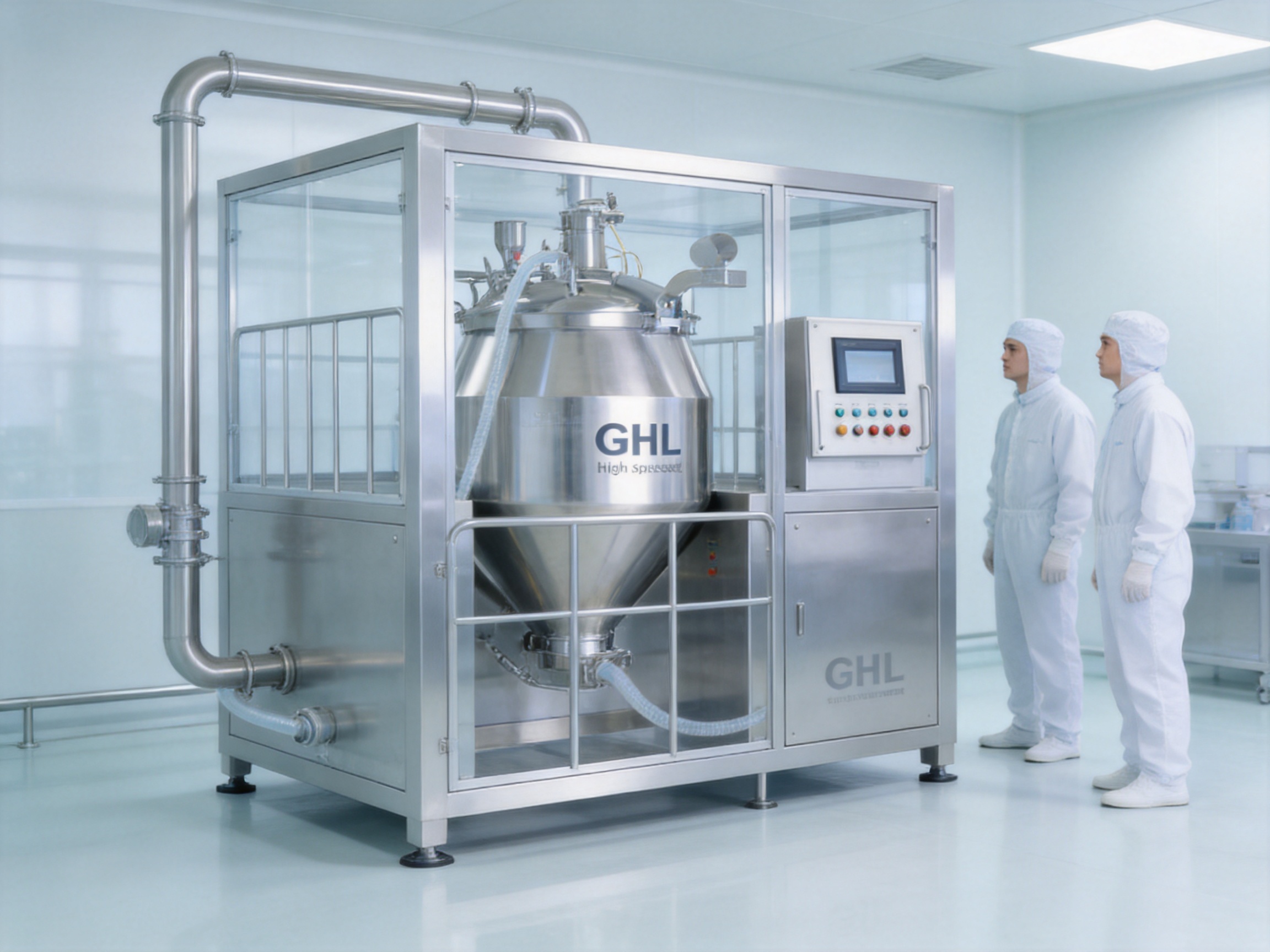
Hygienic design is central to pharmaceutical powder processing. Residual powder can create cross-contamination risks, affect product recovery, and increase cleaning time. The enclosed interior and no-dead-angle design of the GHL granulator are intended to reduce places where powder or wet material can accumulate.
Cleaning procedures should be developed for each formulation and validated according to the facility’s quality system. Important considerations include product-contact materials, dismantling requirements, access to internal components, cleaning-agent compatibility, rinse verification, drying, and inspection. If the equipment is used for multiple products, the cleaning strategy should be evaluated together with the potency and toxicity of the materials.
Containment is also important when handling fine powders or active pharmaceutical ingredients. An enclosed machine can reduce exposure during mixing and granulation, but the complete system must include appropriate loading, discharge, transfer, ventilation, filtration, and personal-protection measures.
Safety features are provided to support secure operation. A complete safety assessment should address access doors, interlocks, emergency stops, rotating components, compressed air, electrical systems, pressure conditions, material loading, cleaning, maintenance, and restart procedures. Operators should receive documented training before using the equipment.
The most direct application is the production of granules for tablet compression or capsule filling. Uniform, free-flowing granules can improve die filling, reduce weight variation, and support stable compression. The appropriate granulation endpoint depends on the formulation and the performance requirements of the final dosage form.
Granules produced by the GHL machine may be dried and then milled or screened before final blending. Additional excipients, such as lubricants or glidants, may be added after drying if required by the formulation.
Nutraceutical formulations often contain powders with different densities, particle sizes, and flow properties. Wet granulation can improve the handling of vitamins, minerals, botanical materials, and other nutritional ingredients. It may also reduce dust and enhance the consistency of tablets or granulated drink products.
In food processing, granulation can improve the flow, dispersibility, and dosing behavior of powdered ingredients. Applications may include functional ingredients, instant products, flavor systems, and premixes. The material of construction, cleaning method, and process controls should be selected according to food-industry requirements.
Chemical manufacturers may use wet granulation to produce agglomerated products with improved handling, reduced dust, or controlled particle size. The machine can be evaluated for materials such as additives, catalysts, agricultural ingredients, and specialty powders, subject to compatibility, safety, and process testing.
Veterinary products and biotechnology-related powders may also benefit from controlled granulation. The enclosed process can help protect the material from environmental exposure while reducing manual handling. Formulation-specific trials are essential when materials are sensitive to moisture, shear, heat, or prolonged processing.
Wet granulation is normally followed by drying. The potential reduction in binder use and short granulation cycle can help reduce the moisture load presented to the dryer. However, the final drying time depends on the amount and type of granulating liquid, the granule structure, the drying technology, the product temperature, and the required residual moisture.
Fluid-bed drying is often selected for pharmaceutical wet granules because it provides efficient contact between heated air and the material. Other drying technologies may be appropriate for heat-sensitive or moisture-sensitive products. The granulator and dryer should be evaluated together so that the discharge rate, batch size, moisture content, and cycle time are compatible.
After drying, the granules may require milling or screening to achieve the required particle-size distribution. The degree of sizing depends on the granulator settings and the final compression or filling process. A properly controlled granulation stage can reduce the amount of oversize material and fines, improving the efficiency of downstream sizing.
The granules may then be blended with external-phase excipients before being sent to a tablet press or capsule-filling machine. In a complete line, material-transfer equipment can reduce manual handling and improve process continuity. The manufacturer’s broader product range includes auxiliary processing equipment and transfer and conveying systems that can support such integration.
Before commercial production, the formulation should be tested in a structured development program. Important variables include powder loading, fill level, dry-mixing time, binder concentration, binder addition rate, mixing speed, cutting speed, granulation time, and discharge method.
Possible critical quality attributes include granule-size distribution, bulk density, tapped density, moisture content, flowability, compressibility, granule strength, tablet hardness, friability, disintegration, dissolution, and content uniformity. The relevant attributes depend on the product and regulatory requirements.
Process analytical tools may be used to identify the granulation endpoint. These can include motor load, torque, power consumption, acoustic signals, moisture measurements, near-infrared analysis, or visual inspection. The most appropriate endpoint method should provide a clear relationship between the process signal and the required granule properties.
Validation should demonstrate that the equipment and process can consistently produce material meeting defined specifications. Installation qualification confirms that the machine is installed according to approved requirements. Operational qualification evaluates the operating ranges and functions. Performance qualification confirms that the equipment performs effectively with the intended product and process.
Scale-up should be supported by data rather than assumptions. A change in equipment size may affect shear, residence time, binder distribution, heat generation, and discharge behavior. Engineers should compare the relevant process parameters and confirm the granule properties at each scale.
Regular maintenance supports equipment reliability and product quality. Maintenance activities may include inspection of mixing and cutting components, seals, bearings, drive systems, discharge mechanisms, electrical controls, safety interlocks, and compressed-air connections.
Wear on cutting tools or mixing components can gradually alter the granulation process. Deteriorated seals may affect containment or cleaning performance. Preventive maintenance schedules should therefore be based on operating hours, batch frequency, material abrasiveness, cleaning procedures, and the recommendations supplied with the final machine.
Long-term operating value depends on more than the initial purchase price. A machine that reduces processing time, binder use, product loss, manual handling, and cleaning difficulty may provide a lower total cost of ownership. The ability to support different batch sizes and integrate with other process equipment can also extend the usefulness of the installation as production requirements change.
Responsive technical service is another important factor. Equipment users may require assistance with installation, commissioning, process trials, operator training, spare parts, troubleshooting, and future modifications. A manufacturer with experience in powder processing and complete production-line engineering can provide support beyond the initial machine delivery.
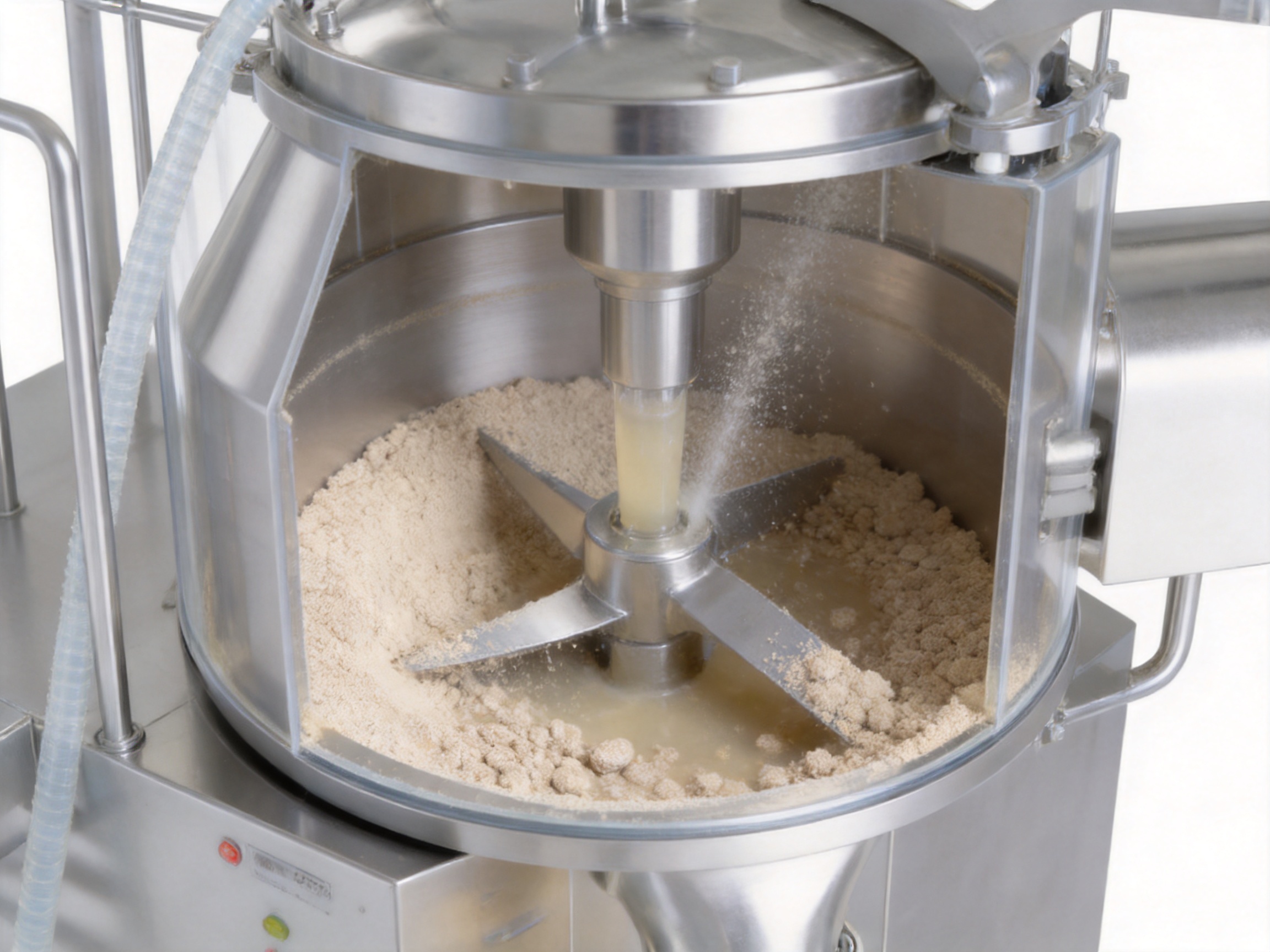
The GHL High-Speed Wet Granulator offers a combination of process efficiency, broad capacity selection, enclosed construction, and integration potential. Its main competitive strengths can be summarized as follows:
First, it combines dry mixing and wet granulation in a single processing unit. This can simplify the production route and reduce intermediate handling.
Second, it is designed for rapid operation. Dry mixing may be completed in approximately two minutes, and wet granulation may take approximately one to four minutes for suitable formulations.
Third, it may reduce binder consumption by up to 25 percent compared with conventional approaches under comparable conditions. Lower binder use can support lower material cost and shorter drying requirements.
Fourth, the high-speed cutting mechanism helps produce uniform granules with good flowability, supporting tablet compression and capsule filling.
Fifth, the enclosed, no-dead-angle interior supports GMP-oriented production, easier inspection, and improved hygiene.
Sixth, the extensive model range allows users to select equipment for laboratory, pilot, medium-scale, or full-scale manufacturing.
Seventh, the equipment can be supplied as part of a modular system or complete production line, making it suitable for manufacturers seeking coordinated process integration rather than a single isolated machine.
Finally, the manufacturer’s process-engineering approach allows the equipment to be considered in relation to material properties, production capacity, site conditions, and downstream requirements. This can be particularly valuable when a standard machine must be adapted to a specific formulation or facility.
A suitable machine should be selected after reviewing the formulation, required batch size, target production rate, material density, binder system, desired granule properties, cleaning requirements, and facility layout.
The first step is to define the formulation and product objectives. Users should identify the active ingredient concentration, excipient characteristics, moisture sensitivity, target particle-size distribution, and downstream compression or filling requirements.
The second step is to estimate the working volume and batch mass. The published capacities are based on a material density of 0.6 grams per cubic centimeter, so capacity should be recalculated if the actual formulation density differs significantly.
The third step is to conduct laboratory or pilot trials. These trials can establish the appropriate mixing time, binder quantity, binder addition rate, cutting speed, and granulation endpoint.
The fourth step is to review the complete installation. This includes loading and discharge arrangements, compressed air, electrical power, ventilation, cleaning access, maintenance clearances, floor loading, and connection to dryers or transfer systems.
The fifth step is to define the required documentation. Depending on the application, this may include material certificates, drawings, manuals, test records, risk assessments, qualification documents, cleaning information, and spare-parts recommendations.
The final step is commissioning and validation. Operators should be trained, process parameters should be recorded, and the equipment should be evaluated under representative production conditions.
The machine is used to mix powdered materials and convert them into uniform wet granules in a single processing step. The granules can then be dried and used for tablet compression, capsule filling, or other downstream operations.
The equipment is primarily intended for pharmaceutical and oral solid dosage production. It can also be used in nutraceutical, food, chemical, veterinary, biotechnology, additive, and related powder-processing applications, subject to material and safety evaluation.
Dry mixing may take approximately two minutes, and wet granulation may take approximately one to four minutes for suitable formulations. Actual cycle time depends on the material properties, batch size, binder system, operating speed, and required granule characteristics.
Yes. The machine is designed to maintain uniform mixing even when active ingredients and excipients differ substantially in particle size, density, or other physical properties. Formulation trials are still necessary to establish the best process conditions.
The product information indicates that binder usage may be reduced by up to 25 percent compared with traditional methods under comparable conditions. The actual reduction depends on formulation design and process optimization.
The listed cutting speed is variable from 0 to 2,880 revolutions per minute. The appropriate speed should be selected according to the formulation, granule-size target, and process-development results.
The largest listed model is the GHL-1200, with a container volume of 1,200 liters and a nominal capacity of approximately 400 kilograms per batch when the material density is calculated at 0.6 grams per cubic centimeter.
Yes. The GHL-20, GHL-30, and GHL-50 models provide smaller capacities suitable for laboratory development, formulation testing, pilot work, and small-batch production.
The enclosed interior and no-dead-angle design support hygienic, GMP-oriented processing. Complete GMP compliance depends on the full machine configuration, facility, utilities, documentation, cleaning program, validation, and quality-management system.
Yes. It can be supplied as a standalone machine, a modular system, or part of a complete powder-processing and oral solid dosage line. Integration may include drying, milling, screening, transfer, coating, compression, and other operations.
Requirements depend on the selected model and configuration. Published specifications include compressed-air consumption of approximately 0.2 to 2.0 cubic meters per hour and compressed-air pressure of 0.4 to 0.6 megapascals. Electrical power ranges from 3.3 to 70 kilowatts across the listed models.
Users should review floor loading, machine dimensions, lifting access, operator clearances, maintenance space, electrical supply, compressed air, ventilation, material loading, discharge height, and connections to upstream and downstream equipment.
The GHL High-Speed Wet Granulator is designed to provide efficient, controlled, and hygienic production of uniform wet granules. By combining powder mixing and wet granulation in a single enclosed machine, it can reduce process complexity, shorten production cycles, lower binder requirements, and limit intermediate material handling.
Its high-speed mixing and cutting system supports consistent granule formation and improved flowability. The broad range of available models enables use across laboratory development, pilot production, and large-scale manufacturing. The no-dead-angle interior and enclosed structure support GMP-oriented operation, while the flexible configuration options allow the equipment to be adapted to different material behaviors and facility requirements.
The manufacturer’s strengths extend beyond the machine itself. Its process-driven engineering approach, product range, modular integration capability, research and development focus, manufacturing experience, and overseas service orientation provide a foundation for complete powder-processing solutions. For manufacturers seeking to improve oral solid dosage production, the GHL series can serve as a practical core unit within a modern granulation and pharmaceutical processing line.
1. United States Pharmacopeia. General Principles of Pharmaceutical Manufacturing and Solid Dosage Forms.
2. World Health Organization. Good Manufacturing Practices for Pharmaceutical Products.
3. European Commission. EudraLex, Volume 4: Good Manufacturing Practice Guidelines.
4. Aulton, M. E., and Taylor, K. M. G. Aulton’s Pharmaceutics: The Design and Manufacture of Medicines.
5. Parikh, D. M. Handbook of Pharmaceutical Granulation Technology.
6. Lieberman, H. A., Lachman, L., and Schwartz, J. B. Pharmaceutical Dosage Forms: Tablets.
7. Manufacturer-provided technical information for the GHL High-Speed Wet Granulator series.
8. Manufacturer-provided product specifications for GHL granulator capacity, power, utilities, dimensions, and operating features.
Want to stay up to date?
Contact us via the email address below.
Don't worry about spam. We hate it too!
Mobile Client

Video Account
Phone:+86-15161130178
Tel:+86-519-88674267
Email:czzy188@163.com
Phone:+86-15161132798
Email:zy@zy-drying.com

WeChat ID

Copyright 2026 Changzhou Zhiyang Machinery Equipment Co., Ltd. All Rights Reserved  Oral Solid Dosage Equipment Manufacturer