 English
 Español
 русский
 中文简体

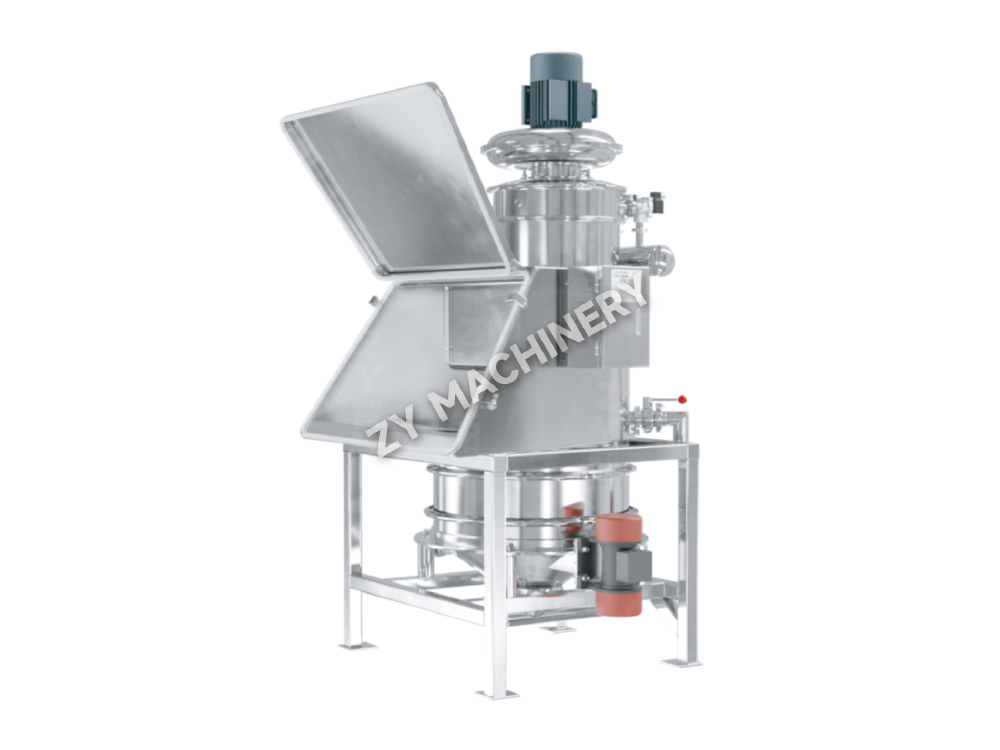
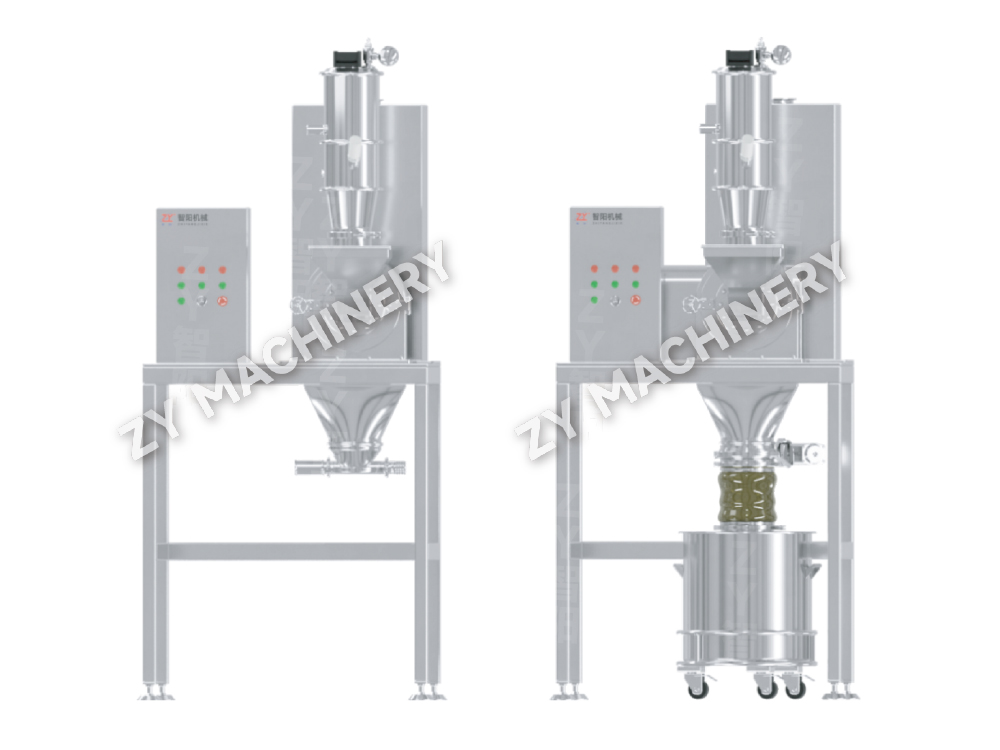
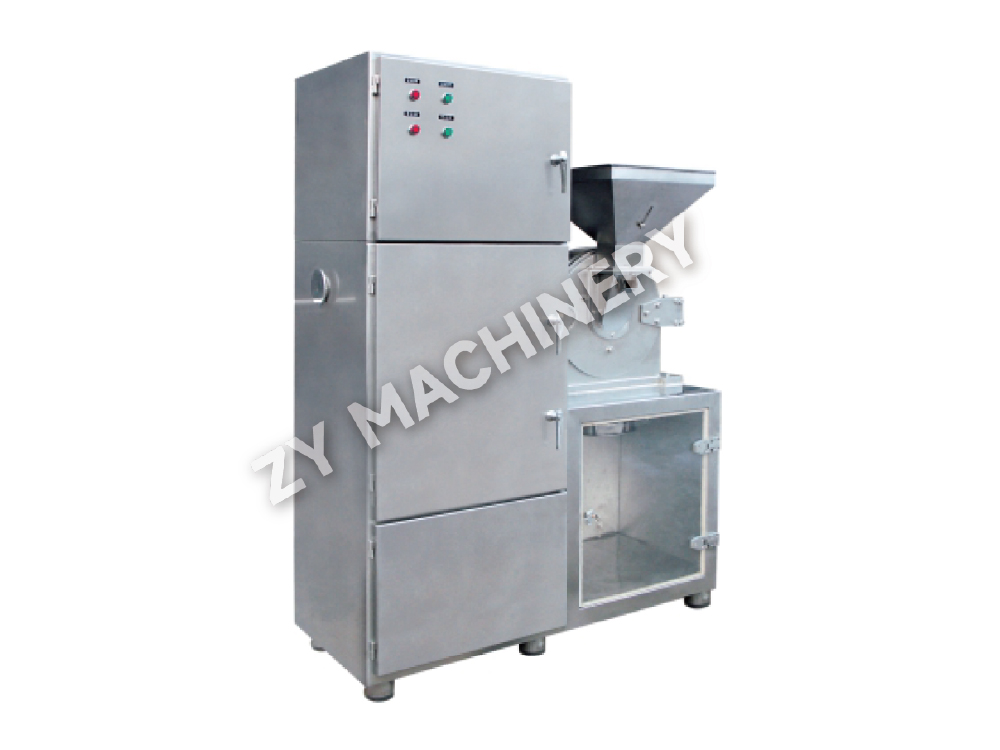
TLZ Dust-Free Feeding Station
The TLZ Dust-Free Feeding Station is designed to address dust generation du.....

Content
Accurate material dosing is one of the most important stages in pharmaceutical powder processing and oral solid dosage manufacturing. Even when mixing, granulation, drying, and coating equipment are carefully designed, the quality of the finished product can be compromised if raw materials are not supplied in the correct quantity, sequence, or proportion. A small dosing deviation can affect blend uniformity, active ingredient concentration, tablet performance, process yield, and batch-to-batch consistency.
The LCP Weighing and Feeding Station is engineered to address these challenges through an integrated system that combines dust-free feeding, vacuum conveying, temporary storage, screw feeding, precision weighing, and mobile material handling. Instead of treating feeding and weighing as separate operations, the station connects them into a coordinated process. Materials are introduced into an enclosed feeding station, transferred to an elevated temporary storage silo, metered through a screw feeder, and accurately discharged into weighing hoppers mounted on an AGV mobile cart.
This integrated approach gives manufacturers a practical solution for controlled powder dosing in pharmaceutical, nutraceutical, veterinary, food additive, chemical, and related production environments. It supports multiple weighing systems, reduces manual handling, improves production continuity, and helps maintain a clean and GMP-oriented workspace.
Compared with conventional manual charging or disconnected feeding arrangements, the LCP system offers a more organized route from material loading to formulation-ready weighing. Its value lies not only in the accuracy of the weighing process, but also in its ability to connect material transfer, feeding control, dust containment, and production scheduling within one coordinated system.
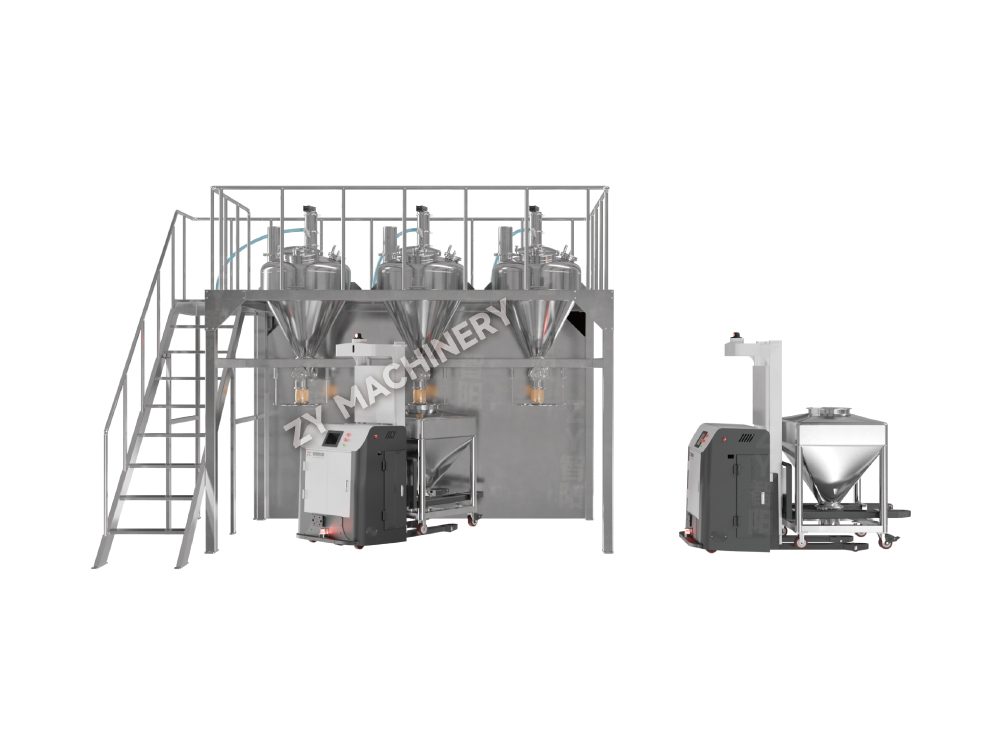
LCP Weighing and Feeding Station
Powder-based manufacturing often involves several raw materials with different densities, particle sizes, flow characteristics, and handling requirements. Some ingredients may be present in relatively large quantities, while others may be required only in small amounts. The dosing system must therefore handle both throughput and precision without allowing one requirement to compromise the other.
In pharmaceutical production, a formulation can include active pharmaceutical ingredients, fillers, binders, disintegrants, lubricants, glidants, pigments, and other functional materials. Each component contributes to the final product, and the ratio between components must be controlled carefully. If too much of one material is added, the resulting product may fail its quality specifications. If too little is added, the product may not achieve the required performance or therapeutic consistency.
Traditional manual weighing can create several operational difficulties. Operators may need to move bags or containers repeatedly, open and close material packages, transfer powders between work areas, and record weights manually. These activities increase labor requirements and may expose personnel to dust. They also create opportunities for material loss, weighing errors, cross-contamination, and production delays.
A dedicated weighing and feeding station reduces these risks by giving materials a defined and controlled path through the process. The operator loads materials into the dust-free feeding station, while the conveying and feeding equipment performs the subsequent transport and dosing operations. The weighing hoppers receive material under controlled conditions, and the control system monitors the process according to the production formulation.
The result is a more repeatable batching process. Repeatability is particularly important when a facility produces several products, operates multiple shifts, or must maintain documented production records. A controlled system can also simplify operator training because the process is organized around standardized steps rather than individual working habits.
The LCP Weighing and Feeding Station combines several functional sections into one process route. These sections are not merely placed next to one another; they work together to maintain a continuous movement of material from the input stage to the weighing stage.
The process begins when raw materials are loaded into the enclosed feeding station. This section provides a controlled point for introducing powders into the system. By concentrating material loading within a dedicated station, the design helps reduce uncontrolled powder release in the surrounding production area.
Dust containment is valuable for several reasons. It supports operator comfort, reduces the need for frequent cleaning, protects nearby equipment, and helps the facility maintain a more hygienic environment. In pharmaceutical and nutraceutical applications, where cleanliness and controlled handling are essential, an enclosed loading point is more suitable than an open transfer arrangement.
The feeding station also creates a consistent interface between incoming materials and the conveying system. Operators can load the material in accordance with the batch plan, while the equipment transfers it through the next stage without requiring repeated manual scooping or open-container movement.
After loading, the material is transported by a vacuum conveyor to an elevated temporary storage silo. Vacuum conveying is particularly useful for powder handling because the material moves through an enclosed route. This reduces exposure to the surrounding environment and limits the possibility of dust escaping during transfer.
The use of vacuum transport also helps connect equipment located at different elevations or positions within the production area. Rather than requiring operators to lift material manually to an elevated hopper, the system uses controlled conveying to move the powder to temporary storage. This can reduce physical handling and improve the overall organization of the process.
Vacuum conveying is also compatible with flexible production layouts. Depending on the site arrangement, the feeding station, temporary silo, screw feeder, and AGV weighing cart can be coordinated as part of a material flow designed around the available space and process sequence.
The temporary storage silo acts as an intermediate buffer between conveying and precision feeding. This buffer is important because the material transfer stage and the weighing stage may not always operate at exactly the same speed. The silo provides a controlled reserve of material so that the screw feeder can continue supplying the weighing hoppers without requiring the vacuum conveyor to respond to every individual dosing action.
Buffer storage can help improve process continuity. When the temporary silo contains sufficient material, the screw feeder can operate according to the weighing demand. This supports a more stable feed rate and helps reduce unnecessary waiting between operations.
The elevated position of the silo also supports an efficient feeding arrangement. Material can be delivered from the silo through the screw feeder into the weighing hoppers under a controlled mechanical configuration. This creates a clear flow path and helps reduce unnecessary transfer points.
The screw feeder is responsible for delivering material from temporary storage into the weighing hoppers. Screw feeding is widely used for controlled powder transport because the rotating screw can provide a predictable and adjustable material flow.
In the LCP system, the screw feeder works together with the weighing process. The feed rate is controlled so that the required quantity enters the appropriate hopper according to the production formulation. Continuous monitoring allows the system to adjust or manage feeding as the target weight is approached.
A controlled screw-feeding arrangement is especially valuable when handling materials with different flow characteristics. Although powder behavior varies from one formulation to another, the use of a dedicated feeding mechanism provides a more consistent basis for dosing than manual transfer. The final process configuration can be selected according to material properties, capacity requirements, and site conditions.
The weighing hoppers are mounted on an AGV mobile cart. This arrangement combines precision dosing with mobility. Once the required materials have been weighed, the cart can support the next stage of material movement within the production workflow.
A mobile weighing platform can be advantageous in facilities that manufacture multiple products or operate several processing areas. Instead of installing a fixed weighing point for every production route, a mobile unit can be used where required. This can support more flexible equipment utilization and may help manufacturers adapt their production layout as capacity or product requirements change.
The cart-based configuration also provides a clear separation between material dosing and downstream processing. After weighing, the prepared material can be moved according to the batch sequence, reducing the need for repeated manual transfer between separate weighing points.
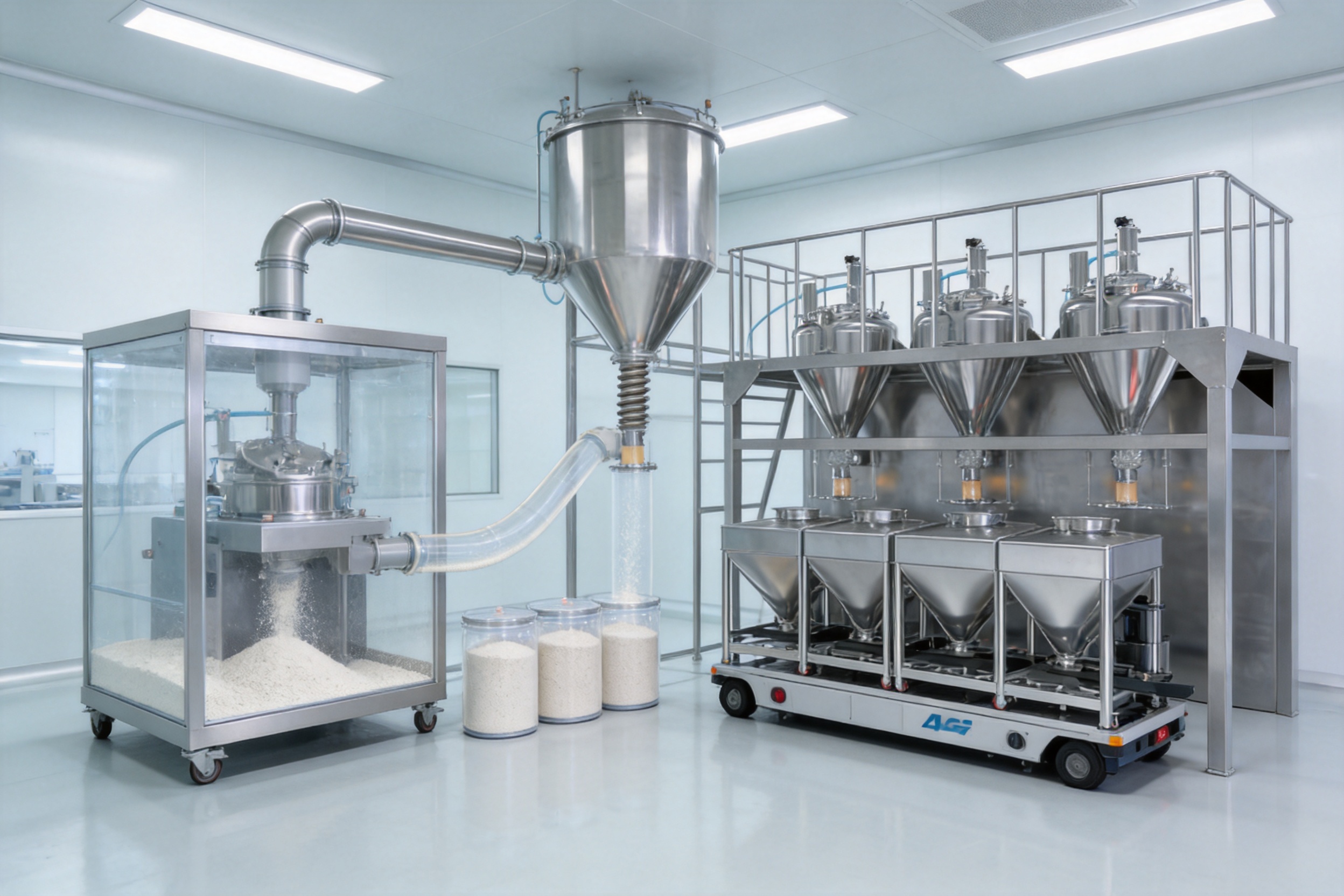
The LCP Weighing and Feeding Station is designed to dose multiple materials according to production orders and formulations. This is one of its most important functions. A production order is not simply a request for a total material quantity; it normally defines the identity, quantity, and relationship of each component in the batch.
The station supports the controlled feeding of different materials into the weighing hoppers. Each material can be metered according to the required target. The formulation is therefore translated into a physical dosing sequence that can be monitored and managed by the equipment.
The available configuration includes models with different weighing arrangements. The LCP4-200/5 model is listed with four weighing positions and a weighing capacity described as 200 kg and 5 kg, while the LCP2-300 model is listed with two weighing positions and a capacity of 300 kg. Both models are specified with accuracy class X(0.1) and a capacity range of 500 to 2,000 kg per hour.
| Item | Unit or Description | LCP4-200/5 | LCP2-300 |
| Category | Listed configuration | 4 | 2 |
| Weighing capacity | kg | 200 kg and 5 kg | 300 kg |
| Accuracy class | Classification | X(0.1) | X(0.1) |
| Capacity | kg/h | 500 to 2,000 kg/h | 500 to 2,000 kg/h |
The configuration of multiple weighing systems gives manufacturers more flexibility when planning production. Different materials may require different target quantities, and the system can be arranged to support the formulation requirements. A facility can select a suitable model according to batch size, material characteristics, weighing requirements, and expected production volume.
Multiple weighing systems also support better process utilization. Rather than relying on one weighing hopper to complete every dosing task sequentially, several weighing functions can be coordinated. This can help reduce idle time and contribute to a shorter batching cycle.
One of the system’s key advantages is its ability to coordinate feeding and weighing operations. In a conventional arrangement, the next hopper may remain idle while the previous hopper is being filled, discharged, or manually checked. Such waiting periods can accumulate throughout a batch and reduce the effective capacity of the production line.
The LCP system is designed to support simultaneous operation of multiple weighing systems. This means that different materials can be dosed according to the process requirements without requiring every operation to wait for the completion of all other operations.
Intelligent control optimizes feeding time and helps eliminate unnecessary waiting between hoppers. The control logic can coordinate material supply, weighing status, and feed progression so that the overall batching sequence remains active. This is particularly important for production environments where many batches are processed each day.
Shortening the batching cycle can provide several practical benefits. More batches may be completed within the same production period. Equipment downstream may receive material more consistently. Operators may spend less time monitoring stalled operations. Energy, labor, and floor space can also be used more efficiently when material movement is better coordinated.
Improving cycle time does not mean sacrificing accuracy. The purpose of the integrated control system is to balance throughput with controlled dosing. The system monitors the weight and feed rate so that the desired quantity is delivered while the equipment continues operating efficiently.
Compared with simple single-hopper feeders, a coordinated multi-hopper system can be more suitable for complex formulations and higher production demands. The advantage is not limited to faster feeding; it is the ability to connect several operations into a synchronized sequence.
Powder dust is a major concern in pharmaceutical and related manufacturing. It can affect operator working conditions, contaminate nearby surfaces, create cleaning requirements, and cause material loss. In some cases, airborne powder may also present handling or occupational concerns depending on the properties of the material.
The LCP Weighing and Feeding Station uses a fully enclosed process design to help prevent dust leakage. The dust-free feeding station, vacuum conveyor, temporary silo, screw feeder, and weighing hoppers form a substantially controlled material route. By reducing open transfer points, the system supports cleaner processing.
A cleaner environment can improve daily operating efficiency. When less powder escapes into the production area, operators may spend less time cleaning equipment surfaces and surrounding floors. The risk of material accumulation around moving parts or sensors may also be reduced. In addition, controlled containment can help maintain the separation between different materials and batches.
The system’s enclosed design supports GMP-compliant production environments. GMP compliance involves more than a single piece of equipment, and the final compliance status depends on the complete facility, procedures, validation program, materials, utilities, and operating controls. However, equipment that is designed for enclosed powder handling can provide an important foundation for hygienic and controlled manufacturing.
Dust containment is also relevant to product protection. Open handling exposes powders to ambient conditions and increases the number of points where foreign matter may enter the process. A closed conveying and feeding route helps minimize unnecessary exposure during transfer and weighing.
The equipment can therefore contribute to a more reliable environmental control strategy. It is not a substitute for facility-level hygiene procedures, but it supports them by making the material route more controlled and easier to manage.
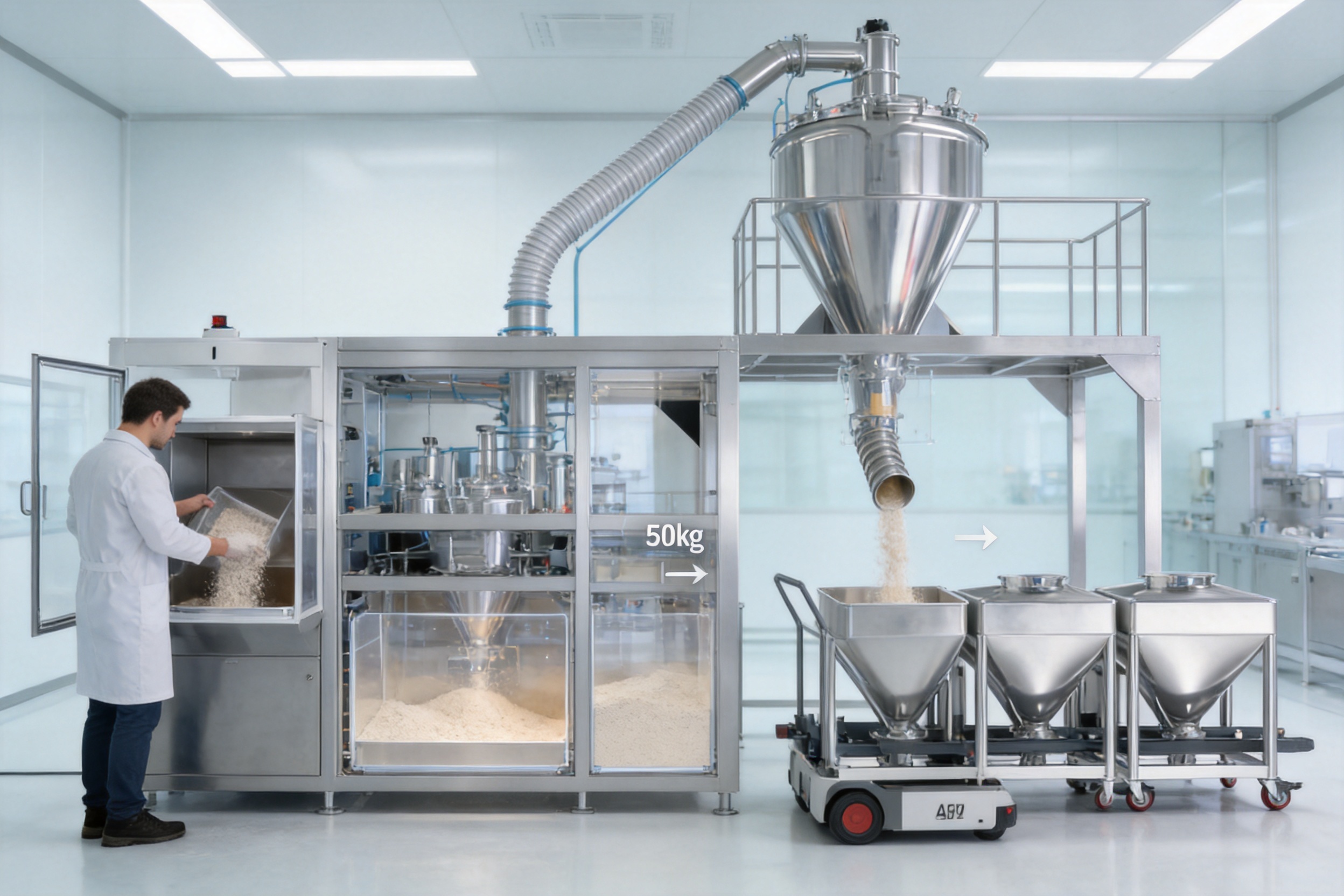
Manufacturers evaluating weighing and feeding equipment often compare manual weighing, separate conveying units, fixed dosing systems, and integrated automated stations. Each approach has a place in industry, but the LCP configuration offers several advantages when accurate, enclosed, and flexible powder batching is required.
Manual weighing may be suitable for very small-scale production, occasional laboratory work, or formulations that require extensive operator intervention. However, it becomes less attractive as batch sizes and production frequency increase. Manual handling requires more labor, creates more opportunities for recording errors, and may expose operators to powder during charging and transfer.
The LCP station automates the transfer and feeding steps after material loading. This reduces the number of manual interventions and establishes a repeatable dosing route. The operator does not need to carry each material repeatedly between storage, weighing, and processing locations.
Automation also makes the process less dependent on individual operator technique. A standardized feeding and weighing sequence can improve consistency between shifts and reduce variation caused by different working practices.
Open transfer systems may have a relatively simple initial arrangement, but they can create dust, material loss, and cleaning challenges. Every open transfer point is a potential source of exposure to the environment and a possible location for cross-contamination.
The LCP system uses enclosed conveying and feeding to establish a cleaner process route. This is a meaningful advantage for manufacturers seeking to improve powder containment and support GMP-oriented operations. The enclosed design also reduces the need for operators to manipulate open bags, trays, or containers during transfer.
A facility may combine a standalone vacuum conveyor, an independent storage hopper, a separate feeder, and several manual weighing stations. While such a configuration can perform the required functions, it may require more coordination between units. Material may need to be transferred manually from one stage to another, and operators may need to monitor different controls.
The LCP station integrates these stages into a coordinated system. The material route is easier to understand, and the feeding, storage, and weighing operations are designed to function together. This integration can reduce process complexity and help improve production planning.
Fixed weighing stations can offer stable operation, but they may limit layout flexibility. If the production line changes, the fixed equipment may be difficult to relocate or adapt. In contrast, the LCP system places weighing hoppers on an AGV mobile cart, allowing the weighing function to be incorporated into a more flexible material flow.
Mobility can be valuable for multiproduct facilities, pilot production areas, and plants that need to make efficient use of shared equipment. A mobile cart may also reduce the distance between weighing and downstream operations, depending on the facility layout.
A single-point dosing arrangement may require all materials to pass through one weighing position in sequence. This can lengthen the batching cycle, particularly when a formulation contains many components. The LCP system supports multiple weighing systems and can coordinate them to reduce unnecessary waiting.
The resulting advantage is a better balance between accuracy and productivity. Manufacturers can maintain controlled material dosing while improving the speed at which a complete formulation is prepared.
The performance of a weighing and feeding station depends not only on its basic operating principle but also on the manufacturer’s ability to design, fabricate, integrate, test, and support the equipment. Changzhou Zhiyang Machinery Equipment Co., Ltd. specializes in powder processing and oral solid dosage equipment and has developed its product portfolio around process integration.
Founded in 2010 and based in Changzhou, China, the company provides standalone equipment, modular systems, and complete production lines. Its scope includes laboratory equipment, mixing equipment, granulation equipment, drying equipment, coating equipment, auxiliary processing equipment, and transfer and conveying systems.
This broad product scope is relevant to the LCP station because weighing and feeding rarely operate in isolation. The prepared materials may proceed to blending, granulation, drying, coating, or other downstream operations. A manufacturer with experience across these process stages can better understand how the dosing system must connect with the wider production route.
The company’s approach is based on process requirements rather than simply supplying individual machines. Material characteristics, capacity requirements, production objectives, and site conditions are considered when developing equipment solutions.
For powder handling, these factors are especially important. Powders differ in bulk density, particle size, moisture sensitivity, flowability, cohesiveness, and dust behavior. A feeding system that performs well with one powder may require different settings or design considerations for another. Process-driven engineering helps ensure that the equipment configuration is appropriate for the intended application.
For the LCP station, this approach may involve evaluating the required batch size, number of materials, target weights, conveying distance, available installation space, expected capacity, and downstream process requirements. The objective is to create a practical implementation plan rather than an isolated equipment specification.
Manufacturing a complete weighing and feeding station requires coordination between mechanical fabrication, conveying technology, feeding components, weighing systems, electrical control, software logic, and final assembly. The manufacturer’s experience in producing different categories of process equipment supports this type of integration.
Integrated manufacturing helps reduce the risk that individual components will be selected without considering their interaction. The conveyor must supply the temporary silo effectively. The silo must provide stable material availability to the screw feeder. The screw feeder must respond appropriately to the weighing process. The mobile cart must accommodate the weighing hoppers and fit the intended material flow. The control system must coordinate all of these functions.
When these elements are developed as part of one solution, the result can be more coherent than a system assembled from unrelated equipment packages.
The company has expanded its product portfolio, strengthened research and development capabilities, obtained quality system certification, developed patented technologies, and built overseas service capabilities. These activities indicate a long-term focus on improving equipment design and supporting industrial applications.
Research and development are important in powder processing because production requirements continue to evolve. Manufacturers increasingly seek improved containment, shorter cleaning times, more flexible layouts, greater automation, and better data management. Equipment suppliers must therefore continue refining mechanical systems, controls, and process integration methods.
The company serves pharmaceutical, biopharmaceutical, biotechnology, nutraceutical, veterinary, additives, and related industries. These industries share a need for controlled material handling, but their formulations and production conditions may differ significantly.
Experience across multiple sectors can help an equipment manufacturer understand a wider range of powder behaviors and production requirements. Pharmaceutical customers may prioritize formulation accuracy and GMP-oriented design. Nutraceutical producers may require flexible multiproduct operation. Veterinary and additive manufacturers may focus on high throughput, containment, or large batch sizes. A broad application background supports more adaptable engineering solutions.
Advanced equipment performance is supported by the quality of fabrication and assembly. For a powder dosing system, fabrication quality affects surface condition, cleanability, mechanical reliability, and the consistency of material flow.
Product-contact areas should be designed with attention to hygienic construction. Smooth and accessible surfaces can make cleaning and inspection more practical. The number of unnecessary ledges, dead zones, and difficult-to-reach locations should be minimized wherever the process and design requirements allow.
Mechanical alignment is also important. The vacuum conveyor, silo, screw feeder, weighing hoppers, and mobile cart must be assembled so that material flows correctly and the weighing function remains stable. Poor alignment or vibration can affect operation and may contribute to inconsistent feeding or measurement.
Control integration is equally important. The station must coordinate conveying, temporary storage, screw feeding, weighing status, and material sequencing. A well-integrated control structure can help operators understand the operating condition of the system and respond more quickly to alarms or process interruptions.
Before delivery, equipment suppliers commonly perform assembly checks, functional testing, and control verification. The specific testing and validation documentation required will depend on the customer’s industry, internal quality system, and regulatory obligations. For pharmaceutical applications, customers may also request documentation related to materials, welding, calibration, cleaning, safety, and qualification.
Changzhou Zhiyang Machinery Equipment Co., Ltd. provides engineering implementation plans in addition to equipment. This is important because successful installation depends on more than machine delivery. Layout, utilities, material loading procedures, operator access, cleaning arrangements, and connection to downstream equipment must all be considered.
The LCP Weighing and Feeding Station can be applied wherever multiple powders or granular materials must be dosed accurately and transferred under controlled conditions.
In pharmaceutical manufacturing, the station can support the weighing of active and inactive ingredients before blending, granulation, or other processing steps. The enclosed route helps reduce environmental exposure, while the weighing function supports formulation accuracy.
Nutraceutical formulations often contain vitamins, minerals, plant extracts, amino acids, carriers, and functional additives. The ability to handle several materials and support different target quantities is valuable for multiproduct nutraceutical plants.
Veterinary formulations may include powders with different dosing levels and flow characteristics. A controlled feeding and weighing route can help improve batch consistency and reduce manual material movement.
Manufacturers of additives and specialty powders may need to combine several components in precise ratios while maintaining a high production rate. The system’s listed capacity range of 500 to 2,000 kg per hour provides a basis for evaluating its suitability for such applications, subject to the actual material properties and process configuration.
Because the system is available in different configurations, it can be evaluated for various production scales. The final selection should be based on batch size, target accuracy, number of materials, required throughput, available space, and the intended downstream process.
When evaluating dosing equipment, purchase price is only one part of the decision. Manufacturers should also consider labor requirements, production speed, cleaning effort, material losses, equipment flexibility, and the cost of quality failures.
The LCP system can contribute to total process value in several ways. Automated conveying and feeding reduce manual labor. Enclosed handling can reduce powder loss and cleaning requirements. Multiple weighing systems can shorten batching time. The AGV mobile cart can support flexible movement of prepared materials. Coordinated controls can reduce waiting and improve equipment utilization.
Improved batching consistency may also reduce the risk of rework or rejected batches. A formulation that is dosed accurately and repeatably provides a better foundation for downstream mixing and processing. While the final quality of a product depends on the entire manufacturing process, accurate initial dosing is a fundamental requirement.
Operational efficiency is also connected to operator safety and ergonomics. Reducing the need to lift, carry, open, and manually transfer powders can create a more manageable work routine. A clear material route can make it easier to define standard operating procedures and train new personnel.
The long-term value of the equipment therefore comes from the combined effect of precision, containment, automation, flexibility, and integration. These advantages may be especially significant for manufacturers expanding production, introducing additional formulations, or upgrading from manual powder handling.
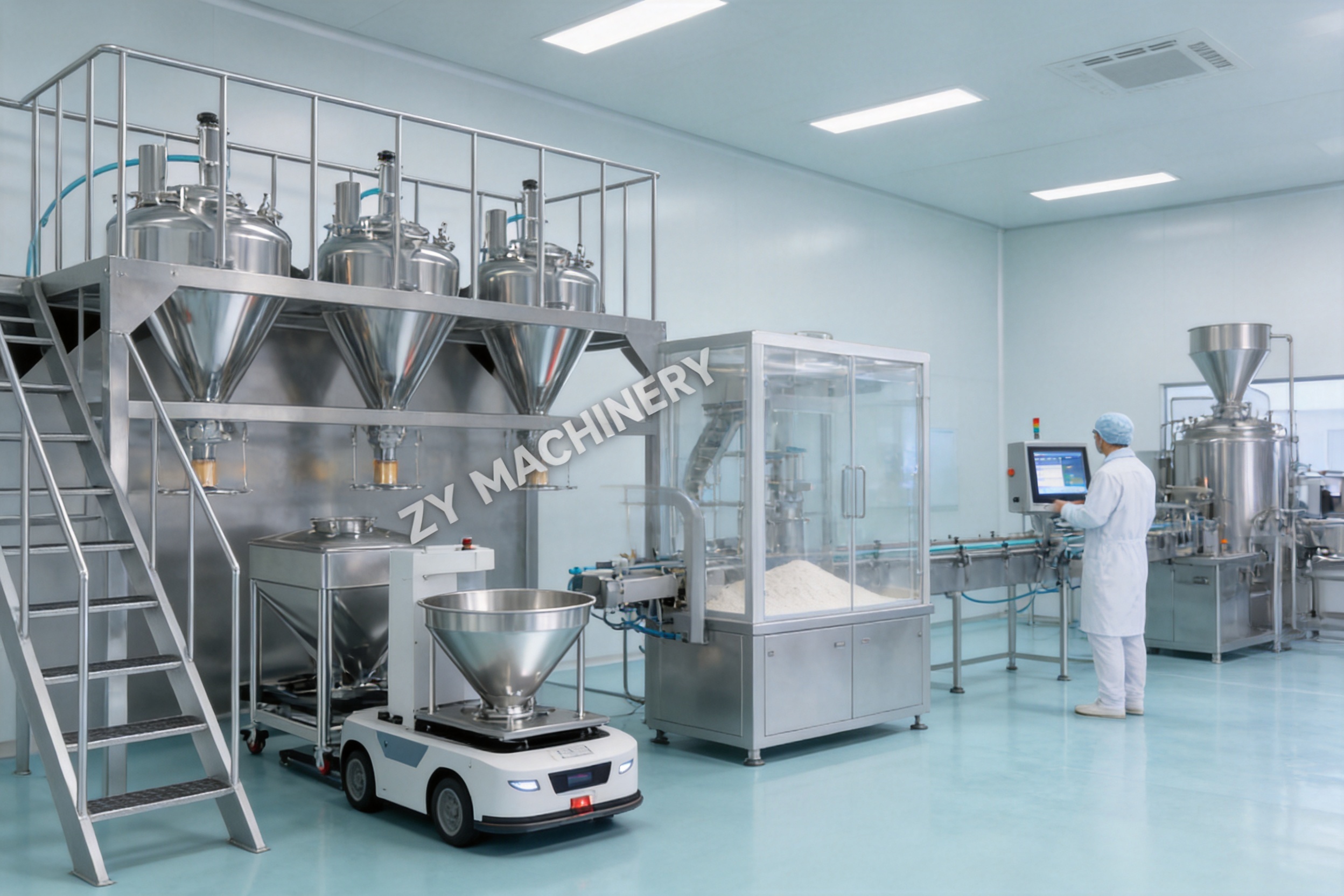
Successful implementation begins with a detailed understanding of the production process. Before selecting or installing the station, the manufacturer and equipment supplier should review the materials, formulation structure, batch sizes, target weights, required output, building layout, and downstream equipment.
Material characteristics should receive particular attention. Bulk density affects the volume of material in the silo and hopper. Flowability influences screw-feeder performance. Cohesive or moisture-sensitive powders may require additional handling considerations. Dust behavior affects containment and cleaning strategies.
The site layout should provide sufficient space for the feeding station, vacuum conveyor, temporary storage silo, screw feeder, AGV cart, operator access, maintenance access, and cleaning activities. The route should also be compatible with the movement of raw materials and completed weighing batches.
Utilities and supporting systems must be planned as part of the project. Depending on the final configuration, requirements may include electrical power, compressed air, vacuum generation, control connections, grounding, and appropriate ventilation or dust-control provisions. The exact requirements should be confirmed during engineering design.
Operator access is another important consideration. Personnel must be able to load materials safely, inspect the equipment, respond to alarms, perform cleaning, and complete routine maintenance. The system should be incorporated into standard operating procedures that define material identification, loading sequence, batch verification, cleaning, and release steps.
For regulated industries, documentation and qualification planning should begin early. Customers may require design review, factory acceptance testing, site acceptance testing, calibration records, operating instructions, maintenance documentation, and training. The specific package depends on the company’s quality system and the regulatory environment in which the equipment will operate.
Reliable dosing depends on keeping the conveying, feeding, weighing, and control components in good condition. Preventive maintenance should be established according to operating hours, material characteristics, and the manufacturer’s recommendations.
The screw feeder should be inspected for wear, buildup, and changes in feeding behavior. The temporary silo and conveying path should be checked for material accumulation or restrictions. Weighing hoppers and load-measuring components should be protected from unnecessary mechanical stress and inspected for stable operation.
Vacuum conveying components should also be maintained to preserve transfer performance. Filters, seals, hoses, valves, and connection points may require inspection or replacement depending on the design and operating conditions.
Cleaning is a critical part of maintenance in multiproduct facilities. The cleaning method should be selected according to the material properties and the customer’s process requirements. Operators should have clear instructions for isolating the equipment, accessing product-contact areas, removing residual material, and verifying cleanliness before the next batch.
Because the LCP station is designed as an integrated system, maintenance planning should consider the interaction between components. A problem in the vacuum conveyor may affect silo availability. A change in screw-feeder performance may affect weighing accuracy or cycle time. A mobile cart issue may interrupt the transfer of prepared material. A coordinated maintenance program helps protect the performance of the complete process rather than focusing only on individual parts.
The listed LCP4-200/5 and LCP2-300 configurations provide different combinations of weighing positions and capacity. Selection should be based on the actual formulation and production objectives rather than on nominal capacity alone.
The LCP4-200/5 configuration may be appropriate where four weighing positions are beneficial and where the process includes both larger and smaller weighing requirements. Its listed weighing description of 200 kg and 5 kg suggests a configuration intended to accommodate different dosing scales within the same station.
The LCP2-300 configuration may be suitable for applications requiring two weighing positions with a listed capacity of 300 kg. It can be considered when the formulation structure and batching plan align with this arrangement.
In both cases, the listed capacity range is 500 to 2,000 kg per hour. Actual throughput may depend on material properties, target weights, feeding behavior, conveying distance, operating sequence, and the selected control strategy. A technical review with the equipment supplier is therefore recommended before final selection.
Manufacturers should also evaluate future requirements. If new products may be introduced later, a more flexible configuration may provide greater long-term value. If the facility requires frequent product changes, cleaning access and mobile handling may be especially important. If the process is expected to expand, the control architecture and layout should allow suitable integration with future equipment.
Powder production is a sequence of connected operations. A problem at the weighing stage can affect mixing, granulation, drying, coating, compression, filling, or packaging. For this reason, dosing equipment should be evaluated as part of the complete process rather than as an isolated machine.
The LCP station reflects this principle by combining material feeding, vacuum conveying, temporary storage, screw feeding, weighing, and mobile transport. The integration reduces the number of disconnected handoffs between operations and creates a more continuous process path.
Process integration can also improve communication between departments. Production planners can define the batching requirements. Operators can follow a standardized material route. Quality personnel can review the weighing and formulation records. Maintenance teams can work from a more clearly defined equipment structure.
For an equipment manufacturer, integration requires an understanding of both mechanical operation and production objectives. Changzhou Zhiyang Machinery Equipment Co., Ltd. positions its engineering work around complete process routes and implementation plans. This approach is useful for customers who need more than a catalog machine and require support with equipment selection, layout, integration, and production application.
The station is designed to dose multiple materials accurately according to production orders and formulations. It combines dust-free feeding, vacuum conveying, temporary storage, screw feeding, precision weighing, and mobile material handling.
Materials are first loaded into an enclosed feeding station. A vacuum conveyor transfers them to an elevated temporary storage silo. A screw feeder then delivers the materials into weighing hoppers mounted on an AGV mobile cart. The system monitors the weighing and feeding process according to the formulation requirements.
Yes. The system is designed for the controlled dosing of multiple materials. Its multiple weighing arrangements allow different ingredients to be metered according to their required quantities and production sequence.
The listed models are LCP4-200/5 and LCP2-300. The LCP4-200/5 is listed with four weighing positions and a weighing description of 200 kg and 5 kg. The LCP2-300 is listed with two weighing positions and a 300 kg weighing capacity.
Both listed models have a capacity range of 500 to 2,000 kg per hour. Actual performance depends on the material, formulation, target weights, operating sequence, and complete system configuration.
Both listed configurations are specified with accuracy class X(0.1). Final performance should be confirmed during technical evaluation and commissioning under the customer’s actual operating conditions.
The feeding, conveying, storage, and feeding stages are arranged as an enclosed material route. This helps reduce dust leakage and limits unnecessary exposure of the powder to the production environment.
The silo provides an intermediate buffer between vacuum conveying and screw feeding. It helps maintain material availability for the feeder and allows the conveying and weighing operations to work in a more coordinated manner.
The mobile cart supports flexible material movement and can help connect the weighing operation with downstream processing areas. It may be particularly useful in multiproduct facilities or layouts where shared equipment must serve different production routes.
Its fully enclosed design supports clean and GMP-oriented powder handling. However, GMP compliance depends on the complete facility, operating procedures, cleaning program, qualification activities, and quality system, not on one equipment unit alone.
Potential applications include pharmaceutical, biopharmaceutical, biotechnology, nutraceutical, veterinary, additive, and related powder-processing industries.
Customers should review batch size, number of materials, target weights, powder flowability, bulk density, required capacity, cleaning needs, production layout, downstream equipment, and possible future expansion.
The company provides standalone machines, modular systems, complete production lines, process routes, and engineering implementation plans. Its product range covers laboratory, mixing, granulation, drying, coating, auxiliary processing, transfer, and conveying equipment.
An integrated solution can reduce disconnected handoffs, simplify material flow, coordinate controls, minimize manual transfer, and improve the relationship between conveying, feeding, weighing, and production scheduling.
Requirements vary by customer and project, but may include design information, material documentation, operating instructions, maintenance procedures, calibration records, factory testing, site testing, training records, and qualification support.
The LCP Weighing and Feeding Station provides an integrated approach to accurate powder batching. By combining dust-free material loading, vacuum conveying, elevated temporary storage, screw feeding, precision weighing, and AGV-based mobility, it addresses several challenges that commonly affect manual or disconnected dosing processes.
Its ability to support multiple weighing systems helps manufacturers manage formulations containing materials with different target quantities. Intelligent control reduces unnecessary waiting between hoppers and supports a shorter batching cycle. The enclosed process route helps control dust, protect material quality, and support a cleaner GMP-oriented production environment.
The station also benefits from the process and manufacturing capabilities of Changzhou Zhiyang Machinery Equipment Co., Ltd. The company’s experience in powder processing and oral solid dosage equipment, together with its broad product range and process-integration approach, enables it to develop solutions that connect dosing with mixing, granulation, drying, coating, transfer, and other production stages.
For manufacturers seeking to improve dosing accuracy, reduce manual handling, increase batching efficiency, and establish a more controlled powder-processing environment, the LCP system offers a practical platform for modernization. Its final suitability should be evaluated against the customer’s materials, formulation, capacity, layout, cleaning strategy, and regulatory requirements. With the correct configuration and implementation plan, it can become an important part of a reliable and efficient powder production line.
1. Product information for the LCP Weighing and Feeding Station, including operating principle, features, model data, weighing capacity, accuracy classification, and throughput specifications.
2. General principles of pharmaceutical powder handling, formulation control, material transfer, and GMP-oriented equipment design.
3. General engineering practices for vacuum conveying, temporary storage, screw feeding, weighing systems, and enclosed powder-processing equipment.
4. General guidance on hygienic design, cleaning access, process integration, and maintenance planning for pharmaceutical and nutraceutical manufacturing equipment.
5. Company information concerning Changzhou Zhiyang Machinery Equipment Co., Ltd., its product categories, engineering capabilities, research and development activities, quality systems, and international service experience.
Want to stay up to date?
Contact us via the email address below.
Don't worry about spam. We hate it too!
Mobile Client

Video Account
Phone:+86-15161130178
Tel:+86-519-88674267
Email:czzy188@163.com
Phone:+86-15161132798
Email:zy@zy-drying.com

WeChat ID

Copyright 2026 Changzhou Zhiyang Machinery Equipment Co., Ltd. All Rights Reserved  Oral Solid Dosage Equipment Manufacturer